Saturday, December 31, 2005

War News Update, Saturday, December 31, 2005 Via Reuters:
BAGHDAD - One civilian was killed and three others injured when a mortar round hit a house in central Baghdad on Saturday, police said. KHALIS - Five people were killed and two injured when their car struck a roadside bomb outside the local headquarters of the Iraqi Islamic Party in Khalis, 60 km (40 miles) north of Baghdad, police said. BAGHDAD - Two policemen were killed and one was injured when a roadside bomb struck their car in the centre of Baghdad. Police said four civilians were also injured. BAGHDAD - Four police commandos were seriously injured when a roadside bomb struck their car in al-Dura district in southern Baghdad, police said. BAIJI - One civilian was killed and another injured when a U.S. patrol opened fire after a roadside bomb went off nearby in Baiji 180 km (112 miles) north of Baghdad. No casualties were reported among the U.S. patrol, the U.S. army said.
Before the year ends I want to mention a very notable ambassador by the name of Craig Murray. You can visit his website here (blocked the last time I tried it) and look at the lies, hipocrisy and filth that spews from the British Government regarding the torture of innocents in this so called war on terror.

|
War News for Saturday, December 31, 2005 Bring 'em on: US soldier killed by IED in Baghdad. Bring 'em on: US soldier killed in a gun attack in Fallujah. Bring 'em on: After six of its staff have been kidnapped, Sudan has closed its embassy in Baghdad. Bring 'em on: Two Iraqi captains gunned down in Dujail. Bring 'em on: Five members of the Iraqi Islamic party killed by a roadside bomb Al-Khalis. Bring 'em on: Roadside bomb kills five policemen in Baghdad. Bring 'em on: Five Sunni family members murdered by gunmen in Iskandariyah. Yes, we are winning in Iraq: Two more U.S. soldiers were killed in Iraq as the year wound down Friday, putting the American military death toll at 841 so far - just five short of 2004's lost lives despite political progress and dogged efforts to quash the insurgency. The Spinning General: "The number of attacks is greater, but the number of successful attacks is down to 10 percent" of the total, compared with 25 to 30 percent a year ago, Webster told Pentagon reporters in a briefing from Iraq. "The insurgency has weakened since the elections," with attacks down since the Dec. 15 vote to elect a new legislature, he added. But he acknowledged that U.S. troops are dying in the city at about the same rate as a year ago. "We're working hard to reduce that number," said Webster, commander of the Army's 3rd Infantry Division. Election Fraud: Many Iraqis are demanding a new poll after more than 1,500 cases of election fraud and forgery were reported in the Dec. 15 elections, at least 30 of them "extremely serious". The results so far indicate a strong win for Shia religious groups. There are widespread complaints that many of the instances of fraud favoured Shia religious groups that led the interim government which conducted the poll. In Baghdad, the most important district in the poll with more than a fifth of the seats in parliament, the Iranian-backed Shia alliance took a surprising 57 percent of the vote, as opposed to 19 percent for the Sunni coalition. Will it come to anything?: The Justice Department has opened a criminal investigation into recent disclosures about a controversial domestic eavesdropping program that was secretly authorized by President Bush after the Sept. 11, 2001, attacks, officials said yesterday. Federal prosecutors will focus their examination on who may have unlawfully disclosed classified information about the program to the New York Times, which reported two weeks ago that Bush had authorized the National Security Agency to monitor the international telephone calls and e-mails of U.S. citizens and residents without court-approved warrants, officials said. Stalin Lives: What is clear about JPEN is that the military is not inadvertently keeping information on U.S. persons. It is violating the law. And what is more, it even wants to do it more. Follow-up reporting on the Pentagon spying story -- both by this newspaper and by the New York Times -- mistakenly refers to the suspicious incidents database that I obtained for the time period July 2004-May 2005 as the TALON database, for the Threat and Local Observation Notice reporting system. TALON, according to the Pentagon, is merely a non-threatening compilation of "unfiltered information." Fight Back at Stalin: "It must not be cool anymore to have access to this data," said Rieger, who argued that Western societies are becoming democratically legitimized police states ruled by an unaccountable elite. "We have enough technical knowledge to turn this around; let's expose them in public, publish everything we know about them and let them know how it feels to be under surveillance." The four-day Chaos Computer Congress is meeting near Alexanderplatz in the former East Berlin, where more than a half-million people rallied for political reform five days before the fall of the Berlin Wall. In his keynote address, Joichi Ito, general manager of international operations for Technorati, warned that the internet could itself become a walled-in network controlled by the International Telecommunication Union, Microsoft and telecommunications companies. We cannot Protest!: His tribute has irritated the military recruiters next door, who dislike the daily reminder of friends lost. Staff Sgt. Gary Capan, the post's commander, requested that the sign come down for his colleagues' benefit. "They're saying, 'Why should we have to look at that? We lost people over there,'" said Staff Sgt. Gary Capan, the post's commander. "It's not just a number to them." Some of Cameron's supporters believe the sign will hurt recruiting. I blame the Parents: Hassan spoke to The Associated Press early Friday, several hours before the embassy announcement, and he was still under the impression that he would be following his personal travel itinerary, which had him leaving the country by himself on Sunday. He hadn't even been aware that the story of his perilous travels was published around the world - or that his mother was being interviewed on television. "I don't have any Internet access here in the Green Zone, so I have no idea what's going on," he said. A military officer accompanying him, who did not identify himself, said it was his task to get Hassan "safe and sound to the United States." Just a Cabinet Reshuffle?: As a fuel crisis deepened in Iraq, the government replaced its oil minister with Deputy Prime Minister Ahmed Chalabi, whose poor performance in the Dec. 15 elections was a setback in his recent attempt at political rehabilitation. The oil minister, Ibrahim Bahr Uloom, was put on a mandatory, monthlong leave. He had previously threatened to resign over the government's recent decision to increase gas prices sharply, a move that has outraged motorists and sparked attacks on gas stations and fuel convoys.
Just you wait until June 2006, when Iraq's oil production is non-existent, and Iran and Saudi Arabia squeeze GWB's tiny testicles so hard the cost of a barrel of oil tops $80, what will Nascar supporters do then?
Opinion and Commentary Review of 2005:
The most frightening symbol of dysfunctional government this year was Iraq. Despite a stirring election in January, the new Iraqi government - burdened with a hated American occupation and vicious sectarian tension - failed to thrive. Indeed, over the past year, Iraq seemed to be becoming more of a mafia state, with each party, sect and tribe fighting for its share of what's left of the ruined economy. At year-end, there was hope that Iraq's feuding politicians had become so exhausted that - despite another polarizing election in December - they might cobble together a government of national unity, blessed by Shiite Grand Ayatollah Ali Sistani and Sunni Muslim clerics. In practice, this grand coalition might emulate the warlords' council approach in Afghanistan. That would be progress. But for years to come, Iraq is likely to remain a source of instability and terror. It was a bad year, finally, for the people who are paid to make sense of things - the unhumble and increasingly unloved scribes in my business of journalism. Newspaper circulation was plummeting, network television lost its anchors, literally and figuratively, and new media seemed to be feeding on popular anger at the mainstream media and its claims of impartiality. At the center of some of the year's biggest stories stood the media itself - trying to balance codes of professional ethics against demands of citizenship. The New York Times lionized Judith Miller for going to jail to protect her sources from a grand jury investigation, but when her key source turned out to be Vice President Dick Cheney's top aide, the cheering stopped and Miller lost her job. Top editors of the Times and The Washington Post tried to act responsibly by discussing explosive intelligence stories with the White House before publication, and then were vilified by the left for publishing too little and by the right for publishing anything at all. Maybe the lesson of 2005 was the same for the media as for the politicians: Hang on tight to your values, and don't be afraid to let that passion animate your work; be careful about making promises you can't or shouldn't keep; don't try to please everyone, or you may end up pleasing nobody at all.
Propaganda Whisker emailed me yesterday about this. Now read this confirmed BULLSHIT:
Letters: Mission in Iraq is accomplishing its goal This letter is in response to Ron Griesbach's Dec. 23 letter and a quick message to the American people. You say that there's no link between 9-11 and Iraq, but that isn't true. There were al-Qaida cells working in Iraq with Saddam's regime prior to 9-11. As a two-time vet of Iraq (who's currently in Iraq), we needed to save this country. There was barely any education, water, health care or law systems in place. There are many other things that this country lacks. People were dying from the way that this country was run. There's a solution in place and it's working. I'm part of a military transition team that's in control of training and supervising the Iraqi army. Believe me when I say it's working. What I ask is that the people of the United States don't just give up on a country. If it were the U.S. that this was happening to, you all would greatly appreciate having a greater and richer force come in and establish some type of fair law and order. Staff Sgt. Keith Olson, Menasha
Matt was due to post today, but he now knows why I never fly with Ryanair.

|

Friday, December 30, 2005

War News Predictions 2006 It's the time of year to join a gym and make resolutions and predictions. Leaving aside the gym and resolutions, I want to see how many mystical posters we have here. It's time for predictions on the War on Terror and the Bush Junta for 2006. Here are mine.
· Casualties of the Coalition of the Killing will hit the 3,000 mark in early July. · Bush’s approval ratings will be the lowest in living memory for a President of the United States. · Today in Iraq will be viewed by over 2m posters by November.
So OK, I cheated on the above, they were just extrapolations. Now, for the mystical stuff.
· Saddam will be alive on Dec 31, 2006 · Zarqawi (and OBL) will still be “officially” alive on Dec 31, 2006 · Iran will not be attacked. · Syria will be under heavy UN sanctions but Assad still in power. · US troop levels will not fall below 130,000. · Oil barrel prices will pass the $80 dollar mark in June. · Iraq will remain a quagmire.

|
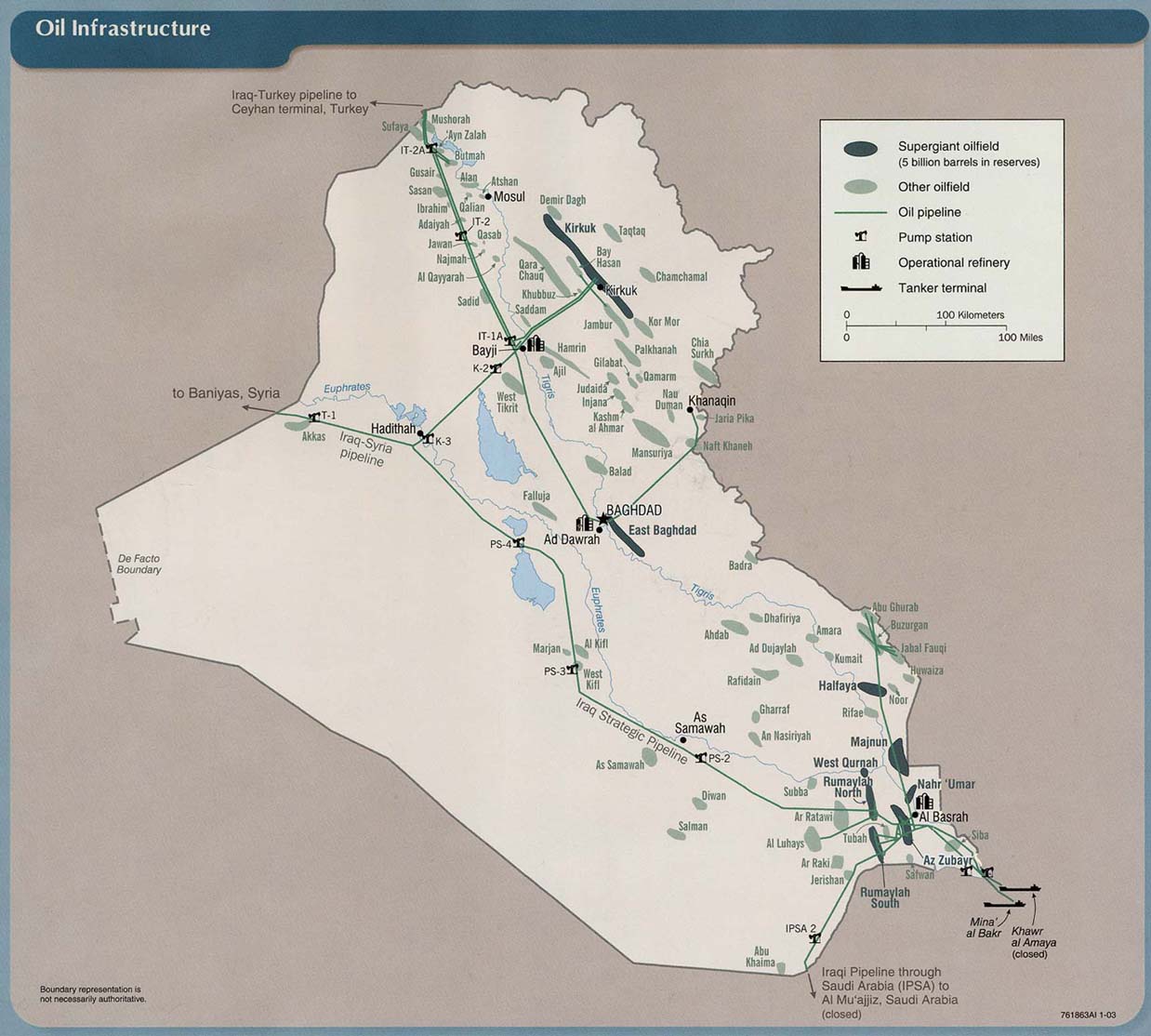
War News for Friday, December 30, 2005 Bring 'em on: Five Iraqis killed in mortar attack in Baghdad. Bring 'em on: A policeman was killed and two others wounded when their patrol was struck by a roadside bomb in the town of Iskandariya. Bring 'em on: U.S. soldiers killed two people in a car on Thursday night near the Himreen mountains, 75 miles south of Kirkuk. Bring 'em on: Police said four mortar rounds landed on a police commandos' headquarters on Thursday night in the town of Samarra. Mr .89% coup: Iraq's Deputy Prime Minister Ahmad Chalabi has assumed direct control of the powerful oil ministry as crude exports ground to a halt due to sabotage attacks and logistics problems, officials said on Friday. Chalabi, who has been improving his relations with Washington after falling out with the U.S. administration, was appointed acting oil minister after the incumbent Ibrahim Bahr al-Uloum was given leave, the officials said.I predicted he would be PM, remember? War on Terror widens: Al Qaeda in Iraq said it had launched missiles at Israel from Lebanon as part of a "new attack" on the Jewish state, a statement posted on the Web said on Thursday. It appeared to be the first claim of responsibility from al Qaeda for an attack on Israel from Lebanon. A senior Israeli security source questioned the claim. Big Brother is watching all of us: In a posting on his googlewatch.org website a privacy activist, Daniel Brandt, says he discovered that the NSA was using tracking devices when he logged on to the agency website on Christmas Day. He found the site was using two persistent cookies that would not expire until 2035, well beyond the life of most computers. While the use of cookies is seen as a convenience at commercial websites, allowing a visitor access without laboriously retyping passwords, their utility for government websites - which do not typically have repeat visits - is uncertain. Stalin would be Proud: The broad-based effort, known within the agency by the initials GST, is compartmentalized into dozens of highly classified individual programs, details of which are known mainly to those directly involved. GST includes programs allowing the CIA to capture al Qaeda suspects with help from foreign intelligence services, to maintain secret prisons abroad, to use interrogation techniques that some lawyers say violate international treaties, and to maintain a fleet of aircraft to move detainees around the globe. Other compartments within GST give the CIA enhanced ability to mine international financial records and eavesdrop on suspects anywhere in the world. Goebbels would be Proud: But one observer sees the Iraq "payola" issue and the new Murrow programme as "an example of the difference between democracy in theory and practice". Prof. Beau Grosscup of the University of California at Chico told IPS, "The same people who set up a programme to promote 'independent journalism' are the same folks who defend funding public relations firms, conservative think tank connected jingoist individuals and embedded journalists as 'independent' media." "It's all about public relations and media control. Joseph Goebbels (Adolph Hitler's propaganda minister) would be proud." Who cares about Gitmo?: The number of detainees involved in a hunger strike at the US internment camp in Cuba's Guantanamo Bay has more than doubled in the past week. The US authorities say 84 prisoners are now refusing food, with 46 more joining the protest on Christmas Day. The US military is believed to be force-feeding some of the inmates, who are protesting against the conditions in which they are being held and their continued detention without trial. No Oil: Iraq's largest oil refinery has been shut down following death threats to tanker drivers, jeopardising supplies of electricity across northern Iraq. The threats followed a steep rise in the price of petrol earlier this month, ordered by the government. Were they Unfair?: team of international monitors has said it is ready to visit Iraq to review complaints that parliamentary elections held this month were unfair. The monitors' offer has been welcomed by leading Sunni Arab and secular Shia parties, who have alleged that the vote was marred by fraud and intimidation. Meanwhile those in Power: Far from the violence of this country's turbulent capital, the emerging Shiite and Kurdish leaders of Iraq's new democracy hunkered down in a northern mountain retreat to plan, they say, a pluralistic government that would embrace disenfranchised Sunni Arabs. The stakes of such meetings are enormous. While certainly the beginning of political horse-trading that will stretch over the coming weeks, the challenge will be to unite groups with widely different views into one ruling coalition. A consensus-based process could create a government stabilized through the buy-in of all Iraqis. White Man's Burden: "The bottom line will be that the Iraqi army and the Iraqi police will gain in competence, that they will be able to take on more and more of the territory, whether or not there are still insurgents in that area," he said in an interview with a small group of reporters, including The Associated Press, aboard a military plane en route to the United Arab Emirates. Amid congressional pressure and growing public opposition to the war, the Bush administration last week announced plans to reduce U.S. combat troops in Iraq to below the 138,000 level that prevailed most of this year. More White Man's Burden: American commanders are planning to increase significantly the number of soldiers advising Iraqi police commando units, in part to curtail abuse that the units are suspected of inflicting on Sunni Arabs, a senior commander in Iraq said Thursday. Under the plan, which the officer said he expected would be formally approved in a few weeks, the number of advisers working with the Iraqi units would be greatly expanded. The advisers themselves would be under the command of American officers. More Prisons: American forces in Iraq have launched a £30 million programme to expand military prisons after the number of suspected insurgents in custody doubled to 15,000. The programme forms part of a two-pronged scheme which aims to ensure there is space to keep captured gunmen locked up and to hand over the task to the Iraqis. South Korea: South Korea's parliament approved a government plan Friday to bring home one-third of the country's troops in Iraq but extended the overall deployment for another year. The National Assembly vote was 110-31 with 17 abstentions. Kirkuk: The settlements' purpose is as blunt as their design: They are the heart of an aggressive campaign by the Kurds to lay claim to Kirkuk, which sits on one of the richest oil fields in the world. The Kurdish settlers have been moving into the area at a furious pace, with thousands coming in the past few months, sometimes with direct financing from the two main Kurdish political parties. The campaign has emerged as one of the most volatile issues dogging the talks to form a new Iraqi government. In this region, it has ignited fury among Arabs and Turkmens, adding to already caustic tension in the ethnically mixed city, U.S. and Iraqi officials say. Opinion and Commentary The Ultimate Quagmire:
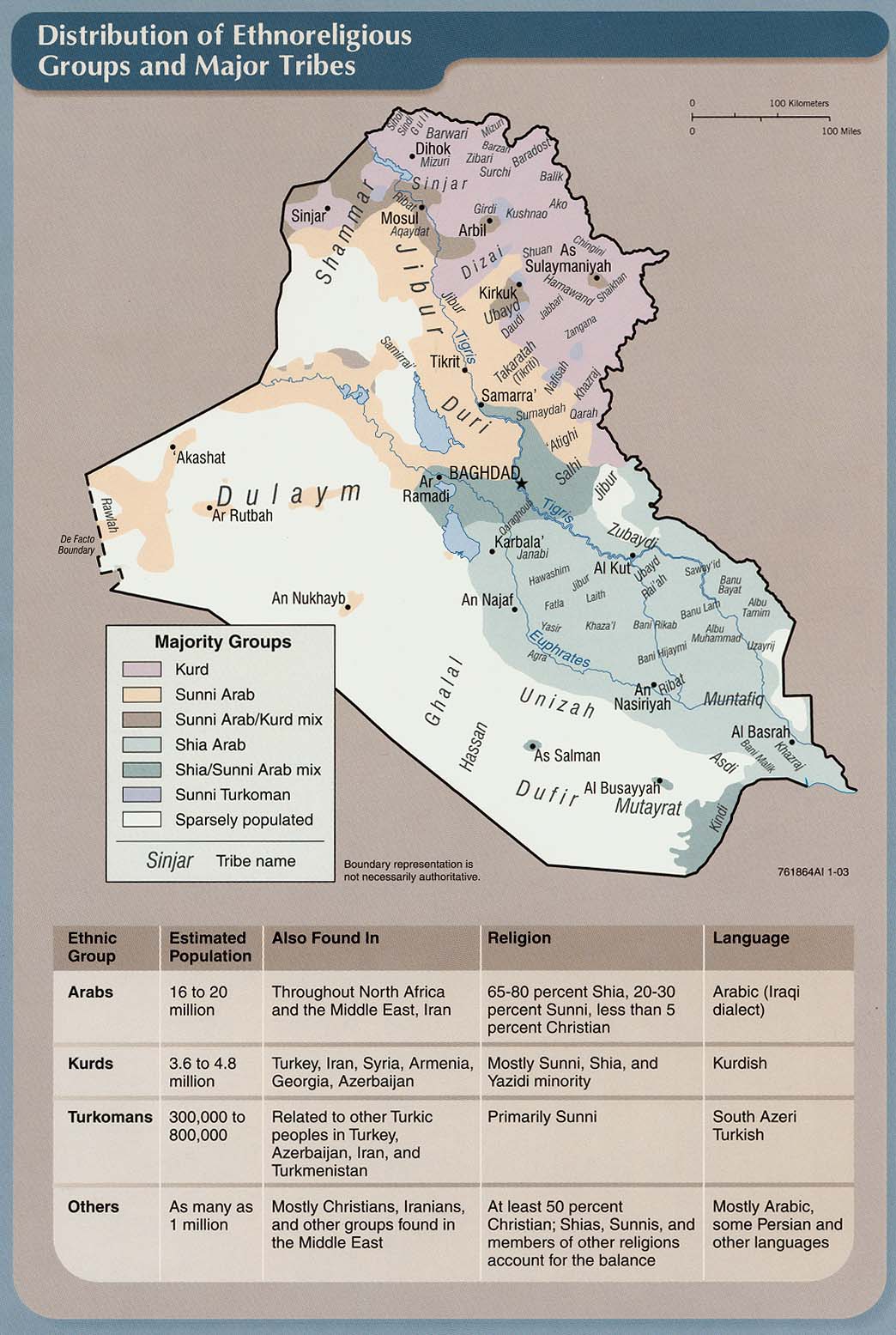
Iraq is a giant, messy albatross hanging from President George W Bush's neck. The faith-based American president believes "we are winning the war in Iraq". The reality-based global public opinion - not to mention 59% of Americans, and counting - know this is not true. Bush felt that "God put me here" so he could conduct a "war on terror". Somebody up there must have a tremendous sense of humor - once again manifested in the way He allotted winners and losers in Iraq's December 15 parliamentary elections. The Shi'ite religious parties in the United Iraqi Alliance (UIA) were the big winners - from 70% to 95% of the vote in the impoverished southern provinces; 59% in Baghdad; and nationally, well over 40% of the total (they've won in nine of Iraq's 18 provinces plus the capital). It's a relatively unexpected success considering the dreadful record of Ibrahim Jaafari's Shi'ite-dominated government. All those intimately allied with the US invasion and occupation were big losers. The Iraqi National List of US intelligence asset and former prime minister Iyad Allawi, also known as "Saddam without a moustache", the man who endorsed the Pentagon bombing of the Shi'ite holy city of Najaf and Sunni Arab Fallujah - got a pitiful 14%. Convicted fraudster and former Pentagon ally Ahmad Chalabi received less than 1% in Baghdad. The neo-conservatives of the American Enterprise Institute were predicting 5% for Chalabi (their overwhelming favorite) and 20% for Allawi; that's proof enough they have no clue about what's going on in Iraq. Bush's new Iraq is pro-Iran. It will not recognize Israel. And it wants the Americans out; one of the first measures of an emerging, powerful parliamentary alliance between roughly 38 Sadrists of Shi'ite nationalist cleric Muqtada al-Sadr and roughly 50 Sunni Arabs will be to call for an immediate end of the occupation. The details to be ironed out hinge on whether the UIA majority aligns itself with the Sunni Arabs, the Kurds, or with both in a government of "national unity" - as it is being called by the current vice president Abdel Mahdi (a free marketer) as well as current president Jalal Talabani, a Kurd. "National unity" is improbable; the Shi'ites simply won't forgo their majority. The Kurds for their part know it will be a foolish move to try to break their strategic alliance with the UIA. Sunni Arab votes were split between the neo-Ba'athist National Dialogue Council of Salih Mutlak and the Islamist, Sunni National Accord Front of Adnan Dulaimi. But what matters is that they are both part of the Sunni Arab resistance. Their common line is that their presence in parliament develops a new political front - what we have called the Sinn Fein component of the Sunni Arab resistance. The big problem is that once again in Iraq Shi'ites voted for Shi'ites, Sunnis for Sunnis (they won in four provinces, Anbar, Salahuddin, Nineveh and Diyala, but got only 20% in Baghdad) and Kurds for Kurds (they also won in four provinces, including Kirkuk). Liberal democrats who were dreaming of a democratic, federal, anti-sectarian Iraq have been totally sidelined. Arguably no politician in Iraq is thinking about the future of the country as a whole. No national projects are being discussed. The constitutional vote in October had already institutionalized the sectarian division - 80% of the Sunni Arabs in the four main Sunni provinces voted against what they saw as an American-designed charter. Washington believed the vote would undermine the resistance. The exact opposite happened. The December elections now paint a vivid picture of a country fractured on sectarian lines. But this is what the Americans wanted in the first place. Elections or no elections, Iraq enters 2006 mired in the same, usual, gruesome rituals. The Pentagon believes it can subdue the Sunni Arab resistance by bombing them to death while the resistance keeps bombing, suicide bombing and assassinating en masse.
Analysis The Shia Majority:
When the SCIRI leadership refused to back down on control over the Interior Ministry, the Bush administration relented rather than create a political crisis. This time, however, the stakes are higher. If sectarian violence continues to worsen, the White House risks a collapse of political support at home. And the administration has already warned publicly that it will not accept a continuation of the status quo. For Shiite party leaders, U.S. pressure to share state power with secular or Sunni representatives -- especially on internal security -- touches a raw nerve. They regard control over the organs of state repression as the key to maintaining a Shiite regime in power. If Abdul Aziz al-Hakin and other SCIRI leaders feel they have to choose between relying on U.S. military protection and the security of their regime, they are likely to choose the latter. They could counter U.S. pressures by warning they will demand a timetable for withdrawal of U.S. troops if the United States continues to interfere in such politically sensitive matters. That would not be an entirely idle threat. Last October, Ayatollah Ali al-Sistani was reported by associates to be considering such a demand. The implication of calling for a relatively rapid U.S. withdrawal would be that the Shiite leaders would turn to Iran for overt financial and even military assistance, in line with their fundamental foreign policy orientation. The Bush administration's strategy of pressure on Shiite leaders over the issue of control over state security organs thus has the potential to spin out of control and cause another policy disaster in Iraq and the entire Middle East.

|

Thursday, December 29, 2005

War Profit News, Thursday/Friday, December 29/30, 2005 I'll be putting up a news thread late tomorrow because I have to go to a funeral for a work colleague. But this is literally priceless:
The Marine Corps is paying $100,000 apiece for a revamped military jeep that some critics call a rip-off of taxpayers, according to a news report Thursday. The Marines budgeted to buy more than 400 vehicles, called Growlers, under a contract that could total $296 million including ammunition, USA Today said, citing Pentagon records.
A commercial version of the jeep costs just $7,500. The Marines' version has considerable upgrades from the commercial and Dominican models, the Corps and contractor said, including a turbo-diesel engine, disc brakes and other systems adapted from modern vehicles. But some critics charge that the unarmored vehicle makes no sense for today's missions, the paper said.
Wow, $92,500 for a turbo-diesel engine, disc brakes and other systems adapted from modern vehicles. Me and Matt met for a pint today, we talked a lot and we have some blog ideas for Today in Iraq; share your thoughts now.

|
War News for Thursday, December 29, 2005 Bring 'em on: A Task Force Baghdad Soldier was killed when an improvised explosive device struck his vehicle while on patrol in eastern Baghdad Dec. 29. Bring 'em on: A suicide bomber, wearing a police uniform, killed four Iraqi policemen and wounded five at checkpoint close to the interior ministry in Baghdad on Thursday Bring 'em on: U.S. fighter jets dropped two 500-pound (225-kg) bombs on a village in northern Iraq, killing 10 Iraqis they suspected of planting explosive devices on a nearby road, the U.S. military said on Thursday. The incident occurred on Tuesday in a small village near the town of Hawija Bring 'em on: The Department of Defense announced today the deaths of two soldiers who were supporting Operation Iraqi Freedom. They died in Baghdad, Iraq, on Dec. 27, when an improvised explosive device detonated near their dismounted patrol. (CENTCOM never released anything on this attack.) Bring 'em on: The head of Saklawiya police station was seriously wounded when gunmen attacked him while he was heading to Falluja, 50 km (30 miles) west of Baghdad, police said. Bring 'em on: In Balad, 80 kilometres north of Baghdad, two Iraqi soldiers were killed when gunmen opened fire on the vehicle in which they were travelling. Bring 'em on: Spc. Dane O. Carver, 20, of Freeport, Mich., died in Khalidiyah, Iraq on Dec. 26, when his HMMWV came under attack by enemy forces using small arms fire. Carver was assigned to the Army National Guard's 1st Battalion, 125th Infantry Regiment, Saginaw, Mich. (CENTCOM never released anything on this attack.) Bring 'em on: In Tikrit, northern Iraq, gunmen attacked an Iraqi army patrol west of the city, killing two soldiers and wounding seven. Bring 'em on: Three policemen were wounded when a car bomb attacked their patrol in the town of Samarra. Bring 'em on: Gunmen killed two soldiers and wounded seven in an ambush on an Iraqi army patrol on Tuesday in Dhibai village near Dujail, about 60 km (40 miles) north of Baghdad, police said. The patrol was struck by a roadside bomb before gunmen fired upon the soldiers, in an apparently well-planned attack. Bring 'em on: One of the Mortar rounds landed close to the 3rd Battalion, 7th Marines’ combat operations center — less than 100 yards away from the chow hall — wounding one officer when shrapnel tore through the front door of the building. A week from the forgotten battlefield: Seven people were killed in a gunbattle in a tribal region near the Afghan border as Pakistani Islamic militants raided homes searching for rivals, residents and a representative of the militants said on Thursday. Two rebels and a policeman have been killed in a shootout in central Afghanistan. An Afghan Interior Ministry spokesman says coalition soldiers and Afghan police were on patrol when 15 rebels attacked them. But a U-S military spokesman says the attack by enemy forces was "a failure." Five Afghan police officers are recovering from injuries suffered in an attack by suspected insurgents.Authorities say the militants opened fire in eastern Afghanistan at a convoy of vehicles carrying a provincial police chief. The chief wasn't hurt, but five of his escorts were. One policeman and three Taliban militants were killed Friday in a firefight between the two sides in Afghanistan's southern province of Kandahar, a spokesperson of the Interior Ministry said Saturday. A primary school in the Afghan southern province of Kandahar was set on fire by suspect Taliban militants Thursday night, said an Afghan official on Friday. Two suspect Taliban militants crashed into the school of Cholghar village of Panjwayee district of Kandahar last night setting fire to the library, desks and books, Abdul Hakim Angar, an intelligence officer of Kandahar told Xinhua. Fortunately it took place at night and caused no casualty, he added. A rocket explosion shook Afghan capital Kabul Saturday night but left no casualty, a local official said. Three persons including one policeman were kidnapped Saturday by Taliban militants in Afghanistan's western province of Farah, a local official said Sunday. A land mine exploded on a highway in southern Afghanistan, killing four suspected Taliban insurgents as they tried to plant the explosive on the road, a government official said Sunday. Two soldiers from the NATO-led peacekeeping force in Afghanistan and two Afghan civilians were wounded on Monday in an explosion in the north of the country, officials said. A top Taliban commander said more than 200 rebel fighters were willing to become suicide attackers against U.S. forces and their allies -- a claim dismissed as propaganda Monday by Afghanistan's government, which said the hard-line militia was weakening. A roadside explosion hit a patrol of international peacekeepers in northern Afghanistan, injuring two foreign soldiers and two Afghan civilians, officials said. The nationalities of the peacekeepers were not immediately released, but several sources said they were Dutch and British. A consignment of over 100 tonnes of explosives meant for use by Border Road Organisation for road construction in Afghanistan has gone missing from a merchant ship off the coast of Mumbai, sending alarm bells in security establishments. A U.S. soldier was killed and four others injured in a vehicle roll-over accident on Wednesday in Afghanistan's southern province of Kandahar, the U.S.-led coalition forces said. A remote-control bomb exploded on a mountainous road in eastern Afghanistan on Wednesday, killing one U.S. service member and wounding two, officials said. Al-Qaida insurgents attacked a Special Forces camp in Afghanistan during a visit by U.S. Defense Secretary Donald Rumsfeld, The New York Daily News reported. No U.S. personnel were injured in the attack on the base. Politics: On the Iraq Election: Noam Chomsky interviewed by Andy Clark: Police Infiltrate Protests, Videotapes Show: Undercover New York City police officers have conducted covert surveillance in the last 16 months of people protesting the Iraq war, bicycle riders taking part in mass rallies and even mourners at a street vigil for a cyclist killed in an accident, a series of videotapes show. In glimpses and in glaring detail, the videotape images reveal the robust presence of disguised officers or others working with them at seven public gatherings since August 2004. The officers hoist protest signs. They hold flowers with mourners. They ride in bicycle events. At the vigil for the cyclist, an officer in biking gear wore a button that said, "I am a shameless agitator." She also carried a camera and videotaped the roughly 15 people present. Beyond collecting information, some of the undercover officers or their associates are seen on the tape having influence on events. At a demonstration last year during the Republican National Convention, the sham arrest of a man secretly working with the police led to a bruising confrontation between officers in riot gear and bystanders. A New Phase of Bright Spinning Lies About Iraq: Three days before Christmas, the Bush administration launched a new salvo of bright spinning lies about the Iraq war. “In an interview with reporters traveling with him on an Air Force cargo plane to Baghdad,” the Associated Press reported, Donald Rumsfeld “hinted that a preliminary decision had been made to go below the 138,000 baseline” of U.S. troops in Iraq. Throughout 2006, until Election Day in early November, this kind of story will be a frequent media refrain as the Bush regime does whatever it can to prevent a loss of Republican majorities in the House and Senate. By continuing to fortify large military bases in Iraq -- and by continuing to escalate an air war there courtesy of U.S. taxpayers but largely outside the U.S. media frame -- the White House is determined to exploit every weakness and contradiction of antiwar sentiment inside the United States. Mayor of London Calls Bushies "A Gang of Thugs" Ken Livingstone, the Mayor of London, England, threw a bash for anti-war activists this evening and denounced the Bush Administration as "a gang of thugs." He praised the work of those present from the US and the UK who have worked to end the war, including offering high praise for Cindy Sheehan, who also spoke. "You are the majority of Londoners," Livingstone said, referring to those who want the war ended and who view the behavior of the Bush Administration as criminal. In reference to reports that Bush wanted to bomb the headquarters of Al Jazeera, Livingstone said "Anywhere else we call that Murder Incorporated." About Iraq on the Record: 237 specific misleading statements made by Bush: On March 19, 2003, U.S. forces began military operations in Iraq. Addressing the nation about the purpose of the war on the day the bombing began, President Bush stated: “The people of the United States and our friends and allies will not live at the mercy of an outlaw regime that threatens the peace with weapons of mass murder.” Two years later, many doubts have been raised regarding the Administration’s assertions about the threat posed by Iraq. Prepared at the direction of Rep. Henry A. Waxman, Iraq on the Record is a searchable collection of 237 specific misleading statements made by Bush Administration officials about the threat posed by Iraq. It contains statements that were misleading based on what was known to the Administration at the time the statements were made. It does not include statements that appear mistaken only in hindsight. If a statement was an accurate reflection of U.S. intelligence at the time it was made, it was excluded even if it now appears erroneous. For more information on how the statements were selected, see the full methodology. The Iraq on the Record Report is a comprehensive examination of these statements. Iraq on the Record Voice Of God Revealed To Be Cheney On Oval Office Intercom: Telephone logs recorded by the National Security Agency and obtained by Congress as part of an ongoing investigation suggest that the vice president may have used the Oval Office intercom system to address President Bush at crucial moments, giving categorical directives in a voice the president believed to be that of God. While journalists and presidential historians had long noted Bush's deep faith and Cheney's powerful influence in the White House, few had drawn a direct correlation between the two until Tuesday, when transcripts of meetings that took place in March and April of 2002 became available. In a transcript of an intercom exchange recorded in March 2002, a voice positively identified as the vice president's identifies himself as "the Lord thy God" and promotes the invasion of Iraq, as well as the use of torture in prisoner interrogations. A close examination of Bush's public statements and Secret Service time logs tracking the vice president reveals a consistent pattern, one which links Bush's belief that he had received word from God with Cheney's use of the White House's telephone-based intercom system. CONYERS CALLS FOR BUSH IMPEACH: Powerful, Congressional representative and Detroit Democrat John Conyers has introduced a House resolution to create a Select Committee with subpoena authority to investigate the misconduct of the Bush Administration. Conyers' resolution cites "the Iraq war and ... possible impeachable offenses; as well as resolutions proposing both President Bush and Vice-President Cheney [that] should be censured by Congress based on the uncontroverted evidence of their abuse of power." The report is entitled "Demand Censure and Accountability for Misconduct by Bush and Cheney in Iraq War." War News: ICRC stretched to the limit in 2005: The director of operations at the Geneva-based International Committee of the Red Cross (ICRC) tells swissinfo that 2005 has been a "very demanding" year. Pierre Krähenbühl said natural disasters, armed conflicts and visits to around 2,400 prisons in nearly 80 countries had prompted a record response from the Swiss-run organisation. Challenge of the IEDs: One of the most difficult challenges in Fourth Generation military theory is the problem Fourth Generation war poses for operational art. Put simply, 4GW is hard to operationalize. Operational art is not a thing, but a linkage: the connection between the tactical and strategic levels of war. General Dynamics Awarded $19 Million for Bradley Fighting Vehicle Reactive Armor: General Dynamics Armament and Technical Products, a business unit of General Dynamics (NYSE:GD) , received a $19 million contract modification from the U.S. Army (Picatinny, N.J.) for the production of enhanced-capability reactive armor tile sets for the Bradley Fighting Vehicle System. This award modifies a contract initially awarded on November 5, 2004, and brings the total contract value to $122 million. The reactive armor system is composed of tiles that fasten to the vehicle's exterior and provide the ability to withstand direct hits from a variety of anti-armor munitions, including shoulder-fired rocket propelled grenades. Installed on U.S. Army's Bradley Fighting Vehicles currently in Iraq, the General Dynamics reactive armor system is saving lives and preventing crippling vehicle damage. Only one Medal of Honor given in conflicts: American troops have been fighting and dying in Iraq and Afghanistan for more than four years, but just one soldier from those wars has received the Medal of Honor, the nation's highest military honor for bravery. The lack of such medals - by comparison, two were awarded for fighting in Somalia - reflects today's unconventional warfare and the superior weaponry of U.S. forces, military experts say. It's not that today's troops lack valor, but they lack opportunities to display it in the extraordinary way that would merit the Medal of Honor. Resources: DNO finds oil in north Iraq well: Norwegian oil group DNO has struck oil in a well in the Kurdish area of northern Iraq, the company said. It said that the Tawke number 1 well, spudded on November 28, had found oil in a first prospective reservoir at a depth of 350 metres. It said that the oil was similar to oil found in other similar reservoirs in Northern Iraq. Iraq must decide who controls oil: To entice foreign companies to develop Iraq's oil sector, the nation's next government will not only have to tackle violence that has scared away investors, it also will have to determine who controls the country's lucrative oil fields. Despite the oil industry's many problems — falling production, crumbling infrastructure and relentless insurgent attacks — the prize of one of the world's largest proven reserves is so enticing that some foreign companies have taken the risk of investing. Most have been small companies that bypass the central government in Baghdad and sign agreements with regional Kurdish officials in the north, just to get a foothold in the market. The real test will be if Iraq can manage to entice the world's top oil companies, which are needed to rebuild the industry. Iraq hopes to produce 2.5 million barrels of oil day by end-2006: Iraq hopes to produce at least 2.5 mln barrels of oil a day by the end of 2006 but will need significant foreign investment to reach that target, Iraqi Finance Minister Ali Allawi told CNBC Europe television. Iraqi Oil Minister Ibrahim Bahr al-Ulum earlier this month said the country hoped to turn out 3 mln barrels a day by the end of 2006 and 3.5 mln by December 2007, compared with current production of about 2 mln barrels a day. The United States and the Iraqi Oil Prize: "America, our coalition, and Iraqi leaders are working towards the same goal -- a democratic Iraq that can defend itself, and that will serve as a model of freedom for the Middle East." This is how President Bush summarized the White House's policy in Iraq in his 18 December 2005 address to the nation. In his address, the president sought to reassure the US public about events in Iraq. Three days have passed since the 15 December legislative elections, which were held under extremely tough conditions and which will possibly represent an important step towards pacifying the situation and bringing it back to normal. Yet, the basic question that needs to be asked is: Which political forces will gain legitimacy through these elections, and who will head the sovereign government in "liberated" Iraq? S Iraq Oil Exports Still Down On Bad Weather: Iraq's southern oil exports remained shut in Wednesday due to strong winds, officials and agents said. Tuesday, calm seas had revived hopes that four tankers berthed alongside Basra and Khor al-Amaya terminals since Saturday would be able to set sail after the resumption of pilot services. But renewed strong winds prevented the pilot tugs reaching Iraq's two offshore terminals, where 16 or 17 tankers are now waiting to load cargoes. "The weather is horrible," said a shipping agent in Iraq. "And it looks like it will remain for at least two more days." Kurds plan to invade South: Kurdish leaders have inserted more than 10,000 of their militia members into Iraqi army divisions in northern Iraq to lay the groundwork to swarm south, seize the oil-rich city of Kirkuk and possibly half of Mosul, Iraq's third-largest city, and secure the borders of an independent Kurdistan. Five days of interviews with Kurdish leaders and troops in the region suggest that U.S. plans to bring unity to Iraq before withdrawing American troops by training and equipping a national army aren't gaining traction. Instead, some troops that are formally under U.S. and Iraqi national command are preparing to protect territory and ethnic and religious interests in the event of Iraq's fragmentation, which many of them think is inevitable. The soldiers said that while they wore Iraqi army uniforms they still considered themselves members of the Peshmerga — the Kurdish militia — and were awaiting orders from Kurdish leaders to break ranks. Many said they wouldn't hesitate to kill their Iraqi army comrades, especially Arabs, if a fight for an independent Kurdistan erupted. Crude Oil: OPEC To Decide On Production Cuts In January: The Organization of Petroleum Exporting Countries, or OPEC, won't decide on possible production cuts until the end of January, OPEC President Sheikh Ahmad Fahad Al-Ahmad Al-Sabah said, Russian news agency Interfax reported Monday. Energy Watch: U.S. sanctions against Iran do not allow for the possibility of direct investment of American firms, while European hopes of new upstream deals in Iran wane, leaving room for Asian majors such as China and India to fill the void. But Iran is no easy market to break. Despite signing several memoranda of understanding for major oil development projects over the past year, Indian and Chinese firms remain unsatisfied over Iran`s buyback scheme, which asks companies to pay back from the proceeds of incremental production. Such contracts can deliver an acceptable rate of return of over 15 percent, but are not the most attractive types of investment. Chinese firms have outbid major rivals in Iran where foreign investment is thorny. Sinopec recently sent a delegation to Iran to hold talks on the progress of an MoU, which gave the Chinese firm a 51 percent stake in development of the onshore Yadavaran field on the condition that Sinopec remains committed to a 30-year contract to purchase Iranian liquefied natural gas. But it remains uncertain whether Sinopec has the means to receive the 250 million tons foreseen in the MOU, or for that matter whether Iran has the ability to produce such volumes. After a number of Western firms dropped out of the race, India`s Oil and Natural Gas Corp. remains the only foreign firm to possibly hold a stake in the Yadavaran field, with an arrangement similar to China`s. But Indian firms also face similar problems in Iran. After a consortium of Indian firms secured a 25-year contract with the oil ministry`s National Iranian Gas Export Co. six months ago, the deal has yet to materialize as it awaits approval from the Supreme Economic Council, chaired by Iran`s new president, who is fighting to appoint a new oil minister. UAE set to earn $39b in oil revenue this year: The UAE is projected to net a record $39 billion in oil export revenues in 2005 and oil income will surge above $40 billion next year, according to official US data. Strong crude prices have already filled the UAE's coffers as its income soared to its highest ever level of around $29.8 billion in 2004, when crude prices averaged nearly $36 a barrel, said the Energy Information Administration(EIA) of the US Energy Department. 'The UAE's net oil export revenues are expected to climb to $39 billion in 2005 and rise further to reach $42.7 billion in 2006 due to high oil prices,' EIA said. The 2005 revenues were calculated on the basis of an average oil price of around $45 a barrel and the UAE's average output of nearly 2.3 million bpd. Higher revenues in 2006 means crude prices are expected to remain strong and the UAE will continue to produce as high as 2.3 million bpd or even more. Egyptian oil minister says Egypt will build world's biggest refinery: Egypt is to build the world's biggest oil refinery in conjunction with Arab investors, Egypt's Petroleum Minister Sameh Fahmy said in comments published Friday. The refinery will have a capacity of 500,000 barrels per day, the Kuwaiti newspaper Al-Siyassah quoted Fahmy as saying. It was not clear why the minister reportedly said the refinery would be "the world's biggest" as South Korea, for instance, has two refineries with a capacity of 650,000 barrels a day and more. Kuwait may ask oil giants back: Kuwait Ending nearly a decade of debate and delays, Kuwait is close to opening up its lucrative oil production business to foreign companies, 30 years after they were first expelled from the country OPEC Exploring Oil in Moscow: On Saturday, an OPEC delegation headed by president of the cartel Ahmad al-Sabah arrived in Moscow. The delegation wants to find out Russian plans of oil production and export in an attempt to coordinate their efforts. OPEC is afraid again that Russia will increase its share on the world market for the cartel account. However, exactly in this moment Russian oil production export is having big problems. China, DPRK agree on joint offshore oil exploitation: China and the Democratic People's Republic of Korea (DPRK) signed an agreement here Saturday on the joint exploitation of offshore oil. The document was signed after Chinese Vice Premier Zeng Peiyan met with a DPRK government delegation led by Vice Premier Ro Tu Chol. Vast natural gas reserves could supply South America: Deep under the earth in Bolivia lies enough natural gas to supply South American consumers and industry for years, a windfall that could ease the astonishing poverty in one of the continent's poorest countries. The problem: Morales is trumpeting a vague plan to "nationalize" a gas exploration and production industry dominated by foreign companies, but Bolivia doesn't have the cash or expertise to take over the job, Latin American experts and oil analysts say. Morales said this week that there will be no seizures of assets of the big oil companies who have invested $3.5 billion in Bolivia: Brazil's Petroleo Brasileiro SA, Britain's BG Group PLC, France's Total SA and the Spanish-Argentine Repsol YPF SA. He also suggested this week that Bolivia will "strengthen our relations with state oil companies and welcome and value their proposals." But he also says the nation's gas reserves have been "looted," and insists that current gas production contracts are illegal and must be re-negotiated. A Story About Oil You NEED To Hear: (from the Daily Kos) On March 23, 2006, the Board of Governors of the Federal Reserve System will cease publication of the M3 monetary aggregate. The Board will also cease publishing the following components: large-denomination time deposits, repurchase agreements (RPs), and Eurodollars. The Board will continue to publish institutional money market mutual funds as a memorandum item in this release. Casualty Reports: wounded: On his third or fourth day in Iraq, both of Camuso's eardrums were perforated when a roadside bomb exploded a few feet from his Humvee. Camuso has mild hearing loss and occasional headaches from the March 2004 blast. A homemade bomb that struck a military detachment in Iraq critically wounded city firefighter Michael J. McMullen, a Maryland Army National Guard sergeant whose unit reportedly was attacked Christmas Eve. He suffered abdominal and spinal injuries and that efforts were under way to stabilize and transfer the soldier to a military hospital in Europe. Lt. Col. Bob Chappell, commander of the Culpeper Army Reserve Unit serving in northwestern Iraq, was injured last week when his Humvee was attacked. Chappell, who required 14 stitches to his head, spent three days in the intensive care ward. He is now in Al Kasik, Iraq, recovering from wounds that included an injured right knee, cuts to his arms and hands, two black eyes and bruises on his leg, foot and ribs. Lance Corporal Matt Cummings was hit by shrapnel in both legs last year, and just finished physical therapy. Injured in Iraq last month, U.S. Army 1st Lt. Ryan Kules was moved out of intensive care last week. He suffered severe injuries Nov. 27 when he was thrown from his vehicle during a roadside bomb attack outside of Camp Taji, about 15 miles north of Baghdad. The force of the explosion threw Ryan nearly 100 feet. His left leg was severed just below the hip and his right arm below the shoulder, the father said. It's a question Cpl. John Chmill, bomb blast victim, has gotten a lot since returning from Iraq. He lost his left eye and part of his left hand when a suicide bomber in an Iraqi police car plowed into his truck. He could easily have been killed. The shot severed Jay's (Briseno) spinal cord and left him paralyzed from the chin down. Two subsequent cardiac arrests cut off oxygen to his brain, leaving him brain damaged. Kyle Anderson, a U.S. Marine who suffered brain damage in an Oct. 11, 2004, bomb explosion in Iraq, is out of the hospital and recovering at home. Anderson, 20, underwent successful surgery to reconstruct his skull in mid-November--yet to regain speech but has learned sign language--He gets around with the help of a walker but still suffers from nerve damage that limits the mobility of his right arm and leg. After months of surgery and recovery at Walter Reed Army Medical Center in Washington, D.C., Army Sgt. Tony Wood was back home yesterday for a Christmas Day homecoming his family had been wishing for. Wood was in a coma for 45 days. He endured several rounds of surgery to remove shrapnel lodged in much of his body. Shrapnel had ripped his right arm and chest and sliced through internal organs. Four days later, Wood was flown to Walter Reed Army Medical Center. Medics worked frantically to keep Tom Brooks from bleeding to death when a mortar attack in Iraq ripped open his left leg and blew away part of his foot. Today, Pfc. Damarcus Wilson will wake up in the comfort of his childhood home. The 20-year-old soldier had a piece of car bomb metal lodged in his brain and tubes draining fluid from his head. Nick Beintema has been coming to Lodi for Physical Therapy several times a week. What's amazing is he's not alone. One of his best friends who also lost a leg while fighting in Iraq is helping him along the way. Mitch Ehlke, a Marine reservist who lost a leg in Iraq will be one of the first injured Idaho soldiers to receive money under new traumatic injury insurance legislation. Sergeant Brent Bartlett suffered a pelvic fracture when he was pinned against a military vehicle. He's in Illinois now and will travel to Texas before returning to Alaska. Killed: Sgt. Regina Reali Sgt. Cheyenne Willey Sergeant Myla Maravillosa Tony O. Cardinal Spec. Dane Carver Sgt. Dominic R. Coles Army Chief Warrant Officer Richard Salter Army Chief Warrant Officer Richard M. Salter

|

Wednesday, December 28, 2005

DAILY WAR NEWS FOR WEDNESDAY DECEMBER 28, 2005 Bring ‘em on: Three Iraqis killed and six wounded in attacks in Kirkuk and in Mahaweel. Bring ‘em on: Three police and two civilians wounded by bomb blast in al Zuwairiah district of Baghdad. Police colonel killed by gunman in al Yarmouk district of Baghdad. Bring ‘em on: Eight dead in Iraqi prison shooting (other reports have different death tolls) in Baghdad. Prisoner grabbed a guard’s assault rifle and opened fire. Later update says six detainees escaped. Bring ‘em on: Gunman killed a major in the former Iraqi army and another civilian in the care with him in Baghdad. Gunman in Baghdad also killed Interior Ministry Brig. Haider Ali Saide. Bring ‘em on: Three civilians killed by US airstrike on their home in al Dolouieya. One victim was 12 years old and the daughter of a local police captain. Air raids are also being launched on Tikrit. Bring ‘em on: US forces thwarted two terrorist bombing operations in Baquba. One was a vehicle racing through a checkpoint. Driver was killed and two gunmen jumped out, one escaped and another one had a suicide belt on when detained. Gunmen attacked Iraqi army patrol in Tikrit, killing two soldiers and wounding seven. Bring ‘em on: US army fires on approaching vehicle and killed two civilians and critically wounded two others in al Khalidiya. Bring ‘em on: Life at Landstuhl is grim. Bring ‘em on: Family of four stabbed to death in Hilla. Three policemen wounded by a car bomb in Samarra. Two Iraqi soldiers killed and seven wounded in village near Dujail. They were first struck by roadside bomb, and then attacked by gunman. REPORTS THE TRAGEDY OF IRAQ: Lights Out in Baghdad Baghdad is getting only around six hours of electricity a day, down from 11 in October, and attacks on Iraqis working on U.S.-backed reconstruction projects are at a record, the U.S. military said on Wednesday. December was the worst month for such attacks, said Brigadier General William McCoy, head of the U.S. Army Corps of Engineers. Six Iraqi contractors were killed, five wounded and two kidnapped in 32 assaults across the country. THE TRAGEDY OF IRAQ: Many Iraqi Soldiers See a Civil War on the Horizon Kirkuk lies just a few miles from one of the nation's largest oil fields, worth billions of dollars. Arabs figure that the city's oil wealth should belong to Iraq, while ethnic Kurds see it as part of a future nation of Kurdistan. "If the Kurds want to separate from Iraq it's OK, as long as they keep their present boundaries," said Sgt. Hazim Aziz, an Arab soldier who was stubbing out a cigarette in a barracks room. "But there can be no conversation about them taking Kirkuk. ... If it becomes a matter of fighting, then we will join any force that fights to keep Kirkuk. We will die to keep it." Kurdish soldiers in the room seethed at the words. "These soldiers do not know anything about Kirkuk," Capt. Ismail Mahmoud, a former member of the Kurdish Peshmerga militia, said as he got up angrily and walked out of the room. "There is no other choice. If Kirkuk does not become part of Kurdistan peacefully we will fight for 100 years to take it." Five days spent interviewing Iraqi army soldiers in northern Iraq - who are overwhelmingly Kurdish - made clear that many soldiers think that a civil war is coming. THE TRAGEDY OF IRAQ: US Raises Doubts Over Iraq Prison Control While the central government, with U.S. help, is trying to take charge of these prisons the Interior ministry, which runs them may have its own way of doing things, suggested State Department spokesman Adam Ereli. (Rewritten in normal English: The central Iraq government is trying to take charge of these prisons with US help. However, the Interior Ministry, which runs these prisons, may have their own way of doing things, suggested US State Department spokesman Adam Ereli. – Susan) "The problem has clearly not been solved and the problem is widespread," Ereli said. "We and the Iraqi government continue to have concern about the way prisoners are treated in Iraqi facilities and in facilities nominally under the control of the Iraqi government," the spokesman said. "And the United States, for its part, is going to do everything it can to ensure that the rights of Iraqi citizens are respected," Ereli added. The statement acknowledged weakness in the Iraqi government, but also credited it with trying to address a problem that undercuts the administration's case that reform is taking hold since the toppling of President Saddam Hussein. THE TRAGEDY OF IRAQ: Violence Defies Reason for Many in Iraq In Iraq, people are killed for many reasons: working with the Americans, joining the security forces or belonging to the wrong sect or ethnic group. But many others are killed without apparent reason in an often murky conflict that pits Islamic extremists and nationalist insurgents against U.S. troops and Iraqi government forces. Their deaths not only leave families and neighbors baffled, they fuel a sense of vulnerability and insecurity. For a country increasingly polarized along ethnic and sectarian lines, it is perhaps ironic that the violence is so indiscriminate. Abbas said she did not know what the U.S. troops were firing at when they hit her husband's car as he was driving in the Abu Ghraib area in western Baghdad. "Eissa was sleeping in the arms of his brother. The bullet hit him in the head," Abbas said. "He died in his sleep. There was no time for him to wake up or move a muscle." When she saw her son's body, Abbas slapped her face, beat her chest and ripped off her flowing robe. She wailed and sobbed as U.S. troops tried to calm her. "It is a mistake. We didn't mean to kill the child. We will do anything you want," she said they told her. "They apologized, but I didn't accept their apology." She never heard from them since, she complained. She wants the U.S. military to pay her money in compensation. Queries to the U.S. military about the case went unanswered after an initial response that they would look into it. THE TRAGEDY OF IRAQ: Kurds in Iraqi Army Proclaim Loyalty to Militia Kurdish leaders have inserted more than 10,000 of their militia members into Iraqi army divisions in northern Iraq to lay the groundwork to swarm south, seize the oil-rich city of Kirkuk and possibly half of Mosul, Iraq's third-largest city, and secure the borders of an independent Kurdistan. Five days of interviews with Kurdish leaders and troops in the region suggest that U.S. plans to bring unity to Iraq before withdrawing American troops by training and equipping a national army aren't gaining traction. Instead, some troops that are formally under U.S. and Iraqi national command are preparing to protect territory and ethnic and religious interests in the event of Iraq's fragmentation, which many of them think is inevitable. The soldiers said that while they wore Iraqi army uniforms they still considered themselves members of the Peshmerga - the Kurdish militia - and were awaiting orders from Kurdish leaders to break ranks. Many said they wouldn't hesitate to kill their Iraqi army comrades, especially Arabs, if a fight for an independent Kurdistan erupted. BAD NEWS: Meanwhile, Iraqi oil officials quoted by Dow Jones said yesterday that the deputy prime minister Ahmed Chalabi would take over the oil ministry, replacing Ibrahim Bahr al-Ulum, who has taken a month’s leave. Mr Bahr al-Ulum is reported to be disgruntled with the current government and earlier this month threatened to resign over a rise in oil prices. (Unreal – Susan) GOOD NEWS: Four Iraqi Children Leave NY Hospital Four Iraqi children with life-threatening heart defects left a Bronx hospital Tuesday after successfully undergoing open heart surgery. Through its Operation Iraqi Hearts, Montefiore Medical Center has performed such operations on more than 500 children around the world in the past 15 years. The children's families had first sought help from the U.S. military. Rotary Club's Gift of Life International helped Satryano arrange for them to go to Jordan for treatment. Doctors there determined they needed surgery in the United States. The Rotary program paid for the hospital stays, along with the Rachel Cooper Foundation. An open-heart operation costs as much as $100,000. NEWS: Ukrainian, Bulgarian troops leave Iraq; Poland plans fewer troops. The U.S. coalition in Iraq saw its size dwindle Tuesday as Ukraine and Bulgaria said all their troops had left the country. Poland said it would remain but reduce its number of troops by 600 next year. The Polish government's decision, which is expected to be approved by President Lech Kaczynski, was a boost for President Bush, who has faced withering criticism at home and abroad over his handling of the Iraq war and the growing insurgency there. NEWS: Blogger in Iraq comments on the good news from Iraq Sadr City has 15 sewage pumping stations rebuilt. This area of Baghdad was one of the most neglected under Saddam. In the past, sewage flowed in the streets, today they are clean. Furthermore, water treatment plants are being built and extensive networks of water taps are being located in homes.The newly built Mashtal Employment center in the Tissa Nissan district provides job training in a rehabilitated bomb shelter. Sewing machines and computer training are part of the center. It took only 30 days to complete, yet another amazing accomplishment. It is stated more than 20 Iraqi workers were involved in the projects and I believe it. When the Iraqi people want something done, it is completed quickly and with dedication. (I’ve just run across this anonymous Iraqi blogger, and I wonder how a regular citizen would know about these projects in various parts of Iraq. – Susan) NEWS: Blogger from Iraq comments on propaganda by US military The US military is trying to re-package its failures in Iraq by continuing to buy favorable coverage In Iraqi media. Two weeks ago we heard of US military personnel writing articles which painted their efforts in Iraq in a positive light and placing them in select Iraqi media.Today, the Washington Post is reporting that the US military is undertaking the same effort on Iraq television channels. According to its article, the US military has been hiring blog writers (hmmm...why does this not seem so shocking?) to cover the war and show that the US is winning. Free and independent press? By what stretch of the mind does such a nomer apply here. Portray in a positive light and the say free and independent press. Pay the Iraqis 1000 dollars a month to air stories you suggest to them is hardly free or independent. It is agenda-setting. And it is coercion - with financial duress - backed by a rifle and tank parked outside. Hitler referred to the press in his country as free and independent. So did Stalin. And the Chinese. And the Egyptians. And Saddam and Idi Amin. (I have been following this blogger for a few months now. He is not in Iraq, but he is Iraqi and he has relatives living there. – Susan) NEWS: Blogger in Mosul comments on daily life These days the weather became very cold, the temperature is 2-3 degrees under zero … this cold weather synchronize with not only the raise in the oil, fuel prices but with its exiguity….yesterday my baby (20 months old) cried freezing at night, we have oil storage but we tried to sleep without (soba) an oil heater, to save it for the rest of winter. We get the electricity for ONLY 2 hours a day now, we also don't have hot water! Since a week now the gas stations in Mosul are shut down , therefore the gasoline in the black market is very expensive, going to my job plus my two daughters'& husband's transportation expense is at least 170000 ID whereas our income together ( my husband & I) is 501000ID !!! We also buy gasoline for the generator!!… About the safety situation these days while we are waiting for the elections results ,we witness every day the violence in the streets , today I was in my way back from work when suddenly the driver stopped and shouted "disembark quickly" ,as soon as I did a bullet flapped the pavement just beside my foot, I did not feel that, I was shocked , but we ran to a storage across the street , the storage owner kept saying 'Thank god you are ok ". I did not get that,then the driver (who could not make it & follow us to the storage) came after things calm down with some people were in the street telling me that they got terrified to see what happened & show me the bullet…. When Sunshine phoned her friend to wish her a merry Christmas, her friend was not happy at all, they could not leave the house because it's dangerous to go out & because they don't have gasoline. Some of our friends did not even go to the church because of the fear of bombing the church ….(I think you can see we are too busy with our life struggles to think about the elections results!)…. (This blogger belongs to a family of bloggers in Iraq. This is very legit. – Susan) NEWS from the “Some People are Just Plain Nuts” Department. The television commercials are attention-grabbing: Newly found Iraqi documents show that Saddam Hussein possessed weapons of mass destruction, including anthrax and mustard gas, and had "extensive ties" to al Qaeda. The discoveries are being covered up by those "willing to undermine support for the war on terrorism to selfishly advance their shameless political ambitions." The hard-hitting spots are part of a recent public-relations barrage aimed at reversing a decline in public support for President Bush's handling of Iraq. But these advertisements aren't paid for by the Republican National Committee or other established White House allies. Instead, they are sponsored by Move America Forward, a media-savvy outside advocacy group that has become one of the loudest -- and most controversial -- voices in the Iraq debate. While even Mr. Bush now publicly acknowledges the mistakes his administration made in judging the threat posed by Mr. Hussein, the organization is taking to the airwaves to insist that the White House was right all along. ELECTIONS IN IRAQ NEWS: Iraq Election Chief Says Complaints Endanger Lives Iraq's election body warned on Wednesday that accusations of fraud in last week's vote were endangering the lives of the commission's members and encouraging insurgents to attack them. Disappointed Sunni Muslim and secular parties have demanded a rerun of the Dec. 15 election and threatened to boycott parliament. Tens of thousands of their supporters have taken to the streets this week to protest at the results. "The commission is being put in an awkward situation through irresponsibility," Hussein Hindawi, head of the electoral commission, told a news conference. (Nobody said this during the Cedar Revolution or the Orange Revolution. – Susan) NEWS: UN Official Rules Out Iraq Revote He said local and international observer groups have said that these elections were conducted "in accordance with international best practices." The number of complaints was low, the turnout was high, the day was "peaceful," and all communities participated in the vote -- which was for a 275-member parliament called the Council of Representatives. There has been an uproar among Sunni Arabs and others over what they say is fraud in the polling process. There have been mass demonstrations against the election process across the country, including one Wednesday in Samarra -- which is north of Baghdad in the Sunni heartland. NEWS: Election Protests in Samarra In another of continuing political demonstrations across the country, more than 4,000 people rallied Wednesday in Samarra, 60 miles north of Baghdad, in favor of the major Sunni Arab party, the Iraqi Accordance Front. Demonstrators carried banners say "We refuse the election forgery." NEWS: Iraq Prepares for New Government Iraqi political leaders will meet the president in his Kurdish homeland over the next few days to prepare the ground for the formation of a new government, a senior government official said on Tuesday. The announcement, part of efforts ease sectarian and ethnic friction following this month's election, came as around 5,000 supporters of former Prime Minister Iyad Allawi marched through Baghdad in the latest protest against the results. Sunni and secular parties are insisting the vote should be rerun -- at least in some key provinces where they say results were fixed to favor the powerful Shi'ite Alliance, which forms the backbone of the interim government. As political leaders prepared to talk to interim President Jalal Talabani in separate, bilateral meetings at his power base in the relatively peaceful Kurdish north, the violence afflicting much of the rest of the country continued. NEWS: Shi’ites, Kurds Agree to Open Government to Sunnis Leaders of the Shi'ite and Kurdish blocs that emerged triumphant in this month's Iraqi election agreed on Tuesday to push ahead with efforts to bring Sunni and other parties into a grand coalition government. The visit of Abdul-Aziz al-Hakim of the Shi'ite Islamist Alliance to the Kurdish capital Arbil opened a series of planned meetings among rival factions intended to ease friction over election results which Sunni and secular parties say have been rigged and to begin building a consensus administration. "We agreed on the principle of forming a government involving all the parties with a wide popular base," Kurdish regional leader Masoud Barzani told a joint news conference after talks with Hakim, the dominant force in the Alliance. Hakim, whose bloc has run the interim government for the past year in coalition with the Kurds, was due to meet the other main Kurdish leader, Iraqi President Jalal Talabani, on Wednesday, launching a series of bilateral meetings that will include Sunni Arab and secular leaders disappointed in the vote. A provisional estimation by Reuters, based on preliminary results, puts the Alliance on about 130 seats in the 275-seat assembly, just short of its current slim majority, with the Kurds on 52, the main Sunni group the Accordance Front on 41 and Allawi's list on 24, well short of his present 40 seats. The secular Sunni National Dialogue Front would have nine seats. There is general agreement, supported with emphasis by the United States, that a "national unity" government is required to address sharply opposing interests among the armed communities. NEWS: Iraqi blogger comments on the elections and demonstrations So far, the Independent Electoral Commission of Iraq has not announced the final results of the elections. But the big success that the 555 list (An all Shia list) has achieved so far is creating doubts of the commission's integrity, especially in Baghdad. Accusations and even threats are flying around right now. Just a few days ago, Sunnis organized a massive demonstrations in a few provinces. Some of my friends participated in the Baghdad demonstration. They say that hundreds of thousands were there, and from the pictures I have seen of it, I think they are right. They are demanding that the elections are to be repeated in the provinces that has seen some of these very un-expected results. The un-verified results can be found at the commission's official site. (His report of the number of protestors differs greatly from official reports. – Susan) COMMENTARY OPINION: Power That Bush Can’t Just Take All right: Given these overly kind assumptions, can this administration's usurpation of power somehow be justified? Every time I work it through, the answer I come up with is no. The president has no right to ignore the rule of law as if it were a mere nuisance. The problem is that if the president really were determined to do anything it takes to prevent another terrorist strike, why not suspend habeas corpus, as Lincoln did during the Civil War? That way you could arrest everyone who could possibly be a terrorist, or who once lived next door to a suspected terrorist's uncle, and you could hold those people as long as you wanted. Why stop at surveillance of international telephone calls and e-mails? Why not listen in on, say, all interstate calls as well? Or just go for it and scarf up all the domestic communications the National Security Agency's copious computers can hold? In Vietnam we destroyed villages in order to save them. In this war on terrorism, why not go ahead and destroy our freedoms in order to save them? OPINION: Fear Destroys What bin Laden Could Not One wonders if Osama bin Laden didn't win after all. He ruined the America that existed on 9/11. But he had help. If, back in 2001, anyone had told me that four years after bin Laden's attack our president would admit that he broke U.S. law against domestic spying and ignored the Constitution -- and then expect the American people to congratulate him for it -- I would have presumed the girders of our very Republic had crumbled. Had anyone said our president would invade a country and kill 30,000 of its people claiming a threat that never, in fact, existed, then admit he would have invaded even if he had known there was no threat -- and expect America to be pleased by this -- I would have thought our nation's sensibilities and honor had been eviscerated. If I had been informed that our nation's leaders would embrace torture as a legitimate tool of warfare, hold prisoners for years without charges and operate secret prisons overseas -- and call such procedures necessary for the nation's security -- I would have laughed at the folly of protecting human rights by destroying them. OPINION: Telling It Like It Isn’t American journalists frequently used the words of U.S. officials in the early days of the Iraqi insurgency — referring to those who attacked American troops as "rebels" or "terrorists" or "remnants" of the former regime. The language of the second U.S. pro-consul in Iraq, L. Paul Bremer III, was taken up obediently — and grotesquely — by American journalists. American television, meanwhile, continues to present war as a bloodless sandpit in which the horrors of conflict — the mutilated bodies of the victims of aerial bombing, torn apart in the desert by wild dogs — are kept off the screen. Editors in New York and London make sure that viewers' "sensitivities" don't suffer, that we don't indulge in the "pornography" of death (which is exactly what war is) or "dishonor" the dead whom we have just killed. Our prudish video coverage makes war easier to support, and journalists long ago became complicit with governments in making conflict and death more acceptable to viewers. Television journalism has thus become a lethal adjunct to war.Back in the old days, we used to believe — did we not? — that journalists should "tell it how it is." Read the great journalism of World War II and you'll see what I mean. The Ed Murrows and Richard Dimblebys, the Howard K. Smiths and Alan Moorheads didn't mince their words or change their descriptions or run mealy-mouthed from the truth because listeners or readers didn't want to know or preferred a different version.So let's call a colony a colony, let's call occupation what it is, let's call a wall a wall. And maybe express the reality of war by showing that it represents not, primarily, victory or defeat, but the total failure of the human spirit. OPINION: Military’s Interaction with Foreign Kids Will Be Long Remembered Another story involving children and American men came from the pages of the Citizen-Times, a story about U.S. troops interacting with Iraqi children. That article stated: “Soldiers generally believe the presence of children lowers the chance of enemy attack.” To believe such a thing, and to then go to where children are, would indicate that the soldiers are willing to use the children as human shields. I sincerely hope this is wrong. Children are generally delightful, and I am sure that is true no matter what part of the world they come from. In the article called “Winning Small Hearts and Minds in Iraq” the soldiers were giving candy and toys to the children in Iraq. At first, the children reacted with fear to their presence, which in light of the fact that they are in a war zone, would be the normal and expected response. They soon warmed up to the men, and it appears all had a good time. However, it was not prudent on the part of the soldiers to reduce the children’s fear of getting close to U.S. troops. It puts them at risk, since there are 80 to 100 attacks per day against U.S. troops in Iraq. (This is the overwhelming majority of attacks, by the way, even though we hear more about the attacks against civilians, which result in a higher death toll.) One teacher at this school stated very plainly: her primary concern was the sewers. It matters not if the children get candy and trinkets if they get sick from the unclean water and lack of sanitation. OPINION: Iraqi Civilian Deaths Mount—and Count In April 2004, Brigadier General Mark Kimmitt was asked about the images on Iraqi television of civilians being killed in Fallujah by American forces. His answer was, ''Change the channel. Change the channel to a legitimate, authoritative, honest news station." In light of recent revelations, one has to wonder if he meant for Iraqis to change to one of those Iraqi media outlets paid off by Pentagon contractors to print sugar-frosted stories of the invasion. In the United States, there was no channel to change. Iraqi civilians became invisible the moment Americans were wrongfully convinced by administration rhetoric to connect Saddam Hussein and the nonexistent weapons of mass destruction to the fears spawned by Sept. 11, 2001. They remained so inconsequential that just last March, a full two years after the invasion, Defense Secretary Donald Rumsfeld boasted to Pentagon employees, ''Through an unprecedented combination of speed, precision and flexibility, US forces, with coalition support, seized Baghdad, having marched farther and faster than any armed force in military history. And they did it while avoiding large numbers of civilian casualties." That shows you exactly how small an everyday Iraqi has been all along in Rumsfeld's mind. As early as June 2003, the Associated Press estimated 3,240 civilians were killed in the invasion nationwide, 1,900 in Baghdad. By October of 2003, the Cambridge-based Project on Defense Alternatives estimated up to 4,300 in the first month alone. By November, Medact, the British affiliate of the International Physicians for the Prevention of Nuclear War, estimated up to 9,600 civilians. If 3,000, 4,000 or nearly 10,000 dead civilians does not impress Rumsfeld as ''large," then nothing will. That gets us to the 30,000 figure. The moment Bush uttered it, the White House and Pentagon backed away from it. Spokesmen said their boss was just citing public estimates. Iraq Body Count, a volunteer research group that compiles conservative estimates based on media reports, estimates that between 27,383 and 30,892 civilians have died. Since the media cannot be everywhere, many people say it is possible that many thousands more may have died. The most controversial estimate of 100,000 was published by researchers in the medical journal Lancet. Perhaps Bush feels safe to talk about civilian deaths because the United States is no longer responsible for the majority of them. In the first six weeks of the invasion, according to calculations by Iraq Body Count, US-led forces were responsible for 94 percent of the 7,299 civilian deaths. Today, as the invasion/occupation remains riddled with suicide bombings, flickers of a civil war and general lawlessness, the percentage of civilians killed by the US forces has receded to 32 percent. Perhaps Bush felt that the passing of time erased the fact that the US killings -- under his false pretenses of weapons of mass destruction -- remain the most intense of the war. US forces killed an average of 315 Iraqi civilians a day, nine times more than the worst month of anti-occupation and criminal violence during the next 23 months, according to Iraq Body Count. Whatever Bush felt, he still shows no emotion for the men, women, and children who will never enjoy his liberation. He stated the 30,000 figure and went on to the next question. He claims to take responsibility for going to war on bad intelligence, then turns around and says in Philadelphia, ''Knowing what I know today, I'd make the decision again." That illustrates just how far Iraq has removed Bush from his own humanity. Without evidence of weapons, he would still order a war that kills thousands of innocent people. Bush now admits knowing the scorecard. But it still remains only a game. OPINION: Iraq, Game Over The last hope for peace in Iraq was stomped to death this week. The victory of the Shiite religious coalition in the December 15 election hands power for the next four years to a fanatical band of fundamentalist Shiite parties backed by Iran, above all to the Supreme Council for the Islamic Revolution in Iraq (SCIRI). Quietly backed by His Malevolence, Ayatollah Ali al-Sistani, sustained by a 20,000-strong paramilitary force called the Badr Brigade, and with both overt and covert support from Iran's intelligence service and its Revolutionary Guard corps, SCIRI will create a theocratic bastion state in its southern Iraqi fiefdom and use its power in Baghdad to rule what's left of the Iraqi state by force. The consequences of SCIRI's victory are manifold. But there is no silver lining, no chance for peace talks among Iraq's factions, no chance for international mediation. There is no centrist force that can bridge the factional or sectarian divides. Next stop: civil war. OPINION: The Unknown Enemy As Americans debate an exit strategy from Iraq, we still aren't sure of the size and power of the Sunni insurgency. Almost three years into the war, Washington still has very little sense of the size or power of the Sunni insurgency in Iraq. Whether the Sunnis would keep fighting if the Americans left, or, in a nightmare scenario, march on Baghdad, depends in large part on whether they have enough manpower or firepower for the job.Yet nobody seems to know the answer. Since Vice President Dick Cheney famously predicted in May that the insurgency was "in its last throes," both the White House and the Pentagon have scrupulously avoided providing any hard numbers for the fighters who remain. Last January, Gen. Mohammed Shahwani, Iraq's intelligence director, estimated that there were as many as 40,000 hard-core Sunni fighters. In October, Gen. John Abizaid, the head of Central Command (which includes Iraq), set the figure at "no more than 20,000." As for U.S. policy analysts, the only thing they can agree on is that, in the words of Michael O'Hanlon of the Brookings Institution (who tracks developments in Iraq's security and reconstruction), "nobody knows, and our estimates could easily be off by 50 to 100%." OPINION: Winners and Losers in Iraq Anyone who hoped that Iraq's broadest exercise in electoral democracy so far might strengthen women's rights, secular protections or national unity will be disappointed. But anyone who expected such gains cannot have been paying attention to recent developments in Iraq. Iraqi politics are settling into an unsettling pattern. Very few people vote as Iraqis; most vote as Shiites, Sunnis or Kurds. It is progress that Sunni Arabs turned out in large numbers, but that may not be enough to assure them a meaningful role in reshaping a dangerously divisive constitution and forming a broad-based government. If the Shiite parties can keep the support of their Kurdish allies and pick up a few independents, they may be able to assemble a two-thirds majority without Sunni participation and resist the changes Iraq badly needs. That would be a disastrous choice, foreclosing the possibility of containing the insurgency through political means and dimming the prospects for Iraq's survival as a stable, unified state. But it's a disaster that could be avoided if the victorious parties summoned the sense to reach out to a Sunni Arab community that now has one foot in the political process and the other in the insurgency. PEACE ACTION: American Friends Service Committee has an on-line petition to show support for Representative Murtha’s position on Iraq. Also, Murtha’s phone number is 202-225-2065 CASUALTY REPORTS Local Story: International spat upends lives of Turkish translators in Iraq. It's hard for Celik to explain what happened in Iraq - how he made a choice that he says unfairly branded him a traitor in Turkey and turned him into a political refugee in the United States. It's hard to talk about how he fears that returning to his homeland and family could mean prison, torture, even death. Local Story: West Virginia soldier laid to rest. Local Story: Fallen Aberdeen Soldier Burial in Pillipines Local Story: Maryland town mourns second soldier lost in Iraq Local Story: List of Ohio casualties in Iraq and Afghanistan. Local Story: Pride mixes with grief as troops pack up. They came here expecting a battlefield. Instead they found themselves in a different kind of war, in which the enemy was often gone long before his roadside bomb went off, and there was no way to avenge the resulting deaths of their comrades. A war in which it was impossible to tell insurgents from friendly Iraqis, and any car in the chaotic traffic might have been packed with explosives. QUOTE OF THE DAY: Blowing in the Wind, by Bob Dylan How many roads must a man walk down before you call him a man? Yes, 'n' how many seas must a white dove sail before she sleeps in the sand? Yes, 'n' how many times must the cannon balls fly before they're forever banned? The answer, my friend, is blowin' in the wind, the answer is blowin' in the wind. How many times must a man look up before he can see the sky? Yes, 'n' how many ears must one man have before he can hear people cry? Yes, 'n' how many deaths will it take till he knows that too many people have died? The answer, my friend, is blowin' in the wind, the answer is blowin' in the wind. How many years can a mountain exist before it's washed to the sea? Yes, 'n' how many years can some people exist before they're allowed to be free? Yes, 'n' how many times can a man turn his head, pretending he just doesn't see? The answer, my friend, is blowin' in the wind, the answer is blowin' in the wind.

|
Open Discussion Thread for Wednesday December 28, 2005.

|

Tuesday, December 27, 2005

DAILY WAR NEWS FOR TUESDAY DECEMBER 27, 2005 Bring ‘em on: Iraq violence on Monday leaves at least 2 dozen dead. Violence increased across Iraq after a lull following the Dec. 15 parliamentary elections, with at least two dozen people including a U.S. soldier killed Monday in shootings and bombings mostly targeting the Shiite-dominated security services. Bring ‘em on: Raging Bulls charge into Iraq for the second time. Bring ‘em on: Gunman in army uniforms kidnapped the director of a pharmaceutical company along with six of his guards. Iraqi army official killed and two wounded when gunman attack their vehicle near Kirkuk. Bring ‘em on: Three dead bodies, showing signs of torture and bullet wounds, found in Baghdad. The victims were from Kalidiya. Female pharmacist kidnapped by gunman in Tikrit. Civilian killed and two wounded when gunman attacked a petrol station in Kirkuk. Sultan al-Thabhawi, a member of Iraq’s biggest Shi’ite party, the SCIRI, died of wounds from an attack by gunman in Najaf. Bring ‘em on: Two soldiers died in helicopter crash (accident) in Baghdad. Bring ‘em on: US Soldier killed by rocket-propelled grenade in Baghdad. Bring ‘em on: US soldier died of wounds from small arms fire in Khalidiyah, near Fallujah. Bring ‘em on: Gunman killed two policemen and two civilians killed in Baghdad. Roadside bomb targeting a police patrol killed two police officers south of Baghdad (another report says near Mahawil, and I am not sure if it is the same or different attack). Gunman in southern Baghdad killed another policeman. Gunman in Kirkuk killed another police officer. REPORTS THE TRAGEDY OF IRAQ: Iraqis find 31 bodies in mass grave in Kerbala. Original reports said there were 150 bodies. This Reuters report is still saying that it is estimated that hundreds of thousands of people disappeared into mass graves during Saddam’s rule. (I have been following this closely, and with over half the known sites evacuated, the total number of bodies uncovered is around 10,000 to 12,000. There is a report of 8,500 disappeared from Kurdish regions. There is no reporting in mainstream media of the new mass graves in Fallujah from April and November of 2004. They number in the hundreds or low thousands. – Susan) THE TRAGEDY OF IRAQ: Women and children were found in this Iraqi mass grave in Karbala. The remains of women and children, believed to be victims of Saddam Hussein's ousted regime, have been found in a mass grave dug up by workers who were laying down pipes in Iraq's southern city of Karbala, a local official said. "The skulls of children and women with long hair were found in the grave," Abdel Rahman Meshawi, a spokesman for Karbala province told AFP on Tuesday. Some 20 bodies have so far been recovered and taken to the local hospital for DNA testing, he said. The people appear to have been victims of Saddam's bloody suppression of a Shiite uprising in 1991. NEWS: Freed hostage says kidnappers treated her well. She said she resisted her kidnappers as they shoved her inside a car’s boot, according to the voiceover. She could see a police patrol under a nearby bridge, she added. It wasn’t clear if the police saw her. The trip to where she was held lasted for a long time. There, her kidnappers called her by name and told her they knew she was a friend of Iraq, she said. They also told her that this was a political, not criminal kidnapping. The place where she was held was comfortable, she said, even though there was no power and no stores nearby. Mobile phones were not working. She drank tea and smoked a lot. THE WAR AT HOME: State by State: The Bill for the Iraq War. Interactive graphic NEWS: Iraq Contingent May Grow if Attacks Persist, Pace Says. Joint Chiefs of Staff Chairman Gen. Peter Pace said Sunday that the number of U.S. troops in Iraq could increase next year, not decrease, if the insurgency continued. Pace's comments on "Fox News Sunday" suggested that the Pentagon's plan to reduce the scale of American forces in Iraq, announced Friday by Defense Secretary Donald H. Rumsfeld, depended on several variables. “So if things go the way we expect them to, as more Iraqi units stand up, we'll be able to bring our troops down and turn over that territory to the Iraqis," Pace said on the Christmas Day edition of the talk show. "But on the other hand, the enemy has a vote in this, and if they were to cause some kind of problems that required more troops, then we would do exactly what we've done in the past, which is give the commanders on the ground what they need. And in that case, you could see troop level go up a little bit to handle that problem." NEWS: US – Shiite Struggle Could Spin Out of Control The George W. Bush administration has embarked on a new effort to pressure Iraq's militant Shiite party leaders to give up their control over internal security affairs that could lead the Shiites to reconsider their reliance on U.S. troops. The looming confrontation is the result of U.S. concerns about the takeover of the Interior Ministry by Shiites with close ties to Iran, as well as the impact of officially sanctioned sectarian violence against Sunnis who support the insurgency. The Shiite leaders, however, appear determined to hold onto the state's organs of repression as a guarantee against restoration of a Baathist regime. The new turn in U.S. policy came in mid-November, when the administration decided to confront Prime Minister Ibrahim al-Jaafari publicly over the torture houses being run by Shiite officials in the Ministry of Interior at various locations in Baghdad. The decision was not the result of a new revelation, because the U.S military command and U.S. Embassy had known about such torture houses for months, from reporting by U.S. military officers. If Abdul Aziz al-Hakin and other SCIRI leaders feel they have to choose between relying on U.S. military protection and the security of their regime, they are likely to choose the latter. They could counter U.S. pressures by warning they will demand a timetable for withdrawal of U.S. troops if the United States continues to interfere in such politically sensitive matters. That would not be an entirely idle threat. Last October, Ayatollah Ali al-Sistani was reported by associates to be considering such a demand. The implication of calling for a relatively rapid U.S. withdrawal would be that the Shiite leaders would turn to Iran for overt financial and even military assistance, in line with their fundamental foreign policy orientation. The Bush administration's strategy of pressure on Shiite leaders over the issue of control over state security organs thus has the potential to spin out of control and cause another policy disaster in Iraq and the entire Middle East. ELECTIONS IN IRAQ NEWS: Call for Mass Protest in Baghdad Today Political parties alleging fraud in Iraq’s December 15 parliamentary elections called for a mass protest in Baghdad today as they stepped up their campaign for reruns in key areas. A spokesperson for the MARAM (the Arabic acronym for the coalition of political parties against the result of the recent national elections) alliance of Sunni and secular factions which is contesting the preliminary results released so far insisted that the protest call did not spell a rejection of the political process. “The parties and political entities brought together in the Maram movement call for a massive peaceful protest demonstration on Tuesday in Baghdad,” said the spokesman, Ali Tamimi. “This shows that we are not boycotting the political progress,” he said, adding that MARAM “is actually looking to move the process forward by revealing the fraud that accompanied the voting process. “The fraud benefited the United Iraqi Alliance,” he said, referring to the main Shiite list, and accused the electoral commission of “not being independent and only employing those belonging to a certain political tendency”. (Odd, isn’t it, how they are not being cheered on like the Lebanon’s protestors were during the Cedar Revolution. Funny how some people strongly support protest against one election but not others. – Susan) NEWS: Sunni Supporters Rally in Iraq (video included) More than 5,000 people, supporters of Sunni and secular parties, which contested Dec 15 polls marched through Baghdad on Tuesday (December 27), denouncing the vote as fraudulent. Carrying black, white and red Iraqi national flags and clutching posters of Sunni Arab politicians, they strode through Baghdad's upscale neighbourhood of Mansour, chanting: "No to vote-rigging." The protest was organised by MARAM, an umbrella group formed by the Iraqi National List of former prime minister Iyad Allawi, and the main Sunni coalition of the Iraqi Accordance Front together with some 40 secular and Sunni parties to protest the partial election results that gave a main Shi'ite bloc a commanding lead, and to call for a re-run of the poll NEWS: Post Election Tension Grows in Iraq Tensions are growing in Iraq where angry protesters are charging irregularities in last week's elections. Minority Sunni Arabs received fewer votes than expected in the Dec. 15 parliamentary poll, which has sparked charges of vote-rigging along with fears of further violence between the Sunnis and majority-garnering Shiite Muslims, the New York Times reported Sunday. Further raising concerns for peace, Shiite and Sunni leaders have called for separate armies for their regions while the Kurds already have one in place, the newspaper noted. "Every group here is afraid of every other group: The Sunnis are afraid, the Shiites are afraid, and the Kurds are afraid," an unidentified Western diplomat in Baghdad told the Times. "And the response to that has been to sort of draw together as a kind of self-preservation tactic." NEWS: Independent Electoral Commission of Iraq - Interactive Map of uncertified partial results from each governorate. NEWS: Iraqi Leaders Will Meet to Plan for New Government Iraqi political leaders will meet the president in his Kurdish homeland over the next few days to prepare the ground for the formation of a new government, a senior government official said on Tuesday. The announcement, part of efforts ease sectarian and ethnic friction following this month's election, came as around 5,000 supporters of former Prime Minister Iyad Allawi marched through Baghdad in the latest protest against the results. Sunni and secular parties are insisting the vote should be rerun -- at least in some key provinces where they say results were fixed to favor the powerful Shi'ite Alliance which forms the backbone of the interim government. POSSIBLE FUTURE WARS IN THE MIDDLE EAST TURKEY: Bombings fuel fear and anger in southeast Turkey. Former Kurdish rebel Seferi Yilmaz fears for his life after he was almost killed in his bookstore by a bomb many blamed on Turkish intelligence agents. Yilmaz's name was on a hit-list found in the car of the suspected assailants -- reviving memories of extra-judicial killings linked to security forces at the height of a separatist insurgency in Turkey's troubled southeast in the 1990s. In Semdinli, an impoverished town beneath the snow-capped mountainous borders with Iraq and Iran, locals worry that a wave of violence heralds a return to the brutality of those days, just as Turkey begins European Union entry talks. Police in Semdinli said rioting locals had destroyed one of their buildings and erected a makeshift "PKK checkpoint" after the bombing. Rioters ripped down Turkish flags and destroyed a bust of modern Turkey's founder Ataturk, one officer said. Ankara has begun an investigation into the bomb attack and a court on Tuesday ordered the arrest of two members of the gendarmerie, a rural paramilitary force. A third gendarme and a Kurdish rebel-turned-informer have been in detention since the bombing. Israel preparing strikes to take out Iranian nuclear sites. The German weekly Der Spiegel reported Saturday that the Mossad has marked six Iranian nuclear facilities as targets for an Israeli Air Force pre-emptive strike. An unnamed IAF pilot told the weekly that such a mission would be "complex, but feasible." The Los Angeles Times reported that Israel has modified U.S.-made Harpoon cruise missiles so it can launch nuclear warheads from submarines. Prime Minister Ariel Sharon ordered Mossad chief Meir Dagani to devote "utmost efforts" to gather information about Iran's growing nuclear capabilities, Maariv reported today. According to Maariv, Sharon told associates that "Iran is the greatest danger to Israel" and that he was coordinating intelligence-gathering efforts with the United States "down to the last detail." Israel Expands War Arsenal to Deal with Iranian Nuclear Threat Israel is expanding its military arsenal to deal with what it views as the greatest threat to its existence: a nuclear attack by Iran. It has acquired dozens of warplanes with long-range fuel tanks to allow them to reach Iran and signed a deal with Germany for two submarines reportedly capable of firing nuclear missiles. Though Israeli security officials say a strike against Iran is not on the horizon, senior Israeli politicians have begun openly discussing the possibility of a military option – either alone or with other countries. Such a mission would be far more complicated than the 1981 Israeli raid that destroyed an unfinished Iraqi nuclear reactor. It would require heavy precision bombs that can blast through underground bunkers, manned aircraft to bombard multiple targets and possibly ground commandos to make sure weapons materials are destroyed, experts say. Both the United States and Israel refuse to say whether a strike plan is in the works. Israel Readies Forces For Strike on Nuclear Iran Israel’s armed forces have been ordered by Ariel Sharon, the prime minister, to be ready by the end of March for possible strikes on secret uranium enrichment sites in Iran, military sources have revealed. The order came after Israeli intelligence warned the government that Iran was operating enrichment facilities, believed to be small and concealed in civilian locations. Iran’s stand-off with the International Atomic Energy Agency (IAEA) over nuclear inspections and aggressive rhetoric from Mahmoud Ahmadinejad, the Iranian president, who said last week that Israel should be moved to Europe, are causing mounting concern. The crisis is set to come to a head in early March, when Mohamed El-Baradei, the head of the IAEA, will present his next report on Iran. El-Baradei, who received the Nobel peace prize yesterday, warned that the world was “losing patience” with Iran. Persian Fire So now we know: Next time the fire will come in Iran. The blow will be delivered by proxy, but that will not spare the true perpetrator from the firestorm of blowback and unintended consequences that will follow. Even now, the gruesome deaths of many innocent people in many lands are growing in futurity's womb. The Rubicon of the new war was crossed on Oct. 27. Oddly enough for this renewal of the ancient enmity between the heirs of Athens and Persia, the decisive event occurred on the edge of the Arctic Circle, at the Plesetsk Cosmodrome, where a Russian rocket lifted an Iranian spy satellite, the Sinah-1, into orbit. This launch, scarcely noticed at the time, has accelerated the inevitable strike on Iran's nuclear facilities: Israel is now readying an attack for no later than the end of March, The Sunday Times reports. The order, from embattled Prime Minister Ariel Sharon, puts Israel's special forces at the "highest stage of readiness" for the strike. While Iran's plan to begin enriching uranium -- which will give it the capability of building a nuclear bomb -- is the precipitating factor, the budding Iranian space program is a "point of no return" for Sharon, and that is what is driving the actual timing of the strike. The Sinah-1 is just the first of several Iranian satellites set for Russian launches in the coming months. Thus the Iranians will soon have a satellite network in place to give them early warning of an Israeli attack, although it will still be a pale echo of the far more powerful Israeli and American space spies that can track the slightest movement of a Tehran mullah's beard. What's more, late last month Russia signed a $1 billion contract to sell Iran an advanced defense system that can destroy guided missiles and laser-guided bombs, the Sunday Times reports. This too will be ready in the next few months. US Heightens Rhetoric Against Syria: Syria is on "the side of terrorists." That accusation comes today from the U-S State Department, which is linking Syria to a Palestinian group that says it's responsible for five terror attacks on Israel. Palestinian Islamic Jihad has offices in Damascus. And a State Department spokesman says there are "regular interactions" between Syria and the group. US Warns of Possible Mideast, North Africa Attacks (from terrorists) The United States has warned of possible militant attacks on its interests in the Middle East and North Africa and urged Americans there to be vigilant, the U.S. embassy in Kuwait said on Saturday. "Credible information has indicated terrorist groups seek to continue attacks against U.S. interests in the Middle East and North Africa," the U.S. embassy in Kuwait said in a statement dated Dec. 15 and posted on its Web site on Saturday. Earlier this month, Kuwait said it had beefed up security around vital oil and other installations after a recent al Qaeda threat to attack oil facilities in Gulf Arab states, which supply about a fifth of global energy needs. Iran Launches Big Military Exercises The armed forces of the Islamic Republic of Iran launched bigget ever maritime war-game in the Persian Gulf and the Sea of Oman regions, commander of Iranian Navy, Rear Admiral Sajjad Kuchaki told IRIB Thursday. The maneuver codenamed "Ashegane Velayat" covers more than 55,000 square kilometers ranging from the strategic Hormoz strait to the port city of Gouater in the southernmost part of the country, he added. All branches of the military and the Revolutionary Guards including air, land and navy forces as well as Basij voluntary members are participating in the war-game. The maneuver, he noted, is aimed at sending a message of peace and freindship to the regional countries, adding Iran is ready to work with its neighbors to prevent crisis in the region. Israel: Hamas victory precludes return to road map A potential Hamas victory in the upcoming parliamentary elections in the Palestinian Authority would make it impossible to return to the road map peace plan, Israel Radio quoted a government official in Jerusalem as saying Saturday. Foreign Minister Silvan Shalom reiterated his stance that acquiescence to Hamas' participation in elections runs counter to Israeli interests, warning that Israel would impede Palestinian movement during elections in the event the Islamic group does run in the poll. "The participation of Hamas in the elections will result in the establishment of 'Hamastan' in the territories and will put us back 50 years," Shalom said. Palestinian chief negotiator Saeb Erekat said in respose to the American bill, "People must respect the democratic choice of Palestinians," adding that the U.S. government had a different standard for the Palestinian election than for the recent Iraqi election. Yahad-Meretz chairman Yossi Beilin attributes Hamas' strong showing in the elections is the "rotten fruit" of the Israeli government's policy, which has destroyed the ruling infrastructure of the Palestinians Authority over the past five years, Army Radio reported Saturday. Middle East News, Iraq, Iran current affairs Not exactly a tactician or a strategist, Ahmadinejad self-consciously bills himself as a man of the people (Asia Times Online Travels in Ahmadinejadland, September 15). When he says that Europeans "have created a myth in the name of the Holocaust and consider it to be above God, religion and the prophets", he is basically expressing a popular consensus from Cairo to Baghdad, from Ramallah to Karachi, according to which Israel always invokes the victimhood of the Holocaust as a smokescreen for its occupation and activities in Palestine. Ahmadinejad is capable of producing rhetoric that Arab potentates congregating in Mecca for a conference or in Dubai for a polo match cannot; otherwise they would lose precious American protection in the form of investment/aid dollars and/or weapons sales. The man-of-the-people president doesn't need any favors from the so-called (by the Iranian revolutionaries) "Great Satan". And although a Persian, he's above all a pious Muslim, so he'd rather be in sync with the vast masses of the Arab lumpen proletariat. Moreover, everything he says about Israel is standard practice since the 1979 Islamic revolution. It's exactly what Ayatollah Ruhollah Khomeini thought and expressed. And it's exactly how the Supreme Leader, Ayatollah Ali Khamenei, sees it. Once again this week, meeting with the head of Hamas' politburo, Khaled Mishaal Sayyed, Khamenei reiterated that the only way for Palestinians to liberate their land was through armed resistance. Ahmadinejad clearly does not care about Western public opinion - an alien concept to his mindset. He instinctively knows that the message that sticks in the minds of the disenfranchised Muslim masses is when he stresses that the West has invaded Muslim lands and plundered their wealth. For all their conceptual divergence and mutual hatred, al-Qaeda (which considers Shi'ites apostates) would be saying exactly the same thing. Pakistan to Stand by Iran in Case of US Aggression Foreign Minister Khursheed Kasuri has said Pakistan strictly opposes any expected US attack on Iran, and will stand by Iran if this extreme step is taken by Washington. Iranian foreign minister’s statement during his recent visit to Pakistan provides testimony to our policy towards Tehran. Pakistan aspires to resolve the Iranian nuclear issue according to the principles of the IAEA, he added. Kasuri told newsmen here on Saturday neglecting defence would be a suicide in the present scenario and Pakistan would acquire latest technology and defence equipment at all costs to maintain a balance of power in the region. The deferred purchase of F-16s has started. This was put on hold only for coping with the situation arising out of the Oct 8 earthquake, he said. Pro-Israel Group Criticizes White House Policy on Iran After years of unwavering support for the Bush administration, the powerful pro-Israel lobbying group AIPAC has begun to sharply criticize the White House over its handling of Iran's nuclear program. In lengthy news releases and talking points circulated to supporters on Capitol Hill, AIPAC describes the Bush administration's recent policy decisions on Iran as "dangerous," "disturbing" and "inappropriate." One background paper suggests that White House policies are actually helping Iran -- a sworn enemy of the Jewish state -- to acquire nuclear weapons. The American Israel Public Affairs Committee has tussled with past administrations -- Democratic and Republican -- but not with Bush, who has staked his presidency on a vow to bring democracy to a region dominated by Israel's enemies -- chiefly Iran, Iraq and Syria. (This “pro-democracy” stance does not jibe with their “vote the way we tell you” stance in Palestine, does it? – Susan) U.N. nuclear inspectors are on the third year of an investigation of Iran's nuclear program. They have not found proof of a weapons program, but mounting evidence suggests that the Iranians have spent the past two decades acquiring the knowledge and technology that could be used to build an atomic bomb. (But they are not going to let a few facts get in the way of warmongering, are they? – Susan) CIA’s Goss Reportedly Warned Ankara of Iranian Threat During his recent visit to Ankara, CIA Director Porter Goss reportedly brought three dossiers on Iran to Ankara. Goss is said to have asked for Turkey’s support for Washington’s policy against Iran’s nuclear activities, charging that Tehran had supported terrorism and taken part in activities against Turkey. Goss also asked Ankara to be ready for a possible US air operation against Iran and Syria. (I wonder how that conversation went….”we really messed up big-time in Iraq, but we thought we would try out attacking and invading Iran and see how that goes” – Susan) COMMENTARY OPINION: Juan Cole debunks the top ten myths about Iraq. 1. The guerrilla war is being waged only in four provinces. This canard is trotted out by everyone from think tank flacks to US generals, and it is shameful. Iraq has 18 provinces, but some of them are lightly populated. The most populous province is Baghdad, which has some 6 million residents, or nearly one-fourth of the entire population of the country. It also contains the capital. It is one of the four being mentioned! Another of the four, Ninevah province, has a population of some 1.8 million and contains Mosul, a city of over a million and the country's third largest! It is not clear what other two provinces are being referred to, but they are probably Salahuddin and Anbar provinces, other big centers of guerrilla activity, bring the total for the "only four provinces" to something like 10 million of Iraq's 26 million people. OPINION: On the Iraq Election No rational person pays the slightest attention to declarations of benign intent on the part of leaders, no matter who they are. And the reason is they're completely predictable, including the worst monsters, Stalin, Hitler the rest. Always full of benign intent. Yes that's their task. Therefore, since they're predictable, we disregard them, they carry no information. What we do is, look at the facts. That's true if they're Bush or Blair or Stalin or anyone else. That's the beginning of rationality. All right, the basic facts we know: when Bush and Blair invaded Iraq, the reason was what they insistently called a 'single question.' That was repeated by Jack Straw, by Colin Powell, Condoleezza Rice, everyone. 'Will Iraq eliminate its weapons of mass destruction?' That was the single question, that was the basis on which both Bush and Blair got authorization to use force. Within a few months this single question was answered and the answer came out the wrong way and then all of sudden... But hold on a second, the US and Britain announced at once, at once, we will not have a timetable to withdraw. So yes, you can all want us to leave, but we won't have a timetable for withdrawal. Now of course, there's a conflict, the Iraqis have forced the occupying powers to allow some kind of electoral process. What the occupying powers are doing now is perfectly clear and very familiar, very familiar. We've had a long history of this in Central America, the British ran an empire, the Japanese ran an empire, and the Russians ran an empire in Eastern Europe. The way they want it to work - standard procedure - you want the local forces to run their own countries, so Poland under the Russians, the Polish army runs it, the Polish civilians are the bureaucrats, Russians are in the background. The same in say, El Salvador, the US-run state terrorist forces are the military, the civilians are local, and the US is in the background. If anything goes wrong, they move in, the same with the British in India, the same with the Japanese in South Korea. Many of the Western backed or Russian or Eastern or other backed tyrants rose up. However, it is as clear as a bell that the US, and Britain behind it, are doing everything they can to prevent a sovereign, more or less democratic Iraq. And they are being dragged into it step by step. Now there's a good reason why the US cannot tolerate a sovereign, more or less democratic Iraq. We're not allowed to talk about it because there's a party line. The party line we have to rigidly adhere to says you're not allowed to talk about the reasons for invading Iraq. We're supposed to believe that the US would've invaded Iraq if it was an island in the Indian Ocean and its main exports were pickles and lettuce. This is what we're supposed to believe. Now the truth of the matter, obvious to anyone not committed to the party line, is that Iraq has huge oil resources, maybe the second in the world, mostly untapped, that it's right in the middle of the main energy-producing region of the world and that taking control of Iraq will strengthen enormously the US's control over the major energy resources of the world. It will, in fact, give the US critical leverage over its competitors, Europe and Asia, that's Zbigniew Brzezsinski's [President Carter's national Security Adviser] accurate observation. That's the reason. Now suppose that Iraq were to become sovereign and democratic, what would happen? Just think of the policies they would undertake. I mean, we can run through them, it would be a nightmare for the US. The victory of the non-violent resistance in Iraq, which compelled the occupying forces to allow elections, that's a major victory. That's one of the major triumphs of non-violent resistance that I know of. It wasn't the insurgents that did it - the US doesn't care about violence, they have more violence. What it can't control is non-violence and the non-violent movements in Iraq, partially with Sistani as a kind of figurehead, but it's much broader than that, it compelled the occupying forces to allow elections and some limited, very limited degree of sovereignty. And yet we should be trying to help them in these endeavours. OPINION: Iraq’s Disarray is America’s Legacy Prior to the Bush administration’s ill-conceived adventurism in Iraq, waged on the back of a string of falsehoods and leaving countless corpses in its wake, most Iraqis identified themselves as Iraqi first and Sunni, Shiite, or Kurd second. Not so today, as evidenced by the results of the Dec. 15 poll when voters mainly stayed true to their own religious or ethnic parties, resulting in a healthy majority for the Iraqi United Alliance, a religious Shiite coalition, rubber stamped by the powerful cleric Ali Al-Sistani. Yet another winner is neighboring Iran, a fact that hasn’t gone unnoticed by one of the country’s leading newspapers Kayhan, which last Sunday predicted “of the 275 seats in Iraq’s new parliament, 140 will belong to pious Islamists, 60 will be occupied by Kurds with excellent ties with Iran, and 40 will belong to Sunni Arabs, most of whom want a sovereign Islamist state.” “Today’s Iraq shows the two sides of the Middle Eastern coin,” concludes the editorial, “the victory of Islamism, and the defeat and flight of the West.” OPINION: Bush’s 6 wrong ideas on Iraq. At the end of November, the Bush administration issued a 35-page document titled, 'National Strategy for Victory in Iraq.' The new white paper does not represent a change of strategy: it says at the outset, 'The following document articulates the broad strategy the President set forth in 2003 . ...' But it does offer an authoritative statement of the administration’s position and is thus worth careful consideration. First, the terrorists, Saddamists, and rejectionists do not have the manpower or firepower to achieve a military victory over the Coalition and Iraqi Security Forces. They can win only if we surrender. This reduces 'military victory' to childish simplicity, effectively defining it as winning a game of King of the Hill. That is not how guerilla war works. Nor does it end in anyone’s formal surrender. In order to achieve eventual military victory, all the guerillas have to do is continue the fight, which means finding ways to hit us without exposing themselves to annihilation. So far, they have proven rather good at doing that. Sixth, while we can help, assist, and train, Iraqis will ultimately be the ones to eliminate their security threats over the long term. Not only does this ignore the fact that most of those security threats are made up of Iraqis, it misses the all-important fact that whatever we 'help, assist, and train' automatically loses its legitimacy because of our involvement. Indeed, nowhere does the white paper come to grips with this central problem, namely that as an invader and occupier, we cannot confer legitimacy on anything. On the contrary, we have the reverse Midas touch; when it comes to legitimacy, that all-important factor in Fourth Generation war, anything we touch turns to crap. There is an old military saying that 'assume' makes an ass of you and me. In this case, the Bush administration has explicitly based its 'security track' in Iraq on six assumptions, not one of which is self-evident. If we accept those assumptions, what would that make us? OPINION: Of Terrorism and Insurgency During his presentation about the importance of distinguishing between terrorism and insurgency, Murtha was directly admonishing the White House. But what he said could also serve as a reality check for news media. All too often — without attribution to any source — reporters have asserted that the US military actions in Iraq are part of a “war on terror”. And journalists have routinely failed to include any perspectives that challenge the view, avidly promoted by the Bush administration, that the fighters doing battle with American forces in Iraq are, by definition, terrorists. In a typical news report from Baghdad, airing on “All Things Considered” early this month, NPR correspondent Anne Garrels presented the US government line as the only one worth mentioning. During the Dec. 2 broadcast, she described recent American offensives and then told listeners: “The military says its actions have resulted in numerous terrorists killed or detained, as well as the discovery of a large number of weapons caches.” The Bush administration is glad to define a “terrorist” as anyone who uses violence against occupation troops. And many US news outlets parrot the claim. But that is flagrant manipulation of language. PEACE ACTION: The plan is simple. First, Visitors call or visit the offices of Maine's congressional delegates in small groups of three or four. They request private meetings to discuss their concerns about the war. If they haven't gotten a meeting after several attempts, they stage a sit-in, referred to most often as an "occupation," in which they eulogize the Iraq War dead. They ask for a town meeting, open to the public, in which the congressional delegate can discuss his or her policies on the war with constituents. If they don't get a commitment, or a reasonable promise of one, they make phone calls, send letters, write e-mails, several times a month, over and over and over, asking for a town meeting. It is frequent, pointed pressure. Visitors are the guests who won't leave. CASUALTY REPORTS Local Story: Soldier stationed in Aberdeen killed in Iraq. "This is a very bad Christmas," she said. "She is my only child. She is my only daughter." Local Story: Texans killed in Iraq in December. Local Story: List of Michigan casualties in Iraq. Local Story: War widow finds Christmas gift in newborn son. QUOTE OF THE DAY: The means may be likened to a seed, the end to a tree; and there is just the same inviolable connection between the means and the ends as there is between the seed and the tree. Mohandas K. Gandhi

|

Monday, December 26, 2005

DAILY WAR NEWS FOR MONDAY DECEMBER 26, 2005 Bring ‘em on: Two Iraqi military killed and seven injured by car bomb in Kirkuk. Seven Iraqi secret service wounded by car bombs in center of Baghdad. Bring ‘em on: Al Qaeda executed four Arabs (three women and one man) working for US authorities. It is not clear if the Arabs were Iraqis. Bring ‘em on: US soldier dies of injuries from combat operations in Baqubah. Bring ‘em on: Two US soldiers are killed by separate IEDs on December 25 in Baghdad. Bring ‘em on: US troops kill three Iraqis north of Baghdad. "According to the police investigation the US soldiers arrested Dhrgham Shiyaa in his house and took him to his neighbor house where they arrested Fuad Abdullah Ubaid, a policeman, and his cousin Ahmed Karim Khalaf, an army soldier, and killed the three," the source said. The police found the three bodies in a room of Ubaid's house with 24 empty cartridges. Bring ‘em on: Two Iraqi killed in battle with helicopter in Kirkuk on December 22. When returning to the area after refueling their aircraft, the helicopter crews again identified and pursued the armed men. The men fired at the aircraft, and the helicopters returned fire as the men scattered to find cover. Two of the men hid inside a nearby bunker. The team contacted F-15 fighter jets, which dropped a single bomb on the enemy bunker. (A bomb to kill two insurgents. Unreal. – Susan) Bring ‘em on: Iraqi police officer killed in Irbil by bomb. Car bomb in Kirkuk targets Kirkuk’s Director General of Food. This wounded several civilians. Two car bombs exploded in Tahrir Square in Baghdad, injuring four people. Bring ‘em on: Guerrillas kill at least 10 Iraqi police and soldiers today across Iraq. Four police were killed and 17 were wounded in Baghdad by five explosions. In a second major assault on Iraqi police in three days, guerrillas stormed a police checkpoint near Interior Ministry commando base north of Baghdad, in town called Bahraz. (This was later claimed as the work of al Qaeda.) Gunmen jumped out a minibus and began firing. Five police and six gunmen were killed in this attack. Five Iraqi army soldiers killed in the town of Dhabab. At least five Iraqi army soldiers and two US troops killed yesterday. (The numbers don’t add up. I can only say that the reports are confusing, probably due to the fact that highly stressed people don’t have perfect recall under violent conditions. – Susan) Bring ‘em on: Up to seventeen killed in latest Iraqi violence on Monday. Three car bomb attacks in Baghdad, targeting Iraqi police. (May be the same attacks as mentioned above, or may be different.) Gunman fire on a cargo truck in al Mahmodiya killing two civilians. Gunman shot dead an Iraqi professor of fine arts, Nofal Ahmed, on Monday near his home in Baghdad. Bring ‘em on: Suicide bomber shot at checkpoint by a US Marine in Fallujah, with only one civilian wounded. Motorbike loaded with explosives blew up in Baghdad killing three and wounding 23 others. Governor of Diyala province wounded in assassination attempt in Baquba. One aide was killed in the attack. (Later reports say this was done by al Qaeda.) A member of the Independent National Elite List was abducted by gunmen between Baghdad and Baquba. Suicide bomber threw grenades at police recruits in Fallujah, killing two. He then detonated his explosive belt and killed himself. Five killed and 15 injured in four car bomb attacks in Baghdad (may be repeat of above attacks). Five police men killed in Buhriz after insurgents attack a police checkpoint. Six of the attackers were killed. Five Iraqi soldiers killed in a series of coordinated attck in Dhabab village. Bring ‘em on: Oil pipeline blown up near Samarra. Bring ‘em on: Iraqi police and firefighters responded to multiple car bomb attacks in Baghdad on the morning of December 26. A total of five civilians killed and five civilians wounded and ten Iraqi police wounded. Two attacks were suicide car bombs and two were just car bombs. Bring ‘em on: Yet another suicide car bombing in Baghdad struck at a funeral in Baghdad, killing two and wounding 23 others. This followed the four car bombs earlier in the day. (Later reports say it was a parked motorbike, not a suicide car bombing. And it was at a market, near a funeral. Death toll expected to rise.) Bring ‘em on: Latest update: Six vehicle bombs in Baghdad today, and at least 19 people killed. Yesterday’s toll was at least 18 killed. Also, gunman raided a house in Baghdad and killed three people. They attacked again when police arrived to remove the bodies, wounding two officers. Gunmen killed Soaad Ubed, a member of Diyala City Council. Bring ‘em on: Two US troops killed on Thursday, Friday, Saturday, and Sunday of Christmas week. Scores and Scores of Iraqis also killed, so many that it is difficult, or impossible, to get an accurate count. REPORTS THE TRAGEDY OF IRAQ: 150 Bodies Found in Mass Grave in Karbala. These were discovered during maintenance work on the sewer system. They are suspected of being killed during the 1991 uprising. THE TRAGEDY OF IRAQ: Violence Rages in Post-poll Iraq Iraq has returned to its violent ways after a brief lull during a fairly peaceful poll - secured partly by an informal ceasefire by Sunni rebels hoping for representation in parliament. THE TRAGEDY OF IRAQ: The Face and Voice of Civilian Sacrifice in Iraq In Iraq, nobody knows, and few in authority seem concerned to count, just how many civilians have been killed and injured. Soon it will be three years since the American-led invasion. The estimates of those killed run into the tens of thousands, the numbers of wounded two or three times the number who lost their lives. Even President Bush, estimating recently that 30,000 civilians may have been killed, acknowledged that was no more than an abstraction from unofficial calculations, not a Pentagon count. “After the shooting stopped, the American convoy continued driving. I thought only the driver was hit. His injuries were serious but not life threatening. When I looked into the back seat, I found my wife and two children covered in blood. I realized my wife was dead. My daughter was dead. I tried to lift my daughter. Parts of her brain fell from the wound on the side of her head. My baby boy was covered with blood and wounds. He survived. I don’t know why the Americans shot at us.” - AHMED MOAYDA (Said his family was fired on by an American convoy as they were traveling by car from Baghdad to Jordan) “My grandfather and I took down our curtains in our home so we could wrap the dead boys in them. He did not want them to lie exposed, uncovered, in the streets. First, we tore the curtains in half. Then my grandfather and I went into the street. Together we wrapped my dead friends. We used to play soccer 11 on a side. Now there’s only enough for three against three.” - MUHAMMAD SATTAR, 11 (Twin brother was killed in a bombing) THE TRAGEDY OF IRAQ: In Iraq, 425 Foreigners Estimated Kidnapped Since 2003. Figure Far Exceeds Previous Assessments; Abduction of Iraqis Is Far More Common. Insurgents and common criminals have kidnapped about 425 foreigners in Iraq since U.S.-led forces entered the country in 2003, a Western official in Baghdad said Saturday. The official, who spoke to reporters on condition he not be identified further, was addressing an upsurge in the kidnappings of foreigners since October. Police officers receive reports of as many as 30 Iraqis kidnapped each day, the official said. But he added that police estimate that only 5 percent to 10 percent of the Iraqi cases are reported. "The problem of kidnapping of Iraqis is not something that's gotten proportional attention," the official said. "The breadth and scale is under appreciated." Iraqis pay an average ransom of $30,000 in each case, the official said, although some Iraqis have reportedly gone bankrupt trying to pay hundreds of thousands of dollars. The main insurgent bands involved in kidnapping are al Qaeda in Iraq, Ansar al-Sunna and the 1920 Revolution Brigades, he said. "There is also evidence of selling up," he said, referring to the practice of some criminals who kidnap foreigners and sell them to insurgents. "It's something that people know they can do and have some confidence in getting away with it," he said. GOOD NEWS (for now, anyway): US Cites Improvement in Mosul Security Few Iraqi cities have seen such extreme swings between peace and violence since the U.S. invasion in March 2003. Sunni Arab with a large Kurdish minority, Mosul is where Saddam Hussein's sons hid after the U.S. invasion, and where they died. In November last year, insurgents took control of much of Mosul, drove car bombs into police stations and fought U.S. troops in the streets. But in a speech to the Council on Foreign Relations on Dec. 7, Bush named the city 225 miles northwest of Baghdad as an example of U.S. success in Iraq. Citing "tremendous gains" in the area, Bush said: "As the Iraqis have grown in strength and ability, they have taken more responsibility for Mosul's security, and coalition forces have moved into a supporting role ... freedom is taking hold in Mosul, and residents are making their voices heard." A civilian Iraqi-American interpreter with extensive experience in Mosul, who could not be identified for security reasons, said people are disenchanted with the insurgency and more trusting in the U.S. military's promises to withdraw eventually. (So, if things are so safe now, why can’t this interpreter be identified? Inquiring minds want to know. – Susan) NEWS: Interviews with three Iraqis about the nature and source of the resistance (video) NEWS: US General Admits Iraqis Want US Out “As Soon As Possible” Understandably, Iraqis themselves would prefer to have coalition forces leave their country as soon as possible,” Pace said in a Christmas Day interview on Fox News Sunday. “They don’t want us to leave tomorrow, but they do want us to leave as soon as possible.” Some US foreign policy experts have expressed concern that a new Iraqi government emerging from the December 15 parliamentary elections could ask American troops to leave, but officials have dismissed that forecast as unrealistic. However, an opinion survey conducted in Iraq in October and November by ABC News and a pool of other US and foreign media outlets showed that despite some improvements in security and living standards, US military operations in the country were increasingly unpopular. Two-thirds of those polled said they opposed the presence of US and coalition forces in Iraq, up 14 points from a similar survey taken in February 2004. HYPOCRISY IS NOT DEAD: US Says No Handover of Prisons to Iraq. The U.S. military will not hand over detention facilities or individual detainees to Iraqi officials until they've demonstrated higher standards of care, a U.S. official said Sunday. Lt. Col. Barry Johnson said detention facilities in Iraq will be transferred over time to Iraqi officials but that they must first demonstrate that detainees' human rights aren't being violated and that international law is being followed. NO, HYPOCRISY IS NOT DEAD: US Commander accuses Iran of meddling in Iraq. "And I believe they will continue to attempt to influence the formation of this government over the coming weeks, to get a government that they believe is supportive of their interests," he said, adding: "That is worrisome and it is a challenge for us.” HYPOCRISY IS ALIVE AND WELL: Christmas Spirit Mocked by World of War, Torture. This year I am bewildered and incredulous at the perversion of Christmas by George W. Bush. Although he "takes responsibility" for a war he admits was unjustified, there is no evidence that he is trying to ‘do justice, seek mercy, or walk humbly’ with his God or the world. I’d sooner believe in Santa and Rudolph than in Bush as a Christian. In addition to our Bush’s pursuit of war and defense of torture, the White House is celebrating Christmas with "All Things Bright and Beautiful," while for millions of children living in fear, want and pain, having anything Bright and Beautiful is less believable than Santa and red-nosed Rudolph. AND THE BIGGEST HYPOCRISY OF THEM ALL: Send our sons and daughters to fight for “freedom and democracy” in Iraq while limiting freedom for their parents at home. Domestic Spying and Intimidation of Military Families The information received via the phone call was to inform the families that the base did not condone the site, nor [did] the Army, and that it was not to be used; the gist was, families were not allowed to use the site, or they could get into "trouble". Some members reported their soldier calling from Iraq, telling them to be careful about using the site as the Army was monitoring it. I reminded the Army I am a private citizen, not on base, with a private site making no claims to have any affiliation with any branch of service, but clearly stating we were families and friends of our unit in support of one another. We were treated to power by intimidation. It isn't hard to make that work, when you have someone's child in a war zone. We were a group of 77 families from all over the country, at the time of the call. Every single family was phoned and told not to use the site; and I believe some 150 other families were phoned as well, as it was an official order from a commanding officer. I have waited to speak of this situation until my son was home safe and sound, and also after his transfer to another base. Yes, I was afraid of repercussions that could have harmed him, one way or another. I called my local senator's office, 4 months ago, following up every 10 days to 2 weeks, and still have no answers or support. It's simply amazing that my son and others risk their lives for ”Freedom" in Iraq, when his own mother's civil liberties are threatened, and families are intimidated into silence, by the very same Army he is serving. I am hoping after reading this you may direct me as to where I can at least have this concern heard. Basically, are the following common practice, and legal? **The Armed services can order families from communicating in a private forum? **The Armed services can threaten private citizens’ first amendment rights? I want to make sure this is not happening to other service member's families. We live in a hell everyday during the deployment of our loved ones; we don't need the added bullying or stripping away our means of helping one another. NEWS: US Missteps Leave Iraqis in the Dark The massive U.S. effort will leave behind this legacy: Iraqis will actually have, on average, fewer hours per day of electricity in their homes than they did before the U.S.-led invasion in March 2003. "The money was not effective," Muhsin Shalash, Iraq's minister of electricity, said in an interview. "The contracting was wrong. The whole planning was wrong…. It's a big problem."U.S. officials have blamed insurgent attacks, unchecked demand and the poor conditions of Iraq's power plants for hobbling the bid to restore electricity. But interviews with dozens of U.S. and Iraqi officials reveal that poor decisions by the United States also played a significant role.Perhaps most serious was the decision to expand a program begun under Saddam Hussein to install dozens of natural-gas-fired electrical generators, U.S. and Iraqi officials said. Iraq has such gas in abundance, but it uses only a fraction of it. The rest is burned off during oil production. The U.S. spent hundreds of millions of dollars to purchase and install natural-gas-fired generators in electricity plants throughout Iraq. But pipelines needed to transport the gas weren't built because Iraq's Oil Ministry, with U.S. encouragement, concentrated instead on boosting oil production to bring in hard currency for the nation's cash-starved economy. In at least one case, the U.S. paid San Francisco-based Bechtel Corp. $69 million for a natural-gas-fired plant that was never built, according to State Department documents and U.S. officials. (Read the whole article. It is unbelievable, and unlines the real reason we should never allow our government to do anything outside or inside our borders- they are plain incompetent, pure and simple. – Susan) NEWS: US Seeks to Escape Brutal Cycle in Iraqi City On one of his last days in Iraq, Sgt. Dale Evans looked out over the turbulent city from a rooftop tower piled high with sandbags, manning a machine gun. Below him, rows of Bradley Fighting Vehicles stood at the ready. Dusty streets were lined with coiled barbed wire and abandoned houses pockmarked from gunfire -- a protective no-man's land around a base that U.S. commanders describe as their "battleship" in downtown Samarra. This month, Evans and his company from the 3rd Battalion, 69th Armor Regiment, will leave Patrol Base Uvanni, beginning a third attempt in as many years by U.S. forces to hand this Sunni city over to Iraqi police. It's a major test for the U.S. military in Iraq, and one U.S. commanders here say they can't afford to fail. Since 2003, Samarra has come to symbolize the trials and errors of U.S. strategy in Iraq -- a cycle of military offensives, lulls and new waves of lethal insurgent attacks. In recent months, U.S. forces have resorted to draconian tactics to try to drive insurgents from Samarra and keep them out. In late August, Army engineers used bulldozers to build an eight-foot-high, 6 1/2-mile-long dirt wall around the city, threatening to kill anyone who tried to cross it. Entry into Samarra was limited to three checkpoints. Since then, attacks have fallen sharply, and voter turnout was high for the Dec. 15 national elections. But no one here is sure the relative calm will last. The military received reports that at least one local election worker was killed last week. ELECTIONS IN IRAQ NEWS: Expatriate Results. All of the election complaints demonstrate the difficulty that Iraqi parties will face in forming a government after final election results are released in early January. About 1,500 complaints have been lodged about the elections, including at least 35 that the Iraqi election commission said could be serious enough to change the results in certain areas. The expatriate results released by the Independent Electoral Commission of Iraq showed the Kurdistan Coalition List with 36.5 per cent of the vote, the Shiite United Iraqi Alliance winning 30.3 per cent, former Shiite prime minister Ayad Allawi's secular Iraqi National List garnering 11.1 per cent and the main Sunni Arab Iraqi Accordance Front taking 4.9 per cent of the vote. Smaller parties split the remainder. The IECI said that a total of 482,450 valid votes were cast in 15 countries and in special polling stations set up on Dec. 12 for soldiers, patients and detainees. It added that 31,000 expatriate votes were being reviewed and said there were reports of fraud at three polling centres in Istanbul, Turkey. It did not say if the ballots under review were in Turkey. There were 15 million eligible voters in Iraq and 70 per cent cast ballots in the Dec. 15 elections. The expatriate and early election votes, including expatriate votes from Canada, will be added to a national total and help elect 45 of the parliament's 275 members. NEWS: Bombs, Protests as Iraq Election Mood Sours President Jalal Talabani, meeting the U.S. ambassador who is mediating in efforts to transform the newly inclusive parliament into a viable government, urged Sunni leaders to join a new, broader coalition. Otherwise there would be no peace, he warned. Disappointed Sunni and secular parties have demanded a rerun of the December 15 election and threatened to boycott parliament, a move that could damage U.S. hopes of forging a consensus that can keep Iraq from breaking up in ethnic and sectarian warfare. But despite militant rhetoric, seemingly aimed at increasing their leverage, Sunnis are negotiating with others to build a governing coalition on the basis of the existing poll results. Meeting U.S. envoy Zalmay Khalilzad in his Kurdish power base of Sulaimaniya, Talabani said: "Without the Sunni parties there will be no consensus government ... without consensus government there will be no unity, there will be no peace." NEWS: Shi’ites Decline Sunni Bid for More Iraq Parliament Seats Sunni Arab political leaders asked the main Shiite political block today to give them 10 Shiite seats in the new parliament in an early attempt to defuse tensions over the results of last week's election. The Shiites refused the request. A small committee headed by two independent Sunnis - Noori Arawi, Iraq's outgoing culture minister, and Zuhair Chalabi, the minister of human rights - met with members of the Shiite group, the United Iraqi Alliance, and relayed the request on behalf of the Sunni parties, said Sami al-Askari, an alliance member who was briefed on the meeting. It was not clear that Iraqi election rules would permit such a seat donation. NEWS: Iraqi Meet to Form Government as Election Result Protests Continue Iraqi President Talabani held a series of meeting with political forces Sunday towards forming a new government as a Shiite cleric called for a united government amid street protests against preliminary election results. Sistani, in a statement issued by his office in the southern city of Najaf, also urged political forces to avoid sectarian strife and “rally around the (goal of) building the country, strengthening economic development, and improving services and security.” NEWS: Iraq Election Protest Called for Tuesday A spokesperson for the Maram alliance of Sunni and secular factions, which is contesting the preliminary results released so far, insisted that the protest call did not spell a rejection of the political process. "The parties and political entities brought together in the Maram movement call for a massive peaceful protest demonstration Tuesday in Baghdad," said the spokesman, Ali Tamimi. "This shows that we are not boycotting the political progress," he said, adding that Maram "is actually looking to move the process forward by revealing the fraud that accompanied the voting process. (There is one thing that the Iraqis united on – rejecting Chalabi. Being friends with Rumsfeld, Pearle and Cheney did not help him at all. – Susan) MEDIA ISSUES NEWS: Media Watchdog Appeals to Iraq Over Prosecutions Two Iraqi journalists face more than 10 years in prison on defamation charges stemming from articles criticizing the police and local Iraqi government officials, a journalism watchdog said on Friday. The New York-based Committee to Protect Journalists said Ayad Mahmoud al-Tamimi and Ahmed Mutair Abbas, editor in chief and managing editor of the now-defunct daily Sada Wasit in the southern city of Kut, were due to go on trial Dec. 25. “Police brought a charge over another article about an Iraqi allegedly abducted by Iraqi Special Forces. When the family of the abducted man went to City Hall to inquire about his whereabouts they, too, were arrested,” the CPJ said. “A free press is a cornerstone of democracy and in order for it to function properly, journalists must be able to carry out their jobs without interference from authorities and the fear of imprisonment,” the CPJ said in the letter. At least four journalists are in US detention in Iraq, including three Iraqis who work for Reuters. The fourth is an employee of CBS who has been detained since April despite an Iraqi court saying his case does not justify prosecution. NEWS: What’s the Story Behind 30,000 Iraqi Deaths? Civilian casualty numbers can be hot potatoes. The newly liberated Iraqi ministry of health reported civilian deaths until the number appeared to become a political liability. Then, as the insurgency increasingly terrorized civilians, the Iraqi government resumed releasing civilian death tolls, but only of those deaths blamed on insurgents. A host of other actors -- the Red Cross, Iraqi hospitals, nongovernmental organizations, private contractors, reporters and medical researchers -- compile their own records of civilian deaths, though their methods, purposes and results vary enormously. Certainly, the number matters. First, it can help keep us honest about the costs of the wars we wage. In the Western thinking about just war we demand that a military intervention yield a good that outweighs war's inevitable harms. Civilian deaths alone cannot invalidate a war, but they aren't irrelevant either. They inform individual and national deliberations about the Iraq war -- particularly now that the invasion's rationale, stripped of all other explanations, hinges on the good it brings the Iraqi people. Imagine America being liberated from dictatorship by a foreign intervention that kills, say, 300,000 U.S. civilians. A sobering price, but one we might consider worth paying. NEWS: US Shelves Arabic ‘Propaganda’ Mag In saying 'bye to Hi, the state department acknowledged the dialogue it had sought with the Arab world had become a one-way conversation. The magazine had been derided by commentators in the Arab world as "schlock'' or "brainwashing'' and one had dubbed it the CIA's official publication. The decision to suspend publication was made by Karen Hughes, undersecretary of state for public diplomacy, the fast-talking former adviser and political spinner for fellow Texan George W. Bush. "The state department is conducting a review of its Arabic-language magazine, Hi, to assess whether the magazine is meeting its objectives effectively,'' said spokesperson Sean McCormack. The U.S. government has been spending $4.5 million (U.S.) annually since July 2003, trying to bring its own particular take on American life to a target Arab demographic aged 18-35. Along with Al-Hurra TV and Radio Sawa, Hi was a three-pronged $62 million (U.S.) annual effort to counter anti-Americanism in countries such as Iraq, Egypt, Saudi Arabia, Sudan, Syria, Yemen and others. "Like other parts of our new diplomatic effort, it was not seen as something credible,'' said Steven Cook, a Middle East expert at the non-partisan Council on Foreign Relations. NEWS: Bloggers, Money Now Weapons in Information War (Washington Post) I am convinced that information operations from both sides are increasing and intensifying. I think both sides are beginning to understand that this struggle will be waged in both the kinetic and informational realms, but that the latter is the decisive area of operations," wrote Daniel Kuehl, a professor at the National Defense University in Washington who specializes in information operations. "The insurgents target several audiences, including the Islamic world and the American populace." In addition, the military has paid money to try to place favorable coverage on television stations in three Iraqi cities, according to an Army spokesman, Maj. Dan Blanton. The military, said Blanton, has given one of the stations about $35,000 in equipment, is building a new facility for $300,000 and pays $600 a week for a weekly program that focuses positively on U.S. efforts in Iraq. The names of the city and the television station are being withheld because the producer of the show said he and his staff would be seen as collaborators and endangered if identified. (And, after reading that last line, let me tell you that this WaPo story started out by covering a blogger who went to Iraq to get ‘the real story’ of the war – that is, the good news. No kidding. – Susan) And about that blogger: After military officials in Baghdad said Roggio could not be issued media credentials unless he was affiliated with an organization, the American Enterprise Institute, a conservative-leaning research organization in Washington, offered him an affiliation, according to an entry on Roggio's blog. OPINION: Why Oh Why Can’t We Have a Better Press Corps? (Washington Post Chalabi Suck-Up Edition) A few weeks ago, no less an esteemed outlet than the Washington Post would have had us believe that Ahmed Chalabi was a serious contender for prime minister of Iraq -- and this after almost everything of consequence that Chalabi had told the U.S. media had proven to be bogus.... "Highly placed sources say he has become the choice of many U.S. officials to lead the country," the Post reported. Washington Post last month: Anticipation is high in the steamy standing-room-only crowd of journalists and cameras at the American Enterprise Institute. "Hollywood," "big deal," "who knew?" is the buzz around the room. Of course every news organization wants to be there for the return of Iraqi lightning rod Ahmed Chalabi. Outside on the street, a small crowd of placard-carrying protesters are shouting "Liar." Chalabi strides to the podium after a flattering introduction by the head of the institute. One top White House official, in listing the possible leaders who could emerge in Iraq after next month's elections, put Chalabi's name first. NEWS: Planted PR Stories Not News to Military U.S. military officials in Iraq were fully aware that a Pentagon contractor regularly paid Iraqi newspapers to publish positive stories about the war, and made it clear that none of the stories should be traced to the United States, according to several current and former employees of Lincoln Group, the Washington-based contractor. In contrast to assertions by military officials in Baghdad and Washington, interviews and Lincoln Group documents show that the information campaign waged over the last year was designed to cloak any connection to the U.S. military. "In clandestine parlance, Lincoln Group was a 'cutout' — a third party — that would provide the military with plausible deniability," said a former Lincoln Group employee who worked on the operation. "To attribute products to [the military] would defeat the entire purpose. Hence, no product by Lincoln Group ever said 'Made in the U.S.A.' " A number of workers who carried out Lincoln Group's offensive, including a $20-million two-month contract to influence public opinion in Iraq's restive Al Anbar province, describe a campaign that was unnecessarily costly, poorly run and largely ineffective at improving America's image in Iraq. The current and former employees spoke on condition of anonymity because of confidentiality restrictions. "In my own estimation, this stuff has absolutely no effect, and it's a total waste of money," said another former employee, echoing the sentiments of several colleagues. "Every Iraqi can read right through it." NEWS: From Geeky Kid to Iraq’s Rich Fake News Flack The Times Online reports that "The transformation of the geeky but ambitious Christian Martin Jozefowicz, who just a few years ago was growing up in a modest terraced house in Godalming, Surrey, to the charming, baby-faced multimillionaire Christian Bailey now rubbing shoulders with some of the most powerful figures in Washington — and who next year will probably face questions on Capitol Hill about his company — is one of the more extraordinary stories to have emerged from the Iraq war. This month it was revealed that Mr Bailey’s US company, the Lincoln Group, was the recipient of a Pentagon contract to help to fight the information war in Iraq. It then emerged that the company was paying Iraqi journalists to plant optimistic news 'stories' in Iraqi papers that had been written by the US military." NEWS: Meet the New Jeff Gannon: Apparently the sycophant's name is Joseph Curl, and he has been making regular appearances on Fox News as of late. He might truly be Gannon's replacement after all. NEWS: Washington Times Reporter Joseph Curl’s Pattern of Misinformation Curl: “Joe Wilson said that he was sent on this mission to find out in Niger from Cheney's office. And in fact, that turns out not to be true at all, it was not Cheney's office. It was the CIA, at the request of his wife, Valerie Plame. So there are a lot of people, including The Washington Times and other newspapers, asking the vice president's office: Who sent Joe Wilson? So I think that a lot of people, like you said at the beginning of this, a lot of people were talking about this, and it is not surprising that the president's right-hand man is talking to the vice president's right-hand man about who this guy Joe Wilson is.” Wilson, in his July 6 New York Times op-ed, in fact stated that he was sent by the CIA to investigate reports that Iraq had acquired uranium from Niger -- and that the CIA decided to send someone to Niger in order to respond to questions posed by Cheney's office. OPINION: Facts and Fantasies about Arab Satellite TV The recent British press revelation that President George W. Bush last year told U.K. Prime Minister Tony Blair that Washington was considering bombing the Qatar headquarters of the pan-Arab satellite station Al-Jazeera (denied by the White House) brought to new levels of intensity and idiocy the ongoing tension between the American government and some Arab satellite channels. This is the most dramatic edge of a wider phenomenon that is being extensively discussed in the Middle East and throughout the West: the virtually unregulated Middle Eastern and global Arabic-language satellite services, and their impact on Arab social and political sentiments, especially their views of the U.S. and Israel. I have had the pleasure this month of participating in two gatherings in Dubai that treated this important issue, which has potentially significant consequences for the region, and also for the world. For there is a direct relationship today between mass media output, public opinion attitudes and political or military action by small groups of dynamic activists and leaders in society who believe they have a divinely-mandated mission to change the world for the better - including Osama bin Laden-type Arab terrorists, Dick Cheney-type neoconservative American militants, and Tony Blair-style British neocolonialists who represent the long and seemingly perpetual tradition (now in its third consecutive century!) of British leaders sending their troops to Basra in southern Iraq. The facts suggest that these channels' professional focus is to provide audiences with a relevant and useful package of news, analysis, opinion and entertainment. Increasing competition in recent years has seen the news-oriented channels with impact expand to include Al-Jazeera, Al-Arabiyya, the Lebanese Broadcasting Corporation (LBC), the Middle East Broadcasting Center (MBC), Abu Dhabi Television, and, to a smaller extent, Lebanon's Future Television, Hizbullah-owned Al-Manar, Orbit, and Egyptian television. These stations, in fact, have provided a vibrant television form of precisely that which Bush and his nonstop string of dizzy dames of public diplomacy have been calling and warring for in this region: democratic pluralism, at least in television news and opinion. The U.S., Israel and others understandably dislike the criticisms of their policies that they see and hear on Arab television. To respond by attacking the Arab journalist messengers who carry the bad news, however, rather than addressing the contentious underlying political problems between the U.S., Israel and the Arab world, is a sign of political amateurism and personal emotionalism. OPINION: American View: Most Think Propaganda Campaign in Iraq Wrong Almost three-quarters of Americans think it was wrong for the Pentagon to pay Iraqi newspapers to publish news about U.S. efforts in Iraq, a new USA TODAY/CNN/Gallup Poll shows. USA TODAY reported earlier this month that the Pentagon plans to expand beyond Iraq an anti-terrorism public relations campaign that has included secret payments to Iraqi journalists and publications who printed stories favorable to the USA. In some cases, the stories will be prepared by U.S. military personnel, as they have been in Iraq. The military will not always reveal it was behind the stories, said Mike Furlong, deputy director of the Joint Psychological Operations Support Element. The global program will be part of a five-year public relations campaign costing up to $300 million. OPINION: Arab View: It’s Your History US President George W Bush once again blamed Arab media for his country's image problem. "I recognize we've got an image issue, particularly when you have television stations, Arabic television stations that are constantly just pounding America -- saying America is fighting Islam, Americans can't stand Muslims, this is a war against a religion," Bush commented following a speech in Philadelphia on Monday. It's disturbing to think that the president truly believes that Arab and Muslim contempt for his government stems from Arab media detractors, rather than his administration's misguided policies. Simply put, Arab and Muslim nations' disdain for the Bush administration is a natural human response to colonization, military oppression and the degrading regimes they bring about. Before offering his impulsive remarks, President Bush should have consulted the history of the Middle East -- of which his clique often claims mastery -- a region whose past has been marred with utter contempt for foreign occupiers and unyielding struggle to force them out. Indeed, the US image problem has little to do with newspapers and 24-hours news channels, and more to do with the dangerous insistence on ignoring the roots of the West's falling out with Muslims, not always as a religious group, but as colonized and exploited nations. COMMENTARY OPINION: The truth of these words is beyond doubt, but the mission to which they call us is a most difficult one. Even when pressed by the demands of inner truth, men do not easily assume the task of opposing their government's policy, especially in time of war. Nor does the human spirit move without great difficulty against all the apathy of conformist thought within one's own bosom and in the surrounding world. I come to this platform tonight to make a passionate plea to my beloved nation. OPINION: Fear of the Devil: This Maze Leads to a Trap Without an Exit We'll never be secure as long as we act like the enemy we're trying to destroy. Waging war on Absolute Evil — through torture and missile strikes on civilians populations and the shriveling of domestic civil liberties, as though freedom is some childish indulgence, not our strength and greatest hope — is a trap with no exit. OPINION: Arab View: Year of Accomplishments? And the fact sheet promises the Americans that President Bush is ‘advancing his agenda.’ Even diehard supporters of the administration would agree that this has been anything but a year of ‘accomplishments’ for Bush. The year did begin on a positive note with Bush winning a re-election battle that the world thought he had lost. Then there was the first ever election in Iraq. However, with the progress of year 2005, the situation in Iraq began to get out of hand as the gains initially made were quickly squandered. No good news on home front either. From John Bolton to Alberto Gonsalves to Harriet Miers, one Bush nominee after another ran into a firm wall of resistance on the Capitol Hill. These reverses have been conveniently left out in the fact sheet released on Christmas Eve. OPINION: Korean View: Why I Mourn For America A few days ago a mentally-retarded passenger, a U.S. citizen, was killed in America by an air marshal because he had pretended to have had some kind of bomb with him. The all-powerful President of the United States has recently said he had ordered eavesdropping of U.S. citizens in order that he could protect America from terrorism. For more than three years now, the United States has been engaged in a war with Iraq to eliminate the weapons of mass destruction and to overthrow the regime of Saddam Hussein. Although the second objective has been met, the first one could not be fulfilled because, by his own admission, the President did not have correct "intelligence" information about WMD. One concludes, therefore, that the very basic premise of engaging in war with Iraq was wrong and inadequate. But the President claims that his judgment to declare war against Iraq was just and appropriate. As I watch the various events, I get more and more convinced that the United States has become paranoid. The country finds the ghost of terror anywhere and everywhere. OPINION: Lebanonese View: The Tragedy of American Human Rights Abuse The atrocities and inhuman physical abuse of helpless prisoners of Abu Ghraib have been vividly recorded in photographs and video tapes made by none other than the perpetrators of the crimes themselves. This tell-tale evidence of human right abuses has gone into the record of history as a black spot on the Bush administration. At the time of invading Iraq, the US had accused Saddam Hussain, among other things, of using chemical weapons against the country's Kurdish civilians. Now it has came to light that the US troops used incendiary white phosphorus in their 2004 offensive against the insurgents in Fallujah -- a thickly-populated Iraqi town. An Italian documentary titled "The Hidden Massacre" included gruesome images of the victims of the fierce fighting in the town in November 2004. The Americans recaptured the town in fighting that destroyed the 60 per cent of the buildings and decimated its population with the inhuman use of white phosphorus against its civilians. White phosphorus use against civilians was banned by a protocol signed by the US in 1983. The film brought back to memory the Vietnam era spectacle of Napalm-hit women and children fleeing their burning villages. But the images of the white phosphorus victims were even more ghastly as the effects of white phosphorus are even more terrible. OPINION: Indian View: Invading America Imperial overreach, or perhaps hubris, is tripping US President George W. Bush. While America’s travails in Iraq are too many to recount, his tribulations in the US are now becoming apparent. The American people are becoming increasingly disillusioned by the Iraq war and the US Congress has begun checking the enormous powers that the administration arrogated to itself in the wake of 9/11. This is, of course, not unique to the US. The repeal of Pota in India, the defeats handed out to Tony Blair in Britain in the matter of terrorism legislation and the issue of torture gives a clear indication that across the world, the people want governments to fight terrorism, but not at the cost of allowing harsh laws to undermine civil liberties. OPINION: Arab View: From White House, Some Candor, But Not Enough In the lead-up to the Iraq elections, the White House has embarked on a new public relations strategy. For months now, the president has responded to critics of the war by presenting an exaggerated rosy picture of success. Not only has this failed to win converts, it has made the president appear either out of touch with reality or dishonest. As a result, not only has Bush’s performance poll numbers dropped to record low levels, but almost 60 percent of the public indicate they no longer trust the president to tell the truth. And so during the last two weeks the White House changed direction. In delivering what were called four major speeches on Iraq, Bush mixed candor with admissions of mistakes and appeals for support until the war is won. While the president’s new candor is refreshing, it is neither complete, nor is it sufficient. The original sin of this war was not just the failed intelligence on WMDs and the supposed 9/11 connections. It was also the failure to understand the consequences of the war, its costs and the commitments it would require. One thousand days ago, the White House entered Iraq, believing the war would be a “cake walk.” Fantasy and ideology combined to create this mess; providing no security or services for the civilian population; dismantling the apparatus of the state and military; enabling cronyism and corruption and all the rest. One thousand days later, some candor and some admission of mistakes, but still no strategy and no clear sense of what will constitute real victory. OPINION: Arab View: Tough Challenges for a New Iraq Iraqis were rendered a people broken in back and spirit. It will take as long for them to scrub the grime of that devastating political tradition off their national soul as it had taken them to acquire it. In the new Iraq, where torture was to become a banished shadow of the former Baathist regime, Iraqis from the Interior Ministry still torture their fellow Iraqis in underground police cellars; millions of dollars meant for reconstruction still flow into the bank accounts of corrupt government officials; and the reach of political hatred and ethnic strife has lengthened. To think that a large turnout at the polls, without a large turnaround in the very perceptions of the political culture, will transform Iraq in the near future, seems unrealistic. President Bush had every right to be buoyed, as everyone else was, by the throngs of Iraqi voters casting their ballots last week. But an Iraq that is a “powerful example to others in the region,” and a beacon of democracy? Not in Bush’s lifetime or mine, believe me. PEACE ACTION: International Peace Conference in London, England on December 10, 2005. Section on Military and Families Campaigns. This was one section of four, click on link to see pictures and hear audios of the conference. CASUALTY REPORTS Local Story: Puerto Rico soldier killed in Iraq. Member of 101st Airborne. Local Story: Two soldiers based in Northern California killed in Iraq. They were Sgt. Regina Reali and Spc. Cheyenne Willey. Local Story: Soldier from Ohio killed in Iraq Local Story: West Texas soldier killed in Iraq QUOTE OF THE DAY: “Who is left to open the eyes of the country – to tell Americans what is happening? There is no one left, none but all of us.” -- Bill Moyers 10/1/05

|

Sunday, December 25, 2005

DAILY WAR NEWS FOR SUNDAY DECEMBER 25, 2005 Bring ‘em on: Eight people killed by gunmen around Baghdad on Saturday. Bring ‘em on: Two car bombs wound seven in Baghdad, directed towards Iraqi army and police. Gunman shot an Iraqi Interior Ministry civil servant dead in Baghdad. Mortar round into the Green Zone injures a policeman. “A lull in violence around the December 15 parliamentary election has been broken in recent days.” Bring ‘em on: Four suspected insurgents killed on Saturday when a mortar round they were attempting to fire detonated prematurely in Samarra. US forces killed three insurgents on Saturday near Duluiya. Two Iraqi soldiers killed and six wounded when mortar round lands on Iraqi military base in Mahmudiya. US tank blasted by roadside bomb in eastern Baghdad, no casualties reported. Bring ‘em on: One civilian killed and seven wounded by car bomb targeting Iraqi police in Kirkuk. Police officer killed by gunmen in Kirkuk. Police officer killed by bomb in Mosul. Unknown number of wounded. The president of the Students Union of Mosul University found dead two days after he was abducted. He was shot. On December 21, he had led a demonstration on the campus complaining of election fraud. Bring ‘em on: Car bomb killed two civilians in Kirkuk. Three security guards of a senior local official were wounded. Bring ‘em on: Two Iraqi soldiers killed when mortars land at military base south of Baghdad (This may be the same as attack listed above in Mahmudiya.) Bring ‘em on: At least 16 people killed in violence around Iraq on Sunday. Suicide car bomber slams into two Iraqi army vehicles killing five soldiers and wounding seven police and civilians. Gun battle in Kirkuk leaves one of the attackers dead. Gunman killed Salman Jadr, a bank employee who once was reportedly a member of the Baath party in Baghdad. Gunman killed a man near his home in Jbala. This report states three killed in Samarra from a mortar they were trying to detonate. Gunman killed a man driving his children to school in Baghdad. Gunman killed a police officer in civilian clothes in Baghdad. (This listing does not add to 16 because some of the stories were already listed. - Susan) Bring ‘em on: Eighteen reported killed in Iraq in a series of attacks on Saturday, including two soldiers and four policemen. Eight bodies found in the country. (These may have been mentioned in yesterday’s post, but there is not enough information to know if they were included or not. – Susan) Bring ‘em on: Iraq’s Minister of Justice survived a shooting attack that killed two people in Baghdad. Bring ‘em on: STILL NOT CONFIRMED: Four US soldiers killed in western Iraq when their vehicle was run over by an Iraqi truck, outside Fallujah on Saturday. Bring ‘em on: ALSO NOT CONFIRMED: US soldier killed by IED today in Baghdad. REPORTS THE TRAGEDY OF IRAQ: A Dossier of Civilian Casualties in Iraq: 2003–2005 "A Dossier on Civilian Casualties in Iraq, 2003-2005" is the first detailed account of all non-combatants reported killed or wounded during the first two years of the continuing conflict. The report, published by Iraq Body Count in association with Oxford Research Group, is based on comprehensive analysis of over 10,000 media reports published between March 2003 and March 2005. Findings include: Who was killed? 24,865 civilians were reported killed in the first two years. Women and children accounted for almost 20% of all civilian deaths. Baghdad alone recorded almost half of all deaths. When did they die? 30% of civilian deaths occurred during the invasion phase before 1 May 2003. Post-invasion, the number of civilians killed was almost twice as high in year two (11,351) as in year one (6,215). Who did the killing? US-led forces killed 37% of civilian victims. Anti-occupation forces/insurgents killed 9% of civilian victims. Post-invasion criminal violence accounted for 36% of all deaths. Killings by anti-occupation forces, crime and unknown agents have shown a steady rise over the entire period. What was the most lethal weaponry? Over half (53%) of all civilian deaths involved explosive devices. Air strikes caused most (64%) of the explosives deaths. Children were disproportionately affected by all explosive devices but most severely by air strikes and unexploded ordnance (including cluster bomblets). How many were injured? At least 42,500 civilians were reported wounded. The invasion phase caused 41% of all reported injuries. Explosive weaponry caused a higher ratio of injuries to deaths than small arms. The highest wounded-to-death ratio incidents occurred during the invasion phase. Who provided the information? Mortuary officials and medics were the most frequently cited witnesses. Three press agencies provided over one third of the reports used. Iraqi journalists are increasingly central to the reporting work. Speaking today at the launch of the report in London, Professor John Sloboda, FBA, one of the report's authors said: "The ever-mounting Iraqi death toll is the forgotten cost of the decision to go to war in Iraq. On average, 34 ordinary Iraqis have met violent deaths every day since the invasion of March 2003. Our data show that no sector of Iraqi society has escaped. We sincerely hope that this research will help to inform decision-makers around the world about the real needs of the Iraqi people as they struggle to rebuild their country. It remains a matter of the gravest concern that, nearly two and half years on, neither the US nor the UK governments have begun to systematically measure the impact of their actions in terms of human lives destroyed." THE TRAGEDY OF IRAQ: Aid Needed for Displaced in Anbar, demonstrators say. Some 400 people demonstrated in the Iraqi capital, Baghdad, on Tuesday, calling for more aid for people displaced in the western Anbar governorate, due to ongoing clashes between US forces and insurgents. Anbar residents, now living with relatives in the capital, and others took to the streets shouting slogans urging the government and international aid agencies to help families in need of vital supplies.Many don't have adequate food or shelter and are living in improvised camps and abandoned buildings near the cities of Ramadi and al-Qaim, they said. "They are human beings, not animals. They need a roof over their heads, food to eat and healthcare," demonstrator Ibrahim Rabia'a said. NEWS: Iraqi Boy Gets Heart Help in NYC An 11-year-old boy from Iraq underwent heart surgery Monday in New York, the first of four ailing children who will be treated this week after their families sought help from the U.S. military. NEWS: US Army Digs Up Weapons Cache in Iraq U.S. soldiers in the northern Iraqi desert dug up more than 1,000 aging rockets and missiles wrapped in plastic, some of which were buried as recently as two weeks ago, Army officials said Tuesday. Commanders in the 101st Airborne Division said an Iraqi tipped them off to the buried weapons, perhaps an indication that residents in this largely Sunni Arab region about 150 miles north of Baghdad are beginning to warm up to coalition forces. "The tide is turning," said 2nd Lt. Patrick Vardaro, 23, of Norwood, Mass., a platoon leader in the division's 187th Infantry Regiment. "It's better to work with Americans than against us." NEWS: Many Sunni Muslims Diverting Anger from Israel to Iran We have always argued that Iran is the problem. The Iranian status in Iraq is a mass occupation," said Hossein Madani, a political representative of the group. "If you don't want to deliver Iraq to Iran on a silver platter, you need to do something soon." For many Shiites here, the alliance with Iran is natural. Besides sharing a border, Iran is the largest and most powerful Shiite-dominated government in the world. In the Shiite-dominated south, political parties often serve Iranian-made pastries at their events, women wear Iranian-made jewelry and markets offer an array of Iranian products, such as potato chips and photo albums. Residents there are unapologetic about their allegiance, but they said they are loyal to Iraq first. "I don't think there is an Iranian interference in Iraq or in the elections," said Balasim Rizoki Jassim, 28, a Shiite supermarket owner. "I think they can be our friends." Alusi believes Sunni politicians sometimes stoke fears of Iranian influence to galvanize their base, which is struggling to define its place in the new government. NEWS: UN Inability to Avert Iraq War ‘Haunts’ Annan Secretary-General Kofi Annan's biggest regret in his nine-year tenure as U.N. chief was not being able to prevent the war in Iraq, he said Wednesday during his annual year-end news conference. The United Nations' inability to head off the U.S.-led invasion in 2003 "still haunts me and bothers me," he said, because it caused divisions that still trouble the world body today. He said he had intervened personally with officials from many nations to try to head off the invasion, and wished that U.N. inspectors seeking to ascertain whether Iraq possessed weapons of mass destruction had been given more time to do their work. "But we were not able to do that," he said. Annan has tried to appear neutral on the subject of the Iraq war, despite one slip during a BBC interview in which he declared the war illegal. NEWS: US Frees Saddam Aides, Iraq Wants Them Re-arrested Iraq's national security adviser said on Saturday he wanted to re-arrest Saddam Hussein's former top weapons experts, as the U.S. military confirmed the release of 14 more high-ranking detainees. Scientists Rihab Taha and Huda Ammash -- "Dr Germ" and "Mrs Anthrax" to the Western media -- were among eight former senior figures under Saddam freed on Dec. 17. Along with several of the 14 more now technically freed, they appear to be still in U.S. care for their own protection, awaiting flights abroad. A lawyer for Ammash and others dismissed the announcement of Iraqi arrest warrants as "pure theatre", saying the government had agreed to a deal under which, he said, U.S. forces had freed the 22 Saddam aides on condition they leave the country. National Security Adviser Mowaffak al-Rubaie said after he met top Shi'ite cleric Grand Ayatollah Ali al-Sistani in Najaf that he would not accept their being at liberty: "There are warrants of arrest for them issued by Iraqi judicial authorities and if they are released, we'll arrest them." NEWS: Iraq’s Population Soars to 28 Million Iraq’s population has surged to more than 28 million in a country almost the size of the United Kingdom, according to a report by the Statistics and Information Technology Bureau. The report, a copy of which was obtained by Azzaman, also provides estimates for the country’s demographic shifts expected in the future. It said the country’s population was expected to hit nearly 29 million by the end of 2006 with 66% of them living in urban areas. The report said Baghdad’s population was expected to soar to nearly 7 million by the end to 2006. Baghdad’s population is growing and the capital will house more than 22% of the country’s population in 2006, it said. Iraq lacks credible official counts as the country’s various ethnic groups claim their numbers were being underestimated by the former regime of President Saddam Hussein for political reasons. The report provides no counts on the number or size of the country’s various religious and ethnic groups. Nearly 45% of the country’s population is below 15 years of age, the report. The bureau said it based its estimates on the 1997 census and on the country’s population growth rate estimated at 2.5%. The first post-Saddam census is scheduled for 2007. NEWS: Iraq, Saudi Coordinate Border Control Iraq and Saudi Arabia have agreed to hold regular meetings to coordinate efforts to prevent infiltration by foreign fighters into the country. The meetings will involve senior security and police officials of the border provinces in both countries. The decision to hold meetings at provincial levels between the countries come following a meeting representatives of the interior ministries in the two countries which took place last month. That meeting was held at the border post of Araar and was attended by the British Consular officials in southern Iraq. A senior security official in southern Iraq, refusing to be named, said the countries had already “taken some measures on how to control their international border and prevent infiltration and smuggling.” ELECTIONS IN IRAQ Election Demonstrations in Baghdad (at least two), Fallujah, and Baqouba today. Some are in support of the election results, some are protesting the results. Fallujah also had a work stoppage today. Officials indicate that the results are valid and final. NEWS: Iraq Removing 90 Ex-Baathists from Ballots Iraq's electoral commission said Saturday it would carry out a court decision to remove 90 people who were members Saddam's Hussein's outlawed Baath party from the tickets of political parties and coalitions that participated in Dec. 15 elections. The Independent Electoral Commission of Iraq did not name any of the 90 people or say if any were likely to be elected when final results are released in early January.Earlier this month, the de-Baathification commission, a body charged with removing senior members of Saddam's party from government posts, recommended that nearly 185 people running as candidates be banned from taking part in the elections. The de-Baathification commission later withdrew some of the names, citing mistaken identities. Others were withdrawn by their parties - leaving 90 people on the list. COMMENTARY OPINION: Iraqi blogger on the election At the days following the election, many people and I are very optimistic that there will be deviation to the political processes instead of armed confrontations. This was because of the easiness and peaceful ballot. But it lasted for no more than two days, then the explosions and the clashes started again. You know why? ... I will tell you … I know. Seven days since the election, every new day we hear news of frauds in the process of voting. There are more than 1250 claims of illegal and cheating acts during the process of voting. All the cheating are done by the militias of the puppet government, (the Badr militia in the middle and the south and the Peshmerga in the north), both are supported by the current government. Many of the complaint are really serious. At Tuesday 20, they announced primary results of the vote; the results are disappointing to all that shared in the election except the United Iraqi Alliance, and the Kurdish alliance. And since then, the tension come back to Iraq, there are demonstrations daily in many of the Iraqi provinces refusing those results and demanding of rerun the ballot. Opinion: Iraqi blogger on the election I slightly feel like the wind has been knocked out of me and I have been avoiding all the news and election predictions as much as I can. So Iraqis chose hard-line Shia and hard-line Sunni. Forget liberalism, forget secularism and bring out the Hijabs. Well, it’s a good thing I already have the beard and I don’t wear ties (the tie being an Infidel/Christian/Heathen invention for those who are wondering). Rejoice!!! OPINION: Iraqi in America comments on the aftereffects of the election MARAM is made up of 35 political entities and individuals that refuse to accept the initial results of the elections. Chief among this new group are, Ayad Allawi of the Iraqi List and Adnan al-Dulaimi of the Accordance Movement. But it doesn't stop at these two lists, Salih al-Mutlaq of the Natioanl Dialogue and Mish'an al-Jibouri of the Reconciliation are also part of MARAM. Even though both Mithal al-Alusi and Ahmad Chalabi are at risk of walking away with no seats, they were either not invited to the MARAM conference or refused to attend it.While this effort was most likely engineered by Ayad Allawi, there is no evidence that he is even in Iraq. Large groups of people are expected to participate in demonstrations after the Friday prayers tomorrow in solidarity with MARAM. While this is happening in Iraq, the winners of last Thursday's elections are acting as losers. The Kurds are deafeningly silent and the Shi'a coalition realize that this was too much of a good thing. The mandate they received apparently is bigger than what they are capable of handling.The Americans, responding to concerns that Iran's meddling might have gone too far reportedly arrested Bayan Jabr, Iraq's minister of Interior. Things do not only look bad, they look dangerous. (On the day he voted, he was very positive and he was very impressed with his visit with Bush in the White House. He believed that Bush had brought freedom to Iraqis. – Susan) OPINION: What I heard about Iraq in 2005 I saw a headline in the Los Angeles Times that read: ‘After Leveling City, US Tries to Build Trust.’ I heard that military personnel were now carrying ‘talking point’ cards with phrases such as: ‘We are a values-based, people-focused team that strives to uphold the dignity and respect of all.’ I heard that 47 per cent of Americans believed that Saddam Hussein helped plan 9/11 and 44 per cent believed that the hijackers were Iraqi; 61 per cent thought that Saddam had been a serious threat to the US and 76 per cent said the Iraqis were now better off. I heard that Iraq was now ranked with Haiti and Senegal as one of the poorest nations on earth. I heard the United Nations Human Rights Commission report that acute malnutrition among Iraqi children had doubled since the war began. I heard that only 5 per cent of the money Congress had allocated for reconstruction had actually been spent. I heard that in Fallujah people were living in tents pitched on the ruins of their houses. Within a week in January I heard Condoleezza Rice say there were 120,000 Iraqi troops trained to take over the security of the country; I heard Senator Joseph Biden, Democrat from Delaware, say that the number was closer to 4000; I heard Donald Rumsfeld say: ‘The fact of the matter is that there are 130,200 who have been trained and equipped. That’s a fact. The idea that that number’s wrong is just not correct. The number is right.’ I heard him explain the discrepancy: ‘Now, are some getting killed every day? Sure. Are some retiring at various times or injured? Yes, they’re gone.’ I remembered that a year before he had said the number was 210,000. I heard the Pentagon announce it would no longer release Iraqi troop figures. OPINION: Circus of a Trial Few people doubt that Saddam, as a fearsome dictator, was directly responsible for the terror with which his country was run. But the man’s trial might have been cathartic for all Iraqis, in that it tabulated the horrors of the Baathist thugs and thus brought closure for a deeply violated society. That however is not what is happening. Saddam has recovered his composure and is turning the legal process against him into his last hurrah. The Americans have handed him all the ammunition with which to do this. Instead of being allowed to concentrate upon the terrible facts of the charges against him and his co-defendants, the court is in danger of being turned into a circus in which Saddam re-fights the origins of the war. OPINION: Civil War Feared As the votes are tallied from last week's election, there is renewed speculation, regardless of the election results, that Iraq is on the verge of erupting into civil war. Or worse: many argue that the civil war has already begun. While the US military and others deny that Iraq is in the midst of a civil war, the evidence is mounting against their denials. Many analysts argue that at the very least, low-level sectarian violence between Shiites, Sunnis and Kurds threatens to blossom into a civil war that could tear Iraq further apart. Tit-for-tat kidnappings, murders and attacks are increasingly common, and increasingly more organised. Sunnis attack Shiite mosques; Shiites attack Sunni mosques. In July, followers of Abu Mussab Zarqawi pledged to eradicate Moqtada Al Sadr's Badr Brigade for targeting the Sunnis. In November, American troops found some 170 Sunni detainees in the basement of the Shiite-controlled interior ministry, most showing signs of torture and abuse. And tensions between Arabs and Kurds, seen by Arab Iraqis as collaborating with the occupation forces, are increasingly tense — just days ago, the offices of the Kurdish Islamic Union were attacked and a senior KIU official killed. Most analysts agree that the violence in Iraq has the potential to draw the entire Middle East into the fray, with dire consequences. Letter: Troops Cause Iraq Misery Your editorial (20 December) hopefully suggests that the continued presence of British troops in Iraq might help Iraqis protect and defend their fledging democracy against the return of a bloody dictatorship. The bloody situation that exists in Iraq at this moment has been brought about by the presence of British and American forces in that sad country. These forces are the cause of all Iraq's problems, they will never be the solution. Democracy cannot be exported - it must come from within. It is depressing to listen to George Bush harping on about troops remaining in Iraq until victory is secured. Such talk can only prolong these bloody matters. JOHN REID Inverness Christmas Stories NEWS: Fear overshadows Christmas joy in Baghdad. The biggest celebration of the year for Christians is only a day away, yet the Virgin Mary Church in Baghdad wears a deserted, almost forlorn look. The festive lights and glittery decorations of years past are nowhere to be seen. A small, unshapely tree with silver and purple ornaments stands near the pulpit -- a poor substitute for a traditional giant Christmas tree that, in years past, was decorated to the sounds of young men and women singing hymns. Just six women came to evening prayers a few days ahead of Christmas, leaving rows of pews empty in the dimly lit church. It wasn't always this way. A Christmas fable: the fox and the stranger "So some Palestinian walks into town - beard, sandals, looks like a terrorist, right? Says that God can be directly experienced by everyone, without rich, powerful clergymen or their politician buddies. And when folks want to exchange money at our convenient in-Temple banking centers - which is their God-given right - he calls it an abomination. "He's part of the war on Passover! What can you do with a guy like that but string him up, right? I'm Bill O'Reilly and this is the No-Spin Zone." Imagine that Jesus is what they said He was: the Son of God who was born in poverty, an outsider born to an outsider people. The Israel of his time was a desolate outpost in the Roman Empire. No doubt some Centurions saw the Jews as "camel jockeys" - those oppressed citizens of a sand-strewn Imperial ghetto. OPINION: High Crimes and Low Comedy in the Bush Imperium – Gospel Truth Bush professes to believe that Jesus is the son of God, whose words are literally divine commands. Yet anyone who compares what Jesus really said to Bush's actions in power – the abandonment of the poor, the exaltation of the rich; the dirty insider deals, the culture of corruption, the politics of smear and slander; the perversion of law to countenance murder, torture and predatory war – can readily see that this profession of faith is a monstrous deceit. Bush – and his politicized, pseudo-religious "base" – may well believe that some divine being approves of their unbridled greed, aggression and self-aggrandizement; but this mythical godling in their heads has nothing to do with the man from Nazareth who, as Matthew and Luke tell it, went up into a mountain one day and began to preach: "Blessed be ye poor; for yours is the kingdom of God. Blessed are ye that hunger now; for ye shall be filled. Blessed are ye that weep now; for ye shall laugh." "Ye have heard that it hath been said, An eye for an eye, and a tooth for a tooth; but I say unto you: Resist not evil, but whosoever shall smite thee on thy right cheek, turn to him the other also.” "Ye have heard that it hath been said, Thou shalt love thy neighbour and hate thine enemy. But I say unto you: Love your enemies, bless them that curse you, do good to them that hate you, and pray for them which despitefully use you and persecute you. Thus you may be the children of your Father which is in heaven: for he maketh his sun to rise on the evil and on the good, and sendeth rain on the just and on the unjust. For if ye love them which love you, what reward have ye? Do not even publicans the same? And if you salute your brethren only, what do you more than others?” NEWS: GI’s Hope for Christmas Miracle A group of Georgia soldiers is hoping for a Christmas miracle for a 3-month-old Iraqi baby with a birth defect. First Lt. Jeff Morgan, a member of the Georgia Army National Guard and a single father of five, has finally found a doctor back home who has agreed to operate on little Noor, if Morgan and his buddies can get her to the United States. OPINION: Christmas Spirit Mocked by World of War, Torture This Christmas season Condoleeza Rice has argued that practices like ‘extreme rendition’ are justified because "captured terrorists of the 21st century do not fit easily into traditional systems of criminal or military justice." She admitted that the purpose of the practice is to put suspects out of reach of U.S. laws against torture. She also stated that we "... should be prepared to do anything that is legal to prevent another terrorist attack." Accordingly, Congress and the administration are now busy behind closed doors writing the rules and laws for torture. The details are classified, so we cannot know which ‘interrogation techniques’ will be illegal, and which will be legal because they are ‘not torture.’ Eleven days before Christmas we read "Pentagon to seek $100 billion more for wars." Our terror warriors in Washington believe – and apparently many Americans agree – that the mission to defeat terrorism can only be accomplished by wars killing all terrorists (and anyone in their vicinity) and terrorizing everyone else into submission and compliance. For God’s sake, it’s Christmas. Torture, ‘extreme rendition’ and war are wrong, immoral, unjust, and cruel – not just illegal. How can we celebrate a Christian vision of Peace, Love, and Mercy by preparing to do "anything that is legal" against terrorists or suspected terrorists or by spending more billions of the world’s wealth on more war? PEACE ACTION: The story of the Christmas Truce. The "Christmas truce" began on Christmas Eve, December 24, 1914, during World War I, when German troops began decorating the area around their trenches in the region of Ypres, Belgium, for Christmas. They began by placing candles on trees, then continued the celebration by singing carols. The British troops in the trenches across from them responded by singing English carols. The two sides continued by shouting Christmas greetings to each other. Soon thereafter, there were calls for visits across the "No Man’s Land" where small gifts were exchanged. CASUALTY REPORTS Local Story: Iraqi violence continues on Rumsfeld visit. Local Story: Names added to crosses on memorial fence in Angleton, Texas. QUOTE OF THE DAY: Happy Xmas (War is over) by John Lennon So this is Christmas, and what have you done? Another year over a new one just begun. And so this is Christmas - I hope you have fun The near and the dear ones, the old and the young. A very Merry Christmas and a Happy New Year: Let's hope it's a good one, without any fear. And so this is Christmas (war is over) For weak and for strong (if you want it) The rich and the poor ones (war is over) The world is so wrong (if you want it) And so happy Christmas (war is over) For black and for white (if you want it) For the yellow and red ones (war is over) Let's all stop the fight (now) A very Merry Christmas and a Happy New Year: Let’s hope it's a good one, without any tears. So this is Christmas (war is over) and what have we done (if you want it)? Another year over (war is over) a new one just begun (if you want it). And so happy Christmas (war is over) we hope you have fun (if you want it), The near and the dear one (war is over) the old and the young (now). A very Merry Christmas and a happy New Year: Let's hope it's a good one, without any tears. War is over, if you want it, War is over now.

|
Happy Holidays From Today in Iraq

|

Saturday, December 24, 2005

Iraqis mourn relatives awaiting burial after being killed last month in fighting near the town of Qaim in western Iraq. DAILY WAR NEWS FOR SATURDAY DECEMBER 24, 2005 Bring ‘em on: The Real Face of Occupation. White flags on top of houses and cars, plenty of American and Iraqi military vehicles, too many check points and blocks on the road, many frightening walking patrols, curfew after sunset, heaps and heaps of destroyed houses, shops, offices, the only bridge, hospitals and medical care centers, walls covered with bullets shots, and elections posters…empty faces with bleak looks wonder in the streets. This is Al-Qaim picture after the Steel Curtain military operation which began on November 5, 2005 with 3000 thousands American and Iraqi troops participating in it. Bring ‘em on: Unconfirmed report of four US soldiers killed when their vehicle was run over by an Iraqi truck in Fallujah. Bring ‘em on: US soldier killed in northern Iraq from grenade blast. Bring ‘em on: Three employees of the Health Ministry in Baghdad killed by unknown gunmen. In another incident, gunman killed an Iraqi army captain in Amil district in Baghdad. A third attack took place in Mansur district in Baghdad. Gunman riddled a shop with bullets, killing two people. Again, the gunmen were unknown. Bring ‘em on: One civilian killed and three wounded by IED in Kirkuk that exploded near an Iraqi Army patrol. Two people killed (including aide to Ministry of Justice) by unknown gunman in center of Baghdad. Oil pipeline blown up on the outskirts of Hilla. Police blame a makeshift bomb. Bring ‘em on: One Iraqi killed by IED in Kirkuk. Seven unidentified bodies pulled from water near the location of the Rustumiya water project in Baghdad. Most had their hands tied behind their backs, were blindfolded and shot. Police had previously retrieved some 50 such bodies from the same location. Bring ‘em on: Seven bodies of civilians with bullet wounds were found in southern Baghdad. Lt. Colonel in the Iraqi Army shot in his home in Fallujah after gunman broke in. Bring ‘em on: Three Iraqis killed in mortar attack directed towards US base in Yusifiya, which is south of Baghdad. Bring ‘em on: UPDATE: Suicide bombing at mosque in Balad Ruz killed ten Iraqis, not four. Bring ‘em on: Mosul Media Emir and administrator captured, per US military report. Abu Naba was responsible for disseminating propaganda - in this capacity, he produced propaganda fliers and compact disks focusing on military operations, anti-voting messages, Jihad messages and prayers. He also facilitated videos of attacks on Iraqi and Coalition Forces to be posted to the Internet. He purchased cameras for terrorists to film violent acts including bombings, kidnappings and executions. Abu Naba helped produce the final video products and delivered the videos to other Ansar al-Sunna leaders for posting on the Internet. Based on information Abu Naba and other detained terrorists provided to Coalition Forces, Abu Hudayfah, allegedly in charge of logistics and support for Ansar al-Sunna of Mosul was also identified and captured. (Since so many videos have come out lately, he can’t be the only one. – Susan) Bring ‘em on: Iraqi Inquiry judge survives assassination attempt. Bring ‘em on: Gunman attempt to assassinate an investigative judge on the Iraqi Special Tribunal. Bring ‘em on: Three civilians killed by motar attack in Samarra. Three Iraqi policeman killed by booby trapped motorcycle in Baquba. Another policeman killed in Mosul. Three civilians killed by gunmen who opened fired on their car in Baghdad. Total of eight unidentified bodies found in Iraq: six in Baghdad and two in Mosul. Four civilians killed by rocket attack in the village of Talayeb. Two other attacks in Baghdad brought down an Iraqi army officer and soldier and another attack killed a civilian. Bring ‘em on: Kidnappers give three day ultimatum on Jordanian hostage. The kidnappers demanded the release within three days of an Iraqi woman suspected of involvement in triple deadly bomb blasts in Amman on November 9 2005, but did not specify what would happen if their demands were not met. REPORTS THE TRAGEDY OF IRAQ: US Airstrikes Take Toll On Civilians. U.S. Marine airstrikes targeting insurgents sheltering in Iraqi residential neighborhoods are killing civilians as well as guerrillas along the Euphrates River in far western Iraq, according to Iraqi townspeople and officials and the U.S. military. Just how many civilians have been killed is strongly disputed by the Marines and, some critics say, too little investigated. (Is it being investigated at all? – Susan) But townspeople, tribal leaders, medical workers and accounts from witnesses at the sites of clashes, at hospitals and at graveyards indicated that scores of noncombatants were killed last month in fighting, including airstrikes, in the opening stages of a 17-day U.S.-Iraqi offensive in Anbar province. Rawi said that roughly one week into Operation Steel Curtain, which began on Nov. 5, medical workers had recorded 97 civilians killed. At least 38 insurgents were also killed in the offensive's early days, Rawi said. "I wholeheartedly believe the vast majority of civilians are killed by the insurgency," particularly by improvised bombs, said Col. Michael Denning, the top air officer for the 2nd Marine Division, which is leading the fight against insurgents in Anbar province. (Since no one is making an effort to count the casualties, how would he know? – Susan) Arkan Isawi, an elder in Husaybah, said he and four other tribal leaders gathered to assess the damage while the operation was still underway and identified at least 80 dead, including women and children. "I personally pulled out a family of three children and parents," he said. An exact count, however, was impossible, he said. "Anyone who gives you a number is lying, because the city was a mess, and people buried bodies in backyards and parking lots," with other bodies still under rubble, Isawi said. NEWS: US Increases Air Attacks in Iraq Although receiving little coverage in the US media, the US air force, navy and marines have flown thousands of missions backing up US ground troops in Iraq this autumn. According to figures provided by Central Command Air Force's public affairs office, the monthly number of air missions, including refuelling and other support flights, grew from 1111 in September to 1492 in November 2005. The number of US air raids increased particularly in the weeks leading up to last Thursday's election, from a monthly average of about 35 last summer to more than 60 in September and 120 or more in October and November. News reports and the public have focused mainly on ground action by the army and marines, but a variety of US aircraft are carrying out attacks daily. They include frontline air force and navy fighters as well as marines attack planes. The nascent Iraqi air force has no offensive strike capability at the moment. The role of the Predator is not secret but has been largely lost in the clutter of violence on the ground. At least five times this month an unmanned Predator flown remotely by airmen at flight consoles at a base in Nevada has struck targets in Iraq, mostly in fighters' strongholds in western al-Anbar governorate. General Michael Moseley, the air force chief of staff, said last Tuesday that Predators were attacking targets in either Iraq or Afghanistan almost every day. (And the people who are working in Nevada are often US teenagers who are good at video games. And for many of them, they have no concept of the toll on human lives involved, and no personal experience with death. And nobody reports on the civilian toll, which may be because nobody checks. – Susan) NEWS: Miltary Confirms Surge in Airstrikes. U.S. airstrikes in Iraq have surged this fall, jumping to nearly five times the average monthly rate earlier in the year, according to U.S. military figures. Until the end of August, U.S. warplanes were conducting about 25 strikes a month. The number rose to 62 in September, then to 122 in October and 120 in November. Several U.S. officers involved in operations in Iraq attributed much of the increase to a series of ground offensives in western Anbar province. Those offensives, conducted by U.S. Marines and Iraqi forces, were aimed at clearing foreign fighters and other insurgents from the Euphrates River Valley and establishing Iraqi control over the Syrian border area. But Air Force Maj. Gen. Allen G. Peck, deputy commander of the U.S. air operations center in the region, said the higher strike numbers also reflected more aggressive military operations in other parts of Iraq that were undertaken to improve security for last week's national elections. With the Pentagon preparing to reduce the level of U.S. ground forces in Iraq next year, some defense experts have speculated that U.S. airpower will be used more intensively to support operations by Iraq's fledgling security forces and protect U.S. advisers embedded with them. Indeed, American commanders have said that U.S. air forces in the region will not be drawn down as quickly as ground forces. (Has anybody asked the Iraqi people if they want more bombs dropped on their country? – Susan) THE TRAGEDY OF IRAQ: Not Appropriate for Human Use. All our agonies you may at least have an idea about from the media. But today I am going to talk about something may be the media did not focus onto, it's about the bad sources of goods in the markets, without quality control. Almost everything in the market is from the cheapest sources, but with expensive prices, the most dangerous thing is the food & medications' types. As I am a functionary in the medical field (She is a dentist.- Susan) we know the kinds of food stuffs that are not appropriate for human use …some of them are carcinogenic but are available in the markets since a long time, without any attention from the government toward that important issue, others (like gums) cause sterility because of the high amount of hormones in it, as well as a long list of baby milk, chips, cans food that cause gastric disturbances, we get official laboratory reports from the ministry of health about the list of the unhealthy food stuff in the markets but without any important steps to stop it's usage. About medications it's another tragedy, imagine the patient with hypertension or diabetes, and take inactive medicine. I used many types of antipyretics to reduce Miriam's temperature (her daughter – Susan) during her illness, but many of them were inactive, I hope they were not harmful as well ….the analgesics, antibiotics all can be inactive or harmful, as once the doctor prescribed erythromycin syrup to Miriam , she told me that the medicine smelled bad , I tested it , it was septic. My daughters & I are asthmatic, we always need to use bronchodilator inhalers, but they are not effective at all, and test so bad….may Allah be with the Iraqi patients. NEWS: Iraqi Official Jabr Relieved of Duties Iraqi Interior Minister Bayan Jabr, overseer of two detention centers raided by U.S. troops in the past two months, has been relieved of his duties, according to a former Iraqi special forces commander at the ministry. The interior minister is being investigated in connection with abuse of prisoners, torture and killings carried out by his officers, Gen. Muntazar Jasim al-Samarrai, the former special forces chief, told The Washington Times in a telephone interview from Amman, Jordan. The general said he has taken up residence in Jordan after fleeing Iraq because of death threats. (Keep in mind that the US authorities knew about these detention centers since last spring. – Susan) NEWS: British held Iraqi detainees in disturbances: report. Detainees held by the British army in Iraq have been involved in disturbances are being held without charge or trial, Saturday's Guardian newspaper said, quoting officials in the Gulf. The protests, including hunger strikes, were said to have happened over the last week at the Shaiba detention facility near the southern city of Basra. The Guardian quoted families of those being held as claiming British troops attacked inmates while they were praying and used dogs on them. The newspaper said it could not verify the allegations. Major Cripps said the centre was being run in accordance with international humanitarian law and the International Committee of the Red Cross made regular inspections. NEWS: Five US Soldiers Sentenced. Five soldiers from an elite U.S. Army unit have been sentenced to up to six months confinement in cases concerning the abuse of detainees in Iraq, the U.S. military said Monday. The five, all from the 75th Ranger Regiment, pleaded guilty during courts martial this month and received sentences ranging from 30-day to six-month confinements and reduction in rank, the U.S. military said in a statement. Two of them will also be dishonorably discharged from the army after serving their time. NEWS: UN Oil-for-Food Documents Available Another Three Months The U.N.-appointed panel investigating the scandal-tainted oil-for-food program for Iraq will stay open another three months to help prosecutors pursue cases against corrupt companies and officials it identified, U.N. officials and diplomats said on Tuesday. The committee in October named 2,200 companies in 66 countries accused of steering $1.8 billion in bribes and kickbacks through the program to Saddam Hussein's government. NEWS: Six Jailed in Spain on Terrorist Charges. Six men suspected of belonging to a cell that recruits Islamist radical volunteers for suicide attacks in Iraq and other countries were held in custody in Madrid on terrorism charges on Saturday. They were carrying out "operations of proselytism and recruitment of people who after the necessary indoctrination would have been sent to 'Islamist' conflict zones," local media reports quoted judge Fernando Andreu as saying. Andreu said the recruiting cell was led by Iraqi man Hiyag Maan,25, who was among the six held in custody. He was said to have links to Abu Mussab Al-Zarkawi, head of the Iraqi branch of the al-Qaida network. NEWS: Iraq War Has Had a Crippling Effect on Iraq’s Orange Growers Basim Alwan, 50, still walks the orange groves that surround the small house where he grew up. He still looks past the dark green leaves, searching for the fruit that's defined his life. But these days he finds that fruit less often, and he's worried about what that means for his future, his community's future and even his nation's future. "Without the orange trees, we'd be fish out of water, we'd die," he said. "We don't have any other jobs here. But since the war, the trees have been bare." While the trees are still green and plentiful, they haven't borne enough fruit to yield a decent harvest for two and a half years, since the U.S.-led invasion of Iraq. Bombs and bullets didn't rip the fruit from the branches, but residents still blame the war, which has affected the local economy in a surprising number of ways. NEWS: IMF Approves $685M Loan for Iraq. The loan, approved by the lending institution's 24-member executive board, represents the IMF's seal of approval that the Iraq government is taking the proper approach to reviving its wartorn economy. (My opinion is: they should turn the loan down. – Susan) THE WAR AT HOME: Family of Iraq Hostage Place Release Appeal Ads in Papers. The family of British hostage Norman Kember have placed a number of newspaper adverts in Iraq appealing for the release of the peace campaigner. The 74-year-old, from Pinner, north-west London, was seized in Baghdad on November 26, with James Loney, 41, and Harmeet Singh Sooden, 32, both Canadians, and American Tom Fox, 54. The families of the four men issued a joint appeal for their safe return which will be published in Arabic in Iraqi newspapers over the next few days. The Swords of Righteousness Brigade, which has claimed responsibility for the kidnappings, had threatened to kill the group by December 10 unless Iraqi prisoners were released. There has been no news of the hostages since the deadline expired. NEWS: Types of Democracy Programs – a review of types of democracy in Kyrgyzstan, Iraq, Lebanon. (Note that they left Iran out of the mix. – Susan) CLEARLY DOES NOT KNOW WHAT HE IS TALKING ABOUT: US General says Iraqis Reaching “Saturation Point” with Insurgents. A senior U.S. military officer says the number of insurgent attacks in Iraq is down since last week's election, and he believes the Iraqi people have reached what he calls the "saturation point" of their willingness to tolerate such attacks. Lieutenant General James Conway, the chief of operations for the Joint Chiefs of Staff, spoke at a year-end news conference at the Pentagon, where officials continued to hint at a slight reduction in U.S. troops in Iraq next March, but declined to confirm that will happen. (This was published on 12/22/05, before the upsurge in violence this week. I would imagine that the majority of Iraqis reached their level of tolerance for insurgent attacks with the very first one against civilians. – Susan) ELECTIONS IN IRAQ NEWS: Iraqis March to Denounce election Results Protesters gathered across the country Friday to denounce parliamentary elections that demonstrators called rigged in favor of the main religious Shiite coalition. As many as 20,000 people demonstrated after noon prayers in southern Baghdad Friday in a protest organized by Sunni Arab groups and attended by representatives of secular Shia parties. NEWS: Triumphant Iraq Shi’ites dismiss vote fraud Claims. The coalition bloc that triumphed in last week's Iraqi election dismissed allegations of fraud on Saturday and insisted the country's next prime minister should come from within its Shi'ite Islamist ranks. Responding to claims by Sunni Arabs and some secular parties of widespread vote-rigging during the December 15 election, the United Iraqi Alliance (UIA) said its opponents were bad losers. It said the most serious fraud allegations came from Sunni areas of the country and that there could be no rerun of the election, as a battery of Sunni and secular parties have urged. "There will be no retreat and no rerun of the election," said Jawad al-Maliki, a senior member of one of the main parties in the UIA. "In the end we have to accept the results and the will of the people," he told a news conference. Unofficial but near-complete results from last week's poll suggest the UIA did better than expected in some key areas of the country, notably Baghdad where they took 59 percent of the vote to just 19 percent for their nearest Sunni rivals. NEWS: Iraqi Sunnis, Shi’ites Threaten a Boycott Dozens of Sunni Arab and secular Shiite groups threatened to boycott Iraq's new legislature Thursday if complaints about tainted voting are not reviewed by an international body. A representative for former Prime Minister Ayad Allawi described the Dec. 15 vote as "fraudulent" and the elected lawmakers "illegitimate." A joint statement issued by 35 political groups that competed in last week's elections said the Independent Electoral Commission of Iraq, which oversaw the ballot, should be disbanded. NEWS: Parties Demand New Elections The call for new elections emerged from two days of talks at Allawi's Baghdad office. Among those represented were the Tawafaq Front, a coalition led by the Iraqi Islamic Party, widely considered the largest Sunni Arab party, and the Iraqi Front for National Dialogue, led by Sunni hard-liner Saleh Mutlak. The parties that signed the statement appear to have won as many as 80 seats in the 275-seat National Assembly, according to an analysis of preliminary results. "We were all surprised by the forgery and fraud in the election process," the statement said. "If these violations pass without a punishment, they will empower a phony democracy that's closer to a dictatorship." In addition to new elections, other demands issued Thursday by the newly formed coalition include dissolution of the electoral commission -- which fielded tens of thousands of monitors last week at polling sites throughout the country -- because of its "responsibility for violations and fraud in the elections," the statement said. They also asked for last week's election results to be independently reviewed by international monitors such as the United Nations. NEWS: The Resistance Will Go On. The future of Sunni participation remains nonetheless fraught with uncertainty. As initial results from the poll began to filter in, the main Sunni coalition, the Iraqi Accordance Front (IAF), challenged the numbers, calling them "falsification of the will of the people" and saying that evidence of fraud was abundant; that the vote in Baghdad had been rigged. Tareq Al-Hashemi of the Iraqi Islamic Party -- one of the parties of the IAF -- threatened that Sunni forces would withdraw from the process and might block the formation of a new government if the votes were not re- counted. Initial tallies put the Sunni coalition second to the Shia-dominated United Iraqi Alliance (UIA). Such statements are in stark contrast to what Sunni politicians said earlier in the week about how successful the elections were. According to other analysts, however, the reason behind Sunni entry into the process is to end the monopoly of the Kurdish-Shia alliance. "The Sunnis want to restore a balance to the political process which they believe has been hijacked by the Shia-Kurdish alliance," said one analyst. This might explain why the key issue that the Sunni bloc will address once in parliament will be the introduction of constitutional amendments, particularly to articles related to the issue of federalism -- articles 111 to 123. "Iraq's Arab identity and the shape of the Iraqi polity future will be amongst the key issues which the Sunni bloc will address in the assembly," Assaf said. Sunni candidates are also playing on themes of Sunni disenfranchisement and opposition to the new constitution. The more Sunnis win seats in this national election the greater their chance to alter the constitution when the National Assembly sits. While it is too early to tell whether the Sunnis will achieve a large enough constituency within the National Assembly to be able to change the constitution (any such change would need the approval of two-thirds of the assembly), there are growing possibilities that the Sunni bloc may strike an alliance with Allawi's bloc. NEWS: Political Tension in Iraq, Call for Unity Government Reactions continued in Iraq regarding the rejection expressed by the Iraqi political forces to the announced partial results of the legislative elections which took place last week in Iraq, and according to which the Shiite coalition have received the greater majority, while the Iraqi Tawafuq Sunni list came second. In this regard, the chairman of the United Iraqi Coalition, Abdul Aziz al-Hakim, expressed his regret over the rejection of certain groups of the declared results by the higher commission for the elections.Al-Hakim said following his meeting with the Shiite clergy Ayatullah Ali al-Seistani in Najaf city, south of Baghdad, that it is the right of every side to disregard in the results, however, these regrettable and unjustified stances, and the threats that started by some in this regard "a bad sign." NEWS: Iraq Election Results Will Pose New Challenges for US Policy The apparent failure of secular, Western-oriented political groups to win many seats in Iraq's four-year legislature puts new pressure on the Bush administration in its efforts to stabilize the country. In Iraq, U.S. officials will have to intensify their efforts to contain ethnic and sectarian divisions that have deepened over the last year and, if allowed to fester, could push the country toward civil war. And as initial results indicate that the Iraqi government will be led by Shiite Muslims with ties to Iran, U.S. officials also may face pressure to establish their own direct working relationship with Tehran. Both tasks could prove crucial if the administration is to achieve its oft-stated goal of creating a stable, unified, democratic and peaceful country. Allawi's Iraqi National List appears to have won only 21 seats, claiming 8% of the popular vote tallied so far, whereas the religious Shiite-based United Iraqi Alliance has apparently garnered 110 seats with an estimated 44% of the vote. Allawi and other groups are expected to pick up more seats in the 275-member parliament once expatriate votes are tallied. A secular alliance headed by controversial Deputy Prime Minister Ahmad Chalabi, a onetime Pentagon favorite to lead Iraq, scored less than 0.5% of the vote — not enough to win a seat. ONE WOULD HOPE IT WILL PUT THEM OUT OF BUSINESS: Chalabi’s Defeat Puts US Friends in a Quandary Iraqi politician Ahmed Chalabi appears to have suffered a humiliating defeat at the recent Iraq polls, according to the uncertified preliminary results. The news comes just a month after Chalabi had conducted a tour of Washington in an effort to patch up his tattered image in America. Paperwork shows that in November Chalabi’s Washington representative hired a powerful D.C. lobbying firm. The election results in Iraq may present Chalabi’s ardent U.S. supporters with a quandary: Chalabi, as well as other losing candidates, is alleging fraud in the election, even though the Bush administration hailed the vote as a historic step for democracy in Iraq. Poor showing for the man who ‘liberated’ Iraq Preliminary results in the Iraqi capital of Baghdad indicate that Chalabi’s Iraqi National Congress scored a minuscule 0.36 percent of the votes. Out of almost 2.5 million voters in Baghdad, only 8,645 voted for Chalabi. In the Shiite city of Basra, the results indicate he had an equally dismal showing of 0.34 percent of the vote. In the violent Sunni province of Anbar, 113 people voted for him. During the election, Chalabi’s campaign posters proclaimed, "We Liberated Iraq." The reference was to Chalabi’s role in pushing the United States toward war against Saddam Hussein. Over the years, Chalabi’s group received tens of millions of dollars from the CIA and the State Department. In that role, before 2003, Chalabi had been funded by the U.S. Congress, through the Iraq Liberation Act, and enjoyed the support of neoconservatives in the United States. NEWS: Blogging the Vote in Iraq – Several Iraqis write about the election in Iraq. COMMENTARY OPINION: Turning the Corner in Iraq – Yet Again For several months – actually, since the U.S. invasion of Iraq – neoconservative propagandists have been trying to counter-spin the depressing reality in Mesopotamia that we've been watching on television by celebrating several "tipping points" that were supposed to mark the victory of freedom in Baghdad: The bringing down of Saddam Hussein's statue in Baghdad; the capture of the Iraqi dictator (remember the intrusive examination of his mouth and beard?) and the killing of his sons; the "handover of sovereignty" to a provisional Iraqi government; the parliamentary election on Jan. 30 and the voters happily waving their purple fingers; the recent adoption of an Iraqi constitution and the start of Saddam's trial. In a way, each image of a "turning point" should have affirmed the broader story of what American leaders promised would be a war of liberation to unseat a brutal dictator and free his imprisoned people, who would respond with gratitude and friendship, allowing American troops to return very quickly home (well, let's forget about those missing weapons of mass destruction). But each time, the celebrated turning-the-corner image dissolved into thin air. As reality started biting, it became difficult to fit the "pseudo-events" into the storyline promoted by the neocons. OPINION: US Exit Strategy in Iraq: Hand Quagmire to Iran For Arab media commentators across the region, the provocative speeches of Iran's new president merely aim to distract attention from that country's increasingly central role in Washington's emerging exit strategy from Iraq. "The (American) decision to open direct contacts with Iran means that Iraq will be handed over to Iran," Fadel Al Rabee, a spokesman for the National Iraqi Alliance, told "Behind the News," a daily news program on Al Jazeera. "The U.S. is ignoring the Saudi advice not to do so. Instead, they are allowing the Iranian influence to grow stronger in Iraq," Al Rabee added. He said the U.S. exit strategy is similar to the one used by the French to drag the Americans into Vietnam before they left. In this way Shiite Iran will become a "partner in the occupation of Iraq" and inevitably find itself head-to-head with the Sunni-led national Iraqi resistance. At the same time, Atwan says the United States is planning to exploit Arab countries' growing animosity toward Iran by selling them tons of weapons. Atwan adds, "Just like the Gulf countries were fooled into spending their wealth for American weapons to fight Iran during the Iran-Iraq war, they might be fooled again to spend their huge surplus from the increase in oil prices to do the same thing." OPINION: Iraq and the laws of war. On 19 March 2003 President Bush Jr. commenced his criminal war against Iraq by ordering a so-called decapitation strike against the President of Iraq in violation of a 48-hour ultimatum he had given publicly to the Iraqi President and his sons to leave the country. This duplicitous behavior violated the customary international laws of war set forth in the 1907 Hague Convention on the Opening of Hostilities to which the United States is still a contracting party, as evidenced by paragraphs 20, 21, 22, and 23 of U.S. Army Field Manual 27-10 (1956). Furthermore, President Bush Jr.'s attempt to assassinate the President of Iraq was an international crime in its own right. Of course the Bush Jr. administration's war of aggression against Iraq constituted a Crime against Peace as defined by the Nuremberg Charter (1945), the Nuremberg Judgment (1946), and the Nuremberg Principles (1950) as well as by paragraph 498 of U.S. Army Field Manual 27-10 (1956). Next came the Pentagon's military strategy of inflicting "shock and awe" upon the city of Baghdad. To the contrary, article 6(b) of the 1945 Nuremberg Charter defined the term "War crimes" to include: ". . . wanton destruction of cities, towns or villages, or devastation not justified by military necessity. . ." The Bush Jr. administration's infliction of "shock and awe" upon Baghdad and its inhabitants constituted the wanton destruction of that city, and it was certainly not justified by "military necessity," which is always defined by and includes the laws of war. Such terror bombings of cities have been criminal behavior under international law since before the Second World War: Nagasaki, Hiroshima, Tokyo, Dresden, London, Guernica-Fallujah. OPINION: Forget Rule of Law, the President Does As He Pleases Never again, given the abuses of earlier administrations, would government be allowed to snoop into the personal business of Americans without a court order. Never again would an imperial presidency be unrestrained to assert itself over the co-equal branches of government. Never again would the White House flagrantly skirt the rule of law by claiming executive privilege. But the rule of law didn't stop Ronald Reagan from circumventing a congressional ban on providing aid to contra rebels in Nicaragua, and the rule of law hasn't stopped George W. from assuming that his executive power takes precedence over the judicial and legislative branches, which he obviously considers full subsidiaries. Using 9/11 as his customary be-all-end-all excuse for doing whatever he pleases as President, Mr. Bush pulled rank over all sorts of established convention by detaining U.S. citizens indefinitely as "enemy combatants," by denying prisoners due process, by selectively applying the Geneva Conventions, by adopting a customized version of interrogation techniques, and by organizing secret foreign prisons to torture terrorist suspects without anyone the wiser. We the people gave our new Nixonite extraordinary latitude to bend the rules of law or disregard them altogether after the terrorist attacks cracked our civil liberties resolve. But the taste of absolute power has absolutely propelled the Bush Administration to the point of impeachable conduct. OPINION: What really went on in Saddam Hussein's Iraq prior to the invasion that ousted him? The U.S. Department of Defense is in possession of more than 2 million documents captured after the fall of Baghdad, many of them from the Iraqi Intelligence Service. They include handwritten documents, audio and videotapes, formal documents, photographs and other data captured off computer hard drives that Saddam's bureaucrats failed to destroy in time. Soon after the fall of Iraq, the Defense Department established a "document exploitation" program known as DOCEX, headquartered in Doha, Qatar. Translating, organizing and, above all, authenticating these millions of documents has proved extraordinarily difficult. So much so that despite employing more than 600 translators working round-the-clock shifts, no more than 50,000 documents thus far have been fully "exploited," in the military's lingo. If it is difficult to imagine that the truth behind Saddam's biggest secrets remains tantalizingly just out of our grasp, well . . . the story gets worse still. According to Hayes' report in the Dec. 19 issue of the Standard, the entire deciphering program may be shut down at the end of this month if certain officials in the Defense Intelligence Agency have their way. Hayes has launched an ardent editorial campaign in his magazine to save the deciphering program. Likewise, Rep. Pete Hoekstra, R-Mich., chairman of the House Permanent Select Committee on Intelligence, as well as other members of Congress, has argued to continue this program. The Bush administration has long claimed that it is unafraid of the truth regarding Iraq. While that argument may have been largely validated by the after-action analyses, they have not convinced many critics. Would Saddam's own words make a difference? Maybe. Maybe not. But it is absolutely imperative that we find the truth. Especially those truths well within our grasp. PEACE ACTION: As the year winds down, remember the Conscientious Objectors, and help support their efforts for peace. CASUALTY REPORTS Local Story: Bedford Family Mourns Soldier’s Death in Iraq. Local Story: Guam son died in road blast in Iraq. Local Story: Governor Manchin has ordered West Virginia flags be flown at half-staff next Tuesday to honor a Summers County soldier killed in Iraq. QUOTE OF THE DAY: "These people died silently, complaining to God of a guilt they did not commit," Zahid Mohammed Rawi, a physician, said in the town of Husaybah. (Talking about US airstrikes in 2005 in Iraq.)

|

Friday, December 23, 2005

DAILY WAR NEWS FOR FRIDAY DECEMBER 23, 2005 Bring ‘em on: Iraqi violence: more killed, including six police officers. Violence around Iraq left more than a dozen people dead, officials said Thursday. Six Iraqi police officers were shot dead in Baghdad, while three Iraqi police were killed and four wounded in an attack in Samarra. Bring ‘em on: US soldier killed by IED in Baghdad on December 22. Bring ‘em on: More than a dozen people dead from violence in Iraq, including six police officers. Six Iraqi police officers were shot dead in Baghdad, while three Iraqi police were killed and four wounded in an attack in Samarra, 95 kilometers (60 miles) north of Baghdad, a U.S. military official said. Gunmen in the capital killed politician Khazaal Jasib al-Saiedi, the head of the small independent Iraq Reforming Movement, Baghdad police's Lt. Mohammed Khayoun said. In the southern city of Basra, an Iraqi translator working in the British consulate was shot and killed, Basra police said. The translator, identified as Basaam Abdelkadim, was abducted on Wednesday night, and his body was found on Thursday morning in western Basra, said Capt. Mushtaq Kadim of Basra police. A suicide car bomb attack against a police patrol on a highway in Iskandariyah, 50 kilometers (30 miles) south of Baghdad, wounded seven policemen, local police said. In Samarra, 95 kilometers (60 miles) north of Baghdad, a roadside bomb targeting a vehicle carrying municipal workers killed four people and wounded another two, police in the city said. In the town of Khalis, 80 kilometers (50 miles) north of Baghdad, gunmen opened fire on two trucks carrying construction material, killing the driver of one truck and abducting the driver of the other, police said. Gunmen also opened fire on a minibus carrying teachers to school outside Baqouba, 60 kilometers (35 miles) northeast of Baghdad, wounding one teacher, police said. About 700 Iraqis demonstrated in the Euphrates town of Samawah, about 370 kilometers (230 miles) southeast of Baghdad, to protest reports that Italian troops threw a grenade at the offices of prominent Shiite cleric Moqtada al-Sadr, local police said. In north-central Iraq, U.S. and Iraqi forces uncovered nine weapons caches over the past two days, the U.S. military command said Thursday. Bring ‘em on: South African man working as bodyguard killed in Iraq by IED. He is thought to be the 16th South African killed in the war-torn region since 2003. Bring ‘em on: American working as security contractor killed by IED in Iraq. Another person in the vehicle also killed, and three other passengers were seriously injured. Bring ‘em on: Six Sudanese, including diplomat, abducted in Iraq. Bring ‘em on: Former member of governing council survived assassination attempt in Latifiya. Two bodyguards killed and three wounded in attack. Bring ‘em on: Two more US soldiers killed by IED in Baghdad. Gunmen attack a small army base killing 10 Iraqi soldiers. This happened on the road to Kirkuk, about 45 miles north of Baghdad. Three civilian bodies found with multiple gunshot wounds in Baquba. They were blindfolded, with arms and legs bound. An IED targeting a British army convoy exploded in Basra with no casualties reported. Bring ‘em on: (Concerning attack at Iraqi Army checkpoint in the city of Adhaim, which killed ten Iraqi soldiers and wounded seventeen.) “There were too many to count,” said Akid, a 20-year-old soldier from Diwanayah being treated for gunshot wounds to both thighs. “They tried to kill everybody.” Akid, who would only give his first name for fear of reprisal, said his battalion of about 600 men had already suffered over 250 desertions after a Dec. 3 ambush in Adhaim killed 19 Iraqi soldiers. “They gave up,” he said. “They said, 'The hell with this.”’ Bring ‘em on: One civilian motorist killed and another injured in the crossfire on the attack on Iraqi police in Adhaim. No reports of casualties among the gunmen. The Adhaim attack was the latest in a series of large, frontal assaults over more than a year that betray the force of numbers and the military training of the guerrillas and raise concerns about how well government forces might survive in a civil war if U.S. forces withdrew. Lacking sophisticated armor or equipment, Iraqi police and soldiers are among the most exposed to attacks by insurgents. As mortars slammed into the main army base in Adhaim at dawn, police said, gunmen launched their attack on an outlying post some 10 km (six miles) to the north, on the main road to Kirkuk, firing rocket-propelled grenades and heavy machineguns. (I have read reports of attacks on Iraqi soldiers in Adhaim, Bakuba, and the road between Baghdad and Kirkuk. I think the first and last ones are the same attacks, but I am not sure about Bakuba. All reports say 8 to 10 Iraqi soldiers killed.- Susan) Bring ‘em on: Four Iraqis killed and eight wounded by suicide attack on mosque in Balad ruz. Bring ‘em on: At least 12 worshippers killed or injured in suicide attack in Baquba. (This may be the same attack as reported below, with updated casualties report. Or it may be another attack. – Susan) Bring ‘em on: Two US soldiers killed by IED in Taji, Iraq on December 20th. (One was mentioned in yesterday’s post.) Bring ‘em on: Nine insurgents killed and 16 captured by US forces in two separate incidents in southern Baghdad. Bring ‘em on: Suicide attack on a Shi’ite mosque in Bakuba killed four civilians. Civilian killed by gunfire in Dur neighborhood of Baghdad. A colonel attacked in west Baghdad injured. US patrol attacked in yet another attack in Baghdad. No reports of casualties. In Mosul, two corpses were found with their hands tied behind their backs. In another Bakuba attack earlier on Friday, eight Iraqi soldiers killed and 17 wounded. The name of this article is “Suicide Attacks in Iraq Unstoppable.” Bring ‘em on: Video of blast by suicide bomber at mosque in Baquba. Bomber was detained outside the mosque in search; otherwise the death toll would be much higher. Bring ‘em on: Video of gunmen attacking a checkpoint manned by Iraqi police in Baghdad. This attack killed four and wounded six. Bring ‘em on: “Democracy” and “Freedom” in action. Have a look at the true face of US “benevolent hegemony” (The above two videos may make it onto American TV “news” because they are Iraqi-on-Iraqi violence. But you will not see these photos of American-on-Iraqi violence. – Susan) REPORTS NEWS: Washington seeks partial truce with Iraqi Insurgents. American diplomats called it "mission impossible" -- to bend the rules on contact with powerful anti-American Sunni forces in Iraq and negotiate a cease-fire -- all before last week's elections. Their orders came from U.S. Ambassador Zalmay Khalilzad. The effort took months and culminated in a day of voting in which Sunni Arabs came out in droves after having boycotted the first parliamentary election a year ago. Horse-trading tried "They went something like this," the official said. "We'll stop raiding houses searching for suspects, or we'll remove our checkpoints from certain places, provided you guarantee there will be no shootings or bombings on a certain road or geographic area." Later, negotiators worked on a wider form of cease-fire, culminating on Oct. 28 in a "big tent" meeting at an undisclosed location, bringing together American and British diplomats and U.S. Army personnel with tribal, political, religious and insurgent figures. The talks involved considerable risk for those on the American side, who shed the conspicuous "business attire" required at the U.S. Embassy and instead wore casual clothing under their flak jackets. Apache and Chinook helicopters ferried them from the protected green zone in central Baghdad deep into enemy territory, including the cities of Ramadi, Fallujah and Al Qaim and Saddam Hussein's hometown of Tikrit. (thanks for the link, zig. – Susan) THE TRAGEDY OF IRAQ: Of the $230 Billion spent in invading and occupying Iraq, $40 Million goes to Iraq and Afghanistan for civilian casualties. The U.S. military uses these funds to run programs generally paying out up to $2,500 per victim to the families of those killed, and smaller amounts to those who are injured or have property destroyed or who were detained. THE TRAGEDY OF IRAQ: Dutchman faces jail on Iraq genocide. A court in The Hague will pass judgment on Friday on a Dutch businessman charged with selling chemicals to Iraq used to carry out poison gas attacks. Frans van Anraat, 63, is charged with complicity in genocide and war crimes for supplying agents to make poison gas used by Iraq in the 1980-1988 war with Iran and against its own Kurdish population, including a 1988 attack on the town of Halabja. If convicted, he faces a prison sentence of up to 15 years. (Seem rather a light sentence, in light of the fact that the victims were either deprived of life itself or left to have serious life-long injuries and grief. – Susan) FOLLOW UP: Dutchman Jailed for 15 years Over Iraq Poison Gas A court jailed a Dutch businessman for 15 years on Friday after finding him guilty of complicity in war crimes for selling chemicals to Iraq used to carry out gas attacks, but acquitted him of genocide charges. The court said Frans van Anraat, 63, supplied the raw materials knowing they would be used to make poison gas by Saddam Hussein's Iraq in the 1980-1988 war with Iran and used against its own Kurdish population, including a 1988 attack on the town of Halabja. NEWS: Iraqis Protest Government Decision to Hike Fuel Prices. Iraqis are unhappy about the latest hikes in fuel prices which the government announced only a few days after the elections. Demonstrations have been reported in several provinces in the country and some protests have even occurred in southern cities seen as bastions of the outgoing Shiite-dominated government. The rise in fuel prices is expected to have far-reaching impact on economic activity in the country. Transport fees and prices of essential items have risen as a result. The hikes cover main oil products including gasoline which now costs three times as much. A liter of locally produced gasoline has shot to 150 dinars from 50. NEWS: Saddam’s Trial Postponed, Again. The trial of Saddam Hussein has been adjouned for the fourth time since it began Oct. 19. So far, no explanation for Thursday's adjournment has been reported. THE TRAGEDY OF IRAQ: Various Private Armies Still Exist, Threatening Iraq’s National Security. Fighters loyal to radical Shiite cleric Muqtada al-Sadr have set up a base in Samarra, a Sunni-dominated city 60 miles north of Baghdad and home to a powerful insurgent movement. The troops are part of an Interior Ministry special commando unit, based in Baghdad. But while they wear the camouflage fatigues of a government security force and receive a government salary, many of the SWAT-style team members have pledged their allegiance to al-Sadr and are adamant they are part of the Mahdi Army, his private militia. At an outpost in Samarra, dozens of officers from the 1st Brigade Special Police Commando -- the Lion Brigade -- told The Chronicle that they followed al-Sadr. One, who identified himself only as Saif, said the men answered to the cleric and would do as he ordered. Like his colleagues, he wore a badge bearing the commando motto: "Loyal to country." NEWS: Iraqi Reconstruction Shows Progress. In the Northern, Iraqi city of Irbil, construction continues on this new $150 million water treatment facility, which will provide safe drinking water for 450,000 people. Colonel Zillmer says it is the largest of many projects that the US Army Corps of Engineers has been working on throughout Iraq. "I have $466 million of ongoing construction all together, and about 200 projects." In addition to rebuilding basic infrastructure, U.S. aid money is helping restore and encourage the private sector, especially in the field of agriculture. Over $150 million is being spent to fix tractors that have fallen into disrepair during more than 20 years of war and sanctions. The Kurdish region Minister of Agriculture, Aziz Malla, says these million-dollar projects are helpful but the U.S. is hesitant to commit the billions needed to build dams to irrigate the land and make a real difference here. “We have 36 proposals for dams, which would have great impact on agriculture production and irrigation.” The resistance to building dams may be as much political as financial because the rivers flow north to south. And more water for the north could mean less for the rest of the country. But any focus on development, even these smaller scale projects, is seen by many here as a sign of real progress. NEWS: Rumsfeld Visits Iraq. The visit came against a backdrop of mounting pressure on the Bush administration to speed up US troops' withdrawal from Iraq. However, Rumsfeld declined to set a timetable for that, insisting that any further military cuts must depend on assessments of the security situation. NEWS: Blair Visits Iraq. Reports in London said Blair was having "key round-table meetings" with senior commanders and strategists to assess the security situation in Iraq and the likely impact of last week's elections in Iraq on future planning. NEWS: Romanian President Pays Unannounced Visit to Iraq, where he visited Romanian troops in Tallil. OPINION: Iraq has no need of foreign dignitaries flying in. The one thing Iraq could probably do without at the moment is Western leaders rushing in to acclaim its elections and pronounce a new dawn for the country, smothering them with the empty rhetoric of “steps to democracy,” “control of their own affairs” and the “full support of the international community.” Of all its recent visitors, however, none could have been less welcome surely than the US Vice President Dick Cheney making his first trip at the beginning of this week. The prime mover of the invasion, Cheney could also be held responsible, with Donald Rumsfeld, for most of the mistakes of the occupation. The insecurity, the appalling state of the services, the lack of economic growth, can all fairly be blamed on the US administration and the extent to which Cheney himself ensured that it would be handled by the Pentagon and his man Rumsfeld. THE WAR AT HOME: The US Senate has approved a $453 billion defense spending plan to fund military operations in Iraq and elsewhere in 2006. Approval by a 93-0 vote came late Wednesday after senators defied President George W. Bush by blocking his initiative to open up an Alaska wildlife refuge to oil drilling - a project oil firms have pushed for some two decades. THE WAR AT HOME: John Bolton: The Arsonist In his first six months at the UN, John Bolton has offended allies, blocked crucial negotiations, undermined the Secretary of State -- and harmed U.S. interests. We expected bad; we didn’t expect this bad. Progressives knew -- indeed, everyone knew -- that Bolton’s role at the UN would not be merely to represent U.S. interests but to bully the international body into subservience. Bolton has consistently portrayed himself as a man on a mission: to save the UN from itself. But for all his reformist rhetoric, he continues with his wrecking-ball ways, knocking down America’s alliances while our diplomatic adversaries only stand more firmly. After listening to a tirade from Bolton against inefficiency, corruption, and supposed anti-Americanism at the UN during a private dinner, a Sunday Telegraph reporter in the audience asked him what he enjoyed most about the UN, to which Bolton replied, “It’s a target-rich environment.” THE WAR AT HOME: Italy probes US marine for murder in Iraq. Italian magistrates have placed a U.S. marine under official investigation for murder over the killing of an Italian agent in Iraq earlier this year, judicial sources said on Thursday. NEWS: Bulgaria and Ukraine Begin Troop Pull-out NEWS: The U.K., Italy and South Korea are making plans to reduce or even withdraw their troops by the end of next year, following other nations, such as Ukraine and Bulgaria, that have already started to depart. ``It is not a matter of if, but how,'' said Roberto Minotti, senior research fellow at the Aspen Institute in Rome. NEWS: Bush Cutting US Combat Troops in Iraq. President Bush has authorized new cuts in U.S. combat troops in Iraq, below the 138,000 level that prevailed for most of this year, Defense Secretary Donald H. Rumsfeld said Friday. Addressing U.S. troops at this former insurgent stronghold, Rumsfeld did not reveal the exact size of the troop cut, but Pentagon officials have said it could be as much as 7,000 combat troops. Two army brigades that had been scheduled for combat tours - one from Fort Riley, Kan., the other now in Kuwait - will no longer deploy to Iraq. That will reduce the number of combat brigades in Iraq from 17 to 15. ELECTIONS IN IRAQ NEWS: Iraq Election Losers Unite to Contest Result Iraq's Sunni Arab and secular parties threatened on Wednesday to boycott the new parliament after alleging massive fraud in last week's election, ramping up pressure on the triumphant Shi'ite Islamists to share power. Sunni rebels, whose informal truce helped push turnout to 70 percent as insurgents pitched for a voice in the new, full-term legislature, warned they would intensify attacks if the Shi'ite Alliance held on to the lion's share of power. The Electoral Commission, which opposition groups demanded be dissolved accusing it of bias, rejected calls for a rerun of the vote, saying complaints were numerous but unlikely to affect the overall result -- a view held by U.S. and U.N. officials. NEWS: Thirty-three Iraqi Parties form bloc to reject election results. Thirty-three Iraqi political parties decided on Thursday to form a new bloc in protest against the partial results of the Dec. 15 parliamentary elections and threatened to boycott the newly elected parliament. More than 100 politicians and representatives of various groups, including Sunni Arabs and secular Shiites, attended a meeting in the headquarters of the former prime minister Iyad Allawi on Thursday and made the decision. "We demand formation of an international panel to investigate violations and irregularities of the elections and to prepare for a proxy election," the bloc consisting of the 33 groups, who ran in the Dec. 15 elections, said in its first statement. The statement demanded the Independent Electoral Commission of Iraq, which supervised the ballot, be dissolved for being responsible for more than 1,250 fraud complaints during the polls and asked international organizations, including the United Nations, to review the results. "If they reject all these demands, then all these parties will reject the results of the elections, which entails boycott for the coming parliament," the statement said. NEWS: Students in Mosul Protest Election Rigging For the second day in a row, thousands of students at Mosul University in northern Iraq have demonstrated against alleged rigging of parliamentary elections. Allegations of large-scale rigging during last week’s elections have been made by major political groups, particularly those representing the Sunnis. Only Kurdish and Shiite political factions, who make up the outgoing government, seem to be happy with the results. It is not yet clear how serious the protests are, but several Sunni leaders, aided by secular and independent groups, have warned to derail the political process if their complaints of rigging were not investigated. NEWS: Iran’s Victory Revealed in Iraq election For the Bush White House, the good news from Iraq just never stops. But the joy that President Bush has expressed over the country's latest election, though more restrained than his infamous "Mission Accomplished" speech, will similarly come back to haunt him. Soon after Bush spoke of the Iraqi election as "a landmark day in the history of liberty," early returns representing 90 percent of the ballots cast in the Iraq election established that the clear winners were Shiite and Sunni religious parties not the least bit interested in Western-style democracy or individual freedom -- including such extremists as Muqtada al-Sadr, whose fanatical followers have fought pitched battles with U.S. troops. The silver lining, of course, is that the election did see broad participation, if not particularly clean execution. And because all of the leading parties say they want the United States to leave on a clear and public time line, this should provide adequate cover for a staged but complete withdrawal from a sovereign country that we had no right to invade in the first place. What we will leave behind, after hundreds of billions of dollars and tens of thousands of lost lives, will be a long ways from the neoconservative fantasy of creating a compliant democracy in the heart of the Middle East. It is absurd for Bush to assert that the election "means that America has an ally of growing strength in the fight against terror," ignoring how he has "lost" Iraq to the influence and model of "Axis of Evil" Iran. NEWS: Iraqi Sunni Party Says Rebels Intensify Violence. An Iraqi Sunni leader said on Wednesday insurgents would intensify attacks to drive out U.S. troops and violence would worsen if a Shi'ite-led government returned to power, as seems likely. Sheikh Majeed al-Gaood, head of the "Wahaj al-Iraq" party with strong ties to both Islamist and secular nationalist insurgents, said a victory for ruling Shi'ite Islamists aligned to Iran in last week's parliamentary elections would bring bloodshed. "The resistance will intensify and there will be a bloodbath and much blood will be spilt if Iran's agents gain power," said Gaood whose group has a strong following among ex-army officers, Saddam Hussein loyalists and Arab Sunnis waging the insurgency. "Not a single honest Iraqi nationalist would accept the Iranians or their agents ruling the country." "Those leading the resistance are the generals of the Iraqi army who are well trained," Gaood said. He said only an American commitment to begin a phased withdrawal could bring a scaling down of insurgent attacks and eventual stability. NEWS: Iran Wins Big in Iraq’s Elections. "We knew ever since the beginning [of the Iraq war] that the Americans would become trapped in a quagmire ... Iraq has become a turning point in the history of the Middle East. If the Americans had succeeded in subjugating Iraq, our region would have suffered once again from colonialism, but if Iraq becomes a democratic country that can stand on its own feet, the Americans will face the greatest loss. In such an eventuality, Iran and other regional states will be able to play an important role in world issues since they provide a huge share of the world's energy needs. We see now that the United States has been defeated." The excerpts are from a speech at Friday prayers at Tehran University, made by someone whom the Western world has come to regard as the consummate "pragmatic conservative" (whatever that might mean) of Iranian politics, former president Ali Akbar Hashemi Rafsanjani. There is one thing for which Rafsanjani is famous - he seldom mixes illusions with reality. And the reality is that the Middle East's political compass shifted last week. As the trends became available regarding the Iraqi elections of last Thursday, what has emerged is that contrary to all pre-poll projections, the Shi'ite religious coalition, the United Iraqi Alliance (UIA), not only held together, but also can be expected to dominate the new 275-member National Assembly for the next four years. More importantly, the "secular" candidates who were believed to enjoy links with the US security agencies would seem to have been routed. Former premier Iyad Allawi's prospects of leading the new government seem virtually nil. And Ahmad Chalabi's Iraqi National Accord suffered a shattering defeat. NEWS: Major demonstrations across Iraq on Friday to denounce the elections. Several hundred thousand people demonstrated after noon prayers in southern Baghdad Friday, many carrying banners decrying last week’s elections. Many Iraqis outside the religious Shiite coalition allege that the elections were unfair to smaller Sunni Arab and secular Shiite groups.“We refuse the cheating and forgery in the elections,” one banner read. NEWS: UN Rejects Call for Election Review. "The U.N. is not going to conduct an independent review of the election results," U.N. associate spokesman Robert Sullivan said in New York. The demand for a review came two days after preliminary returns indicated the current governing group, the Shiite religiously oriented United Iraqi Alliance, was getting bigger than expected majorities in Baghdad, which has large numbers of Shiites and Sunnis. COMMENTARY OPINION: The Good and Bad in Iraq. The problem with the President's presentation was that it contained as much propaganda directed at the American population as it did truth-telling and substance. He described post-election Iraqis as "full members of the free world," blithely putting aside the presence of 160,000 U.S. troops still occupying the country. He said that Iraq is now "an ally … in the fight against terror." It's tough to square that description of the country with the very troubled and violent situation that is reality there. Thursday's election was impressive and encouraging, but the anti-American insurgency continues, with considerable losses still occurring, even since the elections. His flat statement that "… we are winning the war in Iraq" simply does not correspond to the facts on the ground, whatever he or Mr. Cheney may say. Even Mr. Bush's quote from the hymn of which a Henry Wadsworth Longfellow poem is the basis, "I Heard the Bells on Christmas Day," was misleading. The song does certainly say, "The wrong shall fail, the right prevail, with peace on earth, good will to men." But it was written in the midst of the American Civil War by a poet who was heartbroken by a maiming wound his oldest son suffered in that war the year before. OPINION: Iraq is a Red State. An election driven by religion. A deeply polarized electorate. Disputed voting results, where the only question is whether the fraud was small-scale or massive. Yes, we have succeeded in exporting American-style democracy to Iraq. The question of whether it was worth it has been answered - with a solid "no" - by the American people, but they lack leaders who will speak for them. You get the democracy you pay for. Why did they believe that Iraqis would use the ballot in a more enlightened way than we do here at home? OPINION: Why Johnny Goes Marching Off to War and Tortures Perception, which is the ability to understand, recognize, and empathize, has been manipulated and diminished through western media, language and history in regards to Middle Eastern societies. Starting in 1980 and continuing until the present, Arabs have been portrayed as gun-wielding, crazy-eyed hijackers and terrorists. Even today popular shows and movies stereotype Middle Easterners as war-like, torturers, and insane murderers. A recent sci-fi movie showed an evil Arabic Jinni, when released from his bottle, bent on destroying the world. Words and concepts such as Islam, Arab, and Muslim have almost always been used in the context and in association with words like Jihad, terrorist, fanaticism, fundamentalism, holy war, etc… Middle Eastern names like Hussein and bin Laden and countries such as Iraq and Iran are constantly associated with Hitler and the evil Axis Powers of WWII. Any use of Arabic words in America now conjure up and construct a whole new meaning of agitation and terror in the western mind. The state, in which I reside has adopted a textbook for the public school that has three pictures pertaining to the Middle East and Arabs. One photograph consists of an angry Saddam Hussein, another picture shows several Iranian students surrounding a helpless American hostage, and the third portrait is the Intifada which shows poor and shoeless Palestinians throwing stones at the Israeli Army. There is no mention of the historical background concerning the Israeli-Palestinian Conflict and in regards to the Iranian Revolution and hostages the textbook writes, ‘The dictator of Iran who replaced the Shah was Ayatollah Khomeini, a fanatical Muslim who tried to return the country to the Middle Ages’. By controlling history and images, the state and the powers control the memories and actions of many unsuspecting and unthinking Americans. Misguided perceptions also produce prejudices, judgments and opinions formed without examining the facts. Many U.S. citizens are taught that Middle Easterners do not value life, are always fighting, are socially backwards, and torture is accepted in many Middle Eastern cultures. It is interesting to compare the government’s responses to the Federal Murrah Building bombings by Timothy McVeigh and the attack on the WTC and Pentagon by Osama bin Laden. After the Oklahoma City tragedy, there was no racial profiling or vandalism towards Caucasians or white-owned business’. However, after the September 11attacks and with U.S. citizens filled with prejudices, not only were hundreds of Arabs arrested, but Middle Eastern establishments and mosques were fire-bombed and several Middle Easerners murdered. Prejudice, as a learned behavior, can be so entrenched in the psyche that it prevents people from identifying with others and witnessing new possibilities. During a July Fourth-Independence Day celebration in 1988, as the media was displaying the downing and wreckage of an Iranian passenger plane as the result of an American warship launched missile attack, when the bloated bodies of the 290 Iranian women, children, and men floating in the Persian Gulf were shown, the crowd erupted into cheers and acclamations of praise for the U.S. Navy. Even the President blamed the Iranian pilots for the downing of the passenger air-bus. When the USS Vincennes crew arrived back to their home port in the U.S., each member was awarded a medal and given a commendation. Whether individuals of one society behead people, while individuals of another society drop bombs from thousands of feet in the air that indiscriminately kill women and children and destroy their infrastructure, both cultures devalue life and are problematic. With modern weapons and nationalist aggressive policies, war has become terrorism. There can even be ’terrorism of the mind’ as the U.S. refers to the massacre of 290 Iranians as only the Vincennes Affair. I imagine Iran has a different name for this tragedy! OPINION: Winter Soldiers and Victims There was a small panel discussion afterwards. The panelists mostly started by talking about how hard war was on the soldiers. After listening to almost two hours of amazing testimony from the soldiers who first and foremost thought about their victims, the panelists knee-jerk reaction was to turn back to the soldiers. Someone from the audience made that point and the panelists said, yes, of course, the victims are first and foremost. Still, it felt a bit like lipservice. A high-level person from Peace Action who was on the panel said, yeah, sure victims but, well, polls don't show concern for Iraqis, unfortunately. Sure. If we, the anti-war movement, acts like the victims of our bombs and guns and torture don't matter, why should anyone else? I'm not saying that the anti-war movement doesn't care about Iraqis. I'm sure most of them do. But many have so deeply internalized the instrumental approach to the troops that they are in a lose-lose situation. They do not confront the reality of the soldiers actions, but instead attempt to pander to them and the military families -- which doesn't work. They also don't provide the kind of moral leadership that anyone would want to follow. (I mean, if proper armor for the humvees in Iraq is your first and foremost concern, why wouldn't you just work with established Republicans and even Democrats?) In the end, we get neither the numbers nor the strength of moral clarity. And that is a shame, and I think that dishonors the very honorable path those soldiers on the Winter Soldiers hearings --and many soldiers since-- have taken, which is to stand up and take responsibility. OPINION: Iraq’s Election Results The big losers were secular and nonsectarian parties, such as that led by former interim prime minister Ayad Allawi. Iraqis "preferred to vote for their ethnic and sectarian identity," as U.S. Ambassador Zalmay Khalilzad put it. The problem with this result, Mr. Khalilzad candidly added, is that "for Iraq to succeed there has to be cross-sectarian and cross-ethnic cooperation." Shiite religious leaders, bolstered by their strong showing, may not be obliged to heed even reasonable Sunni demands in order to name a president and prime minister. The leading Shiite party, the Supreme Council for the Islamic Revolution in Iraq, remains determined to establish a nine-province Shiite ministate in southern Iraq; its leader has hinted at escalating a dirty war against the Sunni resistance spearheaded by the party's own death squads. Kurdish leaders appear willing to collaborate in Iraq's de facto partition so they can establish their own ministate in the north. OPINION: CPT illuminates Iraqi human rights through hostage crisis. Though the fate of the four Christian Peacemaker Teams activists kidnapped Nov. 26 in Baghdad is still unknown, some see a sign of hope in the release Sunday of German archaeologist and aid worker Susanne Osthoff. As they await news on their team members, CPT workers in Iraq and Jordan called on the U.S. government for an end to detention and torture of Iraqis and fair trials for current detainees, they said in a statement Monday. CPT is a Chicago- and Toronto-based organization working to reduce violence in areas of armed conflict. Responding to President Bush's speech Sunday, CPT said they believe "the United States and Coalition Forces war has failed to bring peace and true democracy to Iraq." Greg Rollins, a member of the CPT Iraq team, said in a Dec. 19 statement that CPT had received media coverage because of the kidnappings, but wanted to draw attention to the frequent abuse of Iraqis. "I am disturbed that CPT's personal tragedy outshines the more frequent abductions of Iraqi civilians," Rollins said. Peggy Gish, a full-time Iraq team member, said she has spent three years listening to Iraqis describe their suffering as a result of “mass arrests, house raids and bombing of civilians, continued illegal detentions, torture, and abuse.” The team members also recommended "stating an intention to withdraw all U.S. troops immediately, beginning with urban areas; stopping U.S. bombing; and providing sufficient funds to the Iraqi people to rebuild basic infrastructure," the statement said. In his speech Sunday, Bush said gains were being made in Iraq, and urged Americans whose support for the war is flagging not to despair, according to a CNN report. "For every scene of destruction in Iraq, there are more scenes of rebuilding and hope," Bush said. "For every life lost, there are countless more lives reclaimed." Elections last week for the Iraqi Council of Representatives went smoothly, CNN reported, with little violence on election day. But now Sunni Arab leaders and secular politicians have filed formal complaints and are asking for investigations, accusing the religious Shiite coalition of fraud. In the form of a letter to President Bush, Maxine Nash, a member of the Iraq CPT team, said in a statement Monday that beginning to withdraw U.S. troops is necessary to rebuild Iraqi trust. "My wishes for this Christmas season include the release of my four friends and other captives in Iraq, that troops stationed here will be reunited with their families soon, and that Iraqis will be able to find the peace that has eluded their country for so long," Nash said. Celeste Kennel-Shank, editorial projects assistant for Sojourners, participated in a Christian Peacemaker Teams delegation to Colombia in July 2004. For a Sojourners exclusive interview with Nash, see this Friday's SojoMail Advent reflection by Rose Marie Berger. (This website requires registration, so I included the whole article. – Susan) Humor: Tom Tomorrow reviews the year of 2005. PEACE ACTION: Denounce Torture. Human Rights for All. Please sign the petition for Amnesty International by clicking here. NEWS ON US EXTRAORDINARY RENDITION: The United States has a practice called Extraordinary Rendition. Without being charged with any crime, people are abducted and sent to foreign countries like Eygpt, Jordan and Syria, where they are interrogated in torture cells. They are kept hidden, denied legal counsel, and brutalized, sometimes for years. Extraordinary Rendition is a betrayal of America's best values and a violation of our laws. Watch an online video about Maher Arar, a Syrian-born Canadian, who was detained in NY airport, and then sent to Syria to be tortured. He was never charged with a crime. CASUALTY REPORTS Local Story: Non-hostile Death? A US marine in Iraq was shot in the back of the head and killed while sleeping in his barracks, his family said. The Pentagon said the marine died of a "non-hostile" gunshot wound. The mother of Corporal Adam Fales, 21, said she was frustrated in her attempts to learn more about the circumstances of Friday's shooting in Fallujah, and to bring his body home soon. (Later reports say the shooting was an accident. - Susan) Local Story: Alabama Marine Shot to Death Sleeping in Barracks in Iraq. Glenda Fales said her son's body has been in Delaware since Sunday and the Marines have not confirmed when they will release it for burial. She is faced with the possibility of a Christmas funeral and her birthday is December 26. Local Story: Marine killed in Iraq on-base accident. Local Story: Fort Sill remembers a fallen hero QUOTE OF THE DAY: "To initiate a war of aggression, therefore, is not only an international crime; it is the supreme international crime differing only from other war crimes in that it contains within itself the accumulated evil of the whole." - Judgment of the International Military Tribunal for the Trial of German Major War Criminals - Nuremberg, Germany 1946

|

Thursday, December 22, 2005

War News for Thursday, December 22, 2005 Bring 'em on: A Task Force Baghdad Soldier was killed south of Baghdad Dec. 19 from a roadside bomb. The name of the Soldier is being withheld pending notification of next of kin. The incident is under investigation. Bring 'em on: First Lieutenant Michael Cleary of Dallas was killed this week. He was with the Army's Third Division. According to his father, Jack, 1 LT Cleary was working at a bomb factory near Samara with his explosives ordnance disposal unit when they were ambushed outside the facility. Bring 'em on: In addition to the combat casualties suffered during a tour of duty in Iraq last year, an N.C. National Guard brigade also had to medevac 13 men back to a U.S. hospital after volleyball games left them vulnerable to one of the Iraq war's most exotic hazards -- an outbreak of skin ulcers that can grow for years. The victims, all men from the same small unit, contracted cutaneous leishmaniasis, characterized by weeping sores that refuse to heal, said Lt. Col Tim Mauldin, the brigade's top medical officer. "No matter what you do, it just keeps getting bigger and bigger," he said. Bring 'em on: Gunmen launched an attack against a position held by the law and order brigade (an elite police unit) killing four policemen and wounded six others http://www.middle-east-online.com/english/?id=15298 Bring 'em on: South of the capital in Iskandariyah, four civilians were killed and one was wounded when two minibuses were sprayed with gunfire on a highway, a police spokesman said. Bring 'em on: In Al-Sadiyah, southern Baghdad, gunmen kidnapped three women who worked inside the Green Zone, which houses Iraqi government offices and the US and British embassies. Bring 'em on: Two civilians were wounded on Tuesday when the car they were traveling in was struck by a roadside bomb in the east of Baghdad, the U.S military said in a statement. Bring 'em on: Four civilians were killed on Wednesday when gunmen opened fire on two trucks in Iskandariya, 40 km (25 miles) south of Baghdad, police said. Bring 'em on: A Shi'ite shrine was blown up in the town of Dujail, 90 km (50 miles) north of Baghdad, as Saddam Hussein was on trial in Baghdad for crimes against local people in the 1980s, local security forces said. Bring 'em on: Three Iraqi police commandos were killed and four wounded on Wednesday when a makeshift bomb went off near their patrol in the city of Samarra, local security forces said. Bring 'em on: One civilian was killed and another was wounded on Wednesday when gunmen opened fire on them in the oil-refining town of Baiji, 180 km (112 miles) north of Baghdad, local security forces said. Bring 'em on: Iraqi police found the bodies on Wednesday of two Iraqi contractors working with the U.S forces in Tikrit, 175 km (110 miles) north of Baghdad, local security forces said. Bring 'em on: A car bomb detonated an Iraqi police patrol in southern Baghdad on Thursday, wounding eight policemen, an Interior Ministry source told Xinhua A week from the forgotten battlefield: The head of district education department and one school staff were kidnapped Wednesday and their bodies were found Thursday in Afghanistan's central province of Ghazni, a local official said. A U.S. soldier was killed and another wounded in a firefight with insurgents Thursday in southern Afghanistan, the military said. A U.S. soldier and one Afghan National Army soldier were also wounded in the firefight, but were in stable condition at a nearby U.S. medical facility. One insurgent was killed, it said. A suicide attacker and two passerbys were killed while two others were injured Friday afternoon in a suicide bomb explosion in Afghan capital Kabul, a police officer said. The names of two city soldiers injured in a roadside bomb attack in Afghanistan earlier this week have been released. Capt. Manuel Panchana-Moya, 26, hails from Montreal and Pte. Ryan Crawford, 21, is from Kelowna, B.C. Panchana-Moya suffered a broken leg in the attack, while Crawford sustained a broken ankle and foot. Two Norwegian military vehicles were hit by a suicide bomber in the centre of the Afghanistan capital Kabul on Friday morning. None of the Norwegian soldiers were injured, but the suicide bomber died in the blast. Sgt. 1st Class John D. Morton, 31, ofStanton, Ky., died in Shah Wali Kot, Afghanistan on Dec. 15, when his dismounted patrol came under attack by enemy forces using small arms fire. Morton was assigned to the 74th Infantry Detachment (Long Range Surveillance), 173rd Airborne Brigade, Vicenza, Italy. Men on a motorcycle have opened fire on students leaving school in volatile southern Afghanistan, killing a pupil and a janitor, a provincial official said. The attack in Lashkargah, capital of insurgency-hit Helmand province, comes two days after a schoolteacher was shot dead in the province. Mullah Abdul Salam Rcoketi, a former Taliban commander and member of Afghanistan's post-Taliban parliament, on Saturday called on his former comrades to give up militancy and join government. A car bomb exploded in the Afghan capital, Kabul, today, killing the driver. Kabul's deputy police chief, General Shafiq Fazli, said two civilians were also wounded in the attack. Afghan police quell riot. It was not immediately clear what sparked the riot, or whether there were any injuries or deaths. He said police had responded by only firing into the air. All 35 soldiers aboard a Nevada National Guard helicopter hit by enemy fire in Afghanistan narrowly escaped death during a combat mission, the unit's battalion commander says. Three policemen were killed in an ambush by Taliban guerrillas in southern Afghanistan in the latest violence ahead of the opening of a new parliament next week, police said today. The three were killed on Friday night while patrolling a highway in Zabul province. One Taliban fighter was killed in the clash that followed the ambush, said Mohammad Nabi Mullah Khel, a senior provincial Nato's very public announcement on 8 December that it will send an additional 6,000 troops to Taleban-infested southern Afghanistan next spring and Washington's more cryptic remarks that it wants to withdraw 4,000 troops from the same region at the same time are being read very differently by all those affected. Most Afghans and many diplomats in the capital, Kabul, see it as the start of a US withdrawal from Afghanistan, no matter how profusely Washington's spin machine insists that "the US will never abandon the Afghans". Three Italian peacekeepers have been slightly injured in an apparent suicide attack in the western Afghan city of Herat, police and Nato officials say. The three members of the Nato-led peacekeeping force were travelling into Herat from the airport when a car drew up alongside their vehicle and blew up. Officials say at least one man who was in the car died. Of Life, Liberties, and the pursuit of Terror: Religious parties deal blow to US hopes for Iraq: The Bush administration's hopes for a government of national unity in Iraq, led by its favoured candidate, Ayad Allawi, the secular and pro-western former prime minister, received a setback last night. Preliminary results showed that most voters opted for Sunni and Shia religious parties in a parliament in which nationalists who want an early timetable for a withdrawal of US and British troops will have a stronger voice. Pentagon's domestic spying operations target opponents of Iraq war: As Congress moves toward passage of a bill to extend the USA Patriot Act, scattered reports are surfacing in the US media of a massive expansion of domestic spying operations by the US military. The reports make clear that US citizens engaged in peaceful and legal political activity in opposition to the war in Iraq and aggressive military recruiting tactics are being monitored by military intelligence agencies and included in rapidly expanding secret data banks. The White House is, according to a November 27 report in the Washington Post, considering a proposal by a presidential commission on intelligence established by President Bush that would empower a recently formed Pentagon intelligence agency to “carry out domestic criminal investigations and clandestine operations against potential threats inside the United States.” The panel asserted that this step could be taken by presidential order and Pentagon directive without congressional authorization. The proposal would effectively scuttle the 1878 Posse Comitatus law that bars the military, with few exceptions, from carrying out domestic policing operations. It is only one link in a chain of already existing operations and pending measures that add up to a vast expansion of the domestic role of the military and the creation of a “Big Brother”-style apparatus for government spying and political repression. That the military is using the threat of terrorist attacks as a pretense to spy on opponents of the war was documented in a segment broadcast Tuesday on the NBC Nightly News program. NBC investigative correspondent Lisa Myers reported that NBC News had obtained a secret 400-page Defense Department document listing more than 1,500 “suspicious incidents” across the country over a recent ten-month period. Secret spying started on U.S.-Afghan contacts: The National Security Agency first began eavesdropping without warrants on telephone calls and e-mail messages between the United States and Afghanistan months before President George W. Bush officially authorized a broader version of the agency's special domestic collection program, according to current and former government officials Guantánamo detainees tell of torture in Afghanistan: Eight men at the American prison camp in Guantánamo Bay have separately given their lawyers "consistent accounts" of being tortured at a secret jail in Afghanistan at various periods between 2002 and 2004, the New-York based Human Rights Watch said Sunday. The men, five of whom were identified by name, told their lawyers that they had been arrested in various countries, most commonly in Asia and the Middle East, the rights group said. Some recounted having been flown to Afghanistan and then driven just a few minutes from the landing strip to the prison and hearing from Afghan guards that they were near Kabul. A report released by the rights group to detail the accounts said the prisoners called the place the "dark prison," and said they were chained to walls, deprived of food and drinking water, and kept in total darkness with loud rap or heavy metal music blaring for weeks at a time. One prisoner, identified as Benyam Mohammad, an Ethiopian who grew up in Britain, told his lawyer of being "hung up" in a lightless cell for days at a time, as his legs swelled and his hands and wrists became numb. The prisoners said that they were guarded by Afghans and Americans in civilian clothes, the report said, and that their American interrogators did not wear uniforms, leading the rights group to suggest that "the prison may have been operated by personnel from the Central Intelligence Agency." U.S. Command in Kuwait Supplies the Sinews of War: Imagine what it takes to provide the essentials to a city of 160,000 people. Now imagine that as you supply those needs, the constant danger of improvised explosive devices, car bombs or small-arms fire lurks. Then imagine the typical trip covering about the distance from Washington, D.C., to Dallas and back. Both situations are real: Servicemembers in Iraq couldn't do much without the logistics support their compatriots based in Kuwait provide through convoys. TERROR REBORN IN FALLUJA RUINS: FIRST they made me change out of my western clothes into a flowing black burqa and slippers. Then I squeezed on to the back seat of a car packed with other women and children for the nerve-jangling journey ahead. A toddler was told to sit on my lap so I was almost hidden from view. The driver warned me not to speak if we were stopped, in case Iraqi National Guards noticed my foreign accent. All the precautions were in place for a perilous drive past roadblocks into Falluja, the shattered Iraqi city that no western newspaper reporter has entered for more than a year without the supervision of coalition forces. Moments later we were waved forward and my visit to Iraq’s most defiant insurgent stronghold had begun. For the next five days residents and insurgents alike smuggled me around the ruined city, showing me the searing reality of life under American siege. In November 2004 I was the last western reporter to leave Falluja before the US Army launched Operation Phantom Fury, an air and land assault aimed at eliminating insurgents from a city that had become a bastion of resistance to coalition rule. A young Iraqi doctor testifies on the horror in Iraq: You were in Fallujah during the first siege in April 2004. Can you tell me something about what you witnessed there? The day prior to the siege of Fallujah I had a day off. I was home alone and Al-Jazeera transmitted images of the first bombings. Together with a few other doctors I decided to go to Fallujah. I left a note for my family explaining where I was and that I hoped to see them again when I returned. When we arrived at Fallujah the bombings had started and we entered the city through the desert, as all the roads were blocked. Fallujah lies along the Euphrates and to get to the hospital one has to traverse a bridge across the river. It was impossible to reach the hospital, since American troops had closed the bridge. We turned back to town and established a field clinic. During our stay in Fallujah, American snipers controlled a part of the city, which we called the ‘ghost area’. Everything that moved became a target and even ambulances weren’t spared. An ambulance was hit by a missile right before our eyes and completely burned out. This incident was reported by BBC news.[iii][iii] I was wounded in the chest by shrapnel during this attack. OIL: Healthy world economy boosts demand for OPEC oil: OPEC, supplier of about a third of the world's oil, raised projected demand for its crude next year to 28.7 million barrels per day, an increase of 134,000 bpd from the previous forecast and fractionally lower than the figure for this year. The projection is above the cartel's current output ceiling of 28 million for the 10 members with quotas. Including non-quota Iraq, OPEC 2005 output has averaged 29.9 million bpd. In its monthly report, the exporter organization said it expected world oil demand to rise by 1.6 million bpd, or 1.9 percent, with China playing a leading role as its consumption climbs to more than one fifth of the world's total. Iran pipeline: India moots joint consortium: India today proposed building the over $7 billion Iran-Pakistan-India gas pipeline by two consortiums, comprising international firms, Indian, Pakistani and Iranian national oil companies. Indian consultants suggested that the pipeline could be built in a total of 55 months from the date of political clearance by the three countries. Actual construction will take just 32 months while detailed engineering and financial closure would take another 19 months. Oil And Iraq's Economic Strategy: While the strategic role of oil in Iraq is well known, oil policy after the fall of the former regime became controversial in two aspects; first, because of the debate over public versus private ownership of the industry; and second, the allocation pattern of oil revenues1. The early call for privatization of the oil industry raised fears that the Iraqis might lose their oil wealth to foreign giants. But the issue faded because of domestic political pressure and terrorist attacks on the oil infrastructure. It is essential, therefore, that any new government has a clear position regarding privatization of the oil industry which, in our opinion, should be viewed as part of a long-term development strategy. Also necessary is that governments should be committed to a long-term policy for the allocation of oil revenues to neutralize its political power. For obvious reasons, the policy of maximizing oil production and exports (revenues) has gained the support of all concerned parties. Oil steadies at $58 on milder forecast: U.S. crude was down six cents at $58.00 at 1511 GMT, after shedding $1.93 on Friday. London Brent was down one cent at $57.12 after sliding $2.27 on Friday. "The weather and the high crude inventory levels are the main factors weighing down prices. This trend should carry on until the end of the year, with prices to hold between $55-$58," said Tetsu Emori, Mitsui Bussan Futures' chief commodities strategist. U.S. prices rose to a one-month peak of $61.90 earlier last week following a bout of colder weather in the U.S. northeast, the world's biggest heating oil market. Syria May Import Oil to Meet Plans to Double Refining: Syria, the third largest non-OPEC oil producer in the Middle East, may import crude from neighboring states as part of a plan to double its refining capacity and export products including gasoline to Europe, the country's oil minister said. The Arab state has plans for two new refineries that would boost Syria's processing capacity to the same level as its oil production at about 425,000 barrels, Petroleum Minister Ibrahim Haddad Haddad said in a Dec. 13 interview in Kuwait. Oil pipeline blast in Nigeria kills eight: Eight people were killed by an explosion at a Nigerian oil pipeline after it was attacked by unidentified gunmen, a local government official said on Tuesday. The attack on the pipeline operated by Anglo-Dutch Royal Dutch Shell, located in the Opobo Channel in Nigeria's remote southern delta, also caused a major oil spill and fire, industry and community sources said on Tuesday. Kuwaiti MPs oppose mega oil project: Twenty Kuwaiti lawmakers have declared their 'decisive' opposition to a controversial 8.5 bln usd oil project unless each contract with foreign firms is approved by parliament. The MPs said a government bill, which was approved by parliament's financial and economic affairs committee in June, does not provide sufficient constitutional guarantees to safeguard natural resources. They insisted that after negotiating every individual agreement with international oil companies, the government must seek parliamentary approval before signature. Oil Prices Rise Ahead of Key Market Data: February light, sweet crude rose 24 cents to $58.33 a barrel on the New York Mercantile Exchange on its first day of trading as the front-month contract. February Brent crude futures on London‘s ICE Futures exchange rose 16 cents to $56.33 a barrel. A Dow Jones Newswires poll of analysts found they expect the U.S. Energy Department to report a decline of 1.1 million barrels in crude oil inventories and a decline of the same size in distillate stocks due to last week‘s heavy snowstorms in the eastern United States. Distillates include heating oil. Heating oil rose half a cent to $1.7260 a gallon, gasoline gained almost a cent to $1.5175 a gallon, while natural gas edged lower to $14.00 per 1,000 cubic feet. Iraq resumes nothern oil exports: Iraq has resumed pumping oil from its northern fields to the Turkish port of Ceyhan after a two month stoppage caused by a major act of sabotage. 'The pumping of petrol resumed on Wednesday in Kirkuk and nearly 350,000 barrels have been transported today,' said a technical official from the national oil company, speaking on condition of anonymity. Pumping resumed after the 16 oil and gas pipelines were damaged in the sabotage on October 20. Senate Blocks Alaska Refuge Drilling: The Senate blocked an attempt to open an Alaska wildlife refuge to oil drilling Wednesday, foiling an attempt by drilling backers to force the measure through Congress as part of a must-have defense spending bill. It was a stinging defeat for Sen. Ted Stevens, R-Alaska, one of the Senate's most powerful members peace vigils: St. Gregory's Episcopal Church at Deerfield and Wilmot Roads was open throughout the night for prayer during a snowy Dec. 14 as part of an 18-hour peace vigil for Iraq. CASUALTY REPORTS: Spc. Audrey Bocock preventative medicine specialist with Hawaii's 29th Brigade Combat Team, is recovering from hip surgery. She broke her left hip jumping off a transport vehicle in Iraq in May, but didn't realize the extent of her injury until September. Sgt. Ryan Coffield of Fayetteville sniper in the U.S. Army, is lucky to be alive. He was shot in the neck Oct. 2 while on a rooftop in Ad Duluiyah, Iraq, where he was protecting his unit at a roadside security checkpoint. Chaplain David Sivret was one of 69 people wounded in the blast. After being knocked unconscious, Sivret woke up with a shattered eardrum, broken ribs and an injured knee. First Lt. Michael Cleary, 24, a platoon leader in the 3rd Infantry Division, led his unit to a bomb factory Tuesday near Samarra, Iraq. The unit destroyed the factory and was returning from its mission when it was ambushed by insurgent forces. A roadside bomb was detonated. Cleary died as a passenger in a transport vehicle just 10 days shy of his return home. Staff Sgt. Johnnie V. Mason, 32, of Rio Vista, Texas, died Monday from injuries suffered in the explosion, the Army said. The 101st Airborne Division soldier was an explosive ordnance disposal supervisor. Samuel Tapia, 20, was in Ar Ramadi, Iraq, when he died following small arms fire, Marine Corps officials announced Wednesday morning. Sgt. Timothy R. Boyce, 29, of North Salt Lake, Utah, suffered a brain aneurysm in Iraq on Wednesday. He was airlifted to Landstuhl Regional Medical Center in Landstuhl, Germany, where he died Thursday, the Army said.

|

Wednesday, December 21, 2005

BlogWhoring Rant I got the following email:
December 19, 2005 The Envelope Please: It's Time to Honor our Media Heroes A BUZZFLASH GUEST CONTRIBUTION by Danny Schechter, Mediachannel.org Cue the music, the models, and the melodrama. The award season has begun. An anthropologist from another culture -- or planet -- would find our obsessive need for validation through statuettes, plaques and trophies amusing.
You can read the rest here, but I cut'n paste this.
IRAQ COVERAGE Dahr Jamail, Riverbend's Baghdad Burning Blog, JuanCole.com, IraqProject.org, Knight Ridder Washington Bureau, Electronic Iraq.
Well Media Channel, what is wrong with Today in Iraq? I hope that our 1,436,738 page viewers to date might have something to say to Danny Schechter.

|
War News for Wednesday, December 21, 2005 Bring 'em on: Gunmen in southern Baghdad Tuesday killed a member of the Badr organization, the former military wing of the Supreme Council of the Islamic Revolution in Iraq, or SCIRI, Capt. Taleb Thamer of the Baghdad police said. Bring 'em on: Meanwhile, gunmen in the southern town of Buhriz, a former Saddam stronghold about 60 kilometers north of Baghdad, opened fire on a car late Monday, killing four women and wounding three women and two children, Diyalaa police said. Bring 'em on: In further reports of violence, a policeman was killed by gunmen in Baghdad, police Lt. Thaer Mahmoud said. Bring 'em on: While gunmen killed two police officers in Baqouba, 60 kilometers northeast of Baghdad, Diyalaa police said. Bring 'em on: Gunmen opened fire in the western part of Baghdad on Wednesday on the car of a senior official in Iraq's Ministry of Agriculture, killing his driver and wounding the minister. Bring 'em on: Gunmen also opened fire on a car traveling to a US military base in the town of Baquba, north of Baghdad, killed one Iraqi man and wounding six, according to Reuters. Bring 'em on: US military sources revealed that a roadside bomb which exploded on Monday killed an American soldier south of Baghdad. Bring 'em on: An Iraqi guard was killed on Wednesday and an official at the Iraqi ministry of agriculture injured when gunmen opened fire on their procession in Baghdad, police sources said. Bring 'em on: Meanwhile, an Iraqi civilian was killed and three other injured during a fire exchange between police and gunmen in southern Baghdad, the sources said. Bring 'em on: In a separate incident, a roadside bomb exploded near a gas station in central Baghdad, killing an Iraqi civilian while a passing U.S. army patrol was unharmed by the explosion. Two Weeks Notice: More than 500 Scottish soldiers have been told that they will be heading to Iraq just days after Christmas, in an unexpected push to try to bring order to the country before coalition troops withdraw. Fewer African-Americans Joining: Fewer African-Americans are joining the Army, a trend likely to make it harder to keep the all-volunteer military at full strength. The percentage of African-Americans among all those who signed up for active-duty Army service fell from 24 percent in 2000 to 14 percent in 2005, according to Army statistics. That's the lowest percentage since 1973, when the draft ended and the all-volunteer military began, say David R. Segal and Mady Wechsler Segal, sociologists with the University of Maryland's Center for Research on Military Organization. Fragging?: A Marine in Iraq was shot in the back of the head and killed while sleeping in his barracks, his family said it was told by the military. The Pentagon said only that the Marine died of a "non-hostile" gunshot wound. Must Have Inquiry: The government has failed in its bid to overturn a court ruling that it must hold a full inquiry into the death of an Iraqi civilian who died in custody. The family of hotel worker Baha Mousa allege that he was unlawfully killed by British troops while in custody in Basra in September 2003. Vote Fraud Claims Rejected: Iraq's Electoral Commission has rejected a call from the biggest Sunni bloc to re-run last week's vote in Baghdad after partial results showed the ruling Shia Alliance with a big majority in the capital. Adnan al-Dulaimi, one of the leaders of the National Concord Front coalition, said the group rejected the results announced by the commission. Kangaroo Trial Continues: The trial of Saddam Hussein has resumed with the deposed Iraqi president back in court to hear further testimony from witnesses detailing abuse suffered at the hands of the former regime. Two weeks ago, just before the trial was adjourned because of general elections, the 68-year-old Saddam boycotted proceedings after denouncing the legality of the tribunal and telling the judge to "go to hell". Was it a Swap?: The United States says it will attempt to hunt down and put on trial a Lebanese hijacker released on parole after being in jail in Germany for 19 years. Sean McCormack, spokesman at the State Department, said on Tuesday that President George Bush's administration was disappointed by Germany's decision to free Mohammed Ali Hamadi, convicted in the 1985 hijacking of a Trans World Airlines jetliner. Dumsfeld Speaks: Donald Rumsfeld, the US Secretary of Defence, has said he doubts Osama bin Laden is in a position to assert full command over the global operations of the al-Qaida network. "I have trouble believing that he is able to operate sufficiently to be in a position of major command over a worldwide Al-Qaida operation but I could be wrong. We just don't know," Rumsfeld said. Who's the Terrorist?: Evo Morales, Bolivia's president-elect, has branded George Bush, the US president, a "terrorist", but a spokesman in La Paz said the remark must have been mistranslated. Morales spoke in Spanish to Aljazeera, which dubbed his comments into Arabic. "The only terrorist in this world that I know of is Bush. His military intervention, such as the one in Iraq, that is state terrorism," Aljazeera quoted him as saying. Spying on Americans: Rebuffing assurances from George Bush, the US president, Republican and Democratic members of the US Senate's Intelligence Committee have called for an immediate inquiry into his authorisation of spying on Americans. Chuck Hagel and Olympia Snowe, Republican Senators, joined Carl Levin, Dianne Feinstein and Ron Wyden, Democratic Senators on Tuesday in calling for a joint investigation by the Senate Intelligence and Judiciary Committees into whether the government eavesdropped "without appropriate legal authority". Opinion and Commentary Iraqi Message to Cheney:
In his surprise visit to Baghdad on Sunday, U.S. Vice President Dick Cheney was apparently pleased with the success of the elections. He should not. The elections are first and foremost an achievement carried out solely by the Iraqi people. Neither Cheney nor any other power should have a claim for their resounding success. The nine-hour visit was Cheney’s first since the U.S.-led invasion that ousted President Saddam Hussein in April 2003. The main war architect had no cheering crowds waiting for him as he had predicted prior to the invasion. Nonetheless he bragged about the elections, seeing them as a milestone. That was not surprising because he and his troops had no other achievement to talk about in the nearly three years of their occupation. Iraqi leaders seemed to share Cheney’s happiness over the ballot. But they also need to be reminded that they had nothing to do with the success of the vote. The credit goes for the Iraqi people. Iraqis went to polls in their millions not because they are happy with the status quo. They are tired and desperate and hope their votes will eventually elect a national government that will end the occupation and improve their worsening conditions. The elections are, therefore, the fruit of the struggle of the Iraqi people who deserve better leadership after decades of oppression and tyranny. Iraqis have not felt a big difference since the fall of Saddam Hussein. And now they fear conditions will even exacerbate in the elections aftermath. The outgoing government, mired in corruption, accused of human rights abuses, inefficiency and sectarianism, is pressing ahead with its policies to harm the Iraqi people instead of rewarding them. A few days after the elections and in a dubious move, it raised fuel prices to levels which millions of Iraqis cannot afford. Iraqis are angry but it is too late since they have already cast their votes. Amid rising violence, high unemployment and rampant poverty, Iraqis are in urgent need of state subsidies. But the outgoing government is just doing the opposite. It has scrapped fuel subsidies and says it is going to slash food subsidies, too.
John Simpson of the BBC:
Will the election undercut the strength of the insurgency? President Bush's strategy is predicated on the idea that it will. But why did so many insurgent leaders (with the exception of the religious extremists, who are in a definite minority) encourage the Sunni population to come out and vote? The American academic Dr Juan Cole draws a comparison with the IRA and Sinn Fein in Northern Ireland: they used both the Armalite rifle and the ballot-box in their campaign. The idea that voting necessarily drives out the men of violence is deeply questionable. Is there now less of a danger of civil war and the break-up of Iraq? As more soldiers leave, the risk of all-out civil war increases All-out civil war on the scale of the former Yugoslavia certainly can't be ruled out. But the Shias, on the urging of their religious leader Grand Ayatollah Ali Sistani, have been remarkably steadfast in refusing to respond to deliberate attempts to goad them into violent retaliation. Still, some revenge attacks have happened, and no-one can be sure that the Iraqi state will definitely survive. But so far it's proved remarkably resilient. Can the US withdraw its troops from Iraq soon? It will have to, with the mid-term elections coming up in Washington next November. But no-one has yet managed to explain how, if 160,000 US troops cannot stop the insurrection in Iraq, cutting down their numbers is going to make it easier for the Iraqi police and army to do the job. Does the election mean that Mr Bush will regain the support he has lost? Looking back over a long succession of wars of occupation fought by First World countries in Third World ones, from Iraq to, say, Algeria, I can't think of one where a government which chose to get heavily involved kept its initial popularity. The only successful wars which the First World has fought in the Third World have been short and decisive, like the Falklands campaign and the first Gulf War. Once public opinion turns decisively against a war, it never seems to turn back. The Iraqi election was a big success for the Iraqi people. Whether it will be a success for President Bush is a great deal less certain.
Iraq's Funeral:
Iraq is disintegrating. The first results from the parliamentary election last week show the country is dividing between Shia, Sunni and Kurdish regions. Religious fundamentalists now have the upper hand. The secular and nationalist candidate backed by the US and Britain was humiliatingly defeated. The Shia religious coalition has won a total victory in Baghdad and the south of Iraq. The Sunni Arab parties who openly or covertly support armed resistance to the US are likely to win large majorities in Sunni provinces. The Kurds have already achieved quasi-independence and their voting reflected that. The election marks the final shipwreck of American and British hopes of establishing a pro-Western secular democracy in a united Iraq. Islamic fundamentalist movements are ever more powerful in both the Sunni and Shia communities. Ghassan Attiyah, an Iraqi commentator, said: "In two and a half years Bush has succeeded in creating two new Talibans in Iraq." The success of the United Iraqi Alliance, the coalition of Shia religious parties, has been far greater than expected according to preliminary results. It won 58 per cent of the vote in Baghdad, while Iyad Allawi, the former prime minister strongly supported by Tony Blair, got only 14 per cent of the vote. In Basra, Iraq's second city, 77 per cent of voters supported the Alliance and only 11 per cent Mr Allawi. The election was portrayed by President George Bush as a sign of success for US policies in Iraq but, in fact, means the triumph of America's enemies inside and outside the country. Iran will be pleased that the Shia religious parties which it has supported, have become the strongest political force. Ironically, Mr Bush is increasingly dependent within Iraq on the co-operation and restraint of the Iranian President, Mahmoud Ahmadinejad, who has repeatedly called for the eradication of Israel. It is the allies of the Iranian theocracy who are growing in influence by the day and have triumphed in the election. The US will fear that development greatly as it constantly reminds the world of Iran's nuclear ambitions. Iran may be happier with a weakened Iraq in which it is a predominant influence rather than see the country entirely break up. Another victor in the election is the fiery nationalist cleric Muqtada al-Sadr, whose Mehdi Army militia fought fierce battles with US troops last year. The US military said at the time it intended "to kill or capture him". Mr Bush cited the recapture of the holy city of Najaf from the Mehdi Army in August 2004 as an important success for the US Army. Mr Sadr will now be one of the most influential leaders within the coalition. All the parties which did well in the election have strength only within their own community. The Shia coalition succeeded because the Shia make up 60 per cent of Iraqis but won almost no votes among the Kurds or Sunni, each of whom is about 20 per cent of the population. The Sunni and the Kurdish parties won no support outside their own communities. The US ambassador in Baghdad, Zilmay Khalilzad, sounded almost despairing yesterday as he reviewed the results of the election. "It looks as if people have preferred to vote for their ethnic or sectarian identities," he said. "But for Iraq to succeed there has to be cross-ethnic and cross-sectarian co-operation." The election also means a decisive switch from a secular Iraq to a country in which, outside Kurdistan, religious law will be paramount. Mr Allawi, who ran a well-financed campaign, was the main secular hope but that did not translate into votes. The other main non-religious candidate, Ahmed Chalabi, won less than 1 per cent of the vote in Baghdad and will be lucky to win a single seat in the new 275-member Council of Representatives. "People underestimate how religious Iraq has become," said one Iraqi observer. "Iran is really a secular society with a religious leadership, but Iraq will be a religious society with a religious leadership." Already most girls leaving schools in Baghdad wear headscarves. Women's rights in cases of divorce and inheritance are being eroded. Sunni Arab leaders were aghast at the electoral triumph of the Shia, claiming fraud. Adnan al-Dulaimi, the head of the Sunni Arab alliance, the Iraqi Accordance Front, said that if the electoral commission did not respond to their complaints they would "demand the elections be held again in Baghdad". Mr Allawi's Iraqi National List also protested. Ibrahim al-Janabi, a party official, said: "The elections commission is not independent. It is influenced by political parties and by the government." But while there was probably some fraud and intimidation, the results of the election mirror the way in which the Shia majority in Iraq is systematically taking over the levers of power. Shia already control the ministry of the interior with 110,000 police and paramilitary units and most of the troops in the 80,000-strong army being trained by the US are Shia. Mr Khalilzad said yesterday: "You can't have someone who is regarded as sectarian, for example, as Minister of the Interior." This is a not so-veiled criticism of the present minister, Bayan Jabr, a leading member of the Supreme Council for Islamic Revolution in Iraq, the largest Shia party. He is accused of running death squads and torture centres whose victims are Sunni Arabs. It is unlikely that the Shia religious parties and militias will tolerate any rollback in their power. "They feel their day has come," said Mr Attiyah. For six months the Shia have ruled Iraq in alliance with the Kurds. Kurdish leaders are not happy with the way this government has worked. The Kurds, supported by the US, will now try to dilute Shia control of government by bringing in Sunni ministers and Mr Allawi. But one Kurdish leader said: "We have a strategic alliance with the Shia religious parties we would be unwise to break." The elections are also unlikely to see a diminution in armed resistance to the US by the Sunni community. Insurgent groups have made clear that they see winning seats in parliament as the opening of another front. The break-up of Iraq has been brought closer by the election. The great majority of people who went to the polls voted as Shia, Sunni or Kurds - and not as Iraqis. The forces pulling Iraq apart are stronger than those holding it together. The election, billed by Mr Bush and Mr Blair as the birth of a new Iraqi state may in fact prove to be its funeral.

|

Tuesday, December 20, 2005

WAR NEWS FOR TUESDAY DECEMBER 20, 2005 Bring ‘em on: Women killed, child injured by blast in Kirkuk Bring ‘em on: Two police officers shot in Baqouba, one police officer shot in Baghdad. Fourteen bodies found in the outskirts of Fallujah, some still handcuffed and appearing to have been tortured (from three months ago). A driver for the Jordanian Embassy was kidnapped. Three civilians wounded when a bomb exploded in Baghdad. Bring ‘em on: Gunmen fire on a car in Buhriz, killing four women and wounding five others. Member of the Badr organization shot in Baghdad. Two convoys of trucks carrying goods for US military attacked and set on fire in Baghdad. Bring ‘em on: Three civilians wounded by bomb in eastern Baghdad. Bring ‘em on: Two children wounded when gunmen open fire on the minibus they were traveling in. This happened in Baghdad. Two Iraqi contractors killed by gunfire near US base in Balad. Four civilians wounded by car bomb in Miqdadiya. Three people wounded by bomb in Basra. Gunmen attack the offices of the Turkman Front in Kirkuk. A guard killed and three more wounded. Two civilians killed by suicide car bomber directed at an Iraqi police colonel. Seven more wounded. Three bodyguards of Baghdad deputy governor were killed by gunmen and the governor and his secretary were wounded. Bring ‘em on: Iraqi militant group posted video of the killing of a US security consultant who had been kidnapped. Bring ‘em on: More than 200 foreigners and thousands of Iraqis have been kidnapped since the US led invasion in 2003. 54 foreign hostages are known to have been executed by their captors. Following is a list of foreigners believed to be held hostage in Iraq: HOSTAGE NATIONALITY DATE OF CAPTURE Mohammed Rifat Canada April 8, 2004 Wael Mamduh Jordan April 12 Saad Saadoun Kuwait June 5 Ali Ahmed Mousa Somalia July 29 Unidentified hostage Jordan Sept 1* Four unidentified hostages Jordan Sept 5* Two unidentified hostages East Asian Sept 13* Khalifa al-Breizat Jordan Sept 14* Two unidentified hostages Turkey Sept 14 One unidentified hostage Syria Sept 16 Unidentified hostage Turkey Oct 9 Two unidentified hostages Turkey Oct 14 Unidentified Somalia Oct 30 Noureddin Zakaria Sudan Oct 30 Radim Sadiq U.S. Nov 2 Ghazi Abu Hamzeh Lebanon Nov 13* Two unnamed Turkey Dec 25 Two unidentified South Korea Jan 9, 2005* Unidentified Turkey Jan 13 Sayed Abdel Khalek Egypt Jan 13* Joao Jose Vasconcelos Jr. Brazil Jan 19 Mohammed Haroun Hamad Sudan March 9* Maher Ataya Sudan March 9* Nabil Tawfiq Sulaiman Egypt March 19 Mitwali Mohammed Qassem Egypt March 19 Jeffrey Ake U.S. April 11 Six unidentified Jordan May 6 Ali Abdullah Turkey June 7 Unidentified Turkey June 21* Samuel Edward Egypt Sept 26 Abderrahim Boualam Morocco Oct 20 Abdelkrim El Mouhafidim Morocco Oct 20 Norman Kember Britain Nov 26 James Loney Canada Nov 26 Harmeet Singh Sooden Canada Nov 26 Tom Fox U.S. Nov 26 Bernard Planche France Dec 5 Mahmoud Saedat Jordan Dec 20 2 Ghazi Abu Hamzeh Lebanon Nov 13* Two unnamed Turkey Dec 25 Two unidentified South Korea Jan 9, 2005* Unidentified Turkey Jan 13 Sayed Abdel Khalek Egypt Jan 13* Joao Jose Vasconcelos Jr. Brazil Jan 19 Mohammed Haroun Hamad Sudan March 9* Maher Ataya Sudan March 9* Nabil Tawfiq Sulaiman Egypt March 19 Mitwali Mohammed Qassem Egypt March 19 Jeffrey Ake U.S. April 11 Six unidentified Jordan May 6 Ali Abdullah Turkey June 7 Unidentified Turkey June 21* Samuel Edward Egypt Sept 26 Abderrahim Boualam Morocco Oct 20 Abdelkrim El Mouhafidim Morocco Oct 20 Norman Kember Britain Nov 26 James Loney Canada Nov 26 Harmeet Singh Sooden Canada Nov 26 Tom Fox U.S. Nov 26 Bernard Planche France Dec 5 Mahmoud Saedat Jordan Dec 20 Britain Nov 26 James Loney Canada Nov 26 Harmeet Singh Sooden Canada Nov 26 Tom Fox U.S. Nov 26 Bernard Planche France Dec 5 Mahmoud Saedat Jordan Dec 20 Bring ‘em on: Three bodies of kidnapped policemen found in western Baghdad. According to residents, unknown car threw the bullet-riddled bodies, Abdullah said, adding that the victims' jobs were guarding a facility of a Saudi company working in building barricades for US troops and Iraqi security forces. Bring ‘em on: US Marine killed by small arms fire in Ramadi on December 18. Bring ‘em on: Gunmen attack civil defense members in Baghdad, three wounded. Bring ‘em on: Three policemen killed in Tuz, two employees working in US military base killed in Balad when gunmen opened fired on their car. Bring ‘em on: US air power strikes Iraq targets daily. The airstrikes have been largely in areas of western Iraq and other places where the insurgency is strongest, such as Balad, Ramadi and in the vicinity of Baghdad, according to the U.S. military's Central Command, which is responsible for military operations in Iraq. For example, it said that on Iraq's election day, Dec. 15, an Air Force F-16 fighter fired a precision-guided munition at an access road used by insurgents near Baghdad. The number of U.S. airstrikes increased in the weeks leading up to last Thursday's election, from a monthly average of about 35 last summer to more than 60 in September and 120 or more in October and November. The monthly number of air missions, including refueling and other support flights, grew from 1,111 in September to 1,492 in November, according to figures provided by Central Command Air Force's public affairs office. Those figures pale in comparison to the aerial onslaught that was unleashed at the start of the war in March 2003, when B-2, B-1 and B-52 bombers were part of the offensive. Even so, air might has remained part of the arsenal that U.S. forces routinely use in what is now largely a ground fight against a shadowy insurgency. The insurgents have had little luck defending against air attacks. Yet it is difficult to know how effective the strikes have been in killing them, disrupting their movements or improving security for ordinary Iraqis. (Nor do we know how many innocent civilians were killed. – Susan) According to brief reports provided by Central Command Air Force officials, recent strikes have included a Predator firing a Hellfire missile on Dec. 12 "with successful effects" at an insurgent "improvised explosive device location" near the town of Haditha. An Oct. 7 report said an F-16 expended 1,000 20mm cannon rounds in attacks against insurgents near the town of Haqliniyah. The role of the Air Force Predator is not secret but has been largely lost in the clutter of violence on the ground. At least five times this month an unmanned Predator flown remotely by airmen at flight consoles at an Air Force base in Nevada has struck targets in Iraq, mostly in insurgent strongholds in western Anbar province. Bring ‘em on: Seven Iraqis killed by either gunmen or US troops in separate incidents. Four were killed as they approached US patrols in Balad and three killed by gunmen in Bayji. Police said they arrested two of the gunmen. Bring ‘em on: US soldiers shot a truck driver who got to close to a patrol in Latifiya. He died from his wounds. ELECTIONS IN IRAQ Kurdistan: Voting Irregularities Reported in Kurdish Areas. A number of voters in the northern Kurdish regions were prevented from casting ballots in Iraq's 15 December parliamentary elections due to reported omissions in the official list of voters, officials said on Sunday. "We have proof that thousands of Kurds were kept from the polls because their names weren't included on voter lists," said Fadia Fateh, a senior official in the Arbil electoral commission. "We managed to help some people to vote, but hundreds of others left polling stations without voting," she added. The phenomenon was mostly seen in the majority-Kurdish cities of Kirkuk, Sulaimaniyah and Arbil, and, to a lesser extent, in other isolated areas of the country. Bush calls Talabani and Jaafari and congratulates them on a successful election. McClellan said the President during the two separate calls saluted "the courage and determination of the Iraqi people that demonstrated through the large turnout last week for the election and the broad participation by all communities in Iraq. Baghdad vote fraudulent, Iraqi Sunnis Say. The biggest Sunni Arab political bloc in Iraq said on Tuesday results of the Baghdad vote in last week's national election were fraudulent and the electoral commission should order a new ballot. "They should ... immediately revise the figures," said Tariq al-Hashemi, leader of the Iraqi Islamic Party, speaking a day after the commission (IECI) issued partial results which suggested the ruling Shi'ite coalition had fared very well. "The ball is now in the court of the IECI." Adnan al-Dulaimi, leader of a Sunni umbrella group which stood with Hashemi's party in the election under the name Iraqi Accordance Front, said: "We demand a re-run of the election in Baghdad." Iraq’s Sunni Arabs Demand Election Inquiry. Sunni Arab and a key secular party charged Tuesday that parliamentary elections were tainted by fraud, and demanded an inquiry into preliminary results showing the governing Shiite religious bloc with a comfortable lead. With politicians barely containing their hostility toward each other, the bitter climate raised questions about U.S. hopes that the Dec. 15 vote will lead to a more inclusive government involving Sunni Arabs, the minority group that formed the core of Saddam Hussein's government and is now the backbone of the insurgency. The complaints focused mainly on Baghdad, Iraq's largest electoral district and one that has large numbers of Sunnis and Shiites. With 89 percent of ballot boxes counted, the Shiite bloc United Iraqi Alliance were leading in the province with about 59 percent of the vote, while the Sunni Arab alliance, the Iraqi Accordance Front, trailed with 19 percent. US Official telling them what to do again: Iraq must have an interior minister who rejects sectarianism, the U.S. ambassador said on Tuesday, in an apparent swipe at the current minister, a Shi'ite Islamist facing accusations of allowing mistreatment of Sunnis. Ambassador Zalmay Khalilzad -- seen as a key mediator in the formation of Iraq's next government -- told a year-end news conference that Iraqis had to cooperate across ethnic and sectarian lines if their country was to succeed. Iraq's Electoral Commission rejected on Tuesday a call from the biggest Sunni Arab bloc to rerun last week's vote in Baghdad after partial results showed the ruling Shi'ite Alliance with a big majority in the capital. "So far there are no objective grounds to order a rerun in any province," Hindawi told Reuters, saying the commission had expected such complaints after Thursday's parliamentary poll. He describing the demand for a repeat vote as "political" and added: "No one is satisfied with the results but those who won are less critical than others of course." REPORTS NEWS: Iraqis protest as government hikes fuel prices. Angry Iraqis staged protests across the country on Monday after the government raised fuel prices as much as threefold in a bid to revive the economy. Hundreds of demonstrators marched through the streets of Najaf, Kerbala, Sulaimaniya and other towns following the decision, which pushed up the price of fuel for cooking and heating as well as petrol. The government defended the move, saying fuel was still cheap in Iraq and the hike in prices was necessary to bolster the flagging economy. Premium gasoline rose by 200 percent while diesel jumped by the same amount. Regular gasoline rose by 150 percent and bottled household gas by 100 percent. NEWS: Three Iraqi Provinces Reject Petrol Price Hikes. Three southern Iraqi provinces have refused to implement a wildly unpopular government increase in petrol prices, despite insistence in Baghdad on Tuesday that the measure would help the poor. In Misan, Dhi Qar and Basra provinces, petrol is still available at the highly subsidized price of 50 dinars (three US cents) per litre rather than the new price of 150 dinars, AFP correspondents reported. "This (rise) risks provoking a widespread increase in other prices that will have direct impact on the lives of citizens," said Fadel Nemaa, president of the provincial economic commission, justifying Misan's decision. On Monday, the government of Dhi Qar province, whose capital is Nasiriyah, asked gas stations to stick with the original price after clashes between angry demonstrators and police. OPINION: Interior Ministry Prisons Overcrowded, Plagued with Problems. Ministry of Human Rights has formed special committees to visit Iraqi-run prisons across the country, the ministry said in a statement. The move comes following reports of abuses and torture of inmates in Iraqi prisons particularly those administered by the Ministry of Interior. The number of prison has grown exponentially in the country following the downfall of the former leader Saddam Hussein. At least two ministers – the interior and defense – run what is described here as “special detention centers”. These jails do not fall under the jurisdiction of the Ministry of Social Affairs entrusted with administering prisons for convicted criminals. In addition to these jails, U.S. occupation forces run their own detention camps. The troops have been busy recently building new prisons to accommodate the growing number of Iraqis they arrest during raids. Only inmates in Social Affairs Ministry’s custody have access to lawyers and are only sent to jail following court sentences. The rest – run by the interior and defense ministries as well as U.S. troops – have no legal recourse whatsoever and are incarcerated without court rulings for unspecified periods. Tens of thousands of Iraqis are said to be languishing in these jails. QUOTE OF THE DAY: No army needs to bomb a country they have liberated. Armies only need to bomb countries that seek to be liberated from them. –multisect, in our comments section.

|
Discussion Thread: GW Bush Matt asked us to link some stories in his thread below. However, I found this article written by Jane Smiley on Huffington Post and I feel I have to front page it. The article is brilliant and scary, it encapsulates how dangerous this world has become because of GWB. I post a small part of this article below, but please read it all.
Power is the most ephemeral possession of them all because retaining power means exerting ever more control. Control, of course, operates according to the law of diminishing returns. When you threaten and then torture that first guy, it’s shocking and intimidating, not only to the guy himself but to everyone who hears about it. To maintain that level of intimidation, however, requires ever more threats and ever more torture, and pretty soon you have threatened and tortured, and even killed, hundreds (what’s the count on Iraqis who have died in American custody--121?) or thousands of people, and you are actually losing power because the very thing you thought you could toss out the window in your quest for power, namely morality, comes back to haunt you in the form of disgust (the disgust that others feel toward you) and common decency (that quality that others have retained and you have lost). The US has lasted this long, and survived and thrived because of power dispersal, not power consolidation. Which is not to say that the Bushies can’t do a lot of damage--they have and they can. The loss of our moral compass is devastating. The scattering of beaurocratic talent is a huge hidden cost of the Bush plan, as is the destruction of the volunteer army both as a military entity and as a population of young people who have been required to be ruthless themselves and to be ruthlessly preyed upon by the Iraqi insurgency. Our debts to the Chinese are a price we do not yet know the cost of, and our resistance to the idea of global warming might doom us all. Arousing the foot soldiers of the religious right, whipping them up with ideas of “the Rapture”, then arming them with weapons of mass destruction seems on the face of it to be a first class folly. And all for what? Life is short. Reputations are long.

|
Open Thread for Tuesday, December 20, 2005 Note to Readers: My sincere apologies, but due to holiday related staffing shortages at my work and holiday related extra tasks at home I am unable to assemble a post for today. I don't want to ask my co-bloggers to cover for me because they already do their full shares and more, so I'm turning this one over to you all. Please post any relevant stories you can find and my thanks to every one of you. Hopefully things will settle down to a regular schedule again after the New Year. Best wishes, matt

|

Monday, December 19, 2005

Today in History

Rumsfeld shaking hands with Saddam on December 20, 1983

Rumsfeld and Saddam- Today in History Shaking Hands with Saddam Hussein: The US Tilts towards Iraq, 1980-1984. National Security Archive Electronic Briefing. Prolonging the war was phenomenally expensive. Iraq received massive external financial support from the Gulf states, and assistance through loan programs from the U.S. The White House and State Department pressured the Export-Import Bank to provide Iraq with financing, to enhance its credit standing and enable it to obtain loans from other international financial institutions. The U.S. Agriculture Department provided taxpayer-guaranteed loans for purchases of American commodities, to the satisfaction of U.S. grain exporters. The U.S. restored formal relations with Iraq in November 1984, but the U.S. had begun, several years earlier, to provide it with intelligence and military support (in secret and contrary to this country's official neutrality) in accordance with policy directives from President Ronald Reagan. These were prepared pursuant to his March 1982 National Security Study Memorandum (NSSM 4-82) asking for a review of U.S. policy toward the Middle East. Rumsfeld’s Handshake Deal with Saddam: History Out of Media Bounds As it happens, the initial trial of Saddam and co-defendants is focusing on grisly crimes that occurred the year before Rumsfeld gripped his hand. "The first witness, Ahmad Hassan Muhammad, 38, riveted the courtroom with the scenes of torture he witnessed after his arrest in 1982. "At one point, Mr. Muhammad briefly broke down in tears as he recalled how his brother was tortured with electrical shocks in front of their 77-year-old father."The victims were Shiites -- 143 men and adolescent boys, according to the charges -- tortured and killed in the Iraqi town of Dujail after an assassination attempt against Saddam in early July of 1982. Donald Rumsfeld became the Reagan administration's Middle East special envoy 15 months later. On Dec. 20, 1983, the Washington Post reported that Rumsfeld "visited Iraq in what U.S. officials said was an attempt to bolster the already improving U.S. relations with that country." A couple of days later, the New York Times cited a "senior American official" who "said that the United States remained ready to establish full diplomatic relations with Iraq and that it was up to the Iraqis."On March 29, 1984, the Times reported: "American diplomats pronounce themselves satisfied with relations between Iraq and the United States and suggest that normal diplomatic ties have been restored in all but name." Washington had some goodies for Saddam's regime, the Times account noted, including "agricultural-commodity credits totaling $840 million." And while "no results of the talks have been announced" after the Rumsfeld visit to Baghdad three months earlier, "Western European diplomats assume that the United States now exchanges some intelligence on Iran with Iraq." Victims of US bombings in Iraq in November 2005. This is from one home. This happened in Al-Qa’im, and the survivors claim they were told by the US military to stay in their homes.

They are: (name, age, relation to Arkan and cause of death):

Arkan Abdulla Family:

1-Alia Amir, 50, wife, smashed scull, broken ribs, burns and injuries in the chest and abdomen

2- Asma’a Arkan, 23, daughter, suffocation

3- In’am Arkan, 14, daughter, smashed scull

4- Lubna Arkan, 12, daughter, injury in the head and suffocation

5- Abdul Razzaq Arkan, 10, son, broken ribs and suffocation

6- Mahmood Arkan, 22, son, broken scull and suffocation

Saddam Arkan Abdulla Family

7- Khatar Dahham, 28, daughter in law, injuries and broken scull

8- Dhuha S. Arkan, 10, grand daughter, broken scull and injuries in head

9- Abdulla S. Arkan, 9, grandson, intestine tear

10-Thammir S.Arkan, 4, grandson, broken ribs, bleeding inside chest and broken legs

11- Amir S. Arkan, 7, grandson, smashed scull, suffocation and legs injury

12- Yahia S. Arkan, 3, grandson, smashed scull

13- Saja S. Arkan, 2, grand daughter, smashed scull, tissue tear and broken ribs

Fanar Arkan Abdulla Family

14- Najla’a Najim, 22, daughter in law, smashed scull, suffocation

15- Leila Fanar Arkan, fetus, given birth and death certificate at the same time

16- Ahmad Salih Amir, 25 days, nephew, injuries in head, chest and ribs

17- Khattab Mahmood Arkan, 2, grandson, smashed scull

Academics killed in Iraq since March, 2003. 1 Prof. Dr. Emad Sarsam F.R.C.S. in medicine; member of the Medical Arab Board of Medicine and the Iraqi Board of Medicine; well known surgeon and scholar 2 Prof. Dr. Mohammed A.F. al-Rawi F.R.C.S. in Medicine; President of Baghdad University; member of the Arab Board of Medicine; member of Iraqi Board of Medicine; Chairman of the Iraqi Union of Physicians. 3 Prof. Dr. Majeed Hussein Ali PhD. in physics; faculty member of Science College at Baghdad University; One of the country's most prominent nuclear scientists, was found dead earlier this year (2004), shot twice in the back; He had been questioned by the ISG. 4 Prof. Dr. Wajeeh Mahjoub PhD. in Physical Education (mechanism of human body); General Director of Physical Education at the Ministry of Education; Author of 8 text books in Physical Education. 5 Prof. Dr. Sabri Mustapha al-Bayati PhD. in Geography; faculty member at the College of Art of the University of Baghdad. 6 Prof. Dr. Ali Abdul_ Hussein Kamil PhD. in Physics; faculty member of the Physics Department at College of Science, Baghdad University. 7 Prof. Dr. Mustapha al_Mashadani PhD. in Religious Studies; faculty member at the College of Art, Baghdad University. 8 Prof. Dr. Khalid M. al_Janabi PhD. in Islamic History; faculty member at the College of Art, Babylon University. 9 Prof. Dr. Abdul_ Jabar Mustapha PhD. in Political Sciences; Dean of the College of Political Sciences at Al_ Mosul University. 10 Prof. Dr. Sabah M. al _Rubaie PhD. in Geography; Dean of the College of Education at al _Mustansiriea University. 11 Prof. Dr. Asaad Salem Shrieda PhD. in Engineering; Dean of the Engineering College at al _Basrah University. 12 Prof. Dr. Abdul-Latif al-Mayah PhD. in Economy; Chairman of the Researches Department at al _Mustansiriea University. 13 Prof. Dr. Shakier al _Khafaji PhD. in Administration; Director of the Standardization and Quality Control Council of Iraq. 14 Prof. Dr. Marwan G. Mudh'hir al _Hetti PhD. in Chemical Engineering; faculty member of the Engineering College, Baghdad University. 15 Prof. Dr. Lyla Abdullah al_ Saad PhD. in Law; Dean of the Law College at Mosul University. 16 Prof. Dr. Muneer al_ Khiero PhD. in Law; Faculty member at the Law College of Mosul University; Dr. Lyla's husband. 17 Prof. Dr. Mohammed Munim al- Izmerly PhD. in Chemistry; A distinguished Iraqi chemistry professor tortured and killed by the American Interrogation team, dies in American custody from a sudden hit to the back of his head caused by blunt trauma. It was uncertain exactly how he died, but someone had hit him from behind, possibly with a bar or a pistol. His battered corpse turned up at Baghdad's morgue and the cause of death was initially recorded as "brainstem compression". It was discovered that US doctors had made a 20cm incision in his skull. 18 Prof. Dr. Hazim Abdul Hadi PhD. in Medicine; faculty member at the College of Medicine at Baghdad University. 19 Prof. Dr. Abdul Sameia al _Janabi PhD. in Education; al-Mustansiriea University. 20 Prof. Dr. Aalim Abdul Hameed PhD. in Preventive Medicine; Specialist in Depleted Uranium health effects on al Basrah population; Dean of Medicine College at the Mustansiriea University. 21 Prof. Dr. Abbass al_ Attar PhD. in Humanities; faculty member at Baghdad University. 22 Prof. Dr. Bassem al-Mudares PhD. in Chemistry; faculty member of the College of Science at Tikreet University. In July 21, 2004: Dr Bassem al-Mudares' mutilated body was found in the city of Samarra, Iraq. 23 Dr. Mohammed Tuki Hussein al-Talakani PhD. in Physics; Iraqi nuclear scientist; He was a practising nuclear physicist since 1984; was shot dead in Mahmudiya, south of Baghdad. 24 Prof. Dr. Taleb Ibrahim al-Daher PhD. in Physics; at College of Science, Dyala University; Iraqi nuclear scientist was shot dead north of Baghdad by unknown gunmen. He was on his way to work at Diyala University when armed men opened fire on his car as it was crossing a bridge in Baqouba, 57 km northeast of Baghdad. The vehicle swerved off the bridge and fell into the Khrisan river. Al-Daher, who was a professor at the local university, was removed from the submerged car and rushed to Baqouba hospital where he was pronounced dead. 25 Prof. Dr. Muhey Hussein PhD. in Aerodynamic; faculty member at the Mechanical Engineering Department at the Technology University. 26 Prof. Dr. Muhannad al_ Dilaimi PhD. in Mechanical Engineering; faculty member at the Technology University. 27 Prof. Dr. Khalid Shrieda PhD. in Engineering; dean of the Engineering College at al _Basrah University. 28 Prof. Dr. Abdul Alah al- Fadhil PhD. in Chemistry; Basrah University 29 Prof. Dr. Mohammed Falah al- Delaimi PhD. in Physics; Baghdad University. 30 Prof. Dr. Basil al- Karkhi PhD. in Chemistry: Lecturer at Baghdad University. 31 M.A. Kamal al_ Jarrah M.A. in English Language; Scholar and author; General Manager at Ministry of Education; He was killed in front of his home while he was leaving to his office. 32 Prof. Dr. Ala'a Dawood Ph.D.; President Scientific Assistant of Basrah University; He was assassinated while he was leaving the university with three of his colleagues. 33 Dr. Noel Butrus S. Mathew Professor at the Institution of Health in Mosul. 34 Professor haidar albaaj Director of Albasrah hospital 35 Dr Jamhoor kareem khamees University of albasrah 36 Dr Zaki Bakir Alaany lecturer in college of literature Al Munstansiriya 37 Dr Hashim Abdulameer lecturer in college education Al Mustansiriya 38 Dr Sameer yelda kidnapped August 5 2005 39 Dr professor Haithem Ooda deputy head of chemical engineering department in the University of Albasrah - kidnapped 40 Dr Wissam Al Hashimi president of the Union of Arab Geologists 41 Dr Haidar al Ba'aj Director of Basrah educational hospital 42 Dr Nazar Abdul Amir Al Ubaidy Prof at Baghdad University 43 Dr Nafi Aboud Arab Literature Professor 44 Dr Hisham Sharif Head of History Department in Baghdad University 45 Dr Marwan al-Rawi Engineering Professor 46 Amir Mizhir al-Dayni Communications Engineering Professor 47 Iman Younis Head of Translation Department - Mosul University 48 Dr. Suhad al-Abadi Physician 49 Dr. Sadiq al-Ubaidi Neurologist 50 Isam Said Abd al-Halim Geological expert at the ministry of construction 51 Dr Amir al-Mallah Oculist 52 Dr Hakim Malik Al Zayadi lecturer of Arabic literature at Al Qadisyia University 24/07/2005 53 Dr.Raad Abdul-Latif Al-Saadi Ph.D Arabic language Adviser - Ministry of higher Education and Scientific Research 54 Rafi Sarcissan Vancan MSc in English language, Lecturer in the college of Education for Women Baghdad University 55 Dr. Mustapha Mohammed Al-Heti Ph.D in pharmacology, Dean of the Pharmacy college Baghdad University 56 Dr. Haifa Alwan Al-Hill Ph.D in physic, Lecturer in the college of Science for Women Baghdad University 57 Dr. Nafeaa ahmmoud Khalaf Ph.D in Arabic language ,professor in college of Art Baghdad University 58 Dr. Essam Sharif Mohammed Ph.D in History , Assistant professor in college of Art Baghdad University 59 Dr. Hassan Abd - Ali Dawood AL-Rubai Ph.D in Medicine, Dean Deputy in Medicine college Baghdad University 60 Dr. Marwan Rasheed Ph.D in Engineering , Dean Deputy in Engineering college Baghdad University 61 Dr. Saadi Ahmad Zidaan Al-Fahdawi Ph.D in Islamic science , Lecturer in Islamic Science college Baghdad University 62 Dr. Saadi Dagher Morab Ph.D in Fin Art , Assistant professor in collage of Fin Art Baghdad University 63 Dr. Zaki jabar Laftah Al-Saedi MSc. In Veterinary Medicine , Assistant lecture in Veterinary Medicine college Baghdad University 64 Dr. Khalil Ismail abdAldahri Ph.D in Physical Education , Assistant professor in collage in collage of Physica; Education Baghdad University 65 Dr. Fouad Abrahim Mohammed Al-Bayati Ph.D in German, Head of german Department in collage of languages Baghdad University 66 Dr. Falah Ali Hussin Ph.D in Physic, Dean Deputy in college of Science Al-Mustansirea University 67 Dr. Mohammed Najeeb Al-Qissi Ph.D in Geography, Assistant professor in Researches Department Al-Mustansirea University 68 Dr.Hussam Al-Ddin Ahmad Mahmmoud Ph.D in National Education , Chairman of the Education in college of Education Al-Mustansirea University 69 Dr.Mosa Saloum Addas Ph.D, Dean Deputy in Education College Al-Mustansirea University 70 Dr.Samir yield Gerges Ph.D Assistant professor in collage of Administration and Economic Al-Mustansirea University 71 Dr.Qahtan Kadhim Hatim MSc. Assistant In Lecture in college of Engineering Technology University 72 Dr. Muhannad Al-Dilami Ph. In Mechanical Engineering: faculty member Mosul University 73 Dr. Khalid Faisal Hamid AL-Sheekho Ph.D Assistant professor in collage of Physical Education Mosul University 74 Mohammed younis Thanoon MSc. Assistant lecturer in college of Physical Education Mosul University 75 Dr.Eman Abd-Almonaom younis Ph.D in translation , lectural in college of Art Mosul University 76 Dr. Abdul- Jabar Mustapha Ph.D in Political Sciences, Dean of the college Mosul University 77 Dr. Ghassab jabber Attar MSc Assistant lectural in collage of Engineering Al-Basrah University 78 Dr. Kefaia Hussein Salih Ph.D in English language, lecturer in collage of Education Al-Basrah University 79 Ali Ghalib Abd-Ali MSc , Assistant lecturer in collage of Engineering Al-Basrah University 80 Dr. Jamhour Karim Kammas Ph.D in Art Lecturer in collage of Art Al-Basrah University 81 Dr. Abdl-Hussein Nasir Khalaf Ph.D in Research Center of Date palm Al-Basrah University 82 Dr. Fathal Mosa Hussine PhD professor in collage of Physical Education Tikreet University 83 Dr Mahmoud Ibrahim Hussein PhD in Biology Science , Assistant professor in collage of Education Tikreet University 84 Dr. Raad okhssin Al-binow PhD. FRCS in Surgery , lecturer in collage of medicine AL-Anbar University 85 Dr. Ahmad Abdul- Alrahman hameid Al-Khbissy PhD in Medicine, lecturer in collage of medicine AL-Anbar University 86 Dr. Ahmad Abdl-Hadi Al-Rawi PhD. in Soil science , lecturer in collage of Agriculture AL-Anbar University 87 Dr, Shakir Mahmmoud Jasim PhD. in Agriculture Assistant professor in collage of Agriculture AL-Anbar University 88 Dr. Abdl-Kareem Mekhlef Salih PhD, in Arabic Language, lecturer in collage of Education AL-Anbar University 89 Dr. Mohammed Abd-AlHussein Wahed PhD in Tourist , lecturer in Administrable Institute Technical Education Commotion 90 Aamir Ibrahim Hamza Msc , in power electric technique , Assistant lecturer Technical college Technical Education Commotion 91 Mohamed Salih Mahdi Msc , Assistant lecturer in Research center of cancer Technical Education Commotion 92 Dr. Sami Aymen specialists in the field of malignant and chronic diseases 93 Dr. saad yaseen al-ansary professor in the University of Baghdad 94 Dr. Mustafa Al Hity consultant Paediatrician 95 Dr. Haykel Al Mosawi G.P 96 Dr. Mohammed Al Jazairi consultant , orthopaedic 97 Dr. Amir Al Khazragi G.P 98 Dr. Raad Shlash head of the Biology department- school of Science-Baghdad University 99 Dr. Haikal Mohammed al-Moosawy Kindy medical college 100 Dr Raad Muhsin Mutar al-Mawla head of the biological sciences in the college of science 101 Dr kadhim talal husain deputy dean of the college of education in the Al-Mustansiria University 102 Dr Omer Fakhri professor of the biological sciences in the college of science 103 Dr Saad Alrubaiee 104 Khawla Mohammad Taqi Zwain Doctora en Medicina, profesora de la Facultad de Medicina de la Universidad de Kufa 105 Jasim al-Fahaidawi Doctor, profesor de Literatura Árabe de la Facultad de Humanidades de la Universidad de al-Mustansiriya


|
Our pet troll thewiz reckons the citizens of Tal Afar welcomes US troops, notwithstanding Kurdish ethnic cleansing of the city. In light of thewiz's optimism of how great Tal Afar will be, he should realise what a fuck-up the illegal invasion of Iraq has been.

|
War News for Monday, December 19, 2005 Bring 'em on: Two Iraqis killed and eleven wounded (mostly policemen) in suicide bomb attack on a police convoy near a children's hospital in Baghdad. Bring 'em on: Three civilians killed and three wounded after gunmen attacked the convoy of Baghdad's Deputy Governor in Baghdad. Bring 'em on: Two students injured after gunmen opened fire on their bus in Baghdad. Bring 'em on: Two Iraqi policemen and one civilian injured after gunmen attacked a police checkpoint in Baghdad. Mission Fucking Accomplished: President Bush declared to the nation on Sunday night that the United States was winning the war in Iraq and pleaded with his viewers not to "give in to despair" over a conflict that has cost more than 2,100 American lives and an estimated 30,000 Iraqi deaths. American Hostage Dead: An extremist group, the Islamic Army of Iraq, today claimed on a website posting that it had killed an American adviser taken hostage in Iraq, and said it would publicise a video showing the killing. The group did not identify which American hostage it was referring to, but last week, an internet statement in the name of the Islamic Army claimed that the abductors of American Ronald Allen Schulz had killed him. German Hostage Free: Susanne Osthoff, the German woman taken hostage in Iraq, has been freed, Germany's foreign minister says. Frank-Walter Steinmeier, the German foreign minister, did not say how she was freed. "I am glad to be able to announce to you ... that Mrs Susanne Osthoff is no longer in the hands of the kidnappers," he said on Sunday. British Hostage Hope:There is still hope for Norman Kember despite the apparent execution of another hostage in Iraq, campaigners for the peace activist's release said today. Nothing has been heard from the group holding the 74-year-old since a deadline for its demands to be met passed more than a week ago. $20m 2 month PR contract in Anbar: A number of workers who carried out Lincoln Group's offensive, including a $20-million two-month contract to influence public opinion in Iraq's restive Al Anbar province, describe a campaign that was unnecessarily costly, poorly run and largely ineffective at improving America's image in Iraq. The current and former employees spoke on condition of anonymity because of confidentiality restrictions. "In my own estimation, this stuff has absolutely no effect, and it's a total waste of money," said another former employee, echoing the sentiments of several colleagues. "Every Iraqi can read right through it." Casual Killings: These casual killings are the reality of life in and around Baghdad. The everyday incidents of war play as great a role in determining the political mood as the much-publicised elections. The death of men like Atheer, who also worked on the family farm, and Waleed, who inspected vehicles a a customs post on the Syrian border, usually go unreported. Truce Over: The violence is not likely to end soon. Insurgent leaders from in and around Fallujah said yesterday that the de facto truce to enable Sunni Arabs to vote was now over. "As long as the occupation exists along with those agents who brought it, we will continue our armed struggle," said Abu Muyasir, a former member of the Baath party who is a guerrilla leader in Fallujah. A Little Blood Stained: Iraq may have successfully carried out a referendum and two elections this year, each time with less violence and more people voting. But he believes the provincial elections, due to be held six weeks after a new government is formed, are more important to southern Iraqis than last week's national poll, and could be "a little blood-stained". Factions that had clashed violently in the past before declaring a truce for last week's election could fall out again. "I would predict a slightly bumpy ride," said the commander. Next PM of Iraq?: Iraqi Vice President Adel Abdel Mahdi has had some narrow escapes, but now he has a shot at being named prime minister and tasked with taking the country beyond the somber pall of Saddam Hussein. A top member of the leading United Iraqi Alliance, the devout but moderate Shiite Muslim’s name regularly tops the list of prospective Iraqi premiers. Opinion and Commentary One Thousand Bin Ladens:
But the editor of the Islamabad-based “Mediawatch”, Yaqoub McLintock, who is also an expert on Al Qaeda, appeared confident as to bin Laden’s safety. “I think he is alive and well. Admittedly, bin Laden is not in great health, but he is not at the point of death. All that we hear about his fate is nothing but media speculation. His death would certainly be announced by Al Qaeda, in conformity with Sharia (Islamic law),” he told AFP. He also claimed that bin Laden avoids making any appearance “as a safety measure, knowing that he is being traced by intelligence services.” Abdul Bari Atwan, the editor-in-chief of the London-based daily Al-Quds Al-Arabi, agreed. “Bin Laden has said it all and has nothing to add,” he said. “The man could well be preparing a large-scale operation in the United States,” added Atwan, the first Arab journalist to interview bin Laden, who has a 25-million-dollar bounty on his head. “Dead or not? This is not the question,” said Yasser Sirri, the director of the London-based Islamic Observatory. “Admittedly, bin Laden is a strategic symbol, but Al Qaeda is now a decentralised multi-national jihadist (movement) capable of generating thousands of bin Laden,” he said.
Economist:
Iraq is a bloody mess, and will stay that way for quite some time. It is nothing like George Bush—or, for that matter, The Economist—hoped it would become when he sent in his troops nearly three years ago to get rid of Saddam Hussein. This week's general election will not turn things round overnight.
Exit Strategy:
The American presence in Iraq—and official declarations that the U.S. military there will “hunt down” the terrorists—exacerbates these problems. First, Iraqi politicians will not apply sustained pressure to their security forces to improve themselves so long as they know that the Americans will remain to protect the state from the insurgents. Second, the Iraqi units themselves will not grow in capability and confidence so long as they are relying upon American command and control, firepower, and tactical acumen. The assertion that they would profit from more training, more professional leadership, more organization, and better equipment is true, though the American and Iraqi governments have already had two years to pour resources into these problems. But how do the insurgents do so well with no large training bases, no safe place to organize, no secure electronic command-and-control network, and only the weaponry they can obtain covertly? The answer is almost certainly motivation. The insurgents care more about ejecting the United States than Iraqi politicians and soldiers care about stopping the insurgents—in part because the Iraqis can rely on the United States to do it for them. Third, the political leaders of Iraq’s three main factions will not make difficult compromises so long as the United States remains in Iraq. Ironically, the U.S. presence probably encourages the Kurds, the Shia, and the Sunni Arabs each to believe that they are stronger than they are. The Kurds have become accustomed to American protection from the Shia and from Turkey, so they have felt free to demand what amounts to an independent state and control of Iraq’s northern oil fields. The Shia rely on American soldiers to do the hard fighting against the Sunni Arab insurgents, which permits Shia politicians to believe that they can safely strive for a religious state and preserve their monopoly over Iraq’s rich southern oil fields. Some Shia politicians also support purges of officials and soldiers—most of them Sunni Arabs—who may have had an affiliation with Saddam’s regime but who were pragmatically drawn into the Iraqi administration and security services by Iyad Allawi, the interim prime minister. The Sunni Arabs probably believe that only the presence of U.S. troops can prevent them from re-establishing their domination of Iraq. Only U.S. troops have been able to dethrone them in the past, and many do not even believe the widely accepted estimate that they are outnumbered three to one by the Shia. They also seem to have forgotten that they preserved their domination of Iraq with chemical weapons, artillery, tanks, and aircraft—all of which are gone. They will not reconcile themselves to a diminished position in Iraq until they discover that they cannot beat the Shia and the Kurds in a fair fight. Fourth, the American presence fuels all four social sources of insurgent support. Sunni Arabs almost surely see the United States as the agent of their fall from the top of the social order and the American presence as an obstacle to restoring their power and resources. U.S. military action, however precise by historical standards, nevertheless directly harms Iraqis and their extended families. Every killing or arrest produces more insurgents, and it is easy to see how when every victim may have two or three brothers and many more male first cousins. Finally, and obviously, the American presence stimulates both religious and nationalist opposition. It is easy to forget that, for a time, even some Shias violently opposed the American presence for these reasons. Nationalism and religion have also brought foreign fighters to Iraq. (Good public relations has something to do with it, too: insurgents have posted films of their exploits on the Internet.) Young Arab males have been traveling to Iraq to fight the United States, many coming through Syria. Countries on Iraq’s periphery seem to find it in their interests to look the other way as their more violent and politically and religiously motivated young people go to Iraq, where they can die fighting the Americans rather than conspire against the regimes of their home countries. (Perhaps half of the foreign fighters who have died in Iraq have been Saudi Arabian nationals.) Were the United States not in Iraq, not only would fewer rebels wish to come, but the incentives of neighboring governments to capture such people would rise. Today Iraq is a training ground for foreign fighters, but it is also a burial ground for many of them—thanks to the U.S. military. The Saudi and Syrian governments will have no interest in the Sunni areas of Iraq becoming an unpoliced training ground and sanctuary for rebels who wish to overthrow them once the American forces leave. The United States is more than two years into battling the insurgency in Iraq. The insurgents are at least as strong now as they ever have been, and probably stronger. The American presence simultaneously provokes resistance and reduces the incentives for the Iraqi government to take the steps necessary to combat it. The political and military progress in Iraq to which the Bush administration regularly alludes is to be found mainly in the Kurdish and Shia Arab communities; very little progress is being made in the Sunni Arab communities that are at the heart of the insurgency. The American presence produces at best a bloody equilibrium, the endless costs of which will be paid by American soldiers and taxpayers and Iraqi civilians.

|

Sunday, December 18, 2005

War News for Sunday, December 18, 2005 Bring ‘em on: Four US soldiers killed in a roadside bombing in Taji last Thursday. (Attack not previously reported on this blog. The story states the news was released Thursday night but it didn’t seem to make the papers.) Bring ‘em on: Three police officers killed and two wounded in Baghdad roadside bombing. Bring ‘em on: Police found the body of a former Iraqi Army officer at a fuel station in the centre of Baghdad. Abbas Abdullah Fadhl had been shot to death in his car, they said. Bring ‘em on: Four shootings in Baghdad left a former Iraqi air force officer, a member of a prominent Shiite party and two policemen dead. Bring ‘em on: Unidentified gunmen in separate incidents killed a police Lt. Colonel and an Interior Ministry employee as they were driving to work in western Baghdad. Bring ‘em on: Four police officers were seriously injured when their squad car was sprayed with gunfire in Baghdad and a tea seller was shot and killed in the same area. Bring ‘em on: A police captain and his driver were shot and killed in south Baghdad while two people, including an Interior Ministry driver, were killed in Baghdad’s Shiite Sadr City slum. Bring ‘em on: A suicide bomber killed a police officer and injured another two when he blew up a bomb in a mini van at a checkpoint along a highway in eastern Baghdad near the Interior Ministry. Bring ‘em on: One suicide bomber was killed in Amiriyah when his explosives-laden belt prematurely detonated. Another unidentified man was found shot dead in east Baghdad. A roadside bomb killed at least one woman neighbourhood of Kazimiyah. Bring ‘em on: In central Baghdad, gunmen killed Ali Karim al-Assadi, a Shiite member of the Badr Organisation, the former military wing of the Supreme Council of the Islamic Revolution in Iraq. Bring ‘em on: In western Baghdad, gunmen on Saturday night shot down retired General Mushraf al-Ibrahimi of the dissolved former Iraqi air force. Security officials said the gunmen opened fire at him while he was in his car near his home. Bring ‘em on: Five civilians were killed and seven others wounded when a makeshift bomb went off in a crowded market in the eastern Kadimiya district of the capital. An interior ministry source said a woman was killed and 15 people were injured. Bring ‘em on: Authorities found three unidentified bodies in two locations in eastern Baghdad, police said. Bring ‘em on: a roadside bomb on Sunday left one policeman dead and two wounded in the northern town of Tuz. Bring ‘em on: Gunmen in the northern city of Kirkuk killed two relatives of a senior official of the Patriotic Union of Kurdistan. the uncle and nephew of party official Khodr Hassan al-Hamdani -- were shot late on Saturday as they walked near their house. Bring ‘em on: Gunmen broke into a barber shop in Baladruz, killing two policemen and a civilian and wounding the barber Saturday. Bring ‘em on: The brother of Sheikh Saad Naef al-Hardan, minister of provinces affairs, was abducted on Saturday in Ramadi. Bring ‘em on: An Iraqi was killed by U.S. soldiers in Balad. No other information given. Bring ‘em on: An Iraqi was wounded by U.S. fire near a check point in Baiji. No other information given. Bring ‘em on: A mortar shell exploded near Baghdad's heavily fortified Green Zone as polls opened, slightly wounding two civilians and a U.S. Marine. Mortar attacks on polling stations in the northern city of Tal Afar and western Euphrates River valley town of Parwana killed six people, while a grenade killed a school guard near a voting site in the northern city of Mosul. Al-Qaeda in Iraq claimed Saturday that it attacked numerous locations in Samarra, 60 miles north of Baghdad, and conducted operations in Baghdad and Mosul, and in Anbar and Diyala provinces. (Note: These are more attacks that took place last Thursday but are only surfacing in the news today. Guess the polling wasn’t quite as quiet as we were led to believe.) Bring ‘em on: Five Iraqi policemen were wounded when a suicide attacker rammed his car into their checkpoint near the Interior Ministry in eastern Baghdad. (Note: This may be the same attack reported in the entry above, eighth from the top.) Bring ‘em on: Two Iraqi soldiers were killed and four injured when gunmen opened fire on their bus near al Taji military base north of Baghdad. Bring ‘em on: Two Iraqi policemen were killed Sunday by a roadside bomb in eastern Baghdad that targeted their patrol. An interior ministry official said the explosion completely destroyed one of the police cars. A Marine assigned to the 2nd Marine Logistics Group, II Marine Expeditionary Force (Forward), died from a non-hostile gunshot wound here, Dec. 16. Reports Body counts: USA Today neglected to mention it, but Bush and the media can easily learn a great deal about "how the 30,000 died and who killed them." Iraq Body Count (IBC)'s recently published "Dossier of Civilian Casualties in Iraq, 2003- 2005" (www.iraqbodycount.org.press/pr12.php) reports that 1 in every 1000 Iraqis was violently killed between March 20, 2003 (the day after the beginning of the U.S. invasion) and March 19, 2005. Of the 13,1811 victims of violent death for which IBC has age and gender data, 10 percent were infants or children, 9 percent were adult females, and 82 percent were adult males. By projecting from readily available data on Iraqi marriage and childbirth rates, IBC infers that "tens of thousands of Iraqi women and children have lost a husband or father to violence since March 2003, a loss which will have long lasting psychological and economic consequences for the bereaved families." Iraqi families are also dealing with crippling injuries resulting from wartime violence. By IBC's tabulation, 42,500 Iraqis have been wounded during the occupation. Who has done the killing and wounding? By IBC's meticulous account, based on multiple verifiable media reports, anti-occupation forces have killed less than 10 percent of the total number of the nearly 25,000 dead for whom the killers can be identified. "Criminal elements," who have thrived in the lawless environment created by the destruction of Iraqi civil authority, killed 8,935 or 36 percent. The biggest killers have been the U.S.-led armed forces, which violently ended the lives of 9,270 Iraqis or 37.3 percent. Drawdown: The U.S. military is scaling back combat forces in regions of Iraq's Sunni Triangle that were once fiercely contested, freeing thousands of troops to shift to other trouble spots or to go home without being replaced, according to senior military officials. The U.S. drawdown in parts of central Iraq is a new and important indicator of commanders' confidence in Iraqi security forces in a region long ravaged by lethal insurgent attacks. In Iraq's east-central Diyala province, for example, the U.S. military expects by next month to have cut the number of ground combat units by two-thirds -- a reduction of about 3,000 troops, according to U.S. commanders here. Bulgaria bugs out: Bulgaria has ended military operations in Iraq and has begun withdrawing its troops, the defence ministry has said. The pullout was first scheduled to take place earlier this year but was delayed until after Iraq's ballot on Thursday. The full 400-strong contingent is due back in Bulgaria by 31 December, having lost 13 soldiers and six civilians. Iraqization: The new Iraqi army colonel swaggered into the city council meeting and got straight to the point. "Control your towns or we will. If you don't, we're going to do some things in your towns that we don't want to do," Col. Saman Talabani warned the assembled tribal and city leaders. "I don't believe the city council when it says it doesn't know who's doing the attacks." One councilman was already under arrest for allegedly firing mortar rounds at the home of one of Talabani's men, and the brigade commander was here to read the riot act. Two days later, on Dec. 3, came the response - a roadside bomb that killed 19 Iraqi soldiers and highlighted the struggle of wills that lies ahead for the Iraqi army as it sets out to take control of the country and hasten the day when American forces can go home. The meeting with the leaders of the region 55 miles northeast of Baghdad was Talabani's first, but he quickly dispensed with pleasantries, glaring at his audience and raising his voice. The dozen councilors, most in dark tribal robes, listened quietly. "If our soldiers get shot, I don't care - they can shoot back and level a house," he said, visibly angry because several of his soldiers had been wounded two days earlier in a complex ambush that included attacking the ambulance that came to evacuate the wounded. Then he strapped on his bulletproof vest and walked out. Easing security: Cars and trucks returned to Iraq's roads Saturday as authorities eased tight security imposed for the parliamentary election, and the main Sunni Arab alliance said it was open to forming a governing coalition with a religious Shiite bloc.With Thursday's voting held peacefully, Iraqi officials also reopened border crossings, except on the frontier with Syria. They said the Syrian crossings would resume in a few days, but did not say why there was a delay. Iraqi Politics Violence and fraud: As the United States portrayed Thursday's Iraqi elections as a resounding success, political parties here Saturday complained of violations ranging from dead men voting to murder in the streets. The Iraqi electoral commission said it had received more than 200 complaints in advance of a Sunday deadline for filing grievances. A commission spokesman said many are "exaggerated," but political parties from all corners maintained that violence and fraud made the outcome suspect. Shiite satisfaction: It's election day and Baghdad's most senior Shiite cleric is reflecting on the momentous rise to power of a community long oppressed by Saddam Hussein. "Today, we pick the most beautiful and delicious fruit after the liberation of Iraq from oppression, persecution and dictatorship," Ayatollah Hussein Ismail al-Sadr told two reporters Thursday at his heavily guarded home in Baghdad's ancient Kazimiyah district. He spoke as Iraqis chose a new parliament almost certain to be dominated by Shiites, who represent about 60 percent of the population. The empowerment of the Shiites is a first in an Arab world dominated by Sunnis, but it has come at a high price. And there is no guarantee that things will go smoothly in Iraq with the Shiites at the helm. Last best chance: General Casey and Mr. Khalilzad appeared concerned that the momentum gained through a largely peaceful election with wide participation from all Iraqi groups, crucially including large numbers of Sunni Arabs who had previously boycotted the political process, could be lost amid a new round of political squabbling. After the Jan. 30 elections for a transitional parliament, it took Iraqi politicians three months to form a government, creating a power vacuum that the insurgents exploited with one of the most violent passages of the war. In effect, the Americans seemed to be saying that Thursday's election has given Iraqi politicians their best chance - and, implicitly, their last chance - of winding down a conflict that has cost at least 30,000 civilian lives, paralyzed large areas of the country and prolonged the presence of 160,000 American troops. While encouraged by the high election turnout and the stand-aside policy of some insurgent groups that helped cleared the way for the voting, American officials have been warning Iraqi politicians for weeks that failure to form a government that can reach out promptly to wavering insurgent groups could lead to intensified fighting and, in the worst case, to civil war. A leading proponent of democracy, transparency, and the rule of law puts in an appearance: Vice President Dick Cheney made a surprise visit to Iraq on Sunday under heavy security, touring the country after parliamentary elections that he suggested were a major step toward drawing down U.S. forces. The daylong tour was so shrouded in secrecy that even Iraq's prime minister said he was surprised when he showed up for what he thought was a meeting with the U.S. ambassador only to see Cheney waiting to greet him. Sadr and Mutlak are not impressed: Cheney, one of the chief architects of the war to oust Saddam Hussein, met Iraq's prime minister and president during his 8-hour visit, and hailed Thursday's election as "tremendous". But outspoken Shi'ite cleric Moqtada al-Sadr, whose popular Islamist movement is a key component in the country's interim ruling coalition, and Saleh al-Mutlak, a Sunni Arab nationalist who has spoken up for the views of insurgents, said the Americans were not welcome in Iraq and should leave now. Sadr, who commands a powerful militia and devotional support from many young Shi'ites, accused the United States of self-interest and caring nothing for the Iraqi people. Mutlak said U.S. President George W. Bush was deluding himself if he believed the election was truly democratic, and also said some of his candidates had been killed in the largely Shi'ite south of Iraq on election day. It was the first report of candidates being killed and could not be confirmed. While neither Sadr nor Mutlak will head the next government, both are influential within their respective communities, and their dissent highlights the size of the task facing the next administration, charged with keeping Iraq's rival sects and ethnic groups in check while building a stable democracy. Breaking The Army Oh, this is good: The Army met its recruiting goal for November by again accepting a high percentage of recruits who scored in the lowest category on the military's aptitude tests, Pentagon officials said yesterday, raising renewed concerns that the quality of the all-volunteer force will suffer. The Army exceeded by 256 its goal of 5,600 recruits for November, while the Army Reserve brought in 1,454 recruits, exceeding its target by 112. To do so, the Army accepted a "double-digit" percentage of recruits who scored between 16 and 30 out of a possible 99 on the military's aptitude test, said officials who requested anonymity. Coming up three years: A USA Today reporter notes that the pentagon knew about the humvee armor shortage since 2003 here. And Newsweek first reported on the issue more than a year ago. NYT News Service reported that the Pentagon promised to have humvee armor kits that troops could attach themselves ready and available in Iraq by March of 2005. The kits to add extra protection to vehicles already in Iraq are being produced by the U.S. Army Materiel Command, where officials said yesterday they were scrambling to speed up the work and complete the most recent order from Iraq before the previously stated goal of March 2005. Gary Walters died April 24, still with no armor kit. And things are still not fixed. The troops still don’t have the armor they need, and when two embedded journalists recently took photographs of humvees, documenting holes in their thin armor, they were actually kicked out of the embed system on Dec. 15. The Accelerating Stalinization of America Domestic spying: Months after the Sept. 11 attacks, President Bush secretly authorized the National Security Agency to eavesdrop on Americans and others inside the United States to search for evidence of terrorist activity without the court-approved warrants ordinarily required for domestic spying, according to government officials. Under a presidential order signed in 2002, the intelligence agency has monitored the international telephone calls and international e-mail messages of hundreds, perhaps thousands, of people inside the United States without warrants over the past three years in an effort to track possible "dirty numbers" linked to Al Qaeda, the officials said. The agency, they said, still seeks warrants to monitor entirely domestic communications. The previously undisclosed decision to permit some eavesdropping inside the country without court approval represents a major shift in American intelligence-gathering practices, particularly for the National Security Agency, whose mission is to spy on communications abroad. As a result, some officials familiar with the continuing operation have questioned whether the surveillance has stretched, if not crossed, constitutional limits on legal searches. Spin spin spin: For 24 hours, Bush and other top administration officials refused to confirm the existence of their secret domestic spying program, arguing that doing so would endanger the American people. This morning, President Bush not only confirmed the existence of the program but provided details about how it worked. This demonstrates that the administration’s initial refusal to comment was not motivated by security concerns. If that was the case Bush still wouldn’t have been able to comment this morning. Rather, the refusal to comment was a public relations strategy. When they decided it wasn’t working, they scrapped it and tried something else. President Bush acknowledged on Saturday that he had ordered the National Security Agency to conduct an electronic eavesdropping program in the United States without first obtaining warrants, and said he would continue the highly classified program because it was "a vital tool in our war against the terrorists." Mr. Bush's public confirmation on Saturday of the existence of one of the country's most secret intelligence programs, which had been known to only a select number of his aides, was a rare moment in his presidency. Few presidents have publicly confirmed the existence of heavily classified intelligence programs like this one. Bush said his authority to approve what he called a ''vital tool in our war against the terrorists'' came from his constitutional powers as commander in chief. He said that he has personally signed off on reauthorizations more than 30 times. ''The American people expect me to do everything in my power under our laws and Constitution to protect them and their civil liberties,'' Bush said. ''And that is exactly what I will continue to do, so long as I'm the president of the United States.'' James Bamford, author of two books on the NSA, said the program could be problematic because it bypasses a special court set up by the 1978 Foreign Intelligence Surveillance Act to authorize eavesdropping on suspected terrorists. ''I didn't hear him specify any legal right, except his right as president, which in a democracy doesn't make much sense,'' Bamford said in an interview. ''Today, what Bush said is he went around the law, which is a violation of the law -- which is illegal.'' The New York Times' revelation yesterday that President Bush authorized the National Security Agency to conduct domestic eavesdropping raised eyebrows in political and media circles, for both its stunning disclosures and the circumstances of its publication. In an unusual note, the Times said in its story that it held off publishing the 3,600-word article for a year after the newspaper's representatives met with White House officials. It said the White House had asked the paper not to publish the story at all, "arguing that it could jeopardize continuing investigations and alert would-be terrorists that they might be under scrutiny." Congressional leaders of both parties called for hearings and issued condemnations yesterday in the wake of reports that President Bush signed a secret order in 2002 allowing the National Security Agency to spy on hundreds of U.S. citizens and other residents without court-approved warrants. Disclosure of the NSA plan had an immediate effect on Capitol Hill, where Democratic senators and a handful of Republicans derailed a bill that would renew expiring portions of the USA Patriot Act anti-terrorism law. Opponents repeatedly cited the previously unknown NSA program as an example of the kinds of government abuses that concerned them, while the GOP chairman of the Senate Judiciary Committee said he would hold oversight hearings on the issue. Today, for two separate reasons, has been an incredible day in America. First, the United States has legitimized torture and secondly, the President has admitted to an impeachable offense. First, the media has been totally misled on the alleged Bush-McCain agreement on torture. McCain capitulated. It is not a defeat for Bush. It is a win for Cheney. Torture is not banned or in any way impeded. Under the compromise, anyone charged with torture can defend himself if a "reasonable" person could have concluded they were following a lawful order. The Bush-McCain torture compromise legitimizes torture. It is the first time that has happened in this country. Not in the two World Wars, Korea, the Cold War or Vietnam did the government ever seek or get the power this bill gives them. The worst part of it is that most of the media missed it and got it wrong. Secondly, the President in authorizing surveillance without seeking a court order has committed a crime. The Federal Communications Act criminalizes surveillance without a warrant. It is an impeachable offense. This was also totally missed by the media. If the events I am about to describe were taking place in a movie, or novel, I would lose my ability to suspend disbelief: Who could conceive of an American President and Vice President demanding that Congress give them authority to torture anyone, under any circumstances? Yet that is exactly what happened. Until Congress -- finally -- showed some institutional pride and told Bush and Cheney that it would not tolerate torture. The Bush/Cheney presidency has been pushing the nation toward an atrocity unmatched in the annals of American infamy and ignominy. Thankfully, a few wiser men and women in Washington have saved us from the national disgrace Bush and Cheney insisted upon imposing on the nation. House and Senate negotiators agreed Friday to a measure that would enable the government to keep prisoners at Guantánamo Bay indefinitely on the basis of evidence obtained by coercive interrogations. The provision, which has been a subject of extensive bargaining with the Bush administration, could allow evidence that would not be permitted in civilian courts to be admissable in deciding whether to hold detainees at the American military prison in Guantánamo Bay, Cuba. In recent days, the Congressional negotiators quietly eliminated an explicit ban on the use of such material in an earlier version of the legislation. The measure is contained in the same military policy bill that includes Senator John McCain's provision to ban the cruel, inhuman and degrading treatment of detainees in American custody worldwide. Mr. Bush reluctantly embraced Mr. McCain's ban on Thursday. The full House is expected to approve the compromise bill soon, with the Senate to follow in the next few days, Congressional officials said. The juxtaposition of the seemingly contradictory measures immediately led lawyers for Guantánamo prisoners to assert that Congressional Republicans were helping to preserve the utility of coercive interrogations that senior White House officials have argued are vital to the fight against war against terror. In a stinging defeat for President Bush, Senate Democrats blocked passage Friday of a new Patriot Act to combat terrorism at home, depicting the measure as a threat to the constitutional liberties of innocent Americans. The Senate voted 52-47 to advance a House-passed bill to a final vote, eight short of the 60 needed to overcome the filibuster backed by nearly all Senate Democrats and a handful of the 55 Republicans. Former President Jimmy Carter: "After visiting six of the twenty-five or so U.S. prisons, the International Committee of the Red Cross reported registering 107 detainess under eighteen, some as young as eight years old. The Journalist Seymour Hersh reported in May 2005 that Defense Secretaary Donald Rumsfeld had recieve a report that there were "800-900 Pakistani boys age 13-15 in custody." The International Red Cross, Amnesty International, and the Pentagon have gathered substantial testimony of torture of children (emphasis mine), confirmed by soldiers who witnessed or participated in the abuse. In addition to personal testimony from children about physical and mental mistreatment, a report from Brigadier General Janis Karpinski, formerly in charge of Abu Ghraib, described a visit to an eleven year old detainee in the cell block that housed high risk prisoners. The general recalled that the child was weeping, and "he told me he was almost twelve," and that "he really wanted to see his mother, could he please call his mother." Children like this eleven year old have been denied the right to see their parents, a lawyer, or anyone else, and were not told why they were detained. A Pentagon spokesman told Mr. Hersh that "age is not a determining factor in detention." German politicians expressed surprise on Thursday at reported U.S. comments that Washington had apologized and paid money to a German citizen it abducted to Afghanistan and held for months as a terrorist suspect. The case of Khaled el-Masri, who is suing the Central Intelligence Agency for wrongful imprisonment and torture, took a new twist with comments from Interior Minister Wolfgang Schaeuble in parliament on Wednesday. Schaeuble shed new light on a conversation on May 31, 2004, between his predecessor Otto Schily and then-U.S. ambassador Daniel Coats, at which Coats first told the German government that one of its citizens had been detained. Coats had said that Masri "had received an apology, agreed to keep quiet and been paid a sum of money", Schaeuble said. Hans-Christian Stroebele, deputy leader of the opposition Greens, said the question of whether the United States had paid Masri was a significant new element. "That is an additional admission. You don't pay money unless you're conscious of making a serious mistake," he told Reuters. There are many costs the United States must pay for blundering into Iraq, and they cannot all be calculated in billions of dollars. Two of them are America's loss of confidence in itself and a drift back to isolationism more profound than before the World Trade Center attacks of Sept. 11, 2001. "Preoccupied with war abroad and growing problems at home, U.S. opinion leaders and the general public are taking a decidedly cautious view of America's place in the world," begins the summary of national surveys taken through last month by the Pew Research Center for the People and the Press in collaboration with the Council on Foreign Affairs in New York. "Opinion leaders have become less supportive of the United States playing 'a first among equals' role among the world's leading nations. ... As the Iraq war has shaken the global outlook of American influentials, it has led to a revival of isolationist sentiment among the general public." A striking 42 percent of poll respondents among the general public agreed with this statement: "The United States should mind its own business internationally and let other countries get along as best they can on their own. A little over a year after a rocket-propelled grenade ripped into her helicopter cockpit over Iraq and shattered her legs, Army Major L. Tammy Duckworth is out of the hospital and preparing to take on a new challenge: Congress. The 37-year-old pilot was expected to announce Sunday afternoon that she will enter the race to replace retiring U.S. Rep. Henry Hyde. Even though she's a Democrat, Duckworth believes her "leadership and ability to make tough choices" will resonate with voters in Chicago's affluent western suburbs, represented by the conservative Hyde for 32 years. "As a soldier, when I make a decision it could actually mean that somebody might get shot at or killed," she told The Associated Press on Saturday. "I look around and see that the Bush administration has made some really bad choices when it comes to Iraq." Interview with General Casey: How do you expect the insurgency to adapt now that the election is over? The insurgency will adapt and we’ll adapt to it. On the security side, there are three tacks: developing Iraqi forces, defeating the terrorists and transitioning to Iraqi forces. There have been three elections now. Why should people believe that this election is going to lead to anything different? I don’t know that it is, if you’re looking for this election to result in a diminution of the violence. The violence is about insurgency and it’s about people who feel they’re disenfranchised using violence to achieve their political ends. And what you’re seeing now is after a rejection of the political process by the Sunni population, you’re seeing a buy-in to the political process, and that’s a huge step. But it’s not going to cause the violence to stop overnight because the root causes are the political and economic disenfranchisement, and that’s going to take some time. I think the levels of violence will go down over time. I got here 18 months ago, and you’re looking out here--we wrote a campaign plan to get us here, they wrote a constitution, getting all that done in 18-month window is huge. And the fact that the Iraqi people have participated in increasing numbers in the elections and the referendum, that’s a huge step forward. Pierre Tristam: "Iraq, Ourselves" traces the descent of American values into various circles of hell. The lust and gluttony for power, the greed for cheap and easy profit from Iraq's ruins, the wrath of our terrified military, of our mercenary "private security" goons, and now of Iraq's government-backed death squads and their hunt for heretics: All of it combines into a three-ring circus of violence with the Tigris for a River Styx and the Potomac for a Rubicon. Our imperial president crossed that one three years ago, with fraud on his lips and hubris in his plastic laurels. He, of course, is the head writer of this shameful testament, its editor-in-chief, though he cannot see past fictions. The White House has become his very own Eighth Circle where he wallows in the sloth of flatterers, false prophets, falsifiers, counterfeiters and roving hypocrites. He plays with them in their little ditches, then rises every once in a while to spin their tales in front of big audiences in uniform before sending them off to etch their marble stones while he retreats back to his circle, unrepentant. The Bush-Pentagon vast disinformation campaign in Iraq is finally generating the reaction it ought to have generated back when, in the earliest days of the war, the Pentagon was spilling Jessica Lynch-like lies as liberally as it was spilling other people's blood, staging statue-toppling victory parades in the heart of Baghdad and manufacturing a "Mission Accomplished" celebration on the deck of an aircraft carrier. No one should be surprised about the vast right-wing confabulations that take their source in the White House's messianic conviction that its little junta should represent the Middle East's second coming. But the sense of outrage isn't discouraging still more dangerous fantasies on the part of the administration's foot soldiers. Television's fair-and-bollix propagandists, radio's dittoheads, the blogosphere's approximation of a mobosphere -- they think more disinformation abroad, more censorship at home, more of the same policies and strategies everywhere, including torture and secret prisons, are the answer. Derrick Z. Jackson: Perhaps Bush feels safe to talk about civilian deaths because the United States is no longer responsible for the majority of them. In the first six weeks of the invasion, according to calculations by Iraq Body Count, US-led forces were responsible for 94 percent of the 7,299 civilian deaths. Today, as the invasion/occupation remains riddled with suicide bombings, flickers of a civil war and general lawlessness, the percentage of civilians killed by the US forces has receded to 32 percent. Perhaps Bush felt that the passing of time erased the fact that the US killings -- under his false pretenses of weapons of mass destruction -- remain the most intense of the war. US forces killed an average of 315 Iraqi civilians a day, nine times more than the worst month of anti-occupation and criminal violence during the next 23 months, according to Iraq Body Count. Whatever Bush felt, he still shows no emotion for the men, women, and children who will never enjoy his liberation. He stated the 30,000 figure and went on to the next question. He claims to take responsibility for going to war on bad intelligence, then turns around and says in Philadelphia, ''Knowing what I know today, I'd make the decision again." That illustrates just how far Iraq has removed Bush from his own humanity. Without evidence of weapons, he would still order a war that kills thousands of innocent people. Bush now admits knowing the scorecard. But it still remains only a game. John Aravosis: We now know that for the past 3 years the Bush administration broke American law in order to spy on American citizens. Why? Bush says it's because the current law was so onerous that our spy agencies couldn't find the terrorists in a moment's notice.Maybe that's true, maybe it's not.But, if the president of the United States thinks US civil rights and privacy laws are too onerous and are hampering the war on terror, maybe - MAYBE - he breaks the law the first time the issue comes up - let's face it, he's afraid Osama is running out the door and Bush doesn't have time to call a judge. Okay, it's possible.But Bush didn't do this once. He did it for the past 3 years.The first time you break the law to catch a terrorist who is fleeing, I might forgive you. But after that incident passes, you go to Congress and you ask them to change the law to address this urgent need. You do NOT just shrug your shoulders and break the law repeatedly for 3 years because you're just too proud to ask Congress - to ask OUR ELECTED OFFICIALS - to weigh the case for and against your radical proposal to spy on the American people.This is incredibly serious. Bush did what a dictator does, not what an American president should have done. Pittsburgh Post-Gazette: The Pentagon's action as part of TALON will be put forward as an oversight, but the idea of the Department of Defense maintaining files on American war protesters, perhaps with easy cross-reference to the NSA's records based on the results of their monitoring of phone calls and e-mails of potentially those same protesters, makes possible a very serious violation of Americans' civil rights. Without a serious leap of imagination, particularly with the list of those under surveillance not available to anyone outside the NSA and the Pentagon, it is also possible to project that political critics of the Bush administration could end up among those being tracked. The Nixon administration, a previous Republican administration beleaguered by war critics, maintained "enemies lists." The White House needs to tell the Pentagon promptly to destroy the records of protesters as required, within three months. It also needs promptly to tell the NSA to return to following the rules, to get the approval of the Foreign Intelligence Surveillance Court before monitoring Americans' communications. The idea that all of this is being done to us in the name of national security doesn't wash; that is the language of a police state. Those are the unacceptable actions of a police state. Senator Robert Byrd: Our nation is the most powerful nation in the world because we were founded on a principle of liberty. Benjamin Franklin said that "those who would give up essential Liberty, to purchase a little temporary Safety, deserve neither Liberty nor Safety." Our founding fathers, intent on addressing the abuses they have suffered at the hands of an over zealous government, established a system of checks and balances, ensuring that there is a separation of powers within government, so that no one body may run amok with its agenda. These checks are what safeguard freedom, and the American people are looking to us now to restore and protect that freedom. So many have died protecting those freedoms. We owe it to those brave men and women to deliberate meaningfully, and to ultimately protect those freedoms Americans cherish so deeply. The American people deserve nothing less. Earlier today, the Senate voted to stop a bill that would have allowed the abuses of American civil liberties to continue for another four years. The message of this vote is not just about the Patriot Act: it is a message that the Senate can stand up against an over-reaching executive that has sacrificed our liberties and stained our standing in the world. The Patriot Act has gone too far. Secret renditions should be stopped. Torture must be outlawed. Our military should not spy on our own people.The Senate has spoken: let us secure our country, but not by destroying our liberties. Thank God for checks and balances. Thank God for the United States Senate. To get a sense of what it must feel like to have known, or loved, one of the 2,150 soldiers who have died in Iraq, maybe a good place to start is this Web site called fallenheroesmemorial.com. Look up "Brown, Nathan P." and this entry pops up: "Pfc. Nathan P. Brown, 21 of South Glens Falls, N.Y. Brown died in Samarra, Iraq, when his patrol was ambushed. He was assigned to the Army National Guard's 2nd Battalion, 108th Infantry, 1st Armored Division, Glens Falls, N.Y. Died on April 11, 2004." Those lines are then followed by several hundred messages - from friends, family members, strangers - including this one, buried far down the list: "'Love(,) your little sister Meggie.' Megan Ryan Brown of South Glens Falls New York United States." Brown didn't get much notice elsewhere but he was, and apparently remains, an icon in this small town. The Pentagon released the news Thursday night, four Fort Riley soldiers were killed this week in a roadside bombing near Baghdad. Their deaths mark the second-worst day of the Iraq war for the post. The four members of the Second Battalion, 70th Armor, Third Brigade Combat Team were killed in Taji, northwest of Baghdad. They're identified as: 20-year-old Specialist Peter J. Navarro of Wildwood, Missouri. 32-year-old Staff Sergeant Michael S. Zyla of Elgin, Oregon. 22-year-old Sergeant Brian C. Karim of Talcott, West Virginia. 32-year-old Specialist James C. Kesinger of Pharr, Texas. Post was put together by Matt.

|

Saturday, December 17, 2005

WAR NEWS FOR SATURDAY DECEMBER 17, 2005 Bring ‘em on: US Soldier killed in Balad by IED on December 15, 2005. Bring ‘em on: Purported al Qaeda video outlines attack on Abu Ghraib prison last April. REPORTS NEWS: Iraq Eases Election Security Measures Iraqi authorities on Saturday eased some of the tight security measures imposed for this week's parliament elections, lifting the ban on traffic and opening all border crossings except along the frontier with Syria. There was little violence around Iraq for a third day. Ppolice in the northern city of Kirkuk reported that unidentified gunmen opened fire on a squad car, killing one officer and seriously injuring another. An election official said it could be 10 days before results from Thursday's election are released and called on Iraqis to be patient. "We want to announce the elections results as soon possible so that the public can rest," Abdul-Hussein Hendawi said. "Getting the final elections results may not happen before 10 more days, maybe more, maybe less." He cautioned there was no official date for their release because the commission was "taking the needed time to review the complaints" made about the handling of the election and expected to get more. NEWS: Sunni Alliance Hails Iraq Election as Success The main Arab Sunni alliance that contested Iraq's election said on Saturday it had been a success, fuelling U.S. hopes peaceful politics will help pave the way for a troop withdrawal. Washington and its allies in the Shi'ite and Kurdish-led government have been trying to lure Sunnis into the political process, hoping to undercut support for the Sunni insurgency. "The election process succeeded ... Thank God there were only a few cases in a huge country where there is death and violence," Adnan al-Dulaimi, leader of one of the parties in the Iraqi Accordance Front, told a news conference. Independent Electoral Commission chief Hussein Hendawi told a news conference that there would be no need for recounting of votes in any polling station after he was asked about complaints of violations in the former rebel stronghold of Falluja. NEWS: Iraqis Seize Their Destiny in Elections In Baghdad's normally jam-packed streets, the children were out playing football. The only traffic was the occasional police car and a few patrolling tanks. The security measures were exceptional. The atmosphere was remarkable. At a polling station I visited in a smart Baghdad suburb, Iraqis were revelling in a rare moment of peace. They put on their best clothes to go out and vote. Iraqis had some sense of a control over their own future. NEWS: Falluja – One Year On During the sieges of Falluja US soldiers occupied the main hospital in the city arresting doctors and handcuffing medical personal. The military treated doctors inhumanely. Myself and another doctor were trying to transport a patient from Falluja to Baghdad. The soldiers stopped our ambulance even though we had informed them in advance that we would be trying to move the patient. We were told to leave the ambulance and place our hands on our heads and kneel down. Snipers positioned their guns towards our heads. We were forced to remain in this position for several hours. We were denied the right to check on our patient and ensure that he was ok. During the first siege of Falluja one of our ambulances was trying to transport a family of three, two women and one man near Abdul Aziz Asamari mosque near the centre of Falluja when US soldier shot at the ambulance and injured the driver. He managed to escape from the ambulance- but the vehicle was forced to remain in the area for three days with the patients inside the ambulance. After four days we were able to bring the ambulance back to the hospital- the three patients had bled to death inside the ambulance. NEWS: Soldier Breathes Life Into Iraqi Child Security forces from Task Force Freedom conducted a miraculous act on a young Iraqi boy in Mosul December 15. Soldiers were patrolling a neighborhood near a home where an Iraqi man was seen holding a lifeless baby who had drowned in the flooded basement of their home. The child had a blue tone to his body as a medic, SPC Lucas Crowe, from 2nd Battalion, 1st Infantry Regiment administered aid to the 3-year old boy. The child became responsive, released water from his mouth and screamed a cry that Soldiers were elated to hear. After resuscitating the young boy, the combat medic from 2-1 Infantry turned the child on his side and monitored his breathing until an ambulance arrived. NEWS: Iraq Leaders Lay Markers as Election Commission Accused Political leaders in Iraq and abroad focused on Saturday on a government for the war-torn nation while a high-profile secular candidate charged that an electoral commission had failed in its mission. The Independent Electoral Commission of Iraq cautioned that ballots from Thursday’s legislative poll were still being counted and official results would not be available before the end of the year. Unofficial estimates, however, suggested polarized results similar to those from elections in January, and Adnan Al Dulaimi of the Iraqi National Concord Front, a list strongly supported by Sunni Arabs, said he was ready to join a coalition. But former planning minister Mehdi Al Hafez told media in Baghdad: “The results that have been announced are incorrect and are meant to influence public opinion.” He spoke after reports of a sweeping victory for the main religious Shia coalition, the United Iraqi Alliance (UIA), in nine southern provinces. NEWS: Warrant Issued for UN Bombing Suspect Iraq has issued an arrest warrant naming Mullah Halgurd al-Khabir as the "prime suspect" in the bombing of U.N. headquarters in Baghdad, the U.S. military said Friday. Twenty-two people died in Aug. 19, 2003, attack, including the top U.N. special envoy in Iraq, Sergio Viera de Mello. The U.S. statement identified al-Khabir as Baghdad-area commander for the Islamic militant Ansar al-Sunnah Army, which has ties to al-Qaida in Iraq. NEWS ON THE WOLF BRIGADE NEWS: US Calls For Sacking of Iraq’s Interior Minister Over Sunni Prisoner Abuse The US is pressing for the sacking of Bayan Jabr, Iraq's Shia interior minister, whose staff have been discovered to be torturing Sunni prisoners. With a strong Sunni role in Iraq's next government apparently secure after their high turnout in Thursday's election, US officials want to ensure that cabinet posts are no longer exploited for sectarian or partisan ends. Sunnis have long complained that the interior ministry is one of the worst offenders. The second detention centre uncovered was bigger than Jadriyah. Housed in old stables once used by Saddam Hussein's younger son, Uday, it contained more than 600 men and boys. Between 20 and 25 showed signs of abuse, the ambassador said this week. The centre was run by the Wolf Brigade, a police commando unit, which - Sunnis say - has set up death squads that target Sunni clerics and politicians. Mr Jabr denies this. A desire to stop abuses by what Sunnis see as a biased government was a factor in persuading many Sunnis to take part in this week's poll. (Well, one has to wonder why the US authorities decided to act just before the polls instead of months ago. It’s not like it wasn’t clear that the Wolf Brigade was torturing “terrorists” for some time (they showed them on TV) and somehow, I don’t think a sense of hypocrisy was holding the US authorities back. Be sure to read about how our media covers the Wolf Brigade and how the pro-war, pro-American occupation bloggers feel about the Wolf Brigade further down in post. – Susan) FLASHBACK: Wolf Brigade the Most Loved and Feared in Iraq. (May 2005) The complaints against the Wolf Brigade were the usual: excessive force, renegade patrols, kidnapping, murder. The charges came from Iraq's most powerful Sunni Muslim leaders, and Abul Waleed clearly relished reading them. It's precisely this take-no-prisoners reputation that's made his Wolf Brigade the most feared and revered of all of Iraq's nascent security forces. "The Muslim Scholars Association? They're infidels," Abul Waleed said, tossing his detractors' complaints into the wastebasket. "The Islamic Party? Humph. More like the Fascist Party." No matter how many complaints about heavy-handedness pile up on Abul Waleed's desk, there's no changing the fact that the Wolf Brigade rules public opinion in a country desperate for Iraqi heroes. With their televised humiliation of terror suspects and their dapper uniforms, the Wolf Brigade restores some of the national pride stripped away by war and foreign occupation. While the nation's fledgling police and armed forces are derided as corrupt or incompetent, the Wolf Brigade is the exception. Their logo is a snarling wolf, and their TV show, "Terrorists in the Grip of Justice," is the most watched program in the country. Harassed parents silence noisy children with threats to call the Wolves. Housewives swoon over their "broad shoulders" and "toughness." FLASHBACK ON THE WOLF BRIGADE: Sunni Men in Baghdad Targeted by Attackers in Police Uniforms (June 2005) Iraqi and American officials said the murders aren't being investigated systematically, but in dozens of interviews with families and Iraqi officials, and a review of medical records, a Knight Ridder reporter and two special correspondents found more than 30 examples of this type of killing in less than a week. They include 12 cases with specific dates, times, names and witnesses who said they might come forward if asked by law enforcement. The Interior Ministry, which oversees the Iraqi police, denies any involvement in the killings. But eyewitnesses said that many of the dead were apprehended by large groups of men driving white Toyota Land Cruisers with police markings. The men were wearing police commando uniforms and bulletproof vests, carrying expensive 9-millimeter Glock pistols and using sophisticated radios, the witnesses said. U.S. officials, who have advisers in the Interior Ministry, have said that they're aware of the abductions and killings, but that they think the murders are the work of insurgents posing as police. Baqr said he's been unable to catalog the deaths because so many bodies have been brought through his morgue and because he doesn't have enough doctors. Before March 2003, he said, the morgue handled 200 to 250 suspicious deaths a month, about 16 of which included firearm injuries. He said he now sees 700 to 800 suspicious deaths a month, with some 500 having firearm wounds. (This was May, the total number of suspicious deaths from violence a month in Baghdad is now over 1,100 and continues to rise. – Susan) The man in charge of the Yarmuk morgue, who gave his name as Abu Amir, said he remembers the day the commandos brought Jassim's corpse. "The commandos told me to keep the body outside of the refrigerator so that the dogs could eat it because he's a terrorist and he deserves it," Abu Amir said. The killings didn't stop in May. Saadi Khalif's body was also found at Yarmuk. The 52-year-old Sunni, along with his brother Mohammed, was taken from his home in western Baghdad on June 10. His abductors rode up in pickup trucks painted with Iraqi police insignia, his family said. About 10 came into the house, while about twice as many fanned out in the street outside, forming a security perimeter. They had radios, uniforms, flak vests and helmets, family members said. (A lot of evidence to ignore. More on the Wolf Brigade under Media Issues. – Susan) THE WAR AT HOME: Tale of Two Wars The White House has hit on an ingenious way to win the war in Iraq. It is all laid out in a White House policy paper, “National Strategy for Victory in Iraq.” The strategy was conceived and written not by the nation’s top military strategists but rather by Peter Feaver, an associate professor at Duke University whose field is public opinion and polling. Feaver, hired by the National Security Council earlier this year, is a co-author of “Casualty Sensitivity and the War in Iraq,” a study that found, “When the public believes the mission will succeed, the public is willing to continue supporting the mission, even as costs mount. When the public thinks victory is not likely, even small costs will be highly corrosive.” In essence, the way to win the war is to declare “victory” as imminent. And that is what President George W. Bush has been doing as he tours the country promoting the “National Strategy for Victory in Iraq.” THE WAR AT HOME: US House Again Rejects Quick Withdrawal from Iraq. Republicans pushed a resolution through the House of Representatives on Friday rejecting a timetable to pull U.S. troops from Iraq, the second time in recent weeks they have forced a vote on the issue. Democrats said Republicans had used a resolution meant to congratulate Iraq for this week's elections as a means to try to divide Democrats and lash out at critics of President George W. Bush's war policies. (More political posturing – Susan) MEDIA ISSUES GETTING BACK TO THE WOLF BRIGADE: ABC NEWS: Vargas does a video blog in Iraq, covering the training of the Wolf Brigade and mentions that they are “controversial”. And that is as far as her investigative reporting, and ABC investigating reporting, takes her. IN ANOTHER REPORT, VARGAS STATES: But for millions of Iraqis, real security comes in the form of the most feared commando unit in the country -- the notorious Wolf Brigade. Recruits cannot apply, they must be chosen by fellow members. Most are former Iraqi Special Forces. "Show me where the enemies are," they chant. "Where are the terrorists?" Gen. Rasheed Mohammed, the Wolf Brigade's commander, says his unit is effective and, at times, brutal. "We don't have eavesdropping or electronic monitoring," he said. "And sometimes we have to be aggressive to come up with a confession from a detainee. Of course, you should not torture." Mohammed calls it an “Iraqi approach to Iraqi problems”. (Ms. Vargas shows a level of ignorance, credulity and naivety that is (to me) unbelievable. No wonder the American public is so uninformed, if all they do is watch this crap on their TVs. They will be SHOCKED, SHOCKED, SHOCKED one day to wake up and find out the world turely hates our country. They will have no clue as to why such a thing would be true. – Susan) VARGAS DOES NOT READ AMNESTY INTERNATIONAL: During the night of 12 May security forces from the Wolf Brigade, a unit under the control of the Iraqi Ministry of Interior, stormed a block of flats of the Baladiyat Palestinian Building in Baladiyat Camp in Baghdad, and arrested the four men on suspicion of being responsible for a bomb attack earlier that day in the Baghdad al-Jadidda district. Members of the Wolf Brigade were said to have beaten the four men with rifle butts when they arrested them. On 13 May, the authorities announced the arrest of four men in connection with the bomb attack of 12 May and Faraj, ‘Adnan and Amir ‘Abdullah Mulhim, and Mas’ud Nur al-Din al-Mahdi were shown on the satellite television channel al-‘Iraqiyya. On 14 May they were paraded on al-‘Iraqiyya "confessing" responsibility for the bomb attack. Relatives who watched this programme said the four had injuries on their faces suggesting that torture was used to extract the "confessions". ALL THE ABOVE BRILLIANTLY PUT TOGETHER BY A BLOGGER: It was very shrewd of the U.S. to spoon-feed this little martial-arts demonstration to Vargas. Anyone who watched the story on last night's news or who sees it on the Net will hear about "brutal tactics" on the part of the commandos and think, "Oh -- choke holds that temporarily knock you out. That's not brutal -- that's just tough. Why are the liberals whining?" Lots of Americans already hear "torture" in reference to Abu Ghraib and other prisons and think, "Torture? Naked monkey piles? That's just a college fraternity prank." The same propaganda principle applies here. Vargas says "brutal" and "bullies," but she never mentions the allegations of unambiguous torture cited above -- nor does she note that the Wolf Brigade and other commando units have been linked to extrajudicial executions, perhaps including that of Yasser Salihee, (Knight Ridder has established that he was shot by someone in the US military. – Susan) an Iraqi journalist who was murdered shortly after he coauthored this Knight Ridder story that mentioned the Wolf Brigade in the context of revenge killings. Given the standards of TV journalism today, you wonder: Does Vargas even know about these things? Does she know anything about the commando units apart from what she learned, probably, in a brief cram session just before doing this report? (Well, she’s not following Amnesty International. I recommend this blog, which is by Steve M., also known as No More Mister Nice Blog. He said this in the comments section: “I watched ABC again tonight. The entire Vargas series in Iraq looks as if it was arranged by the Lincoln Group.” I agree. – Susan) NON-CORPORATE US MEDIA COVERS WHAT A REPORTER IN IRAQ UNCOVERED: Yasser Salihee is dead. He was on his way to drive his family to a swimming pool in western Baghdad when he was struck by a single bullet to head – he died instantly. Some say he was an unintentional casualty of war. Some whisper, “the wolves got him.” (Someone in the US military shot him for not slowing down at a temporary checkpoint. – Susan) You see, since May, Dr. Salihee, had been reporting on the similarities between the death squads used in El Salvador to obliterate their “insurgency” and the US military’s creation of the “Wolf Brigade” that has been unleashed to eliminate the Iraqi “insurgency.” Our government calls it Operation Lightening. To be clear, there is no shame in the game of the US military – they make no secret that the Wolf Brigade is modeled after the death squads in El Salvador. In fact, up until April 2005, the main advisor to the Wolf Brigade was a man named James Steele. (This article was published in July 2005.) The Wolf Brigade says that they are patriots. They utilize television to depict the insurgency’s humiliation. In fact, “Terrorist in the Grip of Justice” is the most watched TV program in the country. They wear snappy red berets and ride around in white $55,000 vehicles. When children get too out of hand their parents threaten them with “calling the wolves.” One young man was quoted as saying “when I see them I feel safe. I feel we have a country with a government.” It appears Operation Lightning has quite a fan base. I remember a time in the United States when bodies with their hands tied behind their backs were found floating in rivers. Bodies never identified by loved ones. Bodies buried in mass graves. The organization that put them there has quite a fan base too. (I recommend this blog also: they totally understand racism in America. – Susan) HOW DO THE PRO-WAR PRO-AMERICAN BLOGGERS VIEW THE WOLF BRIGADE? AMERICAN OPINION: One of the most encouraging reports from Iraq I've read in recent months. If the war there is to be won, it will be the Wolf Brigade and similar Iraqi forces that win it. “The complaints against the Wolf Brigade were the usual: excessive force, renegade patrols, kidnapping, murder. The charges came from Iraq's most powerful Sunni Muslim leaders, and Abul Waleed clearly relished reading them. It's precisely this take-no-prisoners reputation that's made his Wolf Brigade the most feared and revered of all of Iraq's nascent security forces.” I can't wait for Riverbend and Raed Jarrar to start complaining about them. :) Posted by Stephen at May 21, 2005 (This is a guy who attacks the anti-war crowd and liberals in general on a regular basis. – Susan) IRAQI OPINION: According to Al-Iraqia TV, the Wolf brigade's intelligence elements successfully infiltrated the terrorist groups in the Abu Ghraib region and the information gathered this way paved the way for the latest operation. The successful raids, which represent the largest operation performed by Iraqi forces so far, had resulted in arresting 450 suspected terrorists. The brigade depended mainly on its intelligence personnel who recognized the suspects' faces and pointed them out one by one. The Wolf brigade did almost all the job with the multinational forces providing backup when needed. (The Wolf Brigade was well known for putting “terrorists” on TV to confess to their crimes, and these “terrorists” were obviously tortured. This has been going on for months and months. So, did they infiltrate or did they torture these “terrorist groups”? – Susan) OUR PRICELESS, PRICELESS MEDIA: Counting Iraqi Casualties – Why Didn’t the Press Ask? At the close of a public event on December 12, Bush took questions from the audience. And the very first question was unusually direct: "I'd like to know the approximate total of Iraqis who have been killed. And by Iraqis, I include civilians, military police, insurgents, translators." Bush's response: "How many Iraqi citizens have died in this war? I would say 30,000, more or less, have died as a result of the initial incursion and the ongoing violence against Iraqis." But the most interesting and perhaps obvious aspect of this incident has gone largely untouched: Why haven't reporters asked Bush this question yet? White House spokesman Scott McLellan has rarely had to answer questions about Iraqi deaths during his regular press briefings (a few exceptions have come from syndicated columnist Helen Thomas and progressive journalist Russell Mokhiber). OUR PRICELESS, PRICELESS MEDIA: “The clothes also concealed the explosives strapped around her womb.” (How can they write such drivel??? Now, how on earth do you strap anything around a womb??? One would think they would be embarrassed to publish something as dumb as that. The article is about a female suicide bomber in Iraq. - Susan) US MILITARY AND THEIR MEDIA: Will Pay For Good News What outrages many of us is not that corruption is rampant in most of the so-called "developing nations." Corruption is a way of life in poor countries, and is certainly not limited to the press (try getting through Customs sometime). No, there are three other good reasons why this latest episode ought to make us angry. First, as far as we know, the journalists didn’t ask for money—the Pentagon offered it. And it did so as part of an organized and well-funded program, complete with its own contractor. Second, it did so in secret. Absent the Los Angeles Times , which broke the story, chances are that none of us would ever have known that bribing journalists for ‘good news’ coverage of the Iraq war was yet another example of our tax dollars at work. Such transparency has been poison to the Bush administration. Worst of all, the Defense Department’s payola scheme was being carried out at the same time the State Department’s exchange program was working to teach foreign journalists about the role and responsibility of a free press. Why is this the worst aspect of this situation? Because it adds to the widespread perception of U.S. hypocrisy— at a time when we are spending millions trying to "win hearts and minds" around the world. The task that President Bush gave his longtime confidante Karen Hughes—now undersecretary of state for public affairs and public diplomacy—was arguably an impossible job in the first place. How does even the most competent diplomat go about convincing the world that Abu Ghraib, Guantanamo Bay and secret CIA prisons in Eastern Europe were aberrations, for which people were held accountable and sent to jail? How can Karen Hughes persuade anyone that America is a fair and compassionate society based on the rule of law when evidence keeps piling up that justice is meted out to everyone except the policymakers who are actually responsible? THE RESPONSE AT HOME: Positive Spin: Priceless This "uncovered" policy of our government paying for favorable journalism in Iraq is completely understandable. It happens every day at network news meetings in the U.S.A. Network corporate execs determine the news that is beneficial to corporate America, which would of course be any that is good PR for the current administration. It's the same game. Parker Downs Actually, if it helps people around the world resist our efforts to win their hearts and minds, which means enslavement to the neoliberal economics of imperialism, then I am delighted that the Pentagon, representing the U.S. government, did this deed. Progressives should not support winning hearts and minds, that is just trickery. We should support liberty and national liberation with self-determination for the peoples of the many nations of the world. Hollis Stewart US MILITARY AND THEIR MEDIA: The media center in Fayetteville, N.C., would be the envy of any global communications company. In state of the art studios, producers prepare the daily mix of music and news for the group's radio stations or spots for friendly television outlets. Writers putting out newspapers and magazines in Baghdad and Kabul converse via teleconferences. Mobile trailers with high-tech gear are parked outside, ready for the next crisis. The center is not part of a news organization, but a military operation, and those writers and producers are soldiers. The 1,200-strong psychological operations unit based at Fort Bragg turns out what its officers call "truthful messages" to support the United States government's objectives, though its commander acknowledges that those stories are one-sided and their American sponsorship is hidden. US MILITARY AND THEIR MEDIA: Pentagon Outsources Fake News to Lincoln Group The Pentagon has awarded the shadowy Washington, DC based Lincoln Group a psychological warfare operations (PsyOps) a/k/a propaganda contract worth $100 million to plant fake news in Iraqi newspapers -- even though the principals of the company have no experience in public relations or marketing. The principal of Lincoln Group, Christian Bailey, is a 30-year-old Oxford graduate with no public relations experience. "Christian Bailey may not be his real name: a number of student associates said at some point during his four years that he changed his name from Yusefovich - an unlikely surname for someone called Christian," reports the UK Independent. Is this another gay fake news payoff, like the gay hooker/ journalist "Jeff Gannon," by the Republicans for "services rendered"? US MILITARY AND THEIR MEDIA: So, Just Who Is Christian Bailey? It was recently revealed that Bailey's company was the recipient of a $100m (£56m) contract from Donald Rumsfeld's Department of Defence for buying space in Iraqi newspapers to place deliberately one-sided stories written by US "psy-ops" troops, at a time when the chaos of Iraq makes genuine journalism all but impossible and when journalists risk their lives on a daily basis to report the truth. As part of the project - in which the US military hid its involvement - Lincoln Group staff paid Iraqi journalists to write similarly misleading stories about US forces and the Iraqi government that ignored anything negative about the occupation. One headline read: "Iraqis Insist on Living Despite Terrorism." (The bad news is the good news is fake. – Susan) US MILITARY AND THEIR MEDIA: Media In Iraq: The Fallacy of Psy-Ops Some top Pentagon officials say they are justified in planting positive stories in the Iraqi media about U.S actions in order to present a more positive image. Whether the policy is ethically correct misses the larger point. Pushing PR or propaganda simply doesn't work. The Pentagon has awarded three known contracts to the Lincoln Group, SYColeman Inc. and Science Applications International Corp., totaling a potential $300 million over five years. The purpose, quoting from the Lincoln Group's Web site (www.lincolngroup.com), is to "inject more creativity into its psychological operations efforts to improve foreign public opinion about the United States, particularly the military." What is unknown is how much intelligence agencies are spending for similar psy-ops operations. In addition, the administration has requested $93.1 million in 2006 for Al-Hurrah TV and Radio Sawa, whose missions include spreading the U.S. message, but which are seen as non-indigenous, non-independent stations in the Arab world, with little credibility. US MILITARY AND THEIR MEDIA: US Widens Iraq Media Coverage Inquiry U.S. investigators have expanded their Iraqi news coverage query to examine an Army-financed press club. The Baghdad Press Club was created last year by the U.S. military to promote progress amid the violence and chaos of Iraq, Lt. Col. Barry Johnson, a military spokesman, told USA Today. The Army acknowledges funding the club and offering "reporter compensation," but insists officers did not demand favorable coverage. "Members are not required nor asked to write favorably," said Lt. Col. Robert Whetstone. "They are simply invited to report on events." THE US MILITARY AND THEIR MEDIA: Psychological Operations Leaders Planning Guide: Persuade Change Influence ”The nuts and bolts of conducting tactical psychological operations (PSYOP) are set forth in a new Army guide for military planners and commanders. The PSYOP process is a systematic and continuous method. The PSYOP process includes the elements of planning, analyzing, synchronizing, developing, designing, producing, distributing, disseminating, managing, and evaluation PSYOP products and actions presented to the selected target audiences (TAs). The Psychological Operations task force (POTF) or Psychological Operations support element (PSF) HQ and each detachment or team within the Psychological Operations development detachment (TPDD) has specific tasks and responsibilities to complete throughout this process. They complement each other and are mutually coordinated and supportive. The missions of the POTF, PSE, PDC, and TPDD during PSYOP development are mutally supportive and require continuous coordination. (They sure like using a string of letters to label something, don’t they? No quite as talented as a true acronym, like “snafu” and “radar” though. I also think they are all bat-shit crazy. - Susan) "PSYOP Soldiers may require an interpreter to effectively communicate with the local populace. Guidance on how to select an interpreter, what to do and not do when using an interpreter, and how to work with the interpreter is provided on pages 28 through 31." (No advice on how to obtain an interpreter when the military does not provide one. – Susan) BUSH ADMINISTRATION AND THE MEDIA: New Technology Puts Fresh Spin on US Government Spin From the Strategy for Victory in Iraq to "Recovery Channel" TV on federal disaster relief, the Bush administration's spin operation is in high gear, aiming its message directly at the American public as it critiques the mainstream media. There has been plenty to spin: since George W. Bush's August vacation in Texas, when grieving military mother Cindy Sheehan camped outside his Crawford ranch, the president has had to deal with a perceived sluggish federal response to Hurricane Katrina, the failed Supreme Court nomination of Harriet Miers, the 2,000th U.S. military death in Iraq, the investigation into who leaked a covert CIA operative's name and the indictment of White House aide Lewis "Scooter" Libby. But these addresses are only part of this administration's strategy to shape public opinion. The U.S. military last week acknowledged paying Iraqi newspapers to publish pro-American stories written by an "information operations" task force. Then on Monday, Defense Secretary Donald Rumsfeld blamed the mainstream press for dwelling on "the worst about America and our military." This bad news, Rumsfeld told an academic audience, is "reported and spread around the world, often with little context and little scrutiny, let alone correction or accountability after the fact." A secretive White House Iraq Group, or WHIG for short, set strategy for selling the Iraq war to the public. The group's work became a focus of the investigation into who leaked CIA agent Valerie Plame's name to the media. HOW THE BUSH ADMINISTRATION INTERACTS WITH THE MEDIA: White House Liars on the Defensive The "wise," in the empire-building community that transcends empirical reality, create their own reality not only through vicious violence but through control of information. They know, with Foucault, that information is power. So they fabricate it (Niger uranium documents), disseminate it through the corporate press (Judith Miller), pay for positive spin in that "free press" (Armstrong Williams), stage favorable press briefing questions, set up "unrehearsed" encounters between the president and troops (October 2005 teleconference), buy positive press coverage of the U.S. occupation in the "free" Iraqi press. They talk among themselves about "perception management" as though the perceptions of the masses like threatening flood waters must be channeled and contained lest they get out of control. They petulantly punish truth-telling whistle-blowers (Joseph Wilson), disparage ex-officials become honest and knowledgeable critics (Richard Clarke, Paul O'Neill), and seek to intimidate objective academics. Critical reasoning, once driven from the mainstream press down into the catacomb sanctuaries of the web, revives steadily on TV news. Demands for truth about the "handling of prewar intelligence" (sparked less by politicians' epiphanies than by the successes of the Iraqi resistance and the mounting U.S. death count), are putting administration officials on the hot seat. HOW THE BUSH ADMINISTRATION INTERACTS WITH THE MEDIA: It Takes a Potemkin Village WHEN a government substitutes propaganda for governing, the Potemkin village is all. Since we don't get honest information from this White House, we must instead, as the Soviets once did, decode our rulers' fictions to discern what's really happening. What we're seeing now is the wheels coming off: As the administration's stagecraft becomes more baroque, its credibility tanks further both at home and abroad. The propaganda techniques may be echt Goebbels, but they increasingly come off as pure Ali G. The latest desperate shifts in White House showmanship say at least as much about our progress (or lack of same) in Iraq over the past 32 months as reports from the ground. When President Bush announced the end of "major combat operations" in May 2003, his Imagineers felt the need for only a single elegant banner declaring "Mission Accomplished." Cut to Nov. 30, 2005: the latest White House bumper sticker, "Plan for Victory," multiplied by Orwellian mitosis over nearly every square inch of the rather "Queer Eye" stage set from which Mr. Bush delivered his oration at the Naval Academy. What raised the "Plan for Victory" show to new heights of disinformation was the subsequent revelation that the administration's main stated motive for the address - the release of a 35-page document laying out a "National Strategy for Victory in Iraq" - was as much a theatrical prop as the stunt turkey the president posed with during his one furtive visit to Baghdad two Thanksgivings ago. As breathlessly heralded by Scott McClellan, this glossy brochure was "an unclassified version" of the strategy in place since the war's inception in "early 2003." But Scott Shane of The New York Times told another story. Through a few keystrokes, the electronic version of the document at whitehouse.gov could be manipulated to reveal text "usually hidden from public view." What turned up was the name of the document's originating author: Peter Feaver, a Duke political scientist who started advising the National Security Council only this June. Dr. Feaver is an expert on public opinion about war, not war itself. HOW THE BUSH ADMINISTRATION INTERACTS WITH THE MEDIA: Rumsfeld’s War Plan: First, Attack the Messenger Defense Secretary Donald H. Rumsfeld surfaced earlier this month just long enough to fire another volley at the messengers who bring bad news. The trouble in Iraq, he would have you believe, is all because of the nattering nabobs of negativism, to borrow a phrase from that late paragon of political wisdom and recipient of illicit payoffs, Spiro T. Agnew. In other words it's those pesky damned reporters. They tend to focus too much on roadside mines and bombs blowing up American soldiers and Marines and the foreign jihadist nut-job suicide bombers. Not to mention the assassins who slaughter political enemies in broad daylight on the roads of Baghdad. Why, the secretary wants to know, don't those reporters spend a lot more time writing about all the happy news going on in Iraq? The birthing of democracy. The writing of a constitution. The elections this week of a parliament. The reconstruction of a pitiful country and resultant grotesque profits for a multitude of American contractors. Prison reform at Abu Ghraib. Soccer balls for little kids. The creation of an independent press in Iraq as good as money can buy. Or as Adm. Harry Felt asked an Associated Press reporter in the early days of another American experience, Vietnam: ``Why don't you get on the team?'' HOW US AUTHORITIES INTERACT WITH THE MEDIA: Treat Us Like Human Beings, Saudi Reporter Tells US Ambassador The reporter complained to the ambassador about the abuse and humiliation he experienced when he went to apply for a business visa to the US. He said that he and another colleague were called “animals” by an embassy employee at the front gate. He told the ambassador that Saudi citizens were often mistreated and dealt with rudely when they applied for US visas. He demanded that they should be respected “as human beings.” “One of the employees told my colleague and me while we were waiting in line to enter the embassy grounds, ‘The animals go back,’ referring to Saudi citizens,” Al-Zubaidi said. “Thank you Mr. Ambassador. We do not want your visa,” he said, before he ripped the papers in two. “I can do my business elsewhere. I can go to Europe; I do not need to go to the US.” THE IRAQI GOVERNMENT AND THE MEDIA: Writer Detained For Articles Critical of Kurdish Authorities The Writers in Prison Committee (WiPC), International PEN, London, expressed concerned about the detention and welfare of writer Kamal Sayid Qadir, an Iraqi Kurd with Austrian citizenship who has been detained incommunicado in Iraqi Kurdistan since 26 October 2005. He is believed to be held for articles critical of the Kurdistan Democratic Party (KDP) authorities, including KDP leader Masuud Barzani. International PEN is alarmed at reports that Qadir has been ill-treated in detention, and is in very poor health. (The US authorities in Iraq are also detaining journalists without charges, but I found no recent articles on them. – Susan) CRITICISM OF THE MEDIA: How well do you think the media is doing at explaining the situation in Iraq? Zinn: The media is not educating the America public. The media is not playing the role that the media should be which is to sharply criticize the government when it knows the government is wrong and to represent the interests of the people. And you see the press conferences, and you see how soft the questions are. Take what's supposed to be the best of the media, that is public television, and the Lehrer Newshour, and what you see is... blatant government policies. They have a discussion on torture and they have a lawyer for torture and a lawyer who is sort of against torture. And you wouldn't there have someone on the Holocaust - you wouldn't have somebody who supports the Holocaust and someone who is sort of against the Holocaust. The spectrum that's represented in the media runs from slightly left of center to the extreme right. CRITICISM OF THE MEDIA: In the Kingdom of the Half-Blind They couldn't get away with all of this if the press was at the top of their game. Never has the need for an independent media been greater. People are frightened, their skepticism of power, their respect for checks and balances—eclipsed by their desire for security. Writing in The New York Times, Michael Ignatieff has reminded us that democracy's dark secret is that the fight against terror has to be waged in secret, by men and women who defend us with a bodyguard of lies and armory of deadly weapons. Because this is democracy's dark secret, Ignatieff continues, it can also be democracy's dark nemesis. We need to know more about what's being done in our name; even if what we learn is hard, the painful truth is better than lies and illusions. The news photographer in Tom Stoppard's play Night and Day, sums its up: "People do terrible things to each other, but it's worse in the places where everybody is kept in the dark." Yet the press is hobbled today—hobbled by the vicissitudes of Wall Street investors who demand greater and greater profit margins at the expense of more investment in reporting (look at what's going on with Knight-Ridder.) Layoffs are hitting papers all across the country. Just last week, the Long Island daily Newsday , of which I was once publisher, cut 72 jobs and eliminated 40 vacancies— that's in addition to 59 newsroom jobs eliminated the previous month. There are fewer edi