Thursday, August 31, 2006
DAILY WAR NEWS FOR THURSDAY, August 31, 2006
Photo: A man prays beside the body of his relative before a funeral at the Shi'ite's Imam Ali shrine in the holy city of Najaf, 160 km (100 miles) south of Baghdad, August 31, 2006. The body belongs to one of the 12 people killed during Wednesday's bomb attack outside an army recruitment office. REUTERS/Ali Abu Shish (IRAQ)
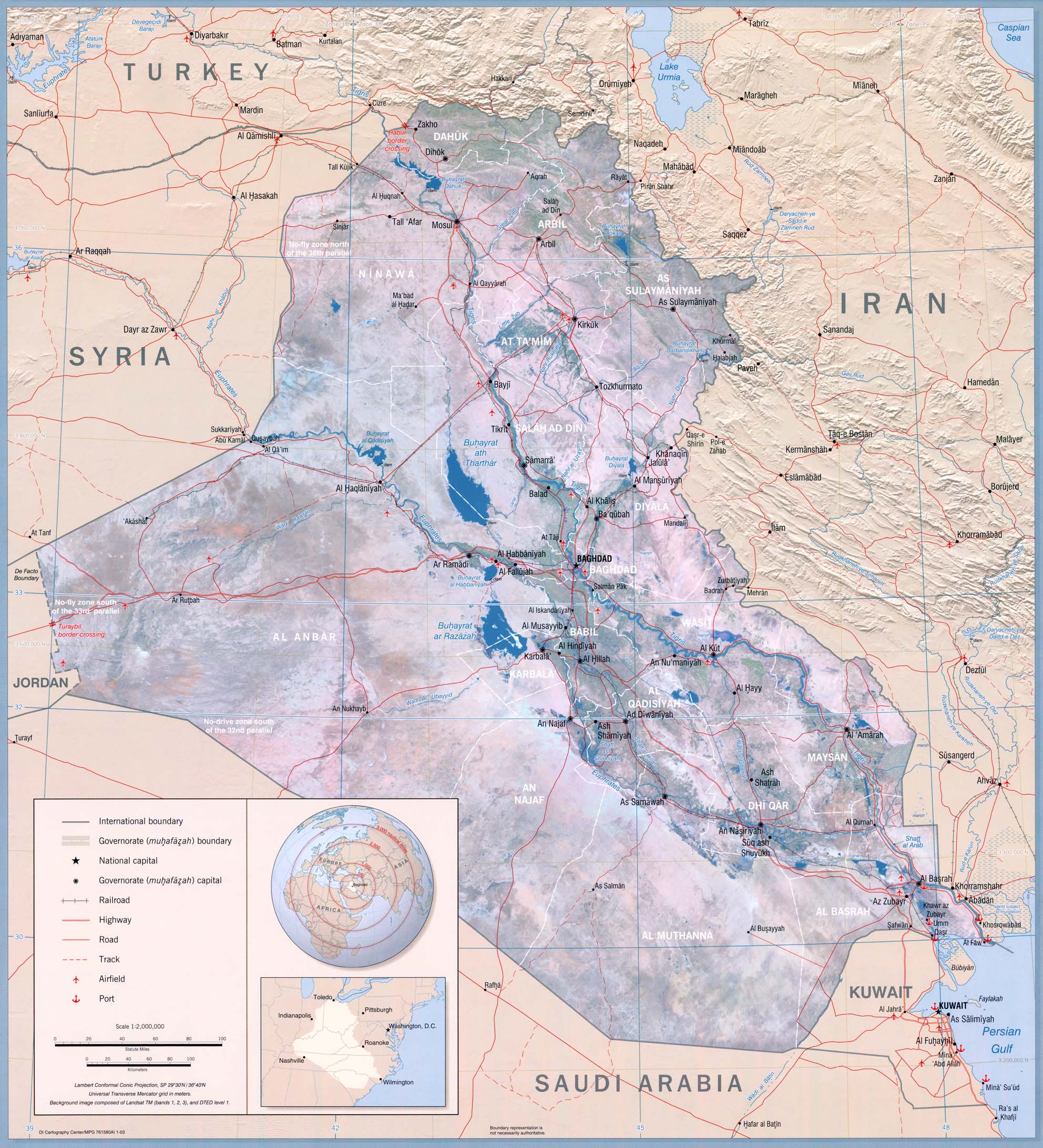
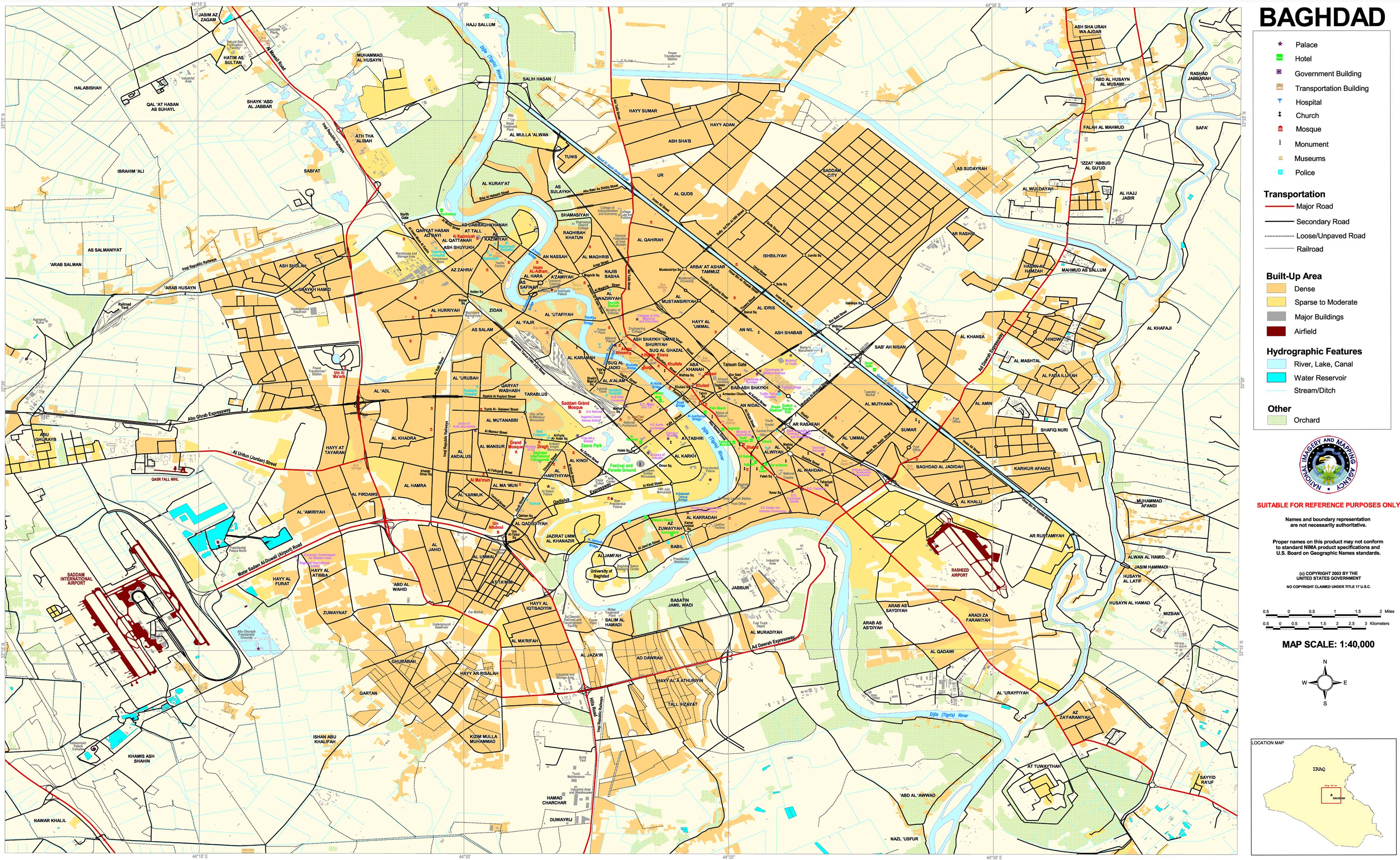
A salvo of rockets killed at least 46 people and wounded 112 in east Baghdad on Thursday, Interior Ministry sources said. The rockets slammed into homes as families gathered in the evening. Sources said the death toll could rise as bodies were being pulled from rubble.
Bring 'em on: A Soldier from the 1st Brigade, 34th Infantry Division was killed by an improvised explosive device while conducting a route security mission at approximately 12:05 p.m., August 30. (CENTCOM)
Bring 'em on: A U.S. soldier was killed in action on Wednesday by a roadside bomb explosion in Anbar Province, west of Baghdad, the U.S. military said in a statement.
A convoy of British diplomats and guards was blasted by a roadside bomb in western Baghdad today but the British embassy said no one was injured. "An incident occurred this morning involving British embassy personnel travelling outside the International Zone," an embassy spokesman said in a statement. "There were no injuries." Iraqi police sources said two people were hurt in the attack in the Mansour district.
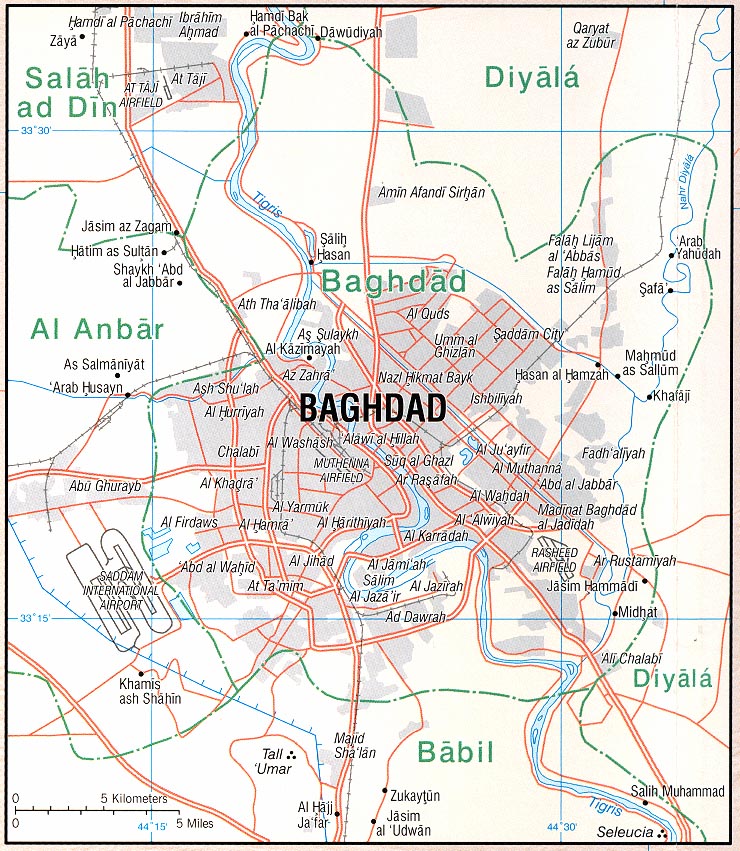
Two British armored civilian vehicles were badly damaged, police said, and at least two occupants had to be helped from the cars. The embassy insisted no one was actually injured.OTHER SECURITY INCIDENTS Baghdad: A series of attacks in eastern Baghdad, including one at a popular market, killed at least 39 people and wounded 115 within a half hour, police said. The attacks included two car bombs — one at a popular market and one on a street about 1.5 miles away. The area also was hit by four mortar rounds, two rockets, a roadside bomb and a bomb in a building, police said. A car bomb targeting an Iraqi police patrol killed four police commandos and wounded 11 people, including five policemen. The bomb in eastern Baghdad'd Mashtal district went off by a petrol station, where a line of cars was waiting for petrol.
[Propaganda 101: here's a report of the same incident making it look like an attack perpetrated by evil terrorists bent on killing innocent civillians -- zig] A suicide car bomb targeting a line of cars waiting at a Baghdad gas station killed two people and wounded 13. The suicide car bomb exploded at a gas station in the Mashtal area in eastern Baghdad, killing a woman and a man and wounding 13 people.Gunmen shot and killed a member of the oil ministry's security service and wounded another as the two were driving in a northeastern Baghdad neighborhood. Eight people were wounded in a bomb blast near a Baghdad restaurant. Eight people were wounded when a roadside bomb struck their minivan in the Mustansiriya District, northern Baghdad. Four people were shot dead in various neighbourhoods of Baghdad. A number of insurgent attacks wounded more than a dozen people in the capital, six of them children who were hurt when rebels slammed a mortar round into the southern Al-Maalif neighbourhood. Five people were wounded, including two policemen, when a car bomb exploded in Harthiya district, in west-central Baghdad. Baqubah: At least nine people were killed in the Diyala province, of which Baquba is the capital. In one of the attacks, gunmen stormed a shop in western Baquba's Yarmuk neighbourhood and shot dead two brothers who owned the shop, police said. Kut: The body of a young woman riddled with bullets was brought to the morgue after being dumped on a main road in Kut, 100 miles southeast of Baghdad, Mahaweel: A bomb at a wedding party wounded at least seven people In Mahaweel, about 35 miles south of Baghdad. Gunmen killed a former intelligence official in Saddam Hussein ‘s regime as he was walking in Mahaweel area, about 35 miles south of Baghdad. Samawa: Four people sleeping on the rooftop of their houses were wounded in separate incidents after being hit by stray bullets from nearby clashes in Samawa, 270 km (168 miles) south of Baghdad. Jbela: One man was killed and eight others wounded when a bomb exploded at a wedding party in the small town of Jbela, 65 km (39 miles) south of Baghdad. Samarra: A civilian judge in Tikrit was found dead in Samarra, 100 km (62 miles) north of Baghdad, medical sources said. They said he had been kidnapped four days ago. Mosul: Two policemen were killed and two others were wounded when clashes erupted between police and gunmen in the eastern outskirts of Mosul, 390 km (240 miles) north of Baghdad. An Iraqi soldier wearing civilian clothing was shot and killed while walking in Mosul. Fallujah: Three people were wounded, including one policeman, when gunmen threw hand grenades at a communication centre in central Falluja, 50 km (32 miles) west of Baghdad, police said. One of the attackers was killed, police said. Ramadi: A former Iraqi Air Force commander under Saddam Hussein was gunned down in the western city of Ramadi. >> NEWS Iraq PM says Iraqi security forces will take over Dhi Qar province in September. It will be the second province to come under the full control of Iraqi troops after the July handover of the southern Muthana province from British troops. Romania has a battalion of about 400 soldiers in Dhi Qar out of a total of 628 in the country. On Wednesday, the Romanian president said his country could withdraw some of its troops from Iraq in the next two months as the Iraqi government takes over military control of Dhi Qar. The U.S. government will not seek the death penalty against a Marine Corps private who is among eight service members charged with murder and other crimes in the shooting of an Iraqi civilian, a military prosecutor said Wednesday. (…) The Marines and corpsman are charged in the shooting of Hashim Ibrahim Awad, 52, in the village of Hamdania. Iraqi witnesses told the military that Marines and a sailor kidnapped Awad on April 26, bound his feet, dragged him from his home and shot him to death in a roadside hole. >> REPORTS A CONVERSATION WITH AN IRAQI POLICEMAN
Click to PlayJust who are the Iraqi Police? How do they think? What are there positions on the war and the occupation? Alive in Baghdad was able to speak to one officer on camera, but he was afraid to reveal his real name or show his face. His is just one opinion, but the complex perspective he demonstrates should give anyone a little insight into the nuances of Iraqi opinion. read in full... "WE'RE HERE TO STAY" The plans are a state secret, so just where the Starbucks and Krispy Kreme stores will be is a mystery. But as the concrete hulks of a huge 21-building complex rise from the ashes of Saddam's Baghdad, Washington is sending a clear message to Iraqis: "We're here to stay." It's being built in the Middle East, but George W's palace, as the locals have dubbed the new US embassy, is designed as a suburb of Washington. An army of more than 3500 diplomatic and support staff will have their own sports centre, beauty parlour and swimming pool. Each of the six residential blocks will contain more than 600 apartments. The prime 25-hectare site was a steal - it was a gift from the Iraqi Government. And if the five-metre-thick perimeter walls don't keep the locals at bay, then the built-in surface-to-air missile station should. Guarded by a dozen gangly cranes, the site in the heart of the Green Zone is floodlit by night and is so removed from Iraqi reality that its entire construction force is foreign. After almost four years, the Americans still can't turn on the lights for the Iraqis, but that won't be a problem for the embassy staffers. The same with the toilets - they will always flush on command. All services for the biggest embassy in the world will operate independently from the rattletrap utilities of the Iraqi capital. Scheduled for completion next June, this is the only US reconstruction project in Iraq that is on track. Costing more than $US600 million ($A787 million), the fortress is bigger than the Vatican. It dwarfs the edifices of Saddam's wildest dreams and irritates the hell out of ordinary Iraqis. read in full... >> COMMENTARY AND ANALYSIS RUMMY'S REVERIE Don Rumsfeld may be a lousy Secretary of Defense, but he's the best buck-passer this country's ever had. Nothing is ever his fault. Not Guantanamo, not Abu Ghraib, not Falluja, not Haditha, not de-Baathification, not the insurgency; nothing. Ever. Of course, ever since Saddam's bronze torso hit the pavement in Fidros Square, the occupation has steadily unraveled and turned into a quagmire. But that's not Rummy's fault either. Like President Bush said, "He's doin' a heck-uva job". Sec-Def Houdini put his excuse-making talents on full-display yesterday in a speech at Fallon Naval Air Station in Nevada. He accused terrorist groups of "manipulating the media" to erode support for the war on terror. "What bothers me the most," he opined, "is the way they are actively manipulating the media in this country. They can lie with impunity...That's the thing that keeps me up at night." Some of us were hoping that Iraq was keeping Rummy "up at night"...or maybe that niggling issue of torture and abuse that keeps popping up in the newspapers. But, noooo; it's the looming specter of Zarqawi at his keyboard e mailing his hypnotic prose to unwitting Americans who are seduced by his vile propaganda. Huh? read in full... IN IRAQ, THE HOSPITAL IS WHERE YOU GO TO DIE From the Washington Post this evening:
In Baghdad these days, not even the hospitals are safe. In growing numbers, sick and wounded Sunnis have been abducted from public hospitals operated by Iraq's Shiite-run Health Ministry and later killed, according to patients, families of victims, doctors and government officials. As a result, more and more Iraqis are avoiding hospitals, making it even harder to preserve life in a city where death is seemingly everywhere. Gunshot victims are now being treated by nurses in makeshift emergency rooms set up in homes. Women giving birth are smuggled out of Baghdad and into clinics in safer provinces. In most cases, family members and hospital workers said, the motive for the abductions appeared to be nothing more than religious affiliation. Because public hospitals here are controlled by Shiites, the killings have raised questions about whether hospital staff have allowed Shiite death squads into their facilities to slaughter Sunni Arabs. . . . Three Health Ministry officials, who spoke on condition of anonymity for fear of being killed for discussing such topics publicly, confirmed that Shiite militias have targeted Sunnis inside hospitals. Adel Muhsin Abdullah, the ministry's inspector general, said his investigations into complaints of hospital abductions have yielded no conclusive evidence. "But I don't deny that it may have happened," he said. According to patients and families of victims, the primary group kidnapping Sunnis from hospitals is the Mahdi Army, a militia controlled by anti-American Shiite cleric Moqtada al-Sadr that has infiltrated the Iraqi security forces and several government ministries. The minister of health, Ali al-Shimari, is a member of Sadr's political movement. In Baghdad today, it is often impossible to tell whether someone is a government official, a militia member or, as is often the case, both.I've spared you the grisly firsthand accounts of abductions and executions inside hospitals, but the Post article has plenty if you click the link (and your stomach is strong enough). link FOR ONCE I BELIEVE GENERAL CASEY Juan Cole has a good roundup on the fighting in Diwaniya - the reports Juan cites confirm what I wrote yesterday in my posting "Another knockout?" [excerpt: "It's difficult to tell at the moment but reading between the lines of the reports from western news agencies and those from Aswataliraq I suspect that what has happened is that this was an attempt at a politically inspired operation similar to 'operation knockout' that encountered very stiff resistance and that SCIRI are now looking for a way out."] that far from being passive during the fighting that the Americans were actively involved including bombing a house. Reports that the police chief was forced to resign have been denied and apparently not only is everything under control but a political solution is well on its way. This doubtless comes as news to the green zone government and their American masters overlords allies who according to this report on Yahoo news have cancelled the agreement:
"Iraqi Defence Minister Abdel Qader Jassim Mohammed canceled a truce between Shiite militia and security forces in the central town of Diwaniyah agreed after fighting left at least 81 people dead on Monday."American General Casey who according to the same report on Yahoo news said "That battle's not finished yet. There were soldiers that were killed there," Now when a senior general in the
This one propaganda set by the US years ago, that the Iraqi government attempting to dry the marshes, the US claim that it was a genocide against the Marshes Arabs.Read it here: The Crimes of Saddam Hussein: 1980-1990 The Marsh Arabs Yet, recent Iraq government came to the same conclusion of the former government. --End Update-- FAO: Iraq, Development and Water - 1997
In order to increase water transport efficiency, minimise losses and waterlogging, and improve water quality, a number of new watercourses were constructed, especially in the southern part of the country. The Saddam river (or Third river) functions as a main out-fall drain collecting drainage waters of more than 1.5 million hectares of agricultural land from north of Baghdad to the Gulf, between the two main rivers (the Euphrates and the Tigris). The length of the watercourse, completed in December 1992, is 565 km, with a total discharge of 210 m_/s. Other watercourses were also constructed to reclaim new lands or to reduce waterlogging.BBC: Iraq marshes' recovery 'in doubt' 30 August 2006
But the future availability of water for restoration is in question because of increasing urban and agricultural demands for water in Iraq.........An estimate made by Iraqis suggests that to restore the marshes could take half of the nation's total water supply. That will be very difficult; human needs have always come first.link WHY ARE WE IN IRAQ? (...) Invading Iraq was a mistake. Why did President Bush invade Iraq? More broadly, why are we involved with Iraq at all? Why aren't Congress and the Executive exiting the morass which is Iraq? Vice-President Cheney (8/29/06) says that withdrawing from Iraq would be "a ruinous blow to the future security of the United States." How absurd to suppose that a country with our might would be ruined by leaving Iraq! We will actually be strengthened. Why are they steering toward war against Iran? Answer why we are in Iraq and we answer these questions too. (...) The drive for expansion of the United States is strong because several elements are acting hand in hand. Our government is responsive or captured by a variety of interest groups and lobbies. The ideology of free markets (even if they do not actually exist) works hand in glove with businesses seeking to expand securely into new markets. Americans are semi-religiously and sometimes religiously trying to convert the world. Americans are a most insecure people who, from the inception of the country to now, persistently expanded the country's reach in order to achieve security (see Albert K. Weinberg's Manifest Destiny). Americans want to be number one and think they are number one. This is their God-substitute. When neoconservatives argue that America is the only superpower and that it should institute benevolent global hegemony, we are hearing a rhetoric that combines many of these long-running historical themes. (...) We are in Iraq because of empire. We have armed forces in Iraq because of error. We have empire because we have a runaway state. In the long run, which sometimes is not that long, empire is seen to be an error. It is an error built upon the error of having a state. We have a state because of hubris, which is an excessive pride in which we boastfully compare ourselves to God or, in earlier days, to other deities. Hubris is associated with hamartia by which Aristotle meant a tragic flaw, an error in judgment, or a character defect that results in a hero's downfall. America and Americans have hubris and hamartia. We need humility. We can't avoid future Iraqs, future losses, and the fall of the American empire until we rein in the American state. We can't rein in the American state until we rein in ourselves. read in full... SO MUCH THE BETTER In the latest interview with President Bush, we again learn he never said Saddam ordered 9/11:
BUSH: [T]he war came to our shores, remember that. We had a foreign policy that basically said, let's hope calm works. And we were attacked. WILLIAMS: But those weren't Iraqis. BUSH : They weren't, no, I agree, they weren't Iraqis, nor did I ever say Iraq ordered that attack, but they're a part of, Iraq is part of the struggle against the terrorists.And recently:
THE PRESIDENT: [N]obody has ever suggested in this administration that Saddam Hussein ordered the attack.Interesting phrasing. Here's a November, 2004 Esquire article by Walter Russell Mead:
But what were the real reasons for going into Iraq? I'd asked a senior administration official...And the connection between containment and Al Qaeda? I asked. Between our Iraq policy and September 11? The official pointed out fatwas from Osama that cited the effects of sanctions on Iraqi children and the presence of U. S. troops as a sacrilege that justified his jihad. In a real sense, September 11 was part of the cost of containing Saddam. No containment, no U. S. troops in Saudi Arabia. No U. S. troops there, then bin Laden might still be redecorating mosques and boring friends with stories of his mujahideen days in the Khyber Pass. As it was, the administration took what looked like the path of least resistance in making its public case for the war: WMD and intelligence links with Al Qaeda. If the public read too much into those links and thought Saddam had a hand in September 11, so much the better.July 1, 2003:
Seven in 10 people in a poll say the Bush administration implied that Iraq and its leader Saddam Hussein were involved in the Sept. 11 attacks against the United States.link REMEMBERING KATRINA, REMEMBERING IRAQ My younger sister was telling me a while ago, after I started this blog, that reading my accounts of life in Baghdad, and reading a Palestinian lady's accounts of life in Gaza, made her lose a certain respect for the people of these nations. Reading about the crazy violence, and the random kidnappings and murder, made her see these people as rather uncivilized people. That was never my intent when I started this blog, and as I continue it today. But I realize that my sister's words do not only reflect her feelings, but those of many people who are bombarded by daily images and stories of bombings, lootings, kidnappings, terror and violence in these hotspots. But I must say that such behavior is not necessarily endemic to these people. It is a result of a catastrophe that has left Iraq, and any other country in its same shoes, in complete chaos, the result of having no government, no governmental authority, no leader, no law in place. That is what happened in New Orleans after Hurricane Katrine hit it exactly one year ago today, on April 29, 2005. I remember watching the news of this natural catastrophe which hit the Gulf Area, in between the few moments of quiet I had while caring for my then newborn daughter. I remember the images of chaos, the dead bodies floating in the streets, the people begging for help on national television, the looting, the guns going off randomly, the National Guard threatening not to come to the city if individuals did not stop using random gunfire to defend their belongings; the horror of having your home destroyed in seconds, of losing your loved ones and not knowing if they were dead or alive, ... At that moment, all I could think of was... Iraq. This is Iraq. This is Palestine. This is every land and people that have been destroyed by a catastrophe. This is America getting a taste of what it is like to be left without law and order. It doesn't only happen in the Middle East, it happened right here, in the heartland of America. When I saw the looters who had to steal food to survive (or not), when I saw people having to take the law into their own hands, defending their homes and businesses from randoms looters, all I could think of was life in Iraq today. This is what a state of chaos and lawlessness does to a people. It leaves them to fend for themselves, some stay true to their goodness, in others, it brings out the worse. read in full... >> BEYOND IRAQ Afghanistan: A Dutch F-16 fighter pilot has died after his plane crashed in southern Afghanistan, officials say. They said that the plane was flying at a "great height" when the accident occurred, which meant that it was unlikely that it was shot down. "We therefore assume it was an accident," the Dutch defence ministry said in a statement. Taliban militants attacked a southern Afghan town today, sparking intense fighting with Afghan troops. The militants used mortars, rocket-propelled grenades and heavy machine guns in the attack on Naw Zad, in volatile Helmand province around 8am (0430BST), said Defence Ministry spokesman Gen. Zahir Azimi. He said that the fighting between the Taliban and Afghan army troops was "intense," but that he had no further details about the scale of the assault or casualties.
"With the support of coalition air forces, Afghan soldiers fought back the enemies in Nawzad district at 11:00 a.m. local time," the ministry said in a statement. Two militants were killed and a number of others injured, it added. It said the operation also caused casualties to the civilians. "There were civilian casualties and property damages, and the details would be released later."NATO commanders are warning Afghans to clear out of an area near Kandahar that has become a Taliban stronghold and a thorn in the side of Canadian troops. Col. Steve Williams, the NATO deputy commander in southern Afghanistan, says his forces will launch a major operation soon to take back Panjwaii district, just west of Kandahar. Canadians and other forces have fought several pitched battles in the area, but have always withdrawn to their bases, ceding the countryside back to the Taliban. Several Canadians have died and many others have been injured in the area. TWO MONTHS TO ELECTION '06: ALL EYES ON...TERRA! That's right, simpleminded Americans. Time for BushCo. to get you back to crapping your pants (in case you'd ever stopped):
NASHVILLE, Aug. 30 - With the midterm elections coming into view, President Bush is launching an extended publicity tour to draw attention back to the threat of terrorism, quickly pivoting to more comfortable political territory for him after the focus in recent days on the anniversary of Hurricane Katrina.B3 forecast: We will see "credible evidence" of an "imminent" terrorist plot -- with the attendant jiggering of the ROY G. BIV Wheel-O-Terror -- sometime late September or early October. link ANWAAR HUSSAIN: OH WHAT TANGLED WEBS WE WEAVE... Most recently, the president of United States said: "This nation is at war with Islamic fascists who will use any means to destroy those of us who love freedom, to hurt our nation." Not to be debated in this column is the fact that the United States itself is now so steadfastly embarked upon a course of such vile fascism that even genuine American fascists are distancing themselves from this Neoconish version of it. Also not to be debated here are further facts that the Islamic fundamentalists who, according to the grapevine, perpetrated 9/11 and similar crimes in Europe, hanker for a fundamentalist theocracy, not fascism and that the new American fascists themselves have their religion and government so thoroughly welded with each other that it is difficult to tell one from the other. No sirs, the agenda of the Islamic cave dwellers of Tora Bora may be any thing but fascist. 'Islamic fascism', this most current war cry of the Neocons, is nothing more than the latest terminological inexactitude on the falling power curve of the Neocons, an ugly last ditch attempt to breathe new life into the fast fading, faltering and dying war steed of the Neocons. Unlike our lying Neocons, Benito Mussolini, the true father of fascism, had a pretty straight forward definition for his creed. He, in his seminal essay 'The Doctrine of Fascism', wrote;
"Fascism should more appropriately be called corporatism because it is a merger of state and corporate power."If the Neocons really were convinced of their cause, if they were a little less deceiving and a little more forthcoming, they would have come up with a more becoming name for their agenda. Allow me to explain how that is. read in full... WHO WOULD WIN THE DEBATE? Who would win a debate on world issues between President Bush and Iranian President Ahmadinejad?
Bush 37% - 40540 votes Ahmadinejad 63% - 68839 votesCNN Poll read in full... QUOTE OF THE DAY: "Terrorism is the war of the poor, and war is the terrorism of the rich." -- Sir Peter Ustinov
Wednesday, August 30, 2006
WAR NEWS FOR WEDNESDAY, AUGUST 30, 2006
"Sometimes, words have consequences you don't intend them to mean. Bring 'em on' is the classic example, when I was really trying to rally the troops and make it clear to them that I fully understood, you know, what a great job they were doing. And those words had an unintended consequence.” George W. Bush, January 13, 2005
Well…I guess that’s ok, then. Because his intentions were good. And when a good man has good intentions, you can’t really blame him for unintended consequences, right? -m
A bomb exploded in the Shorja wholesale market in
Two civilians were killed and 21 wounded, including five policemen, when a nearby car bomb exploded after police responded to a small bomb blast near a petrol station.
Five bodies washed up on the banks of the
Four members of one family were killed when mortar bombs hit their house in south
An Iraqi army officer was killed and two wounded in a roadside bombing between the central city of Kut and
A roadside bomb killed five members of one family including three women and a child and seriously wounded another woman and child as they travelled in their car near the town of
Hilla
A bomb targeting a crowd of men outside an army recruitment office killed 12 people and wounded 38.
Clashes between Iraqi police and insurgents wounded four civilian bystanders in
Numaniya
Gunmen killed three brothers in the Iraqi town of
Qaim
Police in the western Iraqi town of
Samawa
Clashes between Iraqi police and civilians turned away from an army recruitment centre killed one civilian and wounded nine, including five policemen. Iraqi police said hundreds hoping to land jobs turned violent after they were turned away and threw rocks at policemen, who fired at the crowd.
Bring ‘em on: U.S. military losses in Iraq and Afghanistan are expected in coming weeks to surpass the death toll of 2,973 victims killed in the Sept. 11, 2001, terrorist attacks.
The two conflicts, which have lasted longer than most
Next month, the duration of combat operations in
We got the force necessary to deal with the security situation: Hard-pressed Iraqi government forces were forced to strike a truce with Shia militia fighters yesterday, as fierce fighting followed by a pipeline explosion left 155 people dead.
Officials said that 81 people died in Diwaniya in Monday’s clashes between security forces and militiamen and that yesterday, a few hours after a peace deal was reached, a fire at a fuel pipeline outside the town killed 74 more.
Bring ‘em on: In a city with few real refuges from sectarian violence -- not government offices, not military bases, not even mosques -- one place always emerged as a safe haven: hospitals.
So Mounthir Abbas Saud, whose right arm and jaw were ripped off when a car bomb exploded six months ago, must have thought the worst was over when he arrived at Ibn al-Nafis Hospital, a major medical center here.
Instead, it had just begun. A few days into his recovery at the facility, armed Shiite Muslim militiamen dragged the 43-year-old Sunni mason down the hallway floor, snapping intravenous needles and a breathing tube out of his body, and later riddled his body with bullets, family members said.
Authorities say it was not an isolated incident. In
As a result, more and more Iraqis are avoiding hospitals, making it even harder to preserve life in a city where death is seemingly everywhere. Gunshot victims are now being treated by nurses in makeshift emergency rooms set up in homes. Women giving birth are smuggled out of
In most cases, family members and hospital workers said, the motive for the abductions appeared to be nothing more than religious affiliation. Because public hospitals here are controlled by Shiites, the killings have raised questions about whether hospital staff have allowed Shiite death squads into their facilities to slaughter Sunni Arabs.
"We would prefer now to die instead of going to the hospitals," said Abu Nasr, 25, a Sunni cousin of Saud and former security guard from al-Madaan, a
We got the force necessary to deal with the security situation: Iraqi Defence Minister Abdel Qader Jassim Mohammed has said that the security situation in the southern oil city of
"The security situation in
The Iraqi minister said that the solution to the problems in
Bring ‘em on: Pumping their fists in the air, the men and boys inside the colonnaded mosque shout loyalty to cleric Muqtada al-Sadr.
“Hasten the coming of the Mahdi!” thousands chant in the baking sun. “And curse his enemies!”
“Muqtada! Muqtada!” martial voices intone over the loudspeakers as Shiites gather for Friday prayers. “Even the child in the mother’s cradle cries: ” ‘Muqtada! Muqtada!’
Al-Sadr’s followers answer as one when his movement calls, making him
A leaked cable from departing British Ambassador William Patey warned recently:
“If we are to avoid a descent into civil war and anarchy, then preventing the Jaish al-Mahdi from developing into a state within a state, as Hezbollah has done in
Worrisome parallels with Hezbollah are apparent.
We got the force necessary to deal with the security situation: Armed groups of Sunni and Shiite Muslims battled Tuesday for control of several neighborhoods in southwest
Fighting between armed groups of Shiites and Sunnis isn't uncommon in
The
None of the neighborhoods where fighting flared Tuesday has been part of that plan, suggesting that as
And we better damn well hope we got the force necessary to deal with the security situation because these other guys don’t seem to be getting hang of it: About 100 Iraqi Shiite soldiers refused to go to Baghdad to support the security crackdown there, marking the second time a block of Iraqi soldiers have balked at following their unit's assignment, a U.S. general said Monday.
U.S. Brig. Gen. Dana Pittard, commander of the Iraqi Assistance Group, said the problems stem from the Iraqi Army's regional divide, because soldiers are recruited in their home area and expect to train and serve there.
Pittard said about 100 members of a battalion in the 4th Brigade, 10th Iraqi Army Division, who were serving in the southern Maysan province, refused to deploy to
So who are the terrorists here?: The evening light was fading as they came to a point on the river bank where six bloated bodies floated face-down in waist-deep water. They recognised the clothing on one as Muthanna's and they confirmed his identity by two tattoos.
The brothers used a blanket to haul his remains up the embankment, laying him at his mother's feet. His hands were tied behind his back, there were two bullet wounds to the back of his head and he had been beaten.
But there was no time for grieving. Suddenly the sky was lit by a parachute flare and they were under attack. Saad said: "As we loaded the body onto a pick-up, they started firing mortars; they raked our cars with Kalashnikov fire."
As Saad explains his mother's strength "comes from the God", she cuts across him: "I couldn't wait - this was my son. Now I wait for God to avenge his death."
Not quite. Wabila Felehi Hussein is already exacting her own temporal revenge with a cold-bloodedness that, even by Iraqi standards, is unnerving. Out of earshot of the family, the friend in whose house we meet admonishes the Herald: "You didn't ask who told them the body was in the river."
He said that after fleeing Hoorijab, the mother set her sons working their mobile phones, calling the few who they could still trust in Hoorijab to get the name of the alasa who might have given Muthanna's name to the insurgency.
"They got the name of the son of a local tribal sheik who lived near their house," he says.
"When she sent the boys, she insisted he must be brought back to
"He was interrogated and gave up nine more names. Eight of them were abducted and brought back for interrogation … and then they killed them with guns, knives and by bashing some of them. Adel killed six; Saad killed three.
"One of them escaped to
The family friend is more impressed than shocked: "In the history of
But as she slip-slapped her hands in disgust, the avenging grandmother was contemptuous of what
Tears streaming down her face, she hit bottom: "We were happy when the Americans came. They lifted the Saddam darkness, but now they have led us into a new, blacker darkness."
Hey, so the security situation isn’t everything Bush said it would be. What the hell. His intentions were good! And when a good man has good intentions, you can’t really blame him for unintended consequences, right? -m
But We’re There To Help!
Reconstruction: Wars, sanctions and looting have left
Reconstruction efforts have been hampered by insurgent attacks, with many projects stalled and funds diverted to meet rising security costs.
Electricity generation at best meets half of estimated demand and fell below pre-war levels in early 2006. A 2004 survey found just over half of households had a stable supply of safe drinking water.
In the first two years after the war, only a fifth of the money pledged was disbursed, but three years on nearly half the available funds have been spent.
Even with all debt restructuring and relief taken into account,
Security: The
No-one knows exactly how many Iraqi civilians have died in acts of war since the invasion. By March 2006, most unofficial estimates ranged from 17,000 to 38,000, although one study in October 2004 put the figure close to 100,000. In the same period, more than 1,800
About 150,000 coalition troops, together with 230,000 Iraqi security forces, are struggling against insurgent groups which include former Baathists, nationalists, Sunni Muslims and foreign Islamists.
The violence has become increasingly sectarian. Insurgent attacks on Shia targets and killings which some blame on Shia death squads have formed a cycle of revenge and reprisal prompting fears of civil war.
Education: War and economic decline have taken their toll on
An estimated 25% of primary-age children do not attend school, according to the World Bank, although US figures show primary school enrolment up 20% since 2000.
In 2003, half of
USAid said it had rehabilitated nearly 3,000 schools by late 2005, the number it had aimed to upgrade in six months.
Hey, so, a few jillion DoD and State Department press releases aside, the reconstruction situation isn’t everything Bush said it would be. What the hell. His intentions were good! And when a good man has good intentions, you can’t really blame him for unintended consequences, right? -m
Stories About Oil
Well, here’s some good news:
Yes, it’s good that pesky fuel crisis is over: Seventy-five people were killed in
This isn’t going to help: A 48-hour strike led by oil and gas workers in
A bit of history: In October 2002, the State Department established a working group on oil and energy, as part of its "Future of Iraq" project. The project brought together influential exiled Iraqis with US government officials and international consultants. Later, some members of the group became part of the Iraqi government. The result of the project's work was a draft framework for
In January 2003, the wheels started to turn as the Coalition Provisional Authority appointed the former head of Shell USA as senior oil adviser, in daily contact with the Iraqi Ministry of Oil. He was joined by an executive from ExxonMobil, and after six months, the post was rotated to former managers of ConocoPhillips and BP.
In December 2003, the framework was set out in more detail when USAID commissioned a report by the privatisation specialists BearingPoint entitled "Options for developing a sustainable, long-term Iraqi oil industry." The report reinforced the "Future of Iraq's" report, recommending long-term contracts with foreign companies. Pointing to the "success" of this model, BearingPoint used
After the handover to the interim government in June 2004, senior oil advisers--now based within the Iraq Reconstruction Management Office (IRMO) in the U.S. Embassy--continued work closely with the Oil Ministry in shaping policy. Post holders included executives from ChevronTexaco and Unocal.
In 2006, these efforts intensified. In February, the IRMO advisers accompanied eight senior officials from the Oil Ministry on a trip to the
The same month, at the request of the State Department, USAID provided an adviser to the Oil Ministry, again from BearingPoint, to work directly on a new oil law, providing "legal and regulatory advice in drafting the framework of petroleum and other energy-related legislation, including foreign investment."
The
This would be the first time in more than thirty years that foreign companies would receive a major stake in
But with the ink not yet on the paper, the
Mr. Bodman did not stop at reviewing the draft law himself in
Given the pressures involved, perhaps the Minister felt he did not have much choice. His promise to pass the law through parliament by the end of 2006 was set in
And still, the draft law has not been seen by the Iraqi parliament. Meanwhile, an official from the Oil Ministry has stated that Iraqi civil society and the general public will not be consulted at all.
It’s good to see from this last article that at least something is going the way it was planned. Not all consequences are unintended, are they. -m
US Military News
Support the troops!: Brain damaged soldier? Who cares...not the government, that's for sure.
More than any other war in American history, the war in
But maybe Bush can swing through the trauma ward and give some of them a hug – not the ones that are messing themselves, come on, but one or two of the cleaner, more photogenic ones – because he’s a caring guy. And well intentioned, too. -m
Women’s issues: More than 1,500 women have returned from
Maybe he could hug some of them, too – well, maybe not the rape victims, that could get awkward, but some photogenic little thing who still has all her limbs. To show he cares. -m
Meanwhile, as the Individual Ready Reservist Marines pack their bags and say goodbye to the wife and kids…: The Pentagon has done little to recover about $900,000 mistakenly paid to 75 Army reservists who have not reported for duty since late 2001, Congressional investigators said in a report on Monday.
Fewer than two dozen of the deserters have surrendered or been arrested, the report said.
The number of improper payments and the money involved was probably significantly understated, the investigators said. The report said the Army and the Army National Guard and Reserve had acknowledged being unaware of the extent of the problem because there is no system to track such records.
Some comments from noted leftist moonbat US Army General Barry McCaffrey (Ret.): We’ve got 135,000 troops, a lot of power on the ground. Having said that, there’s 27 million people. Dr. Nasr, I think, accurately articulated the political problem we’re facing. It’s not going to be solved—the battle of
…
The Army is $23 billion short, our equipment’s coming apart, we’re drafting 42-year-old grandmothers to be privates in the Army. I shouldn’t have said draft, asking for volunteers. So I don’t think the combat power is there in the Army and the Marine Corps to solve this problem militarily.
…
These Iraqi security battalions have 20, 30 light trucks, light automatic weapons. There’s no plan to build a force which would be capable of, of replacing us. So I think our strategy is flawed. Lieutenant General Marty Dempsey and Joe Peterson, the people on the ground, are doing a great job recruiting, training, fielding, but—and so far the Iraqi security forces have not come apart. We haven’t seen them go to the streets and battle with each other. But I think this is, this is an inadequate strategy right now to prepare the Iraqis to defend themselves.
(Via Anonymous Liberal)
But yes, it’s true, we do prosecute some war criminals: Two Camp Pendleton Marines are set to appear today at a military hearing on murder and other charges in a case that has drawn international attention and criticism from some prominent U.S. lawmakers.
Pfc. John Jodka III, a former UCR student, and Cpl. Marshall Magincalda will hear for the first time in public a Marine Corps prosecutor outline the allegations against them.
Today's hearing is the first of what promises to be several in the coming weeks for the group that some Internet blogs and talk radio programs are calling "The Camp Pendleton 8."
Jodka, 20, and Magincalda, 23, are among seven Marines and a Navy corpsman accused in the April 26 shooting death of an Iraqi civilian in Hamdaniya, north of
Prosecutors contend the men broke into Hashim Ibrahim Awad's home in the insurgent-riddled town, forced him to the ground, bound his hands and feet, took him from his home, killed him and tossed a shovel and AK-47 nearby to make it appear the dead man was planting a roadside bomb.
Other soldiers get commendations: The platoon commander for the squad of Marines who killed as many as two dozen Iraqi civilians during an attack in Haditha last year recommended later that the sergeant who led the attack receive a medal for his heroism that day, according to military documents.
Lt. William Kallop wrote in a praise-filled memo that the incident on Nov. 19, 2005, was part of a complex insurgent ambush that included a powerful roadside bomb followed by a high volume of automatic-weapons fire from several houses in the neighborhood. He lauded Sgt. Frank Wuterich for his leadership in the "counterattack" on three houses while the unit received sporadic enemy fire.
The proposed citation indicates that Kallop -- the only Marine officer at the scene as the incident unfolded -- believed the unit was under a coordinated insurgent attack when Marines stormed civilian homes and opened fire, killing women and children. Whether Marines felt threatened and believed the homes to be hostile is a central element of their defense against potential criminal charges.
The documents offer one of the first public accounts of the incident from Kallop, 25, a
Representatives for Kallop, who was promoted to first lieutenant in May, could not be reached for comment Tuesday. He is one of numerous Marines who are the subject of a Naval Criminal Investigative Service investigation into civilian deaths in the Haditha attack, which has alternately been characterized as a vengeful massacre and as the unfortunate collateral damage of war. None has been charged so far.
It’s Sharing Time
Abu goes to
Flying into the capital's heavily guarded Green Zone, Gonzales discussed detainee issues and interrogation tactics with top Iraqi security officials.
Afterward, Gonzales told reporters he had discussed the use of "extraordinary measures" in the handling of detainees, but he added that the Iraqis will have to decide for themselves what will be permissible.
"It's difficult to decide what is appropriate and what is allowed under law," said Gonzales.
In a series of memos, Gonzales helped draft the
Last year, he also acknowledged taking part in a meeting at which participants discussed the legality of interrogation techniques including the threat of live burial and simulating the sensation of drowning.
He’s a rule of law kinda guy: Attorney General Alberto Gonzales said Tuesday that
Gonzales said after meeting with Deputy Prime Minister Barham Saleh that they had discussed the use of "extraordinary measures," referring to policies toward prisoners and detainees. He added that the
"It is difficult to decide what is appropriate now and what is allowed under the law. This decision will be made by the Iraqi government," Gonzales said. He did not offer specifics or elaborate.
Gonzales is an architect of
Well, geez, guys. If we do it, by definition it’s not torture!: Gonzales played a key role in drafting detention policies that many critics say led to the torture of terrorism suspects and other detainees. He wrote a 2002 Justice Department memo that narrowed the definition of torture and argued that President Bush could override anti-torture laws in some cases.
When asked to distinguish between the kinds of torture he authorized and the kinds being carried out in
``It is against the law,'' he said. ``We have a domestic law prohibiting torture. There are international prohibitions against torture. We are a party to the convention against torture. The president has been very, very clear: This government does not engage in torture.''
Yes, and even if Bush’s government did engage in torture it would be ok because their intentions are good. Right? -m
Pot, Kettle. Kettle, Pot.
Oooh, scary: Defense Secretary Donald H. Rumsfeld on Tuesday compared critics of the Bush administration to those who sought to appease the Nazis before World War II, warning that the nation is confronting "a new type of fascism." Speaking at the American Legion convention here, Rumsfeld delivered his most explicit and extended attacks yet on administration opponents — leading Democrats to accuse him of "campaigning on fear."
By likening today's
Gee, Don, since you brought it up, let’s have a little chat about fascism: "The American fascists are most easily recognized by their deliberate perversion of truth and fact," Wallace wrote. "Their newspapers and propaganda carefully cultivate every fissure of disunity, every crack in the common front against fascism. They use every opportunity to impugn democracy."
In his strongest indictment of the tide of fascism the Vice President of the
"They claim to be super-patriots, but they would destroy every liberty guaranteed by the Constitution. They demand free enterprise, but are the spokesmen for monopoly and vested interest. Their final objective toward which all their deceit is directed is to capture political power so that, using the power of the state and the power of the market simultaneously, they may keep the common man in eternal subjection."
Finally, Wallace said, "The myth of fascist efficiency has deluded many people. ... Democracy, to crush fascism internally, must...develop the ability to keep people fully employed and at the same time balance the budget. It must put human beings first and dollars second. It must appeal to reason and decency and not to violence and deceit. We must not tolerate oppressive government or industrial oligarchy in the form of monopolies and cartels."
This liberal vision of an egalitarian America in which very large businesses and media monopolies are broken up under the 1890 Sherman Anti-Trust Act (which Reagan stopped enforcing, leading to the mergers & acquisitions frenzy that continues to this day) was the driving vision of the New Deal (and of "Trust Buster" Teddy Roosevelt a generation earlier).
As Wallace's President, Franklin D. Roosevelt, said when he accepted his party's renomination in 1936 in
"...Out of this modern civilization, economic royalists [have] carved new dynasties.... It was natural and perhaps human that the privileged princes of these new economic dynasties, thirsting for power, reached out for control over government itself. They created a new despotism and wrapped it in the robes of legal sanction.... And as a result the average man once more confronts the problem that faced the Minute Man...."
Speaking indirectly of the fascists that Wallace would directly name almost a decade later,
"These economic royalists complain that we seek to overthrow the institutions of
But, he thundered in that speech:
"Our allegiance to American institutions requires the overthrow of this kind of power!"
In 2006, we again stand at the same crossroad Roosevelt and Wallace confronted during the Great Depression and World War II. Fascism is again rising in
"In vain they seek to hide behind the flag and the Constitution. In their blindness they forget what the flag and the Constitution stand for."
President Roosevelt and Vice President Wallace's warnings have come full circle. Thus it's now critical that we reclaim the word "fascist" to describe current-day Republican policies, support progressive websites that spread the good word, and join together this November at the ballot box to stop fascist election fraud and this most recent incarnation of Republican-fascism from seizing complete and irretrievable control of our nation.
But don’t worry – they’ll never act like totalitarians. Right? Because Bush is a good man!: A bill that expands President Bush's ability to wiretap American phones and conduct other forms of domestic surveillance will likely appear before the Senate Judiciary Committee next Thursday, RAW STORY has learned.
The bill, which was written by judiciary chairman Senator Arlen Specter (R-PA), and which has been widely and publicly excoriated by Democratic members of the committee, contains provisions—such as the institution of program-wide warrants, and warrants that do not expire for a year—that would weaken the strict limits that currently govern the FISA courts.
The Foreign Intelligence Surveillance Act (FISA) was written nearly 20 years ago and offers guidelines about the legal use of wiretaps on phones inside the
The judiciary committee originally sought to bring the NSA wiretapping program into compliance with FISA, but in practice, critics claim, Specter’s FISA amendments actually give the president freedom to expand his wiretapping activities.
A statement released by the office of Senator Russ Feingold (D-WI) states that Specter’s bill “gives him even more power than he has asserted under his illegal NSA wiretapping program.”
Commentary
Gregory Djerejian: Democracy, in my view, cannot be achieved by grotesquely undermanning a nation-building effort after militarily unseating a dictator in a nation riven by sectarian and ethnic tension (see also
“The answer is that they’re [the Saudis] winning. (We, of course, are not.) So what is it that they are doing right? They have essentially discredited the extremist ideology in their own mosques, by driving the radical imams from the pulpits. They have co-opted or seduced or induced to defect a large number of people who were terrorists or were heading in that direction, and who are now going straight. They’re killing anybody who’s left.”
What the Saudis are doing is precisely how the British succeeded against the IRA. By contrast, we are not dealing with the issue of ideology. Worse, our actions are actually provoking and aiding recruitment. We’re killing a lot of people, but a great deal of those we are killing are not at all associated with extremists, they just happen to be in the way.
No, we are not convincingly dealing with the ideological component of this struggle. By refusing to shut places like Guantanamo, or to fire Rumsfeld and raze Abu Ghraib immediately after that horrific scandal, or to be an honest broker in the Arab-Israeli dispute, spearheading and leading forward a peace process no matter how difficult, or to more assiduously work with the Indians to move them towards a resolution of Kashmir with Pakistan, or to better understand that continued chaos in Iraq leads many Arabs to disdain America's role in the region, among so much more, none of us, whether naive post-Wilsonians pining for an end to tyranny in our time, or soft or hard or skeptical or luke-warm or whatever realists, or progressives, or isolationists--none of us are going to achieve our policy goals--which is to say effectively defending America's national interest against the scourge of international terrorism.
E. J. Dionne: The cracking of Republican solidarity in support of Bush on
With a growing number of Republicans now echoing Democratic criticisms of the war, Republican strategists will have a harder time making the election a referendum on whether the United States should "cut and run" from Iraq, the administration's typical characterization of the Democrats' view.
And even the war's strongest supporters are offering increasingly critical assessments of past decisions. Last Tuesday Sen. John McCain (R-Ariz.) recited a litany of past administration statements -- "stuff happens, mission accomplished, last throes, a few dead-enders" -- as indications that "we had not told the American people how tough and difficult this task would be." On Friday McCain reiterated his loyalty to the
The Republicans' restiveness suggests that Bush may not be able to stick with his current
Rob Kall: When you talk about traitors, the word treason has to come up. Here's Webster Dictionary's take on it:
“In law, treason is the crime of disloyalty to one's nation. A person who reneges on an oath of loyalty or a pledge of allegiance, and in some way willfully cooperates with an enemy, is considered to be a traitor.
Wikipedia describes , another key word, in exploring this realm, as:
“Betrayal, as a form of deception or dismissal of prior presumptions, is the breaking or violation of a presumptive social contract (trust, or confidence) that produces moral and psychological conflict within a relationship amongs individuals, between organizations or between individuals and organizations. Often betrayal is the act of supporting a rival group, or, it is a complete break from previously decided upon or presumed norms by one party from the others.”
From these definitions, it is not a great leap to suggest that the treasons and betrayals which traitors engage in have evolved, along with the computer, sattellites, the media, the internet to something beyond simple betrayal of one country for another. There are now all kinds of treacherous treasons. The victims are no longer only nations. The betrayers are no longer just spies. They are CEOs, ministers, legislators, talk show hosts, authors, to name a few. They work for organizations, corporations, media that are bought and paid for by traitors and by the enemies I speak of. They profess patriotism while supporting the people and entities hard at working destroying the
Matthew Yglesias: For his latest trick, in a speech to the American Legion, Don Rumsfeld gives the full wingnut monte.
This, I think we can assume, is the fall campaign. The idea is to psyche the Democrats out. To make them think they can't win an argument about foreign policy. To make them act like they can't win an argument about foreign policy. And to thereby demonstrate to the American people that even the Democrats themselves lack confidence in their own ability to handle these issues.
It's essential that the debate be joined, and joined with confidence. Rumsfeld is a buffoon. A punchline. A well-known liar. He and his bosses -- Bush and Cheney -- are running around the country trying to cite the failures of their own policies as a reason to entrust them with additional authority in order to continue and intensify those same failings. We're witnessing the bitter, bitter fruits of the Iraq War. Other nations learned that they must seek nuclear weapons as soon as possible to safeguard themselves from a newly trigger happy
That's how we got here. By listening to Bush. By listening to Cheney. By listening to Rumsfeld. The idea that we should keep on listening to them is absurd.
Casualty Reports
Local story:
Local story:
Local story:
Pfc. William E. Thorne, 26, Hospers, Iowa; killed Thursday when his vehicle was struck by a bomb south of Baghdad; assigned to the Army's 1st Squadron, 10th Cavalry Regiment, 2nd Brigade, 4th Infantry Division; Fort Hood, Texas.
Staff Sgt. Dwayne E. Williams, 28, Baltimore; killed Thursday in combat in Anbar province; assigned to 9th Engineer Support Battalion, 3rd Marine Logistics Group, III Marine Expeditionary Force; Okinawa, Japan.
Spc. Thomas J. Barbieri, 24, Gaithersburg, killed Aug. 23 near Baghdad by small-arms fire; assigned to the Army's 1st Battalion, 325th Airborne Infantry Regiment, 2nd Brigade, 82nd Airborne Division; Fort Bragg, N.C.
Lance Cpl. James D. Hirlston, 21, Murfreesboro, Tenn.; killed Aug. 23 in combat in Anbar province; assigned to 2nd Battalion, 8th Marine Regiment, 2nd Marine Division, II Marine Expeditionary Force; Camp Lejeune, N.C.
Navy Chief Petty Officer Paul J. Darga, 34, Lansing, Mich.; killed Aug. 22 by an explosive in Anbar province; assigned to Explosive Ordnance Disposal Mobile Unit Two; serving with the 1st Marine Logistics Group.
Air Force Master Sgt. Brad A. Clemmons, 37, Chillicothe, Ohio; killed Aug. 21 when an explosive struck his vehicle in Taji; assigned to the 354th Civil Engineer Squadron; Eielson Air Force Base, Alaska.
Sgt. Gabriel G. DeRoo, 25, Paw Paw, Mich.; killed Aug. 20 by small-arms fire in Mosul; assigned to the Army's 2nd Battalion, 3rd Infantry Regiment, 3rd Brigade, 2nd Infantry Division; Fort Lewis, Wash.
Cpl. Adam A. Galvez, 21, Salt Lake City, and Lance Cpl. Randy L. Newman, 21, Bend, Ore.; killed Aug. 20 in combat in Anbar province; assigned to 3rd Light Armored Reconnaissance Battalion, 1st Marine Division, I Marine Expeditionary Force; Twentynine Palms, Calif.
Navy Hospitalman Chadwick T. Kenyon, 20, Tucson, Ariz.; killed Aug. 20 when his vehicle was hit by an explosive in Anbar province; assigned to the 3rd Light Armored Reconnaissance Battalion, 1st Marine Division, I Marine Expeditionary Force; Twentynine Palms, Calif.
Sgt. Marquees A. Quick, 28, Hoover, Ala.; died Aug 19 in Ramadi; assigned to the 1st Cavalry Regiment, 2nd Brigade Combat Team, 1st Armored Division; Friedberg, Germany.
Sgt. 1st Class Ruben J. Villa Jr., 36, El Paso, Texas; died Aug. 18 in Dubai, United Arab Emirates, of a noncombat-related cause; assigned to the Area Support Group (CFLCC); Camp Arifjan, Kuwait.
Local story:
Tuesday, August 29, 2006
DAILY WAR NEWS FOR TUESDAY, August 29, 2006
Photo: Smoke rises shortly after a bomb exploded inside a minibus in Baghdad, August 27, 2006. (Namir Noor-Eldeen/Reuters)
Bring ‘em on: One Soldier assigned to Regimental Combat Team 7 died from wounds sustained due to enemy action while operating in Al Anbar Province August 27. (MNF – Iraq)
Bring ‘em on: One Marine assigned to Regimental Combat Team 5 died August 28 from wounds sustained due to enemy action while operating in Al Anbar Province August 27. (MNF – Iraq)
Bring ‘em on: The U.S. Army says one of its contractors were killed in Iraq yesterday while working with Huntsville's Army Engineering and Support Center. The Pentagon says 39-year-old Carey Robinson from Orlando, Florida, died when the vehicle he was riding in hit a roadside bomb. Robinson worked for Tampa, Florida-based Cochise Consultancy.
A Nebraska National Guard Soldier died on Aug. 28, from injuries he sustained when his vehicle rolled over into a canal near Camp Anaconda near the city of Balad, Iraq, on Aug. 21. (CENTCOM)
One Soldier assigned to 1st Brigade 1st Armored Division died from non-hostile causes August 28. (MNF – Iraq)
A Nebraska soldier injured in a Humvee accident in Iraq last week died Sunday, according to the Nebraska Army National Guard.
OTHER SECURITY INCIDENTS
Baghdad:
Iraqi police found the bodies of 24 people who had apparently been tortured and shot before being dumped in two separate locations in Baghdad. The bodies of 11 people, who had been tied up and shot, were found near a school in the Shia-dominated Maalif neighborhood in the south of the city, police spokesman Mutaz Salahiddin said. The bodies of another 13 people, believed to have been aged between 25 and 35, were found dumped behind a Shia mosque in the Turath neighborhood in the west of the city.
Clashes between a Sunni tribe and Shi'ite militias, wounded 14 people in southern Baghdad, the army and an Interior Ministry source said.
Four mortar rounds landed in two districts in northern Baghdad wounding five people, including two Iraqi soldiers.
Baqubah:
In Baqubah three mortars, two rocket-propelled grenades and a bomb exploded at an al-Sadr office almost simultaneously, killing two guards and destroying the building, the Diyala Province police in the city said.
Iraq police forces from Baquba said that they had discovered six unidentified corpses around the city, located approximately 60 kilometers east of Baghdad. Security sources from the city said that four corpses were found in the village of al-Mansouriya, one in the al-Hay al- Sinaei/Industrial District of Baquba, and one other corpse in the suburb of Behrez.
Four people were found shot dead, handcuffed and blindfolded in a village near Baquba.
Fifteen people were gunned down in several attacks in different areas of Baquba.
Diwaniya:
At least 29 people were killed when a blast ripped through scavengers siphoning petrol from pools around a breach in a disused pipeline in central Iraq. A Reuters reporter at the rural site near Diwaniya, 180 kilometres south of Baghdad, saw 15 charred bodies, including that of a boy. The explosion severely wounded 26 people.A police source said more than 50 were killed, although that figure could not be confirmed. Witnesses said the blast occurred at 11:00pm (1900 GMT), while a group of impoverished people were scooping fuel from two large pools.
At least 74 people were killed and 94 injured when an old fuel pipeline caught fire near the southern Iraqi city of Diwaniyah on Tuesday, a senior health official told AFP. "The latest toll for the tragedy is 74 people killed and 94 injured," said Hamid Taathi, head of Diwaniyah's health department.Calm returned to Diwaniya after Shiite militiamen loyal to an anti-U.S. cleric reached an agreement with Iraqi government forces to end a 12-hour street battle that killed 40 people.
(update from 40 dead) Fighting between Iraqi government forces and Shiite militiamen killed 73 people in Diwaniyah before calm was restored, the prime minister's office said Tuesday. The death toll was significantly higher than the 40 people initially reported to have been killed Monday in Diwaniyah before a deal between Shiite militiamen loyal to a powerful cleric and the government ended a fierce 12-hour street battle. "The Iraqi national police and army confronted the gunmen and managed to kill 50 gunmen, but these regretful acts lead to the martyrdom of 23 Iraqi soldiers and wounding of 30 others," said an announcement.Bani Saad: Police said more than 30 Shiite families fled the village of Khan Bani Saad, southwest of the town, after their homes came under mortar attack from suspected Sunni fighters. Balad: Police found the body of a civilian with gunshot wounds to the head and chest in the town of Balad, 80 km (55 miles) north of Baghdad, police said. Baiji: Gunmen killed a bakery worker and wounded another in Baiji, 180 km (112 miles) north of Baghdad. Hilla: The 12 bodies found in Hilleh's suburbs bore evidence of torture along with fatal bullet wounds - some of the bodies had their hands bound and some were blindfolded. Iskandariya: Three bodies were discovered in the town of al-Iskenderiya. Al Rashid: Four bodies were discovered in the town of al-Rashid. Latifiya: One body was discovered in the town of al-Latifiya. An Iraqi soldier was killed and four civilians were wounded when a roadside bomb went off near his patrol in the main road between Mahmudiya and Latifiya, 40 km (25 miles) south of Baghdad. Kirkuk: One policeman was killed when his patrol car hit a roadside bomb in Kirkuk. Three policemen and two bystanders were wounded. A policeman was killed and nine people were wounded when a roadside bomb went off near their patrol in Kirkuk, 250 km (155 miles) north of Baghdad. Mosul: Gunmen killed a man in Mosul, a hospital source said. Gunmen killed a former Iraqi army officer on Monday in Mosul, 390 km (240 miles) north of Baghdad. Ramadi: Locals found dead bodies of two Iraqi policemen in Al-Jumhoriyah neighborhood of Ramadi. The two policemen were abducted on Sunday. >> NEWS About 100 Iraqi Shiite soldiers refused to go to Baghdad to support the security crackdown there, marking the second time a block of Iraqi soldiers have balked at following their unit's assignment, a U.S. general said Monday. U.S. Brig. Gen. Dana Pittard, commander of the Iraqi Assistance Group, said the problems stem from the Iraqi Army's regional divide, because soldiers are recruited in their home area and expect to train and serve there. New allegations of indiscriminate killings by U.S. troops surfaced Monday: Relatives of seven civilians shot dead during a gunbattle in a Baghdad neighborhood Sunday said U.S. soldiers had stepped out of their vehicles and randomly fired at their car. "The soldiers decided to kill everyone on the streets, and my mother was one of them," Mohammed Sabah al-Dulaimi, 19, an engineering student, told The Washington Post in a telephone interview. "They were angry. There's no other reason for killing. They took revenge." Al-Dulaimi's mother, Suad Jodah Yaseen, was returning from work in a company car, which stopped some distance away from the scene where a roadside bomb had struck a U.S. military vehicle, according to her brother, Hadi Jodah Yaseen, 50. "But random shooting by American soldiers hit her in the head and the chest, and one bullet pierced her chest and came out of the back," Yaseen said. Lt. Col Barry Johnson, a U.S. military spokesman, confirmed that seven civilians were killed Sunday in Ghazaliyah, a volatile western Baghdad neighborhood where U.S. forces have bolstered their efforts to tame sectarian violence. But he said the civilians were caught in the crossfire between U.S. troops and insurgents. "These people were unfortunately in the wrong place at the wrong time," Johnson said. He added that there would be a review to determine whether a further investigation into the soldiers' actions is warranted. >> COMMENTARY AND ANALYSIS ANOTHER MISERABLE MILESTONE FOR BUSH'S WAR A miserable milestone was passed the other day. America's (and Britain's) disastrous war in Iraq has now lasted longer than the US involvement in the Second World War. Yes, this conflict has outlasted a war that ended with total victory over Nazi Germany. Hitler declared war on the US on 11 December 1941. Exactly 1,244 days later, on 7 May 1945, Germany surrendered. The US invaded Iraq on 19 March 2003, and this weekend it is 1,267 days later, with no end in sight. Sticklers among you will have noted that the interval between the attack on Pearl Harbor and the Japanese surrender on 2 September, 1945 was 1,364 days. But even that record will tumble at the start of December. And if you do measure Iraq against the longer American war with Japan, the contrast is even starker. Victory in the Pacific was even more conclusive than in Europe. It produced no post-war entanglement with the Soviets and no Berlin airlift. The Iraq war unfolded the other way round: Baghdad fell barely three weeks after the invasion. Since then, however, it's been downhill all the way. read in full... A "BIG-TENT APPROACH" TO INSURGENCY The Associated Press notes this evening, in what has become nearly a routine opening paragraph:
A wave of bomb attacks and shootings swept Iraq Sunday, killing dozens of people despite a massive security operation in the capital and appeals from Prime Minister Nouri al-Maliki for an end to sectarian fighting.This morning, the Los Angeles Times offered a little bit of detail on the most recent evolution of the chronic violence:
The insurgency has increased its use of roadside bombs against U.S. and Iraqi forces since Zarqawi's death in June, and in some ways is stronger than when he was alive. . . . The movement lost a wily strategist, but his successor, whom U.S. officials identify as Abu Ayyub Masri, an Egyptian, appears more flexible in recruitment. And the insurgency's roadside bombings and ambushes have become more dogged, if less flashy. "Zarqawi was a hard-liner in his recruitment practices," said a Pentagon consultant who requested anonymity. "This [new] guy is using a big-tent approach. People who were previously excluded from Al Qaeda in Iraq because they lack exceeding levels of fanaticism are now allowed in."Great. It's almost like they were going easy on us before... read in ful... DISCREDITING THE OPERATIONS THAT ARE ONGOING Gen. William Caldwell, Military Moron, announces that operations to reduce violence in Baghdad have been going great, except for all the violence: "It was always expected that there would be this extremist element that would get out and try to discredit the operations that are ongoing by striking at areas where civilians are readily available, where they can inflict some casualties." read in full... SMELLS LIKE DEBACLE I've been in a series of polite arguments with a number of liberals who think we're winning Over There but are losing the home front battle. They think we're winning Over There based on the dubious "fact" that we're winning every tactical engagement. I don't think that's true, by the way. I count IED attacks as tactical engagements. We're getting destroyed in that particular battle. Keep in mind that you can win all the major engagements and still get the shit kicked out of you. We're "winning" and yet the insurgency is damaging oil production and supply to such an extent that we need to import oil into one of the most oil-rich countries in the world just to keep our war machine running. We're winning every major tactical engagement, yet the basic service infrastructure is crumbling and the country is degenerating into internecine deathsquad warfare. We're "winning" and yet we're unable to prevent gunman from REPEATEDLY ROUNDING UP AND MURDERING 60 PEOPLE in broad daylight within rifle fire of the green zone. So guys, I guess you're perpetuating the big lie yourself. The lie that the "boys" are winning over there. They're not. They're losing. I don't know if it's one of the worst defeats in a hundred years as Aravosis said but the fact that a superpower army is getting its ass handed to it by a ragtag irregular force... Well, let's just say it doesn't look good. "I love the smell of burning oil tankers in the morning..." link THE END OF THE IRAQ WAR Atrios posted this up
Magical Thinking Dionne writes: The Republicans' restiveness suggests that Bush may not be able to stick with his current Iraq policy through Election Day. Even if he does, he will come under heavy pressure from his own party after Nov. 7 to pursue a demonstrably more effective strategy -- or to begin pulling American forces out. But he won't. There won't be a more effective strategy. And forces won't be pulled out. This has been made clear over and over again. I don't know why people refuse to listen.Here's where I disagree. Armies are physical beings. At some point within the next six months, there won't be an Army to deploy to Iraq. Three tours is about it. Afterwards, people start to think of quitting. Sure, you can send more Guard units, but they aren't the Regular Army. The recruits now, kids from youth prisons, kids with records, gang members, 40 year old women running from their responsibilities would have been politely shown the door at any time before March 2003. The only possible solution is a draft, and no one is sending the Duke class of 2008 to die in the sandbox. Just isn't happening. In an era where kids wear helmets to go ice skating and even in peacetime parents oppose enlistment, who would vote for a draft? So we face a conundrum. And Bush will handle it as he always has, by running. One day, Dick Cheney will be told he is a very sick man, with not much time and that the only way to save his life is to leave the WH. Bush will sadly agree, and pick someone else for them job. No, not Condi Rice. Maybe McCain. maybe Hegel, someone who is palatable. Then, after a few weeks, when it is clear that the Iraq war is over, Bush, too, will be found to be near collapse, and Iraq will be President Hegel's job. And he will be the one to end the war When Bush says this will be another president's problem, he is probably right. Only thing is, we're probably not talking 2009. link BRITAIN TAKES A MISSTEP IN IRAQ As the British Army repositions in southern Iraq and considers troop pull-outs, an uncomfortable anniversary passes largely unnoticed. British military commanders hoped the handover of a key base to Iraqi authorities would be a smooth one. But optimism has not been matched by reality. With 1,200 British troops just withdrawn from Camp Abu Naji, al-Amarah, jubilant Shi'ite militiamen from Muqtada al-Sadr's Mahdi Army are claiming victory. Insurgent rocket and mortar rounds had been crumping into this base in southern Iraq for months and providing what British military commanders call a "static target". The abandoned base - in eastern Maysan province - was comprehensively ransacked by insurgents on August 23. Military spokesmen say this is not a British retreat, merely a "repositioning" to fight insurgents more effectively in the areas bordering Iran. (...) Meanwhile, a baleful 90th anniversary has passed largely unnoticed. Further north from al-Amarah is a town which resonates in British history. One hundred miles southeast of Baghdad lies Kut-al Amarah. Kut continues to haunt modern British planners as the ultimate case study of how to fail militarily in the Middle East. Almost a century ago, as the Great War raged, Kut caused shudders across Britain. This summer British historians commemorated the 90th anniversary of the Battle of the Somme of 1916 with exhaustive and high profile analysis. But with British forces still engaged in Iraq, the anniversary of Kut received little comment. This is hardly surprising. Sitting on a bend of the Tigris River, Kut was the nadir of Britain's 1914-18 Mesopotamian campaign. The Battle of Kut in 1916 presaged the end of empire and rivaled earlier humiliations at Gallipoli, the fall of Singapore in 1942 and the Suez episode of 1956. (...) Nemesis, in the form of three Turkish divisions led by von der Goltz, duly arrived. Townshend and 12,000 British and Indian troops found themselves besieged in Kut. Their forces were well dug in but starvation loomed unless a relief force could arrive in time. A force was eventually sent under Lieutenant General Sir Fenton John Aylmer to resupply Kut by river steamer and repeated British frontal attacks were made. They all failed. The British lost a further 20,000 soldiers and the supply port of Basra became a choked bottleneck. Offers were made - by T E Lawrence - to bribe the Turkish besiegers with the sum of 1 million pounds. The Turks, rightly sensing victory, rebuffed all overtures. Inside Kut the defenders were now eating their horses. Emaciated from disease and hunger, 1,750 soldiers and an unknown number of civilians died. On April 29, 1916, after a siege of 146 days, Britain's most senior army commander, Lord Kitchener, authorized surrender. The Empire's shame was acute. Over 10,000 soldiers went into captivity. Worse was to follow. Townshend did not stay with his men. He agreed to be taken to Constantinople, his "prison" consisting of a yacht anchored in the Bosphorous, complete with servants. This action and his inflexibility remain a cautionary tale taught in military staff colleges to this day. What was left of his army now faced brutal treatment. Marched across the desert to prison camps, hundreds died of thirst, disease and the attentions of Arab irregulars nipping at the heels of the column. Over 4,000 died on this death march and later under harsh conditions in Turkish prison camps. Like the remnants of the Crusader army marched into captivity after the Battle of Hattin in 1187, the defeat at Kut echoed around the Middle East. read in full... I COULD TRY TO EXPLAIN IT, BUT IT'S REALLY TOO COMPLICATED FOR SOMEONE LIKE YOU TO UNDERSTAND From a town hall meeting with Madeleine Albright, Sandy Berger and William Cohen on February 18, 1998 in Columbus, Ohio:
QUESTION: I have a question for Secretary Albright. Why bomb Iraq when other countries have committed similar violations? For example, Turkey has bombed Kurdish citizens. Saudi Arabia has tortured political and religious dissidents. Why does the U.S. apply different standards of justice to these countries? What do you have to say about dictators of countries like Indonesia, who we sell weapons to, yet they are slaughtering people in East Timor? (APPLAUSE) ALBRIGHT: Let me answer that. I suggest, sir, that you study carefully what American foreign policy is, what we have said exactly about the cases that you have mentioned. Every one of them has been pointed out. Every one of them we have clearly stated our policy on. And if you would like, as a former professor, I would be delighted to spend 50 minutes with you describing exactly what we are doing on those subjects.Saddam Hussein on trial for the genocidal Anfal campaign against the Kurds:
Yesterday in Baghdad Saddam was called to account for the crimes, but he remained defiant... Asked to plead guilty or innocent on charges of genocide and crimes against humanity, Saddam offered brazen defiance. "That would require volumes of books," he answered.link >> BEYOND IRAQ Afghanistan: A suicide bomber in a car struck a NATO-Afghan military convoy, killing one civilian and wounding two others. No NATO soldiers were wounded. One Canadian soldier has been injured by a mortar attack in Afghanistan. The attack came about 6 p.m. local time yesterday, at Zhari District Centre, west of the city of Kandahar. NATO officials say several mortar rounds struck the Canadian forward operating base, injuring one Canadian soldier and one Afghan security force member. It's the second time in as many days that a Canadian has been injured by mortars at the base, and the third attack in the last 36 hours. Early Sunday, a Canadian soldier and six Afghans were injured by mortar rounds. OOPS, WE DID IT AGAIN Who woulda thunk it?! The big air-travel terror scare earlier this month was -- gasp!! -- overhyped, admits the New York Times:
Despite the charges, officials said they were still unsure of one critical question: whether any of the suspects was technically capable of assembling and detonating liquid explosives while airborne. A chemist involved in that part of the inquiry, who spoke on the condition of anonymity because he was sworn to confidentiality, said HMTD, which can be prepared by combining hydrogen peroxide with other chemicals, "in theory is dangerous," but whether the suspects "had the brights to pull it off remains to be seen." While officials and experts familiar with the case say the investigation points to a serious and determined group of plotters, they add that questions about the immediacy and difficulty of the suspected bombing plot cast doubt on the accuracy of some of the public statements made at the time. "In retrospect,'' said Michael A. Sheehan, the former deputy commissioner of counterterrorism in the New York Police Department, "there may have been too much hyperventilating going on." . . . While the arrests were unfolding, the Home Office raised Britain's terror alert level to "critical," as the police continued their raids of suspects' homes and cars. All liquids were banned from carry-on bags, and some public officials in Britain and the United States said an attack appeared to be imminent. In addition to Mr. Stephenson's remark that the attack would have been "mass murder on an unimaginable scale," Mr. Reid said that attacks were "highly likely" and predicted that the loss of life would have been on an "unprecedented scale." Two weeks later, senior officials here characterized the remarks as unfortunate.They certainly were unfortunate, especially for anyone trying to maintain the illusion that our government is sincerely trying to protect us from terrorism -- as opposed to running around like a bunch of panicked Chicken Littles who don't understand the science of what they're investigating, and trying to hype every implausible threat for political gain. read in full... QUOTE OF THE DAY: "Is it not for the benefit of the people of that country that it should be governed so as to enable them to develop this land which has been withered and shrivelled up by oppression? What would happen if we withdrew?" —— Lloyd George, Britsh PM in 1920, answering calls for a military withdrawal from Iraq following an insurrection in the country occupied by the British Army (quoted in Iraq, 1917 by Robert Fisk, where it is added: “By this stage, British officials in Baghdad were blaming the violence on ‘local political agitation, originated outside Iraq’, suggesting that Syria might be involved.”)
Monday, August 28, 2006
WAR NEWS FOR MONDAY, AUGUST 28, 2006
"We're not in a civil war.
One
In downtown Baghdad a car bomb outside the offices of a government-run newspaper left three dead and at least 29 wounded (update to report posted yesterday -m).
On Monday a suicide car bomber slammed into a checkpoint outside the Interior Ministry in downtown
Four American soldiers died when their vehicle hit a roadside bomb in northern
Police said 20 bodies had been found in different areas of
Seven Iraqi civilians were killed Sunday night in a street battle between American forces and insurgents in
Baquba
Gunmen killed five people in three separate attacks in Baquba.
In Basra, where Maliki has imposed a state of emergency to deal with increasing violence fuelled by tensions between rival Shiite Muslim factions, seven people were killed by a motorcycle bomb in a market. (Another report says 4 dead, 15 wounded. – m)
Diwaniya
On Monday, eight civilians were killed in clashes between militiamen loyal to Muqtada al-Sadr, a populist Shia figure, and Iraqi and
Dujail
Three people — believed to be the bodyguards of a member of parliament — were killed in a drive-by shooting in Dujail.
Khalis
Gunmen stormed the house of a local judge in Khalis, Hamdi al-Ubaidi, shot one of his brothers, and moved to abduct another. When men from a nearby cafe ran to the aid of the family, gunmen opened fire, killing 12 of the would-be rescuers and injuring 25. The kidnappers escaped with the judge's brother as their captive.
Two back-to-back suicide car bombings in the northern city of
Attacks in
Mahmoudiya
In Mahmoudiya, about 20 miles south of
Drive-by shootings killed two people in
Numaniyah
One person was killed in a drive-by shooting in Numaniyah, a town near Kut, 100 miles southeast of the capital.
Tarmiyah
A
Scorecard:
The two conflicts, which have lasted longer than most
Next month, the duration of combat operations in
(Note: For those keeping track of such things, the death toll among Iraqi civilian noncombatants probably surpassed that of the 9/11 victims on the first day of the war; certainly within the first week. They no more deserved to die than the people in the WTC. The term ‘collateral damage’ makes me want to puke. –m)
Speaking of collateral damage…: Most U.S. service members charged in the unlawful deaths of Iraqi civilians have been acquitted, found guilty of relatively minor offenses or given administrative punishments without trials, according to a Washington Post review of concluded military cases. Charges against some troops were dropped.
Though experts estimate that thousands of Iraqi civilians have died at the hands of
“What you see is an atmosphere of reconciliation.", Part One: The Iraqi insurgency remains a potent threat to U.S. forces, but in the months since the death of its flamboyant symbol, Abu Musab Zarqawi, the insurgency's aura has been eclipsed by the widening sectarian fighting between Shiites and Sunnis, American and Iraqi officials say.
The insurgency has increased its use of roadside bombs against
These days
“What you see is an atmosphere of reconciliation.", Part Two: In a grungy restaurant with plastic tables in central
"These cases do not need to go back to the religious courts," said the commander, who sat elbow to elbow with a fellow fighter in a short-sleeved, striped shirt. Neither displayed weapons. "Our constitution, the Quran, dictates killing for those who kill."
His comments offered a rare acknowledgment of the role of the Mahdi army in the sectarian bloodletting that has killed more than 10,400 Iraqis in recent months. The Mahdi army is the militia of Shiite cleric Muqtada al-Sadr, now one of the most powerful figures in the country.
The death squads that carry out the extrajudicial killings are widely feared but mysterious. Often, the only evidence is the bodies discovered in the streets. Several commanders in the Mahdi army said in interviews that they act independently of the Shiite religious courts that have taken root here, meting out street justice on their own with what they believe to be the authorization of al-Sadr's organization and under the mantle of Islam.
Ingrates: Mark Tessler and Mansoor Moaddel recently released some of the data from their latest survey of Iraqi public opinion. As reported in US News, this survey revealed that:
“The growing sense of insecurity affected all three of
The survey also asked a direct question about the presence of American troops in
The bottom line: 91.7% of Iraqis oppose the presence of coalition troops in the country, up from 74.4% in 2004. 84.5% are "strongly opposed". Among Sunnis, opposition to the
Maybe there are reasons for keeping American troops in
Titanic deck chairs: Deputy Prime Minister Barham Salih said Maliki planned to reshuffle his coalition cabinet just 100 days after it was formed because he wanted to root out disloyal or poorly performing ministers and rally factions behind his national reconciliation plan.
The reshuffle would partly involve the political movement of radical Shi'ite cleric Moqtada al-Sadr, whose Mehdi Army militia has clashed repeatedly in recent weeks with
A key player in the government, Sadr denies his militia runs some sectarian death squads.
Salih also told Reuters Iraq hoped its plans to attract investment and create jobs could stem a descent into civil war and that foreign leaders should back a U.N. economic package next month or face disaster for the entire
News From
You just can’t blame the media enough for the mess we’re in: In the Washington Post's front page story this Sunday about the Democratic Party's position on the Iraq War, the newspaper makes a highly misleading statement about the Republican Party's position. After a comment by Montana Democratic Senate nominee Jon Tester demanding a "plan to move the troops out of
One could stretch to make the argument that such a statement is technically true - no Republican has gone on record saying word-for-word "I want to keep large amounts of
For example, less than three months ago, Reuters reported that "congressional Republicans killed a provision in an Iraq war funding bill that would have put the United States on record against the permanent basing of U.S. military facilities in that country." In other words, despite the Post's claim, Republicans just a few months ago actually went on record as supporting the concept of a permanent, indefinite military presence in Iraq (you can see the video of the congressional debate here). Congressional Democrats' efforts to prevent
Then there is President Bush, who stated just last week that we will not be reducing troops "while I'm the president." That was just the latest statement from the administration and the Pentagon about indefinite troop deployments. For example, in May of 2004, international news service AFP reported that the administration quietly announced that it will "keep high force levels in Iraq indefinitely."
I’ll bet he’s not the Easter Bunny either: In a lively but polite give-and-take, Defense Secretary Donald H. Rumsfeld fielded questions Saturday from wives and other family members of Alaska-based soldiers whose combat tours in
“It is something we don’t want to do,” Rumsfeld told several hundred family members who gathered in a gymnasium at nearby
“But in this case we had to,” he added, referring to the decision made in late July to extend the 172nd.
The brigade’s tour was extended by up to 120 days, bringing them close to a Christmas return date. Rumsfeld said he would make no promises that the full brigade would be back home by the holidays.
“I’d love to be Santa Claus. I’m not,” he said in an interview with reporters during a flight to
All-volunteer conscripts: Q: Bush administration officials talk about the all-volunteer force. Are the troops in
A: It's difficult to say for sure. The Army tapped its individual ready reserve in 2004, mobilizing about 5,000 inactive soldiers. About 2,200 Army ready reservists continue to serve, about 1,850 of them involuntarily.
In addition, many military units have been held in
Profiles in spinelessness: Most Democratic candidates in competitive congressional races are opposed to setting a timetable for pulling
Of the 59 Democrats in hotly contested House and Senate races, a majority agree with the Bush administration that it would be unwise to set a specific schedule for troop withdrawal, and only a few are calling for substantial troop reductions to begin this year, according to a Washington Post survey of the campaigns.
The large number of Democrats opposed to a strict timeline for ending the military operations runs contrary to the assertion by President Bush and top Republicans that Democrats want to "cut and run" amid mounting casualties and signs of civil war. At the same time, the decision by many Democrats to refrain from advocating a specific plan for withdrawal complicates their leaders' efforts to convince voters that they offer a clear new direction for the increasingly unpopular war.
Profiles in cynical unprincipled expediency: "Republicans are trying to insulate themselves from
Priorities, Priorities
Your tax dollars not at work: The National Priorities Project has a real eye-opening website that calculates the cost of the War in
As a resident of
Taxpayers in
16,733,296 People with Health Care or 627,551 Elementary School Teachers or 4,767,634 Head Start Places for Children or 25,168,314 Children with Health Care or 235,246 Affordable Housing Units or 4,390 New Elementary Schools or 7,685,109 Scholarships for University Students or 616,017 Music and Arts Teachers or 741,482 Public Safety Officers or 117,140,845 Homes with Renewable Electricity or 601,790 Port Container Inspectors
Go check out what the trade-offs are for your state.
We could have spent money on this stuff: A pipeline shuts down in
None of these recent events resulted from a natural disaster or terrorist attack, but they may as well have, some homeland security experts say. They worry that too little attention is paid to how fast the country's basic operating systems are deteriorating.
"When I see events like these, I become concerned that we've lost focus on the core operational functionality of the nation's infrastructure and are becoming a fragile nation, which is just as bad — if not worse — as being an insecure nation," said Christian Beckner, a
The American Society of Civil Engineers last year graded the nation "D" for its overall infrastructure conditions, estimating that it would take $1.6 trillion over five years to fix the problem.
But instead we’re spending it on this: The most current estimates of the war's cost generally start with figures from the non-partisan Congressional Budget Office, which as of January 2006 counted $323 billion in expenditures for the war on terrorism, including military action in
Scott Wallsten, a resident scholar at the conservative American Enterprise Institute, put the direct cost to the United States at $212 billion as of last September and estimates a "global cost" of $500 billion to date with another $500 billion possible, with most of the total borne by the United States.
That figure is in line with an estimate published last month by
Joseph Stiglitz, a Nobel Prize-winning economist and self-described opponent of the war, puts the final figure at a staggering $1 trillion to $2 trillion, including $500 billion for the war and occupation and up to $300 billion in future health care costs for wounded troops. Additional costs include a negative impact from the rising cost of oil and added interest on the national debt.
(Yeah, I know the article’s from March 2006 but it’s worth another look…-m)
Your tax dollars paid for this, too: A U.S. Army Reserve officer pleaded guilty on Friday to improperly steering millions of dollars in
Lt. Col. Bruce Hopfengardner, 46, of
He pleaded guilty to conspiring to commit wire fraud and money laundering in U.S. District Court for the
Hopfengardner, who had been a police chief in
His duties included recommending spending for law enforcement projects related to rebuilding
Prosecutors said he and others plotted to steer millions of dollars to Philip Bloom, a
Robert Stein, a former U.S. Defense Department contract employee, pleaded guilty on February 5 to related charges. He controlled the spending of about $82 million in CPA funds reserved for reconstruction projects in south-central
Bloom pleaded guilty on April 18 to conspiracy, bribery and money laundering.
Traditional American Values
Fair trials: Despite assuring Congress that career military lawyers are helping design new trials for accused terrorists, the Bush administration has limited their input on their key request, that any tribunals must give detainees the right to see the evidence against them, officials said.
After the Supreme Court struck down the White House's military tribunals system in June, government lawyers began drafting legislation that would set new rules for trials of terrorist suspects. A central issue is whether prosecutors will be allowed to introduce secret evidence, which detainees would not be able to defend against.
Most military lawyers strongly oppose allowing secret evidence, arguing that such a plan would probably violate the Geneva Conventions and create a precedent for enemies of the
Members of Congress have pressured the White House to listen to the military lawyers as it drafts the legislation, and on Aug. 2, Attorney General Alberto Gonzales told lawmakers that ``our deliberations have included detailed discussion" with military attorneys whose ``multiple rounds of comments . . . will be reflected in the legislative package."
But the issue of secret evidence, officials said, has been off the table for all of those discussions with the exception of one meeting between Gonzales and the top military lawyers in late July. The session ended in an impasse, and the issue has not been raised again, they said.
Due process: The federal government has barred two relatives of a
Muhammad Ismail, a 45-year-old naturalized citizen born in
Federal authorities said Friday that the men, both
"We haven't heard about this happening --
McGregor Scott, the
"They want to come home and have an absolute right to come home," said Mass, who has filed a complaint with the Department of Homeland Security and a petition with the Transportation Security Administration.
"They can't be compelled to waive their constitutional rights under threat of banishment," Mass said. "The government is conditioning the return to their home on cooperation with law enforcement."
Open government: Last week, The Washington Post ran a fascinating story based on a report from the National Security Archive, a research library at
Now maybe you wonder what the problem is. This is sensitive information we're talking about, right? Can't have that falling into just anybody's hands, right?
The thing is, it's already in "anybody's" hands: it dates back half a century to the Cold War. We're talking about memos, charts and papers that have over the years been cited in open congressional hearings, reported in newspapers, used in history books. We're talking about information our government long ago deemed innocuous enough to provide even to its former enemy, the
And now - "now!" - we're supposed to believe it's suddenly so sensitive it has to be classified Top Secret? Please.
This is a classic case of locking the barn after the horse has escaped - and died of old age. More to the point, it is a classic and absurd example of the present regime's mania for secrecy, its obsessive need to control what, when, how and why you and I learn about its activities.
Anyone who doesn't see a pattern here has not been paying attention. From its 18-hour blackout of news that the vice president had shot a man, to its paying a newspaper columnist to write favorable pieces, to its habit of putting out video press releases disguised as TV news, to its penchant for stamping top secret on anything that doesn't move fast enough, this administration has repeatedly shown contempt for the right of the people to know what's going on. At a time when information is more readily available than ever, this government is working like 1952 to enforce ignorance.
Accountability: In an ironic twist, legislation that would open up the murky world of government contracting to public scrutiny has been derailed by a secret parliamentary maneuver.
An unidentified senator placed a "secret hold" on legislation introduced by Sens. Tom Coburn, R-Okla., and Barack Obama, D-Ill., that would create a searchable database of government contracts, grants, insurance, loans and financial assistance, worth $2.5 trillion last year. The database would bring transparency to federal spending and be as simple to use as conducting a Google search.
The measure had been unanimously passed in a voice vote last month by the Senate Homeland Security and Governmental Affairs Committee. It was on the fast track for floor action before Congress recessed Aug. 4 when someone put a hold on the measure.
Now the bill is in political limbo. Under Senate rules, unless the senator who placed the hold decides to lift it, the bill will not be brought up for a vote.
This Is The Kind Of Courage It Takes To Save Our Country
Support Lt. Watada!: Bob Watada is proud of his newly famous, and infamous, son. And he's making 26 public appearances this week to tell Bay Area audiences why.
The son is said to be the Army's first commissioned officer to refuse to go to
Both lauded and vilified in columns and letters to editors around the country, 1st Lt. Ehren Watada, 28, faces a possible seven years in prison. Following a hearing last week, the Army's investigating officer in the case recommended Tuesday that he be court-martialed.
His refusal has prompted support rallies in
Two Perspectives
Speaking out: About 700 demonstrators marched past the seaside church where President Bush's second cousin was to be married Saturday and then up to the checkpoint guarding the family summer compound to protest the war in
The protesters left a few hours before the service so as not to disrupt the event itself, but they took advantage of the president's visit to make their point and showcase their opposition to a war that polls show has lost most of the public's support. Just as Bush found himself trailed to
"People wanted to speak truth to power," said Jamilla el-Shafei, 53, a business owner in Kennebunk who helped organize the march. "What we wanted to do was let President Bush know we are the face and voice of a majority of Americans who are standing up to say, 'Enough is enough; we want out of
But more Utahns will see them as aiding the enemies of the
Forty-five percent of poll respondents said war protesters such as Sheehan and Anderson aid
Commentary
Billmon: Hypocrisy, thy name is Uncle Sam:
The
Another official confirmed that the sale of cluster bombs was conditional on
The Guardian US investigates whether Israel violated deal on cluster bombs August 26, 2006
On March 31, 2003, a
Human Rights Watch Cluster Munitions: Toward a Global Solution January 2004
The little canisters dropped onto the city, white ribbons trailing behind. They clattered into streets, landed in lemon trees, rattled around on roofs, settled onto lawns . . . The deadly objects were cluster bomblets, small explosives packed by the dozens or hundreds into bombs, rockets or artillery shells known as cluster weapons. When these weapons were fired on
Having the
Michael Kaidy: Is it all right for a participant in one war to oppose another war? Not many members of my organization, the Genesee Valley Chapter, Veterans of the
No one can seriously contend that World War II was a war of choice, since
So in World War II, we had no choice: The issues and combatants were real, unavoidable. But the
Toledo Blade: Faced with continuing shortages of
These are people who thought they had completed their duties to the nation as soldiers. Many had launched new, more stable lives in the civilian economy, taking on jobs, relationships, and other commitments appropriate to a nonmilitary life. Now they will be required to return to active duty, including combat in
The involuntary recall is a result of Mr. Bush's approach to the Iraq War: that the
The evidence is clear to everyone except, possibly, Mr. Bush and the engineers of the Republican Party's fall campaign, that, apart from the overthrow of Iraqi president Saddam Hussein, the other stated
Flynt Leverett: The conceptual discontinuities between the Bush approach and that of its predecessors make the record of
The
Regarding democratization, the administration’s three examples of U.S.-engineered democratic empowerment in the region --
Digby: I am not entirely sure how I feel about this notion of "Ethical Realism" but I'm completely confident that neoconservatism in any permutation is dangerous and doomed to fail. I will repeat my favorite little story to illustrate:
I remember as a child a strange little neighbor girl who was found in her backyard swinging her cat by the tail against the sidewalk screaming "you're gonna love me!"
That's neoconservatism. It's so insane, I believe almost anything is an improvement.
Frank Rich: Were it not so tragic, Mr. Bush's claim that he had never suggested a connection between the 9/11 attacks and
Casualty Reports
Local story:
Local story:
Local story:
Sunday, August 27, 2006
US Marines inspect the parking lot of the state-owned Iraqi al-Sabah newspaper in Baghdad after a car bomb detonated by insurgents exploded. A string of attacks killed at least 16 people across Iraq in the latest challenge to Prime Minister Nuri al-Maliki's attempts to bring peace to the bitterly divided country.(AFP/Wissam Alokaily)
SECURITY INCIDENTS
U.S. soldier killed by roadside bomb southeast of Baghdad late Saturday.
Marine killed on Friday in Anbar is identified as Cpl. Jordan C. Pierson, 21, of Milford, Connecticut.
Bomb in a minibus in central Baghdad kills 9, injures 16.
Bomb in a marketplace in Baghdad northern suburb al-Khalis kills six, wounds more than 12.
Car bomb attack on Iraqi government-run newspaper in Baghdad kills one, injures 30, according to one report, kills two, wounds 20 according to another, kills 2, wounds 25 according to AFP. Al-Sabah, or "The Morning," newspaper is part of the government-run Iraqi Media Net group, which includes Iraqiya Television channel. (Update: I'm not going to bother editing the above mess, but AP now gives the death toll as 3, wounded as 30. I'm leaving this as an indication of the confused reporting that often comes out of Iraq and the perils of relying on any one source. -- C) AFP also reports:
- Gunmen killed four of former Sunni Deputy Prime Minister Abd Mutlaq al-Juburi's bodyguards in an ambush on their car in Baghdad's Ameriyah neighbourhood, a security official said.
- Four Kurdish policemen -- including a young police academy graduate on his way to meet his fiancee to arrange their wedding -- killed by alleged Sunni guerrillas near Kirkuk police said.
- In Kirkuk, a suicide car bomber blew himself up near the office of President Jalal Talabani's party, the Patriotic Union of Kurdistan, killing one guard and wounding 16 party members, police said.
- Gunmen killed three civilians in Mosul, police said.
- Gunmen killed two brothers and their cousin in Abara, just north of Baquba, police said.
- Iraqi police said they found the bodies of two electricity workers on a main road hours after they were kidnapped in the small town of Hafriya, 40 km (25 miles) southeast of Baghdad. The bodies had their hands tied and had bullet wounds to the head.
- A former member of Saddam Hussein's now outlawed Baath party was shot dead by gunmen in the town of Numaniya, 120 km (72 miles) south of Baghdad, police said.
- Gunmen killed Mahmoud Faisal, a lieutenant colonel in the Iraqi army, in the town of Muqdadiya, 90 km (55 miles, northeast of Baghdad, police said.
By Alastair Macdonald BAGHDAD (Reuters) - Reuters news agency urged the U.S. military on Sunday to investigate the killing of one of its journalists by American troops in Baghdad a year ago. An independent inquiry commissioned by Reuters concluded that the soldiers' shooting of television soundman Waleed Khaled on August 28 last year appeared "unlawful". But the Pentagon has failed to respond to requests to review the local commander's ruling, which said the firing of shots at the car was "appropriate". In April, Reuters gave the U.S. Defence Department the report, which found the soldiers' own evidence did not support the commander's conclusion. The report also criticised the military for "losing" vital video footage of the incident shot by the Reuters cameraman who was Khaled's passenger. He was wounded and then arrested by troops. "The Defence Department has ignored the independent report which concluded that U.S. soldiers breached their rules of engagement and the shooting of Waleed was prima facie unlawful," said Michael Lawrence, Reuters Managing Editor for Europe, Middle East and Africa.A few more scraps of information about the release of Sunni MP Taiseer Mashhadani. She says she was treated well, but suggests kidnappers had close connections to the Maliki government. Maliki claims violence is decreasing, offers no specific evidence. Reuters says he plans a cabinet reshuffle, citing the disloyalty of some ministers. Iraqi government says Abu Ghraib prison is now empty. Don't get too excited -- the prisoners have been moved to Camp Cropper and Camp Bucca -- they're still in U.S. custody. The occupation forces aren't saying, but they appear to be holding about 3,600 Iraqis. -- C. IN-DEPTH REPORTING AND ANALYSIS Autonomous Kurdistan may not bode well for the prospects of a balkanized Iraq. NYT's Edward Wong describes the looming tensions with Turkey and Iran. Excerpt:
As Iraq writhes in the grip of Sunni-versus-Shiite violence, a de facto partitioning is taking place. Parts of the country are coming to look more and more like Iraqi Kurdistan, with homogenous armed regions becoming the norm. But if Kurdistan increasingly portends the future shape of Iraq, it also signals the hazards inherent in a fracturing of the country. American and Iraqi officials agree that the greatest danger to a politically divided Iraq, or to an Iraq riven by civil war, is hostile intervention by the country’s neighbors. The resulting regional conflagration could remake the Middle East through mass bloodshed. Here in Kurdistan, interference by border nations is already happening more overtly than elsewhere in the country. More than a week ago, Iran lobbed artillery shells for several days at villages around Qandil Mountain in the remote north of Iraqi Kurdistan, killing at least two civilians, wounding four and driving scores from the area, said a senior politician, Mustafa Sayed Qadir. Iran has been shelling the area sporadically for months, he said. . . . Like Iran, Turkey has been increasing the pressure against Kurds who are pushing for self-governance. This month, Recep Tayyip Erdogan, the Turkish prime minister, warned Tariq al-Hashemi, the Iraqi vice president and a Sunni Arab, that the Iraqi government needed to take “satisfactory steps” against the Kurdistan Workers Party, a guerrilla group with hideouts in this region. Turkish officials have also warned Iraqi Kurdistan against seizing control of the oil city of Kirkuk. . . . “Both Turkey and Iran are not happy with what’s going on in Iraqi Kurdistan — having a special region, having a government, having a Parliament, and so on,” said Mahmoud Othman, a senior Kurdish member of the Iraqi Parliament. “That’s why they do those special operations, those bombings. It’s a blow against the Kurdish government in Kurdistan." "We have to be very careful, and we are very careful,” he added. The type of cross-border disputes occurring in Kurdistan could spread across Iraq should the country splinter. Some Shiite leaders are working to create a nine-province autonomous Shiite region in the south, one that would include the oil fields around Basra. If this were to happen in the context of a large-scale civil war, Saudi Arabia and Syria, countries with Sunni Arab majorities, could openly back Sunni militias in Iraq against the Iranian-supported Shiite fief. Yet whether Iraq’s neighbors like it or not, this country’s regions are heading toward greater autonomy, not less. . . .Read in Full Andrew Bacevich still wants to rule the world, but at least he wants to do it intelligently. Here are some highlights from a complex essay that is worth reading, even if his unexamined neo-imperialist assumptions and supposed insights into the "Arab mind" can be more than annoying. -- C
EVER SINCE BRITAIN AND FRANCE overthrew Ottoman rule in World War I to create the modern Middle East, Western nations have relied on unquestioned military superiority to secure their position in the region. Between the world wars, European imperialists ruthlessly employed firepower to crush nationalist uprisings. After World War II, as the United States supplanted Europe, American military power underwrote the oil-for-protection bargain forged with Saudi Arabia and eventually made Washington the ultimate guarantor of regional stability. When Iraqi leader Saddam Hussein had the temerity to challenge American primacy in 1990, the outcome served only to affirm US military preeminence. Meanwhile, Israel was subjecting its Arab neighbors to recurring military humiliations. The Israel Defense Forces improvised in 1948 became by the 1960s a seemingly invincible army. That Israel was itself a Western implant and that it relied increasingly on weapons with a ``Made in the USA" label seemed further proof of Western military superiority. . . . Today the tables are turning. Despite a massive American and Israeli technological edge, including nuclear arsenals, mounting evidence suggests that the age of Western military ascendancy is coming to an end. Muslim radicals have evolved an Islamist way of war that is as complex as it is cunning. As a consequence, in and around the Persian Gulf the military balance is shifting. The failures suffered by the United States in Iraq and by Israel in southern Lebanon may well signify a turning point in modern military history, comparable in significance to the development of blitzkrieg in the 1930s or of the atomic bomb a decade later. Although the full implications of this shift are not clear, they promise to be huge, calling into question basic strategic assumptions that have held sway in the United States and Israel. In Washington and Jerusalem alike, officials and commentators classify the activities of diverse groups like Al Qaeda, Hezbollah, Hamas, and Iraq's Sunni insurgents as ``terrorism." That label sells our adversaries short. Resistance, the term that these groups favor to describe their actions, is more accurate. Although the methods employed by radical Islamists include terrorism -- that is, violence directed against civilians for purposes of intimidation -- they do not rely on terrorism alone. . . . Today's resistance blends violence and nonviolence. It includes abductions and assassinations, subversion and insurgency. It entails attacks on infrastructure to produce economic paralysis, but also against military targets to induce exhaustion or provoke overreaction leading to the killing or abuse of civilians. But resistance also includes popular mobilization and protest, social services and legitimate political activity, propaganda designed for internal consumption and propaganda intended for foreign audiences. Resistance means Molotov cocktails and roadside bombs, but also implies distributing alms to the destitute and running for elective office. It is, in short, a sophisticated strategy that integrates political and military action. We should take care to avoid exaggerating what this strategy can accomplish. For the moment at least, the Islamist way of war does not pose an existential threat. Hamas and Hezbollah are not going to overrun the IDF and occupy Jerusalem anytime soon. As long as the United States remains vigilant in guarding its borders, the Islamist ability to penetrate North America will remain minimal. What the Islamist way of war does represent, however, is the ability to prevent conventional armies from achieving decisive results. Resistance is a strategy not of conquest but of denial. Wars undertaken with the expectation that they will be short and conclusive -- on the model of the Six Day War or Operation Desert Storm -- instead become open-ended and inchoate. Politically, the Islamist way of war is demonstrating that the West can no longer impose its will on the Middle East. . . .Read in Full THE HOME FRONT New England Army Reserve medical hospital trains to go to war. The Globe's Colin Nickerson describes 50-year-old nurses learning how to throw grenades, fire machine guns, and march in full combat gear. Excerpt:
They are full of fierce spirit: hurling practice grenades, slogging through swamp in full combat kit, and howling ``Hooah!" -- the Army's all-purpose affirmative and unofficial battle cry -- on every occasion that warrants and many that don't. They are fully aware of the contradictions. ``We're not war fighters, we're healers," said Lieutenant Colonel Michael Nott, 51, a registered nurse from Portsmouth, R.I., as he sorted through catheters, ultra-absorbent bandages, and other life saving supplies. ``We're not about inflicting violence. But where we're going, we at least need to know how." The 399th Combat Support Hospital -- a Massachusetts-based Army Reserve unit of about 470 officers and enlisted personnel, three-quarters of them surgeons, nurses, paramedics, and lab technicians -- is headed ``down range," as the training sergeants say. To Iraq. These professionals, many on the cusp of middle age or well beyond, are bound for a year in the heart of a mercurial war that has no clearly defined fighting lines and where most American casualties are caused by powerful improvised explosives or by fanatics outfitted with suicide bombs.Read in Full 700 anti-war protesters gather outside Bush family compound in Maine as GW Bush visits his parents. Jimmy Carter kicks the poodle. Excerpt:
By John Preston and Melissa Kite Tony Blair's lack of leadership and timid subservience to George W Bush lie behind the ongoing crisis in Iraq and the worldwide threat of terrorism, according to the former American president Jimmy Carter. "I have been surprised and extremely disappointed by Tony Blair's behaviour," he told The Sunday Telegraph. "I think that more than any other person in the world the Prime Minister could have had a moderating influence on Washington - and he has not. I really thought that Tony Blair, who I know personally to some degree, would be a constraint on President Bush's policies towards Iraq." In an exclusive interview, President Carter made it plain that he sees Mr Blair's lack of leadership as being a key factor in the present crisis in Iraq, which followed the 2003 invasion - a pre-emptive move he said he would never have considered himself as president. Mr Carter also said that the Iraq invasion had subverted the fight against terrorism and instead strengthened al-Qaeda and the recruitment of terrorists. "In many countries where I meet with leaders and private citizens there is an equating of American policy with Great Britain - with Great Britain obviously playing the lesser role. We now have a situation where America is so unpopular overseas that even in countries like Egypt and Jordan our approval ratings are less than five per cent. It's a shameful and pitiful state of affairs and I hold your British Prime Minister to be substantially responsible for being so compliant and subservient."Read in Full American Friends Service Committee memorial to U.S. dead is still on the road. (AFSC is the sort of organization you would expect to pay even more attention to the Iraqi casualties, but this is effective in the context of U.S. political culture -- C.) Excerpt:
By ALEXANDRA JACOBS, ADVANCE STAFF WRITER Hundreds of boots stood empty in Clove Lakes Park yesterday, symbolic of the soldiers from New York and New Jersey who have been killed in Iraq. Up front, the boots representing Pfc. Collin Mason faced Clove Road, a street the South Beach native had probably walked more than once in his life. The 20-year-old Army specialist who dreamed of joining the New York City Police Department was killed by indirect fire at a checkpoint outside Fort Taji in Baghdad on July 2. According to Susan McAnanama, who helped organize the event, Pfc. Mason's mother, Cynthia Boone-Mason, stopped by the exhibit, but had to leave because she was overwhelmed. Beyond the two boots representing Pfc. Mason's life lay 336 more, symbolic of the 169 soldiers from New York and New Jersey killed in the war. Tags listing soldiers' ranks, names, ages and hometowns were laced on every set, while some held flowers or prayer cards left by visitors. It's enough to overwhelm any mother. Just ask Elaine Brower of Great Kills, whose son, James, is serving with the Marine Corps in Fallujah. For her, the boots represent her worst fear -- her son getting killed. "I feel like there's such a far distance between me and the troops," she said, eliciting a hug from Mrs. McAnanama.Read in Full Idiotic Quote of the Day I believe that the best way for us to win the war in Iraq is to come together - the administration, Congress, and Republicans and Democrats - to find a solution that will allow our troops to come home with Iraq united and free, with the Middle East stable and the terrorists denied a victory. Sen. Joe Lieberman Tip o' the hat to Atrios Non-Idiotic Quote of the Day It is one thing for those Democrats, such as Sen. John Kerry of Massachusetts, who admit that they bought into the Bush administration’s lies about Saddam Hussein’s alleged nuke program and partnership with al-Qaida and who now seek to make amends by working to bring the troops home. It is quite another, as Lieberman has, to continue to defend as wise this patently absurd betrayal of the public interest. And it moves from dumb to evil to claim that those, such as Lamont, who dare tell the truth are giving aid and comfort to the enemy. . . . The Lieberman-Cheney axis insists that not only are those who disagree with them traitorous or, at best, naive, but also that any and all military action conducted in the name of fighting terrorists is, by definition, good. But what if the opposite were true? That, as Lamont and other critics of this quagmire argue, our clumsy presence in Iraq has increased the danger of al-Qaida-style terrorism? After all, fundamentalist al-Qaida did not have a base in Hussein’s secularized Iraq and has only flourished there since the United States brought chaos and American targets, many of them still teenagers, to Baghdad’s bloody streets. . . .And once we bankrupt ourselves to make Iraq a giant military prison camp, what will we do then? Find a new Hussein to take over Iraq? As Lamont wrote in The Wall Street Journal last week, staying the course when the car is headed off the cliff is hardly a realistic position. Robert Scheer
Saturday, August 26, 2006
WAR NEWS FOR SATURDAY, AUGUST 26, 2006
“We're not leaving, so long as I'm the President.” – George W. Bush, Press Conference, August 21, 2006
Gunmen shot dead the Shiite owner of a bakery and a policemen in separate incidents Saturday in western
Baquba
Gunmen in the town of
Balad Roz
Five civilians were killed and 11 others wounded in the detonation of an explosive device near a football field on Friday night in the town of
Gunmen in a speeding car opened fire on two sisters walking in
Gunmen killed three civilians in
Dhuluiya
Insurgents killed the owner of an ice factory on Friday in the small town of
Howeija
An explosive device targeting an Iraqi army patrol was detonated in the town of
K
Four Kurdish civilians were killed in a drive -by shooting as they were travelling southwest of
The unidentified corpses of six persons shot to death were found around the city of
Gunmen killed a university student and wounded his brother and sister in their home in
Gunmen killed a policeman in
Tikrit
Gunmen in Tikrit stormed a bakery on Friday and killed three Shi'ite workers and wounded two, police said. (Probably an update to the killing of two bakers reported in yesterday’s post. -m)
In Country
A little known Iraqi Islamist militant group said on Saturday it had kidnapped a Turkish man working for a Turkish firm and posted footage of what appeared to be a plea by the hostage. The man spoke in Turkish in the footage posted on a Web site often used by militants. He appeared with his hands shackled in front of a black banner carrying the name of the group, the Brigades of the Lions of Righteousness and the phrase: "God is Great, there is no god but Allah."
Iraqi Politics
Big tribal meeting, the happy version: The leaders of
Amid scenes of celebration at a
Reading the charter, Sheikh Faal Namah said he and his colleagues vowed "to preserve our country, stop bloodletting and displacement among Iraqi people and halt the activities of takfiris (violent Sunni insurgents)".
The accord will be seen as a boost for
Note these other reports don’t mention any celebrations: Meanwhile,
"These tribes have to play a significant role in fighting terrorists, saboteurs and infiltrators," he told the leaders, most of them wearing checkered headscarfs. Others wore suits or loose Kurdish trousers.
"Yes to unity, yes to
Possibly there could be some glitches: The government hopes tribal leaders can exercise influence over their tribes, but it is unclear how effective they can be among Iraqis increasingly turning to religious leaders for guidance.
One Sunni tribal leader set out a list of demands, including a five-year delay in implementing federalism under the constitution, the disbandment of a committee that has purged thousands of mostly Sunni members of the former ruling party from state institutions, and the disarming of militias.
Some Genuinely Good News
Victim released: A Sunni Arab lawmaker was released on Saturday nearly two months after her kidnapping sparked a political furore in
A member of her Iraqi Islamic Party said Taiseer Najah al- Mashhadani was freed after her captors made contact with Sunni Vice President Tareq al-Hashemi.
Fewer deaths: The death toll among National Guard and Reserve troops in
Thus far in August, five members of the Guard and Reserve have died in
The number of Guard and Reserve deaths for the year totals 54, down more than 70 percent from the 189 recorded at this point last year. In the comparable period in 2004, the death toll was 92, according to Defense Department casualty records.
The death count for all
The main reason for the decline in reservist deaths is that fewer are being sent to
Stabilization
I know zig posted this story yesterday but I just love the opening line: Iraqis looted a military base vacated by British troops and stripped it of virtually everything removable on Friday, an indication of possible future trouble for U.S.-led coalition forces hoping to hand over security gradually to the Iraqi government.
Men, some with their faces covered, ripped corrugated metal from roofs, carried off metal pipes and backed trucks into building entrances to load them with wooden planks. Many also took away doors and window frames from Camp Abu Naji.
"The British forces left Abu Naji and the locals started looting everything," 1st Lt. Rifaat Taha Yaseen of the Iraqi Army's 10th Division told Associated Press Television News. "They took everything from the buildings."
Possible future trouble. Damn, that’s good. - m
Too dangerous for archaeology: Iraq's most prominent archaeologist has resigned and fled the country, saying the dire security situation, an acute shortage of funds, and the interference of supporters of the radical Shia cleric Moqtada al-Sadr had made his position intolerable.
Donny George, who was president of the State Board of Antiquities and Heritage, achieved international recognition for his efforts to track down and recover the priceless antiquities looted from
But this week he revealed that he had resigned and was in hiding with his family in the Syrian capital
News From The
Self review: The Army is reviewing casualty reports on American soldiers killed in
The review covers hundreds of casualties in Operation Enduring Freedom, the campaign in
In coming weeks, the Army will issue a directive formalizing the review, according to the military officials. One spoke Thursday on condition of anonymity because officers at the highest levels of the Army are still making minor changes. The other described the initiative in memos obtained by The Associated Press.
Going after the bedwetter vote: In the thick of an election campaign, President Bush has revived and retooled his argument that the
"We leave before the mission is done, the terrorists will follow us here," Bush warned at a news conference this week.
Rep. Curt Weldon, R-Pa., locked in a tight Philadelphia-area re-election race, went a step further. "We either fight them there, or we fight them in the supermarkets and streets here," he said Wednesday in an interview with CNN.
Bush is not on the ballot this midterm election year. But control of the GOP-led Congress is. So the elections could determine the fate of what's left of Bush's second-term agenda.
The fight-them-there theme has been part of Bush's national security stump speech since 2003. But the "follow us here" part is a relatively new twist.
You just can’t blame the media enough for the mess we’re in: During his August 21 press conference, George W. Bush responded to a question about the Iraq War by saying that "sometimes I'm happy" about the conflict. But many readers and TV viewers never heard the remark, since journalists edited the statement to save Bush any possible embarrassment.
Bush's unedited comment was as follows:
Q: But are you frustrated, sir? BUSH: Frustrated? Sometimes I'm frustrated. Rarely surprised. Sometimes I'm happy. This is -- but war is not a time of joy. These aren't joyous times. These are challenging times, and they're difficult times, and they're straining the psyche of our country. I understand that. Viewers of CBS Evening News (8/21/06) saw a carefully edited version of that response—one better suited to presenting Bush as serious and concerned with the effects of the war. Reporter Bill Plante previewed the answer by saying that Bush "conceded that daily reports of death and destruction take a toll, both on the nation and on him." The edited quote that followed:
“Frustrated? Sometimes I'm frustrated, rarely surprised. These aren't joyous times. These are challenging times, and they're difficult times. And they're straining the psyche of our country. I understand that.” CBS was not alone in massaging Bush's response—many outlets excised Bush's "happy" remark, or found other ways to clean up Bush's performance. NBC Nightly News (8/21/06) worked around Bush's awkward answer; reporter Kelly O'Donnell noted that Bush "offered an unusual glimpse into his thinking," but then proceeded to edit the comments to Bush's advantage:
BUSH: Frustrated? Sometimes I'm frustrated. Rarely surprised.
O'DONNELL: ...and acknowledged
So instead of airing Bush's "happy" remark, NBC's reporter stressed the fact that Bush was serious about
Promoting American values: Lawyers for Murat Kurnaz, a German native released Thursday after spending more than four years locked up at
Bernhard Docke, an attorney representing Kurnaz, a 24-year-old Turkish citizen who was born and raised in
Defense Department officials said they agreed to free Kurnaz on the condition that
Declassified records in his case made public last year show that he was kept behind bars and designated an enemy combatant even though U.S. military intelligence and German law enforcement officials had largely concluded that there was no information tying him to al-Qaeda or terrorist activities.
Contractor News
Blackwater: A North Carolina-based security contractor lost a federal appeal Thursday in a wrongful-death lawsuit brought by the families of four men killed and publicly mutilated in
The decision by the U.S. 4th Circuit Court of Appeals in Richmond, Va., means that after a year and a half of motions and appeals, the lawsuit can move forward in Wake County Superior Court and that Blackwater Security Consulting will likely have to give up records and oral depositions about the incident, said Marc Miles, an attorney for the families.
The families had long sought these things, saying that the company has told them almost nothing about how their relatives were killed.
Custer Battles: They say that
Why will the mammoth fraudsters go free? Because of the iron illogic behind the decision. Although the CPA was created, funded, staffed and directly controlled by the
Profiles in Courage
Lieutenant Ehren Watada: We have all seen this war tear apart our country over the past three years. It seems as though nothing we've done, from vigils to protests to letters to Congress, have had any effect in persuading the powers that be...It is time for change and the change starts with all of usThe idea is this: that to stop an illegal and unjust war, the soldiers can choose to stop fighting it.
Now it is not an easy task for the soldier. For he or she must be aware that they are being used for ill-gain. They must hold themselves responsible for individual action. They must remember duty to the Constitution and the people supersedes the ideologies of their leadership. The soldier must be willing to face ostracism by their peers, worry over the survival of their families, and of course the loss of personal freedom. They must know that resisting an authoritarian government at home is equally important to fighting a foreign aggressor on the battlefield. Finally, those wearing the uniform must know beyond any shadow of a doubt that by refusing immoral and illegal orders they will be supported by the people not with mere words but by action.
The American soldier must rise above the socialization that tells them authority should always be obeyed without question. Rank should be respected but never blindly followed. Awareness of the history of atrocities and destruction committed in the name of
The oath we take swears allegiance not to one man but to a document of principles and laws designed to protect the people. Enlisting in the military does not relinquish one's right to seek the truth--neither does it excuse one from rational thought nor the ability to distinguish between right and wrong. 'I was only following orders' is never an excuse.
Hildi Halley: I just got off the phone with Hildi Halley, a woman from
But Halley has just given me a much more detailed account of her meeting with Bush. She told me that she went much farther in her criticism of the President, telling him directly that he was "responsible" for the deaths of American soldiers and that as a "Christian man," he should recognize that he's "made a mistake" and that it was his "responsibility to end this." She recounted to me that she was "very direct," telling Bush: "As President, you're here to serve the people. And the people are not being served with this war."
Maj. Gen. John Batiste (Ret.): Donald Rumsfeld is still at the helm of the Department of Defense, which is absolutely outrageous. He served up our great military a huge bowl of chicken feces, and ever since then, our military and our country have been trying to turn this bowl into chicken salad. And it’s not working.
An Excellent Idea
From someone who should know: A chief prosecutor of Nazi war crimes at
"
Ferenccz said that after
Commentary
Fubar: One way to think of the
Palestinian territories: Hamas-led government.
Egypt, Saudi Arabia, Kuwait, Qatar, et al: Al-Qaeda and Islamic militants.
Nevermind the bubbling-below-the-surface trouble in the former
Glenn Greenwald: When speaking about Iraq at his Press Conference this week, the President seemed to make rather clear that he believes Congress has no role to play in decisions concerning when wars begin and end:
”And any sign that says we're going to leave before the job is done simply emboldens terrorists and creates a certain amount of doubt for people so they won't take the risk necessary to help a civil society evolve in the country.”
”This is a campaign -- I'm sure they're watching the campaign carefully. There are a lot of good, decent people saying, get out now; vote for me, I will do everything I can to, I guess, cut off money is what they'll try to do to get our troops out. It's a big mistake. It would be wrong, in my judgment, for us to leave before the mission is complete in
That is very deliberate wording; he went out of his way to point out that the only thing Congress could do to "try" to compel a withdrawal of troops is to cut off funding. The President clearly has been involved in discussions where it was told to him that he does not need Congressional authorization to fight wars and that Congress cannot force him to end a war by voting, for instance, to revoke the 2002 Authorization to Use Military Force in
Brian Cooney: "Freedom" has been the slogan of George W. Bush's presidency. In his second inaugural address (2005) he used the words "free," "freedom" or "liberty" 49 times in a 21-minute speech. The invasion of
About 42,000 Iraqi civilians have been killed since we "freed" their country.
Shia welcomed the religious freedom that followed the downfall of Saddam's Sunni-dominated regime. But now attendance at both Shia and Sunni mosques has declined drastically because mosques are under constant attack from sectarian forces.
Our freedom crusade has had drastic and bloody consequences for
So what does "freedom" mean?
Howard LaFranchi: Even before this summer's war between
But as the
One of those consequences, they add, is that with
"There was a time when we really led, when we weren't the last ones to the table but were the ones setting the table," says Jon Alterman, a former State Department policy-planning staff member now at the Center for Strategic and International Studies (CSIS) in
"Now instead of the leading force, we seem to be leading less - and the world and the
Joe Conason: If the neoconservatives were not so adept at claiming the patriotic high ground for themselves -- and convincing the nation that they are interested only in advancing the security of America and Israel and the cause of democracy -- it might be time to start asking which of them are actually agents of Iran. The question is pertinent because "objectively," as they like to say, neoconservative policy has resulted in enormous profit to the Iranian mullahs, at grave cost to the
The most obvious example, of course, is the American invasion and occupation of
Katha Pollit: What's wrong with "Islamo-fascism"? For starters, it's a terrible historical analogy. Italian Fascism, German Nazism and other European fascist movements of the 1920s and '30s were nationalist and secular, closely allied with international capital and aimed at creating powerful, up-to-date, all-encompassing states. Some of the trappings might have been anti-modernist--Mussolini looked back to ancient
Andrew Greeley: Back in 2004 during the ill-fated Kerry campaign, the senator from
He did not go further with this scheme, however, probably because his handlers thought that the Republicans would accuse him of being soft on terror and that such a campaign stance would be grist for Karl Rove's mill. Perhaps that was the right decision because the public had yet to turn against President Bush as it has in the last eight months.
When the English cops broke up the plan to destroy American jets with liquid bombs a few days ago, the White House celebrated the impact of close cooperation among police forces in
In fact, the President's oft-repeated insistence that the war in Iraq is the central front in the war on terror is just one more of the many White House lies, though one might argue that the President is not smart enough to perceive that the work of the English police had nothing to do with the war in Iraq (save perhaps that the crazies who wanted to blow up the planes to punish the United States for invading Iraq) and therefore was not lying.
Similarly his repeated insistence that the terrorists want to take away our freedom is, on the face of it, false. They don't give a hoot about our freedom. They care only about punishing us. If we have lost some freedom in the last several years, it is the President who has taken it away from us by his claim to have unlimited powers.
Will Bunch: To give Bush a little credit, in this case at least one of his guests was a woman whose husband died in
But we're still troubled by something he told her:
One anti-war widow said she used the opportunity to voice her objections to Bush's policies.
"I said it's time to stop the bleeding," said Hildi Halley, whose husband, Army National Guard Capt. Patrick Damon, died June 15 in
She said Bush responding by saying "there was no point in us having a philosophical discussion about the pros and cons of the war."
Why not? Seriously. Who better to have "a philosophical discussion about the pros and cons of the war" than the one person who, unlike the rest of us mere mortals, can start a war and send off men and women to wage it, to kill or be killed, with a single phone call?
And who better to have that discussion with, than the wife of a man who paid the ultimate price for that presidential order?
People often say that Bush is "sincere" in his religious beliefs, but we'd say more accurately that Bush is sincere in believing that he acts as a man of faith. But how can he reconcile some of the decisions that he has made in the Oval Office with true Christian teachings?
Yes, that's a philosophical discussion. And with the world teetering on the brink, we couldn't think of a better time to have it.
Casualty Reports
U.S. Army Pfc. William E. Thorne of
He suffered fatal injuries after an improvised explosive device detonated near his vehicle during combat operations.
Thorne was 26 years old.
The latest identifications reported by the military:
- Marine Staff Sgt. Gordon G. Solomon, 35,
- Army Spc. Thomas Barbieri, 24, Gaithersburg, Md.; died Wednesday south of Baghdad from small-arms fire; assigned to the 1st Battalion, 325th Airborne Infantry Regiment, 2nd Brigade, 82nd Airborne Division, Fort Bragg, N.C.
- Marine Lance Cpl. James Hirlston, 21, Murfreesboro, Tenn.; died Wednesday in Anbar province; assigned to 2nd Battalion, 8th Marine Regiment, 2nd Marine Division, II Marine Expeditionary Force, Camp Lejeune, N.C.
- Marine Staff Sgt. Dwayne E. Williams, 28, Baltimore; died Thursday in Anbar province; assigned to 9th Engineer Support Battalion, 3rd Marine Logistics Group, III Marine Expeditionary Force, Okinawa, Japan.
- Army Sgt. Marquees A. Quick, 28,
Cemetery officials expect about 300 people to attend today's military funeral for Capt. John J. McKenna IV, a state trooper and Marine who was killed in
McKenna is to be buried with full military honors at 4 p.m. in
The 30-year-old Marine was killed in action Aug. 16 near Fallujah while conducting combat operations as a platoon commander with Albany-based Fox Company, 2nd Battalion, 25th Marine Regiment, 4th Division.
Lance Cpl. Michael Glover, 28, a University at
Friday, August 25, 2006
DAILY WAR NEWS FOR FRIDAY, August 25, 2006
BBC News graphic
Looters ravaged a former British base Friday, a day after the camp was turned over to Iraqi troops, taking everything from doors and window frames to corrugated roofing and metal pipes, authorities said.
About 1,200 British troops had been stationed at Camp Abu Naji in Amarah, 200 miles southeast of Baghdad, and the base had come under almost daily attack. The troops pulled out Thursday to redeploy along the border with Iran to crack down on weapons smuggling.
Shortly after the troops pulled out, Iraqi police managed to disperse looters by firing warning shots into the air, said Dhaffar Jabbar, spokesman for the Maysan provincial governor's office. But the looters returned Friday.
"The British forces left Abu Naji and the locals started looting everything," 1st Lt. Rifaat Taha Yaseen of the Iraqi army's 10th Division told AP Television News. "They took everything from the buildings."
The withdrawal sparked wide-scale looting at the base and then intense clashes late Thursday between Iraqi army forces guarding the camp and unknown attackers, a military intelligence official said. The volatile situation worsened when the 2nd Battalion of the Iraqi army's 4th Brigade mutinied and attacked a local military outpost, said the official, who spoke on condition that his name not be used. The British soldiers, members of the Queen's Royal Hussars, are preparing to trade their heavy Challenger 2 tanks and Warrior fighting vehicles for lightweight Land Rovers, Burbridge said. They expect to become a flexible, mobile force with no fixed base and receive supplies by airdrops. (…) Burbridge acknowledged that constant shelling of the base in Amarah by militia forces, including 17 mortar rounds fired in recent days that wounded three people, were part of the reason the camp closed. "By no longer presenting a static target, we reduce the ability of the militias to strike us," he said. But he rejected Sadr's claim that the British had been defeated and pushed out of Amarah. "It's very difficult to claim a victory without causing significant casualties." The mood was quite different in Amarah, where jubilant residents flocked to Sadr's office to offer their congratulations. Drivers in the street honked their car horns in celebration. Some prepared to take to the streets to rejoice. "Today is a holiday in our province," said Abu Mustaffa, an unemployed 45-year-old from the city's al-Hussein district. "Thanks be to God!" Abu Mustaffa said anger toward the British reached fever pitch in recent days after soldiers entered a mosque and arrested several local men. The provincial government is controlled by Sadr's movement, he said. (See below "The Long March")U.S. tanks shelled a mosque in the Sunni insurgent stronghold of Ramadi on Friday after coming under rocket-propelled grenade and machinegun fire from the building, the U.S. military said. A doctor at Ramadi hospital told Reuters three people had been killed and 22 wounded by the U.S. fire, which the U.S. military said was provoked by a "complex attack" that also included hand grenades and improvised explosives. OTHER SECURITY INCIDENTS Baghdad: The capital was rocked by a series of explosions in the hours before a vehicle curfew decreed to protect worshippers heading to their mosques, but there was no immediate confirmation that anyone had been hurt. "There were clashes between terrorists and friendly forces in Shuala neighbourhood. There are no reports of casualties yet," said Brigadier General Abdul Karim Khalaf of the Iraqi interior ministry's new press office. Baqubah: Nine people died in separate attacks in various parts of Baquba, 65 km (40 miles) north of Baghdad. Khan Bani Saad: A roadside bomb attack killed an Iraqi army officer and wounded four of his soldiers in the Khan Bani Saad district outside Baquba. Nasiriyah: Members of Moqtada Al Sadr's Mehdi Army militia clashed with fellow Shiites, the guards of a local mosque. Two people were killed in the firefight. Samarra: A police officer was killed in a drive-by shooting in downtown Samarra, 60 miles north of Baghdad. Balad: Two Nebraska Army National Guard soldiers stationed in Iraq have been airlifted to Germany for treatment after being injured in an accident in which their Humvee went off a road and was submerged in a canal. Tikrit: Two workers in a bakery were killed by gunmen in the centre of the northern town of Tikrit. Three others were wounded, police said. Kirkuk: Security forces in Kirkuk said that three tortured and bullet-riddled bodies were found by the roadside Thursday. Hawija: Six people, including three policemen, were wounded in a hand-grenade attack on a market in Hawija, 70 km (43 miles) southwest of Kirkuk. Rashad: A roadside bomb targeting an Iraqi army patrol exploded in the small town of Rashad, 30 km (18 miles) south of Kirkuk, killing one soldier and wounding two others. Qaim: The body of an Iraqi soldier with multiple gunshot wounds, bearing signs of torture, was found in an area near the Syrian border just east of Qaim, 500 km (300 miles) west of Baghdad. >> NEWS Iraq's PM has banned television channels from broadcasting gory images of daily bloodshed in the country, the interior ministry said in a statement. During a visit to the ministry on Wednesday, Maliki issued an order prohibiting broadcasters from showing "blood and killings that magnify the horror" and warned of legal action against those violating the order. >> REPORTS THREATENED TEACHERS FLEEING IRAQ "When I was a child, I dreamt of being a professor so that I could give knowledge to thousands of people in my country," said Hala Jumeiri, an engineering professor at Mustansiriyah University in Baghdad. "I fulfilled my dream - but today I'm fleeing Iraq for my own safety because violence has reached the classroom." Jumeiri and her family are packing their bags and will leave the country in the next few days after she received threats and two of her colleagues were killed for doing their jobs. "Gangs want to destroy the scientific minds of Iraq and with the current lack of security, even giving a low mark to a student in an exam can be reason enough to be threatened or killed," Jumeiri said. Being a teacher in Iraq today has become as dangerous as being a soldier in action, teachers say, and it's a risk many are not willing to take. (...) Such is the prevalence of violence in Iraq, that students have started killing professors. "My husband was a professor at Baghdad University. One of his students was not doing well and he had to fail him for this year," said Salua Muhammad, 51. "He was killed on 26 July. His colleagues said the reason was that he failed a student who got upset and shot him at the door of the college." The victim, Dr Barak Farouk, 58, is one of dozens of other professors who have been killed in similar circumstances, according to the Ministry of Higher Education. (...) There are no reliable statistics on how many professors have left Iraq since the US-led coalition forces began occupying Iraq three years ago, but UPUI statistics show that more than 10,000 professionals in general, including doctors, have already gone. read in full... >> COMMENTARY AND ANALYSIS THE LONG MARCH: OPERATION IRAQI BUG-OUT QUIETLY BEGINS
British Leave Iraqi Base; Militia Supporters Jubilant (WP): (See above "The withdrawal sparked wide-scale looting at the base…")And so the grand retreat begins. Will Bush and his bootlicking warbloggers now denounce Tony Blair for "cutting and running?" Or will they call it a "masterstroke of strategic repositioning" - which is doubtless the kind of thing they will say if America's inevitable bug-out comes before the end of Bush's term. If it happens afterwards, of course, it will be a"shameful and cowardly defeat for American honor" or some such. Although the true shame is the cowardly refusal by the U.S. Establishment to acknowledge that Bush has committed a monstrous war crime in Iraq, permanently staining the nation's honor. But how many thousands of Iraqis and Americans will have to die before the hour of the inevitable comes round at last? link THE US IS PUSHING FOR CIVIL WAR IN IRAQ! This was reported today in a Yahoo! article:
A statement by the General Command of the Armed Forces said Iraqi soldiers raided the Al-Sediq Sunni mosque...Think about that. The "armed forces" that are largely tied to Shiite militias are raiding Sunni mosques. In another related Yahoo! article the absurdity is apparent:
The Stryker Brigade troops are among 12,000 U.S. and Iraqi soldiers rushed to Baghdad this month in hopes of controlling attacks by insurgents loyal to Saddam and the sectarian violence between Sunnis and Shiites.How can we pretend to claim we are trying to control "sectarian violence" by using sectarian militias to raid our adversary? I am neither defending or excusing either side of this conflict. But there are lots of information that are missing about the "civil war," especially since the US claims to be trying to prevent it. I got at least two questions: 1) Why are we propping up the Shiite militias under the disguise of Iraqi Security Forces? 2) Of all the deaths being reported lately, what are the breakdown of sectarian divisions. What I am getting at is that thousands have died this summer and the handfull we read about are generally Shiites. Could the vast majority be Sunnis being targeted by the "militias"? This could help understand and/or explain (not justify) Sunni attacks against Shiites. Also, from the first cited Yahoo! article:
On Thursday, U.S. officials confirmed that 2,625 roadside bombs - directed mostly against American or Iraqi forces - exploded or were discovered before detonation in July, a sharp rise compared to 1,454 bombs in January.That fact is very telling. While there definitely is a "civil war" between the US-backed militias now in power and the Sunni majority, the majority of attacks are still against the occupiers and those who collaborate with the occupiers (namely the Shiite and Kuridsh "militias"). Our refusal to leave or have a rational reconciliation plan is what is keeping this war going, despite the fact that the vast majority of Iraqi's want us out now and that most recognize that we are not helping with security (the MoD poll from last year found that only 1% felt we were helping with security, while nearly half supported blowing us up and 82% wanted us to leave ASAP). Prime Minister al-Maliki's reasonable offer was largely opposed by the US Congress and watered-down by the very Shiite militias (through their political wings in government) attacking Sunnis. Newsweek reported about the "softened version":
At a press conference after the session, U.S. ambassador Zalmay Khalilzad said, "I urge the insurgents to lay down their arms and join the democratic process." Without some form of amnesty, it's difficult to see how they would ever do that.To summarize, we are not trying to prevent civil war. We are provoking it by taking sides, using Shiite "militias" (aka Iraqi Security Forces) to raid and attack Sunnis, and refusing to acknowledge the reality of this dirty war. read in full... IRAQI COURT SENTENCES PEOPLE TO BE BEHEADED? I just saw this:
Iraqi court issues death sentences against nine in Najaf BAGHDAD, Aug 22 (KUNA) -- An Iraqi court on Tuesday issued death sentences against nine people charged with terrorism, manslaughter and looting-related crimes in a number of towns. A spokesman in the Central Criminal court in Najaf said that beheading sentences were issued against nine suspects who have been indicted while 18 others were given life sentences. A judicial source told reporters that crimes in the governorate of Najaf have jumped during the past eight months compared to last year. He said that nearly 407 crimes have been committed during the first eight month of 2006 compared with 447 crimes last year. (end) mhg.Can anyone confirm that this was the sentence actually handed down? Because if it is then there is nothing different between the Iraqi government and the Zarqawi terrorists who behead their victims or the US pilots who squash houses of civilians with their precision bombing. Wow! Some democracy, huh? Iraq the Model indeed ... yet another testament to the great war of liberation which has pushed Iraq forward into the community of nations. link "WORLD TRADE CENTER": GREAT MOVIE, PITY ABOUT THE BIG LIE Most of the controversy over World Trade Center has focused on whether, as the fifth anniversary of the attacks approaches, it is still too soon for a cinematic depiction of these horrendous events. For some people, perhaps that may well be the case. I myself don't think it's too soon for such a film; but I do worry that, powerful and evocative as it is, it may, however inadvertently, only deepen waning support for the war in Iraq, Despite the near flood of documentaries on the terrorist attacks heading toward the small screen this September, Stone's film, for many Americans, may end up being the definitive cinematic record of what it felt like to be inside the hellish cyclone known to them simply by the numbers "9/11". To offer a faithful re-creation of that historical catastrophe, however, Stone owed viewers the whole truth, not merely a brilliant, graphic portrayal of what happened and how it affected the lives of some of those involved. As it ends, a written postscript appears that describes what happened to the buried Port Authority policemen, their families, and the ex-marine who helped rescue them (whose last line is: "We're going to need some good men out there to revenge this"). We learn that the two men survived an unbearable number of surgeries and are living with their families. Next we read that the ex-marine rejoined and later did two tours of duty in Iraq. At that moment, I wanted to shout out, "Don't you mean Afghanistan?" Then I imagined the satisfaction Cheney and sore-loser Senator Joseph Lieberman would take in this not-quite-spelled-out linkage of September 11 and Iraq. I kept waiting for what never came - even a note in the postscript reminding the audience of those who had actually committed the crime. This is where, by omission, Stone's film ends up reinforcing the Bush administration's Big Lie. You could easily have left the theater thinking that the saintly ex-marine had gone off to fight those who attacked the United States. That evening, I wrote the words that should have appeared in the postscript: "Government officials later confirmed that the organization that plotted the destruction of the World Trade Center was al-Qaeda, led by Osama bin Laden, a Saudi, and Ayman al-Zawahiri, an Egyptian. Nineteen men executed the attacks on the World Trade Center and the Pentagon. Fifteen of them came from Saudi Arabia; the remaining four from Egypt, the United Arab Emirates, and Lebanon. None of them came from Iraq." (…) How could Stone leave it up to viewers to discover for themselves who committed this crime? And how could he leave the audience with the impression that there was a connection, as Cheney has never stopped saying, between September 11 and Iraq? This is the tragic failure of Stone's World Trade Center. It undercuts the historical value of the film and reinforces the Biggest Lie of the past five years, still believed by far too many Americans - that in Iraq, Americans are fighting those who attacked their country. read in full... >> BEYOND IRAQ Afghanistan: Four coalition and four Afghan soldiers have been wounded in separate explosions in the eastern and southern parts of the country: A military spokesman says the coalition troops were wounded when their vehicle was hit by a roadside bomb in the Khogyani district of eastern Nangarhar province. No details of the soldiers' nationalities nor the extent of their wounds were given. The Danish military leadership has withdrawn all of its troops from Musa Qala base in Afghanistan following massive attacks by Afghan rebels, Copenhagen's Berlingske Tidende newspaper reported Friday. Many Danish soldiers had been injured - two seriously and several others slightly - in almost daily attacks since they occupied the base in the treacherous Helmand province on July 21, the newspaper reported. INTO THE DARK This column stands foursquare with the Honorable Donald H. Rumsfeld, U.S. Secretary of Defense, when he warns that there will be more terrorist attacks against the American people and civilization at large. We know, as does the Honorable Donald H. Rumsfeld, U.S. Secretary of Defense, that this statement is an incontrovertible fact, a matter of scientific certainty. And how can we and the Honorable Donald H. Rumsfeld, U.S. Secretary of Defense, be so sure that there will be more terrorist attacks against the American people and civilization at large? Because these attacks will be instigated at the order of the Honorable Donald H. Rumsfeld, U.S. Secretary of Defense. This astonishing admission was buried deep in a story which was itself submerged by mounds of gray newsprint and glossy underwear ads in last Sunday's Los Angeles Times. There - in an article by military analyst William Arkin, detailing the vast expansion of the secret armies being massed by the former Nixon bureaucrat now lording it over the Pentagon - came the revelation of Rumsfeld's plan to create "a super-Intelligence Support Activity" that will "bring together CIA and military covert action, information warfare, intelligence, and cover and deception." According to a classified document prepared for Rumsfeld by his Defense Science Board, the new organization - the "Proactive, Preemptive Operations Group (P2OG)" - will carry out secret missions designed to "stimulate reactions" among terrorist groups, provoking them into committing violent acts which would then expose them to "counterattack" by U.S. forces. In other words - and let's say this plainly, clearly and soberly, so that no one can mistake the intention of Rumsfeld's plan - the United States government is planning to use "cover and deception" and secret military operations to provoke murderous terrorist attacks on innocent people. Let's say it again: Donald Rumsfeld, Dick Cheney, George W. Bush and the other members of the unelected regime in Washington plan to deliberately foment the murder of innocent people - your family, your friends, your lovers, you - in order to further their geopolitical ambitions. read in full... MASS MURDER IN THE SKIES: WAS THE PLOT FEASIBLE? Now we have news of the recent, supposedly real-world, terrorist plot to destroy commercial airplanes by smuggling onboard the benign precursors to a deadly explosive, and mixing up a batch of liquid death in the lavatories. So, The Register has got to ask, were these guys for real, or have they, and the counterterrorist officials supposedly protecting us, been watching too many action movies? Making a quantity of TATP [triacetone triperoxide, a high explosive that supposedly can be made from common household chemicals unlikely to be caught by airport screeners] sufficient to bring down an airplane is not quite as simple as ducking into the toilet and mixing two harmless liquids together. (…) Now for the fun part. Take your hydrogen peroxide, acetone, and sulfuric acid, measure them very carefully, and put them into drinks bottles for convenient smuggling onto a plane. It's all right to mix the peroxide and acetone in one container, so long as it remains cool. Don't forget to bring several frozen gel-packs (preferably in a Styrofoam chiller deceptively marked "perishable foods"), a thermometer, a large beaker, a stirring rod, and a medicine dropper. You're going to need them. It's best to fly first class and order Champagne. The bucket full of ice water, which the airline ought to supply, might possibly be adequate - especially if you have those cold gel-packs handy to supplement the ice, and the Styrofoam chiller handy for insulation - to get you through the cookery without starting a fire in the lavvie. Once the plane is over the ocean, very discreetly bring all of your gear into the toilet. You might need to make several trips to avoid drawing attention. Once your kit is in place, put a beaker containing the peroxide / acetone mixture into the ice water bath (Champagne bucket), and start adding the acid, drop by drop, while stirring constantly. Watch the reaction temperature carefully. The mixture will heat, and if it gets too hot, you'll end up with a weak explosive. In fact, if it gets really hot, you'll get a premature explosion possibly sufficient to kill you, but probably no one else. After a few hours - assuming, by some miracle, that the fumes haven't overcome you or alerted passengers or the flight crew to your activities - you'll have a quantity of TATP with which to carry out your mission. Now all you need to do is dry it for an hour or two. (...) So the fabled binary liquid explosive - that is, the sudden mixing of hydrogen peroxide and acetone with sulfuric acid to create a plane-killing explosion, is out of the question. Meanwhile, making TATP ahead of time carries a risk that the mission will fail due to premature detonation, although it is the only plausible approach. Certainly, if we can imagine a group of jihadists smuggling the necessary chemicals and equipment on board, and cooking up TATP in the lavatory, then we've passed from the realm of action blockbusters to that of situation comedy. (...) But the Hollywood myth of binary liquid explosives now moves governments and drives public policy. We have reacted to a movie plot. Liquids are now banned in aircraft cabins (while crystalline white powders would be banned instead, if anyone in charge were serious about security). Nearly everything must now go into the hold, where adequate amounts of explosives can easily be detonated from the cabin with cell phones, which are generally not banned. read in full... QUOTE OF THE DAY:"This morning [the ‘terrorists’] fired on us during a patrol and I shot back. Now I have to pay for some bullets because I fired too many. It's an Interior Ministry rule. I just want to go back to my hometown." -- Ali Abdul Ghani, Iraqi police commando in Baghdad
Thursday, August 24, 2006
DAILY WAR NEWS FOR THURSDAY, August 24, 2006
Photo: U.S. Marines guard a hallway at the Ramadi General Hospital in this July 2006 file photo in Iraq. The Marine Corps will soon begin ordering thousands of its troops back to active duty because of a shortage of volunteers for Iraq and Afghanistan. (AP Photo/Jacob Silberberg, File) (See below "Is The Next Step A Draft?")
Bring 'em on: A Multi-National Division - Baghdad Soldier died of wounds after his patrol was attacked by terrorists using small-arms fire at approximately 12:15 p.m. today in Baghdad. (CENTCOM)
Bring ‘em on: A Multi-National Division - Baghdad Soldier died at approximately 8 a.m. today when the vehicle he was riding in was struck by an improvised-explosive device south of Baghdad. (MNF-Iraq)
Bring 'em on: A U.S. Army Soldier was killed Aug. 23 while conducting combat operations south of Baghdad when his unit came in contact with enemy forces. (CENTCOM)
Bring ‘em on: Chief Petty Officer Paul J. Darga, 34, of Lansing, Mich., died Aug. 22 when his Explosive Ordnance Disposal Team was struck by an improvised explosive device while responding to a previous strike. His unit was conducting combat operations against enemy forces in the Al Anbar province, Iraq. (DefenseLink)
British troops abandoned their base in Iraq's southern Maysan province on Thursday, which has been under almost nightly attack, and prepared to head deep into the marshlands along the Iranian border to hunt gun smugglers. The 600 combat troops are giving up their Challenger tanks and Warrior armoured fighting vehicles in favour of stripped-down Landrovers armed with machineguns. The units will remain constantly on the move and be resupplied by air drops. The Hussars were until Thursday stationed at Camp Abu Naji near Amara, the capital of Maysan province which also has a large presence of Mehdi Army militia fighters loyal to radical Shi'ite cleric Moqtada al-Sadr. While dismissing suggestions the British had been forced out of Amara, he acknowledged the attacks had been one reason for the decision to withdraw, the second being that a static base did not fit with the new operation.
(update from 1 wounded) Four British soldiers were wounded in an insurgent mortar attack on their military base near the Iraqi city of Amara in the Missan governorate on Wednesday, British military sources said. The sources told the Iraqi news agency al-Dar that the attacks was on the Abu Naji military base, which British forces use as a regional headquarters.OTHER SECURITY INCIDENTS Baghdad: A car bomb in the neighborhood of al-Mashtal in eastern Baghdad killed two civilians and injured five others. The explosion occurred about 100 yards from a police station. A car bomb targeting a police patrol in the neighborhood of Azamiyah - killed two civilians and wounded four people, included two policemen. Two civilians were killed and four were wounded, including two policemen, when a parked car exploded in the district of Adhamiyah. Five day laborers were wounded when a bomb hidden in trash exploded outside a paint shop in downtown Tayaran Square, while a roadside bomb exploded next to an Iraqi police patrol, wounding two policemen. Gunmen opened fire on a police patrol, killing one policeman and wounding another, in the Azamiyah neighborhood. Gunmen killed at least three people, two of them in the area Amariyah that has been part of the new security strategy. Two policemen were wounded when a roadside bomb went off near their patrol in central Baghdad. A parked car went off against the convoy of a senior police officer as he passed through central Baghdad's Zayuna neighbourhood. Five policemen were wounded. Two civilians were killed and nine wounded when a parked car full of explosives blew up in the neighbourhood of Baghdad Jadida, near Sadr City. The head of police patrols in eastern Baghdad escaped an assassination attempt when a car bomb exploded near his motorcade in the eastern district of Zayouna. He was unharmed but five of his bodyguards were wounded. Four civilians were wounded when a roadside bomb exploded in central Baghdad. The target of the bomb was not clear. Karbala: Gunmen killed four people, three of them from Saddam Hussein's ousted Baath party, in different attacks in Kerbala, 110 km (68 miles) southwest of Baghdad. Baqubah: A bomb in a minivan killed three policemen and wounded a minivan driver in Baqouba, about 35 miles northeast of Baghdad. A roadside bomb struck an Iraqi army convoy, killing three soldiers and destroying their armored vehicle, on the outskirts of Baqouba. A civilian was wounded when a roadside bomb went off near a shop selling alcohol in Baquba. Baiji: Police found the body of an Iraqi near the town of Baiji, 180 km (112 miles) north of Baghdad, after earlier finding its severed head in the same town on Wednesday. Tikrit: Police retrieved a body from the Tigris river in the city of Tikrit, 175 km (110 miles) north of Baghdad. Balad: Gunmen killed three policemen on Wednesday at a checkpoint in Balad, 80 km (50 miles) north of Baghdad. Latifiya: Police retrieved a body, handcuffed, blindfolded and with gunshot wounds, from a river near Latifiya, 40 km (25 miles) south of Baghdad. Suwayra: Police found a body, handcuffed and with gunshot wounds, in the town of Suwayra, 40 km (25 miles) south of Baghdad. Kut: Police found four handcuffed bodies dumped separately in the streets of Kut, a city 100 miles southeast of the capital. All had been shot. Gunmen in army uniforms kidnapped two truck drivers in the Amara-Kut highway. Mosul: A hospital in Mosul received the bodies of seven people with gunshot wounds, including five from the same family. Police found a body with gunshot wounds in the city of Mosul. Two policemen were wounded when a roadside bomb went off near their patrol in Mosul. Kanimasi and Snaht regions: Turkish jet fighters have commenced air strikes against the outlawed Kurdistan Workers Party (PPK) bases in northern Iraq. F-16 jets carried out air strikes against targets in the Kanimasi and Snaht regions in northern Iraq. Army officials stated that the F-16 jets which took off during the night had inflicted serious casualties on the PKK. >> NEWS In the thick of an election campaign, President Bush has revived and retooled his argument that the U.S. must fight terrorists overseas or face them here. Despite the unpopularity of the Iraq war, some GOP candidates are borrowing Bush's line. "We leave before the mission is done, the terrorists will follow us here," Bush warned at a news conference this week. Rep. Curt Weldon, R-Pa., locked in a tight Philadelphia-area re-election race, went a step further. "We either fight them there, or we fight them in the supermarkets and streets here," he said Wednesday in an interview with CNN. (…) The fight-them-there theme has been part of Bush's national security stump speech since 2003. But the "follow us here" part is a relatively new twist. >> REPORTS A majority of Americans no longer see a link between the war in Iraq and Washington's broader anti-terrorism efforts despite President George W. Bush's insistence the two are intertwined, according to a New York Times/CBS News poll released on Tuesday. Fifty-one percent of those surveyed said the war in Iraq was separate from the U.S. government's war on terrorism. The findings were a considerable shift from polls taken in 2002 and early 2003, when a majority considered the two to be linked, The New York Times said. Sikorsky Aircraft helicopters made for the U.S. Navy and Canada could reinforce a battered and shrinking U.S. Marine Corps helicopter fleet, according to a pair of Washington-area think tanks - if only the Marines could afford them. The Marines need $12 billion to replace equipment that has grown unreliable due to age and heavy use in Iraq, including helicopters, says a joint report issued Wednesday by the liberal-leaning Center for American Progress and the more conservative Lexington Institute. (…) "I think the helicopter situation is dire," said Max A. Bergmann, a co-author of the report, called "Marine Corps Equipment After Iraq." Whether Congress and the Marines will act on the report, and how Sikorsky will try to capitalize on it, are yet to be seen. >> COMMENTARY AND ANALYSIS MANUEL VALENZUELA : DEAR "TERRORIST" CHILD What must it be like to have your home searched, rummaged and eventually destroyed? What must occupation be like for the young, who are forced to confront death, destruction and violence on a daily basis? What must it be like to have your family humiliated, dehumanized, robbed of its few possessions and amounts of money, your room ransacked in the middle of the night by American patrols designed to intimidate and scare more than anything else? To be an Iraqi child during this most criminal and malevolent act of premeditated aggression is to be condemned to live life in hell on Earth, with destruction and death all around, bullets whizzing by and improvised explosive devices booming in the distance, with buildings you once recognized now turned to rubble and a normal life you once knew suddenly turned upside down, an unrecognizable nightmare that you cannot wake from, no matter how hard you try to escape the reality of what you are witness to. Friends you once knew and loved are either dead or missing, ethnically cleansed from your neighborhood because they are Sunni or Shia, forced to leave rather than die at the hands of death squads. You visit cousins in the hospital, their limbs shredded and/or torn off thanks to American ordnance or cannon fire, their eyes having become a vacuum of darkness, a vastness of nothingness inside their pupils, unable to comprehend how a game of football could lead to broken arms and amputated feet. The empty void of rage you must feel inside knowing that your older sister has been raped by American soldiers, humiliated in front of her parents, now castigated and banished from what was once a normal life, her life apparently over. You see the valiant resistance waging guerilla war against the Americans, they with tanks and fighter jets, the resistance with IEDs and mortar fire. You most likely know members of the resistance, some might be friends of the family, others might be relatives, still others your father or older brothers. They are waging a relentless battle with the weapons they have, slowly bleeding the American military, knowing the city better than anyone, blending into buildings, hiding amongst shadows, becoming experts at guerilla warfare and at placing IED's throughout the city streets. They are fighting for your freedom and for Iraqi independence, freedom fighters destined to proclaim victory, if not soon then after patient determination, for morality and justice are with them, as is the population and the parameters of guerilla warfare. They fight occupation and the pillaging of Iraq's resources by the Empire; they fight to expel the American military from your land, knowing full well that if not forced to leave by the resistance the armies of the Empire will never depart; they fight both to make right and bring a sense of justice to the myriad American war crimes, torture, murder, dehumanization, false imprisonment, destruction and the taunts the American military, ignorant of history or of alien cultures, has imported into Iraq. They fight for vengeance, for honor, for Iraq, becoming a valid resistance against illegal occupation. They are called terrorists by the American military and its propaganda machine, the corporate media. You know better. Anything and anyone against the American government and its imperial ambitions gets labeled a terrorist. Any group that does not bow down to honor the Empire and lick its stained boots becomes an evildoer. Any entity that fights the injustice and the devastating policies of America is smeared as an insurgent. Terrorist is the term used to frighten and manipulate the gullible and brain dead American citizenry, making millions believe that if the government labels a group a terrorist organization, then that group or entity is evil and wicked and fighting America because they hate America for her freedoms and democracy and her way of life, and therefore must be defeated and fought in battle, in this charade called the "war on terror." With such an unthinking, ignorant population, willing to believe anything and everything told them, manipulation and propaganda serves to hide truths better left unknown. No, you don't fall for the bull manure of lies and propaganda and manipulations, you are smarter than that, with a mind that thinks on its own. You know your friends and neighbors and relatives and fathers are freedom fighters, interlocked in a war of resistance, much like those in Vietnam and in the American War for Independence. You are proud of the resistance, for they fight in your name, for your land and your resources, fighting to remain free of American hegemony, with its vast arsenal of plundering policies and pillaging techniques. You know very well Bush does not care for the Iraqi people, or for bringing freedom and democracy to your country. He wants your oil, your slave labor, your wallets and your strategic location. You know that your people must fight the Americans, for if not then you will become an American colony, occupied into perpetuity, a nation oppressed inside its own borders, a people robbed of their freedom. And so you imitate your elders, brave freedom fighters that they have become, abandoning jobs as taxi drivers, teachers, construction workers and managers, forced into armed conflict by the brutal oppression and occupation of Iraqis by the American military. You have no AK-47, no IED's or mortars, and so you and your remaining friends imitate the poor Palestinian children, reaching down and around the rubble of destroyed buildings, creating the rocks thrown at American tanks and Humvees. The tanks have become the symbol of occupation, of the hatred and the rage you feel against America, for what it has done to you and your land. You throw and throw rocks at these mighty iron beasts, knowing that you can do them no harm, that your rocks don't even dent the iron. Yet you throw until your arm is dead, for such is the bitterness and the rage inside your tiny body, wishing your rocks were bombs, wishing the American scourge could finally be expelled from Mesopotamia. read in full... THE MURTHA MODEL We all know how the antiwar movement fell silent in 2004 so as not to jeopardize the bloodthirsty campaign of John Kerry who promised to kill more Iraqis faster and cheaper than George Bush. Last week some of us experienced a similar phenomenon in Washington, DC and in other cities around the nation. When a demonstration was held to protest Israel's vicious attack on Lebanon, the antiwar movement, especially those associated with the Coalition for Peace and Justice did not participate. In fact, locally they have offered no response at all to the actions of Israel. The hero du jour of the Democrats is John Murtha -- shades of Wesley Clark. Murtha is the Democratic Party's chief militarist who says verbally that we have to bring our troops home from Iraq but whose actual proposal calls for their redeployment to Kuwait so that they can be ready to invade Iraq or to stage an invasion against Iran or Syria. Here is the exact wording of Murtha's proposal: • To immediately redeploy U.S. troops consistent with the safety of U.S. forces. • To create a quick reaction force in the region. • To create an over- the- horizon presence of Marines. • To diplomatically pursue security and stability in Iraq. When you remove the rhetoric, Murtha's actual proposal says 'redeploy' instead of 'withdraw' the troops from Iraq. When Murtha says 'redeploy' -- instead of withdraw -- the troops from Iraq, he makes clear that -- despite his rhetoric -- he doesn't want to really bring them home, but to station them in the Middle East. Murtha told Anderson Cooper of CNN:
"We ... have united the Iraqis against us. And so I'm convinced, once we redeploy to Kuwait or to the surrounding area, that it will be much safer. They won't be able to unify against the United States. And then, if we have to go back in, we can go back in."Murtha's resolution calls for the U.S. to create 'a quick-reaction U.S. force and an over-the-horizon presence of U.S. Marines' to be 'deployed to the region'. To make matters worse, John Murtha indicated in a press conference that it would take six months even to redeploy our troops. We are killing 100 Iraqis each day. That's 3,000 innocent Iraqis dead each month. Why do these Democrats want to kill 18,000 more Iraqis before they even redeploy to Kuwait? read in full... THE AGONY OF IRAQ The past couple of days have been relatively peaceful in Iraq - for example, only a couple of dozen people have been reported killed each day in and around Baghdad, about half the recent average. Of course, it's taken extreme security measures to achieve even that modest goal, as the New York Times noted yesterday:
Rooftop snipers and mortar fire killed 20 people and wounded 300 others as they walked through religiously mixed neighborhoods in Baghdad on Sunday to commemorate the death of one of Shiite Islam's holiest figures, an Iraqi Health Ministry spokesman said. American and Iraqi officials had been planning security for the pilgrimage for months, trying to avoid the huge loss of life during the pilgrimage last year, when more than 950 died after rumors of a suicide bomber caused a stampede on a bridge packed with pilgrims. . . . But by early Sunday morning, rival groups were exchanging gunfire on Baghdad's streets, officials and residents said, as processions of pilgrims, segregated by sex, ran into apartment blocs and under highway overpasses for cover. . . . The American military released a statement late Sunday that seemed to play down the deaths. "Iraqi military and civil leaders provided a comprehensive security plan to ensure there would be no recurrence of violence that marred last year's event," the American statement said. "As a result, there were no major attacks."That's the kind of chaos that Iraq has developed into three and a half years after Dubya decided to bring them the gift of freedom and democracy, where a score of murders in broad daylight can be written off as minor. read in full… IS THE NEXT STEP A DRAFT? An Iraq War veterans group says the call-up of thousands of Marines from the Individual Ready Reserve, announced by the Pentagon today, is "one of the last steps before resorting to a draft." "This move should serve as a wake-up call to America," said Jon Soltz, an Army captain who served in Iraq and heads the group VoteVets.org, which raises funds for Iraq and Afghanistan veterans running for Congress. "Today's announcement that thousands of Marines in the Individual Ready Reserve will be called back to go to Iraq is proof that our military is overextended, and there is no plan for victory in Iraq." While the Pentagon has repeatedly maintained the armed forces have met their recruiting and retention goals, Soltz says, "Today's actions speak louder than words." The IRR are reservists, who have returned to civilian life, don't drill on a regular basis and prior to the Iraq war were rarely called to active duty. The Army has been dipping into their IRR pool since shortly after the beginning of the war, but today the Marine Corps said they also planned to call thousands of these traditionally last resort troops back to active duty. "If this call-up directly fed into a plan for victory and bringing our troops home, we could take some solace. But there is no plan. We must demand a detailed, military victory strategy in Iraq, which will get our troops out of harm's way and relieve the strain on our active duty troops," said Stolz. The Bush administration has stated that the reinstatement of a military draft is unlikely. Earlier this summer, Vice President Cheney told reporters he is supporter of an all volunteer military. "We keep the provisions for the draft in case circumstances should arise where it might be needed," he said, "but I don't foresee the development of those kinds of conditions any time in the future." link SUNNI, SHIA AND US ME POLITICS Since the invasion of Iraq in 2003, this theme of "democratisation" has become a major topic in American political discourse and in fact accompanies nearly all discussions of the Arab-Muslim world and America's so-called role in it. The Bush administration's response to the current conflict in southern Lebanon, reveals the hypocrisy and true ideology of this administration in aiming at provoking sectarian tension in the region. Western analysts continue to discuss an alleged "historic" hostility between Sunni and Shia in the region. Dexter Filkins, an Iraq based New York Times journalist claimed in a recent radio interview that the Sunni in Iraq have now "realised that the Shia are their true enemy, not the Americans." But the fact is that this statement contradicts history, Iraq Sunni and Shia have been living together for centuries. Modern history books are free from any reference to war between them, but not until the US-led invasion of Iraq. Martin Peretz claims that the most virulent social conflict in Middle Eastern history "is the Sunni hatred of the Shia, and vice versa," another groundless claim seems to suggest that Muslims somehow cause more harm to one another than the illegal occupations of their land. Western analysts and journalists newfound enthusiasm for sectarian history in the Muslim world needs to be contextualised. The danger in baseless claims made by western journalists, become even greater when policy makers and American voters begin to rely on them to assess appropriate action in the Muslim and Arab regions. (...) American policy in the Middle East has two major components: First, the Bush administration has an absolute disdain for true democracy in the Middle East and, secondly, this administration is in great need for civil war throughout the entire region. These observations may appear bold to western reader-it is a common perception amongst Arab and Muslim readers_-when we examine US behaviour, however, it becomes difficult to conclude otherwise. Firstly, the major targets of US criticism and Israeli aggression in the current crises-Hamas and Hezbollah are widely popular resistance groups who have democratically elected representative. President Ahmednijad of Iran, who came to office elected by Iranian people himself, is a target of international criticism because of his hard stance against Israel. Yet Mr. Bush who often says he is a leader of a state belongs to the "free world" supports unelected rulers in Saudi Arabia, Jordan, and Egypt. The Bush administration's cosy relationship with those rulers should serve as fair warning to green eared reformers in the Arab and Muslim world who seek out this administration's alliance in the hope for political change. Furthermore, analyzing US policy in this regard should shed some light on the recent political history of Iraq and help explain why events have taken that turn in that country. These Arab leaders have justified their unpopular alliance with the United States by invoking sectarianism, while the US has justified its alliance with kings and dictators in the name of "protecting" the mainly Sunni Muslim world against alleged sectarian threat posed by Iran and Hezbollah who are Shia Muslims. Let us be clear-this threat cannot be detected amongst the Arab public, it exists largely as an abstract idea that conveniently serves those in power. When one takes a step back and looks at the broad picture of the current conflict it becomes apparently and ironically clear that the elected officials and regimes of the Muslim world are the targets of American and Israeli hostility. (...) Most western observers have conveniently ignored widespread Sunni support for Hezbollah throughout the Arab and Muslim world. In Iraq the US employed a formula of sectarianism in order to entrench itself all the more deeply into Iraqi politics; we now find this formula being extrapolated across the greater Muslim world. read in full... HOW MANY INNOCENT PEOPLE DO YOU GET TO KILL IN THE NAME OF PRESERVING YOUR OWN LIFE? The WaPo report today on the Haditha massacre says in as many words that the Marines involved didn't think that anything unusual had taken place, quoting the statement of a sgt in a "Marine human intelligence exploitation team" who walked the scene and talked to the Marines a few hours later. The Post writer suggests that the Marines "viewed the civilian deaths as accidental rather than the result of a vengeful rampage." 24 accidental deaths. Oops. Certainly their colonel didn't consider those deaths to be anything remarkable, much less worthy of investigation. What these stories leave out is the attempted cover-up. As I've said before, when the first story the Marines told was a blatant lie (that they were all killed by an IED), it behooves you to look fairly carefully at their next story. Also, I'm not sure how exonerating it is if they killed dozens of civilians calmly following procedure rather than in a furious rage after the death of a Marine, directed not at those responsible but at the nearest available Iraqis. Even had they thought themselves under attack, which they claim and which I don't believe, how many innocent people do you get to kill in the name of preserving your own life? In the last scene of "Saving Private Ryan," Ryan wonders if his life had been worth the lives of the men who had been killed "saving" him. How is that question changed if you're the one who pulled the trigger? >> BEYOND IRAQ ARE FOX NEWS EMPLOYEES REALLY "NONCOMBATANTS"? Are FOX employee's innocent bystanders or an integral part of the American war machine? That may turn out to be an important question now that 2 FOX workers have been captured by a group of Palestinian militants. It would be hard, if not impossible to draw a line of separation between the US military and FOX News. Their anchors may shun the camouflage fatigues and jack-boots, but that is where the difference ends. FOX is a fully-integrated cog in the corporate/state media apparatus; faithfully reiterating the official statements of Pentagon Big-wigs and administration powerbrokers. Their "embedded" news team provides the splashy graphics and right wing chatter which energize their base and marshal public support for American aggression. They carefully create a narrative which makes deliberate acts of unprovoked warfare appear necessary and (even) humanitarian. No one has violated the basic standards of journalistic integrity more consistently than FOX News. Their unwavering support for the war in Iraq demonstrates their blatant disregard for professional evenhandedness and neutrality. Dissenting opinions are scrupulously scrubbed from their broadcasts while the vulgar displays of jingoism and xenophobia are presented as "Fair and Balanced" coverage. On some FOX web sites it's still possible to find articles which claim that Weapons of Mass Destruction were actually found in Iraq. No wonder nearly 50% of the American people still believe that Saddam posed a threat to our national security and that Bush's illegal invasion was justified. If FOX is an essential part of the state propaganda-system which facilitates the war, then how can we absolve their employees from accountability? Doesn't that make them legitimate targets for resistance organizations? read in full... QUOTE OF THE DAY: "I am convinced that the occupying forces are seeking to destroy the Iraqi people with the help of certain domestic powers. I think the solution lies in disbanding the Iraqi army and security forces and forcing the U.S. forces to withdraw from my town. " -- Mohamed Jassim, a 45-year-old teacher from Fallujah speaking to BBC Arabic.com
Wednesday, August 23, 2006
Photo: Iraqis grieve for their wounded relatives at a hospital in the restive city of Baquba, northeast of Baghdad. Bomb and gun attacks have killed at least 17 Iraqis as US and British commanders expressed cautious optimism that a plan to restore peace to Baghdad was working.(AFP/Ali Yussef)
Security Incidents on August 23, 2006
In Country:
Baghdad:
Two roadside bombs targeting an Iraqi patrol went off in southern Baghdad on Wednesday, wounding five police, an Interior Ministry source said. The blasts occurred at about 3:00 p.m. (1100 GMT) in Dora district in southern Baghdad, the source said on condition of anonymity. Five cars including a police vehicle were seriously destroyed in the attacks, the source added.
Baqubah:
Most of the violence on Wednesday occured in Diyala province just north of the capital around the city of Baquba, where 10 people were killed and three more bodies found, according to police sources. Basra:
Amarah:
(near) A policeman was shot dead in a similar incident last night in Al-Hay, north of Amarah.
Kut:
Gunmen killed a former member of Saddam Hussein's ousted Baath Party late on Tuesday, police said.
Mosul:
Kirkuk:
Fallujah:
NOTE: A BIG THANKS TO WHISKER FOR PUTTING TOGETHER THE SECURITY INCIDENTS IN IRAQ AND FORWARDING THEM TO ME.
REPORTS – DAILY LIFE IN IRAQ
Fuel prices in Iraq have reached peak levels – with gasoline costing approximately $6 per gallon. The costs of diesel, liquid propane gas used for cooking, and kerosene have risen to levels totally disproportionate to Iraqi’s incomes – having a huge impact on day to day life for regular people. Many people in Baghdad have abandoned their cars – even selling them. Those who can afford to buy gas go through extreme frustration to get it – sometimes waiting all night in endless lines to fill up their tanks – or are forced to buy gas on the black market at extremely inflated prices. Meantime, the costs for taxis and the mini buses - widely used by Iraqis - have risen dramatically, too. For example, two months ago the bus fare used to be 500 Iraqi dinars or about 33 cents. Then a month ago the minibus drivers raised their fares to about 50 cents; now the drivers are charging about 67 cents.
Elsewhere, the major problem for people remains electricity. The state power supply average is just four hours a day! That’s been my personal experience in my neighborhood and the same goes across Baghdad from what I’ve gathered chatting with people on gas lines and elsewhere. That means that most Iraqis are left relying on private generators in their neighborhoods to get power – and forced to pay whatever the owners of the generators are charging. It used to cost about $5.40 per ampere, or unit of electricity, per month - the average Iraqi family requires at least 10 amperes a month per housing unit. Now, owners of the power generators are charging almost double – about $10 a month per ampere. Many people can’t afford to pay that much each month. Others are forced to accept the costs because they know very well that they have no choice: either tolerate the nearly intolerable heat in August or pay. Some generators owners have even stopped supplying power saying that the $10 per ampere doesn’t even cover their costs.
NPR: Iraqi Police Get Little Money, Less Respect
Iraq's local police are at the bottom of a ladder where corruption skims off money for even the most basic needs, from bullets to gasoline. Some policemen have to take money from their own pockets to buy their uniforms on the black market, because higher-ups have stolen and sold them.
Iraq Facing “Stagflation” As Prices Soar
Iraqi inflation soared last month in a clear symptom of economic ill-health, the Central Bank of Iraq said yesterday, warning the country was sinking into "stagflation" as violence choked business activity. "The consumer price index, as a measure of inflation, recorded an increase of nearly 70 per cent by the end of July 2006 compared to the same month in 2005," the central bank said. Consumer prices rose 52.5pc in the year to June and the acceleration highlights wider problems in a country ravaged by sectarian and insurgent bloodshed, which US officers have warned could topple Iraq into a civil war. Lifting growth is a priority of the Shi'ite-led government of Prime Minister Nuri Al Maliki, which blames poverty and unemployment for swelling the ranks of the insurgency. But progress since he took office in May has been slow. Ordinary Iraqis have been particularly hard-hit by rising black market petrol prices. This has added to the misery of stifling summer heat, since most homes rely on fuel-powered generators for their electricity to run air conditioning.
Beefed up Flour to tackle Anaemia
An increasing number of anaemia cases among children and women countrywide is being tackled by the Iraqi government and the United Nations by supplying flour fortified with iron and folic acid as part of monthly food rations. “Rates of anaemia have risen considerably recently in Iraqi society but especially among children. This project aims to reverse this increasing problem,” said Osama Abdul-Aziz, director of the Nutrition Research Institute. According to Abdul-Aziz, 60 percent of students in primary schools and 79 percent of women at childbearing age in Basra governorate have anaemia. Meanwhile, 50 percent of pregnant women in the capital, Baghdad, have the disorder. Iraqis consume an average of up to 223g of flour per person per day and it is the main item in the monthly food ration programme offered to 28 million people countrywide. The nationwide project of flour fortification is supported by the United Nations Children's Fund (Unicef), the World Health Organisation (WHO), the World Food Programme (WFP), the Canada-based Micronutrients Initiative (MI) and the United States Agency for International Development (USAID).
IRAQI SECURITY ISSUES
MILITIAS - From Juan Cole’s Blog
Al-Zaman says that the US military has concluded that there are 20 militias openly operating in Iraq, and that dealing with them is the business of the Iraqi government. (Typically "militias" refers to armed Shiite groups, most of whom are at least nominally allied with parties that support the government. Sunni such groups are typically instead referred to as "insurgents," and the US is actively fighting those.) The same report says that Shaikh Mahmud al-Hasani, the stridently anti-Iranian and anti-American Shiite cleric, has accused unnamed parties of being behind the arrest of his followers among seminary students at the Imam Sadiq Seminary in Karbala last week. He called on the Iraqi government and parliament to open an investigation into the incident. (Karbala authorities maintain that they raided an arms depot being maintained by al-Hasani's followers).
Iraq Security Adviser Says Violence Levels Falling
The level of violence in Baghdad has fallen sharply since July thanks to troop reinforcements and the new government's efforts to reconcile warring Shi'ites and Sunnis, Iraq's national security adviser said on Tuesday. Mowaffaq al-Rubaie insisted that the sectarian and insurgent bloodshed that has seized Iraq was not a civil war, a description U.S. President George W. Bush's administration has strenuously avoided in the face of mounting casualties. "This is absolutely not a civil war," Rubaie told Reuters in an interview during a visit to Japan. "Al Qaeda tried for that for three years and failed miserably. But it has created a crack between Shias and Sunnis." [This would be good news, if it is true. – dancewater]
A massive wave of sectarian violence engulfed several districts of Baghdad yesterday. The violence was sparked by news reports of sniper attacks against Shi’ite pilgrims heading to the shrine of Imam Musa Al-Kadhim in Kadhimiya to commemorate his death anniversary. When the news had spread, armed members of ‘popular committees’ (militias) accompanying the pilgrims opened fire against residences in some Sunni districts surrounding Kadhimiya. Others took over Sunni mosques in Sulaikh, Dola’I, and Palestine Street, and reprisals were reported from several areas of Baghdad.
In the Dola’I neighbourhood, just south of Kadhimiya, gunmen occupied the Du’at Al-Islam mosque and kidnapped the Imam, Sheikh Hassan Ali Yassin, and two guards who were in the mosque. Their battered corpses were found later. Fierce clashes were reported at Sarrafiya, which is where most pilgrims arriving from Sadr City and eastern districts of Baghdad cross the Tigris to Kadhimiya. Al-Sharqiya TV reported that gunmen in official Iraqi security vehicles stormed into residences at the nearby Waziriya district. The Islamic Party claimed that three Sunni families, including women and children, near the Talei'a theatre, were all slaughtered by the attackers, until American troops arrived at the scene and forced the militiamen to flee. Gunmen also attacked the Al-Janabi and Al-Quds mosque at Palestine Street, and parliament members, of the Accord front, complained that several districts and suburbs of Baghdad were attacked. A camp for displaced Sunni families at Hayy Al-Ma’alif in southern Baghdad was also attacked. Fighting was also reported at Bub Al-Sham, Binouk, Hurriya, Dora, Hayy Al-Mechanic, Shurta Al-Khamisa, Fadhl, Wathba Square, Jisr Diyala and Madain. The heaviest fighting took place at Sulaikh, which also lies near a main route for Shi’ite pilgrims commuting to Kadhimiya from the Sha’ab district and from suburbs north of Baghdad. Residents and eyewitnesses said the attackers came in vehicles, in open violation of the vehicle ban, at 8 am and started firing against civilians and the Al-Sada Al-Ni'aim and the Shaheed Sabri mosques. Mortar rounds from the nearby Sha'ab district also targeted the neighbourhood. In fact most of yesterday’s violence occurred around the main routes of pilgrims to Kadhimiya, as you can see here (image at the link). Militiamen were openly touting weapons in Baghdad yesterday, under the noses of Iraqi security forces that were deployed to enforce the ban on vehicles. The subtle line between Iraqi security forces and, supposedly, outlawed militias is increasingly being blurred.
OTHER
Kuwait Summons Iraqi Envoy Over Border Incident
Kuwait summoned an Iraqi envoy on Wednesday to express dismay over a border shooting incident this week by "armed elements" in Iraq on a Kuwaiti border patrol, state media said. Kuwaiti security sources said unidentified gunmen in Iraq had opened fire randomly at a Kuwaiti border patrol on Monday. In a meeting with Iraqi charge d'affaires Hamid al-Shrayfi, state news agency KUNA quoted Acting Foreign Undersecretary Ambassador Mohammad al-Roumi as saying he "hoped some elements would not be given the chance to engage in acts detrimental to the good relations between the two fraternal countries". Last year, hundreds of Iraqi demonstrators scuffled with border guards while demonstrating against Kuwait building a steel security barrier, saying it was damaging their property.
Informant against Hussein Now One of Fellow Inmates
Izzedine Mohammed Hassan Majid was once a valued source of information on his former boss and first cousin, Saddam Hussein. Ousted from the army after being linked to an abortive coup in 1992, Majid — a nephew of the notorious Ali Hassan Majid, or Chemical Ali — used his contacts in the Iraqi military and Sunni Arab tribes to supply intelligence to U.S., British and Jordanian spies, said his wife and a former Jordanian security official. But instead of basking in triumph over Hussein's overthrow, the 47-year-old has spent the last 21 months languishing in various U.S.-controlled prisons in Iraq. American officials, citing Geneva Convention restrictions, won't talk about his case. But friends, family and the former security official fear Izzedine Mohammed Hassan Majid is the victim of a bureaucratic mess they say is all too common today in Iraq, where suspects may be detained on unsubstantiated charges and held indefinitely as their cases wend their way through layers of paperwork. Majid was a major in Hussein's Republican Guard until he, his brother Hussein Kamal Majid and others turned against the regime and became involved in the 1992 coup attempt. His brother was executed after the incident, and Hussein purged the military of 1,500 officers, including Majid. The Tikrit-born military officer became a rising star in the Iraqi opposition, along with U.S. favorites Ahmad Chalabi and Iyad Allawi. But unlike Chalabi or Allawi, Majid vehemently opposed the 2003 U.S.-led invasion, instead advocating a coup. Still, he returned to Iraq in the autumn of 2004 to help persuade fellow Sunnis to take part in the Jan. 30, 2005, parliamentary elections, his wife said. He was detained by U.S. soldiers at a checkpoint near Fallouja in November 2004. Majid was publicly accused by Allawi, then interim prime minister, of stealing millions of dollars and backing the insurgency. But he was never charged, leading family and friends to believe his arrest was aimed at keeping him out of politics. "The worst part is that he's stuck in there with all the people who killed his family," said a recently released Palestinian American businessman who befriended Majid while at the prison, where the U.S. citizen was held without charge for nearly nine months.
THE TRIAL AND PRIOR IRAQI-AMERICAN HISTORY
The trial of Saddam Hussein on charges of genocide moved into its second day on Tuesday with testimony from two Iraqi Kurds who described military bombing campaigns and poison gas attacks in 1987 that killed families, wiped out livestock and razed mountain villages. Their stories began what is expected to be a lengthy series of first-hand accounts by dozens of Kurdish victims of the Iraqi government attacks in 1987 and 1988. In addition to the conventional bombs and fiery napalm canisters dropped on villages from Iraqi military jets and helicopters [Let us not remember where those helicopters came from. – dancewater], the witnesses also described watching other, quieter bombs explode well above the ground and spew green or black smoke that smelled of garlic or spoiled fruit. “Just as if you put an apple in a plastic bag for a long time,” said the day’s first witness, Ali Mostafa Hama, from the Kurdish village of Balasan. Mr. Hussein and his co-defendants maintain that the campaign was military in nature, supporting Iraqi troops trying to suppress Kurdish militias that were backed by Iran. But prosecutors charge that the campaign, which Mr. Hussein’s government code-named Anfal, after a Koranic phrase that refers to “the spoils of war,” killed at least 50,000 Kurds and destroyed some 2,000 villages. Many Iraqi Kurds, though, believe the attacks killed more than 150,000 people. [No mention of UN resolutions against Saddam for these actions, and no mention of what country voted down such resolutions, and no mention of how the US supplied the helicopters used either. Down the memory hole! – dancewater]
Anfal Campaign and American Memory
I have terrible news! I previously reported here and here that—as Saddam's trial for the genocidal Anfal campaign against the Kurds begins—the Memory Hole was functioning perfectly, with no references whatsoever in the U.S. press to Reagan's efforts to cover up what was happening and give Saddam political cover. However, I'm extremely sorry to say we have suffered a major malfunction, with Hole efficiency falling to 99.86%.
Google News results for "saddam kurds" in U.S. publications within past two days: 700
Google News results for "reagan kurds" in U.S. publications within past two days: 1
Believe me, we take this breakdown as seriously as you do, and will be working 24/7 to repair it and crush those responsible.
Saddam Trial Adjourned Until September
Saddam Hussein's trial for genocide against the Kurds was adjourned on Wednesday for three weeks until September 11, the court said. The former Iraqi leader and six co-defendants are accused of slaughtering tens of thousands of Kurds in northern Iraq during a seven-month campaign in 1988.
US MILITARY
Number of US Troops in Iraq Climbs
The number of U.S. troops in Iraq has climbed back to 138,000, driven up in part by the need to control the escalating violence in Baghdad and the decision to delay the departure of an Alaska-based Army brigade. The increase comes as the U.S. Marine Corps is preparing to order thousands of its troops to active duty in the first involuntary recall since the early days of the war. No more than 2,500 Marines will be recalled at any one time, but there is no cap on the total number who may be forced back into service in the coming years as the military helps fight the war on terror. The call-ups will begin in the next few months, and most of the Marines are expected to serve in Iraq and Afghanistan. Troop levels in Iraq had been declining, from about 138,000 for much of last year to a low of about 127,000 earlier this summer, amid growing calls from Congress and the public for a phased withdrawal. Part of the latest increase is due to the overlap of units that are currently moving in and out of Iraq. But much of it comes from the decision late last month to delay the departure of the 172nd Stryker Brigade for four months. The brigade had served its one-year deployment and was beginning to head home to Alaska, but was instead ordered into Baghdad.
US Commander Says Militias Hard to Spot in Baghdad
Militias blamed for much of the sectarian violence that has pitched Iraq towards civil war may have melted back into the population to escape a major security crackdown, a U.S. military commander acknowledged on Wednesday. "The militias are within the people. They blend in with the people. It is very difficult to identify them when they lay down their arms," Colonel Michael Shields told reporters in Baghdad. He was responding to questions about the relatively low number of arrests and weapons seized during a two-week-old operation to stem a surge in violence between majority Shi'ites and minority Sunnis that has killed thousands in recent months. The possibility that the operation, which has focused on the most volatile districts of Baghdad, had simply displaced death squads to other areas was also "a concern", he said. U.S. and Iraqi forces have been going street by street, neighbourhood by neighbourhood searching houses for weapons and suspects in a make-or-break operation to restore stability. But there have been no major confrontations with any militants so far. Military analysts had warned at the start of the operation that insurgents and militias could simply disperse, hide their weapons and try to wait out U.S. forces. "We did a good job of isolating the neighbourhoods. Could some individuals have fled the area? Of course," said Shields, who commands the 172nd Stryker Brigade, at a briefing at Camp Liberty military base in western Baghdad. [And some members of the militias are also, no doubt, members of the Iraqi security forces – who get the word out that the US-Iraqi forces are visiting the neighborhood. – dancewater]
COMMENTARY
OPINION: US Foreign Policy Experts Do 180 And Now Believe Sky May Well Be Blue
What's going on in Iraq? Let's check in with Daniel Byman and Kenneth Pollack: The debate is over: By any definition, Iraq is in a state of civil war... Welcome to the new "new Middle East" -- a region where civil wars could follow one after another, like so many Cold War dominoes. And unlike communism, these dominoes may actually fall. In other news, we're just weeks away from the 4th anniversary of the publication of Pollack's book The Threatening Storm. I wonder how it's holding up? Let's read page 268: “imagine how different the Middle East and the world would be if a new Iraqi state were stable, prosperous, and a force for progress in the region, not a source of violence and instability. Imagine if we could rebuild Iraq as a model of what a modern Arab state could be, showing the frustrated and disenfranchised of the Arab world what they should be trying to fashion. Imagine if there were a concrete symbol demonstrating that America seeks to help the Arab world rather than repress. Invading Iraq might not just be our least bad alternative, it potentially could be our best course of action.”
Yes...just imagine! By the way, this was Pollack's explanation of why Saddam was so dangerous: “[Saddam's] own determination to interpret geopolitical calculations to suit what he wants to believe anyway lead him to construct bizarre scenarios that he convinces himself are highly likely.”
PEACE ACTION: Take the voters’ peace pledge. "I will not vote for or support any candidate for Congress or President who does not make a speedy end to the war in Iraq, and preventing any future war of aggression, a public position in his or her campaign."
The above post was also put on my blog News about Iraq. Here are some articles from earlier this week that may be of interest:
My dear friends, I have been in Baghdad for three weeks, it looks not three weeks but it looks like years. The situation is so bad. Not safe at all. Baghdad looks like graveyard of hell. The US military close all the streets -- no cars pass through. No one can go from city to city in Baghdad. No people go to work for 4 or 5 days. The tanks everywhere and the police cars in front of every street and the fear in all eyes from the USA military and the police. Also from the killers and the thieves. The weather is too hot: my skin burns and hurts me so much because of the sun and the heat. The killing everywhere; it's the real hell. Before 5 days three women [were] kidnapped in front of the people and no one helped them in Al Karada, I heard. The people talked about the kidnappers, how they took the girl to the car holding guns, and how they were sorry that they couldn't help. Also there were police cars near the accident but they are also scared to help. What kind of freedom or democracy that Bush gave to Iraq or the midle east? Baghdad is like hell in the day and the dark in the night, no electric, no good water. Every thing is expensive more than you imagine. (It is like Death Valley in US, maybe worse.) I don't know how the people can stand [by]. [T]he government [with] supporting the Congress of USA [is] killing the Iraqis, slowly way. Many children killed by the weather and the poverty, and no Ciyrosin (oil) for cars. The taxi took more the 10 Dollars to pick one to 10 miles. It is horrible situation here.
I wish the reason of not writing a new post that I was busy with my lessons, or I was busy with Aya and Ayman. But it's not. Right now I concider myself half human. All days are the same, it just like the other days.. repeating itself, Woke up early, took my breakfast and study and study and study till my course's time came,after that I'll go to have it and then get back and study AGAIN. the Same program is running in my life and I accept it if that doesn't mean the killing, bombing and stealing will go on too. I spent a very bad and hard days since I wrote my last post. The situations is deteriorating rapidly, I don't know from where I should start, many things happened I can't number them. but here are some examples:
My dad went to his work with my sister, Aya was with them in the car, and my dad was driving when they heard the sound of few bullets towards the soldiers' tank. the tanks was in front of my father's car in the other direction of the road. My father's car was not the only car there. Anyway after the shooting stop. The soldiers got crazy as they always did. They ordered the people who sit inside the cars to get out and put their hand on their head as the soldiers' order. The soldiers throw out everything from my father's pocket. My father asked the soldiers to send Aya and her mother to the car because it was too hot. They didn't even try to listen to him, they shouted loudly and didn't accept to hear a word. In the moment the Iraqi police told my sister that she can go to the car and she have to keep the doors open. My sister sat on the car with my little niece Aya who was shouting for getting my father back, crying probobly because she was thirsty. My sister fear to move her hand and open her bag and get the water from it, you don't guess the soldiers reaction about that. She stayed in her place thinking of my father, what is he thinking on that moment, what is he feeling, is he thirsty, she was worried about his state because my father had a hard attack and it's not good for normal people to be in that situation so what about a 60-year-old man. She was cursing them silently. What a humiliation to a respectful man. The situation continued for an hour and a half but for some people like my sister it seems like a year. When he returned back to the home, Dad said nothing at all, my sister said "you didn't know what happened to us today!" my father said "nothing". She told the story and my father didn't comment, trying not to make us worried, picking the glass and drinking the water as he always do. It just needs a strong man like my father to forget it, I am not a man and I am not strong. When the danger is around me, my family or around my friend I can't sit watching. It's not war against Saddam or against the terror only; it's a war against us, it's a psychological war.
To live or not to live this is the question.
[This was written by a teenage girl in Mosul. It is hard to find decent words to say to those who are responsible for creating such a situation in her home town. It is hard to realize that Americans created this hell for her, and while I tried to stop it, my tax dollars are still funding it. It is hard to be an American anymore, due to overwhelming shame from this horror the Bush administration created in Iraq. – dancewater]
Mohamed Jassim, 45, teacher, Falluja: The high cost of living is the major problem for my family since we returned to Falluja on 25 December this year, when the US forces decided to allow us to return to our homes. My salary which is about 300,000 Iraqi dinars ($200; £107) is not sufficient to provide for the basic needs of my family. I now provide for 11 people. The price of a single gas cylinder is 17,000 dinars while the price of 20 litres of petrol - the amount needed to operate the home generators for a month due to frequent power cuts - is 115,000 dinars. Just imagine how life is in a house with a large family where there is no electricity, especially when the temperature become so high in summer time. To make matters worse, this family has small children and students who are preparing for upcoming exams. The drinking water is so bad, it's not fit for animals. The water and electricity network works only between one to two hours a day. Healthcare is not good in Falluja either. The local hospitals are short of anaesthetic. A doctor has asked one family of a patient to fetch some from Baghdad. The communications network is hardly functioning. Sometimes I have to leave Falluja to make a phone call. The trip may take two hours. Leaving and getting back into Falluja requires a special authorisation.
Rawa Abdel Khaleq, 25, housewife, Samarra: There are checkpoints everywhere. Explosions may occur at any time of the day. The US military conducts campaigns in the city on a regular basis. The worse thing is that curfews are imposed for several days running. Last month, the US and Iraqi forces imposed curfews three times. In one instance, a curfew was imposed for an entire week. Because of this many of the main market's traders have moved to other parts of Iraq. Consequently, the residents could not buy the food they need, and are forced to consume their stored supplies. My father, who works for a drugs company, supports a family of seven people. When the curfews are imposed, he cannot go to work. Likewise, my brothers and sisters cannot go to their schools and universities. We don't feel any sense of security.
Walid Khalid, 36, trader, Samarra: My small business has folded due to the deteriorating situation in Samarra. Checkpoints are everywhere. Sporadic explosions made movement inside and outside the city difficult. This applies to most of the city. Though Samarra is mostly an agricultural city, its farmers cannot take their crops to Baghdad to sell. Consequently, a significant number of Samarra residents have already emigrated but they could not go to Baghdad whose residents hold them accountable for the bombing of the shrine of the two imams. We are not afraid of sectarian violence - I'm a Sunni - as promoted by the media outlets. But we are concerned about the harsh living conditions we are living in. The Shia shrine which blown up in February has been in Samarra for 1,200 years. At the same time, the Sunnis who are the majority in the city, have always maintained good relations with the Shia. Why was the shrine blown up now? Why have the sectarian problems surfaced only now? I think regional and foreign powers have attempted to trigger a sectarian war in Iraq. Things will not improve in the foreseeable future.
Laughter Eases Pain of Child Patients
Raghed was under great stress from her cancer treatment and her doctors were very worried about her, said Bassima Jua'ad, oncologist at the Cancer Radiation Hospital. But since the group of students started to offer entertainment, Raghed improved rapidly, Jua'ad said. "This improvement does not mean that she will be cured instantaneously, but it has helped with the treatment," Jua'ad said. Laughter improves health because it reduces the depression and stress that can suppress the immune system, Jua'ad said. The trauma of staying in the dull rooms of the hospital contributes to the bleak outlook of patients, but the entertainers bring a bit of light to the children, Jua'ad said. It's a tough audience, but the troupes stay until they see the children break out in big smiles. They give sweets and sometimes kites and dolls to the children. The group gets no financial support from the government or from local organisations, but pays the costs from their own pockets and from the donations of their families. "Unfortunately in Iraq today, with the current lack of security, people are not so involved with arts and culture because they are afraid to go out to the streets," said Khalid Adnan, a member of the student group and in the last year of the arts college. "Many extremists started to see theatre and dance as a sin against Islam." The dangers have stopped some Iraqis from going to jobs and school, but not Adnan. "We decided not to stay in our homes waiting for the day that Iraq will get better," he said. "Instead, we decided to go to help people who need this art to survive - and for sure Iraqi kids are the ones most in need of smiles." According to the Ministry of Health, about 52 percent of all cancer patients in Iraq are children under 5. Some 6,000 new cancer cases are reported every year. Health officials blame some of the cancer increase on the depleted uranium used in bombs during the war. Besides feeling better and healing faster, some of the children now can imagine a future: to leave the hospital bed and one day join the world of the arts, theatre and circus. "I want to be a clown when I grow up, because the most beautiful thing is to see people laughing," said 8-year-old Hussein Dua'a.
Lawyers Killed in Iraq For Defending Women’s Rights
Since October 2005, some 38 lawyers in Iraq have been killed, many of whom were defending women's rights. IRIN News, a United Nations humanitarian news and information service, reports that at least 120 lawyers have fled to surrounding countries since January because of the threats to their safety. Lawyers at special risk for death threats and murder are those who take cases involving violations of Islamic law, such as adultery, so-called honor killings, and cases of women asking for custody of their children. In July, Iraqi lawyer Salah Abdel-Kader was found murdered in his office with a note that read, “This is the price to pay for those who do not follow Islamic laws and defend what is dreadful and dirty,” according to IRIN. He frequently took on cases involving custody disputes and honor killings. The threat of violence has had a chilling effect on lawyers willing to take these cases. “We are afraid and terrified by such killings, and many of my colleagues have stopped accepting such cases — even if it could bring good money — because our lives could be in serious risk,” said Iraqi lawyer Qusay Ahmed, according to IRIN News.
Columbian Ex-Soldiers in Iraq Pay Dispute
Dozens of former Colombian soldiers deployed in Baghdad as security guards are engaged in a pay dispute with their employer Blackwater, a US private military company contracted in Iraq by the State Department. The dispute erupted in Baghdad's fortified Green Zone after 35 Colombians learned that their salaries amounted to a quarter of the $4,000 (€3,120, £2,126) they allege they were offered by recruitment agents in Bogotá acting for Blackwater. Mostly seasoned counter-insurgency troops, the Colombians allege that they were given their contracts barely hours before departing Bogotá or en route to Iraq and only then realised that they would be paid $34 per day. "We were tricked by the company into believing we would make much more money," one former Colombian army captain, who asked not to be identified and who returned from Iraq two weeks ago, told the Financial Times. The 35 Colombians stationed in the Green Zone jointly signed and sent a letter to Blackwater on June 9, a copy of which was obtained by the FT, demanding they receive a salary of $2,700 a "in line with their compatriots", or be repatriated. Because Americans and Britons usually earn salaries in the order of $10,000 in Iraq, the much lower pay offered to Colombians is likely to prompt accusations of exploitation and discrimination, one US security consultant said.
500 Iraqis Join Police in Anbar
More than 500 Iraqi men have joined the police in restive Anbar province — a focal point of the Sunni Arab insurgency — in the most successful recruiting drive in the region by U.S. and Iraqi forces, the U.S. military said Tuesday. U.S. Marines screened thousands of applicants earlier this month in various regions along the western Euphrates River valley before shortlisting the recruits for the Anbar police force, said a statement by the U.S. command. The recruitment of more than 500 police cadets is a significant achievement in the American goal, but desertion rate remains high among the Iraqi army and police force, often because the foot soldiers don't get paid in time or get fatigued by the ongoing fighting. If all 500 new applicants stay with the force after the training period, which last from eight to 10 weeks, Anbar will have more than 2,200 police officers in uniform, the statement said. [But how many of them are infiltrators? – dancewater]
An Interview With an Iraqi Insurgent
The American soldier comes from America. He left his country, his family, his children, his wife. He cannot see them, maybe six months or more. This is very big problem because they are men.... The mujahideen, [we] can [leave] our homes for 20 minutes, hit the American soldier, and come back home. So we [have fought] continuously now three years, and we can continue 10 years or more. But Americans cannot continue one year. It is impossible. I have maybe 2,000 mujahideen in all Iraq, in all towns.... If I divide this into groups of 20, I have 100 groups. So this means I have 100 operations in a week. So in a month I have 400 operations. So if in every operation I kill only 2 soldiers, I kill 800 soldiers in a month. So [President] Bush is very tired because of this number of operations ... so we are sure that the American army cannot continue in Iraq. When the American army took me they hit me. They hit me all over my body. They took my money.... The problem is how the American soldiers are dealing with the people. Why [does the] American government say the mujahideen are terrorists? Sometimes when we try to hit the American soldier, or Iraqi soldier, sometimes we kill women and children in this operation. We don't want to kill the women or children, but this is war.... Allah judges people, asking you, 'How did you deal with the people, the wife, and with Jill Carroll?'
The negotiations between the Iraqi oil ministry and Basra oil pipes company workers resulted in the end of the workers' strike and a ministry promise to meet the strikers' demands, a spokesman for workers said on Tuesday. "The negotiations between the Iraqi oil minister advisor, Kadhem al-Yaqoobi, and representatives of the strikers led to a promise by the ministry to meet the workers' demands and to the end of the strike by the workers," said Qassim Abbod, a Basra oil pipes company worker. The workers are to give the ministry a chance till Sunday to implement the strikers' demands otherwise "the company workers will strike again if their demands are not met by Sunday," threatened Abbod. The workers of oil pipes company in Basra went on Tuesday on a strike that led to cut off the delivery of oil products to Baghdad and stopped exports of black oil, oil refinery byproduct, as of Tuesday early morning protesting a delay in receiving their payments and pressing for an increase in salary and a payment of annual allowances.
Anti-US Guerrillas Flex Muscles in Northern City
Anti-U.S. rebels are fighting pitched battles with Iraqi forces in Mosul, Iraq’s second largest city. The guerrillas are now almost in total control of half of Mosul on the left bank of the Tigris River. Residents say the fighters have boosted their presence on the right bank in the hope of having the whole city for themselves. U.S. troops, following a short intervention, have withdrawn from the city and Iraqi troops are finding it extremely hard to have the resistance under control. The city’s left bank is now as lawless as some of the most restive neighborhoods of Baghdad such as Dora where Iraqi troops, assisted by U.S. marines, are striving to bring under control but to no avail. Kidnappings and killings have increased dramatically in the city. The violence is mainly aimed at the Kurdish, Christian and Shiite minorities as the city is predominantly Sunni Arab. The city’s five bridges are closed to traffic to prevent movement by guerrillas from one city flank to another. But the closure is also hampering Iraqi troops’ logistic effort. Iraqi security and police personnel on the left bank have all but abandoned their positions and even uniform. Even the well armed and entrenched Kurdish peshmerga (fighters) can now hardly protect themselves and there are reports that the Kurds are mulling abandoning the city. The guerrillas have blown up the well guarded offices of the Patriotic Union of Kurdistan, President Jalal Talabani’s faction, which has one of the best trained and armed militias in the country.
Demonstrators Urge End to Iranian Meddling in Iraqi Affairs in South
Many Iraqis are wary of Tehran’s growing influence in southern Iraq and demonstrations are reported in several cities urging the authorities to take immediate measures to halt Iranian meddling. Since the U.S. 2003 invasion, Iran has established a firm foot in the region, bolstering its allies and their militias with money and arms. Iranian influence so conspicuous that in several cities such as Najaf, Kerbala and Basra Persian is steadily replacing Arabic as the official language. Major Shiite political factions and their powerful militias are pro-Iran. So are several senior Shiite clerics, particularly those of Iranian origin. But despite Tehran’s increasing influence, there are still many, among them a few high-ranking clergy, who now publicly show their discontent with the Iranian presence in the south. Some of these clerics have large following in Baghdad and other southern cities and are apparently coordinating efforts to counter-balance the pro-Iran camp. Their supporters went to the streets last week, accusing Iran of fomenting sectarian strife and using its agents to stifle opposition to its presence in the country. One of the organizers, Abdulzahra al-Maamouri, said there was “an atmosphere of terror” in southern Iraq. “We are always under threat. Iranian intelligence agents are in full control and would like everybody including clerics opposing them to shut up.
OPINION: Iraq’s Vicious Circle of Violence
Iraq’s vicious circle of violence has no limitations of time and geography. It stretches from Mosul in the north to Basra in the south and engulfs the cities, towns and villages in between, 24 hours a day and seven days a week. It pays no heeds to the series of military campaigns and security plans. There are some who would say the violence in Iraq is bound to come to an end one day. But that day may not come because in the midst of Iraqi chaos there are of fighters of all colors and hues but no signs fighters for peace. There are armed men who are prepared to fight for their sects, political factions and ethnic minorities. But there are no men in the country ready to fight for peace. In the years since the U.S. invasion, the country has bred all kinds of violence. Iraqi fighters or gangsters have mastered unprecedented skills of murder, kidnapping and killing. The authorities, whether Iraqis or occupiers, have deliberately closed all doors for the emergence of a peace group in the country. In other words the violence plays into their hands.
Tuesday, August 22, 2006
DAILY WAR NEWS FOR TUESDAY, August 22, 2006
Cover of the August 14, 2006 issue of Time Magazine (See below "Life in Hell: A Baghdad Diary")
British troops backed by tanks came under heavy fire after raiding a house in the southeastern Iraqi city of Amara in a hunt for a "terrorist of national significance", a British military spokesman said. The Challenger tanks and Warrior armored fighting vehicles came under co-ordinated rocket propelled grenade and machine gun attack as they withdrew from the area with six suspects, Major Charlie Burbridge told Reuters. No British soldiers were hurt. Police in Amara said two civilians, one of them a boy under the age of 18, were killed in crossfire between British forces and Mehdi Army militiamen loyal to Shiite radical leader Moqtada Sadr. The British could not confirm the casualties or the identity of the gunmen, but said there would be an investigation.(Update) Two more Marines from New York have died in combat in Iraq, including the nephew of a city fire chief who led Sept. 11 rescue efforts. Lance Cpl. Michael Glover, 28, and Capt. John J. McKenna IV, 30, were each shot in the head on Wednesday while together on foot patrol in the volatile Anbar province, the Pentagon said. OTHER SECURITY INCIDENTS Baghdad: Nine corpses were discovered yesterday in Baghdad, four in the neighborhood of Karkh on the west side of the capital, and five in Rusafa, a neighborhood in the east. All the victims had been shot in the head, according to Iraqi police sources. A bomb hidden in a bag exploded on a street in Tayaran Square in central Baghdad, killing two civilians and wounding nine. An engineer was shot dead while he was in his car in Baghdad. Eight people were injured - some critically - when a petrol tanker exploded near a filling station in the north of the Iraqi capital. The body of an employee in the Shi'ite Endowment, a religious foundation that cares for mosques, was found in the southern Saidiya district of Baghdad. Baqubah: Gunmen killed a police major and seriously wounded his driver as he was heading home in Baquba, 65 km (40 miles) north of the capital. Hilla: The body of a man with gunshot wounds to the head was found near Hilla, 100 km (62 miles) south of Baghdad. He had been shot in the head. Madaen: The bodies of eight fruit traders have been found with their throats slit on the roadside south of Baghdad, a government official said. Ahmed Diabil, a spokesman for Najaf province, said the eight were kidnapped and killed on Monday and the bodies dumped in Madaen, 40 km south of the capital. The brother of two of the victims said they had been on their way to nearby Salman Pak to buy watermelons. Muqdadiah: A round of mortar shells crashed into a residential district in the town of Al-Muqdadiah northeast of Baghdad on Tuesday wounding 11 people. The mortars, fired by unknown gunmen, crashed into the neighborhood close to a market of the town, wounding 11 civilians including a child and damaging properties and stores, the police said.
Fifteen people hurt by a mortar attack on a market in Muqdadiya, 100 km (60 miles) northeast of Baghdad, police and hospital sources said.Yusuiya: A civilian was killed and two wounded when a roadside bomb went off near a police patrol near Yusufiya, 15 km (9 miles) south of Baghdad. Mosul: Gunmen killed a man in the northern city of Mosul, 390 km (240 miles) north of Baghdad. A Filipino truck driver has been killed in Iraq. Rogelio Alere Saraida, 47, from Bacoor south of Manila died when his truck was hit by a grenade fired by insurgents in Mosul on August 12, the [Filipino] Department of Foreign Affairs said. Kirkuk: Gunmen killed two people on the main road near Kirkuk, 250 km (155 miles) north of Baghdad. Ramadi: Gunmen killed one of the bodyguards of the governor of Anbar in a drive-by shooting in Ramadi. The governor was not present during the attack. >> NEWS Survivors described a chemical weapons attack on their villages in testimony Tuesday at the trial of Saddam Hussein, telling of poisonous clouds of gas that killed children and blinded residents during a military offensive against Kurds in 1987. Saddam's co-defendants insisted that the Anfal campaign, in which tens of thousands of Kurds were killed, was directed only at Kurdish guerrillas and Iranian troops in northern Iraq during the bloody Iran-Iraq war. (…) Two survivors told the court about an April 16, 1987 attack on the Kurdish villages of Basilan and Sheik Wasan — believed to be the first time Saddam's regime used chemical weapons on Iraqi citizens. "The villagers were blinded and they were vomiting — only God knows what it was like that night," said Najiba Khider Ahmed, a 41-year-old woman from Sheik Wasan. She described being held in a detention camp for nine days, where her brother and niece disappeared. "During those nine days, it was like the apocalypse. Even Hitler didn't do this," she said, breaking down into tears repeatedly. "Saddam Hussein used to shout about 'the Iraqi People.' If we were his people, why did he bomb us with all sorts of weapons?" She said she had two pregnancies after the attack — the baby in the first was born with skin peeling off, and the second miscarried, born with malformed limbs, which she blamed on the gas attacks. (…) Sabir al-Douri, the director of military intelligence at the time of Anfal, said "the Iranian army and Kurdish rebels were fighting together" against the Iraqi army and that Anfal aimed to clear northern Iraq of Iranian troops. He insisted the Iraqi government faced a "tough situation" and had to act because the area where the Iranian-allied guerrillas were located had dams that, if destroyed, would flood Baghdad. He said civilians in the Anfal region had already been removed. "You will see that we are not guilty and that we defended our country honorably and sincerely," al-Douri said. Britain's top commander in Iraq has joined a growing debate over whether Iraq has descended into civil war, insisting it was "at the very best, a civil war in miniature." >> REPORTS SAS MEN GET £100,000 TO BRIBE IRAQI FIGHTERS British Army officers in Iraq are being handed stashes of up to £100,000 in cash for "operational expenses" without formal controls on how it is spent. The money is used by the SAS and other units to buy off leaders of the insurgency or to purchase weapons on the black market to avoid them passing into rebel hands. The decades-old tradition of paying so-called "porter money" to officers is understood to be the focus of a wide-ranging internal inquiry in the SAS. It follows allegations earlier this year that hundreds of thousands of pounds may have been misappropriated during SAS covert operations in Iraq and elsewhere in the Middle East. read in full... LIFE IN HELL: A BAGHDAD DIARY (...) When the Fokker's wheels hit the tarmac [at Baghdad airport], 50 people sigh in unison, 50 stomachs unclench. But the relief is temporary; most of us still have to negotiate the Highway of Death. There have been hundreds of insurgent and terrorist attacks along its length since the U.S. military established its largest Iraqi base, Camp Victory, next to the airport three years ago. Many of the attacks are directed at U.S. patrols, but they have also killed scores of Iraqi noncombatants. Last summer two of my Iraqi colleagues were badly wounded when a roadside bomb went off next to their car on the Highway of Death; twice I've been caught in cross fire between insurgents and U.S. soldiers. Recently the highway has become less deadly--perhaps the only place in Baghdad that can make such a claim. The once daily attacks along the road have given way to occasional strikes, like the twin suicide bombings in May that killed 14 Iraqis near Checkpoint 1, where arriving travelers meet transport waiting to take them into the city. U.S. officials claim the decline in attacks as a victory for military strategy, attributing it to the greatly increased visibility of Iraqi soldiers along the road. My contacts in the insurgency offer an alternative, equally plausible explanation: there are fewer U.S. patrols and convoys on the road than before, fewer targets to attack. Although a ride on the Highway of Death once exaggerated the dangers lurking in Baghdad, it now does the opposite, lulling newcomers into a false sense of security. Even as the airport route has got somewhat safer, huge portions of the Iraqi capital have become far more dangerous. (...) High fuel prices have yielded one bonus: with more and more people keeping their cars at home, the roads are relatively free of traffic snarl-ups. It's typical of Baghdad that when something seems to get better--whether traffic or the ride from the airport--it's usually because something else has got much worse. (...) After the bombing of the Samarra shrine, many Sunni leaders told me the blast was the work of Shi'ite agents provocateurs working in concert with Iranian intelligence operatives. Likewise, Mahdi Army commanders routinely accuse Sunni insurgents of committing atrocities against their own kind and then blaming the Shi'ites. A typical encounter was my interview with Vice President Tariq al-Hashimi, the seniormost Sunni in the Iraqi government. We met in his chintz-laden Green Zone office on the day of the al-Jihad murders. Many of the victims had been dragged out of their homes and shot dead in the street. As usual, the finger of blame pointed to the Mahdi Army. After al-Hashimi had fulminated about the slaughter of his fellow Sunnis, I asked whether the murdering militiamen might have been seeking revenge for the previous week's bombing of the market in Sadr City. Al-Hashimi's response was to claim that militiamen had planted the bomb, deliberately killing their fellow Shi'ites in order to justify revenge killings of Sunnis. "They were able to attack Sunni mosques within an hour of the market bomb," he said. "This has to have been premeditated." Such bizarre logic quickly becomes received wisdom in a society in which even the highest officials in the land propagate outlandish conspiracy theories. The speaker of Iraq's parliament, Mahmud al-Mashhadani, a Sunni, announced at a press conference in Bahrain that "an entire Israeli brigade has entered Iraq ... trying to infiltrate various parties." That phantom force, he continued, is "camped at Babylon, whose destruction signifies the survival of the state of Israel in their holy books." read in full...
Photo essay "Journey Into Baghdad: Iraq's dangerous streets seen through the lens of Franco Pagetti">> COMMENTARY AND ANALYSIS 7 FACTS YOU MIGHT NOT KNOW ABOUT THE IRAQ WAR With a tenuous cease-fire between Israel and Lebanon holding, the ever-hotter war in Iraq is once again creeping back onto newspaper front pages and towards the top of the evening news. Before being fully immersed in daily reports of bomb blasts, sectarian violence, and casualties, however, it might be worth considering some of the just-under-the-radar-screen realities of the situation in that country. Here, then, is a little guide to understanding what is likely to be a flood of new Iraqi developments -- a few enduring, but seldom commented upon, patterns central to the dynamics of the Iraq war, as well as to the fate of the American occupation and Iraqi society. 1. The Iraqi Government Is Little More Than a Group of "Talking Heads" A minimally viable central government is built on at least three foundations: the coercive capacity to maintain order, an administrative apparatus that can deliver government services and directives to society, and the resources to manage these functions. The Iraqi government has none of these attributes -- and no prospect of developing them. It has no coercive capacity. The national army we hear so much about is actually trained and commanded by the Americans, while the police forces are largely controlled by local governments and have few, if any, viable links to the central government in Baghdad. (Only the Special Forces, whose death-squad activities in the capital have lately been in the news, have any formal relationship with the elected government; and they have more enduring ties to the U.S. military that created them and the Shia militias who staffed them.) (…) 2. There Is No Iraqi Army The "Iraqi Army" is a misnomer. The government's military consists of Iraqi units integrated into the U.S.-commanded occupation army. These units rely on the Americans for intelligence, logistics, and -- lacking almost all heavy weaponry themselves -- artillery, tanks, and any kind of airpower. (The Iraqi "Air Force" typically consists of fewer then 10 planes with no combat capability.) The government has no real control over either personnel or strategy. (…) 3. The Recent Decline in American Casualties Is Not a Result of Less Fighting (and Anyway, It's Probably Ending) At the beginning of August, the press carried reports of a significant decline in U.S. casualties, punctuated with announcements from American officials that the military situation was improving. The figures (compiled by the Brookings Institute) do show a decline in U.S. military deaths (76 in April, 69 in May, 63 in June, and then only 48 in July). But these were offset by dramatic increases in Iraqi military fatalities, which almost doubled in July as the U.S. sent larger numbers of Iraqi units into battle, and as undermanned American units were redeployed from al-Anbar province, the heartland of the Sunni insurgency, to civil-war-torn Baghdad in preparation for a big push to recapture various out-of-control neighborhoods in the capital. (…) 4. Most Iraqi Cities Have Active and Often Viable Local Governments Neither the Iraqi government, nor the American-led occupation has a significant presence in most parts of Iraq. This is well-publicized in the three Kurdish provinces, which are ruled by a stable Kurdish government without any outside presence; less so in Shia urban areas where various religio-political groups -- notably the Sadrists, the Supreme Council of Islamic Revolution in Iraq (SCIRI), Da'wa , and Fadhila -- vie for local control, and then organize cities and towns around their own political and religious platforms. While there is often violent friction among these groups -- particularly when the contest for control of an area is undecided -- most cities and towns are largely peaceful as local governments and local populations struggle to provide city services without a viable national economy. (…) 5. Outside Baghdad, Violence Arrives with the Occupation Army The portrait of chaos across Iraq that our news generally offers us is a genuine half-truth. Certainly, Baghdad has been plunged into massive and worsening disarray as both the war against the Americans and the civil war have come to be concentrated there, and as the terrifying process of ethnic cleansing has hit neighborhood after neighborhood, and is now beginning to seep into the environs of the capital. However, outside Baghdad (with the exception of the northern cities of Kirkuk and Mosul, where historic friction among Kurd, Sunni, and Turkman has created a different version of sectarian violence), Iraqi cities tend to be reasonably ethnically homogeneous and to have at least quasi-stable governments. The real violence often only arrives when the occupation military makes its periodic sweeps aimed at recapturing cities where it has lost all authority and even presence. (…) 6. There Is a Growing Resistance Movement in the Shia Areas of Iraq Lately, the pattern of violence established in largely Sunni areas of Iraq has begun to spread to largely Shia cities, which had previously been insulated from the periodic devastation of American pacification attempts. This ended with growing Bush administration anxiety about economic, religious, and militia connections between local Shia governments and Iran, and with the growing power of the anti-American Sadrist movement, which had already fought two fierce battles with the U.S. in Najaf in 2004 and a number of times since then in Sadr City. (…) 7. There Are Three Distinct Types of Terrorism in Iraq, All Directly or Indirectly Connected to the Occupation Terrorism involves attacking civilians to force them to abandon their support for your enemy, or to drive them away from a coveted territory. The original terrorists in Iraq were the military and civilian officials of the Bush administration -- starting with their "shock and awe" bombing campaign that destroyed Iraqi infrastructure in order to "undermine civilian morale." The American form of terrorism continued with the wholesale destruction of most of Falluja and parts of other Sunni cities, designed to pacify the "hot beds" of insurgency, while teaching the residents of those areas that, if they "harbor the insurgents," they will surely "suffer the consequences." (…) The final link in the terrorist chain can also be traced back to the occupation. In January of 2005, Newsweek broke the story that the U.S. was establishing (Shiite) "death squads" within the Iraqi Ministry of Interior, modeled after the assassination teams that the CIA had helped organize in El Salvador during the 1980s. These death squads were intended to assassinate activists and supporters of the Sunni resistance. Particularly after the bombing of the Golden Dome, an important Shia shrine in Samarra, in March 2006, they became a fixture in Baghdad, where thousands of corpses -- virtually all Sunni men -- have been found with signs of torture, including electric-drill holes, in their bodies and bullet holes in their heads. Here, again, the logic is the same: to use terror to stop the Sunni community from nurturing and harboring both the terrorist car bombers and the anti-American resistance fighters. While there is disagreement about whether the Americans, the Shia-controlled Iraqi Ministry of Defense, or the Shia political parties should shoulder the most responsibility for loosing these death squads on Baghdad, one conclusion is indisputable: They have earned their place in the ignominious triumvirate of Iraqi terrorism. read in full... "I WAS A PROPAGANDA INTERN IN IRAQ" Fmr. Lincoln Group Intern Describes Paying Iraqi Press to Plant Pro-American Articles Secretly Written by U.S. Military (...) AMY GOODMAN: Can you talk about the amounts of money that we're talking about on both ends? Here you were interrogating these Iraqis about whether they had possibly pocketed some of the money that was supposed to go to the newspapers. And yet, on the other hand, you had the Lincoln Group receiving millions of dollars. WILLEM MARX: Absolutely. AMY GOODMAN: Can you explain? WILLEM MARX: Well, that was one of the really shocking things to me, is that, you know, I was sent down to talk to these guys, and at most we paid, I think, roughly $2,000 to place an article in the best Iraqi newspapers. And, you know, they were taking half of that. They were pocketing a grand an article, which in Iraq, as I'm sure you'd appreciate, is a huge amount of money and would have helped them and their families quite significantly. At the same time, items in the contract that the Lincoln Group had with the U.S. military -- one such item, a line item, as they would call it, would be placing a TV commercial on Iraqi television, and that would require them to film, edit and then air these 30-second-long or minute-long on-air sort of commercials. And each commercial, they were paid $1 million, just over $1 million. And when I went to try and, you know, get some idea of prices for these things, I was told that you could effectively get one of these on air for about $12,000, and as I'm sure you appreciate, that's a pretty significant profit margin. And yet, there was I, interrogating people with guns for a mere $1,000. AMY GOODMAN: Can you talk about the U.S. generals involved and also the Iraqi newspapers you had these articles placed in? WILLEM MARX: Yes. The process by which I passed on these articles often involved a bit of back-and-forth between myself and captains and majors in the U.S. military unit that I dealt with, and my relationship with them was very important to the company. I had to at times be diplomatic, at times be critical. And occasionally I would have to give up my editorial control over which articles were pushed through to the Iraqi media, because they had, themselves, received orders from above, from men like General Casey, who was the top commander in Iraq at the time and, I believe, still is. And General Casey said, "No, sorry. It's very important we publish this article. You guys make sure the Lincoln Group publishes it." And lo and behold, we'd publish it, even though it would be something that I felt was, you know, not really suitable and would grate with many Iraqis reading it, who would think this is obviously American propaganda. And, you know, the newspapers we dealt with, I think on occasions like that, were very, very suspicious, I would imagine, of who was planting these articles, where they were coming from, why freelance Iraqi writers would turn up to their offices and offer them $1,000, $2,000 to publish an article. And there must have been a huge suspicion from some of these editors that the Americans were involved. And one particular article about the Badr Brigade, which is a Shiite militia, I'm sure you know, which General Casey was very keen to push, basically applauded the Badr Brigade for not retaliating against attacks on the Shia in Baghdad. And he was very keen to get it pushed out, and two newspapers in a row refused to publish it, because it was too inflammatory in a political sense. So that was a very interesting experience, having this senior, senior general getting involved in the nitty-gritty and wanting one particular story to go out, only to discover that no Iraqi newspapers in their right mind were willing to publish it for however much money we offered. read in full... FROM THE DEPARTMENT OF CONSTRUCTIVE ENGAGEMENT I'm accustomed to hearing bizarre flights of fancy expressed by the Shrub-in-Chief whenever he opens his mouth in an unscripted setting, but even I was surprised by this bit of improvisation in today's press conference, as reported by CNN:
But defeat in Iraq is unacceptable, Bush said, because of the physical and psychological boosts it would give to terrorists. "A failed Iraq in the heart of the Middle East will provide safe haven for terrorists and extremists. It will embolden those who are trying to thwart the ambitions of reformers. "In this case, it would give the terrorists and extremists an additional tool besides safe haven, and that is revenues from oil sales," the president said.Okay, let's leave aside for a moment the practical issues involved in terrorists holed up in a "failed state" somehow managing to oversee a thriving oil-export business -- something that the Iraqi government has been unable to do despite the full support of the U.S. military and billions of dollars in reconstruction funds. What I want to know is, what happened to Dubya's faith in the free market system?! If we become their loyal customers, won't those "evil" terrorists be sorely tempted to put aside their "hateful ideology" in favor of the fruits of capitalism -- luxury condos, vacations at posh European resorts, etc.? How could they blow us up when we're busy inflating their investment portfolio? If we're gonna win this War on Terror(tm), our president's got to be more willing to think outside the box. (And I don't mean just when that device on his back goes on the fritz. link >> BEYOND IRAQ Afghanistan: A suicide bomber rammed a car into a convoy of NATO troops in the southern Afghan city of Kandahar, but there was no immediate report of casualties, witnesses said. A vehicle in the convoy was seen on fire, they said. A suicide car bomber attacked a NATO patrol Tuesday in southern Afghanistan, wounding four soldiers from the alliance and one civilian, a spokesman said. Two Canadian soldiers were wounded when their convoy was ambushed by suspected Taliban fighters in southern Afghanistan. There has been a series of explosions in Kandahar City in southern Afghanistan near a Canadian compound. Eyewitnesses say the first explosion was enormous, erupting into a giant fireball followed by a giant black plume of smoke. A series of smaller explosions was also heard shortly afterward. All of the blasts took place near the camp housing Canada's Provincial Reconstruction Team. Britain's troops in southern Afghanistan are pulling back from mountain redoubts to focus on safeguarding reconstruction in lowland valleys, a senior British commander said on Tuesday. The change in tactics follows months of unexpectedly bitter fighting in the mountains of Helmand province. LET'S DISMANTLE FEMA AND BRING HEZBOLLAH TO THE GULF COAST Hezbollah's leader, Nasrallah, gave a victory speech Monday in which he offered to pay a year's rent for a house plus a furniture budget to all displaced Lebanese refugees. The following day, just one day after the cease-fire, Lebanese refugees began returning home. As the NYT reported on Tuesday, "hundreds of Hezbollah members spread over dozens of villages across southern Lebanon began cleaning, organizing and surveying damage. Men on bulldozers were busy cutting lanes through giant piles of rubble. Roads blocked with the remnants of buildings are now, just a day after a cease-fire began, fully passable. ... Hezbollah men also traveled door to door checking on residents and asking them what help they needed." When Katrina hit, it took Bush days to direct a person to chair a task force to coordinate the relief efforts. It took days for the National Guard to appear on the scene. Despite FEMA having 500 buses on standby on the day of the storm, ready to be deployed, it took almost a week to get those buses to the Convention Center in New Orleans to begin evacuations there. Nearly a year after the storm, hundreds of thousands of refugees still have not returned to their homes. Rather than paying an emergency agency to explain to us why it's not their job to respond to emergencies, or why if they did participate in relief work, it would maximize their "potential for failure," let's hire an organization that's so dedicated to relief and reconstruction that they provide those services despite it not being their job. Let's dismantle FEMA and bring Hezbollah to the Gulf Coast. read in full... PRESIDENTIAL BANALITIES DON'T WRITE THEMSELVES, Y'KNOW Go give Bob Harris a visit. He's done a nice job of deciphering a picture that shows some of the notes Bush was using during yesterdays press conference. On one side is a list of figures he could reel off for the inevitable questions about the Katerina response, but on the other side are a list of phrases that helped him come up with such trite platitudes on Iraq as "The final history in the region has yet to be written." Yes, they have to script such crap for Mr. Determination. And what's depressing, but not surprising, was that he used all of those cues in his answers to the first two questions he was asked. Funny, but I seem to remember a movie called Quiz Show, which recounted the scandal that resulted when the questions were provided in advance to a game show contestant. I guess the bar is set a bit lower for presidents. link FADE TO BLACK: ANOTHER TERROR PLOT UNRAVELS
Pakistanis find no evidence against 'terror mastermind' From the Daily Mail: Rashid Rauf, whose detention in Pakistan was the trigger for the arrest of 23 suspects in Britain, has been accused of taking orders from Al Qaeda's 'No3' in Afghanistan and sending money back to the UK to allow the alleged bombers to buy plane tickets. But after two weeks of interrogation, an inch-by-inch search of his house and analysis of his home computer, officials are now saying that his extradition is 'a way down the track' if it happens at all. It comes amid wider suspicions that the plot may not have been as serious, or as far advanced, as the authorities initially claimed. Analysts suspect Pakistani authorities exaggerated Rauf's role to appear 'tough on terrorism' and impress Britain and America. A spokesman for Pakistan's Interior Ministry last night admitted that 'extradition at this time is not under consideration'.Wow, who would have thought it? You mean there might be less than meets the eye about the Great London Bomb Plot, when George W. Bush singlehandedly foiled the imminent death of thousands of people by using his super-president powers of warrantless wiretapping? (That is how the story is being pitched by Bush minions like the cadaverous Michael Chertoff and the chubby-cheeked enabler of torture Al Gonzales, right?) But if even the CIA's old running buddies in the Pakistan secret services can't wring enough plausible evidence out of Rauf with their renowned methods of information extraction, could it be that the whole great googily-moogily is about to unravel? read in full... QUOTE OF THE DAY: "Here's the thing that turned my table real quick. We got there [Iraq] April 3, and by April 15, (a major) told us to put away our protective gear: gas masks, protective suits, chemical suits, and boots. And I said, 'Sir, with all due respect, I thought we were here for weapons of mass destruction.' And he said, exact quote, 'Just fucking do it, listen to what I say.' I'm not a stupid guy. We're there for weapons of mass destruction, and two weeks into the war, we put our weapons of mass destruction chemical gear away? What's up with that? And that's when it just turned me." -- Michael Harmon who was deployed to Iraq on April 3, 2003, where he remained until he redeployed home in April 2004
Monday, August 21, 2006
DAILY WAR NEWS FOR MONDAY, August 21, 2006
Photo: Iraqi Kurd survivors and relatives of victims of the Anfal campaign shout anti Saddam Hussein slogans, and carry photographs of their killed relatives, during a demonstration, in the northern Kurdish city of Sulaimaniyah, 260 kilometers (160 miles) northeast of Baghdad, Iraq, Monday Aug. 21, 2006. (AP Photo/Yahya Ahmed) (See below “Saddam Hussein shouted at prosecutors…”)
Bring 'em on: Two Marines and one Sailor assigned to Regimental Combat Team 7 died from wounds sustained due to enemy action while operating in Al Anbar Province August 20. (MNF-Iraq)
Bring 'em on: A Multi-National Division - Baghdad service member died at approximately 1:30 p.m. today when the vehicle he was riding in was struck by an improvised-explosive device north of Baghdad. (MNF-Iraq)
OTHER SECURITY INCIDENTS
Baghdad:
Insurgents in two cars sprayed automatic fire on a military patrol in the al-Yarmuk neighbourhood, a Sunni area of western Baghdad, killing three soldiers and wounding two more.
Gunmen killed a civilian in northern Iraq near Kadhimiyah, the scene at the weekend of a major Shiite pilgrimage. It was not clear if the shootings were carried out by the same gang, the official said.
Gunmen opened fire on a crowd in Aden Square in northern Baghdad killing at least one person and wounding five others.
Baqubah:
Two civilians were killed in separate shootings near Baquba, northeast of the capital and a police officer was injured by a roadside booby-trap.
Gunmen shot two people to death, including a woman, and wounded two others in two separate incidents in Baquba.
Gunmen shot an Iraqi civilian to death near a market In southern Baquba. Baquba is in Diyala province, about 37 miles (60 kilometers) north of Baghdad.
Khalis:
Gunmen shot dead an Iraqi civilian in Khalis town about 12.4 miles (20 kilometers) north of Baquba.
Balad Ruz:
Two people, including a teacher, were killed by gunmen in Balad Ruz, about 31 miles (50 kilometers) east of Baquba.
Iskandraiya:
Two policemen were wounded when a roadside bomb went off beside their patrol in Iskandariya, 40 km (25 miles) south of Baghdad.
Basra:
Gunmen killed a colonel in the Facility Protection Services (FPS), in the southern city of Basra, 550 km (340 miles) south of Baghdad.
Gunmen killed two off-duty members of the Interior Ministry Intelligence Service in Basra.
Kirkuk:
U.S. forces killed a 10 year-old boy accidentally on Sunday when they fired at a car approaching their patrol in Kirkuk, 250 km (150 miles) north of Baghdad, the U.S. military said on Monday. A bullet ricocheted and struck the child, who was standing nearby.
>> NEWS
Bush has said he was worried that Iraq might slip into civil war but forcefully rejected calls for an immediate US withdrawal, saying that would be a "disaster." At a hastily arranged press conference Monday, Bush also flatly denied that the US-led invasion had stirred up a "hornets' nest" in the Middle East but said the US death toll in Iraq was "straining the psyche of our country."
Saddam Hussein shouted at prosecutors and refused to enter a plea at the opening of his second trial, where he faces charges of genocide and war crimes connected to his scorched-earth offensive against Kurds nearly two decades ago.
The trial begins a new legal chapter for the ousted Iraqi leader, who once again faces a possible death penalty for the killings of tens of thousands of Kurds during the Iraqi army's "Operation Anfal" - Arabic for "spoils of war." (...)
Saddam became furious Monday when prosecutors spoke of Kurdish women being raped in prison during the campaign.
"I can never accept the claim that an Iraqi woman was raped while Saddam is president," he shouted, banging on a podium in front of him and pointing a finger at the prosecutors. "How could I walk with my head up?"
"An Iraqi woman raped while Saddam is the leader?" he bellowed over and over in a rage. He said that during the 1990 Iraqi occupation of Kuwait, he heard a soldier raped an Arab woman, so he ordered him tried and then hanged "for three days at the site of the crime." (...)
Saddam, wearing a black suit and white shirt, was the first defendant called into court as the trial's first session began Monday morning. When Chief Judge Abdullah al-Amiri asked Saddam to identify himself for the record, Saddam retorted: "You know me."
Al-Amiri said it was the law that defendants identify themselves. "Do you respect this law?" he asked Saddam.
"This is the law of the occupation," Saddam replied, then identified himself as "the president of the republic and commander in chief of the armed forces."
The judge told Saddam, "This trial is on charges of genocide, crimes against humanity and war crimes. Are you innocent or guilty."
Saddam replied, "That would require volumes of books." Al-Amiri ordered a plea of innocent entered.
>> REPORTS
READING WRONG NEWSPAPER IN BAGHDAD CAN BE DEADLY
Mohammed Shakir has been selling newspapers from his stall on the right bank of the Tigris River in Baghdad for 20 years.
He used to offer a selection from all of Iraq's political movements and parties - but no more. In his majority Sunni neighborhood that has proved simply too dangerous.
Two months ago a group of masked men showed up at his stall and ordered Shakir to stop selling papers printed by Shiite groups or government officials, saying that he would be killed if he did not comply.
"They even threatened people who buy these papers in the neighborhood," said Shakir, who took the threat seriously and closed down because most papers he carried dealt with Shiites and Shiite issues.
And it appears that these were not idle threats. Two paper sellers were killed in the last two months in Baghdad's Adhamiya neighborhood, a Sunni area. Another three lost their lives in Dora, a district south of the capital that used to be mixed but is rapidly becoming purely Sunni.
Paper sellers say that no one dares to sell newspapers in these areas since they fell under the control of Sunni militants. Banned titles include SCIRI's Al Adala; Al Baya from the Dawa party; and the Sadrists' Ishraqat.
And it is not just paper sellers and their customers who have been caught up in this latest form of sectarian violence sweeping the Iraqi capital. Cafés with televisions have been threatened with bombing unless they stop showing Shiite stations. Several bookshops have also been burned down or targeted by bombers.
The attacks come against a backdrop of a seemingly vibrant media environment in Iraq.
read in full...
>> COMMENTARY AND ANALYSIS
JUAN COLE: "A WORRISOME TURN FOR AMERICANS"
Narratives of what happened on Sunday, when snipers targeted Shiite pilgrims as they passed through Sunni Arab neighborhoods of Baghdad, killing 20 and wounding nearly 300, are confused. What is clear is that there were two follow-ups to this violence. One came from US helicopters. The other from Shiite militiamen, who attacked Sunni mosques.
al-Hayat reports [Ar.] that Lt. Gen. Rashid Fulaih, commander of the 1st Division of the Iraqi army, told al-Iraqiyah television, "The most serious attacks were registered in al-Rusafah, when some armed elements issued from some of the buildings on Jumhuriyah St. and Fadl district, and opened fire indiscriminately with light weapons on pilgrim processions." He said 14 policemen had been wounded in pitched battles with the guerrillas.
Al-Hayat adds that some of the Shiite pilgrims were killed by mortar fire. The Iraqi security forces intervened late in the day. They were followed by American helicopters, which targeted the sources of (Sunni Arab guerrilla) fire and destroyed a number of buildings on Waziriyah Street and in Fadl district. (…)
In what should be a worrisome turn for Americans, the article explicitly blames US military helicopters for bothering Shiites in Sadr City while circling around uselessly allowing Sunni guerrillas to shoot down Shiite pilgrims at will. (This latter characterization is not, as we have seen, correct, but a lot of Shiites will believe it.)
read in full…
IRAQ'S GATED COMMUNITIES
As the bloodshed continues in Iraq despite curfews and vehicle bans, the Los Angeles Times describes the shrinking lives of Baghdad residents:
The shoes of Akram Mustafa tell the story of a dividing city; the orange dust from the clay tennis courts is fading on them. One of his country's top-ranked tennis players, Mustafa seldom plays these days. Getting to his club along the Tigris would mean crossing from his eastern neighborhood of Sadr City into streets guarded by Sunnis. "I haven't been out of Sadr City in five or six months," Mustafa said. "Each day we stand in the same place talking the same talk to the same people. We have nothing." . . . Although Shiites and Sunnis still live side by side in some places, about 200,000 Iraqis, most of them from Baghdad, have left their mixed neighborhoods and taken refuge in communities where they can live among their own. In July, the Baghdad morgue reported more than 1,800 violent deaths. A widening war would strike at the city's religious complexities, which have grown over time: Each sect has holy sites in the other's territory, and neighborhoods such as Kadhimiya, a Shiite stronghold in west Baghdad, and Adhamiya, a Sunni pocket in the east, would be surrounded by enemies. . . . Baghdad has become a sinister parlor game of unmasking affiliations with subtle and not so subtle questions: Where does your family come from, north or south? Who is your uncle? What tribe do you belong to? It is a place where death squads call the family of someone they've kidnapped and ask: Is he a Shiite, or a Sunni? A wrong answer can mean a trip to the morgue to identify a body streaked with acid burns and drill holes. A BBC photo essay of a mostly Shiite neighborhood includes this remark by a volunteer guarding a Sunni mosque: My life is basically between the house and guarding the mosque. You can't go anywhere else. If you go down that street, it's almost guaranteed a car will stop, pick you up, and you'll disappear.And to think they're only about halfway through the downward spiral. The overwhelming odds are that things will get worse from here. link WHY DO THE SHIAS AND SUNNIS FIGHT? 8/16/2006 4:00:00 PM GMT Dear Sheikha, I have a post I would like to hear your answer for. Why do the Shias and Sunnis in Iraq fight? I am a Christian and I know what happened in northern Ireland when the British occupied but the Protestants did not kill hundreds of Catholics and vice versa. Why because the U.S. is occupying Iraq are the Shias and Sunnis killing each other in great numbers? It is not condoned by the Qur'an, and will only cause more deaths and destruction. Paul USA Dear Paul, Islam does not in anyway allow for the killing of any innocent soul. And as manifested in many verses of the Qur'an, Islam prohibits killing of non-combatants, instead it advocates kindness to people, even those of other faiths who do not have open hostilities with Muslims. (...) But the current bloodshed Iraq's witnessing is simply as a result of the political vacuum the occupation created, by ousting the country's leader who skillfully handled the sectarian diversity of his nation and prevented its people from the disaster of civil war. The Iraqi constitution crafted by Bush's admin's officials and aimed at dividing Iraq and its ethnic groups, the Sunnis and Shias, who differ in doctrine, ritual, law, theology and religious organisation, according to the country's oil wealth helped fueling animosity and tension between Iraq's main ethnicities, leaving the three communities fighting to gain control over the richest areas in the country. The U.S. has helped the current incompetent government to rise to power, regardless to the heavy price Iraqis, of all sects, are paying. Neither Sunnis, nor Shias or Kurds are safe now in Iraq. However we can't blindly believe that the daily attacks, many of which are targeting worshipers, are mere sectarian attacks by Sunnis against Shias and Shias against Sunnis. As explained by many experts. The occupation is using criminal gangs from both communities to instigate civil war, and then throw the blame on the Iraqi Muslims, portraying them as "fighting and killing each other" instead of fighting the occupiers. The fragile security situation in Iraq is being perfectly used by the occupation authority with the aim of tarnishing the image of the Muslims on one hand, and justifying an extended military presence of the U.S. in the country on the other. Sheikha Sajida read in full... BUSH'S PLAN FOR DICTATORSHIP IN IRAQ It seems that all the bells and whistles signifying 'democracy' in Iraq are to be shorn. According to the New York Times, Bush is planning an outright dictatorship for Iraq. The spirit of Thomas Paine and Thomas Jefferson is proving too much for Iraqis, so we're told, and so the plan is to revert to the standard procedure of implanting a client dictatorship:
"Senior administration officials have acknowledged to me that they are considering alternatives other than democracy. Everybody in the administration is being quite circumspect, but you can sense their own concern that this is drifting away from democracy."The news and commentary around this revelation have tended to accept the assertion that what presently persists in Iraq is anything like democracy. Hence, we are told by some that the US must not give up the fight for democracy (blah) or by others that it must not entertain such unrealistically high aspirations for such people. The real story here is that the US initially hoped that such opposition as would appear among Sunnis would be drowned out by the pro-US euphoria among Shi'ites: their strategy from the start was marked by the deepest sectarianism, as Hashim discusses in that book I referenced the other day. When that did not obtain, they relied on the idea of bolstering conservative and sectarian-minded Shi'ite groups like the SCIRI against nationalist Shi'ites. The SCIRI would work alongside the Kurdish leadership who have been effectively coopted by the United States for some years. This has served its purpose for a while, averting the serious risk of a pan-Iraq resistance movement forming in 2004. However, this resulted in a serious diminution in the stature of the SCIRI, while the PUK-KDP leadership has seen some erosion in support even though it remains the main player in the Kurdish north. As the opposition to the occupation started to translate into passive, then increasingly active support for armed resistance even in the Shi'ite areas of Iraq, the US started to pursue a strategy of promoting violent sectarian conflict through the Special Police Commandos and the Badr Corps. The sectarian death squads would both kill resistance fighters and divert energies to either pursuing or averting inter-communal violence. However, with increasing dissent among the domestic population toward the puppet government which resulted in Maliki being forced to criticise the occupiers, the dramatic growth in attacks directed at troops (still, after everything, the bulk of attacks are directed at US troops and not civilians), and the growing connections between Sadr's movement and the Sunni resistance: with all of that, the US is considering toppling its man, the guy it pressed to be put in the role of PM in the first place, and putting in place an open dictator. This is the beginning of the end for the occupiers. Such a step would catalyse the growing national unity of the resistance movements, and its development of a pan-Iraqi political structure. It would require a drastic increase in troop commitments at a time when domestic opinion in the imperialist countries tends in the opposite direction. They may not, on account of its obvious pitfalls, opt for such a drastic scenario - but the fact that they are tending in this direction and countenancing such options is indicative of the dire straits they are in. link FOX NEWS: "DON'T MENTION THE WAR!" News Hounds, a Fox Newswatch site, caught this revealing remark from Bill Hemmer today. After spending almost all of his noon hour on Jon Benet and the escaped Virginia prisoner, he talked with Brit Hume about Bush's news conference that morning:
While he was talking to Brit Hume, Hemmer posed the question, "I was surprised that so many questions came back to Iraq."Brit assured him that Bush remained "unyielding" on the issue, but the fact he'd ask the question is mind boggling. But then, with Hemmer it always seemed like you could make out the straw stuffing there just behind his eyes. I guess now that its generally agreed that Iraq has been a disaster, there's no need to beat it into the ground at the expense of their Jon Benet coverage, eh? link >> BEYOND IRAQ DITCH US IN TERROR WAR, SAY 80PC OF BRITONS A majority of British people wants the Government to adopt an even more "aggressive" foreign policy to combat international terrorism, according to an opinion poll conducted after the arrests of 24 terrorism suspects last week. However - by a margin of more than five to one - the public wants Tony Blair to split from President George W Bush and either go it alone in the "war on terror", or work more closely with Europe.... ....While there was strong support for a hard line on terrorism at home, the survey exposed deep-seated distrust of the foreign policies championed by Mr Bush since September 11, 2001. Only 14 per cent believed Britain should continue to align itself with America. link WAR NERD: LESSONS FROM LEBANON (…) You know what "Mainstreaming" is, don't you? That's when they put retards in schools for normal people. And that's what the Mainstream Media is: a bunch of retards who don't know a damn thing about contemporary war, don't even want to know. It's Affirmative Action for fools, not just giving them jobs but shoving them in front of a camera to tell all the suckers back home how the good guys are gonna win, sleep tight, don't worry. The funniest bit is the way desperate suckers are trying to spin total defeat of the IDF into some kind of victory. What's impressed me is that no Israelis are saying that. All the Israeli commentators I've read have faced up to the fact that they got hosed. It's the Americans, totally out of touch with reality and desperate to stay that way, who are finding lame excuses for the IDF, like "Hezbollah didn't really WIN, since they didn't wipe out Israel." The best answer to that comes from an Israeli columnist I read, who said, "If a lightweight boxer fights a heavyweight and gets a draw, the lightweight won." Except I'm not sure it was even a draw. I think Hezbollah flat-out won, not just in PR/Propaganda terms but by anybody's standards. They're in total control of the field of battle, Southern Lebanon -- I hope none of you are dumb enough to think that this "International Peacekeeping Force" is going to actually try to disarm Hezbollah after the Israelis couldn't do it by force of arms. And I'll throw y'all a little curve by arguing that Hezbollah may even have had a smaller casualty count than the IDF. I can't prove it, and I'm not sure, but because Hezbollah fought smart and played defense most of the time, they may actually have had fewer KIA than the 118 the IDF is admitting. The IDF isn't even claiming to have killed more than about 500 Hezzies, and that in itself is shocking. It means that the kill ratio, conventional army to guerrillas, is less than five to one. It should be ten to one at least. The Israeli Air Force tried to fudge those stats by blasting a lot of Lebanese civvies, about 900 or so, but that was just dumb, and it's probably going to cost the IDF C-in-C, Dan Halutz, his job. (…) Of course all these moves would've been wasted if the Israelis had caught on to what Hezbollah was up to, which leads to another lesson, one I'm always preaching: in asymmetrical warfare, Intelligence is everything. Or in this case, counterintelligence. Israeli intel, Shin Bet and Mossad, has been the real strength of the IDF for a long time. They're the best and most ruthless intelligence agencies since the USSR went bankrupt. But they had no idea what was waiting for them over the border. That's incredible, the most shocking news of all. Remember, the IDF has instant access to all US military satellite intel, so this means that our tech intel was just as ineffective as Mossad's more traditional infiltration methods. That means Hezbollah, a huge organization with branches in every street in South Beirut and South Lebanon, has a scary effective counterintelligence branch. We all know the CIA is useless, but when Mossad and Shin Beth can't even penetrate the lower levels of a mass movement like Hezbollah, then the world has turned upside down. And it has, folks. That's why this is such a huge, huge war. No matter what the waterheads on CNN try to tell you, the IDF lost totally, and every force configured like it -- such as, oh, the US Army or Air Force -- lost too. The Gophers are beating the shit out of the gardeners on this course. The gophers just kicked the shit out of Tiger Woods. read in full… QUOTE OF THE DAY: “Senator Chuck Hagel admitted that US influence is slipping in Iraq. I fear it is worse than that. The level of popular vitriol against the US is frightening. 90% of Iraqis would not want an American even to live next to them!. I think of that statistic every time I hear Bush come out and talk about the new Iraq.” – Juan Cole
Sunday, August 20, 2006
Iraqi Shiites pilgrims march toward the Imam Moussa Kadhim shrine, for the annual commemoration of the saint's death, in the Shiite district of Kazimiyah, in Baghdad, Iraq, Sunday Aug. 20, 2006. (AP Photo/Karim Kadim)
Sniper attacks on Shiite religious festival kill at least 20, injure 300. The attacks took place from rooftops of buildings and houses along the route of the procession as it wound its way to the shrine of Imam Moussa Kadhim, an 8th century saint, in Kazimiyah, north Baghdad. (Note: The reported casualty toll from these incidents has been rising steadily. These numbers are from Reuters as of approximately 9:00 am Eastern Time. At 9:40, NPR was giving the death toll as 21.)
Police report making three arrests in attacks on pilgrims
Iraqi Defense Ministry says 14 Iraqi soldiers injured, 30 suspects arrested in connection with the pilgrimage. These arrests by military presumably in addition to 3 arrests reported by police. Reuters also reports:
- A policeman and a gunman were killed in clashes in the holy Shi'ite city of Kerbala, 110 km (68 miles) south of Baghdad, police said. A further two policemen were wounded and four gunmen arrested. It was not clear what sparked the fighting or whether the gunmen were linked to armed militia in the city.
- Police said they found the bodies of two unidentified men in fields in Jurf al-Sakhar, south of Baghdad. They had been shot in the chest and head.
- Gunmen killed seven people in Baqubah, including two brothers in the local police force, police said.
- Two people were killed and two wounded by a mortar attack on a car park in the town of Diwaniya, 180 km (110 miles) south of Baghdad, police said.
A child walks past the graves of the victims of the so-called Anfal campaign, where tens of thousands of Kurds were killed in the north in the late 1980s, in the village of Sewsenan in Sulaimaniya, north of Iraq, August 18, 2006. Saddam Hussein, the ousted Iraqi president who is awaiting a verdict in his first trial for crimes against humanity, will be in the dock again on Monday for the so-called Anfal campaign. Picture taken August 18, 2006. REUTERS/Ceerwan Aziz (IRAQ)
Second trial of Saddam to begin on Monday. Charges center on the so-called Anfal (spoils) campaign in 1988 against Iraqi Kurds. Excerpt:
Iranian shells kill 2 in Kurdish villages in northern Iraq. Excerpt:By CNN's Joe Sterling, Sunday, August 20, 2006;
Former Iraqi dictator Saddam Hussein will go on trial Monday accused of genocide and crimes against humanity in the so-called Anfal campaign of 1988. The series of deadly assaults in the Kurdish region included the former regime's alleged use of poison gas.The trial comes as sectarian violence plagues the country more than three years after Hussein was toppled, with gunmen targeting Shiite pilgrims in Baghdad on Sunday. Across the world, the court of public opinion watching the trial will be scrutinizing the much-criticized Iraqi High Tribunal.
Iraq's Kurds, who are seeking justice for the well-documented attacks, welcome the trial. But one major human rights watchdog group that has helped educate the world about the Anfal campaign worries that the tribunal won't do its victims justice. "Anfal" -- which means "spoils" in Arabic -- is a term from the eighth chapter, or sura, of the Quran, the sacred Muslim book. It is believed that about 100,000 Kurds were killed and 3,000 villages destroyed in the operation. Those who survived were illegally detained and later executed.
Human Rights Watch -- which has tracked, documented and decried the Anfal campaign for years -- warns that the Iraqi tribunal is "incapable" of handling the proceeding fairly, judging from its performance during the ongoing Dujail trial. On the other hand, U.S. officials say the tribunal officials learned a lot from their experiences during the Dujail proceeding and have improved their performance.
snip Hussein and six co-defendants -- including Ali Hassan al-Majeed, a former Iraqi general known as "Chemical Ali" -- are on trial in the Anfal case. All face charges of war crimes related to an internal armed conflict and crimes against humanity. Hussein and al-Majeed have been charged with genocide.The other defendants in the Anfal case are Sultan Hashem Ahmed, the military commander of the campaign; Saber Abdel Aziz, the director of military intelligence during the campaign; Hussein Rashid, the deputy of operations for Iraqi forces at the time; Taher Ani, a former governor of Mosul; and Farhan Jubouri, former head of military intelligence in northern Iraq.
The New York Times By Edward Wong and Yerevan Adham. SULAIMANIYA, Iraq Artillery shells fired from Iran have landed in remote northern villages of Iraqi Kurdistan in the past four days and have killed at least two civilians and wounded four others, a senior Kurdish official said Saturday. Dozens of families have fled the region. The shells have been aimed at an area around Qandil Mountain, known as a base for militant Kurdish opposition groups seeking independence from Turkey and Iran, said the official, Mustafa Sayed Qadir, a senior member of the Patriotic Union of Kurdistan, which governs the eastern half of Iraqi Kurdistan. "A lot of homes have been damaged and livestock killed," he said. A shepherd was wounded Saturday, and two women were among the three people wounded on previous days, he added. The government of Iraq is aware of the shelling, which has taken place occasionally in recent months, but has not taken an official position, he said. The president of Iraq, Jalal Talabani, is the head of the Patriotic Union of Kurdistan. He has at times had a close relationship with Iran, especially when he sought Iranian support in the 1990's against rival Kurdish leaders and Saddam Hussein. But Mr. Talabani is also aware of the Iranian government's poor treatment of its Kurdish minority. Iranian officials could not be reached for comment Saturday evening.NEWS FROM THE HOME FRONT Out-of-uniform troops called to serve in Iraq. Excerpt:
Rebecca Santana ASSOCIATED PRESS CAMP ANACONDA, Iraq — Spc. Chris Carlson had been out of the U.S. Army for two years and was working at Costco in California when he received notice that he was being called back into service. The 24-year-old is one of thousands of soldiers and Marines who have been deployed to Iraq under a policy that allows military leaders to recall troops who have left the service but still have time left on their contract. "I thought it was crazy," said Carlson, who found himself protecting convoys on Iraq’s roads as part of a New Jersey National Guard unit. "Never in a million years did I think they would call me back." Although troops are allowed to leave active duty after a few years of service, they generally still have time left on their contract with the military that is known as "inactive ready reserve" status, or IRR. During that time, they have to let their service know their current address, but they don’t train, draw a paycheck or associate in any other way with the military. But with active-duty units already completing multiple tours in Iraq, the Pentagon has employed the rarely used tactic of calling people back from IRR status. According to the U.S. Army Reserve, about 14,000 soldiers on IRR status have been called to active duty since March 2003 and about 7,300 have been deployed to Iraq. The Marine Corps has mobilized 4,717 Marines who were classified as IRR since Sept. 11, and 1,094 have been deployed to Iraq, according to the Marine Forces Reserve.There appears to be a difference of