Tuesday, February 28, 2006

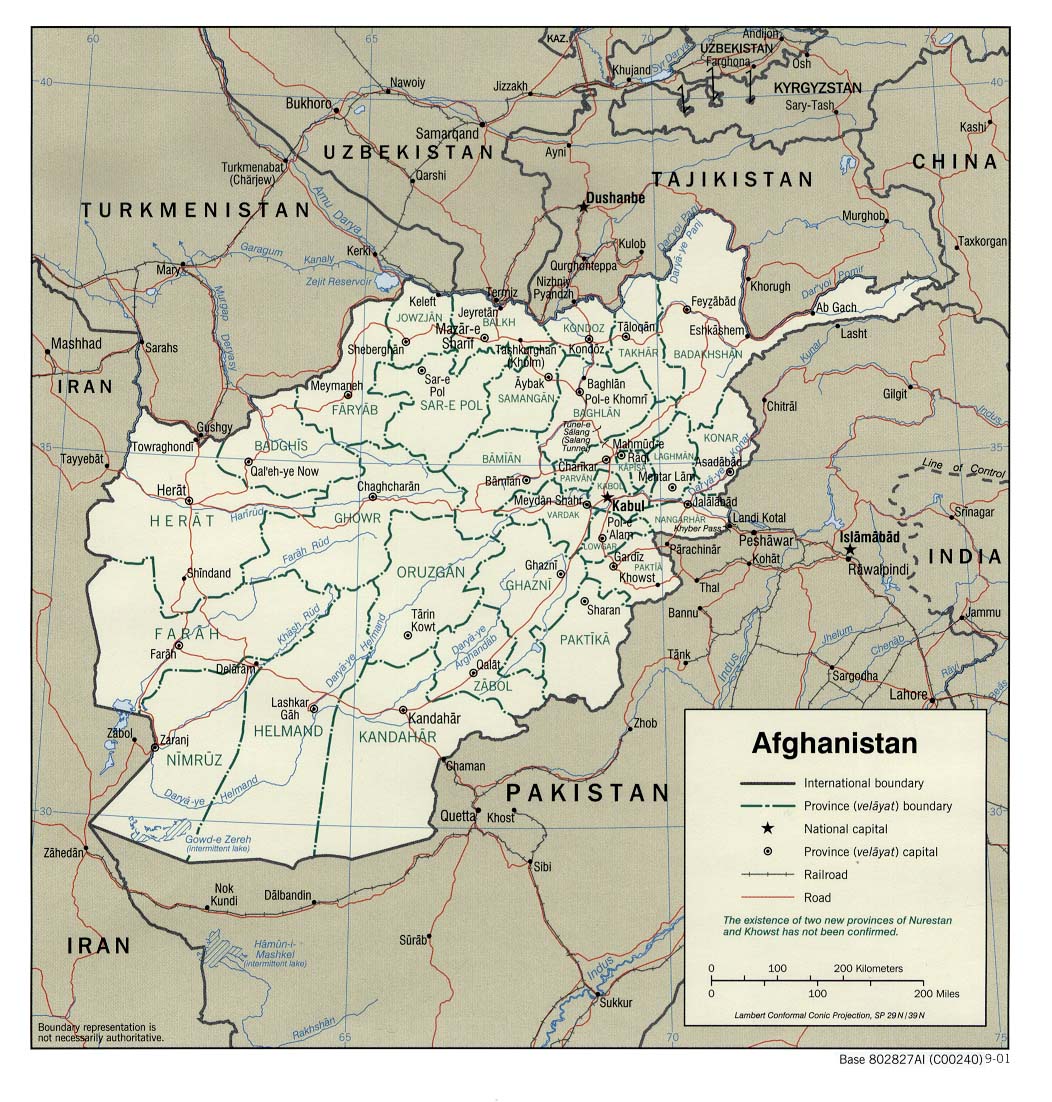
DAILY WAR NEWS FOR TUESDAY, February 28, 2006 Bring 'em on: Four British soldiers killed and another injured by roadside bomb on the outskirts of Amara, southern Iraq, Iraqi security sources said Tuesday. The UK Ministry of Defence confirmed the death of only two. Bring 'em on: U.S. soldier killed by small-arms fire west of Baghdad. Bring 'em on: Italian patrol attacked in Nassiriya by apparent IED. No damage to either personnel or vehicles. Bring 'em on: Roadside bomb targeting convoy of a defense ministry adviser kills five soldiers and wounds seven others. The adviser, Lt. Gen. Daham Radhi al-Assal, was not injured. OTHER SECURITY INCIDENTS Alleged suicide bomber blows himself up at gas station in New Baghdad neighborhood, killing 23 people and injuring 51. Car bomb targeting police patrol in the same neighborhood kills nine people and injures 17, all civilians. Car bomb explodes near Shiite mosque in Baghdad's southeastern Karada neighborhood, killing four people and injuring 16. In Baghdad, gunmen in two speeding cars open fire on the Sunni al-Salam mosque in western Mansour district, killing the guard. Mortar round lands in open area not far from National Theatre in downtown Baghdad, Mohammedawi said. No immediate reports of casualties. Sunni Arab mosque damaged by bomb early Tuesday morning. Mortar round falls near TV station run by Iraqi Islamic Party wounding two senior employees. Iraqi soldiers find bullet-riddled bodies of nine people near two burned minibuses in Iraq's Diyala province. The victims included a Sunni Muslim of the influential Mahamdeh tribe, and two of his nephews. In Tikrit, near Saddam's birthplace north of Baghdad, bomb blast damages dome and blows out doors and windows at Hussein al-Majid mosque, which houses his father's grave. No reports of injuries. Two bodies of civilians with multiple gunshot wounds found north of Falluja. Gunmen in Mosul kill four police and a doctor of the city general hospital. The motive was not known. Car bomb explodes as police patrol passes in Kirkuk, wounding three civilians. OTHER NEWS Violence since bombing of Shi'ite shrine kills 379 and wounds 458, Iraq government says: In an unusual statement, issued in English, the office of Prime Minister Ibrahim Al-Jaafari, said media reports that the death toll was well over 1,000 were "inaccurate and exaggerated." Iraqi prosecutors submit to court trying Saddam Hussein alleged execution order signed by former Iraqi dictator, as his lawyers once again storm out of tribunal: Documents were presented linking Saddam to the trial and execution of 148 villagers from Dujail, north of Baghdad in some of the most significant documentary evidence to have been presented by the prosecution so far. Saddam's lead lawyers, Khalil al-Dulaimi and Khamis Ubaydi, had walked out of the courtroom at the start of the hearing after the judge rejected their pleas for proceedings to be postponed and for the judge and chief prosecutor to be dismissed for alleged bias against the accused. They were immediately replaced by court-appointed lawyers who represented Saddam during an earlier defence counsel walkout. The hearing, markedly quieter than previous sessions that threatened to descend into chaos owing to noisy interventions by the defendants, lasted two hours before being adjourned until Wednesday. More than 7,000 Afghans protest against cartoons of Prophet Mohammad and condemn attack on Shi'ite Muslim shrine in Iraq as "plot by infidels": Tuesday's protests were in Ghazni, a town southwest of the capital, Kabul, and involved more than 7,000 people, including minority Shi'ite and majority Sunni Muslims, officials said. Sayed Ghulam Sakhi, head of the government-appointed Islamic Council in Ghazni, called the printing of the cartoons, the attack in Iraq and desecration of the Islamic holy book, the Koran, by U.S. forces the work of "Zionists". "(They) are linked together and the work of the infidels," he said. Another senior cleric in Ghazni, Mawlavi Jailani, charged that the attack on a Shi'ite shrine in Iraq last week, which has sparked bloody sectarian violence, was part of a "plot by the infidels to create hostility" between the two Muslim sects. REPORTS Iraqi bloggers wonder why Western media wants to see a civil war so badly in Iraq: From what I have seen the Western media has shown too much of a morbid facination with civil war. They are to fast to declare a new war while at the same time frightened by the consequences. The result is that you get a false picture of what is going on. This duality is understandable. The political editor will say "tone it down - a civil war will threaten our interests" while the managing editor will shout "play it up for all its worth - this sells newspapers." So, for the sake of balance I dedicated my Global Voices Online column to reports from those who are looking for lights at the end of the tunnel. (…) Iraq Pundit takes the Western media to task:
Why do these reporters want to see a civil war so badly in Iraq? It looks to me that they hate Bush so much that they will stop at nothing to prove that he’s wrong about Iraq and they are right. The reporters have sunk so low as to take this cheap angle of insisting that an all out civil war has been underway for three years. When will they wake up and realize that this is not a White House scandal. This is about Iraq and its people.
24 Steps To Liberty is amazed by a picture he posts from his TV:
Iraqi clergymen, Shiites and Sunnis, have met in a mosque in Baghdad and decided to contribute to ending the crisis… What was amazing about it is the unity they showed on TV. In the picture, Kubaisi [spokesman of the Sunni Association of Muslim Scholars] is shown leading the prayers and all the clergies behind him are Shiites from Sadr trend. This is the first time I see this. I’ve never seen a Sunni clergyman leading Shiite prayers…. This is a huge encouragement to Iraqis and a huge defeat also for those who predicted a wide civil war in Iraq.
- Salam Adil is an Iraqi blogger who lives in the United Kingdom COMMENTARY AND ANALYSIS "They're going to Baghdad next": The biggest difference in Baghdad from two or three years ago is the nearly total absence of U.S. troops on its streets. In a major gamble, the city largely has been turned over to Iraqi police and army troops. If those Iraqi forces falter, leaving a vacuum, U.S. pressure elsewhere could push the insurgency into the capital. "I think they're going to go to Baghdad next," worried [Maj. Daniel] Morgan [a battalion operations officer]. But other U.S. officers argued that such a move is unlikely because it is more difficult to intimidate a city of 5 million than a rural village. The Middle East as a chessboard: For the most radical-right neoconservative Jacobins amongst the Bush-Cheney team, the possibility that Iraq might fall apart wasn't even alarming: they just didn't care, and in their obsessive zeal to overthrow Saddam Hussein they were more than willing to take the risk. David Wurmser, who migrated from the Israeli-connected Washington Institute on Near East Policy to the American Enterprise Institute to the Pentagon's Office of Special Plans to John Bolton's arms control shop at the State Department to Dick Cheney's shadow National Security Council in the Office of the Vice President from 2001 to 2006, wrote during the 1990s that Iraq after Saddam was likely to descend into violent tribal, ethnic and sectarian war. In a paper for an Israeli think tank, the same think tank for which Wurmser, Richard Perle and Douglas Feith prepared the famous "Clean Break" paper in 1996, Wurmser wrote in 1997 : "The residual unity of the nation is an illusion projected by the extreme repression of the state." After Saddam, Iraq would "be ripped apart by the politics of warlords, tribes, clans, sects, and key families," he wrote. "Underneath facades of unity enforced by state repression, [Iraq's] politics is defined primarily by tribalism, sectarianism, and gang/clan-like competition." Yet Wurmser explicitly urged the United States and Israel to "expedite" such a collapse. "The issue here is whether the West and Israel can construct a strategy for limiting and expediting the chaotic collapse that will ensue in order to move on to the task of creating a better circumstance." Such black neoconservative fantasies-which view the Middle East as a chessboard on which they can move the pieces at will-have now come home to roost. For the many hundreds of thousands who might die in an Iraqi civil war, the consequences are all too real. Like the Sarajevo assassination that precipitated World War I, the attack on the mosque may trigger a war, but it won't be the cause. The cause is far more deep-rooted, embedded in the chaos and bitterness that followed the U.S. invasion of Iraq and America's deliberate efforts to stress sectarian differences in creating the Iraqi Governing Council and subsequent government institutions. If the current crisis doesn't spark a civil war, be patient. The next one will. It's all about the oil: Iraq cannot be physically lost - territorially conceded - to the Iraqis without monumentally dire consequences to American Empire. If abandoned, Iraq's significant share of "the greatest material prize in history" can only be left to the control of others, an outcome that is unacceptable to American policymakers for (again) "very good [imperial] reason[s]." The fully and ugly truth is that the self-proclaimed universal state and global super-power Uncle Sam has no intention of granting management of the world's most "stupendous source of strategic power" and "critical" global political-economic "leverage" to the people who happen to live on its merely national, not-so sovereign topsoil. At this precarious and potentially late point in the history of its global dominance, the U.S. can be expected to hold on to that control with an impressive imperial death grip. It will likely exhibit a fierce determination to defend that grasp through even the most terrible conflicts and violence abroad and at home, where more and bigger 9/11's seem all-too likely in coming years. The risks of not holding on are simply too great, as far as those structurally super-empowered U.S. actors who crave planetary (and indeed inter-planetary) supremacy (the real objective of U.S. foreign policy) are concerned. Withdrawal from Iraq is a most unlikely thing for Uncle Sam to seriously contemplate in light of his tendency to value hegemony over survival, consistent with deadly choices made by concentrated power through the long, reckless, and criminal record of empire. BEYOND IRAQ Here we go again!: Now it's Iran. Bush, again mumbling something about Iran's being a threat to the world, the same crap as about Iraq. But this time, the west European countries (the "traditional" allies) are at it, too. Isn't it strange how all these countries, the USA, Israel, England, France, Germany...with all their weapons of mass destruction, feel so easily threatened? Why shouldn't Iran be a nuclear power? The U.S, England, France, Israel, Russia, China, Japan (yes! Japan, too), India and Pakistan are. These idiots are the cause of nuclear proliferation. If they are so concerned about the safety of the world they should lead by example and dismantle their nuclear weapons. When the U.S, Israel, England France and Germany talk about the safety of the world being their main reason to object to Iran's possessing nuclear technology, what world are they talking about? They are the only ones (as always) who feel threatened. I don't hear about Thailand, Bhutan, Bulgaria, Latvia, Vietnam, Zambia... feeling threatened. I mean, really, what world is in question? The world comprised of the U.S, England, Israel, France, Canada, Germany, Italy, and Japan? The O.E.C.D world? The world made up of the G7 the E.U the IMF, World Bank, WTO, N.A.T.O, the UN Security Council, NAFTA, Wall Street, OIL interests, cheap OIL. Is this the world we hear so much about? Because, if this is the world the West is worried about, then it is a world of SHAME that is in question, a world of deceit, greed, wars, theft, colonialism, capitalism, imperialism... An opulent white world born out of mainly colored peoples slave work, sweat and blood and their natural resources. If this is the world that is in danger then it might as well be done away with! We hear again words of shame, words like "the UN Security Council", "UNSC resolutions", "International community"... I thought all this didn't exist anymore. I thought the UN was finally dead, the coup de grâce being the (another) illegal US-UK-led war against the Iraqi people in order to rob them of their OIL. But let's face it, the UN was never very much alive. Actually, there never was a UN. All there was was the(UN) Security Council, a band of criminals bent on tearing the natural resources of the world at any cost. Although I am far from being a fan of the ruling Mullahs in Teheran, I still remember the Shah, Reza Pahlavi, a friend of the West, which means "the International Community" and oppressor of the Iranian people, a vicious dictator who was propped up and kept in power by the West, robbed his people blind and made himself and the West even richer and who eventually gave birth to the Mullahs. So, I urge Iran not to put its fate into the hands of "the International Community". When you hear "International Community" on the news, what countries pop up in your mind? Albania, Burkina Faso, Burundi...? Of course not! The countries that pop up in our mind are usually the US and whoever follows (pretty much the same faithful dogs : Israel, England, France, Germany, Italy, Japan...) or G7, EU, NATO, W.B., IMF, WTO... it's always the same gangsters anyway. This "International Community" that is so worried about the safety of the "world", that claims the higher moral ground, a higher sense of justice and is so vociferous in its proclamations of being the defender of democratic values, human rights and protector of the "civilized" world, this "International Community" is the same one that has betrayed millions of people around the real world in need of human rights, democracy, justice... Millions have been killed, tortured, oppressed, persecuted, exploited...as a result of the criminal policies of our angelic "International Community", because what mattered and still matters the most today is the economic interests of this "International Community" of SHAME! When the "International Community" threatens Iran to force it to give up its nuclear program in order to make the world safer, I wonder if its thoughts of safety include the Chechens, the Palestinians, the Iraqis, the Sudanese in Darfur, the campesinos and the Indios being massacred in Colombia by death squads backed by the cheap - natural resources - hungry U.S. and its west European vassals and Japan (read: "International Community") ...or the 30 000 daily deaths caused by hunger due to economic policies of the "International Community"...Will all these peoples and many other oppressed ones feel safer once they find out that Iran has agreed to get rid of its nuclear technology? Who or What will really be safer? The flow of cheap OIL to the West and Japan (the "International Community")? In light of this record of atrocities Iran should really hurry and develop whatever it needs to protect itself from us, I mean, "the International Community". Drug smuggling made easy: Profits from the heroin trade are astronomical. Those of us who work for a living just to keep on top of paying the rent can't even grasp the amount of money involved. It's a lot. In 2004, Prof. Michel Chossudovsky of the University of Ottawa stated that, "The Afghan trade in opiates constitutes a large share of the worldwide annual turnover of narcotics, which was estimated by the United Nations to be of the order of $400-500 billion." Prof. Chossudovsky goes on to state that, aside from oil production and weapons sales, the sale of opiates is the largest producer of revenue in the world. And everybody who listens to KPFA or even reads the New York Times knows that 85% of the world's heroin supply now comes from American-occupied Afghanistan. Just Google "Heroin/Afghanistan" and see what sh! ows up. This is NOT a closely-guarded secret. Okay. We now understand that the heroin drug trade represents big bucks. And we also understand that most of the world's heroin supply is coming from American-occupied Afghanistan. But what we don't understand is, with all those drug-sniffing dogs poking around American airports, how can all these billions of dollars worth of heroin sneak their way into our country? Through the ports! And now George W. Bush is insisting that our ports are to be handed over to his friends. Think about it. Now George and his friends are now in control of the ports where heroin enters America. How convenient for them. Now they have a monopoly on the production AND the distribution of drugs. This is a perfect example of the free enterprise system at work. Only it's only free for Bush and his friends. We who work for a living -- and our drug-vulnerable children -- still have to pay. PS: Am I saying that the Bush group will do anything to make a profit, even sell hard drugs to children? Yeah, duh. Never forget that the Bush bureaucracy's motto is, "We will do ANYTHING for cash." These guys did market research. They found out what sells best: Guns, drugs and oil. These are their products. And they have just been voted "Salesmen of the Year". You gotta admit that the Bush bureaucracy's sales campaign is brilliant. Their "divide and conquer" jingle is being hummed on every street corner in the world. These super-entrepreneurs have turned red state Americans and blue state Americans against each other. They've turned the American middle-class against the poor. They've turned Jews, Christians and Muslims against each other. They've even turned Muslims against Muslims. And in the resultant confusion, they make trillions of dollars in profit on drugs, guns and oil. Drugs, guns and oil. Is that what we want our troops to die for? Is that what "Christians" value most? Are "Muslims" willing to soil the words of the Prophet (PBUH) by killing non-Muslims who have done them no harm? And by killing other Muslims? Are the CEOs of Bush Incorporated creating a whole world of avid consumers, zealously killing for drugs, guns and oil? Is this what the human race has come to? We are being used. American Gulag: I represent six Kuwaiti prisoners, each of whom has now spent nearly four years at Guantanamo. It took me 2 1/2 years to gain access to my clients, but now I have visited the prison camp 11 times in the last 14 months. What I have witnessed is a cruel and eerie netherworld of concrete and barbed wire that has become a daily nightmare for the nearly 500 people swept up after 9/11 who have been imprisoned without charges or trial for more than four years. It is truly our American gulag. On my most recent trip three weeks ago, after signing a log sheet and submitting our bags to a search, my colleagues and I were taken through two tall, steel-mesh gates into the interior of the prison camp. We interviewed our clients in Camp Echo, one of several camps where prisoners are interrogated. We entered a room about 13 feet square and divided in half by a wall of thick steel mesh. On one side was a table where the prisoner would sit for our interviews, his feet shackled to a steel eyelet cemented to the floor. On the other side were a shower and a cell just like the ones in which prisoners are ordinarily confined. In their cells, prisoners sleep on a metal shelf against the wall, which is flanked by a toilet and sink. They are allowed a thin foam mattress and a gray cotton blanket. The Pentagon's files on the six Kuwaiti prisoners we represent reveal that none was captured on a battlefield or accused of engaging in hostilities against the U.S. The prisoners claim that they were taken into custody by Pakistani and Afghan warlords and turned over to the U.S. for bounties ranging from $5,000 to $25,000 - a claim confirmed by American news reports. We have obtained copies of bounty leaflets distributed in Afghanistan and Pakistan by U.S. forces promising rewards - "enough to feed your family for life" - for any "Arab terrorist" handed over. The files include only the flimsiest accusations or hearsay that would never stand up in court. The file on one prisoner indicated that he had been seen talking to two suspected Al Qaeda members on the same day - at places thousands of miles apart. The primary "evidence" against another was that he was captured wearing a particular Casio watch, "which many terrorists wear." Oddly, the same watch was being worn by the U.S. military chaplain, a Muslim, at Guantanamo. When I first met my clients, they had not seen or spoken with their families for more than three years, and they had been questioned hundreds of times. Several were suspicious of us; they told me that they had been interrogated by people who claimed to be their lawyers but who turned out not to be. So we had DVDs made, on which members of their families told them who we were and that we could be trusted. Several cried on seeing their families for the first time in years. One had become a father since he was detained and had never before seen his child. One noticed his father was not on the DVD, and we had to tell him that his father had died. Most prisoners are kept apart, although some can communicate through the steel mesh or concrete walls that separate their cells. They exercise alone, some only at night. They had not seen sunlight for months - an especially cruel tactic in a tropical climate. One prisoner told me, "I have spent almost every moment of the last three years, and eaten every meal, here in this small cell which is my bathroom." Other than the Koran, prisoners had nothing to read. As a result of our protests, some have been given books. Every prisoner I've interviewed claims to have been badly beaten and subjected to treatment that only could be called torture, by Americans, from the first day of U.S. captivity in Pakistan and Afghanistan. They said they were hung by their wrists and beaten, hung by their ankles and beaten, stripped naked and paraded before female guards, and given electric shocks. At least three claimed to have been beaten again upon arrival in Guantanamo. One of my clients, Fayiz Al Kandari, now 27, said his ribs were broken during an interrogation in Pakistan. I felt the indentation in his ribs. "Beat me all you want, just give me a hearing," he said he told his interrogators. Another prisoner, Fawzi Al Odah, 25, is a teacher who left Kuwait City in 2001 to work in Afghan, then Pakistani, schools. After 9/11, he and four other Kuwaitis were invited to dinner by a Pakistani tribal leader and then sold by him into captivity, according to their accounts, later confirmed by Newsweek and ABC News. On Aug. 8, 2005, Fawzi, in desperation, went on a hunger strike to assert his innocence and to protest being imprisoned for four years without charges. He said he wanted to defend himself against any accusations, or die. He told me that he had heard U.S. congressmen had returned from tours of Guantanamo saying that it was a Caribbean resort with great food. "If I eat, I condone these lies," Fawzi said. At the end of August, after Fawzi fainted in his cell, guards began to force-feed him through tubes pushed up his nose into his stomach. At first, the tubes were inserted for each feeding and then removed afterward. Fawzi told me that this was very painful. When he tried to pull out the tubes, he was strapped onto a stretcher with his head held by many guards, which was even more painful. By mid-September, the force-feeding had been made more humane. Feeding tubes were left in and the formula pumped in. Still, when I saw Fawzi, a tube was protruding from his nose. Drops of blood dripped as we talked. He dabbed at it with a napkin. We asked for Fawzi's medical records so we could monitor his weight and his health. Denied. The only way we could learn how Fawzi was doing was to visit him each month, which we did. When we visited him in November, his weight had dropped from 140 pounds to 98 pounds. Specialists in enteral feeding advised us that the continued drop in his weight and other signs indicated that the feeding was being conducted incompetently. We asked that Fawzi be transferred to a hospital. Again, the government refused. When we saw Fawzi in December, his weight had stabilized at about 110 pounds. The formulas had been changed, and he was being force-fed by medical personnel rather than by guards. When I met with Fawzi three weeks ago, the tubes were out of his nose. I told him I was thankful that after five months he had ended his hunger strike. He looked at me sadly and said, "They tortured us to make us stop." At first, he said, they punished him by taking away his "comfort items" one by one: his blanket, his towel, his long pants, his shoes. They then put him in isolation. When this failed to persuade him to end the hunger strike, he said, an officer came to him Jan. 9 to announce that any detainee who refused to eat would be forced onto "the chair." The officer warned that recalcitrant prisoners would be strapped into a steel device that pulled their heads back, and that the tubes would be forced in and wrenched out for each feeding. "We're going to break this hunger strike," the officer told him. Fawzi said he heard the prisoner next door screaming and warning him to give up the strike. He decided that he wasn't "on strike to be tortured." He said those who continued on the hunger strike not only were strapped in "the chair" but were left there for hours; he believes that guards fed them not only nutrients but also diuretics and laxatives to force them to defecate and urinate on themselves in the chair. After less than two weeks of this treatment, the strike was over. Of the more than 80 strikers at the end of December, Fawzi said only three or four were holding out. As a result of the strike, however, prisoners are now getting a meager ration of bottled water. Fawzi said eating was the only aspect of life at Guantanamo he could control; forcing him to end the hunger strike stripped him of his last means of protesting his unjust imprisonment. Now, he said, he feels "hopeless." The government continues to deny that there is any injustice at Guantanamo. But I know the truth. On being "good Americans" in a time of torture: As a teenager, I could not understand how the German people could claim to be "good Germans," unaware of what the Nazis had done in their names. I could understand if these ordinary German people had said they had known and been horrified, but were afraid to speak up. But they would then be "weak, fearful or indifferent Germans," not "good Germans." The idea that only the Nazis were responsible for the Holocaust made no sense. Whatever the Germans as a whole know about the concentration camps, they certainly knew about the systematic mistreatment of Jews that had occurred before their very eyes, and from which so many had profited. And if they were not really "good Germans," I wondered, what should or could they have done, given the reality of Nazi tyranny? The issue became personal for me in the summer of 1961, when I hitchhiked through Europe with a lovely German woman named Inge. Still in love after an idyllic summer, we visited Hyde Park the day before I was to return home. A bearded, middle-aged concentration-camp survivor was angrily attacking the German people for standing by and letting the Jews be slaughtered. I was moved beyond words. Suddenly the woman I loved began yelling angrily at him, screaming that the Germans did not know, that her father had just been a soldier and was not responsible for the Holocaust. Our relationship essentially ended then and there. I understood intellectually that she was just defending her father and was neither an anti-Semite nor an evil person. But there it was. She on one side. The survivor on the other. A gulf between them. Whatever my head said, my heart knew that the world is divided into evil-doers, their victims, and those like Inge who do not want to know. And that I had no choice but to stand with the victims. I never dreamed at that moment that I, as an American, would a few years later face this same question as my government committed mass murder of civilians in Indochina in violation of the Nuremberg Principles. Or that more than four decades later I would still be struggling with what it means to be a "good American" after learning that a group of U.S. leaders has unilaterally seized the right to torture anyone it chooses without evidence and in violation of international law, human decency, and the sacrifice of the many Americans who have died fighting autocracy and totalitarianism. (…) We are in some ways more morally compromised than the "good Germans" of the 1930s. To begin with, we are far less able to claim we do not know. Our daily newspapers regularly report new revelations of Bush Administration torture. Second, by opposing torture, we face far less severe threats than did Germans who tried to help Jews. Even the strong possibility that we could become targets of illegal spying by this Administration for protesting its torture is far less frightening than the death or imprisonment faced by Germans who helped Jews. And, third, unlike the Germans, we cannot reasonably claim that it is futile to oppose our leaders. Creating or joining an organized effort to prevent torture can succeed because we possess one great advantage that human rights advocates in Germany did not have: the public is with us. (…) Whatever a movement to abolish torture will achieve for society, it is clear what participating in it means for each of us as individuals. It means above all that our children and grandchildren will not remember us with shame, that they will not one day have to try to justify to our victims our failure to oppose the torture being conducted in our names, and that the term "Good American" will mean just that, and not an excuse for fear or indifference, like the idea of the "Good German." When we fight to end torture we not only fight for human decency, international law, democracy, and freedom. We fight for ourselves.

|

Monday, February 27, 2006

DAILY WAR NEWS FOR MONDAY, February 27, 2006 Bring ‘em on:: U.S. soldier killed by small-arms fire on Sunday in central Baghdad. Bring ‘em on: U.S. soldier killed and three wounded after improvised explosive device detonates near Stryker vehicle in Mosul on Sunday. One soldier listed as very seriously injured and evacuated to Balad, Iraq. IRAQ NEWS Two “insurgents” killed and another wounded while trying to plant a bomb which exploded prematurely in main road between Iskandariya and Latifiya, south of Baghdad. Three civilians killed when roadside bomb explodes in Riyadh town, 60 km (40 miles) south west of Kirkuk. Mortar attack kills four and wounds 17 in Shola, a district in western Baghdad on Monday. Gunmen shoot dead owner of a glaze shop and an employee and wound five others in Baquba, 60 km (40 miles) north of Baghdad. Iraqi police arrest three suspects while planting bombs near a Shiite Shrine of al-Hur al-Riyahi near Kerbala, 110 km (68 miles) south of Baghdad. Civilian killed by Iraqi soldiers while he heading to work in Falluja, 50 km (30 miles) west of Baghdad. Iraqi police arrest 16 suspects on Saturday and Sunday in Tuz Khurmato, 70 km south of Kirkuk, and Dibis, 40 km (25 miles) northwest of Kirkuk, two of them while trying to plant bombs near Shiite mosque. Head of education directorate escapes assassination attempt when gunmen throw hand grenade on his office in Tuz Khurmato. Jill Carroll alive and Iraqi authorities optimistic about her release, U.S. Ambassador to Iraq says. Gunmen kill two youths playing soccer in Diyala and wound five in an attack Sunday. Two Iraqi soldiers wounded in ambush Monday in Mahmoudiya, about 20 miles south of the capital. ”Insurgents” set ablaze oil pipeline in Safra U.S. soldier dies from non-combat related injuries Iraq lifts daytime curfew: Iraq has lifted the strict daytime curfew slapped on Baghdad for the past three days after sectarian unrest triggered by the bombing of a revered Shia shrine. Vehicle traffic and pedestrians were seen on the streets of Baghdad on Monday after the three-day security measure. Iraqi authorities had imposed a vehicle ban on the streets of Baghdad until Sunday. However, the night curfew that comes into effect from 8pm (1700 GMT) to 6am (0300 GMT) will continue in the capital and three other central provinces of Salah al-Din, Bail and Diyala, officials said on Monday. Despite the draconian security measures in the capital on Sunday, insurgents killed at least 23 Iraqis across the country. Saddam ends hunger strike: Saddam Hussein, the former Iraqi president, has ended his hunger strike after foregoing food for 11 days, his lead lawyer Khalil al-Dulaimi said on Monday. "I met my client for seven hours on Sunday. At our request he had earlier ended the hunger strike he had been on for 11 days and he has lost four to five kilos (about 10 pounds)," al-Dulaimi said. "He is doing OK." Iraqi Sunnis in Samarra working tirelessly to rebuild Golden Mosque: "The initiative came soon after the explosion in solidarity with our Shiite brothers," Abu Oqba Al-Samarrai told IslamOnline.net Monday, February 27, after collecting golden pieces of the mosque's destroyed dome. He said people of different age groups have volunteered to remove the ruble in a love demonstration. "Elderly, women, children and men of [predominantly Sunni] Samarra rush to the tomb to remove the debris, using shovels and manual carriages," he explained. Women provided food and water to exhausted men after a long day of hard work to get the job done as soon as possible. "The men chant in unison Islamic songs to kill time," Samarrai said. Chairman of the Sunni Waqfs Ahmad Abdul Ghaffor Al-Samarrai has declared that his body will donate two billion Iraqi dinars ($1,350 million) to reconstruct the shrine. Top Zarqawi lieutenant #345,876 captured: Iraqi Interior Ministry forces have captured a senior aide to al Qaeda in Iraq leader Abu Musab al-Zarqawi, Iraqi state television said on Monday. Iraqiya television named the man as Abu Farouq and said he was captured with five others in the Sunni insurgent stronghold of Ramadi, west of the capital. REPORTS British firm to reshape holy Iraqi city of Najaf: In Britain, Milton Keynes has become a byword for soulless postwar urban planning. But the planning agency which created the town northwest of London from scratch in the 1970s, has now been asked to remodel the Iraqi holy city of Najaf. In 2004, Najaf in southern Iraq became the target of a full-scale US military assault aimed at ousting radical insurgents. Many died in the three-week onslaught that also devastated the centre of the historic Arabic city. Najaf's roots are said to date back to the 8th century, and the city attracts millions of pilgrims every year. In what is thought to be the first commission of its kind in post-war Iraq, the Baghdad authorities have appointed a British firm of town planners to remodel the entire centre of Najaf. While most of the residents of the holy city have probably never heard of Milton Keynes, the company assigned the job of reshaping Najaf was responsible for designing Britain's most infamous new town. Much has changed since 1970, when Richard Llewelyn Davies laid down plans for a new settlement to cater for the growing number of families fleeing London in search of a better life. By the 1980s Milton Keynes had become a byword for the pros and cons of post-war British urban planning. It was to some a spacious, modern, landscaped town, and to others a dystopic, soulless home to shopping centres and skateboard parks. By the late 1990s, some 170,000 people had moved to Milton Keynes, well below the intended target of a 250,000 population. Critics will doubtless ask why an Anglo-Saxon firm should be charged with re-planning a historic Arabic city. Iraq War depleted uranium contaminates Europe: "Did the use of Uranium weapons in Gulf War II result in contamination of Europe? Evidence from the measurements of the Atomic Weapons Establishment (AWE), Aldermaston, Berkshire, UK," reported the Sunday Times Online (February 19, 2006) in a shocking scientific study authored by British scientists Dr. Chris Busby and Saoirse Morgan. The highest levels of depleted uranium ever measured in the atmosphere in Britain, were transported on air currents from the Middle East and Central Asia; of special significance were those from the Tora Bora bombing in Afghanistan in 2001, and the "Shock & Awe" bombing during Gulf War II in Iraq in 2003. Out of concern for the public, the official British government air monitoring facility, known as the Atomic Weapons Establishment (AWE), at Aldermaston, was established years ago to measure radioactive emissions from British nuclear power plants and atomic weapons facilities. The British government facility (AWE) was taken over 3 years ago by Halliburton, which refused at first to release air monitoring data. After the "Shock and Awe" campaign in Iraq in 2003, very fine particles of depleted uranium were captured with larger sand and dust particles in filters in Britain. These particles traveled in 7-9 days from Iraqi battlefields as far as 2400 miles away. The radiation measured in the atmosphere quadrupled within a few weeks after the beginning of the 2003 campaign, and at one of the 5 monitoring locations, the levels twice required an official alert to the British Environment Agency. Why Has the U.S. Military Refused to Show Depleted Uranium Hazard Awareness Training Video To Troops Now Serving In Iraq? Morrissey investigated for criticising Bush: Rock star Morrissey has revealed he was quizzed by the FBI and Special Branch over his criticism of the US and Britain. Morrissey, 46, has previously branded George Bush a terrorist and blasted the Iraq war. The ex-Smiths singer, who lives in Los Angeles, said: “The FBI and Special Branch have investigated me and I’ve been interviewed and taped. “They were trying to determine if I was a threat to the government and similarly in England. “It didn’t take them long to realise I’m not.” The star, who said he did not belong to any political group, claimed it showed neither the UK nor America was truly democratic. He added: “You can’t really speak your mind and if you do, you’re investigated.” In 2004, Morrissey claimed Mr Bush had made America the world’s most “neurotic and terrorobsessed country”. Earlier that year, he told a Dublin gig he wished Mr Bush had died instead of Ronald Reagan. COMMENTARY AND ANALYSIS AFTERMATH OF THE SAMARRA MOSQUE BOMBING Tehran press: Occupying troops involved in Iraq's terrorist bombing: A morning daily commented Sunday on recent bitter developments in Iraq saying that the occupying troops and intelligence services were directly involved in terrorist acts in the war-torn country. Criticizing the 'barbaric attacks' on the holy shrines of Imam Hadi (AS) and Imam Hassan Al-Askari (AS) in Samarra last Wednesday, the English-language daily 'Kayhan International' said that the occupying forces have failed to act based on the Geneva Convention. "The Geneva Convention signed by the majority of countries -- just like many other international conventions -- has become a useless law on paper, leaving nations no other option but to rely on their own capabilities for ensuring national security and defense," the paper argued. It noted that based on the Geneva Convention, the US-led occupying forces, 'are fully held responsible' for what was currently underway in Iraq. Stressing that according to the existing evidences, American and European troops played a central role in committing horrible crimes in Iraq, the article said, "Samarra has been under the strict control of American troops since the beginning of occupation. "The cold-blooded terrorists took their time before planting the heavy explosives inside and outside the holy shrines in the early hours of the dawn," the daily noted. The daily further added given all facts which 'prove the direct involvement of occupying forces and intelligence services in the terrorist acts, particularly the recent bombings of the holy shrines in Samarra', the only way in front of the Muslim nations is to rely on their own capabilities to ensure their national security. The perfect controlled demolition: Take a good look at the picture above because I will tell you what I see. I see a damaged dome caused by an explosion set very professionally that the two minarets from the both sides weren’t effected by the explosion. Not even one single “gold plate” fall down from the minarets while the explosion was so heavy that caused the collapse of the dome. Tell me, Is this work of few terrorists who wants to finish the job as fast as possible? The one who did this, entered the mosque comfortably carrying explosions, he had all the time to study the construction of the building and find the perfect angles to set the explosions in a way that only the dome will be destroyed. This is a professional, controlled demolition and the bombs set by demolition experts. Now, let’s talk about the death of the three Iraqi journalists. TV anchor Attwar, age 26 years is a significant young woman born in Samarra, moved to Baghdad just 3-4 years ago, Attwar worked for Al-Jazeera first and then she moved to Al-Arbyia. I am not writing Attwar’s autobiography here but this has connection to the events, Attwar (I think you are smart enough to know that she is a Sunni) was well-known of her support for the Iraqi cause and blaming the occupation for the mess in Iraq. One ex-Abu Ghraib prisoner tells this story about Attwar: When I came out through the gates of Abu-Ghraib there was TV team waiting outside asked me for an interview, I said yes, then came TV anchor Attwar and asked “How do you fell no…. “she couldn’t finish her question because she burst in tears when she saw how do I look like, bare feet, torn clothes…. This is an example of Attwar mentality. What the media didn’t told on Attwar’s death is this: Attwar and her other two colleagues found dead but the TV team was four members, bad news four the US but one of the team survived the assassination to tell this: Attwar being born in Samarra, her relatives and friends are still there, she managed to interview eyewitnesses on the explosion and people live in the area around the mosque. Notice, they found the TV-team’s bodies later but didn’t found the documentary she made, Who benefit from killing Atwwar, Sunnis? She is a Sunni. Resistance? She sympathise with the resistance. Shiite riot? Samarra is dominated by Sunnis. The answer is simple, Attwar killed because she knew “too much”. Sunni Clerical Association of Muslim Scholars, issued a 4 points condemnation letter to the bombing of shrine in Samara, You can see a picture of the letter here (Arabic), I don’t want go translating the whole letter but point 2 in the letter is a very important point. It says the following: We were suspicious when the US ambassador in Iraq (Zalamy Khalil) said: “A sectarian government who run their own ethnical militias to be incharge of the security (in Iraq) will not be acceptable”, such announcement should be addressed in secret meetings and not through “Satellite TV channels”, such public announcement will rally and moblize the shiia supporters of the “list 555” (Shiite alliance party). SCAS are right, Zalamy Khalilzad announcement in public was meant to hit two birds in one stone, first an advertisement to the world that the US wants a united Iraq (for the public consumption only), second and the mean reason is he wanted to remind the Iraq alliances Shiites that they still under the US control. Worth to notice that all news agancies wrote Khalilzad announcment as: During a rare news conference, Khalilzad….example Shiite alliances didn’t understand the seriousness of Zalamy Khalil and they condemned “Khalilzad” announcement (Hakim, Jaffri..etc), several times they repeated that Iraq can make it’s own decisions and we don’t want an interfering in Iraqi matters from any external power, one Iraqi official said: “Zalmay Khalil went too far with his demands” Was the mosque explosion a continuation in the US and Shiite “dialog” but this time the US uses a “harsher language”?. By the way today the so called Al-Qaeda in Iraq condemned the bombing, Baath party condemned the bombing and many fractions of Iraqi resistance condemned it also. Who benefits from the Samarra attack? A short 'history': Juan Cole (see below two postings of February 24 and 25, 2006 for background) further states: "As a historian, I try not to comment on things for which I don't have good documentary evidence. It just becomes speculation. I'm at a disadvantage in saying anything at all about what goes on in Iraq, since I am not there and can't see it. I finesse this by trying to make a judicious choice with regard to published accounts in Arabic. I didn't see anything I trusted on this issue." At one level, Cole's academically 'safe' response is totally in order. On another level, some extra effort to discern and connect the dots behind the glare of the Corporate Media's superficial coverage, especially for a mini-historian, as I may humbly claim to be, would be in order, even though I also "am not there". In the end, the approach does reflect the interests (as in: Regard for one's own benefit or advantage; self-interest), doesn't it? "The sectarian violence that has shaken Iraq this week has demonstrated the power that the many militias here have to draw the country into a full-scale civil war, and how difficult it would be for the state to stop it, Iraqi and American officials say. The militias pose a double threat to the future of Iraq: they exist both as marauding gangs, as the violence on Wednesday showed, and as sanctioned members of the Iraqi Army and the police. (emphasis added)… The ascent of the militias inside the security forces was quick and quiet. Soon after the Shiite-led government swept into power last spring and Bayan Jabr, a senior Shiite politician, become interior minister, a housecleaning began, in which about 140 high-ranking officials were dismissed and political allies of the Shiites were put in their place, according to several former ministry officials who feared reprisals if they gave their names. In addition, recruitment drives brought hundreds of ordinary Shiites into the security forces, many of whom identified more strongly with their political parties than with the Iraqi state. By summer, an American government adviser to the ministry, Mathew Sherman, recalled writing in his notes that "the ministry is quickly being infiltrated by militia and by Badr people." "The bombing of a revered Shiite shrine which sparked a wave of violence in Iraq was the work of specialists, Construction Minister Jassem Mohammed Jaafar said Friday, adding that the placing of the explosives must have taken at least 12 hours. (emphasis added) "According to initial reports, the bombing was technically well conceived and could only have been carried out by specialists," the minister told Iraqia state television. Jaafar, who toured the devastated thousand-year-old shrine on Thursday a day after the bombing which brought down its golden dome, said "holes were dug into the mausoleum's four main pillars and packed with explosives." "Then the charges were connected together and linked to another charge placed just under the dome. The wires were then linked to a detonator which was triggered at a distance," the minister added. To drill into the pillars would have taken at least four hours per pillar, he also estimated." Note: The third eye-witness (see previous posting), who emailed his version of what he saw before the above report, had said exactly that. Since it is in Arabic, I shall translate. "My name is Ahmad Al-Samarrai and I own an Internet Cafe in front of the shrine. The National Guard arrived at 8:30 p.m. on Tuesday and surrounded the shrine and prevented us from leaving, but we usually sleep at night in our shops fearing theft of the computers. The National Guards and the Americans surrounded the shrine and left by 9 p.m.. They returned about 11 p.m. and strolled around till 6 a.m. on Thursday when all left at 6:30 a.m.. Two explosions occurred, one at 6:40 a.m and the louder one at 6:45 a.m.". Not to mention that Samarra was/is under curfew from 8:00 p.m. till 6:00 a.m. every night; and that "... Sand "walls" built around Fallujah and Samarra in recent months have quelled restive insurgent cells. Army commanders in Samarra said the number of attacks dropped drastically after an 11-mile barrier was built around the city." "Insurgent attacks in Iraq reached a postwar high in the four months preceding Jan. 20, according to a Iraq progress report issued Friday by the Pentagon.More than 550 attacks took place in Iraq from Aug. 29, 2005, to Jan. 20, 2006, according to the latest “security and stability” report the Defense Department is required to send lawmakers every four months. Speaking to Pentagon reporters Friday, Assistant Secretary of Defense for International Security Affairs said that the survey’s conclusions “were not good,” but that “loving us is not what it’s about.” Awareness of the relative unpopularity of U.S. troops “is one of the reasons we want to turn over the battlespace” to the Iraqi security forces, Rodman said. (emphasis added) "In an attempt to end violence sparked by a bombing this week of a revered Shi'ite mosque in Samarra, the Iraqi government imposed an all-day curfew. The ISF are enforcing the curfew through patrols, roadblocks and loudspeaker announcements throughout Baghdad's mixed Sunni and Shi'ite neighborhoods amid one of the worst campaigns of Iraqi-on-Iraqi violence since the fall of Saddam Hussein in 2003. "We have a partnership with two Iraqi army brigades ... and what we have done is we've prepositioned our forces out in that area of responsibility," said Army Col. Jeffrey Snow, whose 10th Mountain Division brigade is responsible for northwest Baghdad. "I want to make clear to everyone that there is no question that Iraqi security forces are clearly in the lead here." American brigades have embedded advisers among more than 50 Iraqi brigades. Equipped with radios, the advisers can call in U.S. reinforcements if the Iraqis become overwhelmed by demonstrators or attackers. The U.S. Army is launching spy drones to monitor Iraqi troops. "The Iraqi security forces stepped up and immediately took steps to enhance a security posture within our area," Col. Snow told reporters at the Pentagon via a teleconference. "Our forces are postured as a quick-reaction force." CNN Pundit: Mosque Bombing Shows Bush Strategy Is Working In Iraq: This afternoon, Terry Jeffery — the editor of Human Events who is paid by CNN to provide political analysis — was asked about the bombing of a Shiite shrine in Iraq. Jeffery said the bombings — part of a wave of violence that have left 200 people dead in the last 24 hours — is evidence that the Bush strategy is working. Watch It: BLITZER: Terry, is Iraq falling apart right now? TERRY JEFFERY: Well, I certainly hope not, Wolf. But I think actually these attacks on Shia shrines can be attributed to the potential success of the Bush strategy. Question for Mr. Jeffery: What, exactly, would be evidence that Bush’s strategy in Iraq isn’t working? Transcript continues below: JEFFREY: Right now the ambassador there is pushing hard as he can to get Shias to bring Sunnis into the government that’s forming. Try and get enough power handed over to the Sunnis so they feel comfortable with the political process. Zarqawi who is the head of Al Qaeda in Iraq has quite literally declared sectarian war against the Shias. He’s trying to keep these Sunnis in the insurgency mode. I think this is his biggest gambit yet to do it. If we can get past this crisis maybe we can form a government that does bring stability to Iraq. Is the U.S. Pursuing a "Divide and Conquer" Strategy in Iraq?: Why wouldn't the U.S. bomb Shiite holy places in Iraq and shift the blame to Sunnis? Why wouldn't the U.S. want a civil war in Iraq? Hasn't the U.S. Always pursued "divide and conquer" strategies, starting with the earliest days of conquering the native inhabitants of Turtle Island? Didn't the British allies of the U.S. get caught with SAS soldiers in Arab garb driving around Basra with bomb-making materials in their vehicle? Weren't the Brits so concerned over the capture of their covert operators by Iraqi police that they broke them out of custody, using tanks to destroy a local jail? Anyone who doubts that the U.S. wouldn't deliberately provoke hostility within the Iraqi population is naive, ignorant, or stupid. Didn't the U.S. set up an Iraqi constitution that subdivided the nation by religion and culture in order to provoke resource disputes between the subdivisions? Wouldn't a united Iraq that insisted on full Iraqi sovereignty and control of Iraqi assets and wealth be a bigger challenge to U.S. hegemony that a divided Iraq, no matter how great the intra-Iraqi violence patterns? After all, the U.S. personnel can stay relatively safe within the Green Zone or military bases with patrol aircraft and mechanized infantry providing security while Iraqis blow the hell out of each other all over the country. The U.S. can send Navy Seals or Delta Force operatives to bomb golden mosques or any other locations they can get access to. Haven't U.S. personnel been photographed in native garb in Afghanistan? Why wouldn't they do the same in Iraq? Divide and Conquer. That strategy is as old as warfare itself. Much is at stake, and letting the divided enemy self-destruct is much more painless than head-on confrontation. OTHER IRAQ TOPICS The United States needs to lose the war in Iraq as soon as possible: Even more urgently, the whole world needs the United States to lose the war in Iraq. It would be nice if Iraq doesn't lose too, but that is a lesser consideration. What is at stake now is the way we run the world for the next generation or more, and really bad things will happen if we get it wrong. The temptation to take charge of the world was bound to be great when the United States emerged from the Cold War as the only superpower, for it seemed like a goal within easy reach. It was nevertheless resisted, by Republican and Democratic administrations alike, for almost a decade. Then a random event - for 9/11 might easily not have happened - unleashed forces in Washington that were itching to make a takeover bid, and now we live in the middle of a train wreck. The idea that the United States can remain 'the world's sole military superpower until the end of time' is comically overambitious, but there it is, embedded in a 34-page document submitted to Congress in September 2002 entitled The National Security Strategy of the United States. 'The United States will not hesitate to strike preemptively against its enemies, and will never again allow its military supremacy to be challenged.' As it becomes clear what the project to turn the United States into the world's policeman (or, more precisely, its judge, jury, and executioner) will cost in American lives and in higher taxes, American voters themselves will pull the plug on it sooner or later. Or maybe the world will pull the plug on the project first, by refusing to go on holding dollars as the gradual collapse in the value of the US currency deepens. The risk is that it will all take too long. If an American defeat in Iraq takes another four or five years, huge and maybe irreparable damage will have been done to the international institutions that are our fragile first line of defence against a return to the great-power wars that could destroy us all. We need the United States back as a leading architect of global order, not a hyperactive vigilante, and we need it back now. If American troops are home from Iraq a year from now and the idea of American global hegemony has lost favour in Washington, then we get the world of the late 1990s back relatively undamaged, and we can pick up from where we left off with the job of building the multilateral institutions that we need to see us through the international storms that are sure to come. If, however, the United States stays in Iraq, then sooner or later most of the other great powers will give up on the United Nations and the rule of law in favour of getting together to counterbalance the weight of the rogue superpower - especially if the United States really is pursuing a coherent strategy of redefining the world in terms of a perpetual, global 'war on terror' with itself as leader. The stakes are much higher than they seem. The foundations of the World War I were laid by decisions that were made ten to twenty years before 1914, and after that it was very hard for anyone to turn back. There is a strong case for saying that we have arrived at a similar decision point now; what happens in the next year or so matters a lot, so we need some answers fast. Is the terrorist threat really worth worrying about? Is there a serious bipartisan project for restoring American global hegemony, or is it merely a bunch of neo-conservatives dreaming of lost glories - or is it just the usual cock-up on an unusually large scale? It’s the Cambodian get-away scheme all over again: Nixon bombs Cambodia back to the Neolithic from 1970 to 1973, killing somewhere in the six figures, destabilizing the country with Lon Nol’s complicity and setting the stage for the Khmer take-over and ensuing genocide. Nixon shrugs, acts blameless. It was a civil war, after all, and he had his own civil war on his hands, compliments of a couple of reporters from the Washington Post. With Kissinger as his Oz, Nixon spun Cambodia into just another American attempt at battling Communism in the name of freedom. The Khmers mucked it up. And by 1973, Kissinger was throwing in the towel, Nixon was facing impeachment, and the Khmers were biding their time until their final, if brief, victory in 1975 (until the Vietnamese finally ended their killing spree in 1978). A similar scenario is unfolding in Iraq. The United States has done nothing if not destabilize the country under the guise of building up democracy for the last three years. Bombings and night raids tend not to do democracy’s bidding. Insurgents have picked up strength. On both sides. A Khmer-like genocide might not be in the offing, although with Lebanon and the Balkans in recent memory, and with Saddam’s tradition of facile massacres still humidifying the Mesopotamian air with the scent of unavenged blood, you never know: a genocide may well result still, giving the region’s Vietnam—Iran—an opportunity to intervene. The moment the United States invaded the way it did and occupied the nation as boorishly as it did, the outcome couldn’t have been any different than it is now. It isn’t the Arabs who are repeating history. It is the United States repeating its own, a few time zones to the east. Same continent. Same errors, same Nixonian hubris. Naturally, Arabs — those “barbaric” Sunnis and Shiites — will get all the blame. But the vilest fanatics are in the White House, comfortably enabling destruction from their “situation room.” The only difference between them and the barbarians who blow up mosques is a matter of dress and language, and, of course, method. The results are the same. Der Spiegel: The clash of cultures on the big screen: The cinema has turned into a new forum for revenge, for the uninhibited expression of opposition to the images from Abu Ghraib. The Turkish film "Valley of the Wolves," for example, is a pure cinematic slap in the face against Hollywood and Bush administration propaganda, an angry indictment of America and the west that's as naïve as it is perfidious. The technically complex action film simply reverses the perspective, turning American heroes into thugs, while Muslim patriots heroically defend their homeland, their culture and their honor. The "Axis of Evil" no longer lies in the Orient, but in the West. A mirror is held up to the United States that projects a cleverly distorted image: good versus evil, the noble versus the lowly, the honorable versus the underhanded, Islam versus Christianity and Judaism. The latest round in the battle over images and cultures begins with a bloodbath. The location is a village somewhere in northern Iraq where a wedding is being celebrated, a peaceful gathering of Turks, Kurds and Arabs. The men dance and the women look on, while children play in their midst. But then some of the men, in a burst of enthusiasm not uncommon in the region, raise their weapons and shoot into the sky. This is the signal US soldiers who have been hiding nearby have been waiting for. "Okay, now they're terrorists," says an officer, commenting on the celebratory gunfire. Then his group of Rambo-like warriors storms the village, threatening the guests and assaulting the women. When a young boy shyly touches an American soldier's gun, the soldier shoots the boy, triggering a massacre in which dozens of wedding guests are killed. The groom is executed with a gunshot to his head. The film, which cost €10 million to produce, making it the most expensive Turkish production of all time, has already brought record numbers of viewers into cinemas since it was first released in early February: more than 2 million in Turkey, but also hundreds of thousands in England, Belgium, the Netherlands, Austria and Switzerland. In Germany, where "Valley of the Wolves" is being shown in Turkish with German subtitles, 236,000 people, mainly Turks, saw the film in the first week following its Feb. 9 premiere. Whenever American villains and sadists die in the film, enthusiastic audiences applaud. BEYOND IRAQ U.S. prison in Afghanistan grows to fill Guantanamo's role: While an international debate rages over the U.S. detention center at Guantanamo Bay, Cuba, the military has quietly expanded another, less-visible prison in Afghanistan, where it now holds some 500 terrorism suspects in more primitive conditions, indefinitely and without charges. Pentagon officials have often described the detention site at Bagram, a cavernous former machine shop on a U.S. air base 40 miles north of Kabul, as a screening center. They said most of the detainees are Afghans who might eventually be released under an amnesty program or transferred to an Afghan prison to be built with U.S. aid. But some of the detainees have already been at Bagram for as long as three years. And unlike those at Guantanamo, they have no access to lawyers, no right to hear the allegations against them and only rudimentary reviews of their status as "enemy combatants," military officials said. Privately, some administration officials acknowledge that the situation at Bagram has increasingly come to resemble the legal void that led to a Supreme Court ruling in 2004 affirming the right of prisoners at Guantanamo to challenge their detention in U.S. courts. While Guantanamo offers carefully controlled tours for members of Congress and journalists, Bagram has operated in rigorous secrecy since it was opened in 2002. It bars outside visitors except for members of the International Committee of the Red Cross and refuses to make public the names of those held there. From the accounts of former detainees, military officials and soldiers who served there, a picture emerges of a place that is in many ways rougher and more bleak than its U.S. counterpart at Guantanamo. Men are held by the dozen in large wire cages, the detainees and military sources said, sleeping on the floor on foam mats and, until about a year ago, often using plastic buckets for toilets. Before recent renovations, they rarely saw daylight. "Bagram was never meant to be a long-term facility, and now it's a long-term facility without the money or resources," one Defense Department official said. Military and administration officials said the growing detainee population at Bagram, which rose from about 100 prisoners at the start of 2004 to as many as 600 at times last year, according to military figures, was in part the result of a Bush administration decision to shut off the flow of detainees into Guantanamo after the Supreme Court ruled that those prisoners had some basic due-process rights. The question of whether those same rights apply to detainees in Bagram has not yet been tested in court. "Guantanamo was a lightning rod," said a former senior administration official who like many of those interviewed would discuss the matter in detail only on the condition of anonymity. "For some reason, people did not have a problem with Bagram. It was in Afghanistan." American Conservative: Small events sometimes reveal large truths: Last month’s U.S. missile strike in the remote Bajaur district of Pakistan was such an event. Aimed at taking out Ayman al-Zawahiri, Osama bin Laden’s chief deputy, the strike missed its intended target and killed as many as 18 residents of the small village of Damadola. But the episode did not end there: outraged Pakistanis rose up in protest; days of highly publicized anti-American demonstrations followed. In effect, the United States had handed Muslims around the world another grievance to hold against Americans. In stark, unmistakable terms, the Damadola affair lays bare the defects of the Bush administration’s response to 9/11. When President Bush in September 2001 launched the United States on a global war against terrorism, he scornfully abandoned the law-enforcement approach to which previous administrations had adhered. To all but the most militant true believers, it has become increasingly evident that in doing so Bush committed an error of the first order. For the United States to unleash a salvo of missiles at a Pakistani village thought to house an al-Qaeda chieftain is the equivalent of the Mexican government bombing a southern California condo complex suspected of harboring a drug kingpin. Even if, as the Pakistani government has subsequently claimed, the missiles killed a handful of unidentified “foreign militants,” that minor success can in no way justify the use of force that takes the lives of women and children. Morally, the arithmetic doesn’t work. Politically, it’s even worse. For the United States government to shrug off those deaths with expressions of regret or offers of monetary compensation simply confirms the worst that others have come to believe: that Americans are callous and arrogant with little regard for the lives of Muslims. By the time this essay appears, the Bush administration will have moved on. As far as official Washington is concerned, the nameless, faceless dead of Damadola are already forgotten. Our warrior-president will continue to insist that we have no choice but to press on, seemingly blind to the moral havoc wreaked by his war and oblivious to the extent to which he is playing into the hands of our adversaries. But our own interests demand that we not forget those whom we have killed. At Damadola we have handed the Islamists a victory of considerable proportions, further enflaming antipathy toward the U.S. in Pakistan and among Muslims generally. And the lesson to be taken from this self-inflicted defeat is clear: four bloody years into President Bush’s war, the time to think anew is at hand. Is American diplomacy going to be always based on guns, bullets, military involvements and wars?: It is very obvious that the United States would not hesitate to wage a war against Iran unless it brings this Asian nation under American political control. Why should the USA demand Iran not to have one nuclear weapon when this American nation has already more than 70,000 nuclear weapons and it is still manufacturing more? In accordance with the philosophy of this American government, the United States can launch a pre-emptive strike against any nation on earth even without warning. Would it not then be natural for every country to equip itself with the most devastating weapons possible as way of counteraction against the United States? Moreover, since the United States manufactures and sells more weapons than all the nations of the world combined, it means that this American nation pollutes our air and water very badly with toxic wastes that is causing two millions of people incur cancer every year in the USA alone. Why is it that when the whole world wanted to take drastic action to curb air and water pollution from our planet, the USA was virtually the only dissenter? It is very obvious that this capitalistic nation is concerned merely with the financial interests of big corporations and nothing else matters, not even the very health and life of the American people. Its top priority is to cater to special interests. This explains why the present U.S. government especially continues to cut significantly the budget on health care and education as to spend more and more money on corporate interests, generally headed by the weapons industry, the construction companies and the oil enterprises. In fact, every year the budget for the military and the waging of wars keeps on going higher and higher, while the budget on the vital needs of the people keeps on going lower and lower. All of this explains why the American people in general and of the whole world at large tend to feel overwhelmed and powerless. But there is always hope. We learn from history that when good and evil struggle against each other, initially evil tends to take the upper hand until all of a sudden it disintegrates and collapses. Regardless of the vicious governments nations might have had, people always ended up getting what they viewed as positive and constructive. Like U.S. President Eisenhower said in his farewell address to the U.S. Congress, “all people of all countries want peace, only their government wants war.” The world finds it's too hard to do business with the US: Lucrative opportunities taken away on a political whim; the danger of being locked up by an over-mighty government agency; the brick wall of protectionism - the business community expects to do battle with all these things in an emerging market. Yet this suddenly seems to be a description of doing business in that most developed of all markets, the United States of America. In the UK, in the cash-rich Gulf states and in fast-growing India, different incidents in the past week have made people ask the same question: is it worth doing business with the US? Critics say the outcry over the £3.9bn acquisition of P&O by Dubai Ports World, which will transfer the running of five US ports to a state-controlled Middle Eastern company, has exposed the US Congress at its xenophobic worst. But it has also revealed more starkly than ever the protectionist tide that is waxing in America under the guise of national security. Protectionism has already won some significant victories. Last year, the Hong Kong-based oil company Cnooc blamed "unprecedented political opposition" in the US for its decision to abandon a $18.5bn bid for the Californian oil firm Unocal - what would have been the biggest Chinese takeover of a US company. Law makers are now pushing a number of Bills that would impose economic sanctions unless greater efforts are made to narrow a trade deficit with China that hit $202bn last year, the largest bilateral imbalance ever. The US government has promised tougher enforcement of trade laws and created a China enforcement taskforce to try to placate Congress. Stephen King, managing director of economics at HSBC, says no one should be surprised that US politicians are reacting to the emergence of China and the threat it poses to US manufacturing jobs. "The employment risk is immediate and it is the workers that vote." There have been periods in the past, he adds, where the US has become more protectionist in order to get through a period of economic upheaval - notably against Japan in the late 1980s. It is not just law enforcement agencies in the US that are reaching across the seas, but US financial regulators too. Foreign businesses with American shareholders have become subject to the provisions of the onerous Sarbanes-Oxley legislation pushed through after the collapse of Enron. This demands that executives take legal responsibility for the accuracy of their financial results, and insists on upgraded audit procedures that are estimated to cost a minimum $1m per year. In the insurance industry, the US is demanding that foreign-owned reinsurers deposit big sums in a trust fund to compensate US partners should they fail. This was slammed last week by Lloyd's of London chairman Lord Levene as discriminatory and totally unacceptable. Perceived discrimination in other areas might also damage America's economic future. The head of chip maker Intel, Craig Barrett, has complained repeatedly that the US is losing out on international talent because of the tightening of immigration laws after 9/11, which led to lots of hi-tech engineers losing their work permits. Intel, Microsoft and others are channelling investment into India that might otherwise have stayed in the US. Across the world, friends and free traders are concerned about the course set by the US. They say that while its motives are diverse - national security, energy supply concerns, the protection of investors - there is a single conclusion: it has become riskier, costlier and harder to do business with the US and, unless that changes, fewer people will want to. Putting Palestinians on a diet: America’s threat to cut off most aid to the Palestinians in response to Hamas’ victory is foreboding, despite recent statements by President George W. Bush, saying that the U.S. will continue humanitarian aid to the Palestinians even if a Hamas-led government takes office. The condition is still there- that Hamas stops its military struggle against the Israeli occupiers and recognises the Jewish State, demands that had been rejected by the Islamist anti-occupation movement in many occasions. "The idea is to put the Palestinians on a diet, but not to make them die of hunger," Dov Weisglass, an adviser to Israeli Prime Minister Ehud Olmert, told the Israeli media- comments that were condemned by Ali Abunimah, a founder of the Electronic Intifada, a pro-Palestinian website based in Chicago as "chilling and cruel". "There will be hunger," he said. Cutting the aid coming from the U.S., which provided about one-third of the nearly $1.1 billion in aid to the Palestine Authority last year, will undoubtedly lead to greater deprivation in the West Bank and Gaza, said an editorial published on CSMonitor. The aid amounts to about $300 per man, woman, and child. “Palestinians live next door to first-world Israel, with a per capita gross domestic product (GDP) of about $22,200 last year. Israel gets about $420 per capita each year in aid from the US, partly as a result of the 1979 Camp David peace accords between Israel and Egypt”, CSMonitor editorial added. Another worthwhile point is that the Palestinian population grows more than 3 percent a year. Each woman in Gaza has close to six children on average; in the West Bank, 4.4 children is the average. Economists explain that rapid population growth makes a rise in economic prosperity difficult, especially in a country that suffers limited resources. Scott Lasensky, a researcher at the United States Institute of Peace, says, "Clearly there is room for leverage." But he doubts the aid cutoff will proceed to the point of "mass starvation," even though humanitarian assistance might continue, and despite the fact that many contributors to Palestine may resist U.S. pressure for cuts. Also Iran offered to assist Hamas' government with financial contributions. Also there could be more malnutrition. According to a report released by the UN two years ago, malnutrition among Palestinians was widespread at the height of the Intifada where commerce was tightly restricted by Israel to force the Palestinians end their armed struggle against the occupying forces. So Hamas' government has to make a difficult choice- choosing between continuing its fight to liberate the occupied Palestinian lands or risk starving the Palestinian population.

|

Sunday, February 26, 2006

DAILY WAR NEWS FOR SUNDAY, FEBRUARY 26, 2006 Iraqi police inspect the wreckage of a bus used today in an explosion in Hilla, south of Baghdad. (AP photo) THE CURRENT SITUATION IN IRAQ Note: I've decided not to use our standard "Bring 'em on" format today because I find the occasion too solemn for snarkiness. The compilation of incidents of violence today is undoubtedly even less complete than usual because both CentCom and the Iraqi Interior Minister have been attempting to suppress news accounts. (See below, Thannasis Cambanis article.) In spite of a continuing lock-down of the capital city, with a 20-hour-a-day curfew extended until Monday, the following incidents have been reported: Knight-Ridder reports a car bomb in An-Najaf killed at least seven and wounded 54. Apparently intended to attack a Shiite shrine, stopped at security cordon. Bomb kills five at bus station in Hilla,, a mostly Shiite town south of Baghdad. Two U.S. soldiers killed by roadside bomb in western Baghdad on Sunday. Total U.S. military killed in theater now stands at 2,290, according to AP. This story from AFP may refer to the same incident, but it gives the total killed to date as 2,291. Other incidents from Reuters:

MADAEN - One police officer was killed and two were wounded when their patrol was hit by two roadside bombs near Madaen, the Interior Ministry said. BASRA - Explosives packed into the washing area of a Shi'ite mosque in the southern city of Basra blew up on Sunday, causing minor injuries, police and witnesses said. Police said they suspected three men wounded in the blast had been planting the bomb when it exploded prematurely. RAMADI - A Baathist officer in the previous Iraqi regime was killed in Ramadi, west of Baghdad, police said. FALLUJA - Three bodies with their hands bound and bullet wounds to the head were found near Falluja, west of Baghdad, police said. The killings took place some three days ago, according to a medical source. **BAGHDAD - A mortar round landed near a Shi'ite mosque in eastern Baghdad, police said. No casualties were reported. Juan Cole, who can read Arabic, which I cannot, relays some additional incidents from Arabic language sources. He says that according to Karbala news,

Guerrillas blew up a Shiite shrine in Bashir, south of Tuz Khurmato. This Turkmen region near Kirkuk is largely Shiite. It was not clear how much damage was done to the shrine. The people of the region formed units to guard the shrines and places of worship from any further destruction. The same source says that Iraqi officers announced that 20 guerrillas attacked the shrine of Salman the Persian. They killed the guards and placed explosives at the tomb, then blew it up, destroying it. Salman al-Farisi was a companion of the Prophet Muhammad who advised the early Muslims on military tactics, and is said to have introduced the technique of digging a trench to trip charging enemy cavalry. Because he was from Iran, and because the Iranians largely became Shiites after 1500, Salman is especially beloved by Shiites. The desecration took place 24 hours after 48 Shiites were killed in the same region. They had been on their way to a peaceful demonstration against Wednesday's destruction of the Askariyah Shrine at Samarra.
Six killed, 38 injured in mortar attack in southern Baghdad. Gunmen fire on soccer game in Baquba, two dead. POINT OF VIEW FROM THE GROUND Christopher Allbritton was very afraid on Saturday night:
It’s clear the authorities, at least the ones who appear on television with titles such as “Defense Minister” and “U.S. Ambassador,” have no clue what to do. Their strategy seems mainly to consist of betting that Moqtada al-Sadr and the hardline Sunni group, the Muslim Clerics Association, really will make nice. Four sheikhs associated with al-Sadr and MCA spokesman Abdel Salam al-Qubasi publicly pledged a “pact of honor” and promised to end attacks. That’s nice. While these men were on television playing political footsie, we had reports that their followers were still trying to kill each other. There’s a real history here of saying one thing and doing another. We’ll have to see. More balderdash from the Americans, of course. U.S. Ambassador Zalmay Khalilzad gave another press conference tonight in which he said the Iraqi “government” was holding lots of meetings, and that was good. Also, the Iraqi “government” has decided to ban people “who should not have arms” from patrolling the streets. “I think the government decision to ban that was a good thing,” he said. Well, sure. But in my experience, men with guns in their fists and rage in their hearts don’t wait around for their weapons license to come through when there’s killing to be done. And who is going to enforce this ban? The police? Badr Brigade members control the police of most of the southern cities. An entire Public Order Battalion in Baghdad is composed of Mahdi Army. In Anbar, most of the Army units are Shi’ites and Kurds. What happens when Mahdi militiamen run into a squad of their brothers in the police? Do you think they’ll turn in their guns? Or what happens in Anbar, where many of the police forces in the cities are now local (Sunni Arab) guys? Do you think they’ll confiscate the AK-47s of their mujahideen brothers off to fight the Shi’ite members of the 1st Division down the road?
Today, he's decided to hope for the best:
Readers of this blog in recent days know that I’ve been very alarmed about the violence going around me. I don’t live in the Green Zone, so I’m not insulated from it as much as they are, and I don’t give much heed to diplomatic happy talk. But so far today, it seems quiet around Iraq and politicians seem — for the moment, at least — to have convinced their followers to stand down. The Sunnis have made noises about coming back to the negotiating table and that’s a good sign. There also was no evidence of any conflict between various parts of the security forces, which was a chief concern of mine, considering how deeply embedded the various militias are to the police, Army, etc. But still… The curfew is due to lift tomorrow morning at 6 a.m. Baghdad and its surrounding towns are still piano-wire tense. The potential for mayhem remains high. That said, I hope we won’t see a resumption of violence tomorrow, despite the carnage of the past four days.
NEWS ARTICLES AND ANALYSIS Agence France Press has some tidbits.
al-Sadr, returning from Iran, says "'I call on all Iraqis, Sunnis and Shiites, Muslims and non-Muslims, to take part in a demonstration of unity in Baghdad to call for the withdrawal of the forces of occupation, even if this has to take place over time,' he told supporters. 'Sunnis and Shiites must back each other and help each other because there is no difference between a Sunni and a Shiite. Iraqis must avoid division and unite in the face of the Crusaders," he said, speaking of US-led coalition forces.'"
Also, contrary to indications from other sources, Khalilzad says U.S. forces are stepping up their activity:
"In the last 24 hours, we are conducting between 270 and 300 (patrols) in that range," US ambassador to Iraq Zalmay Khalilzad said in a conference call Saturday, up from 60 a few nights back. "We are getting a lot of requests for more and our military leaders are looking at those requests." He said however that the overall situation was improving.
However, Britain's former ambassador to Iraq appears to disagree with the optimism.
Iraq is slipping into a state of low-level civil war, Britain's former ambassador to the country said Sunday. Sir Jeremy Greenstock, who was London's senior representative in Baghdad until 2004, said the conflict is increasingly pitting the country's rival ethnic and religious groups against each other. The sectarian fighting, he added, bore a resemblance to ethnic cleansing in some parts of the country. "One could almost call it a low-level civil war already," Greenstock told British television channel ITV1's Jonathan Dimbleby program. He said that though he didn't believe a "classic civil war" would follow, he feared that local communities will look increasingly to militias for protection, ignoring central authorities in the process.
No news on kidnapped journalist Jill Carol, although today is the deadline given by her captors to kill her if their demands are not met. (Note that although they initially demanded that all Iraqi women in U.S. custody be freed, they have subsequently made other demands which have not been made public.) Talabani calls for emergency meeting of various sectarian leaders to defuse violence. This story from KUNA is quite vague about what Talabani has in mind. This may be a reference to the meeting last night with government and party leaders, and Khalilzad. Not a major deal. Sure, this will fix everything. George the Conqueror calls Iraqi leaders, tells them to work together.
Robert Reid, AP: In an unusual round of telephone diplomacy, President Bush spoke with seven leaders of Shi'ite, Sunni Arab, and Kurdish political parties in a bid to defuse the sectarian crisis unleashed by the bombing of the Askariya shrine in Samarra on Wednesday. Bush ''encouraged them to continue to work together to thwart the efforts of the perpetrators of the violence to sow discord among Iraq's communities," said Frederick Jones, a spokesman for the White House's National Security Council. A second straight day of curfew in Baghdad and three surrounding provinces kept the city relatively calm, raising hopes the worst of the crisis was past. Authorities lifted the curfew in the areas outside Baghdad but decreed an all-day vehicle ban today for the capital and its suburbs. Still, the violence continued. . . .
The Globe's Thanassis Cambanis has a good overview. (Free registration may be required.) He mentions a couple of points I haven't seen elsewhere. in particular efforts to minimize the situation by some officials.:
Not since the 13th century, when Mongols sacked Baghdad, have Iraq's Sunnis faced such an assault on their community and houses of worship, Imam Ahmed Hassan al-Samaraei told worshippers at the Abu Hanifa mosque. ''These events serve only the enemies of Islam, Iraq, and the people of Iraq," said Samaraei. ''The Iraqi people should not be dragged into this sectarian war." Since Wednesday, when the golden dome of the Samarra shrine was blasted into a pile of rubble, hundreds of retaliatory attacks have been reported. Sunni groups assert that dozens of members and supporters have been murdered and that hundreds of mosques have been attacked. . . . Both Iraqi government and US officials dispute those reports. The spokesman for the US military in Iraq, Major General Rick Lynch, said yesterday that US forces investigated at least 25 reports of mosque attacks that proved false. and that since Wednesday only 22 mosques had been attacked. According to US military figures, 119 civilians were killed since Wednesday. The Iraqi government and Sunni groups put the number of deaths at more than 200. ''There have been pockets of violence, but we don't see that as a precursor to civil war," Lynch said. Interior Minister Bayan Jabr -- considered by Sunnis to be the power behind one of the most feared Shi'ite militias, the Badr Corps of the Supreme Council for Islamic Revolution in Iraq -- said the government would arrest member of the news media and others who ''incite sectarianism" and spread false information about attacks. Still, over the television stations, in the mosques and political party offices, Shi'ite leaders repeated reports of Sunni terrorists killing Shi'ites, while Sunni leaders tallied a constantly growing number of retribution attacks against Sunnis, including death squad murders and mosque takeovers. Even the US military and Iraqi Army have reported instances of death-squad killings, but the extent of the phenomenon is not known.
According to the Gulf Times, Ayatollah Sistani has called for the Iraqi tribes to raise militias to protect the shrines.
NAJAF, Iraq: Shia spiritual leader Grand Ayatollah Ali al-Sistani called yesterday for Iraq’s powerful tribes to be deployed to protect the country’s holy places after three attacks on Shia shrines in four days, his office said. “Ayatollah Sistani, who received a tribal delegation from Kufa, asked that the Iraqi tribes reclaim their role of protecting the shrines,” said an official in Sistani’s office in the Shia clerical centre of Najaf. “After the crimes against the places of worship, including the blowing up of the mausoleum in Samarra and the attacks against the tombs of Salman al-Farsi and Imam Ali bin Mussa al-Rida, the tribes must take a stand and claim a role in the protection of these sites,” Sistani was quoted as saying.
This does not bode well for the prospects of secular government in Iraq, obviously UN's former Human Rights Chief tells The Independent that hundreds of Iraqis are tortured to death every month by Interior Ministry death squads COMMENTARY AND OPINION Robert Fisk: As torture in iraq was being exposed, Rumsfeld grovelled before Saddam. Excerpt:
Everyone in the Middle East rewrites history, but never before have we had a US administration so wilfully, dishonestly and ruthlessly reinterpreting tragedy as success, defeat as victory, death as life - helped, I have to add, by the compliant American press. I’m reminded not so much of Vietnam as of the British and French commanders of the First World War who repeatedly lied about military victory over the Kaiser as they pushed hundreds of thousands of their men through the butchers’ shops of the Somme, Verdun and Gallipoli. The only difference now is that we are pushing hundreds of thousands of Arabs though the butchers’ shops - and don’t even care. . . As Bouthaina Shaaban, one of the brightest of Syria’s not always very bright team of government ministers, noted: “What is the nature of the kind of Middle East sought by the United States? Should Middle East states adapt themselves to that nature, designed oceans away?” As Maureen Dowd, the best and only really worthwhile columnist on the boring New York Times, observed this month, Bush “believes in self-determination only if he’s doing the determining … The Bushies are more obsessed with snooping on Americans than fathoming how other cultures think and react.” And conniving with rogue regimes, too, Dowd might have added. . . . Rumsfeld’s latest pronouncements have included a defence of the Pentagon’s system of buying favourable news stories in Iraq with bribes - “non-traditional means to provide accurate information” was his fantasy description of this latest attempt to obscure the collapse of the American regime in Baghdad - and an attack on our reporting of the Abu Ghraib tortures. “Consider for a moment the vast quantity of column inches and hours of television devoted to the detainee abuse [sic] at Abu Ghraib. Compare that to the volume of coverage and condemnation associated with, say, the discovery of Saddam Hussein’s mass graves, which were filled with hundreds of thousands of innocent Iraqis.” Let’s expose this whopping lie. We were exposing Saddam’s vile regime, especially his use of gas, as long ago as 1983. I was refused a visa to Iraq by Saddam’s satraps for exposing their vile tortures at - Abu Ghraib. And what was Donald Rumsfeld doing? Visiting Baghdad, grovelling before Saddam, to whom he did not mention the murders and mass graves, which he knew about, and pleading with the Beast of Baghdad to reopen the US embassy in Iraq. . . .
Martin Chulov, The Australian: The gates of hell are open. Excerpt
Since at least March 2005, a secret campaign has been fought in communities that co-existed for more than 30 years under the iron fist of Saddam Hussein. Sectarian killings have been commonplace - a dozen Shia Muslims one day, about as many Sunnis the next. Just as had happened across the global ethnic killing fields of the past three decades; Cambodia, Bosnia, Rwanda, Lebanon and Kosovo, the bodies were strewn where they fell, their homes and villages seized by those who slayed them. When the dictator Saddam strode the land, the Sunni minority walked with him, enjoying power and spoils that far outweighed their numbers. The Shias of Iraq, by far the largest ethnic group, mostly stayed silent, waiting for their turn to wield the levers of power - which was finally delivered to them in December. . . Jordanian regional analyst Labib Qamhawi says the beleaguered country is on a precipice. "I would say the threat of civil war is very, very imminent now," he says. "Unless the religious leaders and the political leaders on all sides join forces in preventing this possibility, we might see ourselves in the middle of a vicious civil war in a country that lacks effective central power. "This is a recipe for disaster because a large country like Iraq cut into pieces and partitions on various grounds [will not work]. The Iraqis must now gather forces and form a government of national unity that would prevail in the country, that would act as central government. The failure [to do so] is fusing various types of tension, whether religious or ethnic. The Sunnis must be rehabilitated within the Iraqi political system." The fledgling Iraqi democracy is nowhere near robust enough to see off the threat from mavericks such as Zarqawi, or even the Shia extremists certain to take the battle to him. Even in the eyes of Iraq's Sunni Arab neighbours, Saddam was an undisputed tyrant - but he was a strongman. Just as the former Yugoslavia was bound together by the iron rule of Tito, Saddam was his nation's glue. Once Tito was gone, Yugoslavia fell apart - with Croats, Serbs and Bosnians going their separate ways. History is in the process of repeating in Iraq.
Note: this is a fairly standard analysis, some may question its premises LOCAL NEWS Clatskanie, Washington soldier still struggling to recover two years after nearly dying in bombing Pocatello, Idaho Marine returns home to recover from severe injuries. Pineville, Missouri soldier killed on Friday along with Staff Sgt. from Salt Lake City who leaves widow and four children, and two othe soldiers. The "Reverend" Fred Phelps and his fellow sociopaths show up at the funeral of Army 1st Lt. Garrison Avery of Lincoln, Nebraska. Maybe somebody will come up with an IED for this gang I posted this at 11:00 Eastern Time. Reports of new incidents are coming over the wires as I publish. Commenters will undoubtedly keep us up to the minute. Quote of the Day:
It was a time of great and exalting excitement. The country was up in arms, the war was on, in every breast burned the holy fire of patriotism; the drums were beating, the bands playing, the toy pistols popping, the bunched firecrackers hissing and spluttering; on every hand and far down the receding and fading spread of roofs and balconies a fluttering wilderness of flags flashed in the sun; daily the young volunteers marched down the wide avenue gay and fine in their new uniforms, the proud fathers and mothers and sisters and sweethearts cheering them with voices choked with happy emotion as they swung by; nightly the packed mass meetings listened, panting, to patriot oratory which stirred the deepest deeps of their hearts, and which they interrupted at briefest intervals with cyclones of applause, the tears running down their cheeks the while; in the churches the pastors preached devotion to flag and country, and invoked the God of Battles beseeching His aid in our good cause in outpourings of fervid eloquence which moved every listener. It was indeed a glad and gracious time, and the half dozen rash spirits that ventured to disapprove of the war and cast a doubt upon its righteousness straightway got such a stern and angry warning that for their personal safety's sake they quickly shrank out of sight and offended no more in that way.
in Mark Twain, The War Prayer By Cervantes

|

Saturday, February 25, 2006

WAR NEWS FOR SATURDAY, February 25, 2006 IRAQ NEWS Iraq interior minister announces 24-hour ban on traffic in Baghdad and suburbs starting 6 a.m. Sunday US soldier dies from non-combat related injuries Two rockets explode in British Embassy compound in Green Zone late Friday, causing minor injuries to two British workers Bodies of 14 police commandos found near mosque in Baghdad following series of clashes with gunmen overnight At least one Sunni mosque attacked in Baghdad on Saturday after two rockets fired at Shiite mosque in Tuz Khormato, north of the capital, the previous night Gunmen attack house head of Iraq's leading Sunni Muslim religious organisation, in attack he blamed on government forces Eleven bodies found in five areas of Baghdad. All were male and all had been shot Three people killed and six wounded in mortar and rocket fire in Sadr City Gunmen attack Sunni mosque in western Baghdad on Saturday Gunmen fire on the funeral procession of Al-Arabiya newswoman, sending mourners dashing for cover. At least one person killed and two injured In Karbala, which is not covered by the daytime curfew, car bomb kills at least five people and injures more than 30 In Buhriz, a Sunni-insurgent stronghold covered by the curfew, gunmen burst into Shiite house and kill 13 people. The victims - three generations of one family - were all men aged 20-70 years Car bomb rips through Iraqi military patrol escorting mourners at funeral procession for Al-Arabiya journalist Atwar Bahjat. At least two soldiers and one police commando killed. Six people, including civilians, injured Bomb tears open fuel pipeline near the Iraqi refinery town of Baiji yesterday and likely to disrupt supplies for about three days Body of police officer with gunshot wounds found near his home east of Tikrit Clashes between Iraqi troops and Sunni militants in village near Baquba, north of Baghdad. Army sources say four militants killed and 17 arrested One worker employed in leather factory at Naharwan killed and two wounded when gunmen stormed factory 12 farm labourers found shot dead in orchard in province of Diyala Saturday In an attack in Jarf al-Sakhr, 70 kilometres south of Baghdad, four members of one family killed and five wounded. Iraq's defense minister warns of risk of "civil war" that "will never end": "If there is a civil war in this country it will never end," Defense Minister Saadoun al-Dulaimi, a minority Sunni Muslim in the Shi'ite-led interim government, told a news conference. Dulaimi called for calm and said reports had exaggerated the death toll, which he put at 119 since the bloodless bombing of the Golden Mosque in Samarra at dawn on Wednesday. Baghdad police say over 200 have been killed in and around the city. Shiite Muslims hold demonstrations in Kashmir to protest bombing of Iraq shrine: The demonstrations were held in Balhama and other Shiite-dominated parts of Srinagar, the summer capital of Indian Kashmir where Islamic rebels have been fighting against New Delhi's rule since 1989. "Death to Bush" and "Down with America and Israel," shouted the Shiite protesters, mostly young men and boys, as they marched down Srinagar's main road with riot police walking alongside Saturday. Three Nobel laureates throw their weight behind international coalition demanding withdrawal of U.S. from : Joining the Global Call to Action coalition are Northern Ireland's Mairead Corrigan Maguire, who shared the 1976 peace prize, Britain's Harold Pinter, who won the 2005 literature prize, and Argentina's Adolfo Perez Esquivel, winner of the 1980 literature prize. Over the coming year, Global Call to Action has planned a series of mass protests along with civil disobedience in cities around the world. The first protest is scheduled for major cities worldwide on March 25, the third anniversary of the Iraq War. Journalists in Iraq asked not to arm themselves: The International News Safety Institute has pleaded with journalists to resist suggestions that they should carry guns in Iraq, following the killing of al-Arabiya's Iraq correspondent Bahjat, cameraman Khalid Mahmoud and technician Adnan Khairullah yesterday. At a news conference after the killings, a reporter asked Iraqi president Jalal Talabani to allow journalists to carry weapons in self-defence. The war in Iraq has now claimed the lives of 104 journalists and support staff in 23 months - the bloodiest conflict for the news media in modern times. "Send me an official request and I will approve it and inform concerned agencies to give you the right to carry arms," Mr Talabani replied. But the INSI, which promotes the provision of safety training and assistance to media workers, believes the move would be counter-productive and that journalists' lives would be placed further in danger if they carried weapons. REPORTS Only Iraqi battalion capable of fighting without U.S. support downgraded: The battalion, made up of 700 to 800 Iraqi Army soldiers, has repeatedly been offered by the U.S. as an example of the growing independence of the Iraqi military. The competence of the Iraqi military has been cited as a key factor in when U.S. troops will be able to return home. "As we see more of these Iraqi forces in the lead, we will be able to continue with our stated strategy that says as Iraqi forces stand up, we will stand down," President Bush said last month. The battalion, according to the Pentagon, was downgraded from "level one" to "level two" after a recent quarterly assessment of its capabilities. "Level one" means the battalion is able to fight on its own; "level two" means it requires support from U.S. troops; and "level three" means it must fight alongside U.S. troops. Though officials would not cite a specific reason for downgrading the unit, its readiness level has dropped in the wake of a new commander and numerous changes in the combat and support units, officials said. One Thousand A Month Tortured To Death In Iraq: Dr. John Pace drops a bombshell that translates as a whisper through an obscure Maltese paper... Proving that Abu Ghraib and Gitmo are the tip of the iceberg, the outgoing UN human rights chief dropped a bombshell when he told an obscure Maltese newspaper that as many as a thousand detainees a month are being tortured to death in Iraq. Dr. John Pace told the obscure Times of Malta newspaper, "The Baghdad morgue received 1,100 bodies in July alone, about 900 of whom bore evidence of torture or summary execution. That continued throughout the year and last December there were 780 bodies, including 400 having gunshot wounds or wounds as those caused by electric drills." Pace echoed previous estimates in stating that 80 to 90 per cent of those rounded up and taken to prison camps were completely innocent. As we have highlighted before, Iraqis are arrested for dastardly crimes such as not showing their papers at checkpoints, selling alcohol and shouting anti-coalition statements. Pace's comments underline the fact that Abu Ghraib is just one of many torture camps that have been used throughout the country since the "liberation" of Iraq and the so-called end of Saddam Hussein's brutal regime of rape rooms and torture camps - and is tame in comparison to the real horrors taking place beneath the media radar. Only on Fox: "All-Out Civil War in Iraq: Could It Be a Good Thing?": Summary: Fox News featured two onscreen captions during a segment on escalating violence in Iraq that read: " 'Upside' To Civil War?" and "All-Out Civil War in Iraq: Could It Be a Good Thing?" A segment about escalating sectarian violence in Iraq on the February 23 edition of Fox News' Your World with Neil Cavuto featured onscreen captions that read: " 'Upside' To Civil War?" and "All-Out Civil War in Iraq: Could It Be a Good Thing?" The segment, guest-hosted by Fox News Live (noon-1:30 pm hour ET) anchor David Asman, featured commentary by Fox News military analyst Lt. Col. Bill Cowan and Center for American Progress senior fellow Col. P.J. Crowley. Iraqi Resistance Report for events of Friday, 24 February 2006 COMMENTARY AND ANALYSIS AFTER THE SAMARRA BOMBING Tehran Times: A new plot to divide Muslims: The serious crime of the terrorists who bombed the holy shrines of the tenth and eleventh Shia Imams, Imam Hadi (AS) and Imam Hassan Askari (AS), on Wednesday in Iraq was an insult to the sanctities of all Muslims. Undoubtedly, it is a new plot which first of all can be considered as the continuation of the disrespectful move of the European newspapers' that published cartoons of the Prophet of Islam. Secondly, the offensive act was meant to create division between Iraqi Shias and Sunnis and ignite a civil war, following the failure of the plans of the occupiers of the country. This is a critical juncture for the vigilant Islamic world. Shias certainly know that such moves are not the work of their Sunni brothers but are directed by the hands of the enemies of Islam. Meanwhile, the Sunni brothers should also be aware that the same terrorists who carried out the criminal act in Samarra yesterday will probably attack their holy sites in the future. Another issue that should also not be ignored is the fact that the occupier U.S. regime, which has turned Iraq's security to insecurity with its 150,000 troops and military equipment, is the main element responsible for these criminal acts. An e-mail exchange with the Guardian: Dear Michael Howard, In your article "Sectarian violence explodes after attack on mosque" (The Guardian, Friday, February 24, 2006), you write: Shias, including members of Moqtada al-Sadr's Mahdi army, took to the streets yesterday vowing revenge for the attack on the shrine. (...) No group has yet claimed responsibility for Wednesday's dawn attack on the mosque, which houses the graves of two ninth-century imams, but suspicion has fallen on Sunni militants such as al-Qaida in Iraq, led by Abu Musab al-Zarqawi. (...) QUESTION 1: Could I ask you what you mean when you write "suspicion has fallen"? It's your opinion? If not, could you provide the source of the "suspicion"? In your same newspaper, the same day, Sami Ramadani writes: It has not been Sunni religious symbols that hundreds of thousands of angry marchers protesting at the bombing of the shrine have targeted, but US flags. The slogan that united them on Wednesday was: "Kalla, kalla Amrica, kalla kalla lill-irhab" - no to America, no to terrorism. The Shia clerics most listened to by young militants swiftly blamed the occupation for the bombing. They included Moqtada al-Sadr; Nasrallah, leader of Hizbullah in Lebanon; Ayatollah Khalisi, leader of the Iraqi National Foundation Congress; and Grand Ayatollah Khamenei, Iran's spiritual leader. Along with Grand Ayatollah Sistani, they also declared it a grave "sin" to attack Sunnis - as did all the Sunni clerics about attacks on Shias. Sadr was reported by the BBC as calling for revenge on Sunnis - in fact, he said "no Sunni would do this" and called for revenge on the occupation. None of the mostly spontaneous protest marches were directed at Sunni mosques. Near the bombed shrine itself, local Sunnis joined the city's minority Shias to denounce the occupation and accuse it of sharing responsibility for the outrage. In Kut, a march led by Sadr's Mahdi army burned US and Israeli flags. In Baghdad's Sadr City, the anti-occupation march was massive. ("Exit without a strategy", by Sami Ramadani, The Guardian, Friday, February 24, 2006) QUESTION 2: Why doesn't your article even mention what Sami Ramadani writes in the paragraphs above? It seems to me quite an interesting aspect of the story. Don't you think it would have deserved a couple of lines? In your article, you also write: International condemnation continued, with George Bush calling the bombing "an evil act" intended to create strife. "I am pleased with the voices of reason that have spoken out," he said. "And we will continue to work with those voices of reason to enable Iraq to continue on the path of a democracy." Under international law, the security of an occupied country is responsibility of the occupation forces. You may want to read the "Statement on events in Samarra and across Iraq" issued by the BRussells Tribunal: The United States and other parties of Multi-National Force-Iraq (MNF-I) remain belligerent occupants under international law. Given that UN Security Council Resolution 1546 only "welcomed" the interim government in Iraq formed June 2004, that it did not recognize it formally, and could not, because it has no legal basis in international law and is not recognized as legitimate by the resistance to foreign occupation, MNF-I is legally responsible for the whole of Iraq. This legal responsibility extends 31 December 2006, as set forth in UN Security Council Resolution 1637. As an occupying power, the United States and other parties to the occupation are legally, individually and severally, responsible for the protection of religious shrines, and imputable under international law, individually and severally, for the criminal destruction of shrines. (For Applicable international law, please read the whole statement) QUESTION 3: When you reported Mr Bush's words, why didn't you think to inform your readers about the obligations of occupation forces under international law? QUESTION 4: Reading your article, I could only get one side of the story. Why? Kind regards, Gabriele Zamparini [follow this very interesting exchange at the link above.] Baath Party statement on the bombing of the Samarra mosque: It is the US and only the US which is the number one responsible of the crime against the Imam Ali Al Mahdi - Peace be upon him - holy shrine, not only because it is occupying Iraq and is responsible of whatever goes on in this country but also seen from the angle of planning the crime and the ones who have the greatest interest into undertaking it. As for Iran, it is the natural US partner in this crime as in all the previous ones, before the occupation and until now. Yes! Iran has uncovered its last criminal cards in its attempts to use our brothers and families in the south as a fire wood for its wars and a tool to find a solution to its differences with the US on the soil of Iraq. That is why we heard from some of those who consider Kahmenei and Kadhim Haeeri and others as their sectarian reference announce in absolute stupidity and idiotic behavior that if Iran was attacked their supporters will attack the US in Iraq! This kind of a homeland treason makes some of these shut up about the occupation of Iraq and its crimes while some others participates into supporting the Occupation, execute its crimes and destroy Iraq but announces at the same time that it will use force to defend Iran? Today all the cards which used to be denied and concealed from the Iraqi people in general and specially from our people in the south, have been uncovered. Dahr Jamail: Who Benefits? : The most important question to ask regarding the bombings of the Golden Mosque in Samarra on the 22nd is: who benefits? Prior to asking this question, let us note the timing of the bombing. The last weeks in Iraq have been a PR disaster for the occupiers. First, the negative publicity of the video of British soldiers beating and abusing young Iraqis has generated a backlash for British occupation forces they've yet to face in Iraq. Indicative of this, Abdul Jabbar Waheed, the head of the Misan provincial council in southern Iraq, announced his councils' decision to lift the immunity British forces have enjoyed, so that the soldiers who beat the young Iraqis can be tried in Iraqi courts. Former U.S. proconsul Paul Bremer had issued an order granting all occupation soldiers and western contractors immunity to Iraqi law when he was head of the CPA...but this province has now decided to lift that so the British soldiers can be investigated and tried under Iraqi law. This deeply meaningful event, if replicated around Iraq, will generate a huge rift between the occupiers and local governments. A rift which, of course, the puppet government in Baghdad will be unable to mend. The other huge event which drew Iraqis into greater solidarity with one another was more photos and video aired depicting atrocities within Abu Ghraib at the hands of U.S. occupation forces. The inherent desecration of Islam and shaming of the Iraqi people shown in these images enrages all Iraqis. In a recent press conference, the aforementioned Waheed urged the Brits to allow members of the provincial committee to visit a local jail to check on detainees; perhaps Waheed is alarmed as to what their condition may be after seeing more photos and videos from Abu Ghraib. Waheed also warned British forces that if they didn't comply with the demands of the council, all British political, security and reconstruction initiatives will be boycotted. Basra province has already taken similar steps, and similar machinations are occurring in Kerbala. Basra and Misan provinces, for example, refused to raise the cost of petrol when the puppet government in Baghdad, following orders from the IMF, decided to recently raise the cost of Iraqi petrol at the pumps several times last December. The horrific attack which destroyed much of the Golden Mosque generated sectarian outrage which led to attacks on over 50 Sunni mosques. Many Sunni mosques in Baghdad were shot, burnt, or taken over. Three Imams were killed, along with scores of others in widespread violence. This is what was shown by western corporate media. As quickly as these horrible events began, they were called to an end and replaced by acts of solidarity between Sunni and Shia across Iraq. This, however, was not shown by western corporate media. The Sunnis where the first to go to demonstrations of solidarity with Shia in Samarra, as well as to condemn the mosque bombings. Demonstrations of solidarity between Sunni and Shia went off over all of Iraq: in Basra, Diwaniyah, Nasiriyah, Kut, and Salah al-Din. Thousands of Shia marched shouting anti-American slogans through Sadr City, the huge Shia slum area of Baghdad, which is home to nearly half the population of the capital city. Meanwhile, in the primarily Shia city of Kut, south of Baghdad, thousands marched while shouting slogans against America and Israel and burning U.S. and Israeli flags. Baghdad had huge demonstrations of solidarity, following announcements by several Shia religious leaders not to attack Sunni mosques. Attacks stopped after these announcements, coupled with those from Sadr, which I'll discuss shortly. Shia cleric Grand Ayatollah Ali Al-Sistani, shortly after the Golden Mosque was attacked, called for "easing things down and not attacking any Sunni mosques and shrines," as Sunni religious authorities called for a truce and invited everyone to block the way of those trying to generate a sectarian war. Sistani's office issued this statement: "We call upon believers to express their protest ... through peaceful means. The extent of their sorrow and shock should not drag them into taking actions that serve the enemies who have been working to lead Iraq into sectarian strife." Shiite religious authority Ayatollah Hussein Ismail al-Sadr warned of the emergence of a sectarian strife "that terrorists want to ignite between the Iraqis" by the bombings and said, "The Iraqi Shiite authority strenuously denied that Sunnis could have done this work." He also said, "Of course it is not Sunnis who did this work; it is the terrorists who are the enemies of the Shiites and Sunni, Muslims and non Muslims. They are the enemies of all religions; terrorism does not have a religion." He warned against touching any Sunni Mosque, saying, "our Sunni brothers' mosques must be protected and we must all stand against terrorism and sabotage." He added: 'The two shrines are located in the Samarra region, which [is] predominantly Sunni. They have been protecting, using and guarding the mosques for years, it is not them but terrorism that targeted the mosques..." He ruled out the possibility of a civil war while telling a reporter, "I don't believe there will a civil or religious war in Iraq; thank God that our Sunni and Shiite references are urging everyone to not respond to these terrorist and sabotage acts. We are aware of their attempts as are our people; Sistani had issued many statements [regarding this issue] just as we did." The other, and more prominent Sadr, Muqtada Al-Sadr, who has already lead two uprisings against occupation forces, held Takfiris [those who regard other Muslims as infidels], Ba'thists, and especially the foreign occupation responsible for the bombing attack on the Golden Mosque in Samarra. Sadr, who suspended his visit to Lebanon and cancelled his meeting with the president there, promptly returned to Iraq in order to call on the Iraqi parliament to vote on the request for the departure of the occupation forces from Iraq. "It was not the Sunnis who attacked the shrine of Imam Al-Hadi, God's peace be upon him, but rather the occupation [forces] and Ba'athists...God damn them. We should not attack Sunni mosques. I ordered Al-Mahdi Army to protect the Shi'i and Sunni shrines." Ayatollah Ali Khamenei, the supreme leader of Iran, urged Iraqi Shia not to seek revenge against Sunni Muslims, saying there were definite plots "to force the Shia to attack the mosques and other properties respected by the Sunni. Any measure to contribute to that direction is helping the enemies of Islam and is forbidden by sharia." Instead, he blamed the intelligence services of the U.S. and Israel for being behind the bombs at the Golden Mosque. British Prime Minister Tony Blair stated that those who committed the attack on the Golden Mosque "have only one motive: to create a violent sedition between the Sunnis and the Shiites in order to derail the Iraqi rising democracy from its path." Well said Mr. Blair, particularly when we keep in mind the fact that less than a year ago in Basra, two undercover British SAS soldiers were detained by Iraqi security forces whilst traveling in a car full of bombs and remote detonators. Jailed and accused by Muqtada al-Sadr and others of attempting to generate sectarian conflict by planting bombs in mosques, they were broken out of the Iraqi jail by the British military before they could be tried. Samarra is the new Fallujah: Resistance from Sunni Arabs over the last year has been fierce and the US 1st infantry division are bogged down in a bloody guerrilla war which is destroying the city. A seven mile long, five foot tall earthen wall built around Samarra by soldiers has failed to pacify the insurgency, despite three military check-points positioned along the dirt wall, where residents must show identification and submit to searches. Distrust runs deep and Major Curtis Strange said, "It's apocalyptic out there." Following the destruction of the al-Askari shrine, Shia militia are now assisting the US and Iraqi troops with reprisal attacks on the Sunni's. No group claimed responsibility for bombing the Golden Mosque, but four men, three disguised in black and one in military uniform, entered the building and detonated explosives which destroyed the dome. The Western media immediately implicated extremist groups linked to 'al Qaeda' but Sunni's claim it was the work of "a foreign hand aiming to create differences among Iraqis." American soldiers have been seizing telephones with build-in cameras from Samarra citizens to prevent news from being distributed on the internet and four journalists, including Atwar Bahjat of al-Arbiya, were kidnapped and shot by gunmen on their way to the city to report on the situation. The holy places are sacred to Muslims from all different sects and the idea that they would blow up a shrine containing tombs of revered imams, believed to be the successors of the Prophet Muhammad, is inconceivable. Iraq could become a new battlefield : Spring is only a month away, and preparations for Nauroz (the Persian new year) are well under way. In Iran this year, however, Nauroz was due to come with a deadly dimension: the start of a new phase of a broad-based anti-US resistance movement stretching from Afghanistan to Jerusalem. Wednesday's attack on a revered shrine in Iraq could change all this. The presence in Iran of the Palestinian groups Hamas and Islamic Jihad, as well as members of the Hizb-i-Islami Afghanistan, is well known, as is the presence of other controversial figures related to the "war on terror", such as al-Qaeda members. Security contacts have told Asia Times Online that several al-Qaeda members have been moved from detention centers to safe houses run by Iranian intelligence near Tehran. The aim of these people in Iran is to establish a chain of anti-US resistance groups that will take the offensive before the West makes its expected move against Tehran. The potentially bloody polarization in the Shi'ite-Sunni world now threatens to unravel the links that have been established between Shi'ite-dominated Iran and radical Sunni groups from Afghanistan and elsewhere. The violence comes at a time that Iraqi leaders are trying to form a new coalition government that will bring Sunnis, Shi'ites and Kurds together. This process, like the resistance, is now also in jeopardy, as calls for separate, quasi-independent regions are bound to intensify. The anti-US resistance movement had wanted to use Shi'ite Iran as the final base to link the resistance groups of this whole region. If the current volatile situation results in Shi'ites sitting on one side, and Sunnis and al-Qaeda-linked groups on the other, this is unlikely to happen. Instead, Iraq could become a new battlefield, not only against US-led forces, but between different factions. Iran, meanwhile, would be left to deal with the West on its own. OTHER IRAQ TOPICS Three years of fighting the world's most advanced military produced very experienced and capable resistance fighters in Iraq: Information released by U.S. military officials in Iraq showed that insurgents conducted 34,131 attacks in 2005, a 29 percent increase over the previous year's 26,496. The number of car bombs more than doubled, while the number of roadside bomb incidents nearly did, rising from 5,607 in 2004 to 10,953 last year. When the 3rd Infantry Division arrived in Baghdad in early 2005, the division's soldiers faced hastily placed improvised explosive devices comprising a single mortar or artillery round, and dealt with occasional sniper fire from insurgents hidden in the shadows. Over the year, the bombs got much bigger, their triggers more sophisticated. These bombs now are often used to initiate an attack, drawing U.S. forces into kill zones emplaced with multiple IEDs, mortars zeroed on preselected locations, and supporting small-arms and rocket-propelled grenade fire, said Capt. Stephen Capehart, a tank company commander in the 3rd Infantry Division. "The insurgency is getting more sophisticated over time," he said. "They adapt to us, and we adapt to them; it's a never-ending cycle." On April 2, one of the most complex insurgent attacks of the past three years struck the Abu Ghraib prison compound west of Baghdad and sent shock waves through the American military command, according to military sources in Iraq. Multiple car bombs detonated against two separate gates in an attempt to breach the heavily fortified base, while mortar fire fell inside the compound and accurate small-arms and rocket-propelled grenade fire forced Marines to abandon the guard towers. As reinforcements rushed to the scene, they were attacked by multiple IEDs laid along the routes to the prison, suffering casualties. Patrols stopped by IED attacks were peppered with small-arms and mortar fire. As additional U.S. reinforcements and attack aircraft poured into the area, the insurgents broke off the attack. At least 44 American troops were wounded. Total insurgent casualties were unknown, as no bodies were found on the battlefield. The insurgents didn't wait long before using those tactics again, this time directing their efforts at Iraq's security forces. In the early morning of June 20, a patrol from the Army's 3rd Battalion, 7th Infantry Regiment, rounded a corner in central Baghdad and surprised a group of insurgents setting up mortars and machine guns. They were preparing to support a large-scale attack by more than 100 fighters against a commando compound. What followed was a running gun battle through narrow streets and alleyways between insurgents and U.S. soldiers backed by tanks, M2 Bradley fighting vehicles and AH-64 Apache attack helicopters, along with Iraqi police. The insurgents managed to get at least one suicide car bomb into the commando compound after a breach was created in the wall by a massive car bomb. Heavy police fire forced the second car bomb to detonate prematurely, killing two commandos and wounding more than 20. IEDs and additional car bombs had been placed at key intersections to attack reinforcements moving to support the police. Insurgents fired on American patrols converging on the area from apartment rooftops, while mortar fire hit the targeted compounds. The Apaches flying in support were hit by ground fire, but with U.S. tanks and armored vehicles rushing to the attack, the response proved too much for the insurgents, who broke off the attack and melted into the surrounding neighborhoods. At the end of the day, four insurgent bodies were found and another two dozen suspects were rounded up. Two weeks earlier, Vice President Dick Cheney told Larry King in an interview on CNN that he believed the insurgency in Iraq was "in the last throes." Excellent graphic on attacks in Iraq since the U.S. invasion Der Spiegel: America's Shame: The new pictures from Abu Ghraib provide the most recent evidence: America's moral bank account is empty -- and it has lost the image wars. The entire Muslim world no longer trusts the world's most powerful nation. They are photos that make your blood run cold. They take your breath away. They turn your stomach. They are photos that make you wonder what kinds of human beings would do these things to other human beings. They trigger anger, disgust and shame. Once again, images from Abu Ghraib will burn themselves into the world's collective memory, the shocking legacy of a superpower gone astray -- icons of America's shame. They will become the images future generations most associate with the war in Iraq, just as the photo of a pro-US Saigon police chief holding his pistol to a Vietcong guerilla's temple, his finger about to pull the trigger, has become a symbol of the Vietnam War. It's hardly relevant that the previously unpublished Abu Ghraib photos taken in 2003 -- about two dozen of them -- are merely variations on familiar themes. It also doesn't matter that at least some of the perpetrators -- absent higher-ranking officers -- have already been hauled before US military courts. Just as their predecessors, these new pictures have the power to generate a dynamic of their own -- making them the perfect propaganda tool for ideological adversaries. From the perspective of the Middle East, the freedom and human rights the Americans profess to be bringing to an oppressed world are nothing more than a front, Washington's false alibi in pushing its agenda of globalization. And for many in the Arab world, they are merely the sinister elements of a slick and even fraudulent marketing campaign aimed at humiliating Muslims. The crimes committed by US soldiers in the name of freedom and human rights, documented in unalterable photographs, appear to confirm the suspicion that America's true aim is something entirely different -- that the US is primarily interested in imposing its own world order and preserving its dominance. In short, for the United States, the most powerful and influential global power ever, the images from Abu Ghraib -- and the ongoing debate over the legality of its prison camp at Guantanamo -- have produced a moral catastrophe that's likely to endure for a very long time. While many in the Muslim world rub their hands in glee, the West watches the moral decline of "God's own country" with painful astonishment. And it's a decline led by a president who, more than most of his predecessors, invokes his born-again Christianity and his desire to bring good into the world and to punish evil. Instead, the Bush Administration has become the picture of incompetence. The bad news continues to mount and America is growing impatient. While Bush's reputation suffers at home, his standing abroad couldn't be worse. In some countries in the Muslim world, Bush is viewed as even more dangerous than terrorist leader Osama bin Laden. Americans don't see themselves as fighting to capture strategic bases or gain control over new oil wells, but rather as missionaries out to make the world a better place, one endowed with freedom and human rights. Gradually, though, it's not just the Muslim world which no longer believes such claims. Even Al-Jazeera, the Qatar-based network, simply broadcast the images as little more than news. They speak for themselves and, in their unparalleled drastic nature, cement in place an idea that has become the core of the Arab world view: The West lies. It touts human rights, and yet it rolls our sons in blood and dirt. It complains about the excesses of Saddam Hussein, but it also forces Iraqi men to masturbate on camera. It expresses outrage over our primitiveness, and yet it films a man banging his head against a prison door until blood finally gushes from his forehead. WORLDWIDE Russia and the 'war of civilizations': Russia's perception of the US role in the region as destructive corresponds with perceptions by many Muslims across the world, who view the US "war on terror" as a war on them. What began as a counter-terrorist operation in Afghanistan with relatively broad international support is increasingly turning into a "war of civilizations", or America's crusade against Muslims and their style of living. Instead of engaging moderate Muslims, US policies tend to isolate them and give the cards to radicals. For instance, the new radical Islamist regime in Iran is a product of the isolationist stance adopted toward the nation by the United States over two decades. US leaders failed to engage moderate politicians such as former presidents Hashemi Rafsanjani and Mohammed Khatami, who were clear in their intentions to put the 1979 hostage crisis behind them and normalize the relationship with the United States. With aggressive foreign policies pursued by Washington, it was only a matter of time before a large and culturally independent nation such as Iran would empower its own hardliners to respond to America's hardline policies. The Hamas case is similar, as both the United States and Europe pursued isolationist policies and even tried to pressure Palestinian voters by threatening to cut financial aid in case of a Hamas victory. Europe recently added fuel to the fire by refusing to assume any responsibility for global protests of Muslims over publication of offensive cartoons of the Prophet Mohammed. That the United States condemned their publication could not change its already-established image of an imperialist power seeking to offend Muslims. Actions, not words, shape perceptions, and it is perception that constitutes reality. Implications of the "war of civilizations" for Russia's well-being are fundamental. For a country with 20 million to 25 million Muslims, an involvement in such a war would mean inviting fire to its own home. Russia's domestic intercultural ties are far from balanced. A growing influence of radical Islamist ideologies, rising immigration from Muslim ex-Soviet republics, and poorly conceived actions of some of Russia's local authorities in failing to build ties with Muslims create politically an explosive environment. Although the situation in Chechnya is much more stable today, Islamic radicals are succeeding in spreading violence and extremist ideology across the larger North Caucasus. It is in this context that one should try to make sense of Russia's Eastern initiatives. They are not anti-Western and do not signal the Kremlin's return to the rhetoric of Eurasianist multipolarity and containment of the West. However, these initiatives do indicate appreciation that the "war of civilizations" between Western nations and Islam is intensifying, as well as understanding that Russia has no business participating in that war. Just as it was a tragic mistake to get involved in World War I in 1914, it would be a tragedy to have a fully hardened Western-Islamic front today and to see Russia joining it. The Dubai-Ports Quagmire: Stephen Colbert of the Colbert Report knocked it out of the park when he said that one New Jersey's districts owns 90% of the island in New York where immigrants used to land. "Who owns the other 10%? The United Arab Emirates." And it's true - companies from Dubai have been super-investing around the world. Every single Scottish horse-racecourse now belongs to any number of Arabs (not necessarily an Emiratis). There's a ton of European businesses linking to companies in Dubai. And now a corporation from Dubai has taken over several US ports. I love it when people get scared about the colonies taking over the masters. I mean, that's what this is about. Sure two of the 9/11 guys came from Dubai. But these are companies setting up shop, not guys with robes and headgear and guns and shit. People must have lost it when Michael Moore mentioned the bilions the Saudis have invested in the US. But that's what those are - investments. A company, even an Emirati one, has profits as its primary goal, not "terror." We've learned well from our masters - economic takeover is far better than a military one. So don't worry about these companies bringing in terrorists to bomb the place. Worry about them firing large proportions of the American dock workforce to bring in their own low-salary workers. Damn there's nothing like the smell of profits in the morning. QUOTE OF THE DAY: I don't really know Iraq: I made a point of getting to know it a lot better. It was a very advanced, progressive country, had, what, 90% literacy, health care for the whole entire population. They were doing well, prosperous, high literacy. Many more book stores per capita in Iraq than there are in this country. Many. No more. We bombed their children. We killed their husbands and wives and we bombed them, and we're going to do it again. Just random killing like that, mass killing to force a population to get rid of Saddam so we can move in and take over and control the oil, God damn it, if that's not evil, I don't know what would be. You know, Bush, he's really the evil one in here. Well, more than just him. We're the Nazis in this game, and I don't like it. I'm embarrassed and I'm pissed off. - Hunter S. Thompson (1937-2005), speaking in 2003 before the then imminent invasion of Iraq

|

Friday, February 24, 2006

WAR NEWS FOR FRIDAY, February 24, 2006 Bring’ em on: Seven U.S. soldiers killed in two separate incidents in Iraq on Wednesday when roadside bombs struck the vehicles in which they were traveling. Four U.S. soldiers were killed in the Iraqi town of Hawija while on patrol, the military said. Three U.S. soldiers were killed near the Iraqi town of Balad when their vehicle struck another roadside bomb. Bring ‘em on: American officials ordered a lockdown in some locations within the Green Zone, after two or three mortar shells exploded, causing no casualties. IRAQ NEWS: AFTER THE SAMARRA MOSQUE BOMBING Twenty bodies of people killed overnight and this morning brought to Baghdad morgue Three children of Shiite legislator in Basra kidnapped by armed men Bodies of two bodyguards for Basra Sunni organization found shot dead Clashes in Baghdad: Shi'ite militiamen clashed with gunmen in southern Baghdad on Friday, leaving Iraqi security forces who are trying to enforce a curfew helpless to stop them, police sources said. They said the clashes were between unidentified gunmen, possibly minority Sunnis, and members of the Mehdi Army militia loyal to firebrand Shi'ite cleric Moqtada al-Sadr, who called on his followers on Friday not to attack Sunnis or their mosques. SECURITY DEVELOPMENTS: KIRKUK - Gunmen killed a member of the Badr movement, Khalil Ibrahim, in his house in the city of Kirkuk, 250 km (155 miles) north of Baghdad, on Thursday, police said. TUZ KHORMATU - Gunmen killed a Shi'ite cleric Abdel Khalek Hussein in Tuz Khormatu, north of Baghdad, on Thursday, police said. BAGHDAD - Abu Asma, the al Qaeda military emir of northern Baghdad, was killed in a raid by the U.S. military and Iraqi police, the U.S. military said. Abu Asma was an explosives expert with close ties to senior car bomb makers in Baghdad, they said. LATIFIYA - Gunmen stormed a house and killed two Shi'ite men and a woman in Latifiya, southwest of Baghdad, around 7 a.m. on Friday, despite a curfew. Two children, aged around 11 and 13, were wounded in the attack. POLITICAL DEVELOPMENTS: BAGHDAD - An emergency curfew for Friday's Muslim day of prayer helped quell sectarian violence that has killed some 200 people around Baghdad, keeping much of the Iraqi capital deserted as leaders work to avert civil war. The government extended an overnight curfew until 4 p.m. (1300 GMT) on Baghdad and three surrounding provinces and police said they will arrest those who take to the streets. BAGHDAD - U.S. Ambassador to Iraq Zalmay Khalilzad said sectarian violence after the bombing of a major Shi'ite shrine only reinforces the need for a government of national unity. BAGHDAD - Thousands defy government curfew in sprawling Shi'ite slum of Sadr City after radical cleric Moqtada al-Sadr called on his Mehdi Army militia to attend Friday prayers but banned attacks on Sunni Muslims. "We call for the American ambassador to leave Iraq and the U.S. forces to withdraw for they are behind all the strife in Iraq," said Fatah al-Sheikh at the protest in Sadr City. About 20,000 Sadr supporters crowded Sadr City chanting slogans in favour of Shi'ite-Sunni brotherhood. "We are not enemies but brothers," Sadr said in a statement. "Anyone who attacks a Muslim is not a Muslim and he who assaults sacraments and mosques shall get his just punishment." BAGHDAD - U.S. forces are patrolling the streets of Baghdad, the U.S. military said, but Iraqi security personnel are situated around sensitive sites such as mosques and government buildings. KUFA - About 5,000 people show up for prayer at the southern Shi'ite city of Kufa. "These are America's plots and the incidents that are happening are because they want to sow strife among the ranks of Iraqis and this is to the benefit of the occupation," said Qaws al-Khafaji. BASRA - About 8,000 people gathered for Friday prayers in the southern city of Basra, Iraq's second largest. "This happened with the blessing of the elected government, God's curse upon it, and because the government did not care because it follows what America wants and nothing else is important," said Karim al-Ghizzi, an official at the office of radical Shi'ite cleric Moqtada al-Sadr. "The government is too busy with itself and its master America. We see thousands of guards in front of the houses of the leaders. This explosion is because we have been busy, us Shi'ites, with politics and elections without turning to our nation." IRAN - A few thousand people crammed the streets of central Tehran after Friday Prayers chanting slogans such as "We protect the holy shrines with our blood" and the traditional cry of "Death to America, death to Israel, death to Britain". IRAN - Iran's President Mahmoud Ahmadinejad, quoted by the official IRNA news agency, in a speech he gave to supporters in central Iran on Friday said "You the endeared people of Iraq, you are at the beginning of the road to freedom and you should know that all your problems originate from the occupiers. The occupiers ... should be held responsible for the insecurities in that country." IRAN - Ayatollah Mohammad Emami Kashani, addressing Friday prayers at Tehran University said: "It is no secret that behind it (the Samarra bombing) is the Zionist Israel and the United States, that is all there is. Mossad and the CIA, the earth and the heavens' curses be upon these two dirty and wicked organisations, have plans against the Islamic Ummah (nation). Muslims should try and understand ... the conspiracy of the enemies, understand their plans to destroy the Islamic Ummah (nation), do not act, do not yell, do not break the glass, do not destroy any place; that is the enemy's plan." Curfew stalls Iraq bloodshed: A daytime curfew in Baghdad and concerted calls for Muslim unity from mosques across the country on Friday seemed to check sectarian violence that has left 200 dead in the capital alone over the past three days. Though tens of thousands of Shi'ite supporters of militant cleric Moqtada al-Sadr defied the ban to march to weekly prayers in Baghdad's Sadr City stronghold and his Mehdi Army militia was involved in clashes, there was little bloodshed and appeals from pulpits may have nudged Iraq back from the brink of civil war. "We are not enemies but brothers," Sadr told his followers. A senior Shi'ite politician said: "Sunni and Shi'ite clerics and political leaders have made great efforts and the situation is better. But to be honest, Iraq is still in the danger zone." Thousands of untested, U.S.-trained Iraqi police and troops blocked roads across Baghdad and surrounding regions as U.S. patrols, widely resented by both sides, kept a low profile. Elsewhere, including the second city of Basra which has also seen violence, there was neither curfew nor much trouble. Police sources said 20 people had been killed around Baghdad overnight and in the morning, compared to nearly 180 over the preceding two days when Iraqis confronted mayhem and fear unseen since the U.S. invasion that toppled Saddam Hussein in 2003. Mehdi Army fighters and suspected Sunni gunmen clashed in southern Baghdad during the night and morning, police said. Gunmen killed three Shi'ites in a house south of the capital. City center streets -- and mosques -- were largely deserted but in neighborhoods where people felt confident they were among fellow Sunnis or Shi'ites crowds walked to prayers to hear sermons calling for Muslim unity and warning against division. "Anyone who attacks a Muslim is not a Muslim and he who assaults sacraments and mosques shall get his just punishment," said a statement from Sadr, whose Mehdi Army is one of a number of rival Shi'ite militias to have been on the streets this week. Iraq’s religious leaders call for Sunni-Shiite unity: In a statement read over national television, top Shiite leader Abdul-Aziz al-Hakim, head of the Supreme Council for the Islamic Revolution in Iraq, said those who carried out the Wednesday bombing at the Askariya shrine in Samarra "do not represent the Sunnis in Iraq." Al-Hakim instead blamed Saddam Hussein loyalists and followers of al-Qaida in Iraq boss Abu Musab al-Zarqawi. In the northern town of Birtilla, which is not covered by the curfew, 500 Shiites marched to demand Saddam's execution and death to Sunni fanatics. On Thursday, the Sunni clerical Association of Muslim Scholars said at least 168 Sunni mosques had been attacked. The Interior Ministry said it could only confirm figures for Baghdad, where it had reports of 19 mosques attacked, one cleric killed and one abducted. Correspondent for Al Arabiya TV and two members of her crew killed by gunmen in Iraq: Al Arabiya's Baghdad correspondent Ahmed al-Saleh said police found the bodies of Atwar Bahjat, her cameraman and soundman on the outskirts of Samarra, a city north of the capital that was racked by sectarian violence on Wednesday. All three were Iraqi citizens and had been covering the aftermath of the bombing of a Shi'ite shrine in the city. An Al Arabiya official said Bahjat was a Sunni Muslim. OTHER NEWS German government acknowledges two German spies provided U.S. with intelligence on Iraq: The 90-page text is part of a larger report given to a parliamentary oversight committee that has been investigating reports that Germany's BND foreign intelligence agency helped the United States select sites to bomb during the 2003 U.S.-led invasion of Iraq, despite official opposition to the war. The report says former BND president August Hanning decided on March 17, 2003 -- three days before the U.S.-led invasion began -- that two BND agents would remain in Iraq despite the evacuation of the entire German diplomatic corps from Baghdad. Given their precarious situation in Baghdad, the two agents depended on the invading U.S. authorities for their safety and ability to gather intelligence, the report said. "In view of the possible need for evacuation or decontamination measures the (BND agents) would be dependent on the willingness of U.S. authorities to cooperate," it said. The report acknowledges the BND agents provided the United States with intelligence but said this was mostly limited to reports about items such as "civilian protected or other humanitarian sites, such as Synagogues and Torah rolls and the possible locations of missing U.S. pilots." The agents also provided U.S. agents with descriptions of "the character of military and police presence in the city." The German agents provided U.S. officials with "descriptions in isolated cases of Iraqi military forces along with geographic coordinates". It said these were provided only after the agents were convinced the Americans had the information. Responding to media reports that the agents had given the United States coordinates that could be used for bombing, the report said the BND provided "no support for the strategic air offensive" in Iraq. Iraq Vet Accused of Stabbing Wife 71 Times: Army officials have recommended a court-martial for a Purple Heart recipient accused of stabbing his young wife 71 times with knives and a meat cleaver. Spc. Brandon Bare, 19, of Wilkesboro, N.C., was charged with premeditated murder and indecent acts related to the mutilation of his wife's remains. On Wednesday, Fort Lewis officials said post commander Lt. Gen. James Dubik agreed with an investigating officer and referred Bare's case to a general court-martial. Bare remains held in the post's Regional Corrections Facility. No trial date has been set. If found guilty, he faces a maximum of life in prison. Bare had returned to Fort Lewis from Iraq in April to recuperate from cuts and internal ear injuries in a grenade attack on his Stryker brigade unit in Mosul. He was there as a machine-gunner with the 1st Brigade, 25th Infantry Division. California latest US state to pass resolution against Patriot Act: Last Thursday, the California State Senate approved Senate Joint Resolution 10 in a 23-10 vote. The California Assembly already approved of the measure last month on a vote of 44-32. Seven other states have passed similar resolutions critical of the USA Patriot Act: Alaska, Colorado, Hawaii, Idaho, Maine, Montana, and Vermont. In addition to the eight states, 53 cities have passed resolutions against the USA Patriot Act, including Los Angeles, Detroit, Minneapolis, Kansas City, Pittsburgh, New York City, Austin, and Milwaukee. The resolution "urges [the California] Congressional delegation to work to repeal any provisions of the USA PATRIOT Act that limit or impinge on rights and liberties protected equally by the United States Constitution and the California Constitution and to oppose any pending and future federal legislation to the extent that it would infringe on Americans' civil rights and liberties." REPORTS Two eyewitness accounts of the night before the bombing: Update: There was one small mistake in the translation, the time line says 6,41 should be 6,45, that’s all. The picture above shows Sunnis in Samarra demonstrating and condemning the bombing of the “Golden Dome”, the Imam in picture is a Sunni imam, you can tell from his white turban, Shiia imams wear a black turban. I want the readers to know that for Samarra inhabitants, the mosques doesn’t represents a Shiia shrines only but represents the existence of the city also and they are very proud of them, even when the situation went very bad between Sunni and Shiia, Shiia pilgrimages to city never attacked by any group, it’s kind of unwritten code of honor. Testimonies of two eyewitnesses near the bombed Dome: Witness 1: I live in a district very near to the mosque and I will tell you exactly what I saw hours before the bombing. There is a daily curfew in our city (Samarra) starts from 8,00 in the evening until 6,00 in the morning, in the night before the bombing and just when it’s getting dark there was unusual activities by the ING in the area around the mosque, I heard their cars the whole night until next day in the morning. The Mosque Guards testimony says: Four people with ING uniforms blind folded them and set the bombs. The witness continues, so ask I you how could the terrorists enter the area which is usually surrounded by the ING and enter the mosque then runway without being got by the police?. Witness 2: Witness 2 gives more detailed information and the Americans connection to the events before the bombing, so I made it as timeline of the events. My name is Muhammad Al-Samarrai, I own an internet-cafe near the mosque, I sleep in my shop because I am worry about my computers from thieves. 8,30 (evening) joint forces of Iraqi ING and Americans asked me to stay in the shop and don’t leave the area. 9,00 (evening) they left the area. 11,00 (evening) they came back and started to patrol the area until the morning. 6,00 (next day morning) ING leave the area . 6,30 Americans leave the area . 6,40 first explosion. 6,45 second explosion. He confirmed again that the curfew starts at 8,00 (evening) until next day 6,00 (morning), INGs and the Americans will surround and patrol the city all that time. City gripped by fury, fear and wild search for a scapegoat: The shops were closed and the streets empty yesterday in Samarrah. Only when a member of the government tried to make an official visit did the crowds form. They wanted to vent their rage at the envoy of a government this primarily Sunni city believes is making their community scapegoats for the destruction of a shrine they had protected for more than 1,000 years. The motorcade of Jassem Mohammed, the Iraqi housing minister and a Shia, approached the twisted masonry that is all that remains of the dome whose cladding of 72,000 golden pieces once dominated the skyline. Then the locals lined up to shower the cars with stones. "It is the Sunnis being blamed but the mosque was the pride of our city," Mohammed, 45, a local businessman, said when questioned about the hostile reaction afterwards. "It is a plot by the Iranians to discredit us and create sectarian war so they can take control of our country. This government are their agents in our midst. Look how they do not stop the retaliatory attacks." Some blamed the militiamen of Moqtada al-Sadr for the destruction of the Golden Mosque. That they had mobilised to offer protection to other Shia holy sites following Wednesday's explosions was proof they had been forewarned, they said. Others thought the Americans were responsible, the destruction part of their scheme to keep Iraq in chaos so they could maintain their occupation. But no Sunnis interviewed would believe that any of their own could have been responsible for an attack that has brought infamy and increased violence to their home city. COMMENTARY AND ANALYSIS Foes and even friends in Mideast say ''America is to blame'': The rush to blame the United States for the shrine bombing is a sign not only of the deteriorating situation in Iraq, but the tense state of West-Mideast relations overall. From riots over the prophet drawings to the United Arab Emirates ports dispute to Hamas' election win, little is going right for the United States across the Arab world. Even a supposed friend — a top Iraqi Shiite leader, Abdul-Aziz al-Hakim, who President Bush once praised at the White House — took a poke after Wednesday's attack on the Askariya shrine in Samarra, saying the U.S. ambassador ''gave a green light to terrorist groups.'' With Iraq veering closer to civil war, many feel like Dr. Nabil Salim, a political science professor at Baghdad University who says U.S.-led forces share blame for the shrine bombing ''because they are in charge of security in the country. ... And they are not doing a good job of improving internal security or controlling borders.'' In the end, it may never be known who actually blew up the shrine: Many Shiites did immediately blame ''takfiri'' — Sunnis so extreme, like Zarqawi, that they believe Shiites are infidels. Many Sunnis in turn immediately blamed extremist Shiites, saying they blew up the shrine to appear more like victims and strengthen their political hand. All sides — Shiite, Sunni, Hezbollah, Iran, friend, foe — blamed the United States. Why? In the end it may boil down to this: America is the outsider. And if you're an outsider trying to get your way, sometimes everybody else pulls together just enough to blame you. Why?: It still remains unexplained why Sunni "insurgents" would bomb a sacred mosque containing the remains of Imam Ali al-Hadi, who died in 868 A.D., and his son Imam Hassan al-Askari, who died in 874 A.D, both descendants of the Prophet Muhammad. Obviously, this is a calculated attack on a Shia pilgrimage site, designed to enrage the Shia and pit them against the Sunni, a completely boneheaded move on the part of the Sunni resistance since it will create far more problems for them than it will solve. In fact, Shia mobs have already attacked Sunni mosques, murdered imams, and are likely in the process of slaughtering random Sunnis on Baghdad street corners. Logic in Bushzarro world dictates that in order to unite Iraq and eject the foreign invaders, the resistance must first enrage and alienate the majority of the people in the country, who are Shi’ites. Of course, in America and Europe, increasing numbers of people believe Arabs and Muslims are irrational and dangerously emotional and thus the unlikely prospect Sunni "insurgents" blew up the al-Askari Golden Mosque in Samarra is not only plausible for them, it is the only acceptable explanation. As well, from a strategic perspective, a religious civil war in Iraq makes perfect sense as the Straussian neocons prepare to attack Iran. If the Sunnis and Shia are busy killing each other, it will be more difficult to rally them to fight against the Anglo-American forces in Iraq, especially after the planned shock and awe campaign against Iran, now considered inevitable. In fact, it is not unreasonable to consider the bombing of the Imam 'Ali al-Hadi and Imam Hasan Al-’Askari mosque in Samarra as a milestone on the road to total war in the Muslim Middle East, a bellwether ominously indicating the decimation of Iran is on schedule, as the Straussian neocons, firmly in control of foreign policy, will not abandon their long held desire to foment a "clash of civilizations" and usher in decades of strife and misery and thus nudge the world a bit closer to the horrific prospect of nuclear Armageddon. Whose Bombs were They? "The only viable strategy, then, may be to correct (Iraq’s) historical defect and move in stages toward a three-state solution: Kurds in the north, Sunnis in the center and Shiites in the south" Leslie H. Gelb, president emeritus of the Council on Foreign Relations; from "Three-state Solution" NY Times 11-25-03. "We are facing a major conspiracy that is targeting Iraq’s unity." Iraqi President Jalal Talabani. There’s no telling who was behind the bombing of the al-Askariya Mosque. There were no security cameras at the site and it’s doubtful that the police will be able to perform a thorough forensic investigation. That’s too bad; the bomb-residue would probably provide clear evidence of who engineered the attack. So far, there’s little more to go on than the early reports of four men (three who were dressed in black, one in a police uniform) who overtook security guards at the mosque and placed the bombs in broad daylight. It was a bold assault that strongly suggests the involvement of highly-trained paramilitaries conducting a well-rehearsed plan. Still, that doesn’t give us any solid proof of what groups may have been involved. It is difficult to imagine that the perpetrators of this heinous attack couldn’t anticipate its disastrous effects. Certainly, the Sunni-led resistance does not benefit from alienating the very people it is trying to enlist in its fight against the American occupation. Accordingly, most of the prominent Sunni groups have denied involvement in the attack and dismissed it as collaboration between American and Iranian intelligence agencies. A communiqué from "The Foreign Relations Department of the Arab Ba’ath Socialist Party" denounced the attack pointing the finger at the Interior Ministry’s Badr Brigade and American paramilitaries. The Ba’ath statement explains: "America is the main party responsible for the crime of attacking the tomb of Ali al-Hadi…because it is the power that occupies Iraq and has a basic interest in committing it." "The escalation of differences between America and Iran has found their main political arena in Iraq, because the most important group of agents of Iran is there and are able to use the blood of Iraqis and the future of Iraq to exert pressure on America. Iran has laid out a plan to embroil America in the Iraqi morass to prevent it from obstructing Iran’s nuclear plans. Particularly since America is eager to move on to completing arrangements for a withdrawal from Iraq, after signing binding agreements on oil and strategy. America believes that without the participation of "Sunni" parties in the regime those arrangements will fail. For that reason 'cutting Iran’s claws’ has become one of the important requirements for American plans. This is what Ambassador Zalmay spoke of recently when he declared that no sectarian would take control of the Ministries of the Interior or Defense. Similarly, America has begun to publish information that it formally kept hidden regarding the crimes of the Badr Brigade and the Interior Ministry." Whether the communiqué is authentic is incidental; the point is well taken. The escalating violence may prevent Iraq from forming a power-sharing government which would greatly benefit the Shia majority and their Iranian allies. Many critics agree that what is taking place Iraq represents a larger struggle between the United States and Iran for regional domination. This theory, however, is at odds with the response of Iran’s Supreme Leader Ayatollah Ali Khamenei following the bombing. Khamenei said, "The occupation forces and Zionism, which seeing their plans dissolve, have planned this atrocity to sew hate between Muslims and fuel divisions between Sunnis and Shiites….Do not fall into the enemy trap by attacking mosques and sacred places of your Sunni brothers….The enemy wants nothing more than weakening of the Islamis front right as Muslims with a single voice have been protesting against the continual provocations of their enemies." The belief that the attack was the work of American and Israeli covert-operations (Black-ops) is widespread throughout the region as well as among leftist political-analysts in the United States. Journalist Kurt Nimmo sees the bombing as a means of realizing "a plan sketched out in Oded Yinon’s "A Strategy for Israel in the Nineteen Eighties" (the balkanization of Arab and Muslim society and culture.) Nimmo suggests that the plan may have been carried out by "American, British or Israeli Intelligence operatives or their double-agent Arab lunatics, or crazies incited by Rumsfeld’s Proactive Preemptive Operations Group (P2OG) designed to 'stimulate’ terrorist reaction." Nimmo is not alone in his judgment. Other prominent analysts including, Pepe Escobar, Ghali Hassan, AK Gupta, Dahr Jamail, and Christian Parenti all agree that the Bush administration appears to be inciting civil war as part of an exit strategy. Certainly, the Pentagon is running out of options as well as time. Numerous leaked documents have confirmed that significant numbers of troops will have to be rotated out of the theatre by summer. A strategy to foment sectarian hostilities may be the last desperate attempt to divert the nearly 100 attacks per day away from coalition troops and finalize plans to divide Iraq into more manageable statlets. Is the bombing of the Golden Mosque the final phase of a much broader strategy to inflame sectarian hatred and provoke civil war? Clearly, many Sunnis, Iranians, and political analysts seem to believe so. Even the Bush administration’s own documents support the general theory that Iraq should be broken up into three separate pieces. But, is this proof that the impending civil war is the work of foreign provocateurs? The final confirmation of Washington’s sinister plan was issued by Leslie Gelb, president of the Council on Foreign Relations, in a New York Times editorial on 11-25-03. The CFR is the ideological headquarters for America’s imperial interventions providing the meager rationale that papers-over the massive bloodletting that inevitably follow. Gelb stated: "For decades, the United States has worshipped at the altar of a unified Iraqi state. Allowing all three communities within that false state to emerge at least as self-governing regions would be both difficult and dangerous. Washington would have to be very hard-headed and hard-hearted, to engineer this breakup. But such a course is manageable, even necessary, because it would allow us to find Iraq’s future in its denied but natural past." There you have it; the United States is only pursuing this genocidal policy for 'Iraq’s own good’. We should remember Gelb’s statesman-like pronouncements in the months and years to come as Iraq slips further into the morass of social-disintegration and unfathomable human suffering. Iraq: Occupation and Sectarianism: At the outset of the Occupation, it was clear that the U.S. would rule Iraq by breaking the country into mini states or regions and dividing the Iraqi population on ethnic and sectarian lines. The Occupation-orchestrated violence between Iraqis was meant to provide a pretext for the long-term occupation of Iraq, and direct Iraqis anger away from the brutality and violence of the Occupation. It started with the deliberate destruction and dismantling of the Iraqi State, and the appointment on July 13, 2003 of the so-called Iraq Governing Council by U.S. Proconsul L. Paul Bremer. The appointees – mostly expatriate quislings – were deliberately chosen and identified according to ethnic and sectarian criteria. They were encouraged and promoted to compete for power and positions. Moreover, Paul Bremer initiated the criminal process of “De-Baathification”, which implied the liquidation of anyone associated with the Ba’ath Party as well as anyone with anti-Occupation nationalist views. “De-Baathification” is simply a murderous tool for inciting violence and destroying Iraqi society. To cement these divisions within Iraqi society, the U.S. and its allies staged illegitimate and fraudulent elections. The latter were designed to establish sectarianism – not ‘democracy’ – as well as legitimise the Occupation. Iraqis were promoted and encouraged to vote based on their religious and ethnic affiliations. Both the electoral system and the methods of voter mobilization applied by major players were meant to fan the flames of sectarianism rather than contribute to national unity and liberation. There were no candidates or political parties with political ideologies, just religious and ethnic slates. In addition, the U.S.-drafted Constitution was there to cement and legitimise these various divisions. One wonders why Britain and the U.S. do not have the same ‘democratic’ system at home. Another U.S. trigger for civil strife and security chaos in Iraq was the deliberate and criminal act of dissolving the Iraqi army and security forces and replacing them with ethnic and sectarian-based militias. U.S.-trained militia, Iranian-trained militia and Israeli-trained Kurdish Peshmerga form the bulk of the new Iraqi army and police. Their lack of loyalty to the Iraqi nation as well as the rivalries and hostilities between these various militia ultimately serve the interests of U.S. forces. These paramilitary groups are deployed to fight their Iraqi brothers belonging to different ethnic areas. This process thereby served to create ethnic tension and division. Furthermore, death squads trained and armed by the Occupation forces are torturing and murdering innocent Iraqis, including prominent Iraqi politicians, nationalist leaders, Iraqi academics and professionals. Even Iraqis who participated in the 1980s war to defend Iraq against the Iran are being targeted. The thugs are eliminating all those who are opposed to the Occupation. After the recent criminal attack on the Askariyah shrine in Samarra – which has never been attacked for centuries –, all Iraqis without exception have condemned the attack. “This is a terrorist act that is aimed to fan a sectarian strife among Iraqis”, said Sheikh Ahmed Daye, member of the Sunni Association of Muslim Scholars. The Occupation-appointed president Jalal Talabani said: “We are facing a major conspiracy that is targeting Iraq's unity. We should all stand hand in hand to prevent the danger of a civil war”. Others in the puppet government have pointed the finger at the U.S. Ambassador in Baghdad for inciting the violence and for interfering in Iraqi political and domestic affairs. Thousands of ordinary Iraqis took to the streets throughout Iraq denouncing the U.S. and Israel. Samarra is like Fallujah. U.S. forces have attacked the Resistance city several times, and Donald Rumsfeld has threatened the city with destruction unless it surrenders. Iraqis believe that the attack is a pretext for the U.S. forces to invade the city. The attack was not something new; similar attacks were perpetuated against other Iraqi cities in the past. These attacks were well-orchestrated to provoke one group of Iraqis against the other, and bring in U.S. forces as “peace brokers”. Immediately after the attack on the Askariyah shrine, violence erupted in several localities in Iraq. Only the U.S. and Britain stand to benefit from the violence and bloodshed. Iraqi sources argue that U.S. and British forces and their collaborators are behind every major sectarian killing and kidnapping in the country. After every act of killing of civilians, a specific Iraqi community is deliberately blamed for the violence. “[W]e have widespread evidence that the outside forces are attempting to instigate a civil war here and Iraqis are conscious of that and have made determined effort not to respond to it”, said Dr. Saad Jawad, a political scientist at Baghdad University. The arrest by Iraqi Police last September of two British undercover soldiers identified as “SAS elite special forces” and disguised as Arabs planning to detonate explosives-packed car in the centre of Basra was a case of Western perpetuated terrorism. Bush and Blair have often used the pretext of preventing “civil war” to counter Iraqi demands for troops' withdrawal. It is the old colonial cliché: The more the natives are divided, the easier to rule them and exploit them. Significance of the Samarra bombing: Background briefing Background Islam is a religion with more than 1.4 million devotees world wide. Its adherents are referred to as Muslims. Muslims predominate in East- and North Africa, the Middle East, Central Asia and Indonesia. The word "Islam" is best translated as "submission to the will of God," and comes from the Arabic rootword (s-l-m) for "peace," "safety," and "security." A "Muslim" is a person who has made this existential surrender to the will of God. Many, in my experience most, Muslims use the expression "true Muslim" for the truly devout. The idea being that all people belonging to Islam are considered as being Muslims, even if they are not particularly observant. Islam is as Gellner(1981) puts it, "the blueprint of a social order". 1. It postulates a community of believers (the umma). 2. It contains and transmits a body of legal prescriptions. 3. It contains and transmits a body of moral injunctions. It is therefore an intrinsically "political" religion and the Western distinction between private religious beliefs and the body politic is meaningless to most Muslims. Shia and Sunni The two major schools of Islam are referred to as "Sunni" and "Shia." It is important to understand that this is not an ethnic distinction. The difference lies in a disagreement as to who should lead the community of believers and the nature of that leadership. The Shia hold that God sent Imams who are descended from the Prophet, filled with the light of creation, and who were to guide the Umma to God. The Sunni hold that the Caliphs were the rightful inheritors of the Prophet's mantle and lay more emphasis upon Islamic law called the Sharia The origin of the Shia After the Prophet Mohammed's death in 632 C.E. a dispute arose within the umma over who should succeed him. Ali ibn Abi Talib, who was both the Prophet's cousin and married to the Prophet's daughter Fatima, was thought by many to have a good claim to the succession. Others while not denying his sterling qualities considered him to be as yet too young and inexperienced and he was passed over in favour of; 1. Abu Bakr (632 - 634), 2. Umar ibn al-Khattab (634 - 644), 3. and Uthman ibn Afn (644 - 656). Uthman's policies caused discontent within the umma and he was assassinated in a mutiny in 656. Ali who was a good soldier, had grown up in the Prophet's household, was imbued with the Prophet's ideals, and who had inspired many by his letters preaching the necessity of justice and importance of dealing compassionately with those under Muslim rule was acclaimed as the fourth Caliph. Not everyone however supported his rule and Mu'awiyya, the founder of the Umayyad dynasty, challenged Ali's position. Ali was murdered in the Iraqi city of Kufa in 661 C.E. The Shi'at 'Ali who had supported Ali subsequently supported the claims of his sons, Hassan and Hussein, to be his rightful successors to the leadership (al-imama) of the Muslim community. Both Hassan and Hussein led unsuccessful revolts against the Umayyad line of Sunni rulers and were killed (Hassan in 671 and Hussein in the massacre of Karbala in 680 C.E.). Thereafter the Shia who held that the leadership of the umma combined spiritual and temporal responsibilities that necessitated divine inspiration and that the imamate should therefore be drawn from the Prophet's line alone considered all Sunni rulers to be illegitimate usurpers and withdrew from political life recognising only their own imams in the line of descent from the Prophet through Ali's children. Present-day distribution of the Shia It is difficult to find reliable and precise statistics on the geographical distribution of the Shia. They are generally believed to number between 10 to 15% of the global Muslim community. As a proportion of national population they are believed to be distributed as follows: * Iran: 89%. * Azerbaijan: 65 - 70 % * Bahrain: 60 - 70% * Iraq: 60 -65 % (or more) * Lebanon: 38 - 40 % (The largest single confessional group in the population as a whole). Elsewhere in the Muslim world the Shia form clear but significant minorities. Religious Significance of The al-Askari Shrine in Samarra Most Shi'ites today belong to a Shia sect called "The Twelvers." The name comes from the number of Imams they recognise. The al-Askari Shrine is dedicated to the spirituality of the last three Imams. * Ali al-Hadi, the tenth imam who was forced into exile in Sammara and who died there. * Hassan al-Askari, his son, the eleventh imam, who also died in Sammara. * Hassan's son, Muhammad. Shortly after Imam Hassan's funeral Muhammad vanished. In "Twelver" theology, this is called "the Occultation." Twelvers believe that God removed Imam Muhammad from the earthly sphere to the world of pure spirit. Hassan's son Muhammad is therefore referred to as the "Hidden Imam." Twelvers believe that he continues to guide and protect believers and will one day return as the "Mahdi" to inaugurate the reign of peace and justice under God upon the earth. The al-Askari Shrine in Samarra is the burial place of the tenth Imam (Ali al-Hadi )and the eleventh Imam (Hassan al-Askari,) it is also next to the cave from where the Occultation of the Twelfth Imam took place. Significance Of The Timing Of The Bombing At the risk of gravely offending some of my Shia friends I will try to explain this to my Western readers using an analogy to Christian history. We are at present in the forty day period between the religious feast Ashura and the religious feast Arba'een. To destroy the Shrine at this time is broadly comparable to someone destroying the site of the Crucifixion at Golgotha a few days before Easter. Where Iraq is heading: The shattered golden dome of Samarra is yet another milestone in George Bush's "long war" - in which a civil war in Iraq shows every sign of being a devastating feature. But what sort of civil war? I am convinced it is not the type of war that politicians in Washington and London, and much of the western media, have been anticipating. The past few days' events have strengthened this conviction. It has not been Sunni religious symbols that hundreds of thousands of angry marchers protesting at the bombing of the shrine have targeted, but US flags. The slogan that united them on Wednesday was: "Kalla, kalla Amrica, kalla kalla lill-irhab" - no to America, no to terrorism. The Shia clerics most listened to by young militants swiftly blamed the occupation for the bombing. They included Moqtada al-Sadr; Nasrallah, leader of Hizbullah in Lebanon; Ayatollah Khalisi, leader of the Iraqi National Foundation Congress; and Grand Ayatollah Khamenei, Iran's spiritual leader. Along with Grand Ayatollah Sistani, they also declared it a grave "sin" to attack Sunnis - as did all the Sunni clerics about attacks on Shias. Sadr was reported by the BBC as calling for revenge on Sunnis - in fact, he said "no Sunni would do this" and called for revenge on the occupation. None of the mostly spontaneous protest marches were directed at Sunni mosques. Near the bombed shrine itself, local Sunnis joined the city's minority Shias to denounce the occupation and accuse it of sharing responsibility for the outrage. In Kut, a march led by Sadr's Mahdi army burned US and Israeli flags. In Baghdad's Sadr City, the anti-occupation march was massive. There was a string of armed attacks on Sunni mosques in the wake of the bombing but none of them was carried out by the protesters. Reports suggest that they were the work of masked gunmen. Since then there has been an escalation of well-organised murders, some sectarian, some targeting mixed groups, such as yesterday's killing of 47 workers near Baquba. But as live coverage of Wednesday's demonstrations on Iraqi and Arab satellite TV stations clearly showed, the popular mood has been anti-occupation rather than sectarian. Iraq is awash with rumours about the collusion of the occupation forces and their Iraqi clients with sectarian attacks and death squads: the US is widely seen as fostering sectarian division to prevent the emergence of a united national resistance. Evidence of their involvement in Wednesday's anti-Sunni reprisals was picked up in the Times, which reported that after an armed attack on the al-Quds Sunni mosque in Baghdad the gunmen climbed back into six cars and were ushered from the scene by cheering soldiers of the US-controlled Iraqi National Guard. Two years ago I argued in these pages that the US aim of installing a client pro-US regime in Baghdad risked plunging the country into civil war - but not a war of Arabs against Kurds or Sunnis against Shias, rather a war between a US-backed minority (of all sects and nationalities) against the majority of the Iraqi people. That is where Iraq is heading. · Sami Ramadani was a political exile from Saddam's regime and is a senior lecturer at London Metropolitan University BEYOND IRAQ Innocence Ignored at Guantanamo: Donald Rumsfeld said "they're terrorists, trainers, bombmakers, recruiters, financiers, [Osama's] bodyguards, and would-be suicide bombers". The Bush Administration calls them the "worst of the worst". The former chairman of the Joint Chiefs of Staff, Richard Myers, said they were so vicious that if given the chance they would gnaw through the hydraulic lines of the aircraft flying them to Cuba. The Australian Government, apparently, agrees with these sober assessments. The references are to US prisoners at Guantanamo Bay. There are more than 400 of them and only 10 have been formally charged with crimes. Many of the remainder have no idea what they are supposed to have done. Two fascinating studies into the Guantanamo detainees have emerged this month in the US. Far from being the worst of the worst, it seems that most of these people should not be there at all. Corine Hegland, in the National Journal, examined the court documents of 132 prisoners who have filed habeas corpus petitions in the courts. Also, she has gone through the transcripts of the hearings of 314 prisoners whose "enemy combatant" status was reviewed by military bodies called combat status review tribunals. Professor Mark Denbeaux, at the Seton Hall University Law School in New Jersey, led a team of his students who investigated the US Government's documentation against all Guantanamo detainees, including its submissions to the tribunals. From both these exhaustive reviews there comes the question: apart from a small handful of hard cases, what does the US think it is achieving by continuing to hold most of these prisoners? Hegland found that a majority of the detainees were not Afghans but were captured in Pakistan. Seventy-five per cent of those who have brought habeas petitions are not accused of conducting hostilities against the US. The information points to the fact that about 80 per cent of the detainees were never members of al-Qaeda and many were not Taliban foot soldiers. They were caught in a dragnet searching for Arabs in Pakistan after September 11, 2001. Some had loose associations with the Taliban or al-Qaeda. Many were simply in the region at the wrong time. Much of the evidence against them is flimsy, having been gathered second-, third- or fourth-hand. Often it is based on admissions of other detainees. Hegland cites examples. Here's an example of loose association: a Saudi held in Guantanamo was classified as an enemy combatant because he spent a couple of weeks at a Taliban bean farm. However, he says he was imprisoned on the farm because the Taliban thought he was a Saudi spy. Others, at least 10, are held because when they were rounded up they were wearing Casio watches and the US Defence Department says these watches are similar to a model with a circuit board used by al-Qaeda for making bombs. This model is sold in shops around the world. Numerous people are detained because they have "affiliations" with groups not on the Department of Homeland Security's watchlist. Eighty-six per cent of the prisoners were not captured by the US, but turned over by either Pakistan or the Northern Alliance, often for money or as reprisals for all sorts of hatreds and feuds. The Road to the Muslim Holocaust: The 2005 report of the International Helsinki Federation for Human Rights (IHF) on ‘Intolerance and Discrimination against Muslims in the EU’ found that attacks on Muslims have markedly increased recently. Muslims in Sweden, Denmark and Austria are encountering difficult barriers. In Sweden, Muslims are advised to change their names to “Swedish- sounding ones” to increase their chance of employment. According to the report, 64 per cent of Muslims interviewed in Britain said that they were “unfairly targeted by counter-terrorism policies”. In Denmark and Austria, the report reveals, Muslim women wearing headscarves are less likely to find work or pursue education. In Sweden, rightwing parties warn of a “Muslim invasion”. Other Europeans such as Belgium, Holland, France, Italy and Spain are also contaminated with far right groups and anti-Muslims parties. Thousands of Muslims have been arrested and screened by German police only because of “their profiles have matched basic criteria, including an affiliation with Islam”, reveals the IHF report. The German state of Baden-Wurttemberg has enacted what is called the “Muslim test”, in which Muslim applicants for citizenship are asked about their views on September 11, gay relationships and whether their teenage daughters are allowed to attend swimming classes. Can you imagine all Germans (in Baden-Wurttemberg) have exactly the same opinion on all three? “I am afraid we have not learned from our history. My main fear is that what we did to Jews we may now do to Muslims. The next holocaust would be against Muslims”, Dr. Wolfram Richter, professor of economics at the University of Dortmund told Ziauddin Sardar of New Statesman magazine in Britain. It has always been easier to use crimes in order to commit even greater crimes.

|

Thursday, February 23, 2006

DAILY WAR NEWS FOR FEBRUARY 23, 2006 AFTERMATH: At right, Iraqis in the city of Samarra viewed the damage at Askariya shrine, where explosions were set off in an attack Wednesday. The shrine is one of four main Shiite pilgrimage sites in Iraq. Its gold dome (l.) was constructed in 1905. LEFT, REUTERS; RIGHT, GETTY IMAGES Bring ‘em on: BASRA - Gunmen in police uniforms seized 11 Sunni men suspected of being insurgents from a prison in the mainly Shi'ite city of Basra on Wednesday and later killed them, police said. Among those killed in the apparent reprisal attack for the bombing of a major Shi'ite shrine earlier in the day were two Egyptians, police sources said. The other nine were Iraqis. SAMARRA - A bomb attack shattered a sacred Shi'ite shrine in the town of Samarra, 100 km (62 miles) north of Baghdad. The blast ignited protests in several cities. DIWANIYA - A Shi'ite police officer guarding a Sunni mosque in Diwaniya, 180 km (110 miles) south of Baghdad, was shot down when gunmen opened fire, police said. BAGHDAD - At least 28 Sunni mosques and an office for the Iraqi Islamic Party in Baghdad were attacked by gunmen after the bomb blast in Samarra. Police said one mosque was completely burnt while others were attacked by gunfire and rocket propelled grenades. Three clerics and three bodyguards were killed, and another cleric was kidnapped, according to interior ministry sources. Gunmen used rifles and RPG rounds in the latest mosque attack, in the southern Saidaya district of Baghdad, a witness said. Hussein al-Falluji, a leading Sunni politician, reported attacks on at least 75 Sunni mosques around the country with most in eastern Baghdad. (Other reports say over 100. – Susan) BASRA - Storage depots belonging to the main Sunni religious body in Basra, 550 km (340 miles) south of Baghdad, were reported by local police to be on fire after three grenades were thrown from moving cars while residents were at prayers. DIWANIYA - Clashes erupted in Diwaniya after militiamen loyal to Shi'ite cleric Moqtada al-Sadr attacked the houses of Arab Sunnis in Diwaniya. One of Sadr's men was killed, said a member of the Diwaniya provincial council. BASRA - Gunmen attacked a Sunni mosque with rocket propelled grenades in Basra, local police said. There were no casualties. BASRA - Local police said shootouts erupted between Sadr's militiamen and members of the Iraqi Islamic Party in Basra. KIRKUK - Gunmen ambushed an Iraqi army patrol on Tuesday, killing two soldiers and wounding two in Kirkuk, 250 km (155 miles) north of Baghdad, said police colonel Sarhat Qadir. HASSWA - Four policemen were wounded by a roadside bomb while travelling on a road in the town of Hasswa, 50 km (32 miles) south of Baghdad, police said. FALLUJA - Three Iraqi contractors working for the U.S. army were abducted by gunmen in the town of Falluja, 50 km (32 miles) west of Baghdad, said police major Omar Mohammed. AL-MASHRUGIYA - Two children and a woman were killed and four people wounded when a roadside bomb exploded near a primary school in al-Mashrugiya, 175 km (110 miles) southeast of Baghdad, police said. BAQUBA - Two police officers were killed by gunmen in Baquba, 65 km (40 miles) north of Baghdad, police said. BAQUBA - The head of the Criminal Court of Diyala province survived an assassination attempt by gunmen in al-Ahmer village, 40 km (25 miles) east of Baquba, but four of his bodyguards were killed, police said. Bring ‘em on: Iraqi Sunni Prisoners Killed in Apparent Reprisal Gunmen in police uniforms seized 11 Sunni men suspected of being insurgents from a prison in the mainly Shi'ite city of Basra in southern Iraq on Wednesday and later killed them, police said. Among those killed in the apparent reprisal attack for the bombing of a major Shi'ite shrine earlier in the day were two Egyptians, police sources said. The other nine were Iraqis. The attackers arrived in a convoy of 16 cars. All 11 prisoners were found dead later with gunshot wounds. Six bodies were found in Republic Street in Basra. Three were discovered in the Sekak district of the city. The other two were found in Leader Street. All the bodies were now in the morgue in Basra, a police source said. Bring ‘em on: Gunmen kill 10 Egyptian, Saudi prisoners in Iraq. Bring ‘em on: Gunmen kidnapped and killed a correspondent for Al Arabiya television and two members of her crew in Iraq, the Arabic channel said on Thursday. More than 70 foreign and Iraqi journalists have been reported killed since the U.S.-led invasion in March 2003. Bring ‘em on: Police and military sources tallied at least 78 deaths, mostly of Sunnis, in the two biggest cities Baghdad and Basra in the 24 hours since the Samarra attack. Dozens of Sunni mosques have been attacked and several burnt to the ground. A bomb blasted an Iraqi army foot patrol in a market in the religiously divided city of Baquba, killing 16 people, including eight civilians, and wounding 21. It was not clear if the total of 53 deaths in Baghdad included over 40 bodies found at a nearby village which has seen previous attacks on Sunnis by Shi'ite militias. Nor was it clear if the Basra death toll of 25 included up to 11 Sunni rebel suspects hauled from a prison overnight by men in police uniform and left shot dead around the mainly Shi'ite southern city. Bring ‘em on: Iraqi police and army officials said that over 40 bodies were found in one spot just south of Baghdad. It was not clear whether the victims who were shot dead had been among 53 deaths reported earlier by police. The bodies -- an army source said there were 42 while police said there were 47 -- were found at the village of Nahrawan. BAQUBA - A bomb targeting an Iraqi army foot patrol killed 16 people, eight civilians and eight soldiers, and wounded another 11 civilians and four soldiers in the city of Baquba, 65 km (40 miles) northeast of Baghdad, on Thursday, an army source said. The colonel commanding the patrol was among the dead. SAMARRA - The convoy of Iraqi Minister of Housing and Reconstruction Jasim Mohammed Jaafar was stoned in Samarra, police said, as the minister visited the damaged Golden Mosque. BAGHDAD - The Iraqi army has closed the road to the Abu Hanifa Mosque, the most important Sunni mosque in Baghdad, the army said. BASRA - At least 25 people have been killed in Basra, 550 km (340 miles) southeast of Baghdad, police said. BASRA - Overnight 12 prisoners were removed from a prison in Basra and 11 killed, police and the British military said. The 12th prisoner is in hospital. Police said the 11 included a two Tunisians, a Saudi, a Turk, one Libyan, two Egyptians and four Iraqis. BASRA - Several thousand people demonstrated near governing council offices in Basra, a Reuters reporter said. Demonstrators also gathered at the Square of the Martyr Mohammed Bakir al-Hakim. BAQUBA - Gunmen in two cars opened fire on a Sunni mosque in the Iraqi town of Baquba, 65 km (40 miles) north of Baghdad, on Thursday, killing one person, police said. SAMAWA - Some 1,000 people demonstrated in Samawa 270 km (170 miles) south of Baghdad, a Reuters journalist said. Police were guarding the access to a Sunni mosque in the town. KIRKUK - Several thousand Arab and Turkish Shi'ites demonstrated in Celebration Square, police said. A dozen explosive devices were found and disabled at the site of the demonstration, police said, alongside several more fake devices. Bring ‘em on: Police said 130 people were killed in Baghdad in the 24 hours after the blast. That casualty figure was not high by Iraqi standards but signs emerged that sectarian killings might be becoming more systematic. Bring ‘em on: 50 shot dead as violence escalates in Iraq. THE bullet-riddled bodies of 50 people were recovered in Baghdad today after a night of sectarian violence in Iraq. Bring ‘em on: Gunman pulled factory workers off buses headed to Baqouba, killing 47 brick factory workers. They were found mid-day on Thursday. Other news from NPR radio: A bus from Najaf was headed to Samarra to protest, and all 48 people on the bus were pulled off and shot dead. All groups are arming themselves and there are many attacks around the country. It is hard to tell if any of these stories are repeats or not. Somehow, it does not feel right to use “Bring ‘em on” here, since these attacks are Iraqi on Iraqi attacks, not attacks on US forces (which was Mr. Bush’s original intention behind the comment). But I don’t know what else to use, and this violence, which is leading to an all-out civil war, is the direct result of Mr. Bush’s policies and decisions and actions. May God forgive him. SHRINE BLAST REPERCUSSIONS Rida Jawad al Takki, a senior official in the Shi'ite SCIRI party said, "So far, Sistani is still the force behind the calmness in the Shi'ites street, his reputation and strength has not shaken ... If it was not for him or if he did not exist we would have faced two dangerous problems: one is an internal Shi'ite problem similar to what had happened between Badr brigades and Mahdi Army ... The other problem would be a Shi'ite-Sunni problem; the Shi'ite public opinion would have exploded and tends to revenge but he was very strict and controlled the street." Barham Salih, Iraqi minister of planning, told Reuters: "One must admire and recognise Ayatolla Sistani's moderating influence ... His restraining role has been crucial in preventing Iraq from sliding into the abyss of civil war." BOYCOTT The Iraqi Accordance Front, which won most of the minority Sunni vote in December's parliamentary election, said it would need an apology from the ruling Shi'ites before it would consider rejoining talks on a national unity coalition. "We are suspending our participation in negotiations on the government with the Shi'ite Alliance," Tareq al-Hashemi, a top official of the Accordance Front, told a news conference at which he accused Shi'ite leaders of fostering the violence. Grand Ayatollah Ali al-Sistani, the Shi'ites' reclusive and ageing senior cleric, made a rare, if silent, television appearance that underlined the gravity of the crisis on Wednesday. He called for protests but also restraint. The Sunni Muslim Clerics Association, without naming him, accused their Shi'ite counterparts of fostering violence, however -- an unusually blunt condemnation. Since U.S. forces toppled Saddam's Sunni-dominated government, Sistani has helped hold in check anger many Shi'ites feel against al Qaeda and other Sunni militants as the Shi'ite majority tastes power after years of oppression. Sunnis accuse police of running death squads against them and some powerful Shi'ites, buoyed by success in December's election, have said only Sistani has prevented more violence. Iraq Forces on Alert as Sectarian Killings Mount Iraq cancelled all leave for the police and army and placed them on the highest alert as the death toll mounted on Thursday in sectarian violence that has swept the country after bombs wrecked a major Shi'ite shrine. The main Sunni political group pulled out of U.S.-sponsored talks on joining a national unity government, blaming the ruling Shi'ite Islamists for attacks on Sunni mosques and dozens of killings since Wednesday's suspected al Qaeda bomb attack that destroyed the Shi'ites' Golden Mosque in Samarra. The main Sunni religious authority made an extraordinary public criticism of the Shi'ites' most revered clerical leader, accusing him of fuelling the violence by calling for protests. President Jalal Talabani, a Kurd, pressed ahead despite the Sunni boycott with a meeting of political leaders that he had called to avert a descent towards a "devastating civil war". His office could not say who was present at the talks. Attack Deepens Iraq’s Divide An attack Wednesday that destroyed the soaring gold dome of one of ShiiteIslam's holiest shrines is being interpreted by most Shiites here as a direct attack on their faith - and has sharply raised sectarian tensions. As citizens deserted the streets of Baghdad in the wake of the attack, many said they feared this could be a seminal moment in Iraq's low-intensity civil war. "The war could really be on now,'' says Abu Hassan, a Shiite street peddler who declined to give his full name. "This is something greater and more symbolic than attacks on people. This is a strike at who we are." The attack occurred shortly before 7 a.m. in the largely Sunni city of Samarra, which has remained an insurgent hotbed despite years of US operations there. It was carried out by a small group of men who somehow gained access to the usually heavily protected Askariya shrine, set demolition explosives, and then fled. Though the shrine dates back 1,000 years, it has been rebuilt numerous times. Its current dome was built in 1905. There are no records of previous attacks on the building or its predecessors. Within hours of the attack, tens of thousands of angry Shiites - many of them members of Shiite cleric Moqtada al-Sadr's Mahdi Army who brandished rifles and rocket-propelled grenades - took to the streets in at least least a half-dozen central and southern Iraqi cities. A spokesman at Mr. Sadr's main office in Baghdad said the militiamen were acting spontaneously, and had not been ordered out onto the streets. The Iraqi and US militaries scrambled forces in Baghdad and other cities in an effort to protect Sunni mosques. US soldiers cordoned off the approaches to the Abu Hanifa mosque in Baghdad's Sunni- controlled Adhamiya district. Shiite Grand Ayatollah Ali al-Sistani, Iraq's most respected cleric, issued a statement forbidding attacks on Sunni mosques and calling for seven days of national mourning. But in a rare move, he also called for public protests. Ayatollah Sistani has typically called for even peaceful protesters to stay off the streets, fearing a downward spiral into violence. Ayatollah Sistani "has the coolest and wisest head in Iraq, but this has chaos written all over it,'' says Mr. Cole. "He must know the likelihood of these protests being completely peaceful is low, so he's got to be absolutely furious to call for people to come out on the streets." Samarra is not simply a Sunni city with a Shiite shrine at its heart. It hosts a confusing welter of tribal allegiances and rivalries that have left it violent and unstable since the war began. About half of its 200,000 residents have abandoned the city in the past two years, and US soldiers built a vast earthen berm around it last August in an effort to keep insurgents out. (Lot of good that did. – Susan) The city's history is also wound up with an age-old Sunni-Shiite rivalry, as well as with the apocalyptic beliefs of many Shiite clerics, like Sadr. The shrine contains the tombs of Ali al-Hadi and his son Hasan al-Askari, the 10th and 11th imams of Shiite Islam who died in the 9th century. Legend has it that Askari's son, Muhammad al-Mahdi, was born in the city. It is one of four main Shiite pilgrimage sites in Iraq. Mahdi was the 12th and final of the Shiite imams. Legend has it that he was "occulted" by God before his death, and will return to earth to bring an era of justice and peace, followed by the end of the world. Sadr's militia is named for this imam. Sadr and his followers are convinced that the time for the Mahdi's return is close. "He disappeared into a supernatural realm from there ... so this will be interpreted as an attack on the imam al-Mahdi, an attack on their guy; so for the Sadr people it's an apocalyptic moment,'' says Cole. "There will be reprisals." Sectarian Emotions Swirl After Iraq Mosque Blast When Hussein Ali was stopped at a makeshift checkpoint in Baghdad, gunmen asked a question he never feared before the bombing of a sacred shrine on Wednesday sparked a wave of violence -- are you Shi'ite or Sunni? "One of the gunmen looked at my identification card," Ali, motorcycle courier, said on Thursday. "He let me pass because I am Shi'ite. But I told him there was no difference between Shi'ites and Sunnis." Many Iraqis would like to believe that. But the devastation of a major Shi'ite shrine in Samarra north of Baghdad is making it very difficult. No single act of violence has fired as much fear of civil war as the attack on the Golden Mosque on Wednesday, even bombings that have killed more than 100 people at a time. Iraqis pointed their fingers in familiar directions, accusing the United States, Israel, Iran, Arab countries and al Qaeda of trying to tear their country apart. But sectarian anger is boiling beneath the surface and people who had dismissed talk of civil war after past crises no longer rule it out. Sunnis sawed down palm tree trunks in the Amiriya district of the capital and used them to block off roads leading to mosques. In Adhamiya, cars packed with Sunni insurgents patrolled the streets while their comrades stood guard in front of mosques. An army officer, who said he was under orders to protect Shi'ite and Sunni mosques, acknowledged it could be difficult in such sensitive times. "We are trying to pacify the situation in spite of the fact that some of the mosques are under the control of gunmen but we do not want to confront them so as not to ignite the situation," said the officer who asked not to be named. Iraqis have heard several appeals for calm from their government. But they are getting mixed signals every time they turn on their televisions. Government-run Iraqiya television included in its schedule a graphic video hailing 9th-century Shi'ite leaders' battles against Sunni dominance set against the backdrop of images of the devastated shrine. One Iraqi man stood silently inside a gutted Sunni mosque staring at charred walls that can no longer protect him. Golden Mosque in Samarra Gunmen entered Samarra's Golden Mosque at dawn on Wednesday and set off charges that destroyed its dome. Below are facts about the Golden Mosque. ** The Golden Mosque is one of the four major Shi'ite shrines in Iraq. The other major sites are in Najaf, Kerbala and the Baghdad district of Kadhimiya. ** Two of the 12 revered Shi'ite Imams are buried in the shrine. Imam Ali al-Hadi, who died in AD 868 and his son, the 11th Imam Hasan al-Askari, who died in AD 874. ** Shi'ites believe the 12th Imam, Imam Mehdi, known as the hidden Imam, went into hiding from a cellar in the complex in AD 878. Shi'ites say he will return before the Day of Judgment to return justice to a world full of oppression. ** Iraqi commandos retook the Golden Mosque from insurgents during a U.S.-led offensive against Samarra in October 2004. ** The golden dome of the sanctuary was completed in 1905 and is covered by 72,000 golden pieces. It measured roughly 20 metres (yards) wide with a circumference of 68 metres, making it one of the biggest domes in the Islamic world. Each of the mosques two golden minarets is 36 metres high, according to the Encyclopedia of the Orient and Atlas Tours. Reactions to Bombing of Samarra Mosque ** Grand Ayatollah Ali al-Sistani: "If the security systems are unable to secure necessary protection, the believers are able to do so with the might of God." ** Abdul Aziz al-Hakim, leader of the Shi'ite SCIRI party speaking of comments made earlier this week by the U.S. ambassador: "The comments of the U.S. ambassador were not responsible. He did not behave like an ambassador and his comments were a reason for more pressure and light for the terrorist groups. Therefore he bears some of the responsibility." ** Shi'ite cleric Moqtada al-Sadr: "We ask Iraqis to rise to the responsibility and the scope of this tragedy and maintain the unity and safety of Iraq. My message today to the Iraqi people is to show solidarity and not to fall prey to projects aimed at compromising the unity of the country." ** Iraqi Islamic Party: "(The party) strongly condemns this sinful act and calls for a wide-reaching and objective investigation to catch those behind this crime that aims to harm the Iraqi people by provoking destructive sectarian strife." ** National Security Adviser Mowaffaq al-Rubaie, a Shi'ite: "They will fail to draw the Iraqi people into civil war as they have failed in the past." Iraq Shrine Bombing Sparks Sectarian Reprisals A dawn bomb attack devastated a major Shi'ite Muslim shrine in Iraq on Wednesday, sparking bloody sectarian reprisals despite urgent appeals from leaders fearful the nation could slide into civil war. The apparently bloodless but highly symbolic attack on the Golden Mosque in Samarra, one of Shi'ite Islam's holiest, provoked more outrage than Sunni guerrilla violence that has killed thousands since U.S. forces overthrew Saddam Hussein. But three Sunni clerics were among six killed at dozens of Sunni mosques attacked, police said; in the bloodiest apparent reprisal, gunmen in police uniforms took 11 Sunni rebel suspects from a jail and killed them in the mainly Shi'ite city of Basra. Sectarian clashes hit a number of cities. In Baghdad, people rushed home before dark, some stocking up on food. Iraqi President Jalal Talabani, a Kurd, accused the bombers, who also dressed as policemen, of trying to derail talks on a national unity coalition. "We must ... work together against ... the danger of civil war," he told Iraqis in a televised address. The Shi'ites' reclusive and ageing senior cleric, Grand Ayatollah Ali al-Sistani, made a rare, if silent, television appearance that underlined the gravity of the crisis. He called in a statement for protests but restraint as a crowd outside his office in Najaf chanted: "Rise up Shi'ites! Take revenge!" Sunnis accuse police of running death squads against them. Militiamen loyal to radical Shi'ite cleric Moqtada al-Sadr patrolled streets in Baghdad and clashed in Basra and elsewhere with Sunnis. A Sadr aide said: "If the Iraqi government does not do its job to defend the Iraqi people we are ready to do so." Sadr himself also called for national unity. Baghdad Streets Tense After Shi’ite Shrine Blast Menacing militiamen in trucks intimidated the few motorists moving along darkening Baghdad streets on Wednesday after the bombing of a Shi'ite shrine left Iraqis fearing they were on the brink of sectarian civil war. Political and religious leaders called for calm, but tense streets, jumpy policemen and Iraqis lining up for bread in case violence spins out of control suggested otherwise. "We don't know what could happen in the next few days," said Mohammed Tariq, standing in a long line outside a bread shop. "I will buy as much as I can because of the security situation." On central Baghdad's usually busy Saadoun street, a handful of motorists were startled when heavily armed Mehdi Army militiamen loyal to radical Shi'ite cleric Moqtada al-Sadr appeared in a pick-up truck waving their AK-47 assault rifles. Fears of revenge killings have already emerged after the attack on the Golden Mosque in Samarra, one of Shi'ite Islam's holiest shrines. Interior Ministry sources said six Sunnis, including three clerics, were killed and 27 Sunni mosques were attacked with rocket-propelled grenades, rockets and rifle fire. Gunmen raided a Baghdad home and killed a Sunni woman from Samarra, family members said. It was not clear if it was related to the Samarra blast or simply another murder of the sort seen every day. Shrine Blast Hits Nerve Among Iraq’s Shi’ites Iraqi Shi'ites condemned the bombing of one of their most sacred shrines on Wednesday as an inhuman act designed to draw them into sectarian civil war. "Whoever did this are not human beings. They are less than animals. It was a cowardly act," said Wuroud Kathim, 29, a computer specialist in Baghdad. Gunmen burst into the Golden Mosque, one of four key Shi'ite holy sites in Iraq, and planted explosives that brought down it down, senior officials said. The 100-year-old, gold-covered dome is one of the biggest and best known in the Muslim world. The bombing in the town of Samarra north of Baghdad touched a raw nerve among Iraq's Shi'ites, who have showed restraint despite bombings that have killed thousands in their majority community. "The goal of this action is to drag the country and the people to a civil war and continuous violence and fighting," said Ali al-Moussawi, a cleric in the sacred Shi'ite city of Najaf in southern Iraq. Shi'ites took to the streets in several cities as their top cleric Grand Ayatollah Ali al-Sistani made a rare call for protests, albeit insisting they should not be violent. bout 2,000 protesters gathered near Sistani's office in the holy southern city of Najaf and shouted words rarely heard among his followers in the 60 percent Shi'ite majority. "Rise up Shi'ites. Shi'ites take revenge. Rise up Shi'ites. Rise up Shi'ites," they yelled. Iraq’s Top Shi’ite Cleric in Rare TV Appearance Iraq's Grand Ayatollah Ali al-Sistani was shown on television meeting fellow senior Shi'ite clerics on Wednesday in an all but unprecedented appearance by the top religious authority after an attack on a Shi'ite shrine. Al-Forat television, run by a Shi'ite political party, showed the ageing and reclusive Sistani flanked by his three most senior colleagues in the holy city of Najaf after Sistani called for protests but restraint following the attack in Samarra. There was no accompanying audio in Wednesday's release. It was the first footage of Sistani since video was released following an operation in Britain in late 2004. Earlier Sistani, a key force for Shi'ite restraint in the face of Sunni insurgent attacks, called for protests and declared seven days of mourning. He insisted in a statement, however, that there must be no violence and in particular no reprisals against Sunni mosques. Iraqi Cleric Sadr Vows Revenge Over Shrine Blast Shi'ite Muslim cleric Moqtada al-Sadr blamed the bombing of a Shi'ite shrine in the Iraqi town of Samarra on Wednesday on Sunni Arab militants and vowed to take revenge, a spokesman for Sadr said. "We will not only condemn and protest but we will act against those militants. If the Iraqi government does not do its job to defend the Iraqi people we are ready to do so," said Abdel Hadi al-Darajee of Sadr's position. Members of Sadr's Mehdi Army militia have already clashed with Sunnis in Diwaniya and Basra. Sunni Arab militants loyal to al Qaeda have claimed responsibility for many of the bombing attacks that have killed thousands of Shi'ites. Sadr, who led two uprisings against U.S. and Iraqi troops, has become a kingmaker in Iraqi politics after joining a Shi'ite alliance that will have the biggest bloc in parliament after Dec. 15 elections. Witnesses said scores of his militiamen armed with AK-47 assault rifles and rocket-propelled grenades took over streets in his Baghdad stronghold of Sadr City after the Samarra attack. Three Days of Mourning Iraqi Prime Minister Ibrahim al-Jaafari declared three days of mourning on Wednesday over a blast at a Shi'ite Muslim shrine in the city of Samarra, which he described as an attack on all Muslims. "I announce on this occasion three days of mourning," Jaafari said in a live address on Iraqi state television. "I hope our heroic people will take more care on this occasion to bolster Islamic unity and protect Islamic brotherhood and Iraqi national brotherhood." Mosque Attack Pushes Iraq Toward Civil War No one was reported injured in the bombing of the shrine in Samarra. But at least 18 people, including three Sunni clerics, were killed in the reprisal attacks that followed, mainly in Baghdad and predominantly Shiite provinces to the south, according to the Iraqi Islamic Party, the country's largest Sunni political group. Major Sunni groups joined in condemning the attack, and a leading Sunni politician, Tariq al-Hashimi, urged clerics and politicians to calm the situation "before it spins out of control." The country's top Shiite cleric, Grand Ayatollah Ali al-Sistani, sent instructions to his followers forbidding attacks on Sunni mosques, and called for seven days of mourning. But he hinted, as did Vice President Adil Abdul-Mahdi, that religious militias could be given a bigger security role if the government cannot protecting holy shrines — an ominous sign of the Shiite reaction ahead. Both Sunnis and the United States fear the rise of such militias, which the disaffected minority views as little more than death squads. American commanders believe they undercut efforts to create a professional Iraqi army and police force — a key step toward the eventual drawdown of U.S. forces. Some Shiite political leaders already were angry with the United States because it has urged them to form a government in which nonsectarian figures control the army and police. Khalilzad warned this week — in a statement clearly aimed at Shiite hard-liners — that America would not continue to support institutions run by sectarian groups with links to armed militias. Iraq Announces Three Day Mourning for Shi’ite Shrine Attack The Iraqi government condemned the attack on one of Iraq's most famous Shiite shrines in Samarra, 120km north of Baghdad, and announced three days of mourning. "We announce three days of mourning in protest against this coward act which was against all Muslims in the world and it entails that all of us should exert every effort to protect these shrines," Iraqi Prime Minister Ibrahim al-Jaafari said in a speech on the Iraqiyah local TV. The attack occurred at about 6:45 a.m. (0345 GMT) on Wednesday at the shrine of Ali al-Hadi and badly damaged the golden dome,said a source from Salahudin province, where Samarra is located. He said the blast caused no casualties. In a press release, Grand Ayatollah Ali al-Sistani, the foremost Shiite spiritual leader, called on Iraqis to hold seven days of mourning for the attack and to protest peacefully against the damage of the shrine. Muwafaq al-Rubayie, Iraq's national security advisor, said the security forces captured 10 suspected "terrorists" in Samarra after the attack. The attack also drew condemnation from Sunni Arabs, calling to bring the responsible for justice. Sadr Calls on Iraqis to Unite Against Aggression on Imam’s Shrine Leader of Sadrist Movement in Iraq Moqtada al-Sadr called on his countrymen on Wednesday to unite against those who are after sowing segregation and dissent among them. This came in reaction against the terrorist blast at the shrine of Imam Ali Al-Hadi and Al-Hasan Al-Askari in Samarra. He told newsmen here after cutting short his visit to neighboring Lebanon "my message to the Iraqi is unite and keep away from being dragged behind the plans to shatter their unity." Sadr called for pull out of the US forces from Iraq according to a timetable and urged the Iraqi parliament to vote for full withdrawal of foreign troops from his country. Dozens of Sunni Mosques Attacked Throughout Iraq The Iraqi Islamic Party, the country's largest Sunni political group, said at least 60 mosques were attacked, burned or taken over by Shiites. They included more than 50 in Baghdad alone, three of which were completely destroyed with explosives, the party said. The rest were in predominantly Shiite areas on the capital's southern outskirts and in Iraq's southern provinces. Armed Shiites attacked the mosques with automatic rifles and rocket-propelled grenades, holding Sunnis after taking over some of them, the party said. Followers of radical Shiite cleric Muqtada al-Sadr, whose Mahdi Army militia took a major part in Wednesday's attacks, said four of their supporters were killed and dozens wounded in a series of clashes with mosque guards. The violence was unleashed when two bombs caused severe damage to the golden dome of the Askariya shrine in Samarra on Wednesday morning. From Juan Cole’s blog: Sistani threatens to turn to Militia, Sadr Calls for Calm The shoe seems to be on the other foot now, with Muqtada al-Sadr attempting to cool Iraq's Shiites down and Grand Ayatollah Ali Sistani threatening to create a paramilitary to protect Shiites. Al-=Hayat says that [Ar.] the Sunni cleric Abdul Ghafur al-Samarra'i led a demonstration of Sunnis in Samarra' in protest against the "Excommunicators" for having attempted to set off a sectarian civil war in Iraq by bombing the shrine. They also blamed "the Americans". Al-Samarra'i asked for restraint and the avoidance of civil war. Sunni and Shiite demonstrators in the city (but presumably mostly Shiite) chanted "With our spirits and our blood, we sacrifice ourselves for you, O Imam!" [Bi'r-ruh wa'd-dam nufdika ya Imam!] The ministers of defense and the interior made a joint announcement that the Iraqi armed forces had been put on alert for any contingency. Grand Ayatollah Ali Sistani was shown on Iraqiyah television meeting with the other 3 grand ayatollahs in Najaf, among whom he is first among equals. They include Bashir Najafi, Muhammad Ishaq Fayyad and Muhammad Sa`id al-Hakim. Sistani called for self-discipline and for peaceful demonstrations. He said Shiites must not attack Sunni mosques, but called for them to demonstrate peacefully. He laid responsibility for security on the Iraqi government, saying that it "is called today more than at any time in the past to shoulder its full responsibilities in stopping the series of criminal actions that have targeted holy spaces. If the security apparatuses are unable to safeguard against this crisis, the believers are able to do so, by the aid of God."Astonishingly, Sistani seems to be threatening to deploy his own militia, Ansar Sistani, if the Iraqi government doesn't do a better job of protecting Shiites and their holy sites. One lesson Sistani will have taken from the bombing of the Askariyah shrine in Samarra is that he is not very secure in Najaf, either. But all we need in Iraq is yet another powerful private sectarian militia! Muqtada al-Sadr had been in Lebanon. He cut short his trip and went overland to Iraq. He told the Syrian news agency that he condements this "despicable crime" and called the Iraqi people to "unity and solidarity so as to deny any opportunity to those who wish to ignite public turmoil." Abdul Aziz al-Hakim said during a press conference in Baghdad that the statements of the US ambassador in Iraq, Zalmay Khalilzad, had "contributed to greater pressure [on the Shiites] and gave a green light to terrorist groups, and he therefore bears a part of the responsibility." Al-Hakim has long wanted to unleash the Badr Corps, his Shiite paramilitary, the Badr Corps, but has been checked by the Americans so far. The Association of Muslim Scholars [hardline Sunni] called for calm but then blamed the Americans for the downward sppiral of conditions. After Supreme Jurisprudent Ali Khamenei blamed the US and Israel for the bombing on Wednesday, Shiites all over the world staged demonstrations in some of which they burned US and Israeli flags. On the other hand, the thousands of protester in Bahrain blamed Sunni "excommunicators" instead. BLAME GAME

Sunni Muslim Religious Organization Speaks

Iraq's leading Sunni Muslim religious organisation blamed top Shi'ite clerics on Thursday for fuelling sectarian tension. "The Muslim Clerics Association points the finger of blame at certain Shi'ite religious authorities for calling for demonstrations," said spokesman Sheikh Abdul Salam al-Qubaisi in comments that appeared aimed at Iraq's top Shi'ite cleric, Grand Ayatollah Ali al-Sistani. Qubaisi also appealed to radical Shi'ite cleric Moqtada al-Sadr to calm his supporters, adding: "I remind Moqtada al-Sadr ... that our blood was mixed in Falluja, Sadr City, Kerbala and Najaf." US Points Finger at al Qaeda for Iraq Shrine Bomb

The militant group al Qaeda is suspected of being behind Wednesday's bomb attack on a major Shi'ite shrine in Iraq which sparked sectarian reprisals, a senior U.S. official said. "We believe this can be traced back to the Zarqawi al Qaeda movement," said the State Department's coordinator for Iraq policy, Ambassador James Jeffrey, adding the United States would do all it could to track down the perpetrators. Asked what evidence the United States had to link the attack to al Qaeda, Jeffrey said Abu Musab al-Zarqawi, the al Qaeda leader in Iraq, had often called for attacks on Shi'ite targets and said they were aimed at sparking civil war. "We are trying to connect the dots," he told reporters at the State Department. "We certainly think it would be in line with what they have been saying and doing." Iran Blames Iraq Shrine Blast on Foreign Forces

Shi'ite Muslim Iran said on Wednesday a dawn bomb attack which devastated a Shi'ite shrine in Iraq was orchestrated by Israel and U.S.-led foreign forces hoping to promote sectarian strife in Iraq. Supreme Leader Ayatollah Ali Khamenei, who has the last word on all state matters in the Islamic Republic, urged Shi'ites not to take revenge on Sunni Muslims for the attack on the Samarra shrine. "This is a political crime and its origins should be found in the intelligence organisations of the occupiers of Iraq and the Zionists," Khamenei said in a statement read out on state television.

"The dominating powers ... have ominous plans such as aggravating the insecurity and creating religious disputes ... Today's crime in Samarra added another page to the list of misdeeds by Iraq's occupiers," he added. Announcing a week-long period of mourning in Iran, Khamenei urged all Muslims to avoid fanning the flames of sectarian rivalry. Shi’ite Leader Cites US in Shrine Blast

A Shiite political leader said Wednesday that U.S. Zalmay Khalilzad shares some of the responsibility for the bombing of a major Shiite shrine because of his criticism of Shiite-led security forces. Abdul-Aziz al-Hakim, head of the Supreme Council for the Islamic Revolution in Iraq, cited Khalilzad's statement at a press conference Monday that America would not continue to support institutions run by sectarian groups with links to armed militias. "For sure, the statements made by the ambassador were not made in a responsible way and he did not behave like an ambassador," al-Hakim told reporters. "These statements were the reason for more pressure and gave green lights to terrorist groups. And, therefore, he shares in part of the responsibility."

Khalilzad has urged the Iraqis to form a unity government in which nonsectarian figures control the ministries of Defense, which runs the army, and Interior, which is responsible for the police. The current Interior Minister Bayan Jabr is a member of al-Hakim's party. His commandos have been accused by Sunni Arabs of widespread human rights abuses against Sunni civilians.

One top Shiite political leader accused Khalilzad of sharing blame for the attack on the shrine in Samarra. "These statements ... gave green lights to terrorist groups. And, therefore, he shares in part of the responsibility," said Abdul-Aziz al-Hakim, head of the Supreme Council for the Islamic Revolution in Iraq and the former commander of its militia.

No group claimed responsibility for the 6:55 a.m. assault on the shrine in Samarra, 60 miles north of Baghdad, carried out by four insurgents posing as police. But suspicion fell on Sunni extremist groups.

The top of the dome, which was completed in 1905, collapsed into a crumbly mess, leaving just traces of gold showing through the rubble. Part of the shrine's tiled northern wall also was damaged. Thousands of demonstrators crowded near the wrecked shrine, and Iraqis picked through the debris, pulling out artifacts and copies of the Muslim holy book, the Quran, which they waved, along with Iraqi flags. "This criminal act aims at igniting civil strife," said Mahmoud al-Samarie, a 28-year-old builder. "We demand an investigation so that the criminals who did this be punished. If the government fails to do so, then we will take up arms and chase the people behind this attack."

U.S. and Iraqi forces surrounded the Samarra shrine and searched nearby houses. About 500 soldiers were sent to Sunni neighborhoods in Baghdad to prevent clashes. National Security Adviser Mouwafak al-Rubaie said 10 people were detained for questioning about the bombing. The Interior Ministry put the number at nine and said they included five guards. In the hours after the attack, more than 90 Sunni mosques were attacked with automatic rifles and rocket-propelled grenades, burned or taken over by Shiites, the Iraqi Islamic Party said. Large protests erupted in Shiite parts of Baghdad and in cities throughout the Shiite heartland to the south. In Basra, Shiite militants traded rifle and rocket-propelled grenade fire with guards at the office of the Iraqi Islamic Party. Smoke billowed from the building. Shiite protesters later set fire to a Sunni shrine containing the seventh century tomb of Talha bin Obeid-Allah, a companion of Muhammad, on the outskirts of Basra.

Police found 11 bodies of Sunni Muslims, most shot in the head and including two Egyptians, in Basra, police Capt. Mushtaq Kadhim said. Protesters in Najaf, Kut and Baghdad's Shiite slum of Sadr City also marched through the streets by the thousands, many shouting anti-American and anti-Israeli slogans and burning those nations' flags. OTHER NEWS Iraq Violence a Nightmare for Poor Workers

Of all the Iraqis struggling to make sense of violence ravaging their country, few are as desperate as the labourers who cannot understand why they were bombed yet again on Monday while trying to earn a few dollars. A bomb hidden under a tea seller’s cart exploded in central Baghdad beside a crowd of workers, wounding 19 people. “We are not policemen. We are not in the army. We are not in the government. We are just poor people,” said Sayid Rasoul, standing at the site of the blast in Bab al-Sharjee, where labourers have been attacked at least seven times. Much of Iraq’s violence is driven by sectarian tensions.

Iraqis have also faced random suicide bombings like the one that killed at least 12 people on a bus in central Baghdad on Monday, one of the attacks apparently designed to fuel chaos. But labourers are baffled by violence against men who gather in Baghdad seeking work, a daily ritual that has nothing to do with sectarianism or politics. Hussein Ali said labourers are always at risk whether they are Shia or Sunni. “How can I feed my family? The government does not protect us. I get work maybe once or twice a week and I make an average of $20,” he said.

“Two days ago our suppliers were selling pipes to labourers and gunmen drove up and opened fire. The police did nothing. Who is fighting us? We have no idea.”

A Serving of Boiled Rice

"U.S. Hypocrisy Hangs Over Rice's Middle East Trip." With headlines like that in Lebanon's Daily Star, it appears that no matter how many millions of U.S.-taxpayer dollars the Bush administration throws at its public-relations effort to alter Arab attitudes about the United States, it's Washington's decades-old, inconsistent policies that will have to change before "they" ever stop "hating us." This theme has come inescapably to the surface now that U.S. Secretary of State Condoleezza Rice has touched down in the Middle East. Among her goals: to convince regional leaders to get on board with Team Bush's approach to the new government of the Israeli-occupied, Palestinian territories.

Yesterday, Rice turned up in Cairo. There, at a press conference with Egypt's foreign minister, she urged the Palestinian militant group Hamas to recognize Israel's sovereignty and renounce the use of violence. (Hamas won the Palestinian parliamentary elections in January. It is now forming the Palestinian Authority's new government.) Speaking of Hamas, Rice declaimed: "You cannot have one foot in the camp of terror and another foot in the camp of politics." (I recommend following this link so you can look at the pictures of Rice and the Hamas leader Khalid Mashal. – Susan) Rights Group Blames US Torture For Detainee Deaths

At least eight detainees of the roughly 100 who have died in U.S. military custody in Iraq and Afghanistan were tortured to death, human rights lawyers said in a report released on Wednesday. "These are detainees who were beaten, suffocated or otherwise died in circumstances that meet the definition of torture that is in the federal law that bans the practice," said Hina Shamsi, a lawyer for New York-based Human Rights First and author of the report. Analyzing military documents and press accounts, Human Rights First examined 98 detainee deaths, and concluded that torture by U.S. military personnel caused eight deaths and may have been responsible for four others. All of the deaths have been disclosed previously.

The Pentagon said at least 108 detainees have died in U.S. custody in Iraq and Afghanistan since 2002, not counting those killed in insurgent mortar attacks on jail facilities. "Critically, only half of the cases of detainees tortured to death have resulted in punishment; the steepest sentence for anyone implicated in a torture-related death has been five months in jail," the report stated. The military has said it has a policy against torture, but has acknowledged using interrogation techniques that include placing detainees in stress positions. U.S. soldiers at Abu Ghraib jail in Iraq were also pictured sexually humiliating prisoners and menacing them with dogs. The report said that of the 98 deaths it examined, only 12 led to punishment of any kind for U.S. personnel.

"People are dying in U.S. custody and no one's being held to account," said Deborah Pearlstein, who heads the Human Rights First U.S. law and security program. US troops taught Iraqi gestures

The US military has funded a computer game to teach its troops how to use and decipher Iraqi body language. The purpose is to teach soldiers that using the wrong gestures can potentially cause offence and escalate already tense situations. In the program, users must build trust with local people through verbal communication and gestures. One of the system's creators says the training tool, known as Tactical Iraqi, has already been a great success. The system also teaches troops Arabic language skills.

(From Shirin: 1. It took them three years to decide it mattered to know something about the language (body and otherwise) of the people they conquered? 2. Why are they spending time and money on this now if they are getting ready to end the occupation? 3. Isn't it a little late to keep trying new ways to win hearts and minds? 4. Don't they understand that that if you treat people like s*** it really doesn't matter if you know what gestures to use, and if you treat them with decency and respect they will overlook your ignorance of cultural niceties?)

COMMENTARY

OPINION: The power of symbols

In response to the bombing of the al-Askariya shrine in Samarra, President Bush issued an eloquent statement:

“I ask all Iraqis to exercise restraint in the wake of this tragedy and to pursue justice in accordance with the laws and constitution of Iraq. Violence will only contribute to what the terrorists sought to achieve by this act.”

Is it inconceivable that while addressing his fellow Americans after September 11, 2001, Bush could have expressed a similar sentiment?In New York City, four and a half years ago, al Qaeda simultaneously created and destroyed a great symbol of American power. Before 9/11, aside from those New Yorkers and tourists for whom the Twin Towers were a visible presence, how many people across this country or around the world would have ranked those stark monoliths as outstanding American icons? For that matter, before 9/11 how many Americans if shown photographs of the United Nations Secretariat Building and the World Trade Center would have correctly distinguished one from the other? Truth be told, the iconic power of the Twin Towers only emerged as they were turning to dust. The destruction was staggering and the tragedy horrific yet the symbolism was an ex post facto concoction. It didn't have to be seen that way.

Now consider today's destruction. For some Americans it might seem obscene that I would draw a parallel. After all, whereas almost 3,000 people died on 9/11, at this time there are no reports that the explosion in Samarra directly resulted in any fatalities. Yet the significance of what happened cannot be measured in numbers.

What was destroyed today in Samarra was not a hub of commerce, but "a symbol of divine dominance engulfing the emotional and physical being of the faithful." More specifically, it was an assault on one of the holiest shrines of Shia Islam. As one Iraqi said, "This is something greater and more symbolic than attacks on people. This is a strike at who we are."

And whereas on 9/11 the future of the United States was in fact not in peril, the future of Iraq now hangs in the balance. Few people in Iraq will have heard or have had any interest in President Bush's wise counsel, but if we were to draw parallels with his response to 9/11, his counterpart in Iraq today would be Moqtada al-Sadr who said, "We will not only condemn and protest but we will act against those militants." Ayatollah Sistani on the other hand is appealing for calm and a week of mourning, though he clearly recognizes the need for people to release their anger. Yet he too offers an ominous warning: "If the security systems are unable to secure necessary protection, the believers are able to do so with the might of God."

The question now: has the need for vengeance already fixed an unyielding grip in the Shia heart? With 90 Sunni mosques attacked in just one day of reprisals, civil war is as close as ever to being an undeniable reality. PEACE ACTION: CodePink is bringing nine Iraqi women to the USA to speak out about their experiences before, during and after the war started by America in 2003. Even if you feel that signing a petition is useless, please sign CodePink’s petition anyway. It cannot hurt and it will show some Iraqi women that not all Americans support this war. Please sign. If you can, support CodePink’s efforts with a financial donation. Thank you. – Susan

Women Say No to War. Over 40,000 Women around the world have signed this petition to say no to war.

QUOTE OF THE DAY: "We must make clear to the Germans that the wrong for which their fallen leaders are on trial is not that they lost the war, but that they started it. ": U.S. Supreme Court Justice Robert Jackson, U.S. representative to the International Conference on Military Trials, Aug. 12, 1945


|

Wednesday, February 22, 2006

DAILY WAR NEWS FOR WEDNESDAY, FEBRUARY 22, 2006 Photo: Residents search through the rubble of damaged shrine following an explosion in Samarra, 95 kilometers (60 miles) north of Baghdad, Wednesday, Feb. 22, 2006. A large explosion shook the city of Samarra early Wednesday, damaging the golden dome of one of the country's most famous Shiite religious shrines. The U.S. military says an explosion in Samarra has 'destroyed' the golden dome of a famous Shiite shrine, and police believe victims are buried under the debris. (AP Photo/Hameed Rasheed) Bring ‘em on: Major shrine in Samarra damaged by large explosion. This shrine contains the tombs of two revered Shi’ite imams. No casualties reported. (BBC radio reports say that thousands have gathered to protest this act of violence. This is going to be big. – Susan) Bring ‘em on: UPDATE: An official with the Salahuldin Joint Coordination Center said a group of men dressed as Iraqi Police commandos entered the shrine around 7 a.m. and detonated explosives under the dome, collapsing it and damaging the entire mosque. The site is sacred to Shia, because they believe Iman al Mehdi will appear at the mosque, bringing them salvation. Bring ‘em on: UPDATE: 28 dead in Monday violence in Iraq. Bring ‘em on: Car bomb parked at a Baghdad market kills 21 people and wounds at least 27 more on Tuesday. Bring ‘em on: UPDATE: Car bomb death total is now 22 with 28 injured. At least 8 others killed and more than 30 injured in other bombings and shootings in Baghdad on Tuesday. At least 969 Iraqis have been killed in war-related violence this year and at least 986 have been wounded, according to an Associated Press count. Bring 'em on: Further Update: Car bomb exploded in a public market on Tuesday evening, killing 23 people and wounding 28. Three suspects were arrested, including one Palestinian. Bring ‘em on: AL-MASHRUGIYA - Two children and a woman were killed and four people wounded when a roadside bomb exploded near a primary school in al-Mashrugiya, 175 km (110 miles) southeast of Baghdad, police said. BAQUBA - Two police officers were killed by gunmen in Baquba, 65 km (40 miles) north of Baghdad, police said. BAQUBA - The head of the Criminal Court of Diyala province survived an assassination attempt by gunmen in al-Ahmer village, 40 km (25 miles) east of Baquba, but four of his bodyguards were killed, police said. Bring ‘em on: Bombing outside primary school kills two boys and wounds four more in Kut. Bring ‘em on: On Tuesday, Iraqi police found an unidentified body in the capital with its hands tied behind its back and a bullet hole through the head. A note on the body said, "this is a terrorist who kills innocents." Bring ‘em on: BAQUBA - Three civilians were injured in separate bombings targeting liquor stores and women's hairdressers in the town of Baquba, said first lieutenant Qusay al-Nidawi from the Diyala provincial police. BAQUBA - Three policemen were wounded when a roadside bomb exploded near their patrol in Baquba, 65 km (40 miles) north of Baghdad, police said. ISKANDARIYA - A roadside bomb went off near a pick-up truck carrying workers, killing one and wounding two in Iskandariya, 40 km (25 miles) south of Baghdad, police said. KIRKUK - Iraqi police arrested three al Qaeda members on Monday who they said confessed to recent church bombings in Baghdad and Kirkuk. KIRKUK - Police colonel Burhan Taha, the head of police headquarters in Kirkuk, escaped an assassination attempt on Monday when gunmen attacked his house in Kirkuk, 250 km (155 miles) north of Baghdad, police said. His son and daughter were wounded, police added. AL RIYADH - Four Iraqi soldiers were seriously wounded when a roadside bomb exploded near a joint Iraqi-U.S patrol near the town of al Riyadh, 60 km (40 miles) southwest of Kirkuk, police said. BAGHDAD - Six civilians were wounded when a mortar round landed in a Shi'ite district of the capital, police said. BAGHDAD - Two police commandos were killed and four people wounded, including a civilian, when a roadside bomb went off near their patrol in southern Baghdad, police said. BAGHDAD - Two civilians were wounded when a roadside bomb went off near a U.S. patrol in central Baghdad, police said. BAGHDAD - A policeman was killed when a roadside bomb went off near his patrol in western Baghdad, police said. BAGHDAD - The body of a man was found, bound and with shotgun wounds to the head and chest, police said. BAQUBA - One civilian was killed and two were wounded when gunmen attacked a judge while he was heading to his work in Baquba, police said. The judge was wounded. Bring ‘em on: Two Iraqis, including a 12-year-old boy, were killed and two others wounded on Tuesday when an armed group attacked their mini bus on its way from Kanaan to Baaquba. Also killed was Baaquba court judge Mohammed Abbas Shalaka. An explosion in the center of the city targeted three shops but no casualties reported. A bomb targeting a US patrol in Abu Ghraib killed two Iraqi civilians. Eyewitnesses say US troops were injured. Missile attack on a house near US army barracks in al Yousifiya kills one civilian and injures two others. One policeman and 11 civilians were injured in explosion in Baghdad. Two other civilians injured in Tahrir Square in Baghdad. Seven civilians injured in mortar attack on site allocated for selling sheep in Sadr City of Baghdad. Bring ‘em on: Spokesperson for Sunni Arab political group found dead of multiple gunshot wounds. He disappeared three days ago in Baghdad. Bring ‘em on: UPDATE: US Marine dies of injuries from attack last week in Iraq. Bring ‘em on: Iraqi Army officer and soldier killed in Kirkuk by unknown gunmen. Two more soldiers were wounded. The Iraqi Army announced in a press release that it arrested four gunmen and found a network of 15 weapon caches in a joint operation with the MNF forces in a village west of Kirkuk called Madina. Kirkuk Police force arrested three Al-Qaeda members, who claimed responsibility for the attacks targeting churches in Kirkuk. Gunman open fire on a car with two Iraqi soldiers, killing them instantly, also in Kirkuk. A nearby civilian was wounded. Bring 'em on: Suicide bomber in Mosul killed three and wounded six, all police officers. Last week, insurgents destroyed a communications center in Ramadi. This building housed a tip line for residents to inform authorities of insurgent activity. It also controlled cell phone service for a large part of the city, and now the city is mainly cut off from the outside. Bring 'em on at home: Three arrested in Ohio for planning attacks on US troops in Iraq. (By the way, while researching today's links on the Washington Post, I noticed an advertisement by Lockheed Martin. They are paying tribute to the troops by saying they are the strength and character of our nation and represent the enduring belief that what matters most is freedom. So, all those weapons that we are going broke paying for are bringing us our "freedom". One thing we can say for sure: those weapons are bringing a lot of people the “freedom of the grave” - including Americans. - Susan) REPORTS

Thousands Protest Bombing of Shi’ite Mausoleum in Iraq

Waving the green flags of Islam and the national Iraqi colours, thousands rallied in the centre of Samarra vowing to punish those responsible for attacking the Imam Ali al-Hadi mausoleum whose golden dome collapsed after two bombs exploded inside the mosque. "A group of armed men attacked the mausoleum of Imam Ali al-Hadi at 7:00 am (0400 GMT), neutralized the policemen guarding the building before placing two explosives charges and blowing them up," police said. There were no immediate reports of injuries, but angry demonstrators called for immediate retribution against the bombers, shouting "You will not escape us".

Shops closed and muezzins recited prayers from the loudspeakers of nearby mosques and blamed the United States for the turmoil, saying "God is Great, death to America which brought us terrorism." Demonstrators carried the turban, sword and shield said to have belonged to Ali al-Hadi, the 10th Shiite imam, shouting "Iman, we are your soldiers".

Tension spread to Baghdad where many Shiites also gathered outside mosques and the headquarters of Shiite political parties. An official close to Shiite radical leader Moqtada Sadr said the army had turned away young men who had tried to take buses to go to Samarra. Shi’ite Cleric Urges Protests Over Shrine Bombing

Iraq's top Shi'ite cleric, Ayatollah Ali al-Sistani, called on Wednesday for protests over the blast that destroyed a Shi'ite shrine in the town of Samarra. A statement from his office said Sistani also called for seven days of mourning over the destruction of the shrine, where two revered Shi'ite imams are buried. The attack, by gunmen who entered the shrine at dawn and planted bombs there, is likely to heighten already severe tension between Iraq's Shi'ite and Sunni Muslims. Prime Minister Ibrahim al-Jaafari declared three days of mourning after the blast which he described as an attack on all Muslims. Little Help Available for Mental Trauma

Iraq is struggling to establish a mental health system to treat survivors of bombings and other attacks. But adequate services are years away, in part because mental health professionals are fleeing the violence themselves. Sabah Sadik, the country's first national adviser for mental health services, said only two mental health hospitals are operating in the country, both in Baghdad. Nearly 100 Iraqi psychiatrists are practicing in the nation of 26 million people, a tiny fraction of what would be expected in a Western nation. "This is probably a drop in the ocean for what Iraq needs," he said.

Prospects are poor for swiftly increasing the number of mental health professionals in Iraq. A key reason is Iraq's insurgents have frequently targeted Iraq's medical professionals. "A lot of colleagues would like to leave the country" before it happens to them, Sadik said. The Health Ministry is trying to recruit medical professionals who fled during Saddam Hussein's time and ask them to return. "I must admit it is very difficult," he said.

The full impact of the current violence in Iraq on the mental health of its people could be years off. Stress diseases, such as post-traumatic stress disorder, or PTSD, sometimes don't appear for years or even decades after an individual is exposed. (When US troops return home and engage in violent or bizarre behavior, it is explained away as the result of the war. Yet, when Iraqis show violent and bizarre behaviors, Americans find that inexplicable. – Susan) 98 Prisoners Died in US Custody: Report

Ninety-eight prisoners have died in US custody in Iraq and Afghanistan since August 2002, the US-based Human Rights First organisation says. Speaking on BBC television, the organisation says a report to be published by a group of US lawyers details at least 98 deaths, with at least 34 of them suspected or confirmed homicides. Their dossier claims that 11 more deaths are deemed suspicious and that between eight and 12 prisoners were tortured to death. The number of deaths in custody discounts those due to fighting, mortar attacks or violence between detainees. They were directly attributable to their detention or interrogation in American custody, the BBC's Newsnight program said. The report's editor Deborah Pearlstein says the writers are comfortable with the reliability of the facts. "These are documents based on army investigative reports, documents that we've obtained from the Government or that have come out through Freedom of Information Act requests in the United States," she said. Rumsfeld: Planting Stories Under Review

Defense Secretary Donal Rumsfeld said Tuesday that the Pentagon is reviewing its practice of paying to plant stories in the Iraqi news media, withdrawing his earlier claim that it had been stopped. Rumsfeld told reporters he was mistaken in the earlier assertion. "I don't have knowledge as to whether it's been stopped. I do have knowledge it was put under review. I was correctly informed. And I just misstated the facts," Rumsfeld said at a Pentagon news briefing. Rumsfeld had said in a speech in New York last Friday and in a television interview the same day that the controversial practice had been stopped. US Envoy in Iraq Accuses Iran of Assisting Militas, Insurgents

At a news conference, Ambassador Zalmay Khalilzad criticized what he called Iran's "negative role" in Iraqi affairs, saying the country's diplomatic relationship with its neighbor was tainted by a policy "to work with militias, to work with extremist groups, to provide training and weapons." He added that there was evidence the Iranians provided "indirect help" to Sunni Arab insurgents who attack U.S. and Iraqi government troops.It was not the first time the United States and its allies have made such accusations. In October, British Prime Minister Tony Blair said his government was investigating evidence that Iran had sold sophisticated bombs to insurgents in Iraq. But Khalilzad's remarks were unusually blunt.

"I have said to Iraqis that we do not seek to impose our differences with Iran on them," Khalilzad said. "But we do not want Iranian interference in Iraq."At the news conference, Khalilzad reiterated a call for Iraqis to form a government representing all of the country's ethnic and sectarian groups and to staff their security ministries with competent, nonsectarian leaders. He implied that the United States could cut off aid to Iraq if they do otherwise. "We're not going to invest the resources of the American people to build forces run by people who are sectarian," Khalilzad said.

At a news conference in Najaf on Monday, Ibrahim al-Jafari, the Iraqi prime minister, said foreign governments were not expected to interfere in the process of forming a government. "The next government will be formed by Iraqi hands and it will take into account the election results," he said. "And will seek to apply standards of honesty, competence and efficiency so that the performance of the government shall be strong."

Iraqi PM Hits Out at US Warnings

The Iraqi prime minister today reacted angrily to warnings that the country risked losing US support unless it shunned sectarianism in its new government. Ibrahim al-Jaafari spoke out after Zalmay Khalilzad, the US ambassador to Iraq, said Iraqi leaders could lose support unless they established a government in which the police and army were beyond the control of religious parties. Mr Khalilzad said Washington was investing billions of dollars in Iraq and did not want to see that money go to support sectarian policies. His comments were echoed by the foreign secretary, Jack Straw, during a visit to Baghdad for talks on a new Iraqi government. However, Mr al-Jaafari said Iraqis did not need to be told what to do by outsiders. "When someone asks us whether we want a sectarian government, the answer is no, we do not want a sectarian government - not because the US ambassador says so or issues a warning," he said. "We do not need anybody to remind us, thank you." The Ambassador Versus the Ayatollah

On Monday, the stage was set for an epic struggle between the two forces behind the scenes in Iraqi politics, US Ambassadro in Baghdad Zalmay Khalilzad and Grand Ayatollah Ali Sistani of Najaf, the spiritual leader of Iraq's majority Shiites. In every previous such contest, Sistani has handily won against his American opponent.

Nancy Youssef of Knight Ridder reports on the press conference in Baghdad on Monday in which Khalilzad publicly threatened to cut off funding for the training of Iraqi troops if the ministries of defense and the interior are under "sectarian" control.In plain English, Khalilzad was saying that the Supreme Council for Islamic Revolution in Iraq (SCIRI) may not retain control of Interior (which in Iraq is a security organization) and continue to pack it with members of the paramilitary Badr Corps, most of them trained originally by the Iranian Revolutionary Guards.

Sunni Arabs have charged that Interior Ministry police commandos have functioned as death squads, conducting reprisal killings against Sunnis.It is in fact important for the recovery of social peace in Iraq that SCIRI and Badr be gotten away from Interior. The problem is that the Shiite religious parties have 132 MPs who will vote with them in a parliament of 275. Barring an unforeseen and substantial defection from among their ranks, they will almost certainly form the government. SCIRI has made it clear that it wants Interior, i.e. federal domestic policing and surveillance, under its control. Foreign Hostages in Iraq

A Jordanian embassy driver kidnapped two months ago by Iraqi militants demanding the release of a failed woman suicide bomber has been freed, officials said on Tuesday. They did not say how Mahmoud Saedat was released after his kidnap in Baghdad on Dec. 20 by a little-known group which had demanded the release of Sajida al-Rishawi, the Iraqi woman who said in November that she had tried to blow herself up alongside her husband in hotel bombings in Amman. More than 200 foreigners and thousands of Iraqis have been kidnapped since the U.S.-led invasion of Iraq in 2003. Fifty-four foreign hostages are known to have been executed by their captors -- 41 in 2004 and 13 in 2005. Nipped in the bud - Iraq's new intellectual property laws

Iraq's revised intellectual property laws have stifled any chance of escaping US control, reports Rob Ray. The trademark and patent offices in Baghdad reopened soon after the invasion on 19th September 2003. Since then they have been working primarily with Iraq's original pre-invasion system, but some major changes have been introduced as part of the occupation's time as the Coalition Provisional Authority. The changes were part of a more radical overhaul of Iraq Intellectual Property (IP) law by Abu Ghazaleh Intellectual Property (AGIP), the largest IP company in every one of the 22 Arab states and commissioned by the CPA. General orders, such as an amendment to article 7.5 of Iraq's IP law, bind Iraq to international agreements, effectively barring Iraqis from using inventions discovered previously in any country covered by WTO or Paris Convention agreements. This affects all new technologies, from improvements to fuel and refining technologies, through to drugs and medical equipment. It's not good news.

Order, 81 states, "Farmers shall be prohibited from reusing seeds of protected varieties." In amongst the other comprehensive measures curtailing Iraq's right to its own production sources, Order 81 gives companies the right to own any seed that is not of traditional stock. This should not be a problem in the short term. Farmers would still be able to farm as they had done in the past, though increasingly they would fall behind the production techniques of agribusiness, should it choose to product-dump in the country. It would only be in the long term that sustainability problems would rise, in theory, due to the US-imposed rules. Although they would eventually only be able to keep up by buying terminator seeds from companies such as Novartis and Monsanto, the transition would be a more gradual one overall. But thanks mostly to the occupation, the problem is actually a great more immediate. Iraq's stores of seed and grain were destroyed in the fighting.

The UN are currently concerned that the seed stocks are so low that there won't be enough to supply more than four per cent of requirements for the coming year. The Food and Agriculture Organisation warned that $5.4bn would be needed to replace the seed stock or face a possible humanitarian disaster. This two years after it was reported that Iraq, against all the odds, had a "stable and functioning" seed system in 2003 and with outlawed seed ownership. And the original location for the seed banks, before it was bombed, cleared and reused? A location regarded as so important it has wheat strains named after it? Abu Ghraib. British Troops Executed Unarmed Iraqi

AN UNARMED Iraqi shot dead in one of the most controversial incidents of the Iraq war is suspected to have been the victim of an execution by British soldiers angry at the death of their sergeant. An army investigation into the case, potentially one of the most damaging allegations against British troops to emerge from the war, has allegedly repeatedly been stalled by senior officers, including one of the army’s most respected generals. But a Metropolitan police investigation is understood to have confirmed the initial suspicions of army investigators that, despite being disabled by machinegun fire, the Iraqi was shot at point-blank range.

Taylor pulled strings to have the case reopened in Iraq, where SIB officers recovered Zaher’s body and an examination found that it was not the machinegun bullets that had killed him. It was two pistol shots to his head as he lay helpless on the ground. “That evidence was very clear,” a source close to the investigation said. “He died from two pistol shots to the head. There were clear grounds to suspect an execution, ie murder. You don’t do that to a prisoner.” US Funded Power Plant Comes On Line

Glistening in Iraq's barren southern salt plains, a natural gas-driven power station has come on line, generating sorely needed electricity for war-weary Iraqis and demonstrating that much-maligned U.S.-led reconstruction efforts are beginning to bear fruit. U.S. officials said Sunday that increasing Iraq's electricity generating capacity through facilities such as the 250 megawatt electricity plant near the southern city of Basra is crucial to American efforts to encourage Iraqis to turn their backs on the insurgency.

Among the most infuriating problems for Iraqis nearly three years after the U.S.-led invasion remains the lack of regular electricity to run lights and home appliances, including air conditioners during Iraq's summer, when temperatures soar beyond 120 degrees. Col. Larry McCallister, the U.S. military official in charge of reconstruction projects in southern Iraq, said giving Iraqis more electricity was crucial to winning local support and defeating the insurgency. McCallister acknowledged that insurgent attacks had reduced the number of projects he and other U.S. officials hoped to bring on line with the $18.4 billion of funds earmarked for reconstruction projects. "We came here with a plan two years ago that we were going to do a lot of projects, but the insecurity increased and our priorities had to shift," McCallister said during a tour of the Khor Az Zubayr site. "We had to suspend some big water projects, but we have continued to push electricity."

Audit reports released recently by Special Inspector General for Iraq Reconstruction found that guerrilla attacks have forced the cancellation of more than 60 percent of water and sanitation projects in Iraq, in part because American intelligence failed to predict the brutal insurgency. Iraq's incessant insurgency absorbs as much as 22 percent of project costs, more than double the 9 percent originally budgeted. Normal Power Supply Years Away

Ordinary Iraqis will have to wait another five to seven years for a reliable electricity supply that runs 24 hours a day, seven days a week across the country, according to US authorities in Iraq. While statements by the US government that the production and availability of electricity is improving are true, they ignore the fact that production is barely back to pre-war levels. The US has spent US$1.4 billion (HK$10.92 billion) on power supply, with 117 projects completed and another 230 in progress, but electricity is still limited to three hours on and three hours off in many places. Baghdad gets even less power. That leaves an estimated US$1.6 billion to be spent completing existing projects and another 54 contracts still to be bid. Record Sales by Steel Enterprise

Al-Simoud State Enterprise, the country’s largest steel manufacture, achieved record sales in 2005, company figures reveal. The figures show that the company had sold products worth 10 billion dinars. The highest figures the company had achieved were in 1995 when it sold products worth 8.5 billion. The company is part of the domestic industry. It was the pride of former regime’s military industries. A company source said the enterprise had abandoned manufacturing of military equipment and has completely converted to civilian products. It was involved in the production of missiles and ammunition. But currently it produces cranes, pylons, communication towers, concrete bridges and steel as well as power infrastructure equipment. 250,000 Families in Basra Have No Homes, Official

More than 250,000 families in the southern city of Basra are without homes, according to Housing Department’s director, Hamad Ghali. Ghali said many of these families live in squalor conditions. Basra, home to nearly 2,5 million people, is overcrowded with several families crammed into one house or one flat. “We simply need 250,000 housing units but I cannot imagine that will ever be possible,” he said. Ghali said with the fall of Saddam Hussein, Basra residents hoped their housing crisis would be given the first priority by any government. However, he added, only 550 new flats have been built in the city since the 2003 U.S.-led invasion. New housing complexes are planned but they will fall far short of the actual demand, he said. Basra has suffered more than any other Iraqi city as it was the theater of the wars waged by former leader Saddam Hussein. The number of families without homes amounts to more than one third of Basra’s population. Food Import Bill Hits $4 Billion; More Than 12,000 Companies Registered

The government has imported more than $4 billion in the past worth of food in three years, Minister of Trade Abelbaset Maulood said in an interview. Maulood also said more than 12,000 newly started businesses were registered with the ministry in the same period. Iraq relies almost solely on imports to meet its food needs and the ministry is in charge of the so-called food-rationing program started in 1990 to offset impact of U.N. trade sanctions. But the program, which continued smoothly for nearly 13 years under former leader Saddam Hussein, is facing serious hurdles. For millions of Iraqis these rations are the main source of food but now many Iraqi families say they do not get their full rations and that the quality of food being handed out is deteriorating. The minister declined comment when asked about these complaints. However, he outlined the difficulties his ministry was encountering in buying, transporting and distributing the food. Some 4.8 million Iraqi families are registered with program and reports of government’s intention to scrap the rations have sent shock waves across the country. The ministry relies on a fleet of 1,785 trucks to ferry food from terminals at the head of the Gulf to 42,000 agents all over Iraq, the minister said.

US Church Alliance Denounces Iraq War

A coalition of American churches sharply denounced the U.S.-led war in Iraq on Saturday, accusing Washington of "raining down terror" and apologizing to other nations for "the violence, degradation and poverty our nation has sown."

The statement, issued at the largest gathering of Christian churches in nearly a decade, also warned the United States was pushing the world toward environmental catastrophe with a "culture of consumption" and its refusal to back international accords seeking to battle global warming.

"We lament with special anguish the war in Iraq, launched in deception and violating global norms of justice and human rights," said the statement from representatives of the 34 U.S. members of World Council of Churches. "We mourn all who have died or been injured in this war. We acknowledge with shame abuses carried out in our name."

The World Council of Churches includes more than 350 mainstream Protestant, Anglican and Orthodox churches; the Roman Catholic Church is not a member. The U.S. groups in the WCC include the Episcopal Church, the Presbyterian Church (USA), the United Methodist Church, several Orthodox churches and Baptist denominations, among others. The churches said they had "grown heavy with guilt" for not doing enough to speak out against the Iraq war and other issues. The statement asked forgiveness for a world that's "grown weary from the violence, degradation and poverty our nation has sown." UK Radiation Jump Blamed on Iraq Shells

RADIATION detectors in Britain recorded a fourfold increase in uranium levels in the atmosphere after the “shock and awe” bombing campaign against Iraq, according to a report. Environmental scientists who uncovered the figures through freedom of information laws say it is evidence that depleted uranium from the shells was carried by wind currents to Britain. Government officials, however, say the sharp rise in uranium detected by radiation monitors in Berkshire was a coincidence and probably came from local sources. The results from testing stations at the Atomic Weapons Establishment (AWE) in Aldermaston and four other stations within a 10-mile radius were obtained by Chris Busby, of Liverpool University’s department of human anatomy and cell biology. Each detector recorded a significant rise in uranium levels during the Gulf war bombing campaign in March 2003. The reading from a park in Reading was high enough for the Environment Agency to be alerted. POLLS IN IRAQ

Nearly Half of Iraqis Support Attacks on US Troops, Poll Finds

The poll also found that 80 percent of Iraqis think the United States plans to maintain permanent bases in the country even if the newly elected Iraqi government asks American forces to leave. Researchers found a link between support for attacks and the belief among Iraqis that the United States intends to keep a permanent military presence in the country. At the same time, the poll found that many Iraqis think that some outside military forces are required to keep Iraq stable until the new government can field adequate security forces on its own. Only 39 percent of Iraqis surveyed thought that Iraqi police and army forces were strong enough to deal with the security challenges on their own, while 59 percent thought Iraq still needed the help of military forces from other countries.

Seventy percent of Iraqis favor setting a timetable for U.S. forces to withdraw, with half of those favoring a withdrawal within six months and the other half favoring a withdrawal over two years. "Iraqis are demanding a timetable for U.S. withdrawal, and most believe that the U.S. has no plans to leave even if the new government asks them to," said Steven Kull, the director of the Program on International Policy Attitudes at the University of Maryland, which conducted the poll. "This appears to be leading some to even support attacks on U.S.-led troops, even though many feel they also continue to need the presence of U.S. troops awhile longer." "If you put it all together, it's clear there is a center of gravity, not towards immediate withdrawal, but for the U.S. to be there in a way that affirms their intent to withdraw eventually," he said. "There is real consensus on that point." According to the poll's findings, 47 percent of Iraqis approve of attacks on American forces, but there were large differences among ethnic and religious groups. Among Sunni Muslims, 88 percent said they approved of the attacks. That approval was found among 41 percent of Shiite Muslims and 16 percent of Kurds. Ninety-three percent of Iraqis oppose violence against Iraqi security forces, and 99 percent oppose attacks on Iraqi civilians.

According to the poll, 80 percent of Iraqis overall assume that the United States intends to keep bases in Iraq. The breakdown of people who have that belief is 92 percent of Sunnis, 79 percent of Shiites and 67 percent of Kurds. More than 80 percent of Sunnis favor a six-month withdrawal period; 49 percent of Shiites favor a longer withdrawal. Just 29 percent of all Iraqis surveyed say U.S. forces should be reduced only as the security situation improves, though more than half of the Kurds surveyed favor that option. What the Iraqi Public Wants

A World Public Opinion Poll, which was conducted by the Program on International Policy Attitudes.

A large majority of Iraqis think the US plans to maintain permanent bases in Iraq, even if the Iraqi government asks them to leave. A large majority of Iraqis favor setting a timetable for US forces to leave Iraq. Almost half approve of attacks on US-led forces. Most Iraqis believe many aspects of their lives will improve once the US-led forces leave, but are still uncertain that the Iraqi security forces can stand on their own.

The majority of Iraqi people view the recent elections as valid and are optimistic that the country is going in the right direction. They feel the overthrow of Saddam has been worth the costs. The Sunnis overwhelmingly reject the validity of the elections, see the country going in the wrong direction, and regret the overthrow of Saddam. (They are speaking of Sunni Arabs, not Kurds or Turkomen. – Susan) Many Iraqis want international assistance, including the presence of foreign security forces, and UN leadership on reconstruction.

IRAQI CHILDREN AND MEDICAL CARE IN THE USA

Iraqi Girl Burned in Bombing Gets Help at Ohio Hospital

A 12-year-old Iraqi girl has finally made it to a Cincinnati hospital to be treated for scars she received from burns in a 2003 bombing in Iraq. Waghdan Al-Jayashi, who speaks almost no English, said through a translator on Monday that she was happy and excited to be at Cincinnati Shriner's Hospital for Children, which is treating her at no cost. The girl is scheduled next week to have the first of what will probably be many surgeries.

Waghdan was at her family's farm in Samawah, Iraq, when it was caught between American and Iraqi forces in March 2003. She was hospitalized for months in Iraq, but she couldn't get the specialized treatment she needed there and her family couldn't afford more advanced medical care. The girl's uncle, Haider Al-Jayashi of Fort Wayne, Ind., found the Shriner's hospital. Then, the U.S. Air Force helped her cross the border from Iraq into Kuwait so that she could fly to the United States, said Jody Greenlee, a volunteer with Children of the Americas, a nonprofit agency that brings children to the United States for donated medical care. After visa difficulties were resolved, Children of the Americas paid for the girl and her grandmother to travel to the United States. Surgeries on Iraqi Children Have Gone Well

Corrective heart surgeries on two Iraqi children have gone very well, according to doctors at Geisinger Medical Center.Five-year-old Khadija Abod Jabar had her surgery yesterday and is currently recovering in the pediatric intensive care unit. Surgery on Mustafa Manthar Bender, 7, was done last week. He has been released from the hospital and is staying at the Ronald McDonald House.Dr. Kamal K. Pourmoghadam, Geisinger's director of pediatric cardiothoracic surgery, performed both surgeries and said he is very pleased with how they turned out.Mustafa came to the hospital the other day for a check-up, Dr. Pourmoghadam said, and he was "walking around and running around in the hallways ... His level of energy is much higher than it was before. He looks extremely lively."Prior to the surgery, Mustafa's condition limited his physical abilities to the point where he had to be frequently carried around by his father. To see the impact the surgery has had on his quality of life is a wonderful feeling, the doctor said."It's a lot of work, a lot of late nights," he said. "But it makes everything totally worth it. Words can't describe how delighted I am." Iraqi ‘Baby Noor’ Still in Good Condition Post-op

Four-month-old "Baby Noor," who was flown to the United States from Iraq on New Year's Eve for treatment of spina bifida, underwent a post-operation evaluation at a US hospital and was declared in "good condition." Dr. Andrew Kirsch, a urologist, said the baby "remains in good condition" and "has an excellent prognosis in terms of her kidney health," the Children's Healthcare of Atlanta, Georgia, a pediatric health care system, said in a statement.

"Dr. Kirsch determined that she will not need to undergo bladder surgery," it said. The doctor also said the baby's health could be "maintained at home by her family with intermittent catherization." Seeking to Recover From Wounds of War

After nearly three months in the United States, 3-year-old Alaa' Khalid Hamdan Abd still gets frightened when she hears the word "Americans." The Iraqi toddler associates Americans with the American military. Her home in Al Qaim, Iraq, was inadvertently hit by a tank round on May 3 during a military operation in the area. The round killed her two brothers, 4 and 5, and a cousin, while the children were having a tea party. Abd needs surgery to reconstruct her abdominal wall, which was damaged in the explosion. A surgery in Orlando to remove micro-shrapnel from her eyes and reattach her retina was successful. The surgeon there said if the eyes had gone untreated a few more days, she would have been blinded forever.

This week she'll meet with Dr. Ali Kavianian, a pediatric surgeon at Children's Hospital of Orange County in Orange. The surgery will likely be scheduled for next week. The biggest danger to Alaa's health was the shrapnel in her eyes. Now her sight is improving. Alaa' wears thick blue-rimmed glasses that are strapped to her neck by a black cord. Still, her father says, Alaa' struggles with the many adjustments she's had to make in America. Alaa's father said a trip to Disney World, while they were in Florida, turned sour when the little girl started crying during a fireworks show. "Americans," she'd scream, said her father, Khalid Hamdan Abd, 28. She associated the blasts of pyrotechnics with bombs. NoMoreVictims.org, a nonprofit group that funds medical treatment for children injured in the war, brought the father and daughter to the United States. Iraqi Girl and Her Mother Headed Home After Unsuccessful Surgery

An Iraqi girl and her mother who were brought to the US through the efforts of a Tennessee National Guard soldier are headed back home. Doctors were unable to correct 6-year-old Hajer Salam Yousef's birth defect. Hajer has relied on a discharge pouch from a colostomy performed in Iraq and needed a new rectum. During surgery last month, doctors at East Tennessee Children's Hospital found that Hajer was missing most of her colon, making it impossible for her to go through the necessary surgery. The girl and her mother, Nidda Jabbar, were brought to Knoxville after meeting Lieutenant Colonel Kim Dees, a physician's assistant from Cleveland who was serving with the 278th Regimental Combat Team. Members of the Muslim community asked Jabbar if she wanted to try to stay in the US permanently, but she said no because she thought it would be a long time before the rest of their family could join them. Iraqi Boy Begins Medical Recovery in Pittsburgh

A terrible accident in Iraqi sends a small Iraqi boy to Pittsburgh for recovery. He lost an eye in a bombing in Fallujah and now eight-year-old Abdul Hakim Ismael Hussein has been brought here to get medical attention. Abdul arrived in Pittsburgh yesterday with his father in a trip arranged by the group “No More Victims.” Right now, he is staying with a woman who volunteered to house him. Today, he was scheduled a doctor in the first of what may be many medical evaluations. The damage to the left side of his face was so extensive, he will at least need a prosthetic eye, skin grafting, jaw surgery and tooth replacement. (Accident? – Susan) COMMENTARY

OPINION: Opposing Experts Agree Saddam's Trial is Fiasco [Additional comments were added by Shirin. – Susan]

But an American lawyer on the defense team and a former U.S. official helping prosecutors differ on the reasons for that. - Curtis Doebbler is one of two American lawyers on Saddam Hussein's international legal defense team.Michael Scharf, a Case Western Reserve University law professor and former State Department official, heads an international team of war crimes experts advising the trial's inexperienced Iraqi judges and prosecutors.[In the context of the Iraq occupation, of course, the term "advising" has its own meaning. From the beginning of the occupation until now, for example, American "advisors" in each ministry make the decisions and issue the orders, and the Iraqis are expected to carry them out.]

In the first of several expected war crimes trials, Saddam stands accused of ordering the killings of more than 140 Iraqi Shiites in Dujail, a town north of Baghdad, to avenge an attempt on his life during a 1982 visit. [And there is little question as to his guilt.]Doebbler and Scharf agree on only one thing about the nearly four-month-old trial of the deposed dictator: It's a mess. [Really?! No! They are joking! We know, of course, that it is a kangaroo court intended to give a political boost to the ailing Bush administration, AND to dispense with Saddam and the others before they can give testimony embarrassing to the U.S. regarding its complicity in their other, bigger crimes such as oh, you know, the use of chemical weapons in the Iran war, their use of U.S. and other western technology against the Kurds, things like that - but it's a mess as well? Who would have guessed from what we see going on there?]

Doebbler blames the U.S. government, which he accuses of running -- and rigging -- the trial behind the scenes and of denying Saddam basic rights of due process such as being able to have confidential conversations with his lawyers. [And he is absolutely correct.]Scharf blames Saddam and his attorneys, who he says are intent on turning the trial into a circus. [And he, too, is correct.] After an 11-day hiatus, the trial is set to resume Monday, and no one seems sure what will happen.[Well, by now we have seen what happened - the fiasco continues.] The trial was adjourned Feb. 2 after Saddam and four co-defendants refused to appear in the courtroom.

Their boycott began after Judge Raouf Rasheed Abdel-Rahman ejected Saddam's half-brother and one of his lawyers from the courtroom because they refused to stop shouting. [Of course he was right to do this! It is part of his job to make sure to maintain proper decorum.]Since the trial began in October, there also have been periodic outbursts from Saddam, who declared that he is still president of Iraq [he has an arguable point here], challenged the trial's legality [he is absolutely right here] and claimed to have been tortured by his guards [this I do not believe for a moment - unless being tortured means being forced to wash his own underwear.] Beyond the theatrics, two defense lawyers and an investigative judge have been assassinated by suspected Shiite vigilantes, and a third defense attorney fled abroad in fear of his life. [And of course we have no idea who is responsible for these events.]

The first chief judge either resigned because he was fed up with Iraqi and U.S. government interference (his explanation) or was fired because he was incapable of maintaining proper courtroom decorum (the Iraqi and U.S. governments' explanation). [That the U.S. government - and probably the Iraqi so-called "government" - interfered is indisputable. Whether he quit because he was fed up with it, or fired, I don't know. That he did not maintain proper courtroom decorum is obvious, but based on Monday's events - in which among other things Saddam used real gutter language to the judge - the current judge (who at his appointment was aburdly dubbed by the propagandists "The Sword of Justice") is not having much better luck in that area.]

Abdel-Rahman, the new judge, is an Iraqi Kurd from a town where 5,000 people, including several of his relatives, died during a 1988 poison gas attack ordered by Saddam. [Abdel-Rahman is a Kurd from Halabja and is also one of the former regime's torture victims. I don't care how strong his character might be, he cannot possibly be impartial under the circumstances. Oh, and by the way, Halabja is one of the crimes the U.S. would prefer Saddam NOT be tried for. Not only did they - to put it as kindly as possible - turn a blind eye to that atrocity, the regime used American technology - helicopters to be exact - in the attack. All that is likely to come out one way or the other if there is a trial.]Doebbler, who shuttles between law offices in Washington and Jordan when he isn't teaching law at a Palestinian university on the West Bank, counts Saddam as the fourth head of state he has helped represent, though he refuses to identify the other three. [yawwwwn!] Joining Doebbler on Saddam's defense team is Ramsey Clark, the former U.S. attorney general who is also advising former Yugoslav President Slobodan Milosevic in a separate war crimes trial that marks its fourth anniversary today at The Hague. The only way to save Saddam's trial, in Doebbler's view, is to start over under U.N. control somewhere outside Iraq. "There's been a total disrespect for the right to a fair trial," he said in an interview. "That can probably not be remedied except by a trial outside the country under U.N. auspices. Otherwise, I think this is nothing but a lynching mob." [I agree completely with his assessment of the trial, but I am not sure the U.N., which is strongly controlled by U.S. and right wing Israeli interests, would be that much better than the U.S.]

Doebbler said he has received e-mail death threats from Americans angry over his legal aid to Saddam, many from active or retired U.S. soldiers. [Well, e-mail death threats are so much more civilized than actually killing them, after all!] "The real test of human rights and our commitment to due process is when we apply them to people we don't appreciate," Doebbler said. "Saddam Hussein has those rights. When we apply them only to people we like, we miss the whole point of those rights, and we make them worthless." [This is absolutely THE central principle in the concept of human rights. They must be equal for all, including the worst of the worst. If we deny them to the Saddam Husseins of this world we guarantee them for no one.]

Doebbler ridicules the legal acumen of the Iraqi judges and prosecutors, some of whom were trained by Scharf and his colleagues. [And of course we all understand what "trained" means in this context.] "The American lawyers are puppeteering things," he said. [duhhhhh! And we expect this show trial to be different from every other aspect of the occupation because...?] "It's admirable that they want to use Iraqi lawyers, but it's important to have judges and lawyers who know the law. If you compare them to judges on The Hague tribunal or the International Criminal Court, these judges sitting on the Iraqi Special Tribunal could not even be law clerks to them." [No doubt true, but unfair to the people he is criticizing. What chance do they have? They have no independence at all, and are not in control of any part of the situation, including what they have been "trained" to do - everthing they "know" they have been told by their American controllers.]

Scharf, who says Doebbler "takes extreme positions and makes them entertaining," said the trial should continue in Iraq because the Iraqi people have told pollsters in overwhelming numbers that Saddam should be tried and judged by his countrymen. [Oh, come on! Since when are matters of legal legitimacy decided by what people tell pollsters? And in any case, Scharf knows very well what this trial is really about, and exactly how legal and legitimate it is.]

Given all the pressure, attention and security threats, Scharf said he thinks the Iraqi judges and prosecutors are actually doing a decent job. [I guess that is why they keep firing them and finding new ones.] Twenty-five witnesses, most of them from Dujail, have given compelling, straightforward testimony about the revenge killings Saddam is accused of ordering and about alleged torture at the hands of his security officials, he said. [Given a properly run, fair court any good trial lawyer could shoot most of the testimony presented so far full of very large holes. In any case up until now there has been nothing to show that Saddam even knew about the crimes that were almost certainly committed in Dujail by members of his regime. He may turn out to have plausible deniability in this case - something politicians know all about.]

"It's a strong narrative, with a logical order of progression of evidence," Scharf said. "The testimony about how young people were killed or tortured really counters the defense argument that Saddam was trying to root out terrorists. Eight-year-old children cannot be seen as a military threat. So the prosecution is doing its job pretty well." [Of course this is pure P.R. talk.]Iraqis could haul Saddam back into court and place him in a glass box that was soundproofed to muffle his yells, but that would "look a bit heavy-handed," Scharf said. [Well, I have no objection to shutting up his gutter mouth! And in any case if the Americans told the Iraqis to do it, they would.] And simply allowing the trial to proceed in Saddam's absence, Scharf said, would deprive it of "an important educative value," [Oh my God! Setting aside the disgustingly patronizing nature of this comment, exactly what is the "educative value" of this current fiasco of an ill-disguised kangaroo court?], especially for moderate Iraqi Sunnis from Saddam's religious sect who need to see that he is being treated better than he treated those he detained. [By which he really means Sunni Arabs - he is clearly ignorant of the fact that the great majority of Kurds and many Turkmens are "Sunnis from Saddam's religious sect". And OF COURSE at some point he has to drag out the "sectarian card"- as if this whole matter has anything to do with educating "Sunnis from Saddam's religious sect", moderate or otherwise. He appears completely ignorant of the fact that some of the worst criminals of the regime, including some of the defendants in this very trial, are NOT "Sunnis from Saddam's religious sect", and that "Sunnis from Saddam's religious sect" were victimized by the regime based pretty much on the same criteria as non "Sunnis from Saddam's religious sect" were.

And please add to all this the stunning hypocrisy of this statement given that the American occupiers and their Iraqi proxies have not treated those THEY have detained a whole lot better than Saddam treated his prisoners.]So Scharf is proposing a novel solution to the Iraqi Special Tribunal: Place a TV in Saddam's cell, deliver a live video feed to it so that he can watch the trial in real time and have a separate video feed back into the courtroom, showing him watching the trial on TV. "That way we could see his facial expressions and have a virtual feeling of him being in the courtroom," Scharf said. [And with this we see clearly what the trial is REALLY about - not about justice, but about what "we" see. In other words, it is all about P.R., folks.]

OPINION: How Will We Know When We Have Lost, America?

We will know we have lost when we do what we have done in Abu Ghraib, Guantanamo, Diego Garcia, Bagram and the other entirely secret and not so secret CIA and military detention centers round the world. We will know we have lost when the first target in the massacre of a village or city is its hospital. We will know we have lost when we don’t bother to learn about war and about the realities of war. We will know we have lost when we avoid impeaching a president who allows “his” Pentagon to defy a federal court order to release photos from Abu Ghraib showing, among other things, the rape of children and murder of prisoners.(3)

We will know we have lost when our elite military units use the torture and suffering of their prisoners for sport and entertainment(4) . We will know we have lost when we don’t care how similar our methods in Falluja are to those of the Nazis in Warsaw or the Russians in Chechnya. (No, I am not a bleeding heart liberal who thinks wars should be fought with powder puffs and cream puffs, but I am a very disillusioned American veteran who sees the horrors of Stalingrad, Warsaw, Falluja or Waco coming soon to a location very near to each of us). We will know we have lost when we don’t know where Jose Padilla is or how long he has been detained. We will know we have lost when we allow one million illegal aliens to cross our borders each year – any of which could be a suicide bomber, a “pilot-in-training” - or just a voter taking a job from an American non-voter. We will know we have lost when we have a Patriot Act I and are crafting a Patriot Act II behind closed doors in our Congress. OPINION: Despotism & Democracy : Measures how a society ranks on a spectrum stretching from democracy to despotism.

Explains how societies and nations can be measured by the degree that power is concentrated and respect for the individual is restricted. Where does your community, state and nation stand on these scales? OPINION: Barbarian Nation: The Torturers Win

We're in a new world now and the all-powerful U.S. government apparently has free rein to ruin innocent lives without even a nod in the direction of due process or fair play. Mr. Arar, a Canadian citizen who, according to all evidence, has led an exemplary life, was seized and shackled by U.S.authorities at Kennedy Airport in 2002, and then shipped off to Syria, his native country, where he was held in a dungeon for the better part of a year. He was tormented physically and psychologically, and at times tortured.

If kidnapping and torturing an innocent man is O.K., what's not O.K.?

This is the "democracy" and "freedom" that the United States seeks to impose on other nations by means of military force, bombing, death and devastation, even on nations that represent no threat to us. And the defenders of this administration and of these policies still wonder "why they hate us"? Here's a simple clue for those who insist on such massive denial even at this late date: it's not because of "who we are." It's because of what we do. That is much more than sufficient reason. OPINION: I Weep For Our Errors in Iraq

Not many years ago, I used to say that our troops were some of the best peacekeepers in the world. Having learned their lessons in Northern Ireland, their performance in Bosnia, East Timor, and Sierra Leone - and in leading the establishment of the peace-keeping force in Kabul - was exemplary.

The Department for International Development, of which I was Secretary of State, provided some funding, and the troops worked in ways that enabled them to get to know the local people. They helped with emergency repairs, set up football clubs, and got involved in other activities. The secret of the troops' success was that they treated local people with respect. And so - despite all the deceit on the road to war in Iraq - it was easy to believe the claims that life was better in Basra than Baghdad partly because our troops knew how to behave.

We can no longer be under that illusion. The video footage that came to light last week showing the beatings of young men by British troops - and the decision of the people of Basra to refuse all contact with British forces - suggests that all is not as we were led to believe. We can no longer feel the same pride in the performance of our armed forces. And their loss of reputation makes them more vulnerable in Iraq and Afghanistan.

On top of what we have just learnt about British military conduct, we have seen more despicable photographs of the mistreatment by the American military of prisoners in Abu Ghraib. Quite apart from anything else, they are a reminder that at no time since the scandal emerged in 2004 has there been a proper inquiry into it, and that nobody in a position of authority has been held to account. OPINION: Pandora’s Box Opened in Iraq: Looking Backward, Forward, and Beyond

Are the Iraqi people better off today? No. A 2004 Lancet study based on U.S. approved research methods puts the war’s Iraqi death toll at 100,000. However, Johns Hopkins epidemiologist Les Roberts, who led the study, said that the results were based on “conservative assumptions.” Deaths increased 1.5 times since the invasion, mostly among women and children, and caused by diverse factors, like U.S. air strikes and military interventions, devastated water and health care systems, and militia or death squad activities. International news sources cite studies pointing “to about 250,000 excess deaths since the outbreak of the U.S.-led war" when deaths in Falluja are included.

Surviving Iraqis confront multiplying tragedies: Poverty rose to 20%; A year-old UN report shows childhood malnutrition doubled; Minority Rights Group International cites Iraq as the country where minority rights are most under threat; the brain-drain of professionals leaving Iraq takes away its future; a rampant "kidnap-and-ransom" industry complicates security; inflation is skyrocketing; the U.S. backed Iraqi constitution privatizes State industries, expatriating profits into Western pockets; and the budget for the highly touted U.S. Iraqi reconstruction has dried up. Iraq is a deadly mess.Even if Iraq overcomes internal maladies, effects reaching beyond its borders make this war a disaster for the world and the U.S.Is the world (including the U.S.) safer? No. Ethnic cleansing in Iraq is pushing the country closer to civil war, risking chaos in the region. The International Institute for Strategic Studies (London) stated “al-Qaeda's recruitment and fundraising was greatly boosted by the U.S. invasion of Iraq.” Militants expanded their influence across the region, be it the Muslim Brotherhood in Egypt, the growing militant threat on Pakistan's border with Afghanistan (New York Times), increased al-Qaeda influence in Afghanistan (noted by its Defense Minister), the recent success by Hamas in Palestine, and the hard-liners in Iran (now also influencing Iraq).

Iraq is now a breeding ground for terrorism. An embarrassed State Department discontinued its annual terrorism report because international terrorist attacks are at the highest level since the first report in 1984. The U.S. sponsored National Memorial Institute for the Prevention of Terrorism counted 3,991 global terrorist attacks in 2005, up 51% from 2,639 in 2004. Ironically, a war intended to produce freedom has, according to Amnesty International, lead to an increase in worldwide human rights violations. Tyrants can legitimately argue that since the U.S. waged pre-emptive war, so can they. In 2003, North Korea stated “preemptive attacks are not the exclusive right of the U.S.” OPINION: Hurting Iraqi Pride

WHEN Iraq's Prime Minister Ibrahim Al Jaafari lost his temper and said his country knew how best it could handle its sectarian issues, it was a note of caution to the US-led coalition forces occupying the country. It also reflected the increasing restiveness among the political leaders over outside meddling. There is frustration that there is still no peace, stability, reconciliation and reconstruction. Jaafari was angrily reacting to the constant US interference in Iraqi affairs. He spoke his mind after talks with British Foreign Secretary Jack Straw. Britain, the closest partner in the war, repeated US demands that there should be no place for sectarianism in the Iraqi government. The advice was provocative enough for Jaafari to remind the world that the Iraqis knew what was good for them.

Washington's stand is that it has spent billions of dollars to topple Saddam Hussein and it wants to see a government in Baghdad that would suit its interests. US Ambassador Zalmay Khalilzad has been reminding Iraqi leaders that America does not want to see that its money is used to support sectarian politics. Straw picked on this theme to add that the December elections proved that people did not want any particular sect to dominate. No party, ethnic or religious grouping could dominate the elections. It showed that the Iraqis wanted a government of national unity. But what Jaafari could not stomach was attempts to impose the coalition's agenda on his government.

Let the Iraqi leaders sort out the problems among themselves without outside interference. They are holding a reconciliation conference during the first week of June, the second such meeting after one held in Cairo late last year. The initiative is being taken by the Arab League, which wants to see stability in Iraq. PEACE ACTION: How you – yes, you – can end the war.

Simple acts and a little courage have worked wonders in the world. Nonviolent people's movements won democratic reforms in Russia, booted the British out of India, resisted the Nazi occupation in Denmark, drove a dictator out of El Salvador and another out of the Philippines, ended Jim Crow, crushed Soviet power in Poland, toppled military regimes in Argentina and Chile, ended Apartheid, and brought democracy to the Ukraine. George W. is no match for a force this powerful.

There is a multitude of ways in which each of us can alter our daily habits to help make this happen. While there may be a value to picking one or two angles of attack and focusing our collective energies there (and while I will recommend some priorities), it is also worthwhile to pursue the many avenues of resistance to the war machine in which every little bit of pressure will help. Different tactics appeal to different individuals and groups, and it is a multifarious movement that will restore the rule of law to the United States and the world. CASUALTY REPORTS Local Story: Alabama Marine dies in humvee explosion in Iraq. Local Story: Soldier from Georgia’s 48th Brigade died in Iraq from non-combat related injury. Local Story: 100th war death soldier’s funeral. Local Story: Community says goodbye to fallen soldier. Local Story: Family mourns Marine killed on Valentine’s Day. Local Story: Fort Worth Officer Killed in Iraq Local Story: Body of local soldier returned to east Tennessee. QUOTE OF THE DAY: Peace has its victories no less than war, but it doesn’t have as many monuments to unveil. –Kin Hubbard


|

Monday, February 20, 2006

WAR NEWS FOR TUESDAY, February 21, 2006 Bring ‘em on: Three persons, including a US soldier, were injured Monday by a blast in Baghdad's northern suburb, injured by a roadside bomb that targeted a US army patrol in Baghdad's Al-Tobaji area. Bring ‘em on: Iraq's displacement and migration minister survived a roadside bomb attack on her convoy on Tuesday. An official in Suhaila Abd Jaafar's office said no one was wounded but police said three guards were injured. Bring ‘em on: In Mosul, 225 miles northwest of Baghdad, a suicide attacker blew himself up in a restaurant packed with policemen eating breakfast, killing at least five people and wounding 21, including 10 policemen. [update from yesterday.] NEWS Karbala province suspends contact with U.S. forces: The governing council of Karbala province said Monday it was suspending contact with U.S. forces over the behavior of soldiers during a visit to the governor's office two days ago. The decision followed similar moves by leaders of Maysan and Basra provinces, which have frozen ties with British forces in southern Iraq. Karbala provincial spokesman Abdel Amir Hanoun complained that U.S. soldiers brought dogs inside the building when their commander visited provincial Gov. Aqeel al-Khazraji, considered an insult by the council. They also blocked roads leading to the governor's office, preventing council members and the governor from parking cars outside the building, Hanoun said. The governor instructed the council to suspend contacts until U.S. forces apologize, he said. The Karbala council is controlled by the Supreme Council of Islamic Revolution in Iraq, the country's largest Shiite party, and Dawa, the party of Prime Minister Ibrahim al-Jaafari. Christian peacemakers in Iraq say abuse photos show 'moral bankruptcy' of occupation: Christian peacemakers working in Iraq, whose colleagues were abducted in November, have said that new photographs showing the torture of prisoners at the Abu Ghraib prison 'testify to the moral bankruptcy of the military occupation.' In a statement, Christian Peacemaker Teams (CPT) offered "its sincere condolences to the torture victims and their families." "We are praying that one day they will find justice and healing", the statement said. But CPT also called on the US and UK forces, "intelligence apparatus and their proxy militias to stop abusing detainees", most of whom are being held without charge. The photographs, they said, "testify - better than any words could - to the moral bankruptcy of the military occupation of Iraq." CPT, who have maintained an almost continuous presences in Iraq since before the invasion, were one of the first groups to document prisoner abuse. Four months before the original pictures of abuse at the notorious Abu Ghraib prison emerged, they documented and presented 72 cases of abuse to the Coalition Provisional Authority in Iraq. These were highlighted in the UK by the thinktank Ekklesia, which works in partnership with CPT, and were reported by the BBC. The four Christian peacemakers taken hostage on 26 November 2005--Jim Loney, Tom Fox, Harmeet Sooden and Norman Kember--were continuing the work of highlighting prisoner abuse when they disappeared. REPORTS U.S. Army stretched to breaking: The Marines may be the most celebrated of the American armed forces, but it's the Army that does most of the heavy lifting, as it is doing in Afghanistan and Iraq. In the process, the Army is being battered and shattered in the same way that it was in Vietnam. Secretary of Defense Donald Rumsfeld says that isn't the case; everything's fine. But a recent authoritative study says he is wrong. Commissioned by the Pentagon, the study was done by Andrew Krepinevich of the independent Center for Strategic and Budgetary Assessments. He's a West Point graduate who served in a variety of Army roles, including a stint on the strategic plans and policy division, before retiring. He holds a doctorate from Harvard University. Krepinevich says the Army can deploy no more than 13 brigades to hardship tours at one time. It now has 19 brigades deployed. To fill the gap, two Marine brigades have been sent to Iraq. "Stop loss" and "stop move" orders have been implemented. The reserves have been well tapped out. Active duty personnel now are commonly on their third rotation into Iraq. The effects of this flawed strategy have been dramatic. The Army has no strategic reserve to call on if another threat were to develop. Divorce rates, domestic abuse and all kinds of mental and physical problems are on the rise among active duty soldiers. In sum, the Army is headed for a "catastrophic decline in recruitment and retention" unless something is done. The "thin green line," Krepinevich says, will break. And don't look to NATO, the United Nations or private contractors for more help, or expect Iraqi forces to develop without many years of effort. Adding an additional 30,000 to 40,000 personnel, "if aggressively executed, could create a force sufficient to sustain current force levels indefinitely, while maintaining a modest strategic reserve," Krepinevich writes. But even that wouldn't help unless the Pentagon's strategy is changed. From a force organized "to compete as a world-class sprinter," Krepinevich says, the Army must recast itself to run marathons _ to put a "greater priority on stability operations." That, he says, will take years, and there are no good options for getting through the transition, even if nothing else happens in the world requiring the Army's attention. Iraqi Resistance Report for events of Monday, 20 February 2006 U.S. citizens lose access to birth and death records: Sometimes it’s the small abuses scurrying below radar that reveal how profoundly the Bush administration has changed America in the name of national security. Buried within the Intelligence Reform and Terrorism Prevention Act of 2004 is a regulation that bars most public access to birth and death certificates for 70 to 100 years. In much of the country, these records have long been invaluable tools for activists, lawyers, and reporters to uncover patterns of illness and pollution that officials miss or ignore. The draft lays out how some 60,000 already strapped town and county offices must keep the birth and death records under lock and key and report all document requests to Washington. Individuals who show up in person will still be able to obtain their own birth certificates, and in some cases, the birth and death records of an immediate relative; and “legitimate” research institutions may be able to access files. But reporters and activists won’t be allowed to fish through records; many family members looking for genetic clues will be out of luck; and people wanting to trace adoptions will dead-end. If you are homeless and need your own birth certificate, forget it: no address, no service. But while the public loses access to records, the federal government gains a gargantuan national database easily cross-referenced in the name of national security. The feds’ claim that increased security will deter identity theft and terrorism is facile. Wholesale corporate data gathering is the major nexis of identity theft. As for terrorism, all the 9/11 perpetrators had valid identification. Meanwhile, the quiet clampdown on vital records is part of a growing consolidation of information at the federal level. “That information will dovetail with the Real ID Act of 2005,” says Marc Rotenberg of the Electronic Privacy Information Center. “Real ID cards are the other shoe that is scheduled to drop in three years.” That act, signed into law last May, establishes national standards for state-issued driver’s licenses and ID cards, and centralizes the information into a database. COMMENTARY AND ANALYSIS An Open Letter to Bubba: I’ve seen you around. I’ve seen you driving your gas guzzling SUV with the “Support Our Troops” ribbon on the back. I’ve seen you wearing your pro-war/pro-bush t-shirts as you walk right past me in my Iraq Veterans Against the War t-shirt as if I don’t exist. And I’ve seen you at anti-war rallies and meetings where I often speak, as you wave your American flag and call me a traitor. In this country we have freedom of speech. But you owe me and every other veteran of this war the respect of listening to our experience. Your magnet says “support our troops,” but what have you done for us? Not a penny of the proceeds go to us, instead they go to sweatshops in . You say that I am not supporting the troops when I say that they should come home. But I am, because I know that there was no threat to our nation from Saddam Hussein, I know that had no weapons of mass destruction, and I know that we were not welcomed in as liberators. I know that the war was not worth fighting. I know, because I fought there. You say I’m confused. But what do you know about ? You’ve never been there. You have the audacity to claim that by not supporting the president, I don’t support the troops. Yet, the president chose to send over 160,000 of us to unprepared and without a defined mission. We had no body armor, no vehicle armor, and poor supplies of ammunition. Our families spent thousands of dollars that they did not have to supply us, while President Bush did nothing. In fact he didn’t even scold his Offensive Secretary, Donald Rumsfeld, when he told our forward deployed troops, “you go to war with the army you have, not the army you wish you had.” Moreover, the mission was originally about weapons of mass destruction, but there were none. Then it was making a democracy, but yet the “insurgency” worsens. Now the president has decided that in order to honor those who died for nothing, more must die for nothing. At present, 2,241 of my brothers and sisters in arms have died. In some way, they may be the lucky ones. Over sixteen thousand others have been wounded in this war, thousands more than planned. The term wounded sounds sterile, bland, and inoffensive. But, in reality, many of them have been so horribly damaged that medical science had to create a new word to describe their wounds: polytrauma. These people would have died in earlier wars, but because of the gallant efforts of brave doctors and medics, they get to live. They get to live with teams of ten or more doctors just trying to get their broken, mangled bodies through another day, as their families look on in horror. They get to live in a physical and emotional hell, not able to recover and not able to voice the pain they feel or the psychological demons they face. All the while suffering with a Veterans Administration under funded by nearly three billion dollars and unable to care for them in the manner they deserve. So which one of us supports the troops? You, who has never set foot in Iraq and wants to leave my brothers and sisters there until they complete whatever the undefined mission of the week is, or me, the veteran of this war who has seen the carnage of battle, the rampant indifference of my countrymen, and just wants to bring my brothers and sisters home alive and care for them when they get here? Keep coming to the rallies. Maybe I’ll get through your thick skull eventually. But remember I waved my flag in Baghdad , so you can sit down, shut up, and listen to me. The notion of an Islamic caliphate may be not such a bad idea after all, but it's not true: At a time of growing political tension between the Muslim world and the West, a new bad idea is creeping into the discourse of European and North American political leaders and is being used to justify an intensification of Western political and military intervention in the Muslim world. Donald Rumsfeld wheeled this bad idea out at a conference on global security in Munich last week. George Bush alluded to it in his 2006 State of the Union address in January. Tony Blair and his Home Office minister, Charles Clarke, have both spoken of it in the past six months. Dick Cheney has bandied it about for even longer. The rhetoric of the new German Chancellor Angela Merkel suggests she too has signed up. The new bad idea is this: the “free West,” having defeated German Nazism and Soviet Communism, now faces a new strategic challenge from the ambition of Muslim radicals to re-establish an Islamic caliphate and impose Islamic law on half the world. As the U.S. Defense Secretary put it at last week’s Munich conference, Islamic radicals “seek to take over governments from North Africa to Southeast Asia and to re-establish a caliphate they hope, one day, will include every continent. They have designed and distributed a map where national borders are erased and replaced by a global extremist Islamic empire." Ouch! A map without borders! Is this the new WMD? It is true that many Islamist groups, including terrorist groups like Al Qaeda, say they would like to see the reunification of the Muslim world under one political leadership. They also frame this in terms of the re-establishment of the political institution which unified the Muslim world in the first few centuries of Islam: the caliphate. But does this make it sensible, wise or proportionate for the leaders of the most formidable military alliance in the history of the world to base their strategic posture for the early 21st century on the invocation of an Al Qaeda or Iranian run, “terrorist caliphate” stretching half way around the globe? No, it does not. And here’s why. First, the evidence that Al Qaeda or any similar organization is in a position to re-create and control a caliphate is entirely non-existent. The only country where Al Qaeda was able to gain any kind of territorial foothold was in parts of Afghanistan. Even there, they were dependent on the goodwill of local leaders, the Taliban, who had only come to power after Afghanistan had been reduced to ground zero by the combined policies of the Soviet Union and the West during the Cold War and subsequent international neglect. In Iraq, where the U.S. military invasion and occupation has created another opportunity for Al Qaeda, Bush’s claim that Al Qaeda would take over the country in the event of a U.S. military withdrawal is nonsense. Al Qaeda has the same chance of imposing its political authority in Iraq as the U.S. does: nil. As for Iran, in the 25 years since the Islamic revolution, Tehran has been unable to export its Shi’ite version of Islamist rule to any other Muslim state, in part because most other Muslim states are dominated by Sunnis. In fact, revolutionary Iran long ago gave up efforts to export its ideology to the wider Muslim world and has concentrated instead on cultivating its influence among Shi’ite sectarian groups in Iraq, Lebanon and elsewhere. The second reason why raising the specter of a resurgent caliphate is foolish is that it plays into the hands of groups like Al Qaeda who claim the “war on terror” is an assault on Islam itself. Where, one wonders, have all those millions of dollars put aside by Washington and London for public diplomacy in the Muslim world gone? It surely would not have cost much to find out that, so far from being seen as a totalitarian tyranny, the early Muslim caliphate is highly venerated by most Muslims as a golden age of Islam. Comparing it to the Third Reich is therefore not a good way of winning friends and influencing people in the Muslim world. The third problem with the caliphate idea is that it has led Western politicians to prepare for and fight the wrong kind of conflict. Al Qaeda is a non-state terrorist organization that presents a complex of threats to western interests, some quite serious but none existential. Its main resource lies not in controlling territory or armies but in its symbolic and ideological influence among young and alienated Muslims. This influence is directly proportionate to the degree to which such Muslims sense they and their religion are oppressed and attacked by the West. In the febrile post-9/11 political atmosphere of the West, the exaggeration of the threat from Islam has in different ways (immigration, terrorism, values) come to be exploited by political entrepreneurs as a crucial means of winning political power, extending state control over scared citizens, and justifying the massive projection of military power abroad. So the notion of a threatening Islamic caliphate may be not such a bad idea after all. It’s just not true. Living in the interval: The kindling has been piled high, stuffed with tinder and doused with gasoline. The match has been lit. All it will take is the slightest flick of the wrist to set off the conflagration. We are now living in the interval, the few heartbeats left before the great flame ignites. The heap of kindling has been a long time building, but in recent weeks, the work has intensified to a fever pitch. With relentless urgency, the American people are being habituated to the prospect of several interrelated upheavals -- new war, new terror attacks -- and the predetermined result of these events: the final, open establishment of presidential tyranny, a militarized "commander state" where executive power is beyond the law, and endless war endlessly prolongs the "emergency measures" of the authoritarian regime. Making a virtue of necessity, the Bush administration has used the exposure of its illegal wiretap scheme to ratchet up the level of terrorist scaremongering, accelerate its drive toward a military attack on Iran and publicly proclaim its long-held covert doctrine of executive dictatorship. Of course, "commander rule" is already the de facto state of the union, as Attorney General Alberto Gonzales made clear to the Senate last week, when he refused to deny the notion that the president can contravene any law he chooses under his authority as commander-in-chief. And we have often detailed here the tyrannical powers that President George W. Bush has already bestowed upon himself without objection from the U.S. political establishment, including the power to jail anyone without charges, hold them indefinitely and have them tortured -- or simply murder them in an "extrajudicial killing." The scope of Bush's claimed powers -- arbitrary sway over the life and liberty of every person on earth -- far surpasses that of the most megalomaniacal Roman emperor or totalitarian dictator. Fortunately for the militarists, Bush has promised war in abundance. Just this month, the Pentagon released its new strategy, heralding the newly dubbed "Long War" against terrorism, where U.S. forces will be deployed, openly and covertly, "in dozens of countries simultaneously" for decades to come. The plan is designed to "ensure that no foreign power can dictate the terms of regional or global security" -- except, of course, for the dictatorial foreign power emanating from the Potomac. This is the constitution of the new commander state: the eternal "emergency," fomenting endless bloodshed, strife, atrocity -- and reprisals, the terrorist blowback that is the essential lubricant for the war machine. And a new terror strike on the "homeland" is inevitable. The ground for this attack has been carefully prepared -- whether wittingly or unwittingly is irrelevant now. For whatever the Bush faction's intentions, their actual policies have demonstrably and indisputably stoked the fires of Islamic extremism to new heights of virulence. Meanwhile, their manifest incompetence and callous disregard for the well-being of ordinary Americans -- vividly displayed in the deadly bungling of the Katrina disaster and its corruption-riddled aftermath -- have left American soil virtually undefended against any genuinely serious terrorist attack, i.e. one not carried out by half-wits telegraphing their punches over tapped phones. For years, a vast infrastructure of authoritarian rule has been constructed behind the facade of ordinary political life -- such as the series of "special authorities" signed by Bush and Pentagon warlord Donald Rumsfeld giving the military absolute power over the nation "in the event of a declared or perceived emergency," The Washington Post reports. This dovetails with such open measures as the Patriot Act and the creation of Northcom, the first military command aimed at the "homeland," which last fall conducted the massive "Granite Shadow" exercise, practicing "domestic military operations" with "unique rules of engagement regarding the use of lethal force," the Post reports. This infrastructure is part of the context, the granite shadow looming behind many recent events, such as last month's $385 million open-ended contract awarded to Halliburton to build large-scale "detention and deportation" centers around the country, as Pacific News reports. It looms behind the "excitement" expressed by weapons-makers over Bush's plans to build new atomic bombs on a production-line basis, the Oakland Tribune reports, including "low yield" nukes for use in attacks on non-nuclear nations. It looms over Rumsfeld's frenzied push to build a new arsenal of "first-strike" intercontinental and space-based weapons to attack enemies -- or perceived enemies -- with "no warning," as the Pentagon declared this month, UPI reports. You can even see it in the Air Force's decision last week to allow top brass to press their politicized pseudo-Christianity on young cadets without restraint, as Reuters reports -- more of the sinister melding of militarism and religious extremism that characterizes the Bushist philosophy. And of course, the granite shadow overhangs the entire campaign to foment war fever against Iran, a grim replay of the "Attack Iraq" propaganda, complete with exaggerated threats, manipulated intelligence supplied by dubious exiles, lies about "pursuing diplomacy" while finalizing battle plans, as The Sunday Telegraph reports -- and a complete disregard of the murderous quagmire that will ensue, including the rapid proliferation of nuclear weapons worldwide as countries scramble to protect themselves from the "first-strike" triggermen of the Bush faction. More war, more terror, more authoritarian rule: The fire next time is almost here. "For the oil and for Israel": There is indeed a growing danger of anti-Semitism and anti-Israelism - two different phenomena that can appear both together and separately. But it is not connected with primitive skinheads like the Moscow knife-wielder. It is much more dangerous, and the fuel that feeds them exists in other places and on other levels. In one of the stream of speeches in which George W. Bush is now trying to defend his ill-fated invasion of Iraq, this week he let loose a sentence that should light all the red lights. In this sentence he castigated his opponents for asserting that he had attacked Iraq "for the oil and for Israel". He thus brought to the surface an assertion that had until then been openly voiced only by anti-Semitic marginal groups. They have put together three facts: (a) that the people who most aggressively pushed for the war were the neo-cons who play a major role in the Bush administration, (b) that almost all the important members of this group are Jews, and (c) that the occupation of Iraq has freed Israel from a significant military threat. Up to now, the American media have treated this allegation with contempt, as a ridiculous "conspiracy theory". Now that the President himself has spoken about it, it may become part of the legitimate public discourse in the United States and throughout the world. Therein lies a great danger for Israel. The entire Israeli establishment supported the American invasion. (When we, the opponents of the war, called a demonstration against it in Tel-Aviv, on the day when millions took to the streets all around the world, it was a small event, ignored by the media.) Now it may happen, as so often in history, that those responsible for the disaster will evade responsibility. George Bush will fade from memory in a few years. What will remain is the impression that Israel and the Jews dragged the poor US into a despicable adventure. The American cocoon: Centuries of lording it over slaves, butchering Indians, and pushing aside Mexicans have ill-prepared white America to live in civilized company, much less to act as maestro for the globe. As Johnny Cochran could tell them, those gloves don't fit. Easy victories over weak, captive or Stone Age adversaries served to teach all the wrong lessons, creating a perverse set of American family values. Unlimited resources, right there for the stealing; fertile fields, awaiting unpaid labor; fragile southern neighbors available to be mauled for sport and profit - a heady brew swilled sloppily, on a mean drunken binge of four hundred years. Entitlement is a word the Bush men abhor. Nevertheless, it is the essence of their distilled, white American sense of themselves as entitled to each bloody slab of meat they can gouge from the baggage or body of the unwary. Ever since there has been such a thing as American popular culture, predation has been celebrated. Killer cowboys, killer soldiers, killer cops, killer business tycoons. John Wayne played all of these roles, which is why he is the quintessential white American actor. The parts he played, the ease with which he dominated, reverberate through centuries of cultural memory and idealization, a birthright bequeathed in full to the children of more recent white immigrants. People die all around white Americans, an historical fact that is also reflected in exaggerated popular cultural forms. White Americans are entitled to live, and live well. Others are not. Others means non-whites, in the nation that invented whiteness to subsume into a melting pot "all the races of Europe" while separating out the Others as non-entitled, nonwhites. It was only yesterday that these social relationships constituted the most inviolable laws of the land - capital punishment was instantaneously imposed on those who offended the birthright privileges of white Americans. Like advantageous traits in biological evolution, the human social organism - through culture -retains those behaviors and worldviews that work. Aggression against Native Americans worked for the European settlers - it brought them free land. Slavery made them kings and queens and princes and princesses, and rich. Foreign conquests of weaker, darker people made them respected among Europeans. Except in the Civil War that they wished they had not fought and treated until just yesterday as a great tragedy, relatively few white Americans were killed in these conflicts. Predation was a good trait. It worked. Armed and extremely dangerous from the day they set foot on North American shores for the express purpose of claiming title to everything within range of their imaginations, white Americans "learned" that they were admired by the survivors among the people they preyed upon and enslaved. They gained this knowledge from each other, the only people whose opinions counted. Their overwhelming arsenals brooked no objection to the self-evident fact of their innate superiority and... goodness. Who would disagree? In this closed, continental conversation a worldview was refined that has grown so fundamental to white American methods of thought, so perfect in its affirmation of self-serving assumptions, so automatically corrective of unwanted information, that the social organism is all but impermeable to disagreeable facts. Outside of the centuries-old American cocoon, much of reality simply does not compute. CARTOONS AND THE 'CLASH OF FREEDOMS' The Respect Of A Cousin: “The portrayal of Muhammad in a pejorative fashion is to them an inconceivably offensive desecration, on the level of what would be for us the defilement of a Torah scroll. Because it was done in newspapers across Europe, it was a slap in the face repeated thousands of times… Freedom of expression theoretically protects the right of a non-Jew to desecrate a Torah scroll. Yet we would all view freedom of expression as a hollow defense to such a vile act.…Regardless of whether or not the European press was constitutionally free to publish the offensive images, the act was a blatant and vulgar act of disrespect to Islam.”
— Edward Miller, “The Respect Of A Cousin,” The Jewish Week, Feb. 10, 2006.
IRAN AND BEYOND More American Mistakes in the Middle East: Once again, Israel is leading America by the nose into more trouble in the Middle East. There are two major problems looming on the horizon, the new talk of “destabilizing” the Palestinian government because Hamas won in the democratically held elections and a possible attack on Iran. Both of these stories have appeared in the New York Times in the past few days. First, it was America who said there should be “democratic elections” in the Middle East. So, Hamas, won the election. But now, America and Israel are not happy that Hamas won, so the want to go against democracy and find a way to destabilize Palestine so that new elections will be held. The Americans and the Israelis think that this will lead to the defeat of Hamas. WRONG! In fact, if this is done, Hamas, because of the rage of the Palestinians against the Americans and the Israelis will win even more seats in the parliament than they presently have. Somehow, it’s like the nonsense that Cheney and Rumsfeld and Wolfowitz spread before America went into Iraq by saying, “The Iraqi people will greet us with joy and flowers.” Second, if Iran is attacked, then they will counterattack against Israel with missiles that can hit anywhere within Israel. This will lead to a bloodbath on both sides. The vaunted “Patriot missiles” have been shown to be effective against new and sophisticated Russian and Chinese missiles of the sort the Iranians now have. Furthermore, the Iranians will send thousands of troops into Iraq and they will overwhelm the American forces who are outnumbered as it is. The “Iraqi army” will fade away, join the Iranians and they will combine to fight against the American occupation forces. If American gets involved with the attack on Iran, the Iranians will cut pipelines to the West, and will most likely sink a ship or two in the Gulf of Hormuz, thus cutting off even more oil—and we will see the price of oil skyrocket to over $150.00 a barrel or more. With the American economy already in shambles, this will create a disaster for the dollar that it may never recover from, and China and others will drop all their American investments and convert to the Euro overnight—which will leave America in an even worse mess. Add to this, that this will also awaken anti-American feeling and reaction in the rest of the Muslim world, and there will be no safe place for any American interests in the Muslim world—from McDonald’s to the Hiltons and others who represent America to the Muslim man and woman in the street. No government, no Imam, no political party can stop the stampede of anger that is now afoot in the Muslim world—the cartoons were but a small thing that broke the camel’s back. The cartoons and American and Israeli actions in Iraq, Afghanistan and Palestine have pushed the world’s Arabs and Muslims to the point of anger that cannot be assuaged any time in any way at this time—unless Bush and the Israelis back down, they will find that they will have opened a Pandora’s box that will release tigers who will tear at the U.S. and Israel the rest of our lifetime. The second-generation revolutionaries of Iran: At a superficial level it appears that the Ahmadinejad government is preparing for conflict and is reordering the entire machinery of government accordingly. But the changes introduced since August have a deeper meaning; they signify the coming of age of so-called "second-generation" revolutionaries who were propelled into a position of leadership by Ahmadinejad's surprise election victory last June. The most important feature of the second-generation revolutionaries is that they developed their political consciousness in the battlefields of the Iran-Iraq War of the 1980s, and not in the revolutionary struggle against the Pahlavi regime. While they are intensely loyal to the memory of the late ayatollah Ruhollah Khomeini (the leader of the Iranian revolution and founder of the Islamic Republic), the second-generation revolutionaries have tenuous ties (at best) to the conservative clerical establishment that controls the key centers of political and economic power. The central question is how the second-generation revolutionaries led by Ahmadinejad view potential conflict with the US. The answer to this question lies in a better understanding of the second-generation revolutionaries' background, ideology and socio-economic agenda. The key personalities in this vast network are former IRGC commanders; this includes Ahmadinejad and nearly all members of his inner circle. This military-ideological background is accentuated by a strong sense of Iranian nationalism and Shi'ite supremacism. Some influential second-generation revolutionaries (including Ahmadinejad himself) even harbor millenarian beliefs. While they do not welcome conflict, they see it as an opportunity for a full-scale catharsis. To men like Ahmadinejad, the Islamic Republic is unconquerable; with its ability to project power well beyond its size and resources, rooted in its "undeterrable" nature. On a more practical level, the second-generation revolutionaries may see conflict as an opportunity for entrenchment and a context-generator for their long-term socio-economic policies. They would certainly see it as an opportunity to reverse Westernization and bring Iran more in line with developments in the wider Muslim world (where anti-Western feelings proliferate and Islamic movements are increasingly on the rise). While a US assault on Iran would probably engender all the above, it also runs the risk of unleashing dynamics that will elude the control of the Islamic Republic. First and foremost, conflict will almost certainly strengthen militant Islam in Iran, but of the kind that even the most hardline elements in the regime would not countenance. At the Brink of the Abyss: All the elements have been put in place carefully and methodically for the U.S. to use tactical nuclear weapons against Iran. The IAEA resolution of Feb. 4 [.pdf] has paved a smooth road to confrontation, paralleling the events after the passage of UN Security Council Resolution 1441 of November 2002. The use of low-yield earth-penetrating nuclear weapons will appear to be a military necessity, one that will save thousands of American and Israeli lives, deter an Iranian response, and achieve "rapid and favorable war termination on U.S. terms." The public mindset has been thoroughly prepared for war by a barrage of untrue propaganda against Iran, extending over many years and gradually escalating in volume and tone. Iran has been demonized as the pure incarnation of evil: the foremost sponsor of terrorism, pursuing nuclear weapons, intent on harming America, harboring al-Qaeda, hiding arsenals of chemical and biological weapons and their means of delivery, oppressing its own people, intent on destroying Israel and the West. However, neither the media nor Congress are bringing up the inconvenient little fact that the military option will necessarily lead to the use of nuclear weapons against Iran. And they are unwilling to weigh the fact that using nuclear weapons against a non-nuclear country like Iran will likely have disastrous consequences for the U.S. and the rest of the world. (…) We are told over and over that the sole purpose of U.S. nuclear weapons is to "deter" adversaries, which surely provides some comfort to otherwise moral people who devote their efforts to building up the U.S. nuclear weapons arsenal. The argument made some sense before: an adversary like the Soviet Union could arguably be deterred by the U.S. nuclear arsenal from launching a nuclear attack against the U.S. or its allies, or even a massive conventional attack against Western Europe. However, the "deterrent" role of U.S. nuclear weapons has recently been extended to deter WMD (e.g., chemical weapons) attacks, and the administration argues that "low-yield" nuclear weapons make deterrence more "credible" [.pdf], and low-yield earth penetrating weapons (B61-11) are already in the U.S. nuclear stockpile [.pdf]. Where does this lead? As Keith Payne, a proponent of the current U.S. Nuclear Posture well puts it, "deterrence is inherently unreliable: prepare for its failure." This means that if an adversary undertakes an action that the U.S. nuclear threat was meant to deter, the U.S. will respond by making good on its threat and use its nuclear weapons. Couple this with the recently adopted preemptive National Security Strategy, and the fact that the U.S. accuses Iran of having chemical weapons and that it can "deploy chemical warheads on its long-range missiles," and you are led to the following scenario: If in response to an aerial attack on Iran's facilities, Iran fires or threatens to fire a single missile against Israel or against U.S. forces in Iraq, the U.S. will attack Iran with tactical nuclear weapons. Why is this a realistic expectation? Because no matter what the political cost, it would support the much broader role desired for the U.S. nuclear arsenal in the "second nuclear age," which currently has no credibility. According to the 2001 Nuclear Posture Review, the U.S. nuclear arsenal is now also supposed to "dissuade adversaries from undertaking military programs or operations that could threaten U.S. interests or those of allies and friends." Well, it has already failed in this regard. Iran is pursuing its nuclear program, undeterred by all overt and less overt U.S. threats. Once the U.S. makes good on its nuclear deterrence threat once and uses its nuclear weapons, the validity of the nuclear deterrence policy against any action opposed by the U.S. will be established for future contingencies. There is a good reason why U.S. documents emphasize that "there is no customary or conventional international law to prohibit nations from employing nuclear weapons in armed conflict." (…) Blaming the administration or the military for crossing the nuclear threshold is easy, but responsibility will be shared by all Americans. All Americans knew, or should have known, that using nuclear weapons against a non-nuclear country like Iran was a possibility given the Bush administration's new policies. All Americans could have voiced their opposition to these policies and demand that they be reversed. The media will carry a heavy burden of responsibility. The mainstream media could have effectively raised public awareness of the possibility that the U.S. would use nuclear weapons against Iran. So far, they have chosen to almost completely hide the issue, which is being increasingly addressed in non-mainstream media. Members of Congress could have raised the question forcefully, calling for public hearings, demanding public discussion of the administration's plans, and passing new laws or resolutions. So far they have failed to do so and are derelict in their responsibility to their constituents. Letters to the president from some in Congress [1], [2] are a start, but are not likely to elicit a meaningful response or a change in plans and are a far cry from forceful action. Scientific organizations and organizations dealing with arms control and nuclear weapons could have warned of the dangers associated with the Iran situation. So far, they have not done so ([1], [2], [3], [4], [5], [6], [7], [8]). Scientists and engineers responsible for the development of nuclear weapons could have voiced concern [.pdf] when the new U.S. nuclear weapons policies became known, policies that directly involve the fruits of their labor. Their voices have not been heard. Those who contribute their labor to the scientific and technical infrastructure that makes nuclear weapons and their means of delivery possible bear a particularly heavy burden of moral responsibility. Their voices have barely been heard. (…) The United States is preparing to enter a new era: an era in which it will enforce nuclear nonproliferation by the threat and use of nuclear weapons. The use of tactical nuclear weapons against Iran will usher in a new world order. The ultimate goal is that no nation other than the U.S. should have a nuclear weapons arsenal. It is not impossible that the U.S. will succeed in its goal. But it is utterly improbable. This is a big world. Once the U.S. crosses the nuclear threshold against a non-nuclear country, many more countries will strive to acquire nuclear weapons, and many will succeed. The nuclear abyss may turn out to be a steep precipice or a gentle slope. Either way, it will be a one-way downhill slide toward a bottomless pit. We will have entered a path of no return, leading in a few months or a few decades to global nuclear war and unimaginable destruction. But there are still choices to be made. Up to the moment the first U.S. nuclear bomb explodes, the fall into the abyss can be averted by choices made by each and every one of us. We may never know which choices prevented it if it doesn't happen. But if we make the wrong choices, we will know what they were. And so will future generations, even in a world where wars are fought with sticks and stones. WORLDWIDE Chavez: “Don't mess with me Condoleezza”: President Hugo Chavez warned Secretary of State Condoleezza Rice on Sunday "not to mess" with him and said her diplomatic efforts to turn Latin American nations against Venezuela would fail. Chavez said Washington opposes his government because Venezuela — the world's fifth largest oil exporter — was broadening petroleum and natural gas development projects with fellow Latin American countries rather than the United States. "We are breaking the imperialist chains that bound us," Chavez said during his weekly television and radio program. Chavez modified lyrics from a Venezuelan folk song, warning: "I sting those who rattle me, don't mess with me Condoleezza." Relations between Caracas and Washington have been tense in recent months, with U.S. officials voicing concerns over the health of Venezuela's democracy and left-leaning Chavez threatening to cut off oil exports to the United States. HUMOR Join the ‘Scanning Evildoers' Telephone Intercepts’ Program!: The University of California at Berkeley's SETI@home, a scientific experiment that used Internet-connected computers to download and analyze radio telescope data in the Search for Extraterrestrial Intelligence (SETI), proved once and for all that no intelligent life exists in the universe. Bad news for them; good news for us! Now the NSA is free to use the name and the idea in its search for evildoers on domestic soil. Join us, and get ready to "Listen in on the Fun!"™ Most Americans agree that they'd be willing to give up nearly all of their personal privacy in order to feel more "safe." Do you want to be left behind with the Doubting Donnies and the Personal-Freedom Peggies? Or are you with us? If you're still reading, we know you're the kind of person we're looking for. Like President Bush, you agree that personal privacy is overrated. Freedom is slavery. Civil liberties are civil constraints. Warrants are warrantless. Evildoers can run, but they can't buy Adidas sneakers in which to run. And, while the human being and fish can coexist peacefully, the human being and the evildoer cannot. That's why we need your help. With the NSA listening to virtually every American, we have a Mount Rushmore-sized mountain of data to sift through. We need volunteers to help download and analyze intercepts, and help us search for terrorist activity. Once you're approved by our vetting committee, we'll send you wiretaps of telephone conversations, or "intercepts" as we here at the NSA like to call them. Lots and lots of telephone conversations. Maybe conversations of people you know, maybe conversations of people you want to know, maybe even conversations of people talking about you! The possibilities for fun are endless, and if you're lucky, you might even be able to help Your Government prevent another 9/11. Don't have a pre-9/11 mentality when the very best people in our country have a post-9/11 mentality. Sign up today, and get started Scanning Evildoers' Telephone Intercepts. For God. For Country. For George Dubya Bush.

|

Sunday, February 19, 2006

DAILY WAR NEWS FOR MONDAY, February 20, 2006 Photo: Cover of former U.S. Marine Jimmy Massey's book Kill! Kill! Kill!, published in France in October 6 2005 by Editions du Panama. The copy text reads: "War crimes in Iraq: The revelations of an American soldier." More below. Bring ‘em on: U.S. soldier killed when a roadside bomb struck his vehicle while on combat patrol near the Shi'ite holy city of Kerbala. Bring ‘em on: At least twelve people killed inside bus in Baghdad by alleged suicide bomber. Bring ‘em on: In Mosul, bomb planted inside a restaurant kills four civilians and one policeman. Bring ‘em on: Car bomb explodes near local council building in Baghdad, killing at least two people and wounding 11. Bring ‘em on: Five Iraqis killed after their truck convoy carrying building materials came under rocket and automatic weapons fire close to the capital. A group of 15 cars struck the convoy, which was delivering supplies to a US military base, at Nabai, about 50km north of Baghdad. Bring ‘em on: Gunmen killed five people and wounded four when they attacked trucks loaded with gravel near the Iraqi town of Dujail on Sunday. Bring ‘em on: At least two Iraqis were killed and 11 wounded when a car bomb exploded in the Diyala Bridge area of Baghdad, police sources said. They said the attack targeted a local government official but most of the casualties were gathered at a nearby outdoor market. Bring ‘em on: At least 19 labourers were wounded when a bomb exploded where they were gathering in central Baghdad. Bring ‘em on: Eleven people were wounded including two foreign contractors when two roadside bombs exploded in eastern Baghdad. Bring ‘em on: Gunmen assassinated a Sunni Muslim cleric and wounded his brother on Sunday in the Sunni town of Dhuluiya, 40km (25 miles) north of Baghdad. Bring ‘em on: Gunmen assassinated a man at a petrol station in the Shi'ite Muslim town of Balad on Sunday, police said. The identity of the victim was not immediately clear. Bring ‘em on: A roadside bomb wounded two policemen when it exploded near their patrol in central Baghdad. Bring ‘em on: A roadside bomb wounded a policeman as his patrol passed through the town of Iskandariya, south of Baghdad. NEWS Report: UK soldiers arrested in Basra: Official sources announce three soldiers from British Army, which controls this part of the country, were arrested in southern Iraqi town of Basra, Arab network Moheet informs. The soldiers were arrested after being accused of rough behavior towards Iraqi youths. Spokesman for British Embassy in Baghdad clarified the case was being investigated. There are no more details in connection to the accusation of the three Britons. Two kidnapped Macedonian contractors released in Basra: The two men, who were abducted Thursday, worked for a Macedonian cleaning company at Basra International Airport. Their kidnappers demanded a $1 million ransom from their employers. It was unclear if any ransom had been paid. U.S. threatens Iraqi parties for not reaching a deal over new government: The U.S. ambassador to Iraq warned Iraqi politicians that the United States will not invest the resources of the American people in institutions run by sectarians in an apparent sign of U.S. displeasure over the direction of talks to form a unity government. Ambassador Zalmay Khalilzad, in a rare press conference, urged Iraq's leaders to come together for the sake of the country. He said failure by the Iraqis to form a broad-based government that does not favor a single sect threatens to upset U.S. plans to transfer power to the Iraqis so that U.S. forces can begin to go home. But prospects for a broad-based coalition taking power soon appeared in doubt after officials from the Shiite and Kurdish blocs told The Associated Press that talks between the two groups had revealed major policy differences. Leaders from Iraq's Shiite majority oppose a Kurdish proposal to set up a council to oversee government operations, the officials said. Shiites also reject a Kurdish proposal for major government decisions to be made by consensus among the major parties rather than a majority vote in the Cabinet. Shiites and Kurds were partners in the outgoing interim government, and talks with Sunni Arabs are likely to be even more difficult because Sunnis refuse to brand all insurgents as terrorists. U.S. officials believe a strong Sunni role is essential if the new government is to undermine the insurgency. Crashed German plane found: The wrecked German plane had been en route to Iraq from Azerbaijan carrying five Germans and an Iraqi — employees of a Bavarian construction company — when it went missing during stormy weather Thursday night over the rugged mountains near the border with Iran. Shahou Mohammed, the regional administrator in Sulaimaniyah, said the wreckage was found about 25 miles northeast of Sulaimaniyah by a Kurdish shepherd tending his flocks on a 4,200-foot ridge. In Baghdad, U.S. Embassy official Peter McHugh said an American adviser who accompanied the Iraqi search team reported from the scene that the aircraft wreckage was scattered over a fairly large area and "there appear to be no survivors." "Everything I've seen suggests this is an aviation accident," and was not the result of any "hostile intervention," he said. Bin Laden compares U.S. to Saddam: Osama bin Laden accused U.S. forces of "barbaric" acts in Iraq comparable to those committed by Saddam Hussein, according to an audio tape first broadcast in January and posted on the Internet in full on Monday. "The (U.S.) criminality has gone as far as raping women and holding them hostage before their husbands ... as for the torture of men it has now come to the use of burning chemical acids and electric drills in their joints," he said in the tape posted with an English-language voice over. In the audio released on Monday, bin Laden said the insurgency in Iraq was gaining strength despite "barbaric and oppressive steps taken by the American army and its agents to the extent that there is no longer any mentionable difference between this criminality and the criminality of Saddam." Commenting on British newspaper report in a November that U.S. President George W. Bush had mulled bombing Al Jazeera's head office, the Saudi-born militant called Bush the "butcher of freedom" and criticised the prominent Arab television and the leaders of its host country, Qatar. "Recently it has surfaced in documents that the butcher of freedom in the world had resolved to bomb the head offices of Al Jazeera satellite channel in Qatar after he had bombed its offices in Kabul and Baghdad although it, as it stands, is the instrument of your (Americans) servants there (in Qatar). Blair: Guantánamo is”anomaly” that will have to be "dealt with": In Berlin to meet the German chancellor, Angela Merkel, the prime minister was asked whether he supported a call from his Northern Ireland secretary, Peter Hain, for the centre to be closed. "I have always said it is an anomaly, and sooner or later has to be dealt with," the prime minister told a news conference, repeating a comment he made to MPs last November. Last night, Mr Hain told BBC1's Question Time: "I would prefer that it [Guantánamo] was not there. I would prefer it was closed, yes." Asked whether it was government policy that Guantánamo should be shut down, he replied: "That's what I think." Mr Hain said the British government accepted that useful information had been obtained from detainees at Guantánamo, but had always been uncomfortable with the camp's existence. "What we have said all along is, we don't agree with that," he said. "[The prime minister] has said that as a matter of fact some of the information that came from there was of importance, but that does not mean to say that he thinks the place should have been set up in the first place. There's a distinction there." He added: "We've always said that Guantánamo Bay was something that should not have happened." Archbishop Desmond Tutu joins chorus of criticism of Guantánamo Bay: "I never imagined I would live to see the day when the United States and its satellites would use precisely the same arguments that the apartheid government used for detention without trial. It is disgraceful," he told the BBC's Today programme. "One cannot find strong enough words to condemn what Britain and the United States and some of their allies have accepted." He also attacked Mr Blair's failed attempt to hold terrorist suspects in Britain for up to 90 days without charge. "Ninety days for a South African is an awful deja vu because we had in South Africa, in the bad old days, a 90-day detention law," he said. Archbishop of York says Bush administration reflects a society heading towards ‘Animal Farm’: Dr [John] Sentamu, the Church of England's second in command, urged the UN Human Rights Commission (UNHRC) to take legal action against the US - through the US courts or the International Court of Justice at The Hague - should it fail to respond to a report, by five UN inspectors, advising that Camp Delta at Guantanamo Bay should be shut immediately because prisoners there are being tortured. Dr Sentamu said the UNHRC should seek a writ of habeas corpus, compelling the US to bring those being detained at Guantanamo to court, to establish whether they are imprisoned lawfully and if they should be released. "The American Government is breaking international law," he told The Independent. "The main building block of a democratic society is that everyone is equal before the law, innocent until proved otherwise, and has the right to legal representation. If the guilt of the prisoners in Guantanamo Bay is beyond doubt, why are the Americans afraid to bring them to trial? Transparency and accountability are the other side of the coin of freedom and responsibility. We are all accountable for our actions in spite of circumstances. The events of 9/11 cannot erase the rule of law and international obligations. "The US should try all 500 detainees at Guantanamo, who still include eight British residents, or free them without further delay. To hold someone for up to four years without charge clearly indicates a society that is heading towards George Orwell's Animal Farm." DoD anounces death of ten U.S. servicemen in Gulf of Aden helicopter crash: “All 10 died Feb. 17, when two CH-53 helicopters crashed into the Gulf of Aden in the vicinity of Ras Siyyan, northern Djibouti, while flying a training mission in the Godoria Range area. The Marines and airmen were deployed to Djibouti as part of the Combined Joint Task Force-Horn of Africa.” REPORTS US military planes criss-cross Europe using bogus call sign: The American military have been operating flights across Europe using a call sign assigned to a civilian airline that they have no legal right to use. Not only is the call sign bogus — according to the International Civil Aviation Organisation (ICAO) — so, it appears, are some of the aircraft details the Americans have filed with the air traffic control authorities. In at least one case, a plane identified with the CIA practice of “extraordinary rendition” — transporting terrorist suspects — left a US air base just after the arrival of an aircraft using the bogus call sign. The call sign Juliet Golf Oscar (JGO) followed by a flight number belongs, says the ICAO, to a now bankrupt Canadian low-cost airline called Jetsgo of Montreal. But for several years and as recently as last December it has been used selectively by both the American air force and army to cover the flights of aircraft to and from the Balkans. ”Terrorism experts” embedded in military industry: In January 2005 a British and an Iraqi civilian were killed just north of Baghdad whilst working for security contractors Janusian Security Risk Management Ltd. The employees were apparently riding in a convoy near to the power station they worked at when they were ambushed. Janusian is one firm amongst multitude of private military companies providing armed guard and escort services in Iraq who, according the US Department of Defence, now employ around 25,000 people. It was apparently the first Western private military outfit to have an operational office and manager stationed permanently in Iraq. The firm grew out of the network of interests that spans the risk management/private military industry and academic ‘terrorology.’ David Claridge, the managing director of Janusian is one of the founder members, and an Honorary Fellow of, the Centre for Studies in Terrorism and Political Violence in the University of St Andrews, Scotland. Janusian and the St Andrews Centre pool ‘expertise’ and share information. The following statement boasts of this relationship on the company’s website: The new company has created a number of proprietary tools to identify and evaluate the terrorist, criminal and other physical threats facing businesses around the world. The first of these, a unique collaboration with the Centre for the Study of Terrorism and Political Violence at the University of St Andrews, includes shared access to research, intelligence sources and databases, and the expertise of the Centre’s staff, as well as the development of sector-specific studies into areas of political risk The close links between the St Andrews Centre and the security industry is typical of the ‘embedded nature’ of academic expertise in terrorism. In the same way that much of our information regarding the nature of the ‘insurgency’ in Iraq remains largely dominated by misinformation drawn from embedded journalism, so much expertise on contemporary terrorism originates from a pool of embedded academics with close links to the military industry. In other words, the academic study of terrorism is dominated by embedded academics. (…) St Andrews Centre associates such as Claridge and Hoffman continue the long tradition of putting counter-insurgency theory into practice. Bruce Hoffman’s term of office in the Coalition Provisional Authority has been most distinguished by his advancement of a new counter-insurgency theory and practice in Iraq. In a briefing paper written as adviser to the occupation regime, Hoffman pays tribute to Frank Kitson’s “magisterial” Low Intensity Operations, the text which set out a rationale for conducting hidden warfare against dissenting colonised populations, promoting the use of psychological operations against counter-insurgency. In doing so he articulates a newly revised version of counter-insurgency theory as a means of continuing the US occupation and defeating the insurgency. The revival of counter-insurgency theory will encourage the US to continue to use forms of torture, psyops and covert infiltration of Iraqi communities. Despite its highly dubious past, counter-insurgency theory is being put into practice in Iraq with the intellectual support of embedded academics who carry a torch for the long discredited theorists of colonial warfare. Funding regime change: Washington's latest policy of putting more pressure on Iran through securing additional funding for "democracy-promoting" activities inside Iran has been greeted with official and popular rejection, even open derision, in Tehran. In seeking an additional US$75 million from the US Congress to fund Iranian non-governmental organizations (NGOs) that promote democracy, human rights and trade unionism, Rice is broadening the range of non-military options at Washington's disposal to weaken from within Tehran's clerical regime. Such pronouncements are greeted with open skepticism by ordinary Iranians who have seen the infrastructure of neighboring Iraq and Afghanistan sustain significant blows by US invasions, after which they have lagged far behind the touted recovery schedules. Iranians also have not forgotten the support offered by Washington to their arch-enemy Saddam Hussein in the Iran-Iraq War of the 1980s. One of the militantly anti-clerical-regime groups that could stand to benefit from the new windfall is the Mujahideen-e-Khalq (MEK), a Marxist-Islamist organization that is hated within Iran because it sided with the Iraqi dictator against Iran during the eight-year Iran-Iraq War. The MEK has been registered by the State Department as a terrorist organization for the past 10 years, but now neo-conservative factions of the Bush administration are lobbying hard to remove it from the list. Should the MEK end up benefiting from US pro-democracy largesse, it would send a clear message to people inside Iran that Washington funds groups that engage in terrorist activity. Some reports quote unidentified US officials as saying that the MEK would not receive any of the new funds. "Most of the groups which will be suckling from this new taxpayer teat include designated terrorist organizations such as the MEK and ancien regime agonists, all with their own agendas which are not limited to outreach to Iranians, as these groups have little if any traction or credibility in Iran today," said Donald Weadon, an international lawyer specializing in Iran. "If the Danish cartoons and most recent Abu Ghraib pictures are timed to promote another war in the Mideast and inculcate the 'clash of civilizations' mindset in the public," said Cyrus Safdari, an independent Iranian analyst, "then Madame Rice has a really bad sense of timing in seeking to 'reach out to the people of Iran' - who don't need $75 million to watch ... 'a few bad apples' from the US torturing people in Abu Ghraib." A suicide bomber is someone who desperately believes in a cause: A leading US academic will challenge the establishment this week when he makes the controversial claim that poverty is not the root cause of inter national terrorism. Alan Krueger, professor of economics and public affairs at Princeton University, will say suicide bombers tend to come from middle-class families. He will also argue that terrorism is directly motivated by US policy decisions. Krueger’s arguments will be made in a prestigious three-part lecture series at the London School of Economics, beginning on Tuesday. The former member of the Clinton administration will present new research on the “causes and consequences” of terrorism, which he says have been misunderstood. One of his main findings disputes the supposed link between deprivation and terrorism. “One point I’m going to make is that the popular stereotype, from Tony Blair on down, seems to be that poverty is the root cause of terrorism. That is a very questionable presumption. The evidence doesn’t point in that direction,” he told the Sunday Herald. Krueger reached the conclusion by sampling members of Hezbollah and looking at the biographies of suicide bombers in Israel. “Overwhelmingly they were from well-off families, ” he said. He said his model is relevant to al-Qaeda (whose leader Osama bin Laden came from a wealthy family and whose main ally was a doctor) and the 9/11 attacks on New York. “It fits very well. Fifteen of the 9/11 hijackers were middle-class or from high-income classes. ” Krueger also applied his findings to the London Tube and bus bombings last July. “My vibe on the people who carried out the suicide attacks was that they were not from struggling families.” He argues that terrorists, instead of coming primarily from poor states, tend to hail from oppressive regimes, such as Saudi Arabia and Egypt. This, he says, shows that terrorists tend to be motivated by fanaticism, not poverty. “ In most cases [a suicide bomber] is not someone who has nothing to live for, but someone who desperately believes in a cause.” He will also say US policies, such as the presence of troops in the Middle East, are one of the main factors behind terrorism. “A good example is US presence in Saudi Arabia, which is a large part of the motivation for al-Qaeda. The US just had to think of suicide bombers as people who are destitute, whereas I think they are motivated by political factors. We have to own up to the fact that a lot of the terrorist activity is in response to policy decisions.” COMMENTARY AND ANALYSIS An Iraqi patriot from Basra speaks out: Since April 2003, the people of Basra have consistently been bemused by reports that they and their city enjoy a state of calm and stability under the command of the British forces, in contrast to the north of Iraq and the so-called Sunni triangle. As someone born and bred in Basra, I hope that the recent images of British troops beating young Basra boys to within an inch of their lives will allow such claims to be laid to rest and show a fraction of the reality that has made life throughout Iraq a living hell. The truth is that ever since the fall of Saddam Hussein's tyrannical regime, abuses and atrocities committed against Iraqi civilians have been a regular, at times daily, occurrence throughout the country, including in Basra. These have been committed by American, British and Iraqi official forces. Hearing the British prime minister describe this latest incident as an isolated case fills me and fellow Iraqis with anger. It adds insult to very serious injury when we are told that this humiliation, torture and violence is the work of a few "bad apples". From previous experience, the most we can look forward to is a whitewash inquiry and possibly a young, low-ranking soldier being made a scapegoat. Although I and numerous members of my family suffered personally, physically and otherwise at the hands of the Saddam Hussein regime, and dreamed for many years of the day he would be gone, I always opposed the invasion and occupation of our country. Subsequent events have made me even more convinced of the fallacy and immorality of the military campaign that Britain and the US have pursued in Iraq. The biggest indictment of the war and occupation is surely that more and more Iraqis are speaking publicly of how life was far better when Saddam was in power - an achievement most Iraqis never imagined possible. Tony Blair's suggestion that British forces are in Iraq to educate Iraqis in democracy has only added salt to our bleeding wounds. This rhetoric harks back to imperial times when Britain was a colonial power and treated my forefathers, as well as many other peoples in the world, as backward savages. It hurts me that despite Mr Blair's first-class education, he seems to have learned so little. Until recently, Britain was admired and respected by Iraqis. The few who had the chance to visit or study in the UK were looked upon with envy. The past three years have seen to it that that respect has been obliterated. Iraqis have suffered immensely over recent years, first from the west's support for a despotic dictatorship, then from 13 years of sanctions that ravaged the country, and finally from a war and occupation that reduced a once-affluent country and its highly-educated people to rubble and dust. I share with the majority of Iraqis the belief that the only way forward is the immediate departure of American and British troops from our country. The suggestion that this would make matters worse is at best laughable and at worst a scurrilous lie. Matters cannot get any worse, and they only became this bad because of the decision by American and British leaders to wage war against a people who were already suffering. I have no doubt that I will see my country truly free and liberated from tyranny and occupation. I pray that this happens without the further spilling of blood - Iraqi, American or British. • Dr Jasem al-Aqrab is head of organisation for the Iraqi Islamic party in Basra Email from Ramadi, Iraq: Paul*, I wish I had the time or energy or memory capacity to describe to you how wrong this whole thing has gone. It's just as you described it a couple years ago. We can make a difference here, and I believe in the mission as it looks on paper. But your president and his brain-dead colleagues aren't even trying to give us what we need to do it. The add-on armor HMMWVs are a joke. The terrorists target them b/c they know they offer no protection. The M1114s have good armor, but every time we lose one (I had one blown up Monday, driver had his femoral artery cut -- will recover fully -- b/c there apparently is no armor or very weak armor under the pedals) it's impossible to replace them. So now I have to send yet another add-on armored vehicle outside the wire daily. The M1114s also have certain mechanical defects, known to the manufacturer, for which there is apparently no known fix. For example, on some of them (like mine) if it stalls or you turn it off, you cannot restart it if the engine is hot. We have to dump 3 liters of cold water on a solenoid in order to start it again. Not that much fun when your vehicle won't start in Indian country. I wonder if DoD is getting a refund for the contract. Speaking of contracts, KBR is a joke. I can't even enumerate the problems with their service, but I guarantee they do not receive less money based on how many of the showers don't work, or how many of us won't eat in the chow hall often because we get sick every time we do. There is so much. I could go on forever. The worst thing, which we have discussed, is that they are playing these bullshit numbers games to fool America about troop strength. If they stopped paying KBR employees $100,000 to do the job of a $28,000 soldier, maybe they'd have enough money to send us enough soldiers to do the job. As it stands we have no offensive capability in the most dangerous city on earth. General Shinseki should write an Op/Ed that basically says, "I told you so." Idiots. Where are the AC-130s? The Apaches? They have them in far less active AOs (areas of operations). All we ever get is a single Huey and Cobra team, both of which are older than I am. It's such a joke. They're not even trying. At all. They have Apaches in Tikrit but Hueys in Ramadi. I wish every American could see this for him/herself. Registering your frustration at the ballot box isn't nearly enough. There should be jail terms for this. * Paul Rieckhoff was assigned as platoon leader for the 3rd Platoon, B Company, 3/124th INF (Air Assault) FLNG, and spent approximately 10 months in Iraq. Third Platoon conducted over 1,000 combat patrols; all 38 men in Rieckhoff's platoon returned home alive. In June 2004, Rieckhoff founded Operation Truth -- now called Iraq and Afghanistan Veterans of America (IAVA). When you’ve killed 100,000 civilians, what is beating up a few youths?: Of course, what makes it a media story is that there were actually pictures. As the entire Western media in Iraq has a policy of skulking in places where they can be certain nothing will happen, such film is rare. And nowadays, if there are no pictures, it is not news. Doubtless, some privates and lance corporals will be court martialled. Actually, I blame them very little. What are they supposed to do to disperse a crowd which, plainly, was trying to inflict actual violence on the troops? If every Iraqi who threw a stone at coalition forces was interned, you would keep millions of prisoners. There are no Iraqi authorities to whom prisoners can be turned over who will deal with them sensibly. The British don’t want prisoners, and the UK military now have a de facto policy of not turning prisoners over to the US authorities because of their inept and violent handling of them. The British troops are in a completely impossible situation. Their role is to support a corrupt and inefficient Iraqi puppet administration which is incapable of exercising control, and would do little for good if it did have control. The vast majority of the Iraqi population do not want us there. The real good that this video might have done is in driving home to the British public, against the ceaseless propaganda of the mainstream media, that we are not wanted. That stone-throwing crowd were Shias, for God’s sake. The official propaganda says that they are on “our” side. So our troops are being sniped at, blown up or facing violent mobs. They can do little about it. Their own military leadership are convinced that they should not be there. They are not the ones reaping the benefits of huge income from the new US and UK oil contracts, though they will be giving their lives to protect the carpetbaggers who have descended on Iraq like locusts. Is there any wonder that this boils over in frustration? The disgraceful actions in that video were not the product of intrinsic evil on the part of the British troops involved. This incident was one of the more minor consequences of the illegal war of aggression and occupation launched by George Bush and Tony Blair. It is Blair and Bush, not the troops, who should be in the dock. The one scenario that is left out of virtually every discussion of how to remove U.S. troops from Iraq: Activists and commentators usually emphasize the political factors that might propel a U.S. withdrawal. A powerful faction in Congress could catch the anti-war bug and set a withdrawal date. Public opinion could sway even more decisively against the war, and the call for an exit grow so loud that a withdrawal must be orchestrated even against President Bush's wishes. Or the Iraqis somehow, against the odds, could suddenly display the resolve, competence and indeed sheer patriotism enabling them to take over the fight against Iraqi rebels and insurgents. These three withdrawal scenarios are the only ones on the table. Either Congress revolts, the masses revolt or the Iraqi government revolts against the U.S. occupation and evicts the Americans. We need to broaden the options. To do so we should think the unthinkable; consider the one scenario that is left out of virtually every public and private discussion of how to remove U.S. combat troops from Iraq. A blow that might kill hundreds of Americans in one encounter. All the possibilities are deeply disturbing. Insurgents could tunnel their way into the Green Zone, the fortified Baghdad neighborhood that is home to top U.S. officials, aid workers and contractors. Even in a brief time, many Americans could be killed before U.S. forces regained control. American troops might be routed in a conventional pitched battle in some Iraqi city; they could be surrounded, slaughtered, even taken prisoner in large numbers. A straightforward terrorist attack could also inflict large casualties. On October 23, 1983, 241 American servicemen were killed by suicide bombers in Lebanon. Losses on such a scale cannot be ruled out in Iraq. Opponents of U.S. forces in Iraq -- and defenders of their presence -- must begin to think the unthinkable. Because of the seeming anarchy?: The US has already lost the war on Iraq. It should pull out. When? Now. What will happen? I don't know. No one knows. What will people do when you let them out of their cages? What will slaves do when you free them? What happens when you free those who are imprisoned unjustly? I don't know the answer to these questions, and no one does. I will observe that other countries count the day that the US soldiers left as the beginning of a bright future. I think of Somalia, which – after a Bush Senior invasion – Clinton wisely left in a lurch after violence against American soldiers. Today warlords still compete for control of the capital. The CIA factbook contains a sentence that might have pleased Thomas Jefferson: Somalia has "no permanent national government." But the rest of the country has moved on. It has prospered. Here is more from the latest CIA factbook:
"Despite the seeming anarchy, Somalia's service sector has managed to survive and grow. Telecommunication firms provide wireless services in most major cities and offer the lowest international call rates on the continent. In the absence of a formal banking sector, money exchange services have sprouted throughout the country, handling between $500 million and $1 billion in remittances annually. Mogadishu's main market offers a variety of goods from food to the newest electronic gadgets. Hotels continue to operate, and militias provide security."
The CIA chooses the word "despite" the seeming anarchy. I would like to replace that with "because" of the seeming anarchy. Now is the time for all good people to become unapologetically paranoid: Paranoia should now be the normal state of mind for thinking people. Sneers and dismissive remarks about "conspiracy theorists" must be ignored. We don't want to end up like the proverbial frog who boils to death because the heat was turned up slowly. The Bush administration is becoming ever more brazen in its effort to snoop on the American people. The Attorney General is making the case that warrants aren't needed if the government wants to spy on us. Unlimited government power is predictably effective. Anyone not wire tapped, investigated or banned from airplanes will be too intimidated to speak up or even to "Google." The Bushmen are too smart to only go after political opponents. Instead they are honing their tactics on everyone who does an internet search, a majority of people in the nation. Under the guise of investigating the extent of child pornography on the internet, the ironically named Justice Department demanded that the largest search engines in the country turn over the results of millions of internet searches in the country. Yahoo, MSN and AOL all gave up without a fight and handed big brother the results of your inquiries on any and every issue or topic. Only Google challenged the subpoena in court. If internet snooping doesn't give one pause, then Halliburton can always be counted on to frighten anyone with half a brain. Vice President Dick Cheney's personal cash cow is the lucky beneficiary of yet another government contract. The Halliburton story of banana republic corruption is well known to anyone not living under a rock. Because their crimes have gone unpunished, news of Halliburton chicanery barely raises eyebrows anymore. Halliburton's latest contract strikes close to home, literally, and doesn't allow them to build barracks in Iraq or clean up after hurricane Katrina. What ought to shock and terrify every American is that KBR, a Halliburton subsidiary, was awarded a $385 million contract to build "temporary detention facilities" in case of an "immigration emergency":
"The contract may also provide migrant detention support to other U.S. Government organizations in the event of an immigration emergency, as well as the development of a plan to react to a national emergency, such as a natural disaster. In the event of a natural disaster, the contractor could be tasked with providing housing for ICE (Immigration and Customs Enforcement) personnel performing law enforcement functions in support of relief efforts."
Anyone paying a little bit of attention will ask, "What immigration emergency?" If there is an immigration emergency looming on the horizon it is a big secret. Of course immigrants will be the first ensnared in the net that big brother Bush has in mind, but the net won't stop with them. What sort of national emergency requires detention centers? America has plenty of prisons. More of our population is behind bars than in any country on earth. There are detention centers for immigration in existence already. As for helping in case of a natural disaster, hurricane Katrina proved that saving American lives is not on the Bush agenda. When the word detention comes up, hairs should rise on the back of every neck. Thanks to the Patriot Act and the creation of "enemy combatants" these detention centers can be used to lock up anyone for any reason for any length of time that Uncle Sam wishes. What sort of national emergency will trigger the beginning of detentions? Probably not Mexicans heading for the border. If Democrats show uncharacteristic boldness and begin impeachment proceedings against Bush, we will begin to see Guantanamo and Abu Ghraib on U.S. soil. The endless war on terror would no doubt be a pretext for detentions of immigrants or Americans. Just ask Jose Padilla, the American citizen accused of planning "dirty bomb" attacks. Actually you can't ask Padilla anything. He hasn't seen the outside of a jail in years. An entirely new category of criminals, enemy combatants, was created to justify endless incarceration. If our government is planning to create more Padillas, Halliburton definitely needs a new contract. You can look it up, if you dare. Searching for the words "Halliburton" and "detention" may bring more than you bargained for. The Point of No Return: Dictators do not appear overnight. They must gradually assume more and more power over time so that the population does not realize what is going on, or does not feel it is worthwhile to object. But to maintain control, dictators "seduce" their population into greater and greater atrocities, over time. There is more than simply acclimating the population involved to the dictator's agenda. By tricking the population into acceptance of greater and greater atrocities, the dictator will eventually reach a position where the people will be too afraid to examine what they themselves have become. Trapped by the fear of examining themselves, such people turn into the most fanatical of the dictator's supporters. They dare not look at the dictator's evil for to do so is to look at their own. Once the dictator can trick his people past that point, they are his slaves. Hitler used this tactic. So did Stalin. The people of the United States stand at that point right now. That the US Government is using torture on POWs (just as Hitler did) is beyond argument. One can either stand up and denounce that torture and demand the firing of all who took part in it (and the end of the war), or one is by default complicit, an accessory after the fact, seen by all to condone such barbarism. Anyone who steps across that line is trapped. Unable to look at what they themselves have become they will refuse to look at what the government has become, indeed will create or accept any justification, no matter how thin and transparent, rather than question that government. And indeed this web site gets email from people who have already crossed that point, and are trying to explain why torture is really necessary "this time". So, you are down to a choice. There is no more being neutral, or sitting on the fence. As Bush himself said, you are either with him or against him, and unless you are actively against him and his war machine, then he wins by default. Unless you stop them now, sooner or later, Bush and the NeoCons will succeed in turning this nation into the 21st century version of Nazi Germany, powered by fanatics so afraid to look in a mirror that they will inflict any pain on any people, rather than do so. Time to decide. Conservatives Endorse the Fuhrer Principle: Last week's annual Conservative Political Action Conference signaled the transformation of American conservatism into brownshirtism. A former Justice Department official named Viet Dinh got a standing ovation when he told the CPAC audience that the rule of law mustn't get in the way of President Bush protecting Americans from Osama bin Laden. Former Republican congressman Bob Barr, who led the House impeachment of President Bill Clinton, reminded the CPAC audience that our first loyalty is to the U.S. Constitution, not to a leader. The question, Barr said, is not one of disloyalty to Bush, but whether America "will remain a nation subject to, and governed by, the rule of law or the whim of men." The CPAC audience answered that they preferred to be governed by Bush. According to Dana Milbank, a member of the CPAC audience named Richard Sorcinelli loudly booed Barr, declaring: "I can't believe I'm in a conservative hall listening to him say Bush is off course trying to defend the United States." A woman in the audience told Barr that the Constitution placed Bush above the law and above non-elected federal judges. These statements gallop beyond the merely partisan. They express the sentiments of brownshirtism. Our leader über alles. In opposing Bush's illegal behavior, Barr is simply being consistent. But this time, Barr's principles are at odds with the emotions of the politically partisan CPAC audience. Rushing to the defense of Bush, the CPAC audience endorsed Viet Dinh's Fuhrer Principle over the rule of law. The Bush regime is asserting the Fuhrer Principle, and Americans are buying it, even as Bush declares that America is at war in order to bring democracy to the Middle East. How to stop terrorism in three days — and suffer the consequences: In case you don't know, on January 19 the latest audiotape from Osama bin Laden was released and in it he declared: "If you [Americans] are sincere in your desire for peace and security, we have answered you. And if Bush decides to carry on with his lies and oppression, then it would be useful for you to read the book _Rogue State', which states in its introduction ... " He then goes on to quote the opening of a paragraph I wrote (which appears actually in the Foreword of the British edition only, that was later translated to Arabic), which in full reads: "If I were the president, I could stop terrorist attacks against the United States in a few days. Permanently. I would first apologize -- very publicly and very sincerely -- to all the widows and the orphans, the impoverished and the tortured, and all the many millions of other victims of American imperialism. I would then announce that America’s global interventions -- including the awful bombings -- have come to an end. And I would inform Israel that it is no longer the 51st state of the union but -– oddly enough -– a foreign country. I would then reduce the military budget by at least 90% and use the savings to pay reparations to the victims and repair the damage from the many American bombings and invasions. There would be more than enough money. Do you know what one year of the US military budget is equal to? One year. It’s equal to more than $20,000 per hour for every hour since Jesus Christ was born. "That’s what I’d do on my first three days in the White House. On the fourth day, I’d be assassinated." You say you want a revolution…: History teaches that the poor aren't always happy being that way. Periodically, they topple kings, behead the courtesans, sell the jewels, establish a people's form of government and then, masters of their own fate, elect someone who favors the rich to lead them. And it starts all over again. But what they gain, meanwhile, is the opportunity to someday be among those with the power to determine precisely who will abuse the subjugated masses. It might even be one of them. I mention this due to a disquieting trend in this country to veer away from what we started a couple of hundred years ago and segue into a form of democratic aristocracy. Everyone wants to be free and everyone wants to be rich. This works quite well if you've managed to earn, inherit or steal a good deal of money, thereby achieving a standard of living far above that of the lumpenproletariat, which is to say those in the crowds at the foot of the castle. If you're not among the aristocrats, life becomes a little harder. The costs of housing, food, transportation and medical care edge increasingly upward. The gap between you and the chairman of the board of Exxon Mobil grows wider. If you're in the lower percentages of the working classes, your income has decreased 1% in the past years. But if you're among the richest 20% of the nation, hallelujah, it's up almost 4%! Even more if you own oil company stock. Meanwhile, we've spent $251 billion so far fighting a war we can't possibly win, and the prez wants billions more. But, hey, look on the bright side: We'll probably be saving money by cutting off relief efforts to the Palestinians because the free election we've been encouraging for years didn't turn out the way we'd planned. But then, you say, what do I know? Not much. I just figure that the rich are getting richer and the poor are getting poorer and it has something to do with greed and the increased costs of just about everything. I'm not sure where all of this might be going, but when the downtrodden get damned tired of watching a class of economic royalists living high on the hog while they starve, well: "When in the course of human events it becomes necessary for one people to dissolve the political bands which have connected them with another…. " That's the start of the Declaration of Independence, if you're wondering; the chains we threw off when our situation became intolerable, when we had no representation in the court of King George, when oppression was a sword that pinned us to the ground. As a ruling class of the moneyed emerges in a country beset by the woes of the poor, one wonders if the impoverished will rise up against economic disparity, at last weary of bearing the burden of aristocratic affluence, tired of scratching for food, of barely making it, when others are making it big. Listen closely and you can almost hear the drums beating. CARTOONS AND THE ‘CLASH OF FREEDOMS’ It’s easy to be a naysayer about this clash of civilizations: Numerous Muslims have written and spoken to condemn any violent reaction or threats; numerous “Westerners” have written to condemn the assault on Muslims’ feelings, though few have termed it racist. Jyllands Posten, the paper that started the furor, is a right-wing anti-immigrant paper and the editor in question, Flemming Rose, is a right-wing provocateur who likes to hobnob with ranting Islamophobe Daniel Pipes. The Syrian government was obviously complicit with the protests in Syria; unauthorized protests are shut down within minutes. The issue didn’t start to take off until a meeting of the Organization of the Islamic Conference at which many governments shared their outrage; it also required fabricated cartoons, including one showing the Prophet as a pig. It’s dangerous, however, to conclude from this that the ordinary people are not involved and it’s just a few interested parties on each side stirring things up. Politics always requires people to stir things up – there’s no such thing as a spontaneous demonstration. The point is that the background of racial hatred, misunderstanding, paranoia and wounded feelings, 9/11, occupation of three Muslim countries by Western troops, and much more was incredibly conducive to a flareup like this. This episode reveals, in a way, more about the deep underlying problems that have made our American crusade and our tremendously polarized world possible, than anything since the reaction to 9/11. Some people of good will like to say that the problem is that “we” don’t understand “them,” so “we” should study the Koran, and so on. I think the problem is that “we” don’t understand “us.” Denmark, Where Are You?: We might not think anyone is noticing this little nation, Denmark, out there in the world. But people around us are following what is happening in Denmark more closely than many Danes themselves. They've heard about Dansk Folkeparti's Louise Frevert's remark that "Muslims are a cancer on the Danish society...." They also know very well that "Reverend" Jesper Langballe in the Danish parliament called Islam a "plague over Europe"..... exactly what Hitler's Der Stürmer called the Jews before the Crystal Night and its murderous raids on Jews November 9th 1938. People of Islamic faith are no more dumb than everyone else. They know that all signs of a coming Holocaust against Muslims are present. In Denmark, around Europe, in Washington and London. In the Middle East it started a long time ago. Is the victim supposed to honor to the executioner's "free speech"? Should my father's beautiful aunt Anna and the 28 other persons from my father's family, who died in Nazi concentration camps, politely have said "To Hitler's right to lie..." when they stepped into the chamber of death? And then here we are at the root of the matter. As Jyllandspostens‚ chief cultural editor, the PR man of the US neocons in Denmark, Flemming Rose, tells the New herald Tribune, this cartoon isue is about far more than a couple of drawings. Rose says - just like Donald Rumsfeld and the neocon kingpin Daniel Pipes this is the "Clash of Civilizations". That's neocon code for the annexation of the Middle East. A vast US nuclear waste junkyard with oilpipes and military bases with ten layers of barbed wire around it. The "Endlösung" for the Palestinian people. An endless West Bank. And it doesn't even stop there. All nations including Denmark are going to get a sweep with the tar brush, and this isn't "in a few years". The Bush globalisation's black future has already begun. In the last couple of weeks Denmark had a little taste of how it feels to be a manipulated colony. Hundreds of millions of other people know all about that already. The Arabic peoples, which Fogh is struggling to "calm down", already knows the ideas of "Project For A New American Century", as the US guys behind Flemming Rose are calling it. They know the paranoid "Empire" won't even feel safe when it has its iron hand on each and every person on the planet. The Iraqis have showed us something really important: the Empire is a colossus on feet of clay. While many Danes were busy with low-interest loans, the Iraqi's dented rifles halted the US Project World Supremacy - at least for a couple of years. Include them in your prayers. They are protecting us too. They are all your daily gift. (…) Let me add a few words on Jyllandsposten's holy cause - freedom of speech. Neither the newspaper nor Anders Fogh have ever worried about freedom of speech before, and have done all they could to take it away. We don't have freedom of speech in Denmark anymore, unless we're prepared to take the risk to get treated like a "terrorist". The Danish "terror Law" is a constitution-breaking hoax, that hasn't brought any terrorists out into the light, but has instead been used against freedom of speech (remember Greenpeace and "Foreningen oprør"). Freedom of speech, oh noble Jyllandposten... Jyllandsposten has a great history of humanism, like e.g. the editorial after Hitlers excesses against the German jews in the Crystal Night 1938:
"You have to admit Germany its clear right to rid itself of its Jews. But one must insist that it happens in a decent manner."
— Thomas Koppel is a musician who with Annisette forms the influential Danish rock band Savage Rose, one of whose albums has just been chosen by the country’s government for the "Culture Cannon", a list of the most important works of art in the history of Denmark. Europe's contempt for other cultures can't be sustained: Is the argument over the Danish cartoons really reducible to a matter of free speech? Even if we believe that free speech is a fundamental value, that does not give us carte blanche to say what we like in any context, regardless of consequence or effect. Respect for others, especially in an increasingly interdependent world, is a value of at least equal importance. Europe has never had to worry too much about context or effect because for around 200 years it dominated and colonised most of the world. Such was Europe's omnipotence that it never needed to take into account the sensibilities, beliefs and attitudes of those that it colonised, however sacred and sensitive they might have been. On the contrary, European countries imposed their rulers, religion, beliefs, language, racial hierarchy and customs on those to whom they were entirely alien. There is a profound hypocrisy - and deep historical ignorance - when Europeans complain about the problems posed by the ethnic and religious minorities in their midst, for that is exactly what European colonial rule meant for peoples around the world. With one crucial difference, of course: the white minorities ruled the roost, whereas Europe's new ethnic minorities are marginalised, excluded and castigated, as recent events have shown. But it is no longer possible for Europe to ignore the sensibilities of peoples with very different values, cultures and religions. First, western Europe now has sizeable minorities whose origins are very different from the host population and who are connected with their former homelands in diverse ways. If European societies want to live in some kind of domestic peace and harmony - rather than in a state of Balkanisation and repression - then they must find ways of integrating these minorities on rather more equal terms than, for the most part, they have so far achieved. That must mean, among other things, respect for their values. Second, it is patently clear that, globally speaking, Europe matters far less than it used to - and in the future will count for less and less. We must not only learn to share our homelands with people from very different roots, we must also learn to share the world with diverse peoples in a very different kind of way from what has been the European practice. Europe has little experience of this, and what experience it has is mainly confined to less than half a century. Old attitudes of superiority and disdain - dressed up in terms of free speech, progress or whatever - are still very powerful. Nor - as many liberals like to think - are they necessarily in decline. On the contrary, racial bigotry is on the rise, even in countries that have previously been regarded as tolerant. The Danish government depends for its rule on a racist, far-right party that gained 13% of the seats in the last election. The decision of Jyllands-Posten to publish the cartoons - and papers in France, Germany, Italy and elsewhere to reprint them - lay not so much in the tradition of free speech but in European contempt for other cultures and religions: it was a deliberate, calculated insult to the beliefs of others, in this case Muslims. This kind of mentality - combining Eurocentrism, old colonial attitudes of supremacism, racism, provincialism and sheer ignorance - will serve our continent ill in the future. Europe must learn to live in and with the world, not to dominate it, nor to assume it is superior or more virtuous. Any continent that has inflicted such brutality on the world over a period of 200 years has not too much to be proud of, and much to be modest and humble about - though this is rarely the way our history is presented in Britain, let alone elsewhere. It is worth remembering that while parts of Europe have had free speech (and democracy) for many decades, its colonies were granted neither. But when it comes to our "noble values", our colonial record is always written out of the script. When Europe dominated, there were no or few feedback loops. Or, to put it another way, there were few, if any, consequences for its behaviour towards the non-western world: relations were simply too unequal. Now - and increasingly in the future - it will be very different. And the subject of these feedback loops, or consequences, will concern not just present but also past behaviour. For 200 years the dominant powers have also been the colonial powers: the European countries, the US and Japan. They have never been required to pay their dues for what they did to those whom they possessed and treated with contempt. Europeans have treated this chapter in their history by choosing to forget. We might think the opium wars are "simply history"; the Chinese (rightly) do not. We might think the Bengal famine belongs in the last century, but Indians do not. Europe is moving into a very different world. How will it react? If something like the attitude of the Danes prevails - a combination of defensiveness, fear, provincialism and arrogance - then one must fear for Europe's ability to learn to live in this new world. There is another way, but the signs are none too hopeful. Oliphant’s static image of the Arab: Unlike some other forms of racism where there have been some incremental improvements, for Arabs the same stereotypes used thirty years ago or even 100 years ago still find their way into newspapers, films, news analysis and even academic discourse. A perfect example of this is nationally syndicated cartoonist Pat Oliphant, who has vilified Arabs in his political cartoons for decades. The Arabs in his cartoons are exclusively hook-nosed, obese, beady eyed, greedy sheikhs residing in tents or palaces. A cartoon published in 2005 showed his trademark greedy Arab sheikhs feasting in a tent and refusing to give money to Tsunami victims. An almost identical cartoon was published in the Denver Post 30 years ago showing the same greedy sheikhs throwing a bone to a starving African child. Thirty years went by and Pat Oliphant was drawing the Arab exactly the same way. The backward and seemingly static image of the Arab that Oliphant, Hollywood and the Bush administration have projected comes from classic colonial notions of Western superiority. The rhetoric by George Bush and Condoleezza Rice about bringing freedom and democracy to the Arab world is no different from the British and French in the 19th century talking about civilizing India and Africa. Neo-conservatives and right wing think tanks see the Arab world as a colonial project in which Arabs need to be subdued and civilized. ONE MARINE WHO DARES TO EXPOSE U.S. WAR CRIMES IN IRAQ ABOUT JIMMY MASEY
Jimmy Massey is a 12-year veteran of the U.S Marine Corps who participated in the invasion of Iraq in 2003: Before going to war, Massey was a Marine recruiter and boot camp drill instructor. But his experiences in Iraq caused him to have a change of heart. After he was honorably discharged in December of 2003 he vehemently spoke out against the war, and help found Iraq Veterans Against the War. Massey also confessed to participating in and witnessing atrocities while in Iraq and these accounts were published in newspapers and magazines across the country. Massey also made international headlines in December of 2004 when he testified on behalf of war resister Jeremy Hinzman at a refugee hearing in Canada. At the time, Massey told Canada's Immigration and Refugee Board "I do know that we killed innocent civilians." He then recounted how US forces once fired up to 500 rounds of ammunition into four cars filled with civilians after they failed to stop at a checkpoint. On the next day, he said he witnessed Marines shooting dead four unarmed Iraqi demonstrators. Massey has written an autobiography titled "Kill, Kill, Kill" that was recently published in France [October 2005].
JIMMY MASEY SPEAKS
“We’re committing genocide in Iraq”: “As far as I’m concerned, the real war did not begin until they saw us murdering innocent civilians,” he said. “I mean, they were witnessing their loved ones being murdered by US Marines. It’s kind of hard to tell someone that they are being liberated when they just saw their child shot or lost their husband or grandmother.” Massey manned a number of US military checkpoints on Iraqi highways in the months following the invasion. He described how, when cars failed to stop, out of confusion or otherwise, the order was to ‘light them up’ or open fire. It was at one of the checkpoints that Massey’s attitude toward the war reached its turning point. “We signaled a car to stop and when it didn’t we opened fire. They were innocent civilians. We found no weapons, no explosives—nothing. Somehow, and I have no idea how he could have done it, but one guy got out of the car and he wasn’t badly wounded. He was the brother of one of the men bleeding to death in the car. He looked at me and asked, ‘Why did you kill my brother. What did he do to you?’” Massey described the chaotic and reckless character of the roadside checkpoints and the indifference of the military leadership to the culture of the people that they were there supposedly to help. “When you put your hand up in the air with a closed fist, in the Marines it means you want them to stop,” he said. “But, as we later learned, it’s actually the international sign of solidarity. It has a totally different meaning for the Iraqis—to them it was a sign like hello. And that was just one example of how we were not trained properly to understand the cultural differences between us and them. “The bottom line is they [the military command] don’t see the need to teach culture and humanity to men whose singular purpose is to kill. And that was just one of the cultural miscues. I blame the top of the chain of command, from the President down to Tommy Franks [the former commander-in-chief of US occupation forces] to General [James] Mattis [commander of the First Marine Division]. They all knew that the military was not trained properly when it comes to dealing with Muslim culture and a foreign land. But that was not our purpose for being there.” In the midst of the widespread killing of civilians, Massey was struck by the callousness of the military command and the lack of humanitarian assistance they were offering the Iraqi people. This further deepened his doubts about the true purpose of the war. “We actually left all of the humanitarian MRE’s [Meals Ready to Eat] in Kuwait,” he recalled. “We were supposed to give these out for relief, and we left them in Kuwait. They were just for show when the film crews came into the camps. We also had this big show with the medical supplies that we were prepping for Iraqi casualties. We were supposed to get in there and take care of them. “But I’ll give you an example of what we actually did. After we shot up this car with civilians, I called in the corpsmen to bring in stretchers. They came in and put two men on stretchers. Five minutes later, they brought them back and dumped their bodies on the side of the road. They were still alive. They were riddled with bullets—one guy was just rolling in agony on the side of the road.” At the time, intelligence reports were streaming in describing insurgents and rebels driving ambulances and civilian cars. In a growing atmosphere of fear within US military ranks, the entire Iraqi population was now viewed as the enemy. “We’re thinking everyone is a terrorist,” Massey recalled. “Here we are on no sleep, and there are intelligence reports coming in right and left about suicide attacks and the Republican Guard and so on—attacks being mounted against American forces. So cars come driving through our checkpoints, and our orders are to light them up. The amazing thing about it is that we were telling the Iraqis the exact opposite. We were telling them to keep their schools open, keep the hospitals open, to go about their normal routine—‘we’re not here to hurt you, we’re just here to overthrow Saddam.’ So these people were just doing their normal routines, and they were getting frickin’ blasted for it.” A recent study estimated the number of Iraqi deaths since the start of the war in March 2003 at around 100,000. When asked if this number seemed accurate, Massey responded: “Yes, but that of course does not include the thousands more who will be dying from disease because of a lack of medical supplies, clean water, or proper sanitation. It does not include the hundreds of thousands that died in Iraq before the war even began from the sanctions. We are committing genocide in Iraq, and that is the intention.”
Interview with Jimmy Massey (excerpts): Sgt. Massey: There was this one particular incident -- and there's many more -- the one that really pushed me over the edge. It involved a car with Iraqi civilians. From all the intelligence reports we were getting, the cars were loaded down with suicide bombs or material. That's the rhetoric we received from intelligence. They came upon our checkpoint. We fired some warning shots. They didn't slow down. So we lit them up. Paul Rockwell: Lit up? You mean you fired machine guns? Sgt. Massey: Right. Every car that we lit up we were expecting ammunition to go off. But we never heard any. Well this particular vehicle we didn't destroy completely, and one gentleman looked up at me and said: 'Why did you kill my brother? We didn't do anything wrong.' That hit me like a ton of bricks. Paul Rockwell: He spoke English? Sgt. Massey: Oh, yeah. Paul Rockwell: Baghdad was being bombed. The civilians were trying to get out, right? Sgt. Massey: Yes. They received pamphlets, propaganda we dropped on them. It said 'Just throw up your hands, lay down weapons.' That's what they were doing, but we were still lighting them up. They weren't in uniform. We never found any weapons. Paul Rockwell: I would like to go back to the first incident, when the survivor asked why did you kill his brother. Was that the incident that pushed you over the edge, as you put it? Sgt. Massey: Oh, yeah. Later on I found out that was a typical day. I talked with my commanding officer after the incident. He came up to me and says: 'Are you o.k?' I said: 'No, today is not a good day. We killed a bunch of civilians.' He goes: 'No, today was a good day.' And when he said that, I said 'oh, my goodness, what the hell am I into?'
ATTEMPTING TO SWIFTBOAT JIMMY MASSEY
Determine for yourself if a man accusing himself of murder is actually executing some clever ploy for fast cash: Earlier this month [November 2005], Ron Harris a reporter at the St. Louis Dispatch who was embedded with the Marines, wrote a series of articles claiming that Massey lied or exaggerated his claims. Harris writes that statements from Massey's fellow Marines, Massey's own conflicting accounts and the five journalists who were embedded with Massey's unit, discredit his allegations. Following the article by Ron Harris, the editorial page editor of the Sacramento Bee - one of the first newspapers to publish Massey's story in May 2004 - says they should have looked more into the credibility of the story. David Holwerk writes, "We should have done more to check the truth of Massey's charges before deciding whether to publish them" he goes on to write that running the story, "raises serious questions about The Bee's performance." Meanwhile, columnist Michelle Malkin writes, "Jimmy was Michael Moore, Cindy Sheehan and John Kerry all wrapped up into one tidy, soundbite-friendly package -- a poster boy for peace topped off by a military uniform and tattoos to boot. But like a lot of the agitators who pose as well-meaning, good-faith peace activists, Jimmy Massey was something else: A complete fraud." Massey has responded with an article posted on the Web. He sticks by his account of atrocities in Iraq and accuses Ron Harris of retaliating against him for calling attention to what he says was his inaccurate reporting while embedded in Iraq. [Excerpt from a debate with Massey and Harris conducted by Democracy Now’s Amy Goodman:] JIMMY MASSEY: Let me ask you this, Mr. Harris, what type of ammunition does a 50-caliber machine gun use in a CAT platoon? RON HARRIS: I would think it would use 50-caliber machine guns. JIMMY MASSEY: Okay. And what type of ammunition is used? 50-caliber, right? What type? What type of ammunition? RON HARRIS: I have not a clue. JIMMY MASSEY: Armor-piercing incendiary depleted uranium rounds. RON HARRIS: What does that have to do with anything? JIMMY MASSEY: What that has to do with, you reported several times from Lieutenant Colonel Belcher that you heard secondary explosions in your report. RON HARRIS: I never said that. JIMMY MASSEY: Yes, you did. I'm asking you how is – and why didn't you, when we were talking about weapons of mass destruction, why didn't you report that the depleted uranium rounds were being used, when we were supposed to be, in fact, looking for weapons of mass destruction, which your report in Salman Pak was totally incorrect. You made it sound like that we found tons of supplies of chemical ammunitions, which was totally untrue. If that was true, then we could have ended the war right there and said that we found weapons of mass destruction. RON HARRIS: Whoa, whoa, I never reported – AMY GOODMAN: Alright, let's get an answer. Ron Harris. RON HARRIS: I never reported that we found tons of chemical weapons in Salman Pak. JIMMY MASSEY: You reported that we found laboratories where supposed chemical munitions were being manufactured at Salman Pak. RON HARRIS: I can pull that story up, if you want, but -- JIMMY MASSEY: Yeah, I’ve got the story right here, Mr. Harris. RON HARRIS: If that's what the Marine Corps reported, then that's what we reported. JIMMY MASSEY: Oh, wait a minute. So you’re saying you report what the Marine Corps reports? RON HARRIS: Let's get clear on something, Jimmy. JIMMY MASSEY: So you mean to tell me – no, no, no, explain to me, how does the briefing actually take place? When you sit down with Lieutenant Colonel Belcher and the major and the X.O. and the gunner of the battalion, what do they tell you prior to you going into an area? Because I'll tell you what, you were never present at any of the times when the civilian casualties and the shootings took place. The only time you showed up, sir, was afterwards, and then you were briefed. And then you were briefed by other Marines.
Jimmy Massey's ’Kill! Kill! Kill!’ book on sale at Amazon Frrance SOME HUMOR… The 2006 Word of the Year: Have you heard? The word impeachable has been voted "Most Likely to Be Selected as the Word of the Year" for 2006. Though it's not a new word by any means, it is set to explode in popular usage this year. If you want to be up with the times, you'd better get reacquainted with the word. Let's start with the dictionary entry.
im.peach.a.ble adj. 1. Liable or able to be impeached ["I'm slowly coming to the conclusion that the president is impeachable"] 2. Providing the grounds for impeachment ["Intentionally violating the constitution is an impeachable act"] 3. Flawed; reproachable; doubted, questioned or discredited ["If lying us into war didn't make him impeachable, this certainly does"] 4. Bellicose and inebriated with power, to the point that only impeachment will provide the necessary wake-up call ["The thing is, he wasn't even elected president in the first place, so it's a little ironic that we need to even discuss whether he's impeachable"] 5. Pertaining to an administration whose every act is so venal, cynical, and counter to authentic American values that it turns the stomach of a majority of the citizenry ["I know that it's only supposed to happen to the president, but let's get real - that whole crowd of neocon loonies is impeachable, if you ask me"] 6. Behaving as though one's blue-blood family history, powerful cronies and name recognition at the ballot box having propelled one into the White House leads logically to the notion that one has become all-powerful and able to speak English coherently ["Can you believe this latest travesty? Without a doubt, that is the most impeachable thing George W. Bush has done... today"] 7. (Archaic) Having engaged in extramarital sex.
There. Now that you're clear what impeachable means, practice using it in conversation. The dictionary entry above includes several sample sentences with the word impeachable. Say each one of the sentences out loud several times until impeachable rolls off your tongue easily and comfortably. All done? Great! Now, create a few sentences of your own using the word impeachable. Come up with at least five or six examples that demonstrate your mastery of the word. Terrific! You're now ready to go out into daily life and impress your friends and colleages with your cutting-edge vocabulary. But be sure to keep practicing. Make a point to work the word impeachable into casual conversation several times a day. The Republicans' "Impeachable" Plan Be forewarned! There is a secret Republican plan to muddle the meaning of the word impeachable by introducing it on TV as a synonym for cool or great. Starting in late April or May, you'll hear exclamations such as, "Wow! That hat is so impeachable!" or "We won first prize? Impeachable!" Impeach will be introduced as a synonym for "totally agree with." For example, "I impeach what you're saying, bro." If this cynical plot succeeds, then people will hear "If that's not an impeachable act, I don't know what is" and think it means "What he's doing is wicked cool." Don't be fooled! WORLDWIDE Poland's FM rules out allowing Iranian researchers to examine Holocaust committed by German Nazis on Polish soil: Meller's remarks came after repeated denials of the Jewish Holocaust by Iranian officials and their suggestions that more research is needed to establish the truth about what happened to European Jews. "Under no circumstances we should allow something like that to take place in Poland," Meller told Polish news agency PAP. "It goes beyond all imaginable norms to question, even discuss or negotiate the issue." Polish daily Rzeczpospolita reported on Friday that Iran wants to send researchers to Poland to examine the scale of the Nazi crimes during the war. Some 6 million Jews perished in the Holocaust, with an estimated 1.1 million killed in gas chambers at Auschwitz- Birkenau, a death camp set up in German-occupied Poland. Last week Iran's ambassador to Lisbon, who in the past served as a diplomat in Poland, said in an interview on Portuguese radio that according to his calculations based on a visit to the camp, now a museum, it would have taken the Nazis 15 years to burn the corpses of 6 million people. Hugo Chavez threatens to cut off oil supplies to U.S.: "The US government should know that if they cross the line they will not have any Venezuelan oil," Chavez said at a public event on Friday. "I have started taking measures in that respect, I'm not going to say what." Venezuela, the world's fifth-biggest oil exporter, supplies about 15% of US energy imports. Speaking to government supporters at the presidential palace, Chavez said "many countries ask us for more oil and we have had to tell many countries we can't send them more" because Venezuela - the world's fifth largest oil exporter - ships 1.5 million barrels of oil a day to the United States. Nigeria oil 'total war' warning: A Nigerian militant commander in the oil-rich southern Niger Delta has told the BBC his group is declaring "total war" on all foreign oil interests. The Movement for the Emancipation of the Niger Delta has given oil companies and their employees until midnight on Friday night to leave the region. It recently blew up two oil pipelines, held four foreign oil workers hostage and sabotaged two major oilfields. The group wants greater control of the oil wealth produced on their land. [Update] Nigeria: Militants who kidnapped nine foreign oil workers in a flurry of attacks that forced a 20 percent cut in Nigerian crude exports vowed Sunday to escalate the violence, threatening for the first time to fire rockets at international oil tankers. While the military said tankers in Nigerian waters were safe, the West African nation is reeling from militant attacks that blasted oil and gas pipelines Saturday, damaged a key oil loading terminal and halted the flow of more than 500,000 barrels a day. Nigeria is Africa's leading oil exporter and the United States' fifth-largest supplier, usually exporting 2.5 million barrels daily. The military said it would do whatever was necessary to ensure the safety of tankers. Violence and sabotage of the delta's oil operations have been common for 15 years amid demands by the region's impoverished communities for a greater share of oil revenue flowing from their land. Kidnappings are also a common occurrence in the volatile area. Most hostages are released unharmed. Last month, militants held four foreigners for 19 days before releasing them unscathed. Dozens of militants seized nine foreigners Saturday in an assault in the swampy Forcados estuary after storming a barge belonging to the Houston-based oil services company Willbros, which was laying pipeline for Royal Dutch Shell. The hostages included three Americans, two Egyptians, two Thais, a Briton and a Filipino, militants and Willbros officials said. The new Warsaw Ghetto: Ehud Olmert, acting like Governor-General Hans Frank, has decided to turn the Gaza Strip into the Warsaw Ghetto. Frank was of course Governor-General of occupied Poland and Olmert is the acting PM of Israel, also known as occupied Palestine (ministerial powers were transferred to Olmert after the war criminal Ariel Sharon suffered a severe hemorrhagic stroke). Frank was prosecuted during the Nuremberg trials and sent to the gallows. Olmert will never face trial for killing Palestinians and will likely go on to become a big cheese in the “centrist” Kadima party. “Israeli officials on Friday discussed virtually sealing off the Gaza Strip, banning the entry of Palestinian day workers and freezing money due to the Palestinian Authority once a Hamas-dominated parliament is sworn in on Saturday,” reports the Financial Times. In other words, since “democracy” didn’t turn out the way the Israelis wanted, they will now wall up the Palestinians much the same way the Nazis in Poland “sealed off” the Jews in the Warsaw ghetto. Obviously, not allowing Palestinians to work or receive money will result not only in massive misery and privation but ultimately starvation as well. But then, as the Jabotinsky Likudite and former Irgun terrorist, Menachem Begin, once quipped, Palestinians are beasts walking on two legs, so really their largely ignored abuse and even murder is no big deal. Ehud Olmert, a former member of the Beitar Youth Organization and a staunch Jabotinsky Likudite, is one of many of Begin’s successors, and thus determined to victimize the Palestinians relentlessly. BEYOND HUMANITY A Natural History of Peace (excerpt): In the early 1980s, "Forest Troop," a group of savanna baboons I had been studying -- virtually living with -- for years, was going about its business in a national park in Kenya when a neighboring baboon group had a stroke of luck: its territory encompassed a tourist lodge that expanded its operations and consequently the amount of food tossed into its garbage dump. Baboons are omnivorous, and "Garbage Dump Troop" was delighted to feast on leftover drumsticks, half-eaten hamburgers, remnants of chocolate cake, and anything else that wound up there. Soon they had shifted to sleeping in the trees immediately above the pit, descending each morning just in time for the day's dumping of garbage. (They soon got quite obese from the rich diet and lack of exercise, but that is another story.) The development produced nearly as dramatic a shift in the social behavior of Forest Troop. Each morning, approximately half of its adult males would infiltrate Garbage Dump Troop's territory, descending on the pit in time for the day's dumping and battling the resident males for access to the garbage. The Forest Troop males that did this shared two traits: they were particularly combative (which was necessary to get the food away from the other baboons), and they were not very interested in socializing (the raids took place early in the morning, during the hours when the bulk of a savanna baboon's daily communal grooming occurs). Soon afterward, tuberculosis, a disease that moves with devastating speed and severity in nonhuman primates, broke out in Garbage Dump Troop. Over the next year, most of its members died, as did all of the males from Forest Troop who had foraged at the dump.[See Footnote #1] The results were that Forest Troop was left with males who were less aggressive and more social than average and the troop now had double its previous female-to-male ratio. The social consequences of these changes were dramatic. There remained a hierarchy among the Forest Troop males, but it was far looser than before: compared with other, more typical savanna baboon groups, high-ranking males rarely harassed subordinates and occasionally even relinquished contested resources to them. Aggression was less frequent, particularly against third parties. And rates of affiliative behaviors, such as males and females grooming each other or sitting together, soared. There were even instances, now and then, of adult males grooming each other -- a behavior nearly as unprecedented as baboons sprouting wings. This unique social milieu did not arise merely as a function of the skewed sex ratio; other primatologists have occasionally reported on troops with similar ratios but without a comparable social atmosphere. What was key was not just the predominance of females, but the type of male that remained. The demographic disaster -- what evolutionary biologists term a "selective bottleneck" -- had produced a savanna baboon troop quite different from what most experts would have anticipated. But the largest surprise did not come until some years later. Female savanna baboons spend their lives in the troop into which they are born, whereas males leave their birth troop around puberty; a troop's adult males have thus all grown up elsewhere and immigrated as adolescents. By the early 1990s, none of the original low aggression/high affiliation males of Forest Troop's tuberculosis period was still alive; all of the group's adult males had joined after the epidemic. Despite this, the troop's unique social milieu persisted -- as it does to this day, some 20 years after the selective bottleneck. In other words, adolescent males that enter Forest Troop after having grown up elsewhere wind up adopting the unique behavioral style of the resident males. As defined by both anthropologists and animal behaviorists, "culture" consists of local behavioral variations, occurring for nongenetic and nonecological reasons, that last beyond the time of their originators. Forest Troop's low aggression/high affiliation society constitutes nothing less than a multigenerational benign culture. Are there any lessons to be learned here that can be applied to human-on-human violence -- apart, that is, from the possible desirability of giving fatal cases of tuberculosis to aggressive