Monday, October 31, 2005
War News for Monday, October 31, 2005
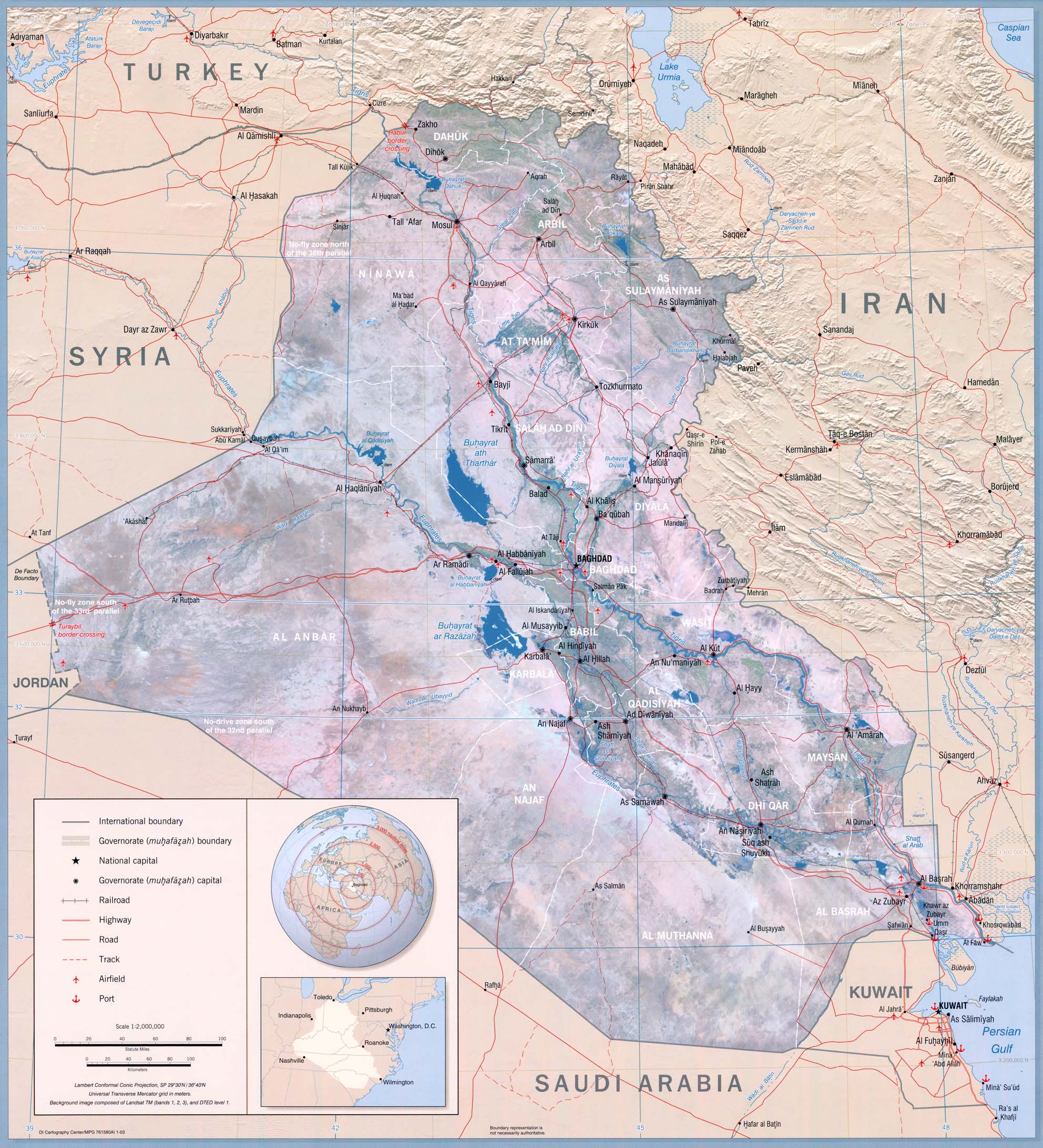
Bring 'em on: US airstrikes kill forty in
Karabila.
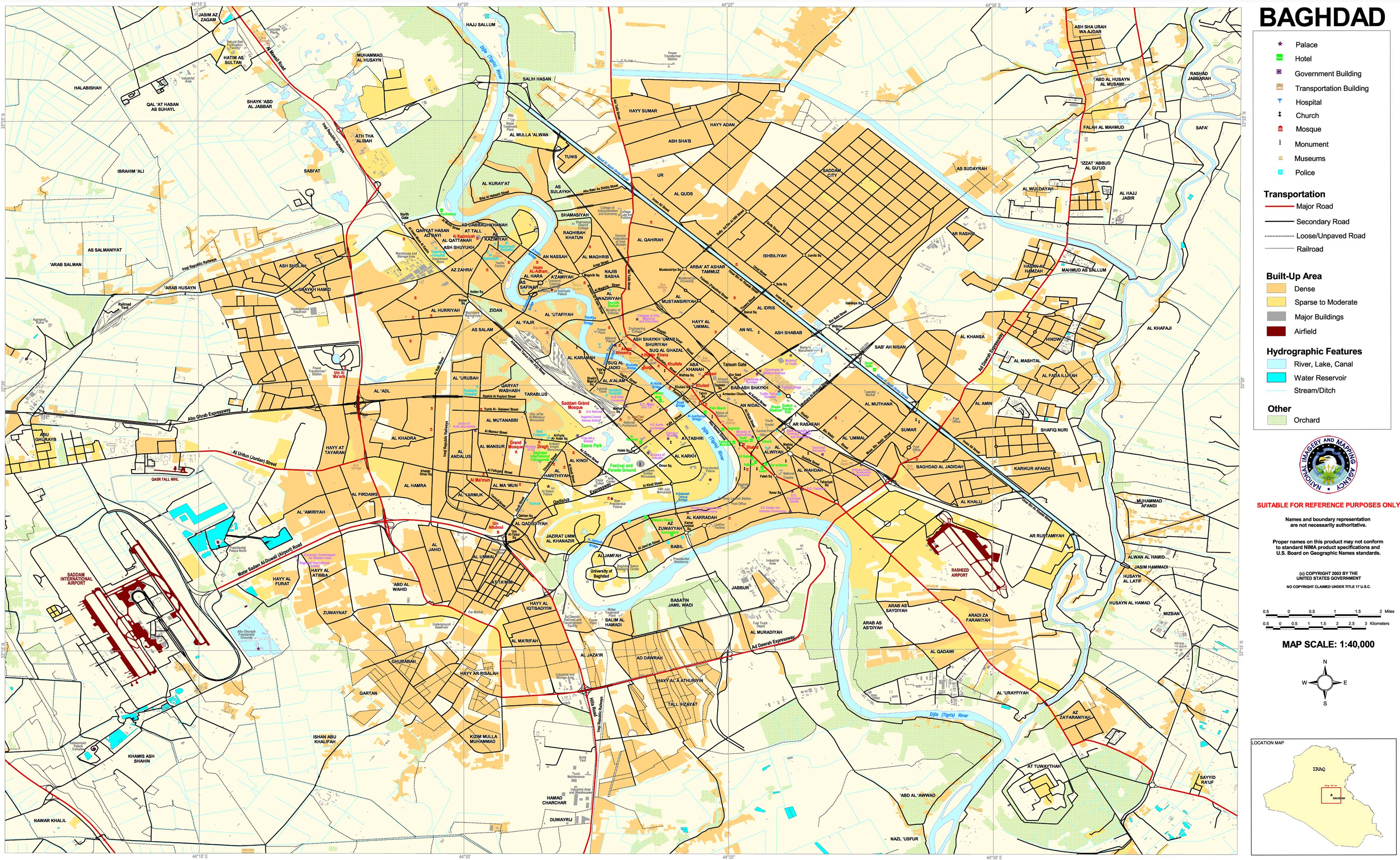
Bring 'em on: Two bank employees gunned down in
Baghdad.
Bring 'em on: US Marine killed in clashes in
Nasser wa Salaam.
Bring 'em on: Brother of Iraq's vice-president gunned down in
Baghdad.
Bring 'em on: Deputy trade minister wounded and two bodyguards killed in attack in
Baghdad.
Missed Deadlines: The Bush administration has missed dozens of deadlines set by Congress after the Sept. 11 attacks for developing ways to protect airplanes, ships and railways from terrorists.
· A plan to defend ships and ports from attack is six months overdue.
· Rules to protect air cargo from infiltration by terrorists are two months late.
· A study on the cost of giving anti-terrorism training to federal law enforcement officers who fly commercially was supposed to be done more than three years ago.
· A report on how a grant program for shippers and ports would work is more than a year late.
· A report on cargo container security is eight months overdue.
· A national security plan for marine transportation is well past its April 1 due date.
Pigs at the Trough: The report said Iraq's Bureau of Supreme Audit charged that up to $1.27 billion from some 90 contracts was lost from
June 2004 to February 2005 because deals were given to "favored suppliers" and cash was given to third-party firms to work out contracts.
Mafia: Italy's government on Sunday rallied to the defense of spy chief Nicolo Pollari, whose agency is accused of passing off bad intelligence to the United States, helping bolster claims about Iraq's pre-war nuclear ambitions.
Mafia 2: Possibly seeking to distance himself from Bush, who is widely unpopular in Italy, Berlusconi also claimed that he pleaded with Bush not to invade Iraq. "I tried repeatedly to convince the American president not to go to war," he told the La7 television channel. "I maintained that military action should be avoided."
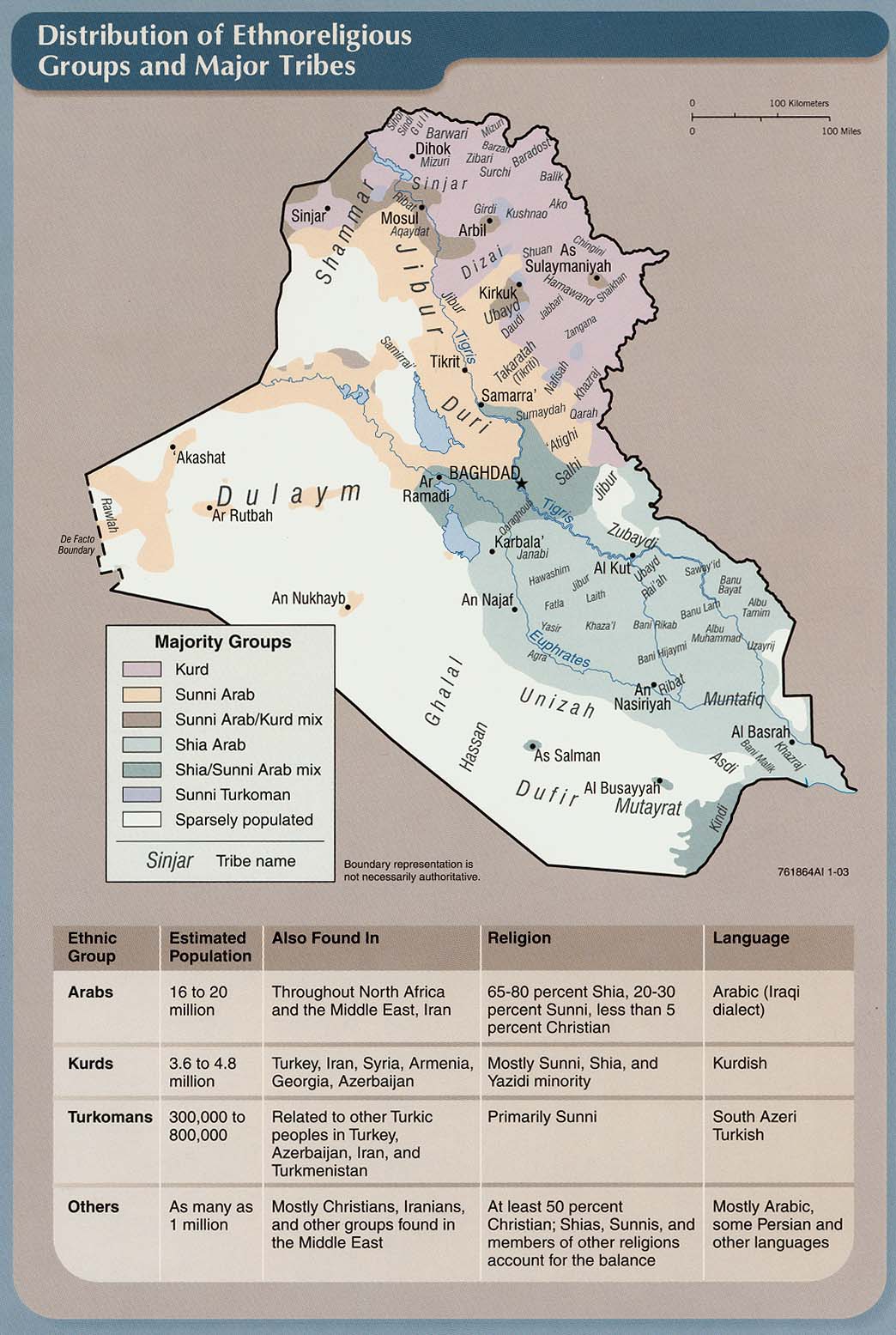
Mosul: Angry Sunni Arabs protesting the removal of a top police official have threatened to topple the provincial government of Nineveh as sectarian tensions flare in the volatile northern Iraqi province. Several hundred armed protesters, chanting slogans against what they say is Kurdish domination of Nineveh's regional administration, besieged government offices in the provincial capital of Mosul late on Saturday and were kept from overrunning the building by U.S. troops, local officials said on Sunday. Arabs accuse Kurdish leaders, whose autonomous region of Kurdistan lies just outside the city, of packing Mosul with Kurds. The Kurds deny this.
Dumbsfeld: "Osama bin Laden hasn't been seen in a video for a hellishly long time. That could be because he's become shy -- but wasn't before."
Complete timeline of the 2003 Invasion of Iraq: Key Events related to issues raised in Downing Street Memo. Please visit this link.
Opinion and Commentary
Brain Drain:
"There are almost no more qualified people in Basra," said Tamimi, who returned to Iraq's second-biggest city recently without his family for a short business trip. "Any successful engineer, doctor or businessman is now abroad. All this will have a negative impact on Iraq."
Successful Iraqis want to invest their money "where there is peace and stability," he said.
Government officials say they have no figures on the number of Iraqis who have fled since the U.S.-led invasion in 2003. But the former minister of migration, Pascale Warda, said she heard of people leaving almost daily.
As many as 800,000 Iraqis are believed to be living in Jordan, many of them since the conflict began. Thousands more have left for Syria, the United Arab Emirates, and other Arab countries. For the superrich, London and the United States are options.
"This just destroys the country. It has a very negative effect on the situation in Iraq and on the country's ability to improve," said Warda, who served in the interim government of Ayad Allawi, which left office in late April.
Salah Ahmed Hamoudi, a businessman who moved to Syria with his family three months ago, said patriotic Iraqis would prefer to stay home.
"Even if Syria is heaven on earth, I still love my country," he said by phone during a business trip to Mosul in northern Iraq. "But what are we supposed to do if there is no strong government? How can I come back and work if no one is capable of defending me?"
Many Iraqi scientists and university professors who stay have become targets, either because they belonged to Saddam Hussein's Baath Party — once essential for career advancement — or as part of a campaign by the predominantly Sunni Arab insurgency to weaken Iraq's intellectual power.
A Sunni Arab engineer, who insisted on not being quoted by name for security reasons, said he sent his wife and children abroad after insurgents threatened him because he works for a foreign company.
He quoted from a letter that the militants left for him with his son: "The only good thing about you is that you're a Sunni. If you weren't, we would have chopped your head off without even a warning."
Long Time Coming:
Liberals called it "Fitzmas". And it was a long time coming. But even though it took almost two years for special prosecutor Patrick Fitzgerald to make it down the chimney, it was worth the wait. Lewis "Scooter" Libby, the chief of staff of vice-president Dick Cheney, faces up to 30 years in prison and a fine of $1.25m if found guilty of lying over his role in leaking the identity of a covert CIA agent. Meanwhile, the continuing investigation of George Bush's consiglieri, Karl Rove, holds out the possibility of further charges against a more senior White House staff member.
In a week that saw Bush withdraw his supreme court nominee, Harriet Miers, and that followed a week in which Tom DeLay, the Republican house leader, was arrested for money laundering and conspiracy, liberals were gorging themselves on a festival of alleged corruption, criminality and incompetence prepared and served by conservatives.
The extent to which these most recent developments have exposed the Bush administration's real agenda and modus operandi should be welcomed. But legal defeats for the right should not be mistaken as political victories for the liberal-left, which has yet to convince anyone that it represents a meaningful alternative.
There is a thin line between what we know to be true and what we can show to be undeniable. Whether it's Rodney King or Abu Ghraib, only with incontrovertible evidence does an assertion shift from a debating point to a reference point. All that separates the misfortunes of Kate Moss from the fortunes of David Cameron is the money shot. We can tolerate the notion that a potential Conservative party leader has taken cocaine so long as we haven't seen it; we cannot tolerate the fact that a waifish model has taken cocaine because we have.
Fitzgerald's investigation crossed that line, laying out in clear detail the proof for some of the central criticisms the liberal-left has asserted about the Bush administration over the past five years.
First, that the case for the invasion of Iraq was built on a lie. This goes to the heart of the matter. Valerie Plame was a covert CIA agent whose husband, the former ambassador Joseph Wilson, was sent on a CIA-sponsored trip to investigate whether Iraq was seeking to buy uranium from Niger for nuclear weapons. Wilson concluded that this was unlikely but the claim ended up in Bush's state of the union address anyhow. When it came to Saddam's supposed weapon's cache, the White House was not the victim of flawed intelligence. It was the wilful perpetrator of known falsehood.
Second, that lie could only be sustained by discrediting those who dared to expose it. On July 6 2003, Wilson accused the Bush administration of exaggerating the case for war in an article in the New York Times. Libby sought to trash Wilson's credibility by telling reporters that Plame helped arrange her husband's trip, thus revealing her identity and sparking the investigation. It is a crime knowingly to divulge the identity of an undercover CIA operative.
For the team that stood a candidate whose wealthy connections ensured he never saw combat while rubbishing the actual war record of his opponent, John Kerry, this was business as usual. Two days after Wilson's piece appeared a Pew poll showed that over the previous four months the number of Americans who believed the military effort in Iraq was going very well had slumped form 61% to 23%; the number of those who thought it was not going well had rocketed from 4% to 21%.
Three months after Bush landed on the USS Lincoln emblazoned with its Mission Accomplished banner, both the message and the mission was tanking; it was time to shoot the messengers along with the Iraqis.
Third, the case has revealed the supine character of America's mainstream media in the run-up to the war. Primarily, it showcased the sharp practices of New York Times reporter Judith Miller. In Miller's own account of her grand jury testimony, she wrote: "When the subject turned to Mr Wilson, Mr Libby requested that he be identified only as a 'former Hill staffer' [rather than "senior administration official"]. I agreed to the new ground rules because I knew that Mr Libby had once worked on Capitol Hill." I once played centre forward for Cygnet Rovers of Stevenage. But to cite me as "a former footballer" would, in most instances, be as true as it is misleading. Miller's uncritical approach amounted to dictation that bolstered the administration's flimsy case for going to war.
"WMD - I got it totally wrong," she told Times reporters recently. "If your sources are wrong, you are wrong. I did the best job that I could."
Neither the Times in particular nor US journalism in general should be judged by the standards of one reporter. But while Miller's reporting style in the run-up to the war was appaling, its content was not aberrant. Following the terrorist attacks of September 11, the administration circled the wagons around the flag and the media found itself on the wrong side. Politically embedded at home before they were military embedded abroad, their fear of appearing unpatriotic trumped their fear of misinforming the public.
So the investigation has given us one of the clearest indications to date of how we got to this point. Given the malevolent partisanship of the Republican party it is not surprising that many liberals gloat at the prospect of a full-scale Republican implosion. But such schadenfreude is premature. The wounds of recent weeks have all been self-inflicted - the result of a mixture of hubris, malice, greed and ineptitude. There is no doubt that they have damaged Bush politically. A Washington Post-ABC poll this weekend shows his approval rating at an all-time low, with the public believing Bill Clinton ran a more ethical administration after the Monica Lewinsky scandal than Bush does now. Meanwhile, An AP-Ipsos poll released on Saturday shows support for the war at an all-time low of 37%.
But the Democrats are not faring much better, with only marginally more support than Republicans, according to a poll taken before the indictments and Miers withdrawal, but after hurricane Katrina and DeLay's arrest.
Having supported the war and without coherent proposals for disengaging, they are ill-placed to take advantage of the Republican's current troubles.
Either unable or unwilling to present a clear agenda of how they would do things differently, they have been effectively mute for several months. With no opposition, popular disenchantment with the Bush Administration's ethical failings is descending into cynicism.
Indeed, the only group that has really flexed its muscles in recent weeks has been the Christian right, which derailed Mier's nomination to the supreme court. Bush is likely to nominate another candidate later this week who will be more to their liking, thereby tipping the balance of the court against abortion and affirmative action. Unless the Democrats develop the wherewithal to challenge them, conservatives will then shape both the law and the politics of the country for a generation. And Fitzmas will be little more than a lingering reminder of what the law can do when politics has failed.
Reality and Myth:
But today we seem to live on two levels: reality and myth.
Let's start with the reality of Iraq. It is, to quote Winston Churchill on Palestine in the late 1940s, a "hell-disaster," a nation of anarchy from Mosul and Irbil down to Basra, where armed insurgents control streets scarcely half a mile from the Baghdad "green zone" wherein American and British diplomats and their democratically elected Iraqi "government" dream up optimism for a country whose people are burning with ferocious resentment against Western occupation. No wonder I'm more sure each day that I want to be away from conflict.
But for Bush, America is not anxious to withdraw from Iraq. Far from it. The United States is fighting enemies who want to establish a "totalitarian empire," he says, a "mortal danger to all humanity" which America will confront. Washington is fighting "as brutal an enemy as we have ever faced." Come again? What about Hitler's Nazi Germany? Mussolini's fascist Italy? The cruel, expansionist Japanese empire which bombed Pearl Harbor in 1941?
It's one thing, surely, for Bush and Lord Blair of Kut al-Amara to play Roosevelt and Churchill or to claim that Saddam is Hitler but to exalt our grubby, torture-encrusted, illegal conflicts as being more important than the Second World War -- or our turbaned enemies as more malicious than the Auschwitz SS killers -- is surely a step on the road to the madhouse.
"By any standard of history," my favourite American President declared this week, "Iraq has made incredible progress." Excuse me? By any standard of history, the Iraqi insurgents have made incredible inroads into the US military occupation of Iraq. "We've lost some of our nation's finest men and women in the war on terror," Bush tells us. .".. The best way to honour the sacrifice of our fallen troops is to complete the mission." In other words, we are going to prove the worth of the sacrifice by making more sacrifices. Truly, this is bin Laden-like in its naivety. We've suffered martyrs? Then let's have more martyrs!
Then we have President Ahmadinejad of Iran. Israel, he tells one of those infinitely dull and boring Tehran conferences on "Zionism" this week, must be "wiped off the map." I'm old enough to remember this claptrap from Yasser Arafat's weary old cronies in Beirut in the late 1970s. Ahmadinejad's speech -- before the obligatory 4,000 "students" who used to be a regular feature of Iran's revolution -- was replete with all the antique claims. "The establishment of the Zionist regime was a move by the world oppressor against the Islamic world. The skirmishes (sic) in the occupied land are part of the war of destiny."
Was this silly man, I ask myself, the scriptwriter for Ridley Scott's movie Kingdom of Heaven? Surely not, for the Hollywood epic is Homeric in its scope and literacy compared to Ahmadinejad's sterile prose. This, after all, is the sort of stuff I had to suffer during the original Iranian revolution when Ayatollah Khomeini set up his theocracy -- no, let us be frank and call it necrocracy -- in Iran. Government for and by the dead is becoming a vision for both Bush and Ahmadinejad.
But hold on. We have not counted on the Churchillian vision of Lord Blair. "I have never come across a situation of (sic) the president of a country stating they want to wipe out another country," he told us on Thursday.
Oh deary me. What can we do with this man? For Rome was rather keen, was it not, to wipe out Carthage (delenda est Carthago, Tony)? And then there is the little matter of Herr Hitler -- a regular bogeyman for Lord Blair when he stares across the desert wastes towards the Tigris -- who insisted that Poland should be wiped out, who turned Czechoslovakia into the Nazi protectorate of Bohemia and Moravia, who allowed the Croatian Ustashe to try to destroy Serbia, who ended his days by admitting that his own German state should be wiped out because its people didn't deserve him.
But now let's listen to Lord Blair of Kut al-Amara again. "If they (the Iranians) carry on like this, the question that people are going to be asking is: when are you going to do something about this? Can you imagine a state like that with an attitude like that having a nuclear weapon?" Well yes, of course we can. North Korea. Whoops! But they've already got nuclear weapons, haven't they?
So we'll ask a different question. Exactly who are those "people," Lord Blair, who might expect you to "do something"? Could they have anything in common with the million people who told you not to invade Iraq? And if not, could we have some addresses, identities, some idea of their number? A million perhaps? I doubt it.
Is there to be any end of this? Not yet, I fear. In Australia a couple of weeks ago, I found Muslims in Melbourne and Adelaide regaling me with stories of abuse and obscenities in the street. New laws are about to be introduced by Prime Minister John Howard to counter "terror" which will not only allow detention without trial, but also the extension of "sedition" laws which could be used against those (mainly Muslims, of course) who oppose Australia's preposterous military involvement in Afghanistan and Iraq.
Well, count me in, John. I think you live in a great country with great people, but I'm planning to turn up in Adelaide again in the spring to argue against any Western involvement in those two countries, including yours. I look forward to a sedition charge. And to Lord Blair "doing something" against North Korea. I hope Mr Bush never does discover enemies worse than the Wehrmacht and the SS. And I sincerely trust that the little satraps of the religious necrocracy that is Iran will grow up in the years to come. Alas. Like Peter Pan, our leaders wish to be forever young, forever childish, and forever ready to play in their bloodless sandpits -- at our expense.
# posted by Anonymous : 10/31/2005 01:18:00 AM
|
Sunday, October 30, 2005
War News for Sunday, October 30, 2005
Bring 'em on: Oil executive gunned down in
Kirkuk.
Bring 'em on: One killed and three injured by roadside bomb in
Muhmoudiyah.
Bring 'em on: Advisor to Iraqi government escapes assassination attempt in
Baghdad.
Bring 'em on: Two US soldiers killed by roadside bomb in
Baghdad.
Bring 'em on: Police colonel and his bodyguard gunned down
Baghdad.
Bring 'em on: Car bomb kills twenty five and injures thirty five in a village near
Baqubah.
Bring 'em on: US soldier killed and four wounded by a landmine in
Baiji.
Bring 'em on: Supporter of Cleric Sadr shot dead in
Baqubah.
Bring 'em on: Al Queada Lt. number ######## killed in US airstrikes in
Huseiba.
Bring 'em on: Seven Iraqi soldiers injured in checkpoint attack in
Baqubah.
Bring 'em on: Two US soldiers die in non-combat related incidents in
Kuwait.
Bring 'em on: Bodies of seven executed Iraqis, some policemen, discovered in
Latifiyah.
Bring 'em on: Iraqi family executed in
Samarrah.
Bring 'em on: Two Iraqi policemen killed by roadside bomb in
Kirkuk.
Electioneering Fatwah?: Iraq's top Shiite Muslim cleric is considering demanding a timetable for the withdrawal of U.S. and foreign troops after a democratically elected government takes office next year, associates of the Iranian-born cleric said. If the Americans and their coalition partners do not comply, Grand Ayatollah Ali al-Sistani would use peaceful means such as mass street protests to step up pressure for a pullout schedule, two associates of the cleric said.
Bring 'em home: Japan and South Korea planning to reduce their military presence in Iraq.
80%: "Approximately 80 percent of all attacks are directed against Coalition Forces, but 80 percent of all casualties are suffered by Iraqis," the report said. It was made available on the Pentagon's Web site. The report noted that attacks by insurgents increased as expected in the runup to the referendum. Weekly attacks numbered just under 200 in the first quarter of 2004, and rose to over 650 a week as the referendum approached.
Opinion and Commentary
Elite Journalists:
Today, elite journalists can't pretend to be on the outside looking in at a scandal that doesn't involve them. This scandal is about them -- it's about White House-media cronyism, about journalists on the top rung of the phone trees of Karl Rove and Scooter Libby, two of the dirtiest smear artists in Washington history. It's no accident Rove and Libby didn't turn to Helen Thomas or Seymour Hersh about Joe Wilson. They turned to journalists they could count on -- at news outlets that had dutifully promoted so many pre-war lies
In the past, elite journalists were up to their neck in scandals -- but they were deft about writing themselves out of the story. That can't happen in this scandal involving the origins of the Iraq War.
It did happen in the scandal at the origins of the Vietnam War: the Tonkin Gulf hoax. In pursuit of his long-held strategy, President Johnson went on national TV in August 1964 to announce a momentous escalation of the war: air strikes against North Vietnam in response to an "unprovoked attack" on a U.S. destroyer in the Gulf of Tonkin.
But there'd been no such attack on the U.S. Johnson's ploy succeeded because major news media reported official lies as absolute truth. The next day's headline in the Washington Post spoke of North Vietnam's "New Aggression." The New York Times reported of U.S. "retaliatory action" and editorialized in support of Johnson and his "somber facts."
Flypaper Strategy:
Islam expert Guido Steinberg, who just wrote a book on new terror networks, suspects that there are hardly more than 1,000 non-Iraqi, Arabic fighters in Iraq, although Paz's estimates are slightly higher. Most are able to sneak in though the Saudi and Syrian borders and this summer, a brochure appeared on the Internet that gave tips on how to best make it to the "battlefield." For example, it suggests a person disguised as a businessman or a patient, ideally wearing jeans and listening to western music on a Walkman, would likely not be suspected of being an Islamic radical by border guards.
And even if they are responsible for the bulk of the most brutal attacks, foreign fighters are in the minority. On the other hand, it is estimated that there are several tens of thousands of Iraqis participating in the insurgency.
Most of the mujahedeen volunteers are, if one can generalize from the data from the lists, between 18 and 28 years old. Many of them are fathers; several of the older ones have already fought in Afghanistan and spent time in prison in their home countries because of extremist activities.
Australian Wanker:
Four images from the Muslim Middle East: Iran's president, Mahmoud Ahmadinejad, calls for Israel to be "wiped off the map"; in Jordan, network TV begins broadcasting a 29-part, Syrian-made series based on the protocols of the Elders of Zion -- a crude and notorious forged document of anti-Semitic propaganda depicting Jews as baby-killers and corruptors of the world.
Meanwhile, in Iraq, about 10 million people, more than 60percent of the electorate, vote to introduce the most liberal and democratic constitution the Arab world has ever known.
And Saddam Hussein, one of the two or three most murderous dictators of the second half of the 20th century, goes on trial in Iraq over the massacre of civilians.
Which of these events occasioned criticism and contempt from left-wing commentators throughout the West?
Naturally, the ones that herald a potentially liberal and democratic future in the Middle East.
There is much tragedy and blood still to come in Iraq, but the referendum was a historic moment.
It's amazing how a de facto alliance has developed between the Left in the West, as seen every day on our own ABC, and the Islamist murderers and terrorists of Iraq, because in the end they share the same enemy: Western power, and especially the US.
No end in sight:
While the nation mourns the 2,000th U.S. combat death in Iraq, instead of looking for ways to plan an exit strategy, Congress is finalizing another payment of $50 billion to continue fighting the war.
The dynamics of the fighting between the resistance and the U.S., and the horrific human costs that are being exacted, are unlikely to change in the near term as the Bush administration remains stubbornly committed to occupying Iraq. And both parts of the administration's purported plan, democratization and putting Iraqis in charge of their own security, are failing because of the continued resistance to U.S. occupation.
It's clear that the situation is only getting worse. Instead of helping make Iraq safer and more stable, U.S. troops add to the violence. As long as U.S. troops remain in Iraq, the resistance -- and the violence -- will flourish. Suicide attack rates have doubled since 2004, the number of resistance attacks per month have doubled in 2005 and the U.S. Army National Guard has been losing more soldiers per months than at any other time during the war.
The impact on the people of Iraq has also been staggering. Over 27,000 Iraqi civilians have died in the war and at least 3,000 Iraqi soldiers have been killed so far. And Iraqis still live today without adequate supplies of water or electricity, without sewage treatment plants or access to jobs.
On top of these human costs, the financial costs are soaring as well. Before the war started, administration officials argued that the total cost would be $50 billion. But the latest spending will lift the tab to $250 billion, bringing the average yearly spending to $86 billion. This amounts to every man, woman and child in the U.S. sending the government a check for $840 to pay for the bill so far.
Congress and the Pentagon have fallen down on the job of keeping tabs on the money being spent. In late September the Government Accountability Office issued a report concluding, "neither [the Department of Defense] nor Congress ... can reliably know how much the war is costing and details on how appropriated funds are being spent." At a time where our nation is running a deficit and money is urgently needed for emergency relief and reconstruction, we cannot afford to waste funds.
Look!!! - Iraq is doing so well:
An embattled President George W. Bush sought yesterday to shift the focus away from a host of domestic political crises by calling for the American people to back the struggle for democracy in Iraq.
At the end of a disastrous week for the White House, which culminated in the indictment and resignation of senior aide Lewis 'Scooter' Libby, Bush and senior Republicans launched a counter-offensive in a bid to regain the political initiative.
Republican leaders and commentators hailed the fact that Bush's political guru, Karl Rove, had not been indicted in the Plamegate scandal - which concerns the leaking of the identity of CIA agent Valerie Plame - as a sign that the worst is over. 'The wrongdoing leads in no way beyond this one individual [Libby] and what he allegedly said to FBI investigators and the grand jury,' said William Kristol, editor of the Conservative 'bible', The Weekly Standard
At the same time Bush used his weekly radio address yesterday to hail the 'great sacrifice' of American soldiers who had died in Iraq. 'The best way to honour the sacrifice of our fallen troops is to complete the mission and win the war on terror,' he said. His comments came as three more American soldiers were killed in Iraq to add to a toll that has already passed 2,000 since the invasion in 2003.
Do they want us?:
The real issue now is not whether the United States leaves Iraq today, tomorrow or in next decade. It is this:
We Americans must realize that our Iraqi adventures fit a long-term pattern. We have believed far too long that people everywhere will like and accept what we, as a nation, do for and to them.
They don't, they haven't and they won't.
I am not opposed to all wars. I would have supported the Union in the Civil War. As a youngster, I supported my country against the Nazis. Later I served six years in the military and was honorably discharged.
I learned then that no sergeant and no general is entirely wise and good. I have learned that no politician and no political party is entirely wise and good. I have learned that civilian and military leaders, rather than lying directly, more often mislead the public with half-truths and "deniability."
I have learned that, concerning national and world affairs it is best to take the long view, rather than critiquing the next election or the most recent war. And I have learned that out in the real world, our American purposes do not guarantee results. This is because other people and nations have their own purposes.
A century ago, with both Republican and Democratic support, the U.S. "freed" numerous Caribbean and Pacific islands, including the Philippines, from Spain. Our leaders promised the Filipinos would welcome our rule with open arms. They didn't. Filipinos, with "insurgent" leader Aguinaldo, had been fighting for freedom against Spain. They continued fighting against us.
Some American soldiers, frustrated, and with official approval, tortured and abused prisoners.
The United States did not free the Philippines, but was increasingly vulnerable there, because an expanding Japan viewed us as intruders in Asia. The Japanese took the Philippines, after first attacking Hawaii, which we had taken from the Hawaiians
Obviously, America's leaders in 1898 did not anticipate a Pacific war 40 years later. Obviously, our 1898 purposes did not match the long-term consequences for ourselves, or for millions of others.
Four presidents led the Vietnam War, two from each party, with support from members of Congress and voters, both Republican and Democratic. The Vietnamese, who had been fighting the French, now fought us. Thousands of Americans died, as did hundreds of thousands of Vietnamese. Vietnam was reunited. Our announced purposes had nothing to do with the real consequences.
We wasted lives, money and international goodwill.
In the last hundred years, we have promised that all those people would welcome our soldiers, our institutions and our trade. But "insurgents" have always appeared, and they always will. Sometimes frustrated American soldiers, trapped by the irresponsible promises of civilian and military leaders, have tortured and abused prisoners, burned villages and killed noncombatants.
Sometimes they have had approval from military and civilian leaders with "deniability." Our armies have "pacified" towns and countries - until we left.
# posted by Anonymous : 10/30/2005 02:15:00 AM
|
Saturday, October 29, 2005
WAR NEWS FOR SATURDAY OCTOBER 29, 2005
Bring ‘em on: Suicide Bombings Higher Than Ever in Iraq. In the six months since Iraq’s government took office, suicide bombers have struck nearly 200 times.
Bring ‘em on: Iraqi Soldier killed in Fallujah from roadside bomb. A women and child were killed in subsequent gunfire. Eight civilians wounded when a bomb went off near a bus station in Miqdadiya. Five civilians, two of them children, were injured when a morter round landed on a residential district in Baquba.
Bring ‘em on: US Soldiers killed three militants in Ramadi.
Bring ‘em on: Three Iraqis were killed in a terrorist blast in Fallujah.
Bring ‘em on: Wounded American Troops in Hospital. More than 30 wounded American troops from Iraq were treated at the hospital at the Lakenheath air base this month. The flight was diverted from Germany because of bad weather.
Bring ‘em on: British soldier would have lived if defense officials had delivered new body armor on time.
Bring ‘em on: US Soldier killed by IED in south Baghdad on October 27, 2005
Bring ‘em on: US Soldier killed by IED in Ramadi on October 27, 2005
Bring ‘em on: US Soldier killed by roadside bomb on October 27, 2005 in Baghdad. This is a separate casualty report than the one above.
Bring ‘em on: Two American Marines killed in Saqlawiyah on October 27, 2005
Bring ‘em on: More information on the five US troops killed above
Bring ‘em on: Syria: US Troops Killed Syrian Soldier - This happened in May 2005. A quote from this article: “What bothers us the most are the continuous American attacks on our village,” said Asir Hamid, 25, from the village of Sanjak, near the Iraqi border city of Qaim. He said American warplanes attacked the area five days earlier.
Bring ‘em on: US Soldier dies at Landstuhl from injuries. He was injured by an explosive device from a moving vehicle in Balad on October 23, 2005
Bring ‘em on: Ten members of one Iraqi family killed earlier this week in Qameshly.
Bring ‘em on: Late Night Explosion Leads to Early Morning Arrests in Baghdad
THE TRAGEDY OF IRAQ: Baghdad man describes his day, his fears, and his reactions to a book about Iraq called “Night Draws Near”
THE TRAGEDY OF IRAQ: Demand For Grave Diggers And Coffins Soars In Baghdad “We have seen nothing like this. Mutilated bodies beyond recognition, bodies shot in the head with hands still cuffed. “I have been in this profession for most part of my life. But what I see now scares me to death,” said Haj Abu Muhanad, 66.
THE TRAGEDY OF IRAQ: Baby “liberation” in Iraq. (Photo)
THE SHAME OF AMERICA: Bribe Inquiry Looks at Sale of Field Gear to Military. In a widening scandal at the US Special Operations Command, federal investigators are looking into a bribery scheme as well as accusations of improper influence involving millions of dollars in battlefield equipment used by Navy Seals and Army Green Berets and Rangers.
THE SHAME OF AMERICA: Scott Ritter and Seymour Hersh: Iraq Confidential. They discuss how the CIA manipulated and sabotaged the work of the UN departments to achieve a hidden foreign policy agenda. Ritter also states that he has no hope for Iraq, and that the best the US can do now is “mitigate disaster.”
THE SHAME OF AMERICA: Libby pushed case for war. (Libby is 55 years old, and has two children – I’ll bet they are old enough to enlist!)
THE SHAME OF AMERICA: (These protestors should be arrested.) An anti-gay church's protest at the funeral of an Indiana soldier killed in Iraq has prompted a state senator to pursue a bill that would make disorderly conduct a felony offense if it occurs at military funerals. Sen. Brent Steele said his proposed bill is in response to the Aug. 28 funeral in Martinsville of Army Staff Sgt. Jeremy Doyle. Church members dragged U.S. flags on the ground and shouted insults at Doyle's wife and other survivors.
THE SHAME OF AMERICA: Only US Seeks To Justify Abuse: Human Rights Watch
THE SHAME OF AMERICA: Dozens of Abu Ghraibs GENEVA, Oct 25 (IPS) - U.S. human rights groups have denounced before the U.N. Human Rights Committee that there are perhaps dozens of secret detention centres around the world where Washington is holding an unknown number of prisoners as part of its "war on terror".
THE SHAME OF AMERICA: The Fall of the Warrior King (This is the story of what happened to a young Iraqi man who was out after curfew and ran into US troops. This would have been an untold story, except he happened to be the cousin of a popular Iraqi blogger, who told his story, and inspired an investigation into what happened. This is one Iraqi blogger who went from being pro-American… to considerably less so. He has since quit blogging.)
When he plunged into the river, Marwan recalled, the frigid water enveloped his body and a swift current pulled him toward the gates of the dam, less than 50 feet downstream. "I felt the water dragging me," he told me. "I was thinking of Zaydoon. I was looking at him. The water was so cold. My feet never touched the bottom. I tried to save Zaydoon, but he slipped from my hands."
THE SHAME OF AMERICA: Many Detainees Died During Interrogation: US Body’s Report on Iraq, Afghanistan
THE SHAME OF AMERICA: Col Janis Karpinski, the Former Head of Abu Ghraib, Admits She Broke the Geneva Conventions But Says the Blame “Goes All The Way To The Top” (A Democracy Now interview.)
THE SHAME OF AMERICA: Now They See Us As We Are. The implication was obvious: Thanks to the United States of America, happiness was on the way. The effect of the speeches was shattering. Silence. No applause. No celebrations. Instead, Turkish women told her, "You cannot bring in war for the sake of peace. The United States cannot interfere in the democracy problem and solve it through war." And Saudi women -- who she promised would soon be able to drive cars -- told her that they were happy, thank you, and that they didn't need America to make their lives complete and that, frankly, they would be a lot happier if she just went home. It was a hard message to misinterpret.
THE SHAME OF AMERICA’S MEDIA: CIA Leak Case May Reopen Iraq Debate Wounds (and the shame is that this is presented as a bad thing!)
OPINION: Where Chaos Is King.
Its first goal has long been to retain a (much reduced) military presence in that country for the foreseeable future. The administration is on record as saying that it will leave if asked to do so; but the continuing chaos and conflict, largely sparked by the continued presence of US troops, ensure that the desperately weak government in Baghdad's Green Zone, which is unlikely to survive without American protection, won't make such a request.
Its second goal is to ensure a predominant role for US companies in the development, production and sale of the country's vast reservoirs of oil. Indeed, the few documents made public from the Cheney Energy Task Force revealed that concern over losing Iraq to European oil companies, combined with China's insatiable thirst for petroleum and fears that it would increasingly encroach on America's sphere of economic dominance, were important reasons for the war.
The administration's final goal has been to continue the wholesale, disastrous privatization of Iraq's economy - something that, as the World Bank warned, was unlikely to be accepted by the people of any Middle Eastern country who possessed the wherewithal to resist. (linked by carl p. in the comments section)
OPINION: Myths About Iraq Must Be Dispelled For War to End.
For example, it is now regarded as an uncontested fact that the disgruntled Sunni population in areas that form an imaginary geographic triangle in the center of Iraq fuels the so-called insurgency. A parallel triangle takes on a different form, uniting the remnants of the Baath Party loyalists, Islamic terrorists fleeing Afghanistan and foreign fighters. We are also told that the reason behind the Sunni fury was their loss of power and status following the toppling of Saddam Hussein, since the latter is a Sunni, who supposedly favored the Sunni Arab minority over the country’s Shia majority, who are merely fighting for what is rightfully theirs, according to the edicts of democracy.
Thus the US military occupation (often referenced as American presence) in Iraq becomes an imperative to protect the country’s fresh democratic experience that restored order in favor of the country’s Shia majority, whose democratically elected representatives are in fact the ones appealing for a military withdrawal deferral. The Bush administration, keen on nurturing democratic experiences everywhere, duly complies, since the national interests of the democratically elected governments of Iraq and the US conveniently converge.
It’s such a shame that so few in the US media (excluding online media and some alternative radio) manage to break away from the above construct, which bears little or no resemblance to the truth; that those even wishing to disapprove of the administration’s policy in Iraq, often do so while accepting the above assertions as the parameters of their critique.To argue that Saddam’s brutality applied to any group or individual that dared challenge his reign, whether Sunni or Shia; that the resistance in Iraq is for the most part a determined response to an illegitimate war and occupation; to challenge the authenticity of the claim specifying one group as majority and another as minority; to question the entire edifice of claims that classify the current political establishment in Iraq as democratic in the first place, or to argue that the relationship between the US military administration and the Iraqi government is not that of equals; to do any of that is to risk being dismissed as a nuisance.
To be taken seriously, one must adhere to conformity, however flawed, and renounce common sense, however evident.
OPINION: Put Iraq’s Story on the Stand "Americans . . . want to blame Saddam for the mass graves and killing Kurds," Khalil Dulaimi, the dictator's lead lawyer, told the Wall Street Journal. "But they forget that they supported Saddam back then."
OPINION: Iraq Blog Count comments on recent poll in Iraq and other Iraqi’s responses: "Are Iraq The Model correct to question poll results? Yes, by all means question anything when the fog of war is all about us. I just wish those two were as critical of all the pro-war drivel their visitors feed them."
BRITISH PEACE ACTION: UK Christians Step Up Anti-Arms Trade Work
PEACE ACTION: In Support of Kent State Students. But there is an even more important reason for demanding that Dave be given all his rights back and that all punishment against him be rescinded immediately. The rock wall is a horrible advertising scam designed to foolstudents about the reality of war, the reality of military “life,” if you are lucky enough to live through it whole and with all your faculties. War isn’t climbing rock walls and joking with friends and David knows this. War isn’t “expanding your horizons” or “learning useful skills”. War is about killing the enemy. That means that war is based on who the governmentdeems the enemy at any given moment in time. And who makes these decisions? Do we vote on war? No, those who rule decide upon war.
CASUALTY REPORTS
Local Story: PA State Trooper Killed by Explosion in Iraq
Local Story: Soldier Laid to Rest Amid Show of Support (Texas)
Local Story: Missouri Soldier Dies in Iraq
Local Story: Indiana Soldier Killed in Iraq Crash
Local Story: Helena Soldier Killed in Baghdad
Local Story: Arkansas City Man Dies In Iraq
QUOTE OF THE DAY: We stand by as children starve by the millions because we lack the will to eliminate hunger. Yet, we have found the will to develop missiles capable of flying over the polar cap and landing within a few hundred feet of their target. This is not innovation. It is a profound distortion of humanity’s purpose on earth. —Sen. Mark Hatfield (R-OR)
# posted by Dancewater : 10/29/2005 07:14:00 AM
|
Friday, October 28, 2005
The Twelve Days of Fitzmas
On the first day of Fitzmas,
my true love sent to me
A
partridge in a pear tree.
On the second day of Fitzmas,
my true love sent to me
Two turtle Roves,
And a
partridge in a pear tree.
On the third day of Fitzmas,
my true love sent to me
Three
French hens,
Two turtle Roves,
And a
partridge in a pear tree.
...Four calling
birds...
...Five golden
rings...
...Six
geese a-laying...
...Seven
swans a-swimming...
...Eight
maids a-milking...
...Nine ladies
dancing...
...Ten
lords a-leaping...
...Eleven
pipers piping...
...Twelve
drummers drumming...
# posted by Anonymous : 10/28/2005 01:00:00 PM
|
WAR NEWS FOR FRIDAY, OCTOBER 28, 2005
Bring ‘em on: Iraq Insurgency Shows No Signs of Abating
Bring ‘em on: Total Disconnect on Iraq Realities (from CBS News) About the only benefit from not being able to move freely to report is that there is time to read about this place. But in doing so, one gets the impression that nobody in the U.S. government pays attention to what we do manage to report. Or is it simply that the disconnect between the reality here and the preferred perception there is unbridgeable? For the sake of motorists, it’s probably a good thing that many VIPs prefer to ride over the city rather than through it because even more dangerous than the troops are the private security convoys. At least the troops are subject to some discipline and rules of engagement. The Private Security Details, or PSDs, drive as fast as possible, guns bristling, bulling their way through traffic in SUVs. The vehicles, of course, are guaranteed to make them a target. But maybe that’s the point. Apparently answerable to no laws, not even those of courtesy, PSDs who shoot at civilians are not known to stop and check what they have done. And the only thing they do more often than shoot is shout “F*** off!” at anyone who gets in their way.
Bring ‘em on: Eight civilians injured from bomb in bus station in Miqdadiya. Five civilians, two of them children, injured when mortar round landed in residential district of Baquba. US Soldier killed on Thursday when his patrol hit an IED in south Baghdad. US Soldier killed on Thursday when his vehicle hit IED in Ramadi.
Bring ‘em on: US aircraft continued air strikes on alleged insurgent safe houses near the Syrian border. Another senior al-Qaeda figure killed in Iraq (reportedly he used religious courts to try Iraqis who supported coalition forces). Three Iraqi bodies found near the town of Baqouba. Three Iraqi engineers where kidnapped recently in the area.
Bring ‘em on: What the US death toll in Iraq reveals - Perhaps the most striking statistic from this war, compared with any other conflict in US history, shows troops today have a much better chance of surviving if wounded. This is because of vast improvements in body armor and strides in battlefield medicine.
Bring ‘em on: Scores killed in Iraq Violence - Stepped-up attacks in Iraq over the past two days have killed at least 44 Iraqis, including 12 labourers, five of them brothers, who were shot and killed at a construction site. (This article is dated October 24, 2005.)
Bring ‘em on: US Has 161,000 Troops in Iraq, Highest of the War
Bring ‘em on: Gun Battle Sees Iraq Near Civil War - The conflict in Iraq took another significant step in the direction of civil war yesterday when rival Sunni and Shiite militias fought a gun battle outside Baghdad in which 15 people were killed. The fighting broke out after Sunni insurgents kidnapped a member of militant Shiite cleric Muqtadr al Sadr's Mahdi Army.
Bring ‘em on: Juan Cole’s explains what happened in the battle mentioned above:
Sunni-Shiite Warfare breaks out in Southeast Baghdad Al-Hayat: Exhibit A in the case for seeing what is going on in Iraq as a low-intensity civil war: On Thursday, Sunni Arab guerrillas from the Nahrawan district of southeast Baghdad kidnapped a member of the Mahdi Army of Muqtada al-Sadr . When the rest of the Mahdi Army militiamen in the man's neighborhood heard about this, they traced the kidnappers to a house in Nahrawan and mounted an assault on it, freeing their colleague. They took the two kidnappers captive. But then as they were leaving Nahrawan they fell into an ambush and 25 of them were killed by Sunni Arab guerrillas. Then the Ministry of Interior gendarmes showed up to help the Sadrists (typically they are drawn from the Badr Corps paramilitary of the Supreme Council for Islamic Revolution in Iraq). They engaged the Sunni Arab guerrillas, and lost two of their men in the firefight. Ironically, SCIRI fighters and Mahdi Army militiamen had clashed with each other in Najaf not so long ago. Assuming these gendarmes were originally Badr, they in any case were able to unite with the Sadrists against Sunni guerrillas. The last time this sort of thing had happened, the "Wrath of God" Shiite militia came up from Basra to Mahmudiyah to defend the Shiites. That was a much smaller conflict. The danger of Thursday's clashes is that they could easily spread.
Bring ‘em on: 27 Killed in Clashes Between Iraqi Police and Civilians (update on yesterday’s story) Also, three Iraqi soldiers killed and at least 11 others, mostly civilians, were wounded in an attack by insurgents on an Iraqi army checkpoint south of Baghdad.
Bring ‘em on: Police colonel dies of wounds from prior attack in Kirkuk
Bring ‘em on: Daily Death Fear for US Soldiers in Iraq - The one that sticks in the mind of Sergeant Joseph Barnes of North Carolina, is more ominous. "There's a sign on one of the posts that says 'Is today the day?"' Just a few hours after he escaped with nothing worse than a flat tyre from a roadside bomb that hit his fuel truck, Barnes said: "Every time you go out, you go out knowing that you might not come back."
Bring ‘em on: Former Iraqi Pilots Decry Wave of Killings. Former Iraqi air force pilots say they are the targets of a witch hunt and are seeking refuge from a wave of assassinations that has killed almost two dozen since the fall of Saddam Hussein’s regime.
Bring ‘em on: Chris Allbritton blogs on “Palestine (hotel) attack the work of Ba’athists, Jihadis” and also writes about the relationship between these two groups. He said the attack on the hotel was against not against journalists, but against security firms now working in Iraq.
Bring ‘em on: Four foreigners die in Iraq blast - Four foreign nationals believed to be US security staff were killed by a roadside bomb targeting a convoy close to the western Iraqi city of Ramadi.
Bring ‘em on: The Number Isn't 2,000
News outlets are now reporting that the number of American military fatalities in Iraq has reached 2,000. However, to focus only on the American and military fatalities as a result of the American-led invasion of Iraq would be a mistake. Here are some other numbers:
Iraq Body Count currently records the number of Iraqi civilian fatalities as at least 26,690, and as many as 30,051. As of this writing,
at least 3,450 Iraqi security forces have been killed since the start of the insurgency. In addition to Iraqi and American fatalities,
coalition forces in Iraq have suffered at least 199 fatalities, including 97 from Britain. Further, as of this writing,
at least 272 contractors have been killed in Iraq. Finally, lest we forget,
at least 58 journalists have also been killed in Iraq. The number is not 2,000. It is way beyond 2,000. Even without the Iraqi civilian fatalities, the occupation has cost the lives of at least 5,979 people (again, most of whom are Iraqis). It has also caused tens of thousands of people to become wounded. So yeah, by the lowest count possible, the number of deaths in Iraq reached 2,000 today. That, however, should not be the only number we are counting.
All the names must be collected. All of the dead must be remembered.
THE TRAGEDY OF IRAQ: Uninvited Marines Become Part of Life for Iraqis
For the Iraqis who become unwilling hosts, it can be anything from a mild inconvenience to a disruption that tears apart lives. For the Iraqis, the intrusion can be disruptive, especially when troops conduct nighttime drills with loud but harmless explosions and armored vehicles pass through at all hours of the day. Many Iraqis also fear the makeshift barracks in their neighborhoods will attract insurgent attacks, possibly putting them in the crossfire. Checkpoints can also make it difficult to travel to local markets.
THE TRAGEDY OF IRAQ: They are too young to understand: Psyche of Iraqi Children
“Children are not living their childhood,” said Suat Mohammed, a psychology professor. “Children are growing afraid to interact with other children. They are afraid of relationships,” Mohammed said. “This generation, when it grows up, will create an unstable, weak society.... [They] will curse us for what we have wrought in Iraq.” At Al Huda School in Karada, a neighbourhood of Baghdad, Principal Najiha Mahdi Mohammed Hadi said she was seeing things she had never seen in her 32 years at the secondary school for girls. Hadi said students had begun talking about who was a Shia and who was a Sunni. This year, there have been several fights between girls from different religious sects, she said. “We never thought of distinctions before,” the 60-year-old principal said, shaking her head sadly in her sweltering first-floor office. “This idea just appeared.”
THE TRAGEDY OF IRAQ: Rising Civilian Toll Is the Iraq War’s Silent, Sinister Pulse
The war here has claimed about 2,000 American service members, but in the cold calculus of the killing, far more Iraqis have been left dead. The figures vary widely, with Iraqi and American officials reluctant to release even the most incomplete of tallies. Civilians do appear to be dying at a faster pace. Mr. Cordesman found in a recent analysis of American figures that more than 60 Iraqis were killed daily this year, up from 40 last year.
THE TRAGEDY OF IRAQ: Iraqi Death Toll Much Higher than U.S.
The number of Iraqis who have died violently since the U.S.-led invasion is many times larger than the U.S. military death toll of 2,000 in Iraq. In one sign of the enormity of the Iraqi loss, at least 3,870 were killed in the past six months alone, according to an Associated Press count.
One U.S. military spokesman said it is possible the figure for the entire war could be 30,000 Iraqis, which many experts see as a credible estimate. Others suspect the number is far higher, since the chaos in Iraq leaves the potential for many killings to go unreported.
THE TRAGEDY OF IRAQ: Analysts Warn of Effects of Iraq Civil War
Any all-out civil war in Iraq could shake the political foundations of places beyond that stricken land, sending streams of refugees across Iraqi borders, tempting neighbors to intervene, and renewing the half-buried old conflict of Sunni and Shiite in the Muslim world, Middle East analysts say. “If it’s a war between Sunni and Shiite, this war might be extended from Lebanon to Afghanistan,” says Diaa Rashwan, and Egyptian expert on Islamic militancy.
THE TRAGEDY OF IRAQ: Grim Milestone? A Sad day in Iraq
One paradox, which Sassaman and not a few others pointed out, was that the Americans could have shot Marwan and Zaydoon that night, and no American officer would have raised an eyebrow. Two young Iraqi men, in a nasty Sunni town, caught driving a pickup after curfew: Iraqi civilians have been killed for less. Yes, from the mouths of babes, Iraqi civilians have been killed for less. Racism? Prejudice? Venom? Insanity? What can you call it. And to add insult to injury, the US media calls today a Grim Milestone. For whom? Every day since the invasion has been a grim milestone for us. Every day another Iraqi is killed is a grim milestone. Every day medical services break down is a grim milestone. Every day Iraqis have to fear walking the streets is a grim milestone. ABC is calling the deaths the price of progress. I wonder if the people at ABC head office would view it as progress if they had to drink infested water, or walk through sewage in their neighborhoods, or dodge bullets from the trigger-happy.
THE WAR COMES HOME: Casualties Of A War A World Away
Elaina Morton is not listed as one of the 2,000 Americans now confirmed killed in Iraq since the start of the war, but she might as well be. In US military parlance the 23-year-old lab technician from Kansas would have been referred to as a "surviving spouse". But three months after her husband, Staff Sergeant Benjamin Morton, was killed by insurgents in Mosul, Elaina picked up a gun and shot herself.
THE UPCOMING IRAQI ELECTION/IRAQI POLITICS
IRAQ POLITICS: Shi’ite and Sunni lines drawn for Iraq vote: Iraq's ruling Shi'ite Islamist parties struck a last-minute deal to patch up differences on Thursday and agreed to register as a united bloc for Dec. 15 polls where they face a new Sunni Arab alliance. But in a flare-up likely to fuel mistrust between Iraq's two main religious sects, at least 21 Shi'ite militia fighters and two policemen were killed when they clashed with Sunni insurgents near Baghdad, an Interior Ministry official said.
IRAQ POLITICS: Sadr, Sunnis join hands to contest polls: Radical Iraqi Shiite cleric Moqtada al-Sadr said Wednesday he would present a joint list of candidates with Sunni Arabs in the Al-Anbar Province to contest the upcoming legislative elections.
IRAQ POLITICS: Ruling Shiite Parties to Run Together in Iraqi Elections - The country's ruling Shiite parties agreed today to run together as a coalition in the coming elections, virtually ensuring that the religious parties, all with strong Iranian ties, will remain a formidable force in the new government. The move also means the vote will likely divide along ethnic and sectarian lines, as it did during last January's elections for a transitional Parliament.One interesting permutation has arisen from the recent horse-trading: The Sadr organization, which has always advocated resistance to the Americans, will not run with the Shiite alliance in volatile Anbar Province, Sheik Rubaie said. There, it will join with hard-line Sunni Arab groups to form a slate of candidates running on an anti-American platform.This evening, Mr. Chalabi met with Abdul-Aziz al-Hakim, the leader of the Supreme Council, in last-minute negotiations. But the two failed to reach an agreement, and Mr. Chalabi now intends to form a coalition with Sheik Abdul Karim al-Muhammadawi, a popular politician from the southern marshlands, said Ali Feisal al-Lami, the senior political officer of the Hezbollah Party, which is led by the sheik. Hezbollah has a strong following in Maysan Province and could well win some of that province's seven parliamentary seats.
IRAQ POLITICS: Three Shiite Parties Announce AllianceThree main Shiite Muslim religious parties Thursday announced an alliance to run in December's legislative elections, a reshuffled version of the slate that swept nearly 50 percent of the vote nationwide last January.
COMMENTARY
WASHINGTON POST VS. THE GUARDIAN: COMPARING TWO ARTICLES BY THE SAME IRAQI AUTHOR (who used to be an architect, who was there when the statue came down on April 9th – and was not brought there by Chalabi – and was very happy to see Saddam gone, who used to blog but stopped after US troops beat the crap out of him, who used to be pretty pro-American, who now sees things differently, I imagine. He has turned into a fine reporter. Pretty much the same material in both articles, but look at the difference in the titles and opening lines)
FROM WASHINGTON POST: The New Sunni Jihad: 'A Time for Politics' Tour With Iraqi Reveals Tactical Change By Ghaith Abdul-Ahad
Special to The Washington PostThursday, October 27, 2005
For weeks before Iraq's constitutional referendum this month, Iraqi guerrilla Abu Theeb traveled the countryside just north of Baghdad, stopping at as many Sunni Arab houses and villages as he could. Each time, his message to the farmers and tradesmen he met was the same: Members of the disgruntled Sunni minority should register to vote -- and vote against the constitution.
"It is a new jihad," said Abu Theeb, a nom de guerre that means "Father of the Wolf," addressing a young nephew one night before the vote. "There is a time for fighting, and a time for politics."
Abu Theeb recounted how once he was driving to Baghdad carrying a sack filled with anti-tank rocket detonators. American soldiers stopped him at a checkpoint, ordered him out and began searching his car. "I prayed to God. I told him, 'God, if I am doing what I am doing for your sake, then spare me. If not, let them get me,' " he recounted. "The American soldier opened the trunk where I had the sack filled with rocket detonators. He moved it away and started to search. He finished and asked me to leave. I knew then I was blessed by God."
Initially, al Qaeda in Iraq gained support in parts of the Sunni community for its meticulous planning, its ferocious fighting and its funding. "If it wasn't for al Qaeda fighting alongside the Sunnis in Iraq, the whole battle would have had a different outcome," said Abu Hafsa, a regional guerrilla commander based north of Baghdad.
"They have experience in fighting; they did very clever stuff," Abu Theeb agreed. "They attacked all the centers of the Iraqi state and by doing so prevented the Americans from creating a puppet state that they can hand everything to. The Iraqi resistance was preoccupied with fighting the Americans only and couldn't see that strategic goal."
FROM THE GUARDIAN: “We Don't Need al-Qaeda” Thursday, October 27, 2005 by Ghaith Abdul-AhadAbu Theeb is the leader of a band of Sunni insurgents that preys on US targets north of Baghdad. Last week he openly defied al-Qaida in Iraq by actively supporting the referendum. Ghaith Abdul-Ahad spent five days with him - and uncovered evidence of a growing split in the insurgency. The tipping point came when al-Qaida, known then as the Tawhid al-Jihad, decided to target the Iraqi police and army and other Iraqi ministries and institutions. Its goal was to prevent the Americans establishing an Iraqi state that could lead the fight against the insurgency - and allow the Americans to take a back seat. "They have experience in fighting and they did very clever stuff," says Abu Theeb. "They attacked all the centres of the Iraqi state and prevented the Americans from creating a puppet state that they could hand everything to. The Iraqi resistance was occupied by fighting the Americans and couldn't see that strategic goal." Perhaps inevitably, though, the insurgents turned out not to have the same stomach for Iraqi blood. "Al-Qaida believes that anyone who doesn't follow the Qur'an literally is a Kaffir - apostate - and should be killed," says Abu Theeb. "This is wrong."
OPINION: Who Are We To Pick Syria’s President? Could Someone Recommend One for Us?
OPINION: The Voice of Iraq (Arab News) ALL interested parties will try to extract the message that most suits them from the overwhelming endorsement of the new Iraqi Constitution which was announced yesterday by the UN officials supervising the vote. However, regardless of any spin, the plain fact is that first the interim parliamentary elections and now the constitutional referendum have taken place, despite dire predictions that the men of violence would sabotage the process. The stage is now set for final parliamentary elections in early December at which point Iraq will have, on paper at least, completed its rapid transformation from a single-party dictatorship to a pluralist democracy.
OPINION: Winds of Change (Iraqi Blogger –he says attack on Palestine hotel was against the media, whereas Chris Allbritton claims they were targeting foreign “security forces.”) But the progress towards democracy is unstoppable and inexorable and total victory is in sight. The enemy is now counting on one and only one forlorn hope, and that is to wear down the resolve of the American and western people, with the help of the MSM, which explains the latest explosions near the Meridien/Palestine hotel. The American and Iraqi military campaigns have achieved considerable success, and it is more essential than ever to persevere and stand firm at these critical times, I mean from now until the coming elections in December, at least. Firmness must be accompanied by no less determined efforts to draw in the reasonable elements from the Sunnis to the political process and full participation in the coming elections. This includes reinforcing and helping the local leaders and tribal communities who wish to maintain the peace in their areas and combat the extremists and terrorists, and there are quite a number of these, from my own personal knowledge.
OPINION: The newly released film Occupation Dreamland, illustrates this particularly well with a Socratic monologue by a captain of the 82nd Airborne in Fallujah in the fall of 2003. He says, "What are we here for? To provide security? To secure the local government? Does anyone think that the local sheikhs and notables in the government are going to be killed by their own people? [This was still early in the occupation, when indeed that was very unlikely] So then who are we securing? We're securing ourselves." A USAID official quoted in George Packer's new book, the Assassin's Gate, says it similarly: "Our troops are in force-protection mode. They don't protect anyone else. They're another private militia." Another instructive point: the resistance in Ramadi, while composed of numerous groups with lots of competition and poor central coordination, and far from a model force – for instance, they heavily attacked polling centers on constitutional referendum day – in general maintains a focus on attacking the occupying forces. There have been no suicide bombings in a long time, and no mass killings of Iraqi civilians such as characterize so many other areas. Indeed, even further than that, according to the article's author, the resistance even refrains from attacking projects, like power plants and transformers, that the population supports. The result is that, at least as far as occupying forces can tell, the population of Ramadi is solidly behind the resistance, which is indeed, at least to some extent, a fish swimming in the sea of the people. Finally, says the article, Iraqi army forces are far better at fighting the resistance than they were a year ago. This is entirely because of the sectarian cast given to the counterinsurgency, where Shiite and Kurdish units are brought in to fight in Sunni Arab al-Anbar province. The result, presumably, is that the only ways for the Americans to win Ramadi will be to destroy it themselves or have Shiites and Kurds do it and set the stage for civil war.
SIGNS OF POSSIBLE UPCOMING WARS IN THE MIDDLE EAST
Iran's New President Says Israel 'Must Be Wiped Off the Map'
UN Reports Rising Flow of Arms From Syria into Lebanon
Israel Intensifies Crackdown on Palestinians
Seven killed in Gaza air strike. Islamic Jihad said one of its suicide bombers had struck in Hadera (on Wednesday) to avenge the Israeli army's killing on Monday of Luay Saadi. In the aftermath of the Gaza air strike, a local Islamic Jihad leader said his group would hit back. Palestinian negotiator Saeb Erekat condemned the Israeli attack and warned of "the consequences of this escalation. It came shortly after Mr Sharon …… vowed "wide-ranging and ceaseless" operations against Palestinian militants in response to the Hadera bombing. (got all that? It sure supports the thesis ‘violence begets violence’)
Palestinian Suicide Bomber Kills 5 in an Israeli Town
Bush Wants Syria Held to Account in Terrorism
Experts: An Iraq Civil War May Cause Turkish Intervention
PEACE ACTIONS
Peace Group Urges Congress to stop Iraq War Funds
Join Us In A “Show The War, Tell The Truth” Campaign - Without TV and press cheerleading the war could never have won support. With pressure, we can encourage the media to move in the other direction. Its time for a "SHOW THE WAR, TELL THE TRUTH" campaign aimed at unmasking media collusion and pressing for better coverage. Footage, Footage, Footage. It's there. Why can't we see it? At a recent protest at CNN HQ in Atlanta, network staffers told me that they get dramatic footage in from the conflict everyday that they do not put out. Why? It is time to end censorship and self-censorship. A CNN producer told protesters with signs demanding "Show the War" that they should be there every day. Media insiders know that pressure can move PR sensitive executives to respond to public demands. They don't want to be challenged as toadies of a bankrupt Administration.
A Parent Responds: We will join you. My daughter Ava, a 15 year old Alabama activist, has created many anti-war animations that are very powerful. On their website, Peace Takes Courage.
Pakistan press takes note of Cindy Sheehan’s arrest in Washington DC
Bells ring for Iraqi Civilian Deaths - Outside Central United Methodist Church in Detroit on Thursday, Patricia Lent rang a bell, then Patricia Lay-Dorsey read the name of one of the Iraqis who died in the U.S.-Iraq war. "Noor Rameem Yswif," said Lay-Dorsey, a Grosse Pointe Farms resident. "A 12-year-old boy killed by a missile."
AN IRAQI BLOGGER COMMENTS ON THIS: “The bells will ring; our hearts will hear. Let us work hand by hand toward putting an end to this madness. Let us pray together.”
CASUALTY REPORTS
Local Story: Indiana Soldier Dies in Iraq
Local Story: Navy Corpsman from Millers Creek (NC) Dies In Iraq
Foreign Story: A Soldier’s Story: The short life and violent death of Sgt Chris Hickey, 1st Battalion, The Coldstream Guards. His death on Tuesday got only fleeting mentions. So Severin Carrell went in search of the man who was the 97th Briton to fall in Iraq, and found friends asking: how many more of our lads are going to die like this?
Local Story: Tucson (AZ) Soldier Among Latest of War Casualties
Local Story: Video: Remembering Andy, One of the 2,000
Local Story: Convention Honors Teacher Killed in Iraq (Wisconsin) - "Together, we know that the source of all good teaching is the human heart," State Superintedent Elizabeth Burmaster told those assemble. "We learned Andrew was well known for his energy and his love of teaching."
QUOTE OF THE DAY: I'm a Vietnam infantry veteran who has taken the time to peel away the onion of war. Strip off the uniforms, the flags, the nationalities, the slogans. War is, at best, the failure of leaders to solve problems. At worst, war is a massive money-generating machine with no regard for life. --Arnold Stieber, USA (published in letter to The Guardian)
# posted by Dancewater : 10/28/2005 07:59:00 AM
|
Support The Troops Edition, Friday, October 28, 2005
Scum of the Earth.
On Oct. 16 at an Army airfield in Indiana, Suzette Boler wrapped her arms around her husband and through tears wished him the best. Army Spc. Jerry Boler, 45, was bound for Fort Dix, N.J., and duty in Iraq. He expects to put his life on the line guarding convoys from insurgent attacks.
Suzette Boler, of Caledonia, returned home that Sunday night and prepared the next day to return to her receptionist job at a small Caledonia employee benefits firm. She had taken four unpaid days off to see her husband of 22 years off to war.
Late Monday afternoon, Boler, 40, answered the phone. She was told to come in the next day and pick up her things.
She was fired.
"It was a shock," Boler said. "I was hurt. I felt abandoned by people I thought cared for me. I sat down on the floor and cried for probably two hours."
Officials at Benefit Management Administrators Inc. confirmed Boler was fired for failing to show up for work the day after she bid goodbye to her husband.
"We gave her sufficient time to get back to work," said Clark Galloway, vice president of operations for Benefit Management.
Benefit Management Administrators, Inc.
Email:
Benefit Management Administrators, Inc
N. Henry Bledsoe, President
# posted by yankeedoodle : 10/28/2005 01:49:00 AM
|
Thursday, October 27, 2005
War News for Thursday October 27th 2005
Bring 'em on: SOLDIER FATALITY IN VEHICLE ACCIDENT NEAR CAMP BUCCA
Bring 'em on: U.S. SOLDIER DIES OF NON-COMBAT WOUNDS
Bring 'em on: 2 U.S. SOLDIERS KILLED IN BOMB ATTACK
Bring 'em on: ONE KILLED, 4 WOUNDED BY SMALL-ARMS FIRE, IED ATTACK
Bring 'em on: Baldwin City Police Officer Lance Parker's brother, Evan Parker, has died as a result of head injuries suffered Sunday when a grenade was tossed in his Army Humvee in Iraq.
Bring 'em on: A roadside bomb destroyed a Humvee in a US convoy.
Bring 'em on: Two police killed three wounded in roadside bombing
Bring 'em on: Armed men assassinated Wednesday an official of the Iraqi Culture Ministry's tourist institution
Bring 'em on: Four bodies were found in northeastern Haditha. Three of them were wearing army uniforms and the other was a contractor working with U.S companies.
Bring 'em on: Gunmen opened fire on a convoy of bodyguards for Iraq's minister of water resources in western Baghdad, wounding two people.
Bring 'em on: Three people were abducted by gunmen on the road outside Tikrit on Tuesday, local officials said. One of the kidnapped is a sister of the provincial minister of housing, the other is a manager in local agriculture ministry, and the last is a brother of a director in the provincial health directorate. The woman was released later in the day while the men were still held captive.
Bring 'em on: Three policemen were killed and two wounded when a roadside bomb exploded beside their patrol in central Fallujah
Bring 'em on: Two policemen were killed when gunmen attacked a police station in Ramadi
Bring 'em on: An Iraqi was killed and eight others wounded on early Thursday by a suicide car bomb in central Iraq
Bring 'em on: Coalition Force Engineers patrol was attacked by improvise explosive device and then came under small arms fire on the road 1 km south of An –Numaniya city. 3 Ukrainian soldiers were wounded.
Bring 'em on: The bodies of three Iraqis have been discovered near the town of Baqouba.
Bring 'em on: A drive-by shooting by insurgents killed police Lt. Colonel Mahdi Hussein
Bring 'em on: In Fallujah insurgents fired a mortar round at the Iraqi army headquarters, leading soldiers to return fire randomly and hit a nearby car carrying three teachers to a school, said police 1st Lt. Assad Hussein al-Jumaili. One of teachers was killed and two were wounded
Bring 'em on: U.S. ground and air forces continued to attack insurgents in western Iraq near the Syrian border.
Bring 'em on: At least 21 Shi'ite militia fighters and two policemen were killed on Thursday when they clashed with Sunni Arab insurgents southeast of Baghdad. Another five policemen and 12 members of the Mehdi army were wounded.
Bring 'em on: A police major was killed by gunmen in the southern district of the capital
Bring 'em on: A car bomb hit a U.S. patrol of Humvee armoured vehicles in Baghdad early on Thursday, killing one civilian and wounding four
Bring 'em on: One policeman was killed and five others wounded when clashes broke out between insurgents and Iraqi police in Baquba
Bring 'em on: One policeman was found shot dead in his car south of Baquba
Bring 'em on: One policeman from an elite unit was killed and two wounded when a roadside bomb exploded near their patrol in the northern city of Kirkuk
Bring 'em on: Two policemen were wounded when a car bomb exploded near a police patrol in Hawija
Bring 'em on: The head of the Hawija city council escaped death when gunmen attacked him near Hawija, police said. He is seriously wounded in a hospital.
What's left of the coalition of the willing:
At this time,
27 nations are contributing to the ongoing stability operations throughout Iraq. These countries are Albania, Armenia, Australia, Azerbaijan, Bosnia and-Herzegovina, Bulgaria, Czech Republic, Denmark, El Salvador, Estonia, Georgia, Italy, Japan, Kazakhstan, South Korea, Latvia, Lithuania, Macedonia, Mongolia, Netherlands, Norway, Poland, Romania, Slovakia, Ukraine, United Kingdom, and United States.
Oil:
More than
4,500 companies took part in the United Nations oil-for-food program and more than half of them paid illegal surcharges and kickbacks to Saddam Hussein, according to the independent committee investigating the program.
Profit at
Exxon Mobil, the world's biggest publicly traded oil producer, jumped 75 percent to an industry record of $9.92 billion, the company said today in a statement. The Hague-based Shell set the previous profit record about six hours earlier, when it said net income rose 68 percent to $9 billion.
While the most dire predictions have been largely dismissed as alarmist --
gasoline prices in the United States of up to $6 a gallon and crude oil climbing to $105 a barrel in 2007 -- analysts warn consumers could face new price spikes and won't soon be returning to pump prices that propelled the popularity of gas-guzzling SUVs.
Scandals in a broken house:
The White House braced for the possibility that Vice President Dick Cheney's chief of staff, I. Lewis "Scooter" Libby, could become a criminal defendant by week's end. Bush's top political adviser, Karl Rove, remained in jeopardy of being charged with false statements.
President Bush on Thursday accepted the withdrawal of Supreme Court nominee Harriet Miers, according to a statement from the White House.
peace vigils:
Reno:
Michigan:
Philadelphia:
Durango:
Martinsburg:
FARMINGTON:
Oakland:
Morristown:
Marin:
Austin:
Cleveland:
Cape Cod:
Billings:
Fort Collins:
Oregon:
West Springfield:
New Hampshire:
Anchorage:
Chicago:
Florida:
New Haven:
End games:
Lance Cpl. Jonathan Spears, who shed some of the weight that made him a formidable football player before the Marines would let him enlist, is the first service member from the Pensacola area to die in Iraq.
The U.S. military announced the death of a soldier in San Antonio —
Staff Sgt. George T. Alexander Jr., 34, of Killeen, Texas — from wounds sustained in Iraq
Capt. Tyler B. Swisher and another Marine were killed when a roadside bomb struck their vehicle during combat near Amariyah, the Marine Corps said Wednesday.
Last Christmas,
Lance Cpl. Kenneth Butler gave his stepfather a U.S. flag and a red Marine Corps flag. He had planned to put up a pole for the flags for Father's Day next year, after his return from Iraq. But Butler, 19, was killed Friday in Iraq.
# posted by whisker : 10/27/2005 07:27:00 AM
|
Wednesday, October 26, 2005
War News for Wednesday, October 26, 2005
Bring ‘em on: Three people abducted by gunmen on the road outside Tikrit. Two policemen killed when gunmen attacked a police station in Ramadi. Three policemen killed and two wounded when a roadside bomb exploded beside their patrol in central Falluja. Four bodies found in northeastern Haditha, three of them wearing army uniforms and the other a contractor working with U.S companies. The corpses were bound, gagged and had gunshot wounds to the head and chest. Gunmen killed an official at Iraq's Ministry of Culture and seriously wounded his driver in southern Baghdad. Gunmen opened fire on a convoy of bodyguards for Iraq's minister of water resources in western Baghdad, wounding two people. Police said that the minister, Abdul Latif Rasheed, was not present.
Bring ‘em on: At least nine people killed when a car bomb exploded in Sulaimaniya. A member of the Patriotic Union of Kurdistan escaped assassination when two car bombs targeted his motorcade near his home in western Sulaimaniya, one of his guards was killed and two were injured in the attack. Three corpses of Iraqi army soldiers wearing civilian clothes found in Ramadi. The bodies had gunshot wounds to the head. Two policemen killed and another seven wounded when gunmen ambushed a vehicle transferring prisoners in the western Ghazaliya district of Baghdad,. It was not clear if there were casualties among the prisoners. A suicide car bomber targeted a U.S. military convoy in the Mansour district of western Baghdad, killing one civilian and injuring five. One person killed and one wounded when a roadside bomb exploded near one of Baghdad's children's hospitals.
Technology marches on: After 31 months of fighting in Iraq, more than half of all American fatalities are now being caused by powerful roadside bombs that blast fiery, lethal shrapnel into the cabins of armored vehicles, confronting every patrol with an unseen, menacing adversary that is accelerating the U.S. death toll.
U.S. military officials, analysts and militants themselves say insurgents have learned to adapt to U.S. defensive measures by using bigger, more sophisticated and better-concealed bombs known officially as improvised explosive devices, or IEDs. They are sometimes made with multiple artillery shells and Iranian TNT, sometimes disguised as bricks, boosted with rocket propellant, and detonated by a cell phone or a garage door opener.
The bombs range from massive explosives capable of destroying five-ton vehicles to precision "shaped charges" that bore softball-size holes through thick armor, the main defense of troops in the field, and they are becoming a key factor in the fast-rising U.S. death toll.
Iraqi Politics
Democracy in Iraq: After 10 days of audit, a draft Iraqi constitution was finally ratified with 78 percent of "yes" votes, surpassing the 21 percent "no" votes with a huge margin, as announced by the Iraqi Independent Electoral Commission on Tuesday.
The long-awaited but much anticipated result of the Oct. 15 referendum, which was to pave the way for a parliament election in mid December, was embraced by majority of the 9.8 million voters despite a narrow fate of being defeated by opposing Sunnis, who managed strong "no" votes in two provinces, falling short of only one in order to veto it.
Some disagree: When election officials proclaimed yesterday that Iraqi voters had approved a constitution in this month's referendum, the U.S. and Iraqi governments cheered the news as a victory for democracy here.
Perhaps, say Iraqi scholars and analysts. The referendum drew a 63 percent turnout, 3 points higher than the legislative elections in January, and about 79 percent of voters backed the constitution, according to results released yesterday by the Independent Election Commission.
But the vote result also deepens a dangerous divide that could inflame the insurgency by Sunni Arabs, who voted massively against the constitution.
"This result ... is a big fraud operation by the government," declared Saleh Mutlaq, a leading Sunni politician who served on the commission that drafted the constitution.
Societal fracture lines: In final results for the October 15 referendum released yesterday, some 78.6 per cent of voters cast Yes ballots and 21.4 per cent voted against - but voting appears to have split along ethnic and sectarian lines.
In the overwhelmingly Sunni Arab governorates of Anbar and the predominantly Sunni Arab Salaheddin, 97 and 82 per cent of voters rejected the document, while in the swing governorate of Ninawah, about 55 per cent of ballots rejected it.
But the result in Ninawah, which was only announced yesterday, means opponents of the draft narrowly failed to reach the two-thirds majority in three provinces that would have been needed to block the charter.
The predominantly Shia south and Kurdish north meanwhile supported the document by margins of more than 95 per cent, while more divided results in the mixed governorates such as Baghdad, in which 78 per cent of voters approved it, Kirkuk, in which 63 per cent did, and Diala, in which only 51 per cent voted Yes, also appeared to reflect the demographic balances in those governorates.
May they find consensus: Three Sunni Arab parties on Wednesday set up a coalition to contest December's parliamentary elections after a big turnout of Sunni voters failed to block Iraq's new U.S.-backed constitution.
The move comes after the U.S. military death toll in Iraq passed 2,000, a symbolic figure which is expected to pile up pressure on U.S. President George W. Bush to pull out troops from the country. Another soldier was reported killed on Wednesday in a vehicle accident, raising the total to 2,001.
In forming their new coalition, the Iraqi People's Gathering, the Iraqi Islamic Party and the Iraqi National Dialogue hope to give Sunni Muslims, who had boycotted previous elections, a bigger voice in a permanent political structure expected to emerge from the December poll.
It also may provide Sunnis more leverage in discussions over constitutional amendments under a deal brokered by U.S. diplomats just before the referendum, guaranteeing four months of additional negotiations in an effort to achieve consensus.
The Number Of The Beast
Round number: The American military death toll in the Iraq war reached 2,000 Tuesday with the announcements of three more deaths, including an Army sergeant who died of wounds at a military hospital in Texas and a Marine and a sailor killed last week in fighting west of Baghdad.
The 2,000 mark was reached amid growing doubts among the American public about the Iraq conflict, launched in March 2003 to destroy Saddam Hussein's alleged weapons of mass destruction. None was ever found.
Rough numbers: Iraq Body Count, a peace group which counts casualties based on media reports, says on average 38 Iraqis a day die violently. It says at least 26,600 have died since the invasion but the true figure may be higher because many deaths go unreported.
A report by Iraq Body Count in July said nearly 37 percent of the Iraqi deaths it had recorded were caused by U.S.-led forces, with the rest caused by insurgents and criminal gangs.
According to icasualties.org, a web site run by a non-governmental group that tallies U.S. and Iraqi casualties, more than 3,400 Iraqi police and soldiers have been killed in postwar Iraq, including more than 2,100 this year alone.
Numbers game: The US military has revived the discredited "bodycount" method of measuring success in Iraq to counter bad publicity over mounting American casualties, now approaching 2000 dead.
The technique of announcing the number of enemy insurgents killed was abandoned in the 1970s when US units in Vietnam were found to be falsifying the figures.
Some commanders ordered the bodies of guerrillas killed in action to be buried and then had them dug up and counted a second time to inflate their combat performance and lessen pressure for results from senior officers.
There was also always the question of whether the bodies were genuine combatants or civilians caught in the crossfire.
Unlucky number: Adel Abed Hammed was a skinny 31-year-old so withdrawn he sometimes went days without talking to anybody and would let only his mother touch him.
Mentally ill since childhood, he used to wander the streets of Baghdad alone. One day he chanced on some American soldiers who shot him dead after he took fright at a bullet fired over his head.
"I wouldn't feel such misery if he wasn't so sick but that makes it double for me," said his mother. "He was like a child."
Comparing numbers: "The nearly 2,000 Americans killed in combat (1,998 on October 24, 2005) in Iraq since 2003 are more than were lost in Vietnam combat in the first four years of U.S. combat (1961-1965, when just over 1800 died). This total is more than were lost in the last two years of combat (1971-1972, when just over 1600 died)," recounts Maurice Isserman, co-author of "America Divided: The Civil War of the 1960s."
Statistics: The real human cost, of course, is far greater than 2,000. It includes the 198 members of the "coalition of the willing" who have died, almost 300 private contractors, 73 journalists, the 15,220 Americans who have been wounded, and the invisible dead from what the Guardian's Julian Borger called the "extraordinarily high number of accidents, suicides and other non-combat deaths in the ranks that have gone largely unreported in the media."
And then there's the sad fact that those deceased Americans and allies are a fraction of the number of Iraqi dead.
Another estimate: Michael O'Hanlon, a military analyst at the Brookings Institution who has closely followed the war's casualties, said an average of 1,500 to 2,000 Iraqis have been killed per month, about half of them insurgents.
While American troops are killed at the rate of about 60 to 70 per month, the new Iraqi military suffers that many deaths in a week, mainly from insurgent attacks that rose to about 90 per day in September, O'Hanlon said.
Exacerbating the carnage is the Iraqi crime rate, now the highest in the Middle East, with about 10,000 homicides a year that would not have happened without the invasion, he said.
The total of Iraqi deaths - including insurgents - from all manner of war-related violence could run as high as 70,000, said O'Hanlon, who teaches a course at Columbia University on estimating war casualties.
One in four: Since the March 2003 invasion, at least 487 National Guard or Reserve troops have died in Iraq, nearly 1 in 4 U.S. casualties. These are not professional soldiers. These are the people who sell us insurance, drive our trucks, fix our cars.
"The Guard is different in the respect that these folks are seen around town every day, driving a deputy sheriff's patrol car or working at the 7-11 or teaching high school," said U.S. Sen. Saxby Chambliss, R-Ga. "These are everyday folks who have been commanded to go to war."
Folks like James Kinlow, who survived just six weeks in that hostile land.
“An artificial mark”: AP said the 2,000th military fatality was an Army sergeant who was wounded by a roadside bomb north of Baghdad and died in Texas last weekend. He is Staff Sgt. George T. Alexander Jr., 34, of Killeen, Texas.
But the chief spokesman for the American-led multinational force has called on the media not to consider the 2,000 number as some kind of milestone.
U.S. Army Lt. Col. Steve Boylan, director of the force's combined press center, wrote in an e-mail to reporters, "I ask that when you report on the events, take a moment to think about the effects on the families and those serving in Iraq. The 2,000 service members killed in Iraq supporting Operation Iraqi Freedom is not a milestone. It is an artificial mark on the wall set by individuals or groups with specific agendas and ulterior motives."
Specific agendas and ulterior motives. What, the Bush administration set the artificial mark? Shove it, Steve.
Invisible numbers: The human toll for the U.S. military in the Iraq war is not limited to the nearly 2,000 troops deaths since the March 2003 invasion. More than 15,220 also have been wounded in combat, including more than 7,100 injured too badly to return to duty, the Pentagon said. Thousands more have been hurt in incidents unrelated to combat.
Military doctors say U.S. troops are surviving wounds in Iraq that would have been fatal in previous wars due to advances in medical care and body armor.
Military statistics showed that while 23 percent of U.S. troops wounded in combat in World War Two died and 17 percent in the Vietnam War, 9 percent of those wounded in Iraq and Afghanistan died. Without the advances since Vietnam, the U.S. death toll in Iraq would be nearly double the current total.
But military doctors said some troops who may have died in previous wars are surviving, but with grievous injuries such as multiple limb amputations. More than 300 troops have undergone at least one limb amputation. By far the single biggest cause of combat wounds are blasts from IEDs.
Not numbers at all: Air Force Master Sgt. Steven Auchman was the 1,294th service member killed in Iraq, according to one count.
On Tuesday, nearly a year after his death, the nation mourned the 2,000th U.S. casualty since the invasion began in March 2003.
"To me, it's not so much the number, it's the person, because I couldn't tell you what the number was for my husband," said his widow, Jenny, sitting in her home off College Street. A gold star banner hangs in her living room and his picture smiles down on her from the fireplace mantle.
"I really don't care what his number is. He's a person, not a number."
“Negligible”: Imagine a major mainstream media figure stating that the deaths of American soldiers in Iraq are not really a big deal. You would expect that pundits across the political spectrum would attack such a statement as an affront to the troops and a belittling of their sacrifices.
But you don't have to imagine; this scenario has already happened, with hardly a peep from other commentators. The journalist in question is Fox News Channel anchor Brit Hume. On the October 13 broadcast of Special Report, the show he regularly hosts, Hume said of U.S deaths in Iraq, "by historic standards, these casualties are negligible."
What history is Hume referring to? It's true that U.S. deaths were substantially higher in World War I and II, Korea and Vietnam--major wars fought either against major world powers or against well-armed states backed by superpowers. Deaths were also much higher in the U.S. Civil War.
But when compared to other conflicts in its category--wars and counterinsurgency operations against comparatively weak, isolated nations and guerrilla movements--the death toll in Iraq is strikingly high. Of all the other U.S. military interventions over the past 30 years--which include Lebanon, Grenada, Panama, the 1991 Gulf War, Somalia, Haiti, Kosovo and Afghanistan--none have come close to 1,000 U.S. deaths, let alone 2,000. By those "historical standards," the Iraq War has been remarkably deadly.
How many service age children or grandchildren do you have, Brit? How many are actually serving?
Some other numbers: On top of these human costs, the financial costs are soaring as well. Before the war started, administration officials argued that the total cost would be $50 billion. But the latest spending will lift the tab to $250 billion, bringing the average yearly spending to $86 billion. This amounts to every man, woman and child in the U.S. sending the government a check for $840 to pay for the bill so far.
Congress and the Pentagon have fallen down on the job of keeping tabs on the money being spent. In late September the Government Accountability Office issued a report concluding, "neither [the Department of Defense] nor Congress ... can reliably know how much the war is costing and details on how appropriated funds are being spent."
Here are some of those spending details: When the Pentagon went shopping for seven armored cars for senior Iraqi policemen, U.S. officials turned to an Iraqi supplier to provide them with some hardened Mercedes-Benzes.
After spending nearly $1 million, here's what they got: Six vehicles with bad armor and run-down mechanics. They also were a little more than slightly used: The newest model was a 1996; the oldest a 1994.
According to the special inspector general for Iraq reconstruction, the seventh auto is missing.
In a report released Monday, the inspector general said the Pentagon couldn't get its money back because it did such a bad job negotiating the no-bid deal.
Only a down payment: In the weeks ahead, Congress will formally sign over to the Pentagon about $50 billion to run the war in Iraq and Afghanistan through March.
That's only a down payment for anticipated costs. "More funds will be needed by DoD (Department of Defense)," Amy Belasco, senior defense budget analyst for the Congressional Research Service, observed dryly in an Oct. 3 report. How much more, she said, no one knows.
Iraq war costs are averaging about $6 billion a month, with Afghanistan costing another $1 billion. Together, that's more than the annual budget of the entire U.S. Coast Guard and 15 times more than the Homeland Security Department is budgeted to spend this fiscal year on emergency preparedness for floods and other natural disasters.
In truth, however, not even the Pentagon knows precisely where its money will be spent. Its financial books are in such a shambles that government accountants say they are unable to audit them.
Same old stuff from numero uno: President Bush tried Tuesday to begin reviving U.S. support for the war in Iraq and reinvigorating his troubled presidency as the U.S. military death toll topped 2,000.
"I know this is a trying time for our military spouses," Bush said at a Joint Armed Forces Officer Wives' luncheon at Bolling Air Force Base. "We've lost some of our nation's finest men and women in the war on terror."
"And the best way to honor the sacrifice of our fallen troops is to complete the mission and lay the foundation of peace by spreading freedom," he said.
Number 2001: An American soldier was killed Tuesday in a vehicle accident near Camp Bucca, the U.S. detention center in southern Iraq, the U.S. military said Wednesday, a day after the somber milestone of 2,000 military deaths in the Iraq war was reached.
Two thousand and one Americans. Tens of thousands of Iraqis. Five or ten times that many wounded, twenty times that many lives irreparably shattered. Billions of wasted dollars.
Complete the mission. Stay the course.
What are we buying with all this blood, all this wasted treasure?
Torture: The Bush administration has proposed exempting employees of the Central Intelligence Agency from a legislative measure endorsed earlier this month by 90 members of the Senate that would bar cruel and degrading treatment of any prisoners in U.S. custody.
"This is the first time they've said explicitly that the intelligence community should be allowed to treat prisoners inhumanely," said Tom Malinowski, the Washington advocacy director for Human Rights Watch. "In the past, they've only said that the law does not forbid inhumane treatment." Now, he said, the administration is saying more concretely that it cannot be forbidden.
Murder: At least 21 detainees who died while in US custody in Iraq and Afghanistan were the victims of homicide and usually died during or after interrogations, according to an analysis of Defence Department data.
The analysis by the American Civil Liberties Union, released today, looked at 44 deaths described in records obtained by the ACLU. Of those, the group characterised 21 as homicides, and said at least eight resulted from abusive techniques by military or intelligence officers, such as strangulation or "blunt force injuries", as noted in the autopsy reports.
The 44 deaths represent a partial group of the total number of prisoners who have died in US custody overseas; more than 100 have died of natural and violent causes.
Starvation: UNICEF recently conducted a rapid assessment survey to determine the current rate of malnutrition among children under the age of five, with the results being released 10 days ago.
The results showed that acute malnutrition among children had almost doubled since before the war, jumping from 4 per cent to 7.7 per cent. Children who are acutely malnourished are literally wasting away, and for severe cases their condition can be fatal. Acute malnutrition sets in very fast and is a strong indicator of the overall health of children.
And an America that should shame every one of its citizens: Congressional negotiators are feeling heat from the White House and constituents as they consider whether to back a Senate-approved ban on torturing detainees in U.S. custody or weaken the prohibition, as the White House prefers.
Led by Vice President Dick Cheney, the Bush administration is floating a proposal that would allow the president to exempt covert agents outside the Defense Department from the ban.
Complete The Mission. Stay The Course.
What mission?: In November 2003, McKee quietly ordered up a new plan for Iraq's oil. The drafting would be overseen by a "senior adviser," Amy Jaffe, who had worked for Morse when he held the formidable title of Chairman of the Council on Foreign Relations-James Baker III Institute Joint Committee on Petroleum Security. Jaffe now works for Baker, the former Secretary of State, whose law firm serves as counsel to both ExxonMobil and the defense minister of Saudi Arabia. The plan, nominally written by State Department contractor BearingPoint, was guided, says Jaffe, by a handful of oil industry consultants and executives.
For months, the State Department officially denied the existence of this 323-page plan for Iraq's oil, but when I identified the document's title from my sources and threatened legal action, I was able to obtain the complete report, dated December 2003 and entitled "Options for Developing a Long Term Sustainable Iraqi Oil Industry." The multi-volume document describes seven possible models of oil production for Iraq, each one merely a different flavor of a single option: the creation of a state-owned oil company. The seven options ranged from the Saudi Aramco model, in which the government owns the whole operation from reserves to pipelines, to the Azerbaijan model, in which the state-owned assets are operated almost entirely by "IOCs" (International Oil Companies). The drafters had little regard for the "self-financing" system, such as Saudi Arabia's, which bars IOCs from the fields; they prefer the production-sharing agreement (PSA) model, under which the state maintains official title to the reserves but operation and control are given to foreign oil companies. These companies then manage, fund, and equip crude extraction in exchange for a percentage of sales receipts.
While promoting IOC control of the fields, the authors take care to warn the Iraqi government against attempting to squeeze IOC profits: "Countries that do not offer risk-adjusted rates of return equal to or above other nations will be unlikely to achieve significant levels of investment, regardless of the richness of their geology." Indeed, to outbid other nations for Big Oil's favor will require Iraq to turn over quite a large share of profits, especially when competing against countries such as Azerbaijan that have given away the store. The Azeri government, notes the report, has "been able to partially overcome their risk profile and attract billions of dollars of investment by offering a contractual balance of commercial interests within the risk contract." This refers to the fact that Azerbaijan, despite its poor oil quality and poor location, drew in the IOCs via scandalous splits of revenue allowed by the nation's corrupt government.
Given how easily the interests of OPEC and those of the IOCs can be aligned, it is certainly understandable why smashing the oil cartel would not strike oilmen as a good idea. In 2004, with oil approaching the $50-a-barrel mark all year, the major U.S. oil companies posted record or near record profits. ConocoPhillips, Rob McKee's company, this February reported a doubling of its quarterly profits from the previous year, which itself had been a company record; Carroll's former employer, Shell, posted a record-breaking $4.48 billion in fourth-quarter earnings. ExxonMobil last year reported the largest one-year operating profit of any corporation in U.S. history.
Fighting The Only War They Know
The PR war: President George W. Bush's nominee to be the Pentagon's chief public affairs official told Congress on Tuesday he hoped to encourage more positive stories about the Iraq war by encouraging the practice of embedding reporters with U.S. troops in Iraq.
Dorrance Smith, a former television producer who spent nine months in Iraq as a senior adviser for former ambassador Paul Bremer, also defended his controversial article in the Wall Street Journal in April, in which he said extremists like Osama bin Laden had "a partner in Al-Jazeera, and by extension, most networks in the U.S."
In the article, Smith concluded that the United States was "losing badly" the battle for the hearts and minds of the Iraqi people, and said ethical questions were raised by the practice of U.S. networks airing videos of hostages obtained by Al-Jazeera, a popular Arab-language television channel.
He told the Senate Armed Services Committee one way to get out more positive stories about U.S. troops in Iraq would be to "reinvigorate" the Pentagon's practice of embedding reporters with military units, which was widely used during the invasion of Iraq 2-1/2 years ago but is done only sporadically now.
They better move fast though: A new Harris Interactive poll shows American sentiment about the situation in Iraq remains generally gloomy, with fewer than a quarter of Americans saying they are confident U.S. policies in Iraq will be successful.
For the first time, a majority of Americans (53%) feels that military action in Iraq was the wrong thing to do, according to the survey of 1,833 U.S. adults, compared with 34% who feel it was right.
At the same time, 66% of U.S. adults now say President Bush is doing a "poor" or "only fair" job of handling Iraq, while 32% say he is doing an "excellent" or "pretty good" job. That's little changed from a September Harris poll that found 65% rated Mr. Bush negatively and 34% rated him positively.
This one might already be lost: The Bush administration and the U.S. military are looking for victory against a stubborn insurgency 2½ years after the first bombs fell on Baghdad. Yet ever more members of Congress and the American public are looking for a way out.
With the death toll reaching 2,000, those two goals are colliding as escalating public impatience with the war is triggering demands for more progress in Iraq than the political and military forces have been able to muster.
Unless they open a second front: As the war in Iraq bogged down, and as a public outcry developed in the United States against the neoconservatives over the apparently bungled war, another sort of conventional wisdom began to take flight. According to this theory, the United States no longer had the stomach—or the capability—to spread the war beyond Iraq, as originally intended. Our troops are stretched too thin, our allies are reining us in and cooler heads are prevailing in Washington—or so the theory goes.
But the news from Syria shows that the conventional wisdom is wrong. The United States is indeed pursuing a hard-edged regime change strategy for Syria. It’s happening right before your eyes. With the ever-complacent U.S. media itself bogged down in Iraq, and with the supine U.S. Congress unwilling to challenge our foreign policy apparatus, Syria is under the gun. As in Iraq, the United States is aggressively pursuing a regime change there without the slightest notion of what might come next or who might replace President Bashar Assad. Might it be the fanatical Muslim Brotherhood, by far the most powerful single force in largely Sunni Syria? Might the country fragment into pieces, as Iraq is now doing? The Bush administration doesn’t know, just as they didn’t know what might happen to Iraq in 2003. But they are going ahead anyway.
That would be a good diversionary tactic: Of course it’s deeply disturbing that Syria’s leadership should be behind the bomb that killed former Lebanese Prime Minister Rafik Hariri. But it’s hardly surprising, since Syria has for decades meddled in Lebanese politics, occupied the country, probably had a hand in past assassinations in a country where such things are all too common. It was more or less a given that Syria was behind the assassination, with help from Lebanese insiders. The report simply confirmed those suspicions.
But Bush’s UN call is not without specific purpose. In fact, it’s likely part of a two-pronged argument that we’re about to hear: Syria is destabilizing the region at a crucial time, and providing safe haven to terrorists on their way into Iraq. Them’s fighting words, and before long, the media will be convulsed with a debate over yet another possible invasion. (And if you prefer threesomes, to Iraq and Syria, add Iran, about which we’re hearing more tough talk.)
It is highly doubtful that such an invasion will take place, especially given how stretched US military resources are, but it’s a sure bet that this represents the launching of a major political offensive.
That is, get everyone whipped up about the pros and cons of another invasion, including, especially, the costs, in dollars and lives. And, about the goals and appropriateness of the action. Almost by definition, news organizations must always place military issues and possible hostilities ahead of other matters. And the reality is that wars play better: it’s just too darned hard to explain to the public the intricacies of corruption cases – unless the corruption involves something we all get, like a blue dress that needs dry cleaning. Plus, resources, space and time are limited. So all of these creeping –gates, PlameGate, LobbyistGate, DonorGate, etc, can momentarily be shunted away to the inside pages where only the most hardy pay attention to them.
To be sure, an actual arrest and prosecution of someone of Rove’s ‘stature’ would lead the news. But don’t bet on it remaining the topic of conversation once a clarion call is sounded for America to again do its thing for global security.
Good thing the media won't let them get away with it! Umm...: It’s finally dawning on the New York Times how thoroughly it was spun on the fictions about Iraq’s weapons of mass destruction, but the “newspaper of record” is showing the same credulity about the emerging Syrian crisis.
“Some deeply troubling facts about the murder of Rafik Hariri, Lebanon’s former prime minister, have now been established by a tough and meticulous United Nations investigation,” the Times wrote in an Oct. 25 editorial demanding punishment for top Syrian and Lebanese officials supposedly implicated by the report.
But the problem with the Times editorial is that the report by German prosecutor Detlev Mehlis is anything but “meticulous,” reading more like a compilation of circumstantial evidence and conspiracy theories than a dispassionate pursuit of the evidence.
Fight Back!
Cut their funding!: As the number of U.S. military deaths in Iraq reaches 2,000, U.S. Rep. Jim McGovern (D-MA) this week will introduce legislation to prohibit the use of taxpayer funds to deploy United States Armed Forces to Iraq. The bill will allow funds to be used for the safe and orderly withdrawal of our troops; for transitional security provided by other countries – including international organizations like NATO and the United Nations; and for continued support for Iraqi security forces and international forces in Iraq – as well as funding for reconstruction efforts.
Take back the media!: With the Bush administration on the defensive, with rationalizations for the war fading, with public opinion shifting, with talk of troop withdrawals all the buzz even as the Pentagon hardens "permanent" bases in the mess it has made of ‘Messopotamia,’ it's time for those who oppose the war to think about where our pressure and protest might hasten the war's end.
The Administration is locked into its own imperial logic with Condoleezza Rice even now refusing to rule out new wars in Iran and Syria. It is incapable and unwilling to listen to any voice other than its own, even as its forward thrust has been put on the defensive by scandals like the Valerie Plame affair and the Katrina catastrophe.
Protests to the ideologues and neocon warheads, in what a former Colin Powell aide now calls "The Cabal," are fruitless. That seems clear.
The Democrats as a party also seem too compromised and incapable of mounting the kind of opposition that is needed. We all know why. They drank the "Kool Aid" of war early on and uncritically backed the invasion. Some have now moved away from their earlier positions. Some politicians have admitted they were wrong, but as the war machine grinds on, most remain, uncomfortably perhaps, part of it.
We need to move beyond narrow partisanship. We need a new citizen-based campaign to make the war and its coverage an issue. We need to reach out to the existing anti-war movement, and beyond it.
Who should be targeted? Who can we turn to, and who can we turn on?
Why not the media!
Commentary
Here’s something encouraging – one of the following pieces was written by well-known liberals and the other two were written by people with impeccable conservative credentials. Can you tell which is which?
Opinion: As of today, the principal winner of the Iraq war is Iran. While our invasion of Afghanistan smashed a Taliban regime hostile to Iran, our invasion of Iraq was even more beneficial. It brought down a Baathist regime that had inflicted hundreds of thousands of casualties on Iran in their eight-year war in the 1980s. In power in Baghdad today, in place of Saddam, is a Shia regime that looks to Iran as patron and ally.
In 2001, Iranians demonstrated in support of the United States after 9/11, and in successive elections a moderate presidential candidate had carried 70 percent of the vote. The Tehran mullahs were on the ropes.
But with Bush declaring Iran an "axis-of-evil" nation, which was to be denied any nuclear program or weapon of mass destruction, Iranians responded as nationalists. A hard-liner won the presidency and Tehran's defiance is now a popular policy.
With Iraq smashed and perhaps splintering after we depart, Tehran is set to fill the power vacuum.
A second winner of the Iraq war is al-Qaida. While the U.S. invasion of Afghanistan dethroned the Taliban enablers of bin Laden, killed countless followers and destroyed his base camp, our invasion of Iraq compensated him for his losses. The Iraq war radicalized the Islamic world, recruited thousands of jihadists and converted Saddam's country -- inhospitable terrain for Islamists -- into the world's training ground for Islamic terrorists.
Among the other beneficiaries of America's Iraq war are the Shia fundamentalists who stand to inherit their first Arab country. Among the losers are the Turks, who must contend with Kurdish nationalism inflamed by Kurdish successes next door, and Saudi Arabia, Jordan and Kuwait.
As George Bush's place in history is riding on the outcome of this war, he is right to be angry and alarmed. But this war is not the doing of any subordinate.
Opinion: We'll never know how many Iraqis have been killed at checkpoints, how many were caught in crossfires, how many were killed by roadside bombs. We'll never know how many Iraqi babies have died because of unclean drinking water from bombed out water systems, how many sick Iraqis died because hospitals were looted of critical equipment, how many Iraqis died because so many doctors have fled the country. Some say tens of thousands; others, like the survey in the medical journal, Lancet, say over 100,000. We don't know; we'll never know.
The Bush administration insists we must "stay the course" to help the Iraqi people. But a national survey conducted in August by an Iraqi university research team for the British Ministry of Defense found 82 percent of Iraqis "strongly opposed" to the presence of coalition troops; less than one per cent of the population believes coalition forces are responsible for any improvement in security, and 67 per cent of Iraqis feel less secure because of the occupation.
But why should we expect the Bush administration to listen to the Iraqis, when they don't even listen to their own constituents? Since the summer of 2005, polls consistently show that a majority of Americans oppose this war, think it's unwinnable, think it makes us less safe at home and want a timetable for troop withdrawal. How many of our soldiers need to die before our elected officials start listening to us?
Opinion: From managing the environment to securing sufficient energy resources, from dealing with trafficking in human beings to performing peacekeeping missions abroad, governing is vastly more complicated than ever before in human history.
Further, the crises the U.S. government confronts today are so multifaceted, so complex, so fast-breaking — and almost always with such incredible potential for regional and global ripple effects — that to depart from the systematic decision-making process laid out in the 1947 statute invites disaster.
Discounting the professional experience available within the federal bureaucracy — and ignoring entirely the inevitable but often frustrating dissent that often arises therein — makes for quick and painless decisions. But when government agencies are confronted with decisions in which they did not participate and with which they frequently disagree, their implementation of those decisions is fractured, uncoordinated and inefficient. This is particularly the case if the bureaucracies called upon to execute the decisions are in strong competition with one another over scarce money, talented people, "turf" or power.
It takes firm leadership to preside over the bureaucracy. But it also takes a willingness to listen to dissenting opinions. It requires leaders who can analyze, synthesize, ponder and decide.
Today, we have a president whose approval rating is 38% and a vice president who speaks only to Rush Limbaugh and assembled military forces. We have a secretary of Defense presiding over the death-by-a-thousand-cuts of our overstretched armed forces (no surprise to ignored dissenters such as former Army Chief of Staff Gen. Eric Shinseki or former Army Secretary Thomas White).
It's a disaster. Given the choice, I'd choose a frustrating bureaucracy over an efficient cabal every time.
Casualty Reports
Local story: Dimmitt, TX, soldier killed by indirect fire in Hit.
Local story: Anderson Township, OH, soldier killed by roadside bomb near Syrian border
Local story: Yucca Valley, CA, soldier killed while participating in a combat mission in Ramadi.
Local story: South Haven, MI, soldier killed in a roadside bombing in Ramadi.
Local story: Tucson, AZ, soldier killed in a roadside bombing in Ramadi.
Local story: Catawba, NC, Marine killed by a roadside bomb southwest of Baghdad.
Local story: Clanton, AL, soldier died Saturday afternoon in San Antonio of wounds suffered Oct. 17 in Iraq.
# posted by Anonymous : 10/26/2005 11:15:00 AM
|