Friday, September 30, 2005

War News for Friday, September 30, 2005 Bring 'em on: Seven Iraqis killed, 30 wounded by car bomb in Hilla. Bring 'em on: Sixty-five Iraqis killed, 80 wounded by three car bombs in Balad. Bring 'em on: Five US soldiers killed by roadside bomb near Ramadi. Bring 'em on: Two Iraqi policemen killed, three wounded in Baghdad ambush. Bring 'em on: Suicide bomber captured in Baghdad. Bring 'em on: Anglican Church leaders in Iraq kidnapped, feared dead. Bring 'em on: Car bomb detonates at US installation in al Makhaweel. Bring 'em on: Four Iraqi policemen killed, one wounded in ambush near Basra. Bring 'em on: One Iraqi killed in mortar attack on Balad checkpoint. One battalion. "The Iraqi military has only one battalion — about 500-600 soldiers — capable of fighting on its own, U.S. commanders told lawmakers Thursday. Many Iraqi police are not being paid, and insurgents are infiltrating Iraqi police and military forces, the commanders acknowledged. Even so, Gen. George Casey, the top U.S. general in Iraq, said U.S. troops could start leaving next year if Iraqi voters back a proposed constitution and form a government." But clueless Lieutenant AWOL says: "The growing size and increasing capability of the Iraqi security forces are helping our coalition address a challenge we have faced since the beginning of the war. And General Casey discussed this with us in the Oval Office. See, it used to be after we cleared the terrorists out of a city, there wasn’t enough qualified Iraqi troops to maintain control — so when we left to conduct other missions, the terrorists would move back in. Now, the increasing number of more capable Iraqi troops has allowed us to better hold on to the cities we have taken from the terrorists. The Iraqi troops know their people, they know their language, and they know who the terrorists are. By leaving Iraqi units in the cities we’ve cleared out, we can keep the cities safe while we move on to hunt down the terrorists in other parts of the country." Support the troops! "Nearly a year after Congress demanded action, the Pentagon has still failed to figure out a way to reimburse soldiers for body armor and equipment they purchased to better protect themselves while serving in Iraq. Soldiers and their parents are still spending hundreds and sometimes thousands of dollars for armor they say the military won’t provide. One U.S. senator said Wednesday he will try again to force the Pentagon to obey the reimbursement law it opposed from the outset and has so far not implemented. Sen. Christopher Dodd, D-Conn., said he will offer amendments to the defense appropriations bill working its way through Congress, to take the funding issue out of the hands of Defense Secretary Donald H. Rumsfeld and give control to military unit commanders in the field. 'Rumsfeld is violating the law,' Dodd said in an interview with The Associated Press. 'It’s been sitting on the books for over a year. They were opposed to it. It was insulting to them. I’m sorry that’s how they felt.'" Baloney. "Asked whether the insurgency has worsened, Casey said it has not expanded geographically or numerically, 'to the extent we can know that.' But he noted that current "levels of violence are above norms,' exceeding 500 attacks a week. 'I'll tell you that levels of violence are a lagging indicator of success,' he added. 'And what's really important is the fact that the Iraqis are at 98 percent registered to participate in the referendum, in the elections.'" Former Iraqi generals sound off. "It was meant to be a moment of reconciliation between the old regime and the new, a gathering of nearly 1,000 former Iraqi army officers and tribal leaders in Baghdad to voice their concerns over today's Iraq. But it did not go as planned. General after general rose to his feet and raised his voice to shout at the way Iraq was being run and to express his fear of escalating war. "They were fools to break up our great army and form an army of thieves and criminals," said one senior officer. "They are traitors," added another. The sense of hatred felt by these influential men, mostly Sunni Arabs, towards the new order installed by the US since the fall of Saddam Hussein in 2003 is palpable and it bodes ill for Iraq. The country is entering a critical political period that will see a deeply divisive referendum on the constitution on 15 October, the trial of Saddam four days later and an election for the National Assembly on 15 December. The Sunnis fear the constitution means the break up of Iraq and their own marginalisation." Rendition. "Italian authorities have ordered the arrests of a former U.S. Embassy official here and two other people in connection with a "rendition" case in which CIA operatives allegedly kidnapped a radical Muslim cleric from Milan and flew him to Egypt, where, he has said, he was tortured. The new arrest warrants bring to 22 the number of people sought on suspicion of planning and executing the plot and apparently are the first direct connection to the U.S. Embassy in Rome. U.S. intelligence officials in Washington, though refusing to acknowledge the operation publicly, have sought to portray it as conducted by the spy-world equivalent of contractors." Whitewash. "The conduct of U.S. troops in Iraq, including increasing detention and accidental shootings of journalists, is preventing full coverage of the war reaching the American public, Reuters said on Wednesday. In a letter to Virginia Republican Sen. John Warner, head of the Senate Armed Services Committee, Reuters said U.S. forces were limiting the ability of independent journalists to operate. The letter from Reuters Global Managing Editor David Schlesinger called on Warner to raise widespread media concerns about the conduct of U.S. troops with Defense Secretary Donald Rumsfeld, who is due to testify to the committee on Thursday." Another whitewash. "An Army inquiry has found no evidence to prove that American military personnel sent graphic photographs of Iraqi war dead to an Internet site in exchange for online pornography, Army officials said Wednesday." That was the fastest investigation I've ever seen. Commentary Analysis:
If the referendum on Iraq's draft constitution next month is conducted fairly, it now appears very likely that the document will be defeated by a two-thirds majority in the three Sunni-dominated provinces of Anbar, Salahadeen and Nineveh, plunging Iraq into a new political crisis. However, one way such a defeat could be averted is by massive vote fraud in the key province of Nineveh. According to an account provided by the US liaison with the local election commission, supported by physical evidence collected by the Independent Electoral Commission of Iraq (IECI), Kurdish officials in Nineveh province tried to carry out just such a ballot-stuffing scheme in last January's election.
Opinion:
We've been treated to the spectacle of a Republican-controlled House and Senate abdicating their constitutional responsibility to conduct rigorous oversight of actions and failings of the executive branch of government. This has gone on for the four-plus years that George W. Bush has occupied the White House, and it looks as if we'll get more of the same for three more years and a bit. There have been 17 separate investigations of Abu Ghraib, Guantanamo and other prisoner abuse scandals. All have gone straight to the bottom of every case. All have consistently claimed that no one higher up the chain of command, including the civilian leadership in the Pentagon, bears any responsibility for any of this. Hogwash. BS. Nonsense. If the lowest private fails, then others have failed in training, leading and directing that private. The chain runs from sergeant to lieutenant to captain to lieutenant colonel to colonel to one, two, three and four stars, on to the longest serving, most arrogant secretary of defense in our history, Donald H. Rumsfeld, and beyond him to the commander in chief, President Bush. It's long past time for responsibility to begin flowing uphill in this administration. It's time for our leaders to take responsibility for what's being done in all our names and under our proud flag. It's time for Congress to do its job if the administration won't do its job. The Teflon is wearing off this administration in a hurry. It's past time for an end to strutting, victory laps, crowing to the skies and boasting "Bring 'em on!" Now is the time to provide the leadership our troops deserve. Now is the time to state plainly and unequivocally that we are Americans, and we live by a rule of law that protects everyone, even the worst terrorist who ever fell into our hands. Maybe especially the worst terrorist who ever fell into our hands.
Opinion:
Though most Americans have lost confidence in Bush as a war president and believe that the war was a mistake and we should start bringing our troops home, no elected leader of national stature is demanding an end to U.S. involvement or a new policy for victory. Our political elite is in paralysis. Sen. McCain talks of more troops, but has not broken with Bush on his refusal to send them. Sen. Feingold calls for a withdrawal timetable, but passed on the antiwar demonstration in Washington last weekend. Critics fear this war could end badly, if not disastrously, for the United States. No one wants to say anything that can be used to substantiate a future charge of having given aid and comfort to the enemy in a time of war and helping to ensure an American defeat.
Casualty Reports Local story: Florida airman killed in Iraq. Local story: Texas Guardsman killed in Iraq. Local story: Texas Guardsman killed in Iraq. Local story: Ohio soldier killed in Iraq. Local story: Pennsylvania Guardsman killed in Iraq.

|
JWN posts on Moqtada Sadr, Sistani, the Iraqi Sunnis, (Palestinian elections), and investigations of abuse by the US military (only two posts in all) I put two posts up on JWN on Sept. 29 dealing with Iraq. This one highlighted some of the perceptive analyses that the French-Lebanese specialist Gilbert Achcar has been making of the situation inside Iraq. His bottom lines:
  1. Shiite firebrand Moqtada Sadr is still trying to call for a coalition with the Iraqi Sunnis despite all the attacks Sunni extremists have made against Shiite civilians
  2. Ayatollah Sistani is still calling for the Shias to refrain from undertaking revenge attacks. (Both of these are good news, but...)
  3. It looks as though the US military is continuing to maintain a hostile, very confrontational attitude to most Iraqi Sunni communities in the lead-up to the October 15 referendum, and this may lead to low Sunni participation in that poll and a prolongation of sectarian tensions in the country (bad news).
(In that post I also note a strikingly parallel situation existing in the Occupied Palestinian Territories.) In this second post, I note further developments in the NTFU porn-site story (with some refernces to my role in it) and also the success at this stage of the ACLU lawsuit requesting the public release of some 70 reportedly horrific photos (and three videos) that show previously unpublished aspects of the abuse at Abu Ghraib. These images and videos have been seen by members of Comgress but not so far by the taxpaying public. I also note the importance-- in both the ACLU suit and the efforts being undertaken by Human Rights Watch and other groups-- of the campaign to push responsibility for the abuses committed by US military people as far up the chain of command as they need to go, rather than keeping them focused on the lower-ranking people.

|

Thursday, September 29, 2005

Note to Readers, Thursday, September 29, 2005 I can't provide an update today. Please take the time to read cervantes' perceptive and insightful analysis of the current situation in Iraq. And a bunch of fine, upstanding and pissed-off veterans are collaborating on a new blog, Main and Central, that offers original commentary on military issues and foreign affairs. Both are worth a visit and a bookmark. Alert readers can post links to news stories in the thread below. Thanks, YD

|

Wednesday, September 28, 2005

Special Post for Thursday, September 29, 2005 A Letter From An Honorable Man The following letter was sent to Sen. John McCain (R-Ariz.) on Sept. 16: Dear Senator McCain: I am a graduate of West Point currently serving as a Captain in the U.S. Army Infantry. I have served two combat tours with the 82nd Airborne Division, one each in Afghanistan and Iraq. While I served in the Global War on Terror, the actions and statements of my leadership led me to believe that United States policy did not require application of the Geneva Conventions in Afghanistan or Iraq. On 7 May 2004, Secretary of Defense Rumsfeld's testimony that the United States followed the Geneva Conventions in Iraq and the "spirit" of the Geneva Conventions in Afghanistan prompted me to begin an approach for clarification. For 17 months, I tried to determine what specific standards governed the treatment of detainees by consulting my chain of command through battalion commander, multiple JAG lawyers, multiple Democrat and Republican Congressmen and their aides, the Ft. Bragg Inspector General's office, multiple government reports, the Secretary of the Army and multiple general officers, a professional interrogator at Guantanamo Bay, the deputy head of the department at West Point responsible for teaching Just War Theory and Law of Land Warfare, and numerous peers who I regard as honorable and intelligent men. Instead of resolving my concerns, the approach for clarification process leaves me deeply troubled. Despite my efforts, I have been unable to get clear, consistent answers from my leadership about what constitutes lawful and humane treatment of detainees. I am certain that this confusion contributed to a wide range of abuses including death threats, beatings, broken bones, murder, exposure to elements, extreme forced physical exertion, hostage-taking, stripping, sleep deprivation and degrading treatment. I and troops under my command witnessed some of these abuses in both Afghanistan and Iraq. This is a tragedy. I can remember, as a cadet at West Point, resolving to ensure that my men would never commit a dishonorable act; that I would protect them from that type of burden. It absolutely breaks my heart that I have failed some of them in this regard. That is in the past and there is nothing we can do about it now. But, we can learn from our mistakes and ensure that this does not happen again. Take a major step in that direction; eliminate the confusion. My approach for clarification provides clear evidence that confusion over standards was a major contributor to the prisoner abuse. We owe our soldiers better than this. Give them a clear standard that is in accordance with the bedrock principles of our nation. Some do not see the need for this work. Some argue that since our actions are not as horrifying as Al Qaeda's, we should not be concerned. When did Al Qaeda become any type of standard by which we measure the morality of the United States? We are America, and our actions should be held to a higher standard, the ideals expressed in documents such as the Declaration of Independence and the Constitution. Others argue that clear standards will limit the President's ability to wage the War on Terror. Since clear standards only limit interrogation techniques, it is reasonable for me to assume that supporters of this argument desire to use coercion to acquire information from detainees. This is morally inconsistent with the Constitution and justice in war. It is unacceptable. Both of these arguments stem from the larger question, the most important question that this generation will answer. Do we sacrifice our ideals in order to preserve security? Terrorism inspires fear and suppresses ideals like freedom and individual rights. Overcoming the fear posed by terrorist threats is a tremendous test of our courage. Will we confront danger and adversity in order to preserve our ideals, or will our courage and commitment to individual rights wither at the prospect of sacrifice? My response is simple. If we abandon our ideals in the face of adversity and aggression, then those ideals were never really in our possession. I would rather die fighting than give up even the smallest part of the idea that is "America." Once again, I strongly urge you to do justice to your men and women in uniform. Give them clear standards of conduct that reflect the ideals they risk their lives for. With the Utmost Respect, -- Capt. Ian Fishback 1st Battalion, 504th Parachute Infantry Regiment, 82nd Airborne Division, Fort Bragg, North Carolina Via Main and Central

|

War News for Wednesday, September 28, 2005

Bring ‘em on: One policeman killed by gunmen in northeastern Baghdad. Six people, later found shot dead in the Baghdad morgue, detained by men wearing commando uniforms in Baghdad’s Huriya district. Two policemen wounded in roadside bombing on the Doura highway in southern Baghdad.

Bring ‘em on: One police major with a counterterrorism unit killed, one other police officer wounded in an attack by armed men in Kirkuk. One Iraqi soldier killed and one wounded in an attack by gunmen on the Kirkuk-Tikrit road. Five Iraqi civilians wounded in a car bomb attack near a US convoy in Baghdad.

Bring ‘em on: At least 10 Iraqis killed and 28 injured in a suicide bomb outside a police recruiting centre in Baquba. Bodies of three Iraqis, bound and blindfolded, found dead with gunshot wounds near Latifiya. One Iraqi civilian killed and two policemen injured in a roadside bombing directed at a police patrol in Kirkuk. Five civilians wounded near a restaurant in central Baghdad's Nidhal street in a car bombing directed at a convoy of foreign security contractors.

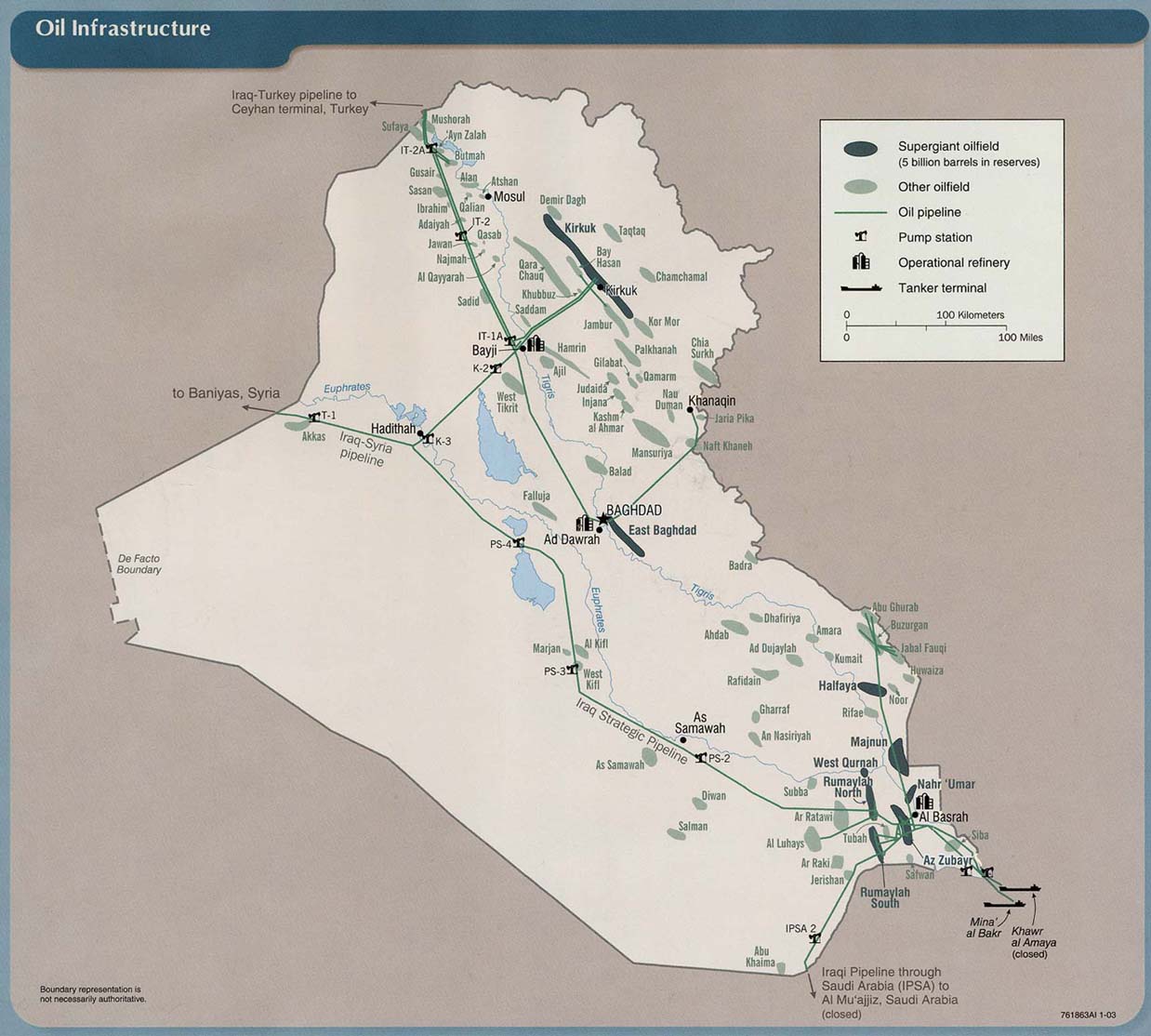
Bring ‘em on: Local official killed by gunmen in the Hashimiya district of western Baquba. A pipeline junction on Iraq's crude oil export line to Turkey was bombed and nine employees of an oil complex were briefly detained by insurgents in the city of Kirkuk.

Bring ‘em on: Four police officers and two detainees killed and eight detainees wounded when gunmen fired on a minibus bound for Abu Ghraib prison in Baghdad. Police officer killed in Kirkuk by a roadside bomb. One US Marine assigned to the Second Marine Expeditionary Force killed by a homemade bomb during combat operations west of Baghdad.

Bring ‘em on: Seven people killed and 37 wounded in suicide bomb attack on an army recruitment center in Tal Afar. One person killed and 14 wounded in suicide car bomb attack on a police patrol in Baquba. One US Marine dead from a “non-hostile” gunshot wound suffered Monday near Fallujah.

Bring ‘em on: Seven bodies, shot to death, handcuffed and blindfolded, found in Taji.

Bring ‘em on: Two Iraqis killed when a vehicle carrying a Jordanian diplomat came under fire in Baghdad. No Jordanian nationals were injured.

Bring ‘em on: One US soldier killed and one wounded by a roadside bomb in Safwan.

A first: Iraq's first female suicide bomber blew herself up outside a U.S. military office in the northern Iraqi town of Tal Afar on Wednesday, killing herself and at least five others and wounding 53, police said.

It marked the first time since an insurgency by Sunni Arabs began that a female suicide bomber had launched an attack in Iraq, in a new tactic common among Chechen suicide bombers operating in Russia but rare in the Middle East.

The U.S. military said in a statement the bomb targeted Iraqi citizens filing for compensation at a Civil Military Operations Centre. Iraqis visit such centres to claim compensation if they lose relatives, or suffer damage to property, because of U.S. military action.

Another first- at least, that they've admitted...: A car bomber penetrated the heavily fortified Green Zone in the center of the capital on Tuesday but was stopped by U.S. Marines at a checkpoint before he was able to detonate the vehicle, the military said.

U.S. troops destroyed the explosives-rigged car and detained the bomber, a military spokesman said.

The U.S. military's Baghdad press office offered no details on the incident, and it was not immediately clear how the bomber was able to enter the most secured compound in Iraq, which houses the U.S. Embassy and the Iraqi government. Thousands of Iraqis and foreigners live and work inside the Green Zone.

CBS gets a clue: Behind the blood and chaos of the insurgents' bombs, there is an undeclared civil war already underway in Iraq, between the Sunni minority who ruled this country under Saddam and the Shiite majority. CBS News correspondent Lara Logan reports there is a secret, ruthless cleansing of the country's towns and cities. Bodies — blindfolded, bound and executed — just appear, like the rotting corpses of 36 Sunni men that turned up in a dry riverbed south of Baghdad. CBS News traced 16 of those men to a single street in a Baghdad suburb, where family members showed CBS News how the killers forced their way into their homes in the middle of the night and dragged away their sons and fathers. "My uncles were tortured, they even poured acid on them," a young boy told CBS News. Clutching photographs of the murdered men, the women and children left behind came together to grieve. One woman said as her husband was marched away she sent her son after him with his slippers, but his abductor sent the child back with a chilling message: No need for slippers — he will come back dead.

Workaday life: “I get used to mutilation: it’s like lunch and supper for us — something you get twice a day,” says Ismail Fadhil, blank-faced, stubbing out another cigarette butt. “It is usual to load up body parts, half bodies. Once, in Al-Amel, most of the victims were kids and they were in bits.”

Working 24-hour, day-on day-off shifts, Ismail, 39, drives an ambulance for Yarmouk Hospital, and is usually scrambled to emergencies alone, without even a radio. His decrepit Saddam-era ambulance, pocked with bullet holes, has not so much as a bandage: the hospital’s equipment, looted in 2003, has yet to be replaced.

“I’ve got no first-aid measures at all,” says Ismail. “It’s like driving a cab. The best I can do if I find a guy with his guts hanging out is stuff them back in and shove him into the vehicle.”

When his work is done he slops the blood out with a bucket of water. “We haven’t even got disinfectant. It is like cleaning out a garage.”

For every sick person, Ismail collects ten victims of violence. He has been shot at by insurgents, US soldiers, Iraqi police and national guards. At the scene of one suicide bomb attack last year he saw ambulance crews hit by a second bomber.

Peace, Fallujah-style: Iraqi and U.S. troops recently ended a joint military operation in Tal Afar, which they say has long been a stronghold of insurgents. The U.S. military said during the operation it killed or captured over 500 people whom it called "terrorists or foreign fighters".

They hailed the full-scale assault on the town as a success and said they had brought Tal Afar, which U.S. forces say has been used as a conduit for foreign fighters entering Iraq from Syria, back under their control.

But previous military operations against insurgency strongholds have not led to peace, and sectarian violence continued on Wednesday.

Signs: U.S. Marines took down a sign warning Iraqi citizens not to cooperate with the Americans. The blue sign with yellow writing bears the signature of al Qaeda in Iraq, the terrorist group led by Abu Musab al-Zarqawi. It stood along Iraq's desert highway leading into Qaim, near the Syrian border.

Such signs have been reported in other cities around the region, which includes Husayba, New Ubeydi, Karabila and Sa'dat, Col. Stephen Davis, whose forces operate in the western Al Anbar province, told CNN.

The Marines have also received reports of fliers telling residents of Sa'dat, west of Qaim, to leave the city or die, said Davis, the commander of the Marines Regimental Combat Team 2. And Marines have seen civilians leave, he added.

With the Iraqi army: Juwad's battalion has responsibility for northwest Fallujah, a sector called the Jolan. With its centuries-old souk, or marketplace, a twisting labyrinth of alleys and cluttered shops, the Jolan was infamous during 2004 as the lair of arch-terrorist Abu Musab al-Zarqawi. Down the street from Juwad's makeshift fort stood the abandoned warehouse where in May 2004 Zarqawi had beheaded the easygoing Californian entrepreneur/adventurer Nicholas Berg. Zarqawi timed and videotaped the murder so that Al Jazeera television received the tape in time for its evening news.

The jundis are under no illusions about the attitudes of the Sunni residents of the Jolan. A year ago, about 5,000 Kurds, some of whom had lived in the Jolan for generations, were forced to flee for their lives when the Sunni fundamentalists temporarily ruled the city, Taliban-style. Practically all the jundis in Juwad's company are Shiites who feel unwelcome in the city.

Of the 140 jundis in Juwad's company, 10 are Kurds and the rest are Shiites from southern Iraq. The pay—$430 a month—is excellent by Iraqi standards. Juwad estimates he has 80 soldiers ready for duty on any given day. No one in the company lives anywhere near Fallujah. Taking leave and being away from the company on other duties is an elastic concept. Jundis come and go at times and in ways often mysterious to their advisers. When they want to go home for a week or so, they wear civilian clothes and hire taxis or hitch rides to Baghdad, where they disappear in the crowds and make their way from there. A recurrent request is for small pistols they can conceal in their waistbands, in case insurgents stop their bus or taxi.

Old news worth repeating: About 30,000 fighters are believed to be involved in the insurgency in Iraq, approximately 90 per cent of whom are Sunni Arab Iraqis motivated by fear of Shiite domination or anger over lost power, according to a report released this month by the Washington-based Center for Strategic and International Studies.

Of the estimated 3,000 foreign fighters, the largest number -- about 20 per cent -- are from Algeria, followed by Syria and Yemen, with about 18 and 17 per cent, respectively, said the report, which was issued on Monday.

About 350 Saudis entered Iraq by August of 2005, about 130 of whom are believed to have been killed or captured, it says.

Admitting the obvious: The nation’s top military officer said Tuesday that the killing last weekend of a senior leader of the al-Qaida in Iraq organization will hurt the terrorists but perhaps only in the short term.

Air Force Gen. Richard B. Myers, chairman of the Joint Chiefs of Staff, was asked at a Pentagon news conference with Defense Secretary Donald H. Rumsfeld about the killing of Abdullah Abu Azzam on Sunday.

“It will have some effect, but over time they will replace people,” Myers said.

“There are others, foreign fighters, marching to the guns on a regular basis,” who can be promoted to leadership roles, he added, although in many cases they are less experienced and qualified in planning and executing attacks.

Whack a mole: Abu Musab al-Zarqawi's network of al Qaeda-linked insurgents is emerging as a self-sustaining force, despite repeated blows by U.S. forces and the reported death of his second-in-command, U.S. intelligence officials and other experts say.

The Zarqawi network, responsible for some of the Iraqi insurgency's bloodiest attacks, has grown into a loose confederation of mainly native Iraqis trained by former Baath Party regime officers in explosives, small arms, rockets and surface-to-air missiles.

"The suggestion is that this has shifted from being a terrorist network to a guerrilla army," said Vali Nasr, a national security affairs expert at the Naval Postgraduate School in Monterey, California.

U.S. military officials on Tuesday said they had killed Zarqawi's No. 2 in Iraq, an operative identified as Abu Azzam. Al Qaeda did not verify the U.S. claim.

But intelligence officials said the death of Zarqawi himself would not mean al Qaeda's defeat in Iraq, partly because he has ceded authority over day-to-day operations to regional commanders and tribal leaders who operate according to his strategic guidelines.

"If he died in the cause, that's huge. That's what everybody wants. Then he's a giant figurehead and everybody can do something in his name," one intelligence official said.

"He has enough force in place to sustain operations," the official added. "Al Qaeda in Iraq ... regenerates very quickly. You knock off a guy who's in charge in a certain area, another person steps into the gap."

Gee, I Feel Better Already

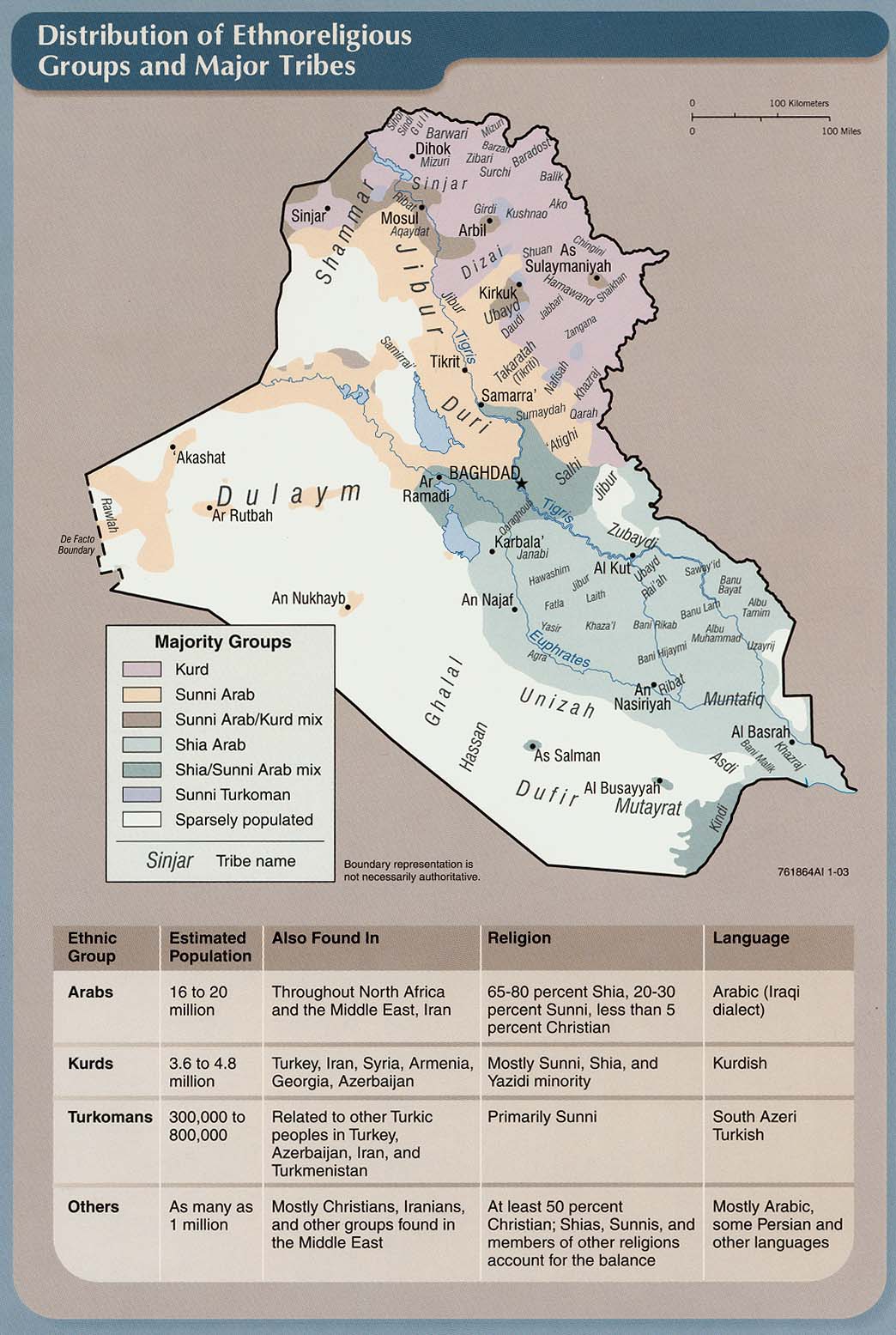
Because this kind of thing is so worrisome: When it comes to ominous warnings about the future of Iraq, none have been more dire than those coming from Prince Saud al-Faisal. He is Saudi Arabia's foreign minister and the first Arab leader to have spoken out in public about Iraq in such pessimistic terms in recent months. Prince Saud said last week that he has been warning the Bush administration that Iraq was heading rapidly toward disintegration. He can foresee a fracturing of that unstable country into three hostile factions of Sunnis, Shias and Kurds - a prelude to an uncontrollable civil war that could destabilize the Persian Gulf and other parts of the Middle East, with incalculable consequences.

If what he envisions were to come true, U.S. troops would not be able to maintain control and would be pulled out; the Shia government, facing defeat by Sunni insurgents, would ask the Shia clerics ruling Iran for help and Iranian troops would cross the border to fight Sunnis; Kurds would pull away into an independent state and Turkey, fearing its own Kurdish guerrillas would find a safe haven, would invade Kurdistan.

Good thing we have a big strong man to protect us!: President Bush on Wednesday warned there will be an upsurge in violence in Iraq before next month's voting, but said the terrorists will fail. "Our troops are ready for them," he said.

Bring ‘em on!

And his ultracompetent administration is our first line of defense: The US Financial Crimes Enforcement Network (Fincen) has shut down its QuikNews e-mail messaging system after unidentified hackers used it to broadcast disturbing images of civilian casualties in Iraq.

The breach of security is a huge embarrassment for the US Treasury Department agency, which is responsible for enforcing regulations against money laundering and terrorist financing.

The mass e-mail to Fincen subscribers included photos of pools of blood and an Iraqi child in a hospital bed and contained the message: "take back your monsters (army)/you killed my father and mother/what you want???/ i know (oil) [sic]."

In a statement, Fincen sought to reassure subscribers that "Bank Secrecy Act data and all other sensitive information maintained on internal systems by Fincen are secure and were in no way, shape or form compromised by this incident."

Feeling reassured?

Rule Of Law

The Germans get it: Just a few weeks ago, a highly significant judicial decision was handed down by the German Federal Administrative Court but barely mentioned in the German media. With careful reasoning, the judges ruled that the assault launched by the United States and its allies against Iraq was a clear war of aggression that violated international law.

Further, they meticulously demonstrated that the German government, in contrast to its public protestations, had assisted in the aggression against Iraq without having any legal right to do so. Although the decision was made three months ago, the judgement and its legal arguments have only just been made available in written form, comprising more than 130 pages.

The decision was made in relation to legal proceedings initiated by a German army officer who had refused to obey an order following the invasion of Iraq by the US-led coalition of forces because he feared that he would in effect be supporting the war. As a result, he was demoted from major to captain and the army filed a criminal complaint against him for insubordination. In its latest judgement, the Federal Administrative Court reversed the demotion and said the charges against the officer contravened Article 4, Paragraph 1 of the German Constitution, which guarantees the right to freedom of conscience.

Freedom of the press: The conduct of U.S. troops in Iraq, including increasing detention and accidental shootings of journalists, is preventing full coverage of the war reaching the American public, Reuters said on Wednesday. In a letter to Virginia Republican Sen. John Warner, head of the Senate Armed Services Committee, Reuters said U.S. forces were limiting the ability of independent journalists to operate. The letter from Reuters Global Managing Editor David Schlesinger called on Warner to raise widespread media concerns about the conduct of U.S. troops with Defense Secretary Donald Rumsfeld, who is due to testify to the committee on Thursday. Schlesinger referred to "a long parade of disturbing incidents whereby professional journalists have been killed, wrongfully detained, and/or illegally abused by U.S. forces in Iraq." He urged Warner to demand that Rumsfeld resolve these issues "in a way that best balances the legitimate security interests of the U.S. forces in Iraq and the equally legitimate rights of journalists in conflict zones under international law". At least 66 journalists and media workers, most of them Iraqis, have been killed in the Iraq conflict since March 2003.

Kidnapping: A branch of the U.S. Navy secretly contracted a 33-plane fleet that included two Gulfstream jets reportedly used to fly terror suspects to countries known to practice torture, according to documents obtained by The Associated Press.

At least 10 U.S. aviation companies were issued classified contracts in 2001 and 2002 by the obscure Navy Engineering Logistics Office for the "occasional airlift of USN (Navy) cargo worldwide," according to Defense Department documents the AP obtained through a Freedom of Information Act request.

Two of the companies — Richmor Aviation Inc. and Premier Executive Transport Services Inc. — chartered luxury Gulfstreams that flew terror suspects captured in Europe to Egypt, according to U.S. and European media reports. Once there, the men told family members, they were tortured. Authorities in Italy and Sweden have expressed outrage over flights they say were illegal and orchestrated by the U.S. government.

While the Gulfstreams came under scrutiny in 2001, what hasn't been disclosed is the Navy's role in contracting planes involved in operations the CIA terms "rendition" and what Italian prosecutors call kidnapping.

War Porn

Disgusting trade: An Islamic civil-rights group has asked Defense Secretary Donald Rumsfeld to investigate an Internet site on which U.S. service members have posted graphic pictures of mutilated and dismembered Iraqis and Afghans in return for free access to Internet pornography.

“This disgusting trade in human misery is an insult to all those who have served in our nation’s military,” said Arsalan Iftikhar, legal director for the Council on American-Islamic Relations, in a letter to Rumsfeld.

The Washington-based group brough the Web site to national attention in a statement to the media Sept. 27. Army and Pentagon officials said they are investigating.

“Obviously, it is an unacceptable practice,” said Bryan Whitman, a spokesman for Rumsfeld.

Whoa, Bryan, that’s an awfully harsh condemnation! Sure you don’t want to tone it down a bit?

The lightning investigation: The Army is investigating complaints that soldiers posted photographs of Iraqi corpses on an Internet site in exchange for access to pornographic images on the site, officials said Tuesday.

An Army spokesman, Col. Joseph Curtin, said the Criminal Investigation Division recently began investigating the matter on behalf of Lt. Gen. John Vines, commander of the Multinational Corps in Iraq.

Another Army spokesman, Paul Boyce, said later that the preliminary criminal inquiry determined, based on available evidence, that felony charges could not be pursued. But the matter, including the possibility of disciplinary action, was being handled in coordination with other military services, he said.

It’s because they’re decisive: US Army has ALREADY concluded that they won't press charges against soldiers based on the death-photos-for-porn scandal. Gee that was fast.

Fast, and rather disgusting. And rather poorly timed, the same day Lynndie England is convicted for her Abu Ghraib big adventure. Think about how crass the Pentagon is. DOD is contacted about this scandal earlier today, tell the press they're investigating, because of course they only JUST heard of this horrible scandal recently (that's why they didn't act sooner, of course), and then a few hours later says sorry, we can't prosecute but we'll be sure to consider disciplinary action. Huh?

Our Helena gets around: The story of NTFU and its unusual exchange of free porn for gory war photos was first picked up by an Italian blogger named Staib, and then the Italian news agency ANSA. Blogger/journalist Helena Cobban, who pens a column for the Christian Science Monitor, asked her blog readers for an English translation of the ANSA article and quickly received many versions that clarified what the site was about.

Cobban was horrified by the gory photos, but tried to make sense of the motivation of people who posted them -- and tried hard to grasp the idea of a serious discussion of war on a porn site. She told me that taking and posting "trophy" photos of dead Iraqis was a gross show of disrespect and a violation of the Geneva Conventions. But she put the blame on the direction of military leadership.

"The important thing is for the U.S. military and political leadership at the highest levels to recommit the nation to the norms of war including the Geneva Conventions, and to be held accountable for the many violations that have taken place so far," Cobban said via e-mail. "What I don't think would be helpful would be further punitive actions that are still limited to the grunts and the foot soldiers, who already have the worst of it."

The Geneva Conventions include Protocol 1, added in 1977 but not ratified by the U.S., Iraq or Afghanistan. It mentions that all parties in a conflict must respect victims' remains, though doesn't mention the photographing of dead bodies. This could well be a judgment call, and the celebratory and derogatory comments added on NTFU make the case more clear.

When I contacted military public affairs people in the U.S. and Iraq, they didn't seem aware of the site and initially couldn't access the site from their own government computers. Eventually, they told me that if soldiers were indeed posting photos of dead Iraqis on the site, then it's not an action that's condoned in any way by the military.

"The glorification of casualties goes against our training and is strongly discouraged," said Todd Vician, a U.S. Defense Department spokesman. "It is our policy that images taken with government equipment or due to access because of a military position must be cleared before released. While I haven't seen these images, I doubt they would be cleared for release. Improper treatment of captured and those killed does not help our mission, is discouraged, investigated when known, and punished appropriately."

Capt. Chris Karns, a Centcom spokesman, told me that there are Department of Defense regulations and Geneva Conventions against mutilating and degrading dead bodies, but that he wasn't sure about regulations concerning photos of dead bodies. He noted that the Bush administration did release graphic photos of the dead bodies of Uday and Qusay Hussein to the media.

Good point: The American administration has failed to issue a satisfactory response to the fact that its army violates the laws of war. It has suggested successfully, according to American public opinion, ­that the units of military police that were photographed humiliating prisoners at Abu Ghraib were not obeying any order of the army or the intelligence services. With soldier Lynndie England, who appeared in the photographs, standing before a military tribunal at Fort Hood for the past week, will America accept the official version according to which this entire matter was one of unguided "lost soldiers?"

The American pacifist movement has not seized on these questions. Its principal and laudable concern ­ epitomized by the image of Cindy Sheehan, traumatized by her son’s death in Iraq - is to preserve the life of American soldiers. As is often in war, it is difficult to listen to the other, the foreigner, the "enemy.”

While authorizing its army to perpetrate what international law describes as "serious violations of the laws of the war," such as "torture" or "inhumane treatment" of prisoners ­ and "war crimes" in the case of executions - the United States placed itself in a position of illegality in the service of the cause that they allege to defend: freedom, justice and democracy faced with the "the madness of Allah." But every time an Afghan or Iraqi is killed wrongly or tortured, and precisely because the United States is a democratic country, it is a defeat for America and all who defend the values and morals for which it claims to embody.

More pragmatically, the use of torture is one less chance for Washington to win its wars, because for each martyred prisoner, for each image of Abu Ghraib or Guantanamo, ten fighters rise against the United States.

Commentary

Opinion: More than a third of the U.S. soldiers based in Iraq belong to the Reserves or National Guard. Weekend warriors intended to supplement full-time active duty troops now fight for 14 months on average. But most are still treated like part-timers, and prepped and outfitted for combat accordingly. New equipment goes to the Army while Guardsmen and Reservists get hand-me-downs. This bodes badly for part-time soldiers who have become a major fighting force in Iraq.

August was the deadliest month for citizen soldiers. Five Pennsylvania Guardsmen died when the second-class humvee they were in was blown up. They had requested permission to use some of the 12 brand new, fully up-armored vehicles issued to a nearby active duty unit. The request was denied. The trucks stood idle when the Guardsmen died.

A total of 46 National Guard and Reserve soldiers were killed in August, more than half the 83 troop deaths. The disproportionately high -- and rising -- casualty rates of citizen soldiers are part of a trend. Pentagon statistics released at the end of 2004 showed losses sustained by Army National Guard soldiers in Iraq were 35 percent higher than that of regular enlisted. The elevated mortality rate of citizen soldiers is unparalleled. Of the 58,209 U.S. deaths in Vietnam, 94 were Guardsmen, and none were killed in the Persian Gulf War, USA Today has reported.

Long, hazardous duty is one reason why Army National Guard and Army Reserve recruitment numbers are off by 23 percent and 20 percent, respectively. In the first half of 2005, the Seattle Army Reserve office missed its target of about 100 recruits by 75 percent. Oregon recruitment is down 40 percent. Several battalions have lost more than half their members. One Reserve unit saw 70 percent of its members leave within a few months of coming home.

Half the soldiers leaving active duty service have traditionally joined the Guard, but since that likely means a quick trip back to Iraq, the number has dropped to about 35 percent. With so many first responders in Iraq, we have fewer first responders -- fire, police and emergency medical technicians -- in our communities.

While the Guard and Reserve are particularly hard hit, our entire country is suffering from the Iraq war. Rep. Michael McNulty, D-N.Y., recently noted that more than 16,000 U.S. troops have been killed or wounded in Iraq, and that the government has spent more than $200 billion on the war so far, saying, "The war has been a tremendous failure by both measures." He was announcing his support for legislation to require that U.S. troops begin their withdrawal from Iraq by October 2006.

It's time we add Homeland Security to the growing list of casualties of the war in Iraq.

A related story: The 69 Iowa National Guard mechanics at Camp Liberty are the best of the best. This isn't just talk. The Army selected them based on high test scores, then put them together with soldiers from Maine and Washington in a kind of super unit to fix what breaks down. If it has an engine, these men and women of the 3655th Maintenance Company can make it run. Humvees, armored personnel carriers, tanks. Anything. So the Army sent them to Iraq. But most of these soldiers haven't gone near a wrench during their deployment. They've been here since April standing guard duty atop the wall that separates this military base from Baghdad. And they sit outside checking IDs at dining halls and the PX , the military all-purpose store.

Opinion: A marketing campaign, launched shortly after the war began and continuing to this day, has sought to link support for the men and women serving in this country's military forces with support for even the most foolhardy and dangerous of the president's policies. There are even bumper stickers that declare: "Support President Bush and the Troops."

But this is just political gamesmanship, nothing more.

How do we know?

Because House Majority Leader Tom DeLay tells us so.

Back in 1999, after President Bill Clinton had ordered U.S. forces to begin a massive bombing campaign and missile strikes against Yugoslavia, the House of Representatives considered a resolution supporting the mission.

The leading opponent of the resolution was DeLay, who dismissed the notion that opposing the war was in any way an affront to the troops. In a visceral floor statement delivered in March of that year, DeLay declared, "Bombing a sovereign nation for ill-defined reasons with vague objectives undermines the American stature in the world. The international respect and trust for America has diminished every time we casually let the bombs fly. We must stop giving the appearance that our foreign policy is formulated by the Unabomber."

As the war progressed, DeLay condemned "(President Clinton's) war," and grumbled in April 1999, "There are no clarified rules of engagement. There is no timetable. There is no legitimate definition of victory. There is no contingency plan for mission creep. There is no clear funding program. There is no agenda to bolster our overextended military. There is no explanation defining what vital national interests are at stake. There was no strategic plan for war when the president started this thing, and there still is no plan today."

Opinion: If you need yet another reminder why the Democrats continue to teeter on the verge of becoming a permanent minority party, I suggest you pick up the Boston Herald and watch CBS News. At the same time the situation in Iraq continues to deteriorate, with CBS reporting on the "undeclared civil war" raging between Shiites and Sunnis and the Saudi Foreign Minister telling the world that Iraq is "going toward disintegration," there was John Kerry giving a speech arguing that "progress" was being made. As the Boston Herald put it, Senator John Kerry "back-pedalled on blistering criticism of the war."

Unbelievable.

Andrew Gumbel's latest HuffPost turns a flashing red spotlight on why we need to reform our voting systems. But even the most corruption-free voting system in the world isn't going to help Democrats if they keep offering up candidates who make the kind of absurd pronouncements on Iraq Kerry did this week.

Editorial: After a day of stunningly large antiwar demonstrations that surrounded a beleaguered White House while its occupant attended to a more natural disaster, the Lincoln words bit hard.

''We of this Congress and this administration will be remembered in spite of ourselves," observed Lincoln long ago in a written message to Congress after the gore of Antietam but just a month before the Emancipation Proclamation. ''No personal significance or insignificance can spare one or another of us. The fiery trial through which we pass will light us down in honor or dishonor to the latest generation. We, even here, hold the power and bear the responsibility."

Indeed. The inspiring words of the past mock the poses of the present.

Earlier that day, there had been a demonstration downtown that dwarfed official expectations. In an interesting abandonment of post-9/11 paranoia, the parade permit allowed a virtual encirclement of the White House by a throng that easily exceeded 300,000 peaceful souls from around the country. I have either been in or covered every peace demonstration around here since 1967, and this one was more than reminiscent of the whoppers in the Nixon years.

The people are currently leagues beyond the politicians. The link between the ongoing war and the literal storms of the past month is in the opinion polls, with solid majorities not only of the opinion that the invasion of Iraq wasn't and isn't worth its cost but demanding that money being sent overseas be invested in reconstruction at home. The problem is that no one prominent in politics is really listening.

Opinion: As far as Iraq goes, "stuck on stupid" could be the operating motif for politicians on both sides of the aisle. Already mired in a hopeless mess of his own making, the president pushes on, ignoring public opinion, the evidence on the ground and the apparent thinking of his own commanders and allies.

Last week, Saudi Foreign Minister Saud Faisal warned that Iraq is "gradually going toward disintegration," and the British newspaper The Guardian reported, "Diplomats in the Foreign Office are working frantically in private on what they refer to as the 'exit ticket' from Iraq."

What's more, the United States' eagerness to rush approval of an Iraqi constitution, according to a report from the Brussels-based think tank, the International Crisis Group, has made that process "a new stake in the political battle rather than an instrument to resolve it...

"The United States has repeatedly stated that it has a strategic interest in Iraq's territorial integrity, but today the situation appears to be heading toward de facto partition and full-scale civil war."

Cervantes: This is the truth. There is no good news from Iraq. The "democratically elected" government is controlled by two Shiite religious parties, with the cooperation of Kurdish representatives whose only long-term goal is independence but who are playing along for now in order to win territory on the cheap. The Shiite parties also envision an independent Shiite theocracy closely associated with Iran's clerical rulers. These factions wrote the new constitution in order to achieve these ends. The only effective units of the Iraqi army are actually militias of these Shiite and Kurdish parties who wear Iraqi Army uniforms, and these are the "Iraqi" soldiers who now fight alongside U.S. forces against Sunni Arabs -- when they aren't commiting atrocities on their own. Why on earth the United States would be spending blood and treasure to advance these objectives is incomprehensible. Opposing this project through guerilla warfare are secularist Iraqi nationalists, principally Sunni Arabs who were associated with or had a stake in the former regime; and Sunni Islamic factions including Iraqis and a small number of foreigners. The Shiite movement of Muqtada al Sadr, who has a huge following, opposes the present government politically and is allied with the Sunni insurgency against the intended breakup of Iraq. Although his fighters have been observing a cease fire for more than a year now, that appears to be breaking down, and U.S. forces are again skirmishing with his Mahdi Army. Meanwhile, there is no basic security or civil order in Iraq. Gangs of vicious criminals operate freely, commiting kidnappings for ransom and robberies that have the Baghdad middle class huddling behind closed doors. Women and girls are afraid to leave the house, and the social equality and freedom they enjoyed under the secular Baath regime has been lost. Child malnutrition is widespread. Most people with the means to get out of the country are doing so, notably the physicians and other professionals who would be essential to the rebuilding of Iraqi society. The police and other security forces, as well as the government ministries, are completely corrupt, and loyal to their factions. The police are as dangerous as the criminals, or perhaps indistinguishable from them. Daily attacks on the oil infrastructure have reduced production to below pre-war levels. Electricity in Baghdad is available for only a few hours a day. Sewage still flows in the streets. The government hides behind 12 foot blast walls in a closed zone of central Baghdad controlled and secured by the American occupiers, to which American "reporters" (actually transcriptionists of Central Command briefings) are confined. And then there is the occupation. War is not glorious, or pure, or honorable. It is brutalizing, grotesque, beyond morality. The Americans drop bombs on houses from airplanes, killing people indiscriminately. They fire 50 caliber machine guns at cars that they think have approached them too closely, and at everyone in sight if they have been attacked. They break down doors in random searches of entire neighborhoods, destroy and loot people's property, beat and humiliate ordinary citizens. They routinely abuse and torture people they arrest, and they hold tens of thousands of prisoners, the vast majority on nothing but slight suspicions, under grim conditions. They besiege and demolish entire cities, driving their inhabitants into squalid refugee camps. They do this even though they do not understand who they are fighting and they have no evident goal or cause. Some of them have taken to posting photgraphs of themselves laughing at the gory remains of Iraqis on an Internet porn site. Ironically, that's about the only place Americans can see for themselves the reality of war, because the television and the newspapers won't show it to us. The whole world knows all this. But our political leaders, of both parties, and our corporate media, will not confront the truth. There is a cancer on our national soul.

Casualty Reports

Local story: Baltimore, KY, National Guardsman who died in a roadside bombing near al Khalis memorialized in Leitchfield.

Local story: Mesa, AZ, National Guardsman killed in roadside bombing in Baghdad.


|
Over at JWN: Fishback's letter, and the NTFU porn story
[Matt just told me he'd missed this little post when I first posted because I didn't put a bold headline on it. So he went ahead and posted the whole text of the Fishback letter, which you'll see above. I'm cool with that. It's a fine letter! Note to self, though: Blogger is different from the software I use over at JWN, so here I have to remember to insert a special headline. Also, how come I ain't seeing "underline" here? Oh well. Blogger does also have its strong points... ~HC]
Hi. Today over at Just World News I give nearly the whole text of the fine letter that Ian Fishback, a captain in the 82nd Airborne and West Point grad, wrote to Sen. McCain about the way that-- as Fishback has seen in Iraq and Afghanistan-- the "confusion" over the Geneva Conventions at the highest levels of the US command has led to the commission of major abuses in the field. In his letter, Fishback described the search he had made up the chain of command for some clarity on what, in fact, was allowed and what not allowed in the treatment of detainees. And also, the frustration he experienced in that search. He argued:
we can learn from our mistakes and ensure that this does not happen again. Take a major step in that direction; eliminate the confusion. My approach for clarification provides clear evidence that confusion over standards was a major contributor to the prisoner abuse. We owe our soldiers better than this. Give them a clear standard that is in accordance with the bedrock principles of our nation.
Fishback was almost certainly the informant described only as "C" in the recent Human Rights Watch report on torture and abuse. On JWN, I also have a post noting that the story on the solicitation of body-part photos from soldiers in Iraq and Afghanistan by the "Nowthatsfuckup" porn website is finally starting to make its way into the MSM. A number of bloggers, I among them, had started writing about this in English more than a month ago. What took the highly paid MSM types so long?

|

Tuesday, September 27, 2005

War News for Tuesday, September 27, 2005

Bring ‘em on: Five Shiite schoolteachers and their driver murdered by gunmen as classes ended at the Al-Jazeera Elementary School in the village of Muelha, 30 miles south of Baghdad. Six people wounded in suicide car bombing in Iskandariyah. Senior official from SCIRI kidnapped and murdered in Qurna. Two US soldiers killed in a roadside bombing in western Baghdad. One US soldier killed in a bombing 50 miles southeast of the capital.

Bring ‘em on: Two Iraqi policemen and five civilians killed, 30 wounded in suicide car bombing at the gates of the Iraqi police academy. One person killed and four wounded when US forces opened fire on a minibus. It is unclear from the article where these incidents occurred – Baghdad, presumably.

Bring ‘em on: Eight people, including some Mahdi army militiamen, killed in long-running gun battle between US and Iraqi soldiers and Sadrist militiamen in Sadr City. This is not good news.

Bring ‘em on: Egyptian engineer working for Iraqna Mobile Company kidnapped in western Baghdad.

Bring ‘em on: Two guards killed, two guards and five bystanders wounded when robbers attacked a column of armored vehicles and made off with over half a million British pounds worth of cash.

Bring ‘em on: Bodies of 22 men, blindfolded and with their hands bound, found near Kut. All had been shot to death.

Bring ‘em on: Heavy fighting rages in Ramadi, two people reported killed and eight wounded. US armored vehicle reported destroyed in the fighting. One US soldier killed in roadside bombing between Ramadi and Fallujah. One US soldier killed in Ramadi gunbattle. Four US soldiers attached to the Marines killed Monday in two separate roadside bombings. Continued skirmishes between US forces and insurgents reported along the Euphrates. Gosh, a major battle in Ramadi? Why didn't I hear about this on CNN? Oh, wait...no white women disappeared there.

Another lost opportunity: In the chaotic, hopeful April of 2003, Baghdad's Karrada district was one of those neighborhoods where residents showered flowers on U.S. forces entering the capital. Revelers threw water on one another and the Americans, exuding joy at the crushing of a dictatorship that had silenced, tortured and killed their people.

Now, with the end of the third and in many ways hardest summer of the U.S.-led occupation, the lights of Karrada are dimmer. The collapse of Iraq's central power system has left Baghdad averaging less than eight hours of electricity a day.

The crowds on the sidewalks have thinned -- kidnapping and other forms of lawlessness since the invasion mean Baghdad's comparatively liberated women seldom leave home without a good reason.

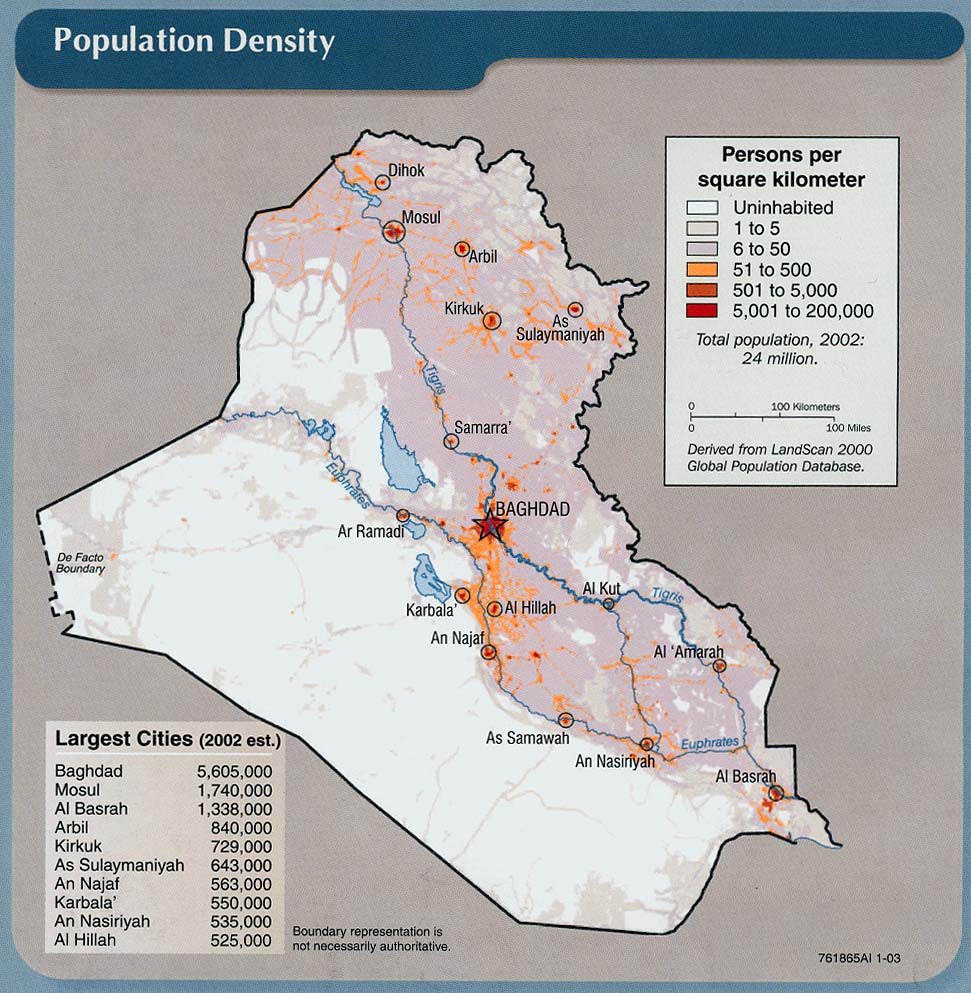
Car bombings and other insurgent attacks, as unknown in Baghdad before the invasion as suicide subway bombings were in London until this summer, have killed more than 3,000 people in the capital since late spring.

Leaving the house for work each day has become a matter of turning the key and consigning one's fate to God, said Jassim Mohammed, 41, a Karrada merchant who has lost two of his closest friends and one of his lighting shops in car bombings since the Americans came.

"Now in Iraq, no one and nothing can protect you but that. Every morning you kiss them goodbye," Mohammed said, referring to his wife and children, "because you don't know if you will be back or not. Everyone in Iraq does that now."

Change of policy?: Shiite leaders have called on their followers to refrain from revenge attacks against Sunnis, fearing a civil war could result, though Sunnis have accused Shiite militias of carrying out some killings of Sunni figures.

But in one of the first public calls for individual Shiites to take action, a prominent Shiite cleric, Ayatollah Mohammed al-Yaaqubi, issued a religious edict Monday allowing his followers to "kill terrorists before they kill."

"Self-restraint does not mean surrender. ... Protecting society from terrorists is a religious duty," al-Yaaqubi said.

Government by militia: A leading Iraqi voice in favor of a negotiated power-sharing arrangement between Sunni and Shiite forces in Iraq charged this weekend that militias in the service of the U.S.-backed Iraqi government in Baghdad tried to kill him, former Prime Minister Iyad Allawi, and other secular Iraqi nationalists by planting a car bomb in the Baghdad neighborhood where they live.

Aiham Al Sammarae, a former minister of electricity in Allawi's government, says that the bomb was discovered and defused. "I live next door to Allawi," says Sammarae, who returned to Iraq from a conference of leading Iraqi Sunnis in Amman, Jordan, on Sunday. "We found a car bomb behind Allawi's house. It would have destroyed the entire neighborhood." According to Sammarae, who spoke to me in a lengthy telephone interview from a hotel in Amman, militias tied to the Iraqi government are conducting death squad-style attacks against Sunnis who oppose the Iraqi regime, which is controlled by a pair of ultra-religious, sectarian parties. "A lot of our guys are being killed," he says. The attacks are being carried out "by the government, by militias that are part of the government."

Constitutional flaws...there might be one or two...: Iraq's proposed constitution -- and the process used to draft it -- have deepened the divide among Iraq's factions and will likely trigger civil war unless changes are negotiated quickly to accommodate the concerns of Sunni Muslims, warned a new report by the International Crisis Group.

The report comes less than three weeks before an Oct. 15 referendum on Iraq's proposed constitution. The ICG calls on the Bush administration to engage in a "last-ditch, determined effort" to broker a compromise among the country's three largest ethnic and religious groups.

"Unless the flaws of its draft constitution can be corrected in the next few weeks before the Iraqi people vote on it, Iraq is likely to slide toward full-scale civil war and the break-up of the country," says the ICG, an independent, nonprofit nongovernmental organization working to resolve conflict in 50 countries on four continents.

The group charges that the constitution was rushed, which cost the process any possibility of consensus. Critical parts of the constitution -- notably on the federal arrangements that will decentralize power -- are also so vague that they already "carry the seeds of future discord," the report says.

This is the good news: Up to 200 Iraqi Sunni politicians and scholars have pressed for voting down the draft constitution in the October referendum and threatened to declare civil disobedience if the US-led onslaughts on Sunni towns continue.

Wrapping up a two-day meeting in the Jordanian capital Amman on Saturday, September 24, Sunni leaders from Al-Anbar province sought the formation of a committee to collect five million signatures to block the charter, the London-based Arabic-language newspaper Al-Hayat reported Sunday, September 25.

"We are mobilizing Sunnis to vote down the draft if our demands were ignored," by the Shiite and Kurdish blocs, Ali Al-Sadoun, a Sunni politician and member of the Iraqi Council for National Dialogue (CND), told the mass-circulation daily.

As Juan Cole points out, if they started a campaign of civil disobedience it would be a major improvement…

Iraqi Security Forces

Still need work: But while it has provided evidence that the capabilities of Iraq's security forces are improving, the operation in Tal Afar has also laid bare the challenges.

Because the ranks of the Iraqi police and army are filled mostly with Shi'ite Arabs and ethnic Kurds, they are perceived in many Sunni sections not as national forces, but as factional hit squads bent on persecution. The tensions were evident in Tal Afar, a city of 200,000, largely Sunni Turkmens.

Most of the forces ''are from the Badr Organization and the peshmerga," said Ibrahim Khalil, 20, one of about 4,000 Tal Afar residents, almost all of them Sunnis, living in a camp established by the Iraqi Red Crescent outside the city. He was referring to the Shi'ite and Kurdish militias.

''They wear the military uniform for disguise," he said. ''Their treatment is very bad. They were taking people to detention prisons just because they are Sunnis."

The Iraqi soldiers from the peshmerga, which for many years was targeted by the Sunni-led army of Saddam Hussein and has long supported Kurdish forces fighting the Turkish government, spoke openly of their zeal to fight the Tal Afar insurgency, led by Sunni Turkmen, according to US soldiers who worked with them.

Meanwhile, US commanders grounded the mostly Shi'ite police commandos a few days into the operation, alleging overly aggressive tactics.

I’ll bet this makes Rustamiya residents happy as hell: NATO inaugurated an officer academy on the outskirts of Baghdad today, boosting its share in training Iraqi security forces.

NATO, which was nearly torn apart in 2003 in a row over the US-led war, has no combat role in Iraq. But it agreed last year to support US-led training of Iraqi soldiers with courses aimed at turning out 1,000 senior officers a year.

The 26-member alliance will shift the bulk of its training mission in Baghdad's heavily fortified international zone to the academy in the suburb of Rustamiya some 20 km south.

Oh Boy! We Got An Al Qaeda Guy! We’re Winning!

Woo hoo! USA! USA!: Al Qaeda's second-in-command in Iraq, Abu Azzam, was shot dead in Baghdad this week, the U.S. military said on Tuesday, a potential a blow to the group at the heart of Iraq's insurgency. U.S. and Iraqi forces tracked Azzam, said to be the right- hand man of Abu Musab al-Zarqawi, the most wanted man in Iraq, to a high-rise apartment building where he was shot on Sunday, U.S. military spokesman Lieutenant Colonel Steve Boylan said. "We had a tip from an Iraqi citizen that led us to him," Boylan said. "We've been tracking him for a while." The death may mark progress against militants but attacks continued unabated. A suicide bomber blew himself up among a crowd of Iraqi police recruits north of Baghdad on Tuesday, killing at least 10 and wounding about 30, police said. It is uncertain how much intelligence Azzam's killing will deliver, particularly since it appears he was shot without being interrogated.

People who follow Bush’s war closely know that this has to be the 50th or 60th really important al-Qaeda bigwig claimed to be killed or captured. Yippee. It means jack to the insurgency, which is Iraqi. It means jack to the overall “War on Terror” since al-Qaeda has mutated into a decentralized network fueled by Islamic rage against US policies – losing one guy, no matter how important to a local effort, isn’t going to deal them a knockout blow. And we don’t even know if it’s true. I mean, check it out – as mentioned further on in the article, 500 detainees were just released from Abu Ghraib as a goodwill gesture to placate Sunnis. Which means there was dick to charge them with. But you can bet that CENTCOM claimed all those people were ‘suspected terrorists’ when they were detained, that is, if there was any public mention of it at all. So excuse me if I’m a bit skeptical about this claim. And anyway…

Why Killing An Al Qaeda Leader Means Jack In Iraq

Iraq is a violence wracked society where hurt people can’t even get to a hospital: When an Iraqi civilian is hurt, the reality is that for nearly half of them help will never arrive. And every violent attack in Baghdad is another strain on an overwhelmed health care system.

One reason why is that driving an ambulance in Baghdad is a risky business. There is the aftermath of insurgent bombs. And drivers, like Mohammad Hassan Hamoodi, are sometimes viewed as a threat by the military.

As he says, "Who do you fear more, insurgents or soldiers? Soldiers. American or Iraqi."

Hamoodi drives one of only 35 working ambulances in this city of more than 5 million people. In one makeshift dispatch center, four phones ring almost constantly — when the phones are working. The call log of one center reads like an emergency room nightmare: shooting, baby born, shooting, shooting, shooting.

And just getting to an emergency can take up to an hour if the ambulance gets there are all.

Where the educated classes are fleeing as fast as they can: One of Iraq's most precious resources -- doctors -- are fleeing the country in increasing numbers, scared off by persistent violence and drawn to safer, better paying jobs abroad, officials say.

A steady trickle of skilled workers has been flowing out of the country since the 2003 invasion, but in the past year, with the sharp rise in assassinations and kidnappings by insurgents, the exodus of doctors has picked up, they say.

"Iraq is like a battlefield, doctors face danger just getting to work because of terrorist acts," said Aakif al-Alusi, a senior member of the Iraqi Doctors' Syndicate, the official medics' register, who worries about the long-term social impact of the medical brain-drain.

The syndicate estimates 1,500 medical professionals -- doctors, nurses, dentists and pharmacists -- have fled in the past year alone, although precise numbers are difficult to obtain. Almost as many left in 2003 and in 2004, Alusi said.

Where thousands of people are displaced from their destroyed homes: The United Nations and its partners have delivered food and non-food items to over 16,000 people in the northern Iraqi city of Talafar where recent fighting between Coalition forces and insurgents displaced several thousand families, a UN statement said on Friday.

Working with the Iraqi Ministry of Displacement and Migration, the prime minister's office, the Iraqi Red Crescent Society (IRCS) and national NGOs, the UN had provided food, water, non-food items and tents to more than 4,000 displaced families in towns surrounding Talafar, the statement noted.

The UN, however, said it was concerned access to food, water and medical services had continued to be hindered by the presence and activities of armed elements. "The UN asks that all actors follow international humanitarian law and guidelines for civil-military interactions," said the statement.

On Wednesday, the IRCS said nearly 1,500 displaced Iraqi families had returned to the city after Coalition forces ended an operation to rout insurgents hiding there. Returnees said dozens of their homes had been totally destroyed.

Despite the returns, however, thousands of displaced people were still living in camps surviving on aid from various humanitarian organisations.

Where the quisling government and occupying forces are destroying the economy: The failure to rebuild key components of Iraq's petroleum industry has impeded oil production and may have permanently damaged the largest of the country's vast oil fields, American and Iraqi experts say. The deficiencies have deprived Iraq of hundreds of millions of dollars in potential revenue needed for national rebuilding efforts and kept millions of barrels of oil off the world market at a time of growing demand.

Engineering mistakes, poor leadership and shifting priorities have delayed or led to the cancellation of several projects critical to restoring Iraq's oil industry, according to interviews with more than two dozen current and former U.S. and Iraqi officials and industry experts. The troubles have been compounded in some cases by security issues, poor maintenance and disputes between the U.S. and its main contractor, Houston-based KBR, a subsidiary of Halliburton Corp., according to the interviews and documents. Despite the United States' spending more than $1.3 billion, oil production remains below the estimated prewar level of 2.5 million barrels per day and well below a December 2004 goal of up to 3 million barrels per day.

And where insiders make out big while everyone else pounds sand: Corruption in Iraq's oil sector looms as one of the biggest threats to the country's economy, yet it has gone largely unaddressed since the toppling of Saddam Hussein's regime in April 2003. In testimony before the U.S. Senate Foreign Relations Committee in July, RAND Corp. senior economist Keith Crane said it is estimated that a third of Iraqi imports of gasoline and diesel fuel is stolen annually, which this year will cost the country about $2 billion. A report released earlier this year by the auditing firm KPMG disclosed that $69 million in oil produced in Iraq during the second half of 2004 disappeared, sparking concern that it had been smuggled. "People in government, or with government ties, are making hundreds of millions of dollars from the current situation," Crane said in a recent interview. "And they don't want to see that changed." As a result, money earmarked for crucial reconstruction projects disappears, a fragile, one-commodity economy stagnates and a restive, war-weary public grows increasingly mistrustful of its fledgling government.

So pardon me if I don’t get too excited about one dead terrorist. Granted, Iraq would be much better off without an al-Qaeda presence but it would still be a basket case and the US invasion and occupation is the reason. There was no al-Qaeda in Iraq until we went in. This is why we don’t give a lot of play to these ‘success’ stories. You want to read happy crap about Iraq, go to CENTCOM’s website. I was there this morning and I see they fixed up another school.

Speaking Of Rebuilding A Destroyed Nation

Bound to get it right sometime: The U.S. military plans to take over responsibility from the State Department for providing assistance to Iraq's Defense and Interior ministries, following a determination that greater resources and technical expertise are needed.

Getting the ministries to exercise effective control over Iraq's fledgling security forces remains key to enabling those forces to operate on their own and allow the withdrawal of U.S. troops. But while the number of Iraqi forces has grown steadily to more than 192,000, the ministries have yet to put in place many of the budgeting, contracting, personnel management and other systems necessary to administer the country's military and police units, U.S. military officers and diplomats said.

Responsibility for the ministries has rested with the State Department's Iraq Reconstruction Management Office, while the Pentagon has overseen training of Iraq's fielded forces. This division of tasks was intended to reinforce the principle of civilian control of the security services, according to officials here, but it has led to some gaps.

The State Department office has struggled to fill all the adviser slots allotted to it, especially at the Interior Ministry, where at least 10 of 51 positions remain vacant. Several U.S. military officers also said that a number of advisers had tended to play only limited roles, helping Iraqi authorities to identify problems but not to solve them.

And what the hell, it’s not like we can’t just throw more money at it: The Senate would give President Bush $50 billion more for wars in Iraq and Afghanistan as part of a $440 billion defense spending measure a panel approved Monday.

The House already has approved $45 billion more for the wars as part of its $409 billion version of the bill providing money for the Defense Department for the budget year that begins Oct. 1.

Both the Senate and House versions provide for a 3.1 percent pay raise for the military, but the bills differ in other areas. The conflicts must be sorted out before Congress sends the final bill to the president for his signature.

Overall, Congress already has given the president about $350 billion for combat and reconstruction in Iraq and Afghanistan and fighting terrorism worldwide since the attacks of Sept. 11, 2001, according to the Congressional Research Service, which writes reports for lawmakers. That total includes $82 billion that lawmakers approved in May.

The Bush administration has not yet asked for more war money, but lawmakers are reluctant to wait for a formal request. Costs are certain given that there's no end in sight to involvement in Iraq or Afghanistan.

And you know our expenditures will be most carefully monitored: When Joseph E. Schmitz took over as the Pentagon's inspector general in 2002, the largest watchdog organization in the federal government was under fire for failing to fully investigate a senior official, falsifying internal documents and mistreating whistle-blowers. He publicly pledged to clean it up. Three years later, similar accusations now surround Schmitz.

Schmitz slowed or blocked investigations of senior Bush administration officials, spent taxpayer money on pet projects and accepted gifts that may have violated ethics guidelines, according to interviews with current and former senior officials in the inspector general's office, congressional investigators and a review of internal e-mail and other documents. The case has raised troubling questions about Schmitz as well as the Defense Department's commitment to combating waste, fraud and abuse of taxpayers' money, especially in politically sensitive cases.

Our New American Values: Torture, Death, And Porn

A sacred trust: "Command is a sacred trust. The legal and moral responsibilities of commanders exceed those of any other leader of similar position or authority. Nowhere else does a boss have to answer for how subordinates live and what they do after work." -- Dep't of the Army, Field Manual 22-100, sec. 1-61. With a sense of timing that can only be described as exquisite, the Secretary of the Army, Francis J. Harvey, and the Army Chief of Staff, General Peter J. Schoomaker, have published a defense of the Army's handling of the torture and prisoner abuse scandal in the National Review Online, just as another, particularly gruesome, chapter in this seemingly endless saga breaks across the front pages of the nation's newspapers. We are rapidly arriving at the point where the denials of military senior brass and political appointees who supervise them can only be viewed either as shirking responsibility or as confirmation that torture and abuse are official U.S. policy. It is hard to judge which of these alternatives is more harmful to the nation and its armed forces.

Army Values The Army is the oldest of the nation's institutions, antedating the Presidency, the Congress and the courts. It played a unique role in defining and unifying the nation and in fixing the traditions with which the country has been associated since its founding. First among these may well be the tradition of humane warfare, articulated by George Washington after the Battle of Trenton, December 24, 1776. "Treat them with humanity," Washington directed with respect to the captured Hessians. He forbade physical abuse and directed the detainees be quartered with the German-speaking residents of Eastern Pennsylvania, in the expectation that they would become "so fraught with a love of liberty, and property too, that they may create a disgust to the service among the rest of the foreign troops, and widen the breach which is already opened between them and the British." (Things unfolded exactly as Washington envisioned). Washington also set the rule that detainees be given the same housing, food and medical treatment as his own soldiers. And he was particularly concerned about freedom of conscience and respect for the religious values of those taken prisoner. "While we are contending for our own liberty, we should be very cautious of violating the rights of conscience in others, ever considering that God alone is the judge of hearts of men, and to Him only in this case are they answerable." Under Abraham Lincoln, in 1862, Washington's orders were expanded in the world's first comprehensive codification of the laws of war, General Orders No. 100 (1862), also called the Lieber Code. Among other points, Lincoln clarified what was meant by "humane" treatment. It could under no circumstance comprehend torture, he directed in article 16. This tradition has been a source of pride for our nation for over 200 years. The pressing question today is whether this legacy has been betrayed by those in the highest positions of our Government and in the Department of Defense. The evidence to this effect is now overwhelming.

Shirkers at the Top The torture and abuse saga has now raged on the public stage for 18 months, and a comparison of the Harvey/Schoomaker article with the current newspaper headlines suggests strongly that the Pentagon views the problem as little more than a public relations squabble. This scandal exposes an assault on core values of the Army by senior policymakers -- for the most part political appointees outside the scope of military investigation. The doctrine of humane treatment has been all but eviscerated. But for the long term, the damage done to the doctrine of command responsibility may be even more troubling. Under both military doctrine and U.S. law (Ex parte Yamashita, 327 U.S. 1 (1946)), command authority bears responsibility for the conduct of soldiers under its supervision. Where command authority fails to control the operations of its troops, particularly by permitting atrocities and war crimes, the command authority assumes criminal liability. Similarly, when crimes are committed and the command authority fails to punish those with supervisory responsibility, the result may be to pass criminal liability up the chain of command. In light of the disciplinary actions recommended and not carried out with respect to general and field grade officers, and the fact that detainee abuse remains unresolved after the passage of years, criminal responsibility has now been passed up the chain of command to those who exercise oversight, potentially including the authors of the National Review piece. This liability exists independently of liability that may arise from the formulation and implementation of policy that foments or permits abuse. As a highly regarded Army reserve lawyer -- now called up to active duty in Iraq -- recently wrote, these developments cumulatively reflect "abdication of responsibility by the Defense Department and the Army. The question is not whether these officers actually directed the abuses or participated in them; rather, the question is how they acted as generals and leaders to facilitate the abuses, fail to prevent them, or fail to stop them." The introduction of torture and abuse as interrogation practices has badly corrupted military intelligence and is undermining morale and discipline throughout the service. The decision to scapegoat the "grunts" for decisions that clearly were taken at or near the top of the chain of command has further undermined confidence in the chain of command and in the integrity of the Army as an institution. The systematic denial of the doctrine of command responsibility threatens the ethic of the military on the most fundamental level. One must wonder when and where this whirlwind of destruction that now engulfs our military and threatens to undermine our national security will end.

This is an outstanding article, well worth reading in its entirety.

A sacred trust, part 2: U.S. Army troops subjected Iraqi detainees to severe beatings and other torture at a base in central Iraq from 2003 through 2004, often under orders or with the approval of superior officers, according to accounts from soldiers released by Human Rights Watch. The new report, "Leadership Failure: Firsthand Accounts of Torture of Iraqi Detainees by the U.S. Army's 82nd Airborne Division," provides soldiers' accounts of abuses against detainees committed by troops of the 82nd Airborne stationed at Forward Operating Base Mercury (FOB Mercury), near Fallujah. Three U.S. army personnel - two sergeants and a captain - describe routine, severe beatings of prisoners and other cruel and inhumane treatment. In one incident, a soldier is alleged to have broken a detainee's leg with a baseball bat. Detainees were also forced to hold five-gallon jugs of water with their arms outstretched and perform other acts until they passed out. Soldiers also applied chemical substances to detainees' skin and eyes, and subjected detainees to forced stress positions, sleep deprivation and extremes of hot and cold. Detainees were also stacked into human pyramids and denied food and water. The soldiers also described abuses they witnessed or participated in at another base in Iraq and during earlier deployments in Afghanistan. According to the soldiers' accounts, U.S. personnel abused detainees as part of the military interrogation process or merely to "relieve stress." In numerous cases, they said that abuse was specifically ordered by Military Intelligence personnel before interrogations, and that superior officers within and outside of Military Intelligence knew about the widespread abuse. The accounts show that abuses resulted from civilian and military failures of leadership and confusion about interrogation standards and the application of the Geneva Conventions. They contradict claims by the Bush administration that detainee abuses by U.S. forces abroad have been infrequent, exceptional and unrelated to policy.

The Human Rights Watch report:

Leadership Failure - Firsthand Accounts of Torture of Iraqi Detainees by the U.S. Army’s 82nd Airborne Division

Silence: Where do American religious leaders stand on torture? Their deafening silence evokes memories of the unconscionable behavior of German church leaders in the 1930s and early 1940s.

Despite the hate whipped up by administration propagandists against those it brands "terrorists," most Americans agree that torture should not be permitted. Few seem aware, though, that although President George W. Bush says he is against torture, he has openly declared that our military and other interrogators may engage in torture "consistent with military necessity."

For far too long we have been acting like "obedient Germans." Shall we continue to avert our eyes -- even as our mainstream media begin to expose the "routine" torture conducted by US forces in Iraq, Afghanistan, and Guantanamo?

The ramifications have not yet begun to unfold: This could become a public-relations catastrophe. The Bush administration claims such sympathy for American war dead that officials have banned the media from photographing flag-draped coffins being carried off cargo planes. Government officials and American media officials have repeatedly denounced the al-Jazeera network for airing grisly footage of Iraqi war casualties and American prisoners of war. The legal fight over whether to release the remaining photographs of atrocities at Abu Ghraib has dragged on for months, with no less a figure than Chairman of the Joint Chiefs of Staff Richard Meyers arguing that the release of such images will inflame the Muslim world and drive untold numbers to join al-Qaeda. But none of these can compare to the prospect of American troops casually bartering pictures of suffering and death for porn.

If American soldiers in the field are always considered representatives of their government, international law clearly prohibits publishing and ridiculing images of war dead. The First Protocol of the Geneva Conventions states that "the remains of persons who have died for reasons related to occupation or in detention resulting from occupation or hostilities ... shall be respected, and the gravesites of all such persons shall be respected, maintained, and marked." The first Geneva Convention also requires that military personnel "shall further ensure that the dead are honorably interred, if possible according to the rites of the religion to which they belonged."

No one can reasonably expect a war without war crimes. But thanks to modern communications technology, photographic evidence of its brutality will always be with us. Roughly two hundred soldiers in Iraq and Afghanistan document their experiences in online "milblogs," and digital cameras are ubiquitous. No one can stop soldiers from posting pictures of eviscerated corpses for all to see, and no one should ever again be able to feign ignorance of war's human cost. Or so you'd think. Yet in the days since the European press uncovered the gore-for-porn story, not a single US print newspaper other than the Express has touched it.

Representatives from Amnesty International and Human Rights First even refused to comment, although both organizations ostensibly exist to condemn just this kind of practice. Perhaps no one wants to give Chris Wilson more publicity, or daily editors are too sensitive about being viewed as unpatriotic. Or perhaps the story is just too ugly to contemplate.

Americans have thousands of media outlets to choose from. But they still have to visit a porn site to see what this war has done to the bodies of the dead and the souls of the living. One of the pictures on Wilson's site depicts a woman whose right leg has been torn off by a land mine, and a medical worker is holding the mangled stump up to the camera. The woman's vagina is visible under the hem of her skirt. The caption for this picture reads: "Nice puss -– bad foot."

But don’t worry – we’ll punish the responsible parties!: Army Pfc. Lynndie England, whose smiling poses in photos of detainee abuse at Baghdad's Abu Ghraib prison made her the face of the scandal, was convicted Monday by a military jury on six of seven counts.

England, 22, was found guilty of one count of conspiracy, four counts of maltreating detainees and one count of committing an indecent act. She was acquitted on a second conspiracy count.

The jury of five male Army officers took about two hours to reach its verdict. Her case now moves to the sentencing phase, which will be heard by the same jury beginning Tuesday.

The World Is Full Of Scumbags

Arrogant scumbags: Tony Blair is at now at odds with the public over keeping troops in Iraq according to a Guardian/ICM poll published today which shows that voters want Britain to set a timetable for pulling troops out of the country despite the worsening security situation.

The poll also shows rapidly rising dissatisfaction with Mr Blair's leadership. Only 41% of voters are persuaded by the prime minister's argument that troops have a duty to remain in the country until things improve. By contrast, a majority of voters, 51%, want the government to set out plans to withdraw troops from Iraq regardless of the situation in the country.

Yesterday Mr Blair again argued that no arbitrary date should be set for withdrawal. In a BBC interview he said: "I have absolutely no doubt as to what we should do. We should stick with it."

But the poll, taken after last week's attack on British troops in Basra, shows that a clear majority, 64%, believe the situation in the country is worsening despite the presence of British forces. Just 12% now share Mr Blair's belief that British troops are actually helping to improve the security situation.

Cowardly scumbags: But on Iraq, a big disconnect exists between what registered Democrats believe about the war and what elected Democratic officials and alleged party leaders like Howard Dean are willing to do. Only two Democratic officeholders -- Representatives John Conyers of Michigan and Cynthia McKinney of Georgia -- planned to be anywhere near the antiwar rally scheduled this weekend in Washington.

Forget about standing up alongside Michael Moore. Merely speaking up against the war in Iraq continues to terrify Democrats. One exception is Senator Edward M. Kennedy, who voted against Roberts and is also a strong, consistent Democratic voice against Iraq. But Kennedy is not running for president.

Democratic senators who are in the presidential contender mix, such as Clinton, Kerry, and Joseph Biden of Delaware, have yet to label their votes to authorize war a mistake, even though the underlying rationale -- weapons of mass destruction -- was long ago revealed as false. Given the reluctance to admit mistakes in Washington, they probably never will. These Democrats, meanwhile, continue to tailor their opposition to the way the war is being waged, not to its underlying purpose or morality.

But There Are Still Some Heroes In Our Country

Ian Fishback: When Army Capt. Ian Fishback told his company and battalion commanders that soldiers were abusing Iraqi prisoners in violation of the Geneva Convention, he says, they told him those rules were easily skirted. When he wrote a memo saying Defense Secretary Donald H. Rumsfeld was wrong in telling Congress that the Army follows the Geneva dictates, his lieutenant colonel responded only: "I am aware of Fishback's concerns."

And when Fishback found himself in the same room as Secretary of the Army Francis J. Harvey at Ft. Benning, Ga., he again complained about prisoner abuse. He said Harvey told him that "corrective action was already taken." At every turn, it seemed, the decorated young West Point graduate, the son of a Vietnam War veteran from Michigan's Upper Peninsula, whose wife is serving with the Army in Iraq, felt that the military had shut him out. So he turned to those he knows best. He sought guidance from fellow infantry commanders and his West Point classmates, and learned that they agreed with him that abuse of prisoners was widespread and that officers weren't adequately trained in how to handle them. Then, in a lengthy chronology obtained Saturday by The Times, recounting what he saw in Iraq and his numerous efforts to get the Army's attention, he wrote that "Harvey is wrong." He wrote that Army guidance was "too vague for officers to enforce American values." He concluded that violations of the Geneva Convention were "systematic, and the Army is misleading America." This summer, after weighing the possible effects on his career, he stepped outside the Army's chain of command and telephoned the Human Rights Watch advocacy group. He later met with aides on the Senate Armed Services Committee. On Friday, he authorized them to make public his allegations, along with those of two sergeants, of widespread prisoner abuse they had witnessed when they served in Iraq in 2003 and 2004 as members of the Army's 82nd Airborne Division. Within hours, the Army announced it had opened a criminal investigation.

Contrast this honorable young man with the Air Force generals who are afraid to protest against the new US nuclear first strike policy that the Pentagon is proposing because it might damage their careers. What cowards they are.

Jed Rakoff: A federal judge Monday rejected a government argument that he was interfering with the president's constitutional authority to wage war by insisting that Guantanamo Bay detainees be asked if they want their names to be made public.

The government raised the objection after U.S. District Judge Jed S. Rakoff last month ordered the Defense Department to pose the question to detainees held at the Guantanamo Bay, Cuba, naval base.

The judge wrote that the argument was without merit, and that it was offered improperly after he had already rejected the government's other reasons for insisting that the information not be released to The Associated Press.

In April, the AP filed a lawsuit asking for transcripts of 558 tribunals conducted in the last year to give detainees a chance to challenge their incarceration. The government released the documents but redacted facts about each detainee's identity.

In his ruling last month, Rakoff noted that the government had argued the identities should be kept secret to protect the privacy of the detainees rather than for national security reasons.

The judge said each detainee could answer "yes" or "no" to the question of whether he wanted his identity revealed.

"One might well wonder whether the detainees share the view that keeping their identities secret is in their own best interests," he wrote last month.

Maurice Hinchey: New York congressman Maurice Hinchey (D-NY) delivered a fiery critique of the Bush Administration's drive to war in Iraq, labeling the push part of a "conspiracy" to deceive Congress and occupy the country.

The speech, made Sept. 19 outside the District Courthouse in Binghamton, New York before the federal trial of the St. Patrick’s Four, was transcribed by RAW STORY's Jennifer Van Bergen.

Speaking of the four protesters who spilled their own blood at a military recruiting center, Hinchey said "what they were protesting was the conspiracy of the Administration of George W. Bush to bring about an attack and then an occupation of the country of Iraq, and as a result making the world a much more dangerous and difficult place than it was prior to those actions."

"It is that conspiracy," he added, "that conspiracy which has now been documented by among other things official British documents called the Downing Street Memo which are communications between the highest ranking officials of the British government – the head of the British Intelligence, the foreign officer, the prime minister himself."

Commentary

Analysis: Posted on a bulletin board at Centcom headquarters here is a 1918 admonition from T.E. Lawrence explaining what he learned in training Arab soldiers: "It is better to let them do it themselves imperfectly than to do it yourself perfectly. It is their country, their way, and our time is short."

That quote sums up an important shift in U.S. military strategy on Iraq that has been emerging over the past year. The commanders who are running the war don't talk about transforming Iraq into an American-style democracy or of imposing U.S. values. They understand that Iraqis dislike American occupation, and for that reason they want fewer American troops in Iraq, not more. Most of all, they don't want the current struggle against Iraqi insurgents, who are nasty but militarily insignificant, to undermine U.S. efforts against the larger threat posed by al Qaeda terrorists, who would kill hundreds of thousands of Americans if they could.

I had a rare opportunity to hear a detailed explanation of U.S. military strategy this weekend when the Centcom chief, Gen. John Abizaid, gathered his top generals here for what he called a "commanders' huddle." They described a military approach that's different, at least in tone, from what the public perceives. For the commanders, Iraq isn't an endless tunnel. They are planning to reduce U.S. troop levels over the next year to a force that will focus on training and advising the Iraqi military. They don't want permanent U.S. bases in Iraq. Indeed, they believe such a high-visibility American presence will only make it harder to stabilize the country.

The commanders' thinking is conveyed by a set of "Principles for a Long War" for combating the main enemy, al Qaeda and affiliated movements. Among the precepts they discussed here: "use the indirect approach" by working with Iraqi and other partner forces; "avoid the dependency syndrome" by making the Iraqis take responsibility for their own security and governance; and "remove the perception of occupation" by reducing the size and visibility of American forces. The goal over the next decade is a smaller, leaner, more flexible U.S. force in the Middle East -- one that can help regional allies rather than trying to fight an open-ended American war that would be a recruiting banner for al Qaeda.

This article is by David Ignatius – I thought it was quite interesting but don’t really have a very good sense of whether he is a real journalist or another Beltway tool. Readers?

Opinion: Ms. Greenhouse and Mr. Greenfeld are only two of the many whistle-blowers done in by this administration so far. (Congressman Rahm Emanuel, Democrat of Illinois, lists nine on his Web site.) Even top government officials who are not whistle-blowers, merely truth-tellers, are axed. Lawrence Lindsey, the president's chief economic adviser, was pushed out after he accurately projected the cost of the Iraq war at $100 billion to $200 billion. Gen. Eric Shinseki, the Army chief of staff, was shunted aside after he accurately estimated the number of required troops ("several hundred thousand") for securing Iraq. Paul Wolfowitz and Donald Rumsfeld, who presented rosy scenarios of getting the job done with Iraqi oil income and low troop deployments, stayed on to bungle the war.

Their errors were compounded when the administration staffed the post-Saddam American occupation with exactly the same kind of appointees it would later bring to homeland security: the two heads of "private sector development" in Iraq were a former Bush fund-raiser in Connecticut and a venture capitalist who just happened to be Ari Fleischer's brother. As The Washington Post reported last year, major roles in the L. Paul Bremer regime were given to 20-somethings with no foreign service experience or knowledge of Arabic simply because they had posted their résumés at the Heritage Foundation, the same conservative think tank where Mr. Bremer had chaired a task force.

The damage done to the mission in Iraq and homeland security alike by Enron governance is immeasurable.

Opinion: George W. Bush will go down in history as the president who fiddled while America lost its superpower status.

Bush used deceit and hysteria to lead America into a war that is bleeding the US economically, militarily, and diplomatically. The war is being fought with hundreds of billions of dollars borrowed from foreigners. The war is bleeding the military of troops and commitments. The war has ended the US claim to moral leadership and exposed the US as a reckless and aggressive power.

Focused on a concocted "war on terrorism," the Bush administration diverted money from the New Orleans levees to Iraq, with the consequence that the US now has a $100 billion rebuild bill on top of the war bill.

The US is so short of troops that neoconservatives are advocating the use of foreign mercenaries paid with US citizenship.

US efforts to isolate Iran have been blocked by Russia and China, nuclear powers that Bush cannot bully.

The Iraqi war has three beneficiaries: (1) al Qaeda, (2) Iran and (3) US war industries and Bush-Cheney cronies who receive no-bid contracts.

Everyone else is a loser.

Casualty Reports

Local story: Elizabethtown, KY, soldier who died September 16 in a Baghdad roadside bombing interred in Cranks, KY.

Local story: Wilmington, VT, soldier killed in roadside bombing in Iraq.

Local story: Two Wisconsin National Guardsmen, one from Oshkosh and one from Mayville, killed in a roadside bombing in Iraq.

Local story: Vista, CA, soldier killed in Iraq by a hidden bomb.

Local story: Washington, NC, soldier killed in roadside bombing in Iraq.

Local story: Two California National Guardsmen, one from Antioch and one from Oceanside, killed in roadside bombing in Baghdad; and one California Marine, from Vista, killed in a bombing in Taqaddaum.

Local story: Hardwick, VT, soldier killed by a sniper near Ramadi. (To the servicemember who sent me this story – Thank you, and I’m sorry I wasn’t able to post it sooner.)

Note to Readers: I’d like to extend a warm personal welcome to our new blog colleague Helena. Her website is a valuable resource which I’ve constantly failed to take adequate advantage of and now that she’s going to be cross-posting here, I can stop feeling guilty about it. She’s going to be a great asset to the site. Welcome aboard, Helena.


|

Monday, September 26, 2005

Hi all. Yankeedoodle, Matt, and Friendly Fire have invited me to join them as a contributor to Today in Iraq. Since I'm a big fan of this blog (and frequently use what I find here in my own work), I am delighted to do that. The main idea is for me to direct-post here links to what I write about Iraq on my own blog, Just World News. I write about a lot of other things there, too, but the actions of the US military in Iraq are a big and continuing concern. I'll try to remember to at least leave a note (and a link) here when I have a post over there about Iraq. Maybe I'll do more than that. Who knows? Recently on JWN, I've had these posts of interest: I have some really good discussions going on some of the comments boards on JWN. They get closed after about 15 days, to minimize the spambots. But come on over sometime, browse around, and join the discussions.

|
War News for Monday, September 26, 2005 Bring 'em on: Seven policemen and three government workers killed in suicide bomb blast at a police checkpoint near government buildings in Baghdad. Bring 'em on: Nine Iraqis, including five police commandos, killed in suicide bomb attack on their convoy in Baghdad. Bring 'em on: Six bodies, including that of a female in her twenties, found by police in Baghdad. Bring 'em on: Seven Iraqis, including two children, killed by a mortar attack in Samarra. Bring 'em on: Four Iraqi soldiers wounded in mortar attack on their checkpoint in Baghdad. Bring 'em on: Six Iraqis killed and nineteen wounded by car bomb attack in Musayyib. Traffic Accident: The U.S. military reported that a soldier assigned to the 56th Combat Brigade Team was killed and two others were injured when their vehicle rolled over near the western town of Trebil on Sunday. The incident was under investigation, the military said. France Worried: French Foreign Minister Philippe Douste-Blazy called for "an international conference on Iraq with all the political parties in Iraq, to be able to think of tomorrow so that Iraq remains one country and there will not be any partition by one side or the other." Murdoch spins for Blair: Two SAS soldiers rescued last week after being arrested by Iraqi police and handed over to a militia were engaged in a “secret war” against insurgents bringing sophisticated bombs into the country from Iran. They had been in Basra for seven weeks on an operation prompted by intelligence that a new type of roadside bomb which has been used against British troops was among weapons being smuggled over the Iranian border.
Juan Cole refers to this story in his daily weblog also; one thing that annoys me is that he accepts this story, hook, line and sinker.
FUCK OFF Diplomacy: British officials in Iraq have ruled out an apology for the mission to rescue two undercover soldiers from a Basra police station last week, saying police in Iraq's second city had disobeyed orders from their bosses in Baghdad. Brits Going: The Observer reported Sunday detailed plans on military disengagement are being drawn up and will be published next month. A document detailing the withdrawal is being prepared by Britain and the U.S. to be presented to the Iraqi parliament in October. The Observer says Britain has already privately informed Japan - which also has troops in Iraq - of its plans to begin withdrawing from southern Iraq in May, a move that officials in Tokyo say would make it impossible for their own 550 soldiers to remain. Brits Staying: Mr Blair told BBC's Sunday AM programme that there was no "arbitrary date being set" for withdrawing troops. The Prime Minister admitted he had underestimated the insurgency, but insisted his strategy was right. Reports and Analysis Failing Iraqis and the Troops:
The leadership in Baghdad changed yet again this year. Negroponte left Baghdad in March to become director of national intelligence. He was replaced by Zalmay Khalilzad. But the turnover in the Iraqi government was far more important: religious Shi'ites, led by Prime Minister Ibrahim al-Jaafari, took charge, a severe irritant to many Sunnis. "The insurgents see al-Jaafari as a traitor, a man who spent the Iran-Iraq war in Iran," says a senior military officer. "And many of the best officers we have trained in the new Iraqi army--Sunnis and secular Shi'ites who served in Saddam's army--feel the same way." Al-Jaafari did not help matters by opening diplomatic ties with Iran, apologizing for Iraq's behavior in the Iran-Iraq war and cutting economic deals with the Iranians. In fact, some Iraq experts in the U.S. intelligence community have come to the conclusion that Iraqis' courageous recent steps toward democracy--the elections in January and the writing of a constitution that empowers the religious Shi'ites and the Kurds (though it is resoundingly opposed by the Sunnis)--have left the country in a more precarious position. "The big conversation in our shop these days," says a military-intelligence officer, "is whether it would be a good thing if the new constitution is voted down [in the public referendum] next month." Iraq experts in the intelligence community believe that the proposed constitution, which creates autonomous regions for the Kurds and Shi'ites in the oil-rich north and south, could heighten the chances of an outright civil war. "A lot of us who have followed this thing have come to the conclusion that the Sunnis are the wolves--the real warriors--and the religious Shi'ites are the sheep," says an intelligence officer. "The Sunnis have the power to maintain this violence indefinitely." Another hot debate in the intelligence community is whether to make a major change in the counterinsurgency strategy--to stop the aggressive sweeps through insurgent-riddled areas, like the recent offensive in Tall 'Afar, and try to concentrate troops and resources with the aim of improving security and living conditions in population centers like Baghdad. "We've taken Samarra four times, and we've lost it four times," says an intelligence officer. "We need a new strategy." But the Pentagon leadership is unlikely to support a strategy that concedes broad swaths of territory to the enemy. In fact, none of the intelligence officers who spoke with TIME or their ranking superiors could provide a plausible road map toward stability in Iraq. It is quite possible that the occupation of Iraq was an unwise proposition from the start, as many U.S. allies in the region warned before the invasion. Yet, despite their gloom, every one of the officers favors continuing--indeed, augmenting--the war effort. If the U.S. leaves, they say, the chaos in central Iraq could threaten the stability of the entire Middle East. And al-Qaeda operatives like al-Zarqawi could have a relatively safe base of operations in the Sunni triangle. "We have never taken this operation seriously enough," says a retired senior military official with experience in Iraq. "We have never provided enough troops. We have never provided enough equipment, or the right kind of equipment. We have never worked the intelligence part of the war in a serious, sustained fashion. We have failed the Iraqi people, and we have failed our troops."
Opinion and Commentary Colonial Rule:
There is now near-universal agreement that the western occupation of Iraq has turned out to be an unmitigated disaster; first for the people of Iraq, second for the soldiers sent by scoundrel politicians to die in a foreign land. The grammar of deceit utilised by Bush, Blair and sundry neocon/neolib apologists to justify the war has lost all credibility. Despite the embedded journalists and non-stop propaganda, the bloody images refuse to go away: the immediate withdrawal of all foreign troops is the only meaningful solution. Real history moves deep within the memory of a people, but is always an obstacle to imperial fantasists: the sight of John Reid and the Iraqi prime minister brought back memories of Anthony Eden and Nuri Said in Downing Street just before the 1958 revolution that removed the British from Iraq. The argument that withdrawal will lead to civil war is slightly absurd, since the occupation has already accelerated and exacerbated ethnic and religious tensions in Iraq. Divide and rule is the deadly logic of colonial rule - and signs that the US is planning an exit strategy coupled with a long-term presence is evident in the new Iraqi constitution, pushed through by US proconsul Zalmay Khalilzad. This document is a defacto division of Iraq into Kurdistan (a US-Israeli protectorate), Southern Iraq (dominated by Iran) and the Sunni badlands (policed by semi-reliable ex-Baathists under state department and Foreign Office tutelage). What is this if not an invitation to civil war? The occupation has also created a geopolitical mess. Recent events in Basra are linked to a western fear of Iranian domination. Having encouraged Moqtada al-Sadr's militias to resist the slavishly pro-Iranian faction, why are the British surprised when they demand real independence? The Iranian mullahs, meanwhile, are chuckling - literally. Some months ago, when the Iranian vice-president visited the United Arab Emirates for a regional summit, he was asked by the sheikhs whether he feared a US intervention in Iran. The Iranian leader roared with laughter: "Without us, the US could never have occupied Afghanistan or Iraq. They know that and we know that invading Iran would mean they would be driven out of those two countries."
Iraqi Journalists:
Fakher is one of 56 journalists to be killed in Iraq since the war started. He is also the 36th Iraqi journalist to be killed, according to the New York-based Committee to Protect Journalists. Last Wednesday Ahlam Youssef became number 37. An engineer working for the Iraqi TV network, she was gunned down in Mosul with her husband. "With the foreign press unable to move around freely for fear of attack, Iraqis have become the eyes and ears of the world in this conflict," reads a statement by CPJ Executive Ann Cooper on their website. "The recent violence is threatening to cut off this critical source of information." As reporting from Iraq is becoming almost impossible, new ground rules have been set for most of the foreign media. Apart from a handful of journalists, everyone goes out in armed convoys, if they go out at all. If you are six feet tall, fair-haired and stupid enough to come to Baghdad, then you might as well stick to the hotel swimming pool or your agency fortress, and the occasional trip embedded with the US Army. Instead you can count on your Iraqi employees to go out and get you the story. A mixture of guilt, responsibility and ambition keeps driving Iraqi journalists to push the limits a bit further every time. The intoxication you get from reporting the truths after so many decades of lies is indescribable. You feel you can tell the world what is really happening, but you also feel that you are safe because of the way you look, because of your scruffy beard or your moustache. But far from being immune, the Iraqis are the ones getting killed. Iraqi journalists, like local journalists all over the world, don't have the luxury of leaving the country every few weeks at the end of their stint. The few who do get to leave the country end up like refugees, drinking heavily in London pubs before being dragged back into the inferno. The idea of independent Iraqi journalism is being killed only two years after it was born, a little of it dying with each of these brave 37 people. Iraqi journalists are being killed by the Americans, the insurgents, the militias and the police. They are often intimidated and threatened by anyone who doesn't like their coverage. There are no ground rules for them; they won't be allowed the luxuries of the fast car and the bodyguard, and they often have houses and families in the local area. They can be located easily, which is why they are often in the firing line.
Unanswered Questions:
So let’s take a test. What do you remember of the dramatic events in Basra this past week, in which two British soldiers were stopped, arrested and later rescued by units of the British force but not before two tanks were lost to petrol bombs, and their occupants pelted with stones as they fled in flames? Do you recall that:
A: The British soldiers were disguised as Arabs? B: That there was a substantial cache of arms in the car they were driving? C: That, when questioned, they refused to show their documents to the police (which, of course, might have ended the whole fracas before it blew up into a crisis)? D: That the Iraqi police were only doing their duty: It is their job to stop cars being driven by “Arabs” who look suspect (the British disguise may not have been totally clever)? E: That no explanation has been given by the British authorities as to the nature of this undercover operation; nor has the press probed to find out, although soldiers have been given permission to grant interviews to convey their side of the story? F: That the British soldiers shot and killed an Iraqi police officer who was doing his duty, and that this murder was unprovoked since there are no reports of the Iraqi policemen opening fire on the disguised British soldiers? G: That the initial attempt to suggest that the arrested soldiers were handed over to some dreaded militia (very useful, that Moqtada Sadr) was quietly forgotten after it had served the purpose of muddying the sand, to reposition a phrase? H: That the British blasted open the jail in which the soldiers were held, and in the process permitted over a hundred prisoners at the very least to escape, doubtless strengthening the insurgents thereby? I: That the justification offered for this illegal invasion of a country’s prison was that “75 percent” of the Iraqi police had become loyal to anti-occupation militias, and therefore could not be trusted with the lives of British soldiers? And that if it is indeed true that 75 percent of those who are meant to fight alongside the British forces in Basra have turned, then Britain and America are arming, training, feeding and building a force in which 75 percent are ready to turn their weapons against the British and Americans. Even Vietnam cannot boast of a somersault at such speed. I quote from a conservative British newspaper, reporting from Basra: “The two men were held in a building belonging to the shadowy Internal Affairs Department.” Hullo. The official Internal Affairs Department of the Iraqi government in Basra has become “shadowy”? Where’s the light then, Brother Blair? J: That, by the rules laid by George Bush, who has said that anyone not in uniform is an illegal combatant and therefore not entitled to the protection of the Geneva Convention, the two British soldiers could not claim the status of prisoners of war?
The Abyss:
In the "green zone", the Iraqi National Assembly drew up a constitution on which the people are meant to vote next month. It has provisions to enshrine women's rights but, in reality, vigilantes and criminal gangs determine whether women may walk bare-headed, or dare to leave their homes at all. Politicians in the green zone, guarded by US marines, operate under the illusion that they live in Iraq, but the real Iraq starts only beyond the razor wire and concrete blast blocks. Reality is too dangerous for most foreign journalists, myself included, so we have to rely on our own lack of illusion. Every day, I see the pictures satellited in from Baghdad - broken bodies and overfilled hospital wards, arbitrary soundbites: "A vehicle drew up and we heard an explosion", "My brother is missing." The illusionists would say I am just dwelling on the bad news. What about all the places in Iraq where there are no bombs? Hard to say, because it's too dangerous to get to them. When I talk to Iraqi friends and acquaintances on the phone, they tell me I have no idea how bad it is. The Iraq they live in is painfully real and leaves no room for illusion. And yet the British and US governments, and their supporters, insist, in the face of increasing violence, that talk of civil war is scaremongering. Until those who make decisions about Iraq face reality, there is no hope of rescuing it from the abyss.

|

Sunday, September 25, 2005

War News for Sunday, September 25, 2005 Bring 'em on: Five killed in suicide bomb attack in Hilla. Bring 'em on: Three injured in suicide bomb attack on Iraqi army convoy in Baghdad. Bring 'em on: Four family members murdered by US forces whilst driving in Karbala. Bring 'em on: Ten militia men killed by US forces in Sadr City. Albright?: no All Dark Now I know why thewiz is here: Propaganda Bullshit Artist Chrentoff has retired. Militant Judge Indeed:
British forces spokesman Major Steve Melbourne said the two men had immunity from prosecution under an arrangement between the Iraqi government and coalition forces. "They have no legal basis for the issue of these warrants," he told BBC News. "What we will do is we'll continue to work closely with the Iraqis who actually have the investigation team down here in Basra now, and also with the Iraqi government. "This has started and we'll see what comes from that into the events of Monday night." However, the judge told the BBC he was not convinced the two men were British and therefore would not be immune from arrest and possible prosecution in Iraq.
Dhuluiyah: YD linked this news item yesterday in the "Bring 'em on" section; when I hit the link I read the following:
"A group of US soldiers stormed the house of Brigadier Jabar Atiyah Saud, the deputy mayor of Dhuluiyah and dragged him out of his house before they shot him several bullets in his head," a source from the Joint Coordination Center in Tikrit told Xinhua on condition of anonymity.
If this is true; I cannot imagine how bad it will get in Iraq, before it gets any better, if ever. Meanwhile KUNA are confirming the story albeit with spin. 82nd Airborne: As the largest parachute force in the free world, the 82d Airborne Division is trained to deploy anywhere, at any time, to fight upon arrival and to win. From cook to computer operator, from infantryman or engineer, every soldier in the 82nd is airborne qualified. Almost every piece of divisional combat equipment can be dropped by parachute onto the field of battle.
The soldiers came forward because of what they described as deep frustration with the military chain of command’s failure to view the abuses as symptomatic of broader failures of leadership and respond accordingly. All three are active duty soldiers who wish to continue their military careers. A fax letter, e-mail, and repeated phone calls to the 82nd Airborne Division regarding the major allegations in the report received no response. When the Abu Ghraib scandal broke in April 2004, senior officials in the Bush administration claimed that severe prisoner abuse was committed only by a few, rogue, poorly trained reserve personnel at a single facility in Iraq. But since then, hundreds of other cases of abuse from Iraq and Afghanistan have come to light, described in U.S. government documents, reports of the International Committee of the Red Cross, media reports, legal documents filed by detainees, and from detainee accounts provided to human rights organizations, including Human Rights Watch. 3 And while the military has launched investigations and prosecutions of lower-ranking personnel for detainee abuse, in most cases the military has used closed administrative hearings to hand down light administrative punishments like pay reductions and reprimands, instead of criminal prosecutions before courts-martial. The military has made no effort to conduct a broader criminal investigation focusing on how military command might have been involved in reported abuse, and the administration continues to insist that reported abuse had nothing to do with the administration’s decisions on the applicability of the Geneva Conventions or with any approved interrogation techniques. These soldiers’ firsthand accounts provide further evidence contradicting claims that abuse of detainees by U.S. forces was isolated or spontaneous. The accounts here suggest that the mistreatment of prisoners by the U.S. military is even more widespread than has been acknowledged to date, including among troops belonging to some of the best trained, most decorated, and highly respected units in the U.S. Army. They describe in vivid terms abusive interrogation techniques ordered by Military Intelligence personnel and known to superior officers.
Opinion and Commentary Peacekeeping:
Remember how we were told that our immense experience of 'peace-keeping' in Northern Ireland had allowed us to get on better with the Iraqis in the south than our American cousins further north? I don't actually remember us doing much 'peacekeeping' in Belfast after about 1969 " the rest, I recall, was about biffing the IRA " but in any case the myth was burned out on the uniforms of British troops this week. Indeed, much of the war in Northern Ireland appeared to revolve around the use of covert killings and SAS undercover operatives who blew away IRA men in ambushes. Which does raise the question, doesn't it, as to just what our two SAS lads were doing cruising around Basra in Arab dress with itsy-bitsy moustaches and guns? Why did no one ask? How many SAS men are in southern Iraq? Why are they there? What are their duties? What weapons do they carry? Whoops! No one asked. What we were actually doing to 'keep the peace' in Basra was to turn a Nelsonian 'blind eye' on the abuse, murder and anarchy of Basra since 2003 (including, it turns out, quite a bit of abuse by our very own squaddies). When Christian alcohol sellers were murdered, we remained silent. When ex-Baathists were slaughtered in the streets " including women and their children, a civil war if ever there was one " our British officers somehow forgot to tell the press. Anything to keep our boys out of harm's way. But this is what has been happening in Basra. As the locally recruited police force (paid by the occupation authorities) sucked into its ranks the riff-raff of every local militia " as it did in Sunni areas to the north " we ignored this. Even when an American reporter investigating this extraordinary phenomenon was murdered " almost certainly by these same policemen " the British remained silent. We were 'controlling' the streets. In Amara " by awful coincidence, the very same Kut al-Amara with whose name, I'm sure, my favourite prime minister will soon be ennobled " British soldiers now operate just one heavily armed convoy patrol a day. That is the extent of our 'control' over Amara. Now we are reducing our patrols in Basra. You bet we are.
Yugoslavia on Crack:
Today's New York Times reported that Prince Saud al-Faisal, the Saudi foreign minister, said Thursday that he had been warning the Bush administration in recent days that Iraq was hurtling toward disintegration, a development that he said could drag the region into war. This is not the wild ravings of a crazy man. This is a cold, honest assessment from someone who really believes he is still a friend of the United States. Our actions are confusing the hell out of our friends. They look at Iran, who has been the largest most prolific sponsor of terrorism since 1980, expand its influence among the Iraqi shia with our help. The Iranians attacked us, Saddam didn't, yet we are helping the Iranians (at least from our friends' perspective). The Saudis (and others) scratch their heads as they watch us give the shia militia carte blanche to establish their power. The Saudis understand that the Shia are keen on solidifying their power. They wonder why we don't see this. What the Saudis and the Kuwaitis and the Omanis and the Abu Dhabis understand is that the Sunni tribes will go to any length to defend themselves and their families from the corruption represented by Shia rule. Think for a moment what a small town in Texas, habitually under the control of Southern Baptists, would do if a group of Catholics or Hasidic Jews moved into town and took control of the political process. While an incomplete analogy, this scenario offers a taste of what is in store for Iraq. Unlike the international intervention in Yugoslavia, there is not a firm international consensus to fight against the fragmentation of the Iraqi society. Prince Faisal, I fear, is a prophet. In the coming years the United States may face the unsavory prospect of actually having to invade Saudi Arabia to secure and protect its access to oil. In the meantime, the U.S. presence in Iraq is provoking terrorism and becoming a rallying point for our enemies. Before George Bush tries to pick the splinter out of the eyes of his father, Bill Clinton, and Ronald Reagan, he may want to spend some time removing the huge beam lodged in his iris.
Stop this Stupid War
Los Angeles Washington Ireland San Diego Columbia San Francisco Rome Vietnam Veterans Paris London Kansas Copenhagen Daytona Indiana Lompoc CA

|

Saturday, September 24, 2005

War News for Saturday, September 24, 2005 Bring 'em on: Heavy fighting continues in Ramadi. Bring 'em on: Two Iraqi policemen killed, five wounded in Baghdad car bombing. Bring 'em on: One US soldier killed by roadside bomb in Baghdad. Bring 'em on: Iraqi Ministry of the Interior assassinated in Baghdad. Bring 'em on: Immigration Ministry official escapes assassination attempt in Baghdad, four guards killed. Bring 'em on: One child killed, two policemen and two civilians killed by car bomb in Musayyib. Bring 'em on: Fighting continues in Dhuluiyah. ADDED: Please take a few minutes to read Helena's most recent commentary over at Just World News. Activist judge. "An Iraqi judge has issued arrest warrants for two British undercover soldiers who were freed after a controversial British raid in the city of Basra, an Iraqi lawyer said on Saturday. Judge Raghib Hassan accused the men of killing an Iraqi policeman and wounding another, carrying unlicensed weapons and holding false identification, said Kassim al-Sabti, the head of the lawyers syndicate in the southern city." OPTEMPO. "'There are 30 to 40 battalion-level operations going on across Iraq on any given day,'' said Lt. Col. Steven A. Boylan, a U.S. military spokesman in Baghdad. 'What you are seeing is the pattern of operations that we have been conducting almost every day here.''" Boots on the ground. "The Pentagon announced on Friday that 9,400 U.S. troops will stay in Iraq beyond their scheduled yearlong duty, Reuters reported. The soldiers have been ordered to stay in Iraq for an extra seven to ten days beyond their previously scheduled departure, Pentagon spokesman Bryan Whitman said. The 9,400 troops have all been scheduled to leave Iraq in mid-January." Reality. "The rare insight into the chaos of the combat ¬ including an order to open fire on all taxis in the city of Samawa because it was believed Iraqi forces were using them for transport ¬ comes as US support for the war in Iraq slumps to an all-time low. Polls suggest that 60 per cent now believe the war was wrong. Mr Bush's personal approval ratings are also at a record low." Commentary Analysis:
U.S. leaders have claimed that the metrics of casualties being inflicted on the insurgents in Iraq prove that the war was going better for the United States and its Iraqi allies. But unfortunately there are solid grounds to dispute that assertion. First, on Friday the Department of Defense announced that 9,400 active-duty U.S. troops in Iraq who were scheduled to finish one-year tours in January will be kept there an extra seven to 10 days. The number of U.S. troops in Iraq currently remains high, around 147,000. Keeping and boosting troop numbers does not indicate a security strategy that is going well at a time when the number of attacks on U.S. and allied forces are remorselessly increasing. Second, as we have noted before in these Iraq Benchmarks columns, kill figures for insurgents and figures of those arrested are usually in any war and military operation vastly inflated by both genuine confusion and wishful thinking. And the more solid reason for skepticism, unfortunately, is that the metrics, or numbers of measurement, on casualties suffered by U.S. and allied Iraqi military forces has been going up remorselessly all around Iraq again. Worse yet, this has been happening right after the counter-insurgency offensive by U.S. and allied forces in Tel Afar and while the insurgents were carrying out a bombing blitz of almost unprecedented intensity in the capital Baghdad itself. The clear conclusion to be inferred from these developments is that even -- or especially -- if the U.S. estimates of casualties being inflicted on the insurgents are correct, the insurgency is steadily growing in the numbers of active participants it call can upon and in its capabilities to inflict attacks on its targets.
Analysis:
Sistani and Hakim lead the urban rich, Muqtada leads the urban and rural poor. Young, poor men support Muqtada not because he is a religious man like Sistani, but because he is a man of principle, they believe, and precisely because he is a rebel. His images are plastered all over Shi'ite towns in southern Iraq, but particularly in Sadr City, a slum inhabited by 2 million on the outskirts of Baghdad that was once called Saddam City but renamed after Muqtada's father after Saddam's fall in 2003. In Sadr City, Muqtada is king. His authority surpasses that of any other Shi'ite leader in Iraq. He has his own welfare system, one codes, laws, education and police system. Judges in Sadr City are appointed by Muqtada himself and verdicts are enforced by his stalwarts. The selling of alcohol is prohibited, as are video cassettes, CDs and cinemas. Veiling is obligatory. The religious police force resembles those that existed in Saudi Arabia in the 1980s and under the Taliban in Afghanistan. Liberal and secular Shi'ites claim that Muqtada's authority in Sadr City is "worse than Saddam". Senior clerics in the community, fearing his radical politics, issued an official condemnation of Muqtada and his Mahdi Army, saying: "The army is composed of suspicious elements including individuals from the extinct regime who have wrapped their heads with white and black rags to mislead people into believing that they are men of religion, when in truth they are devils. We do not need your army. The imam [al-Mahdi] is in no need of an army made up of thieves, robbers and perverts under the leadership of a one-eyed charlatan." Is Muqtada an imposter and a perverter of the Shi'ite cause? Is he a terrorist who must be killed? Or is he a true Shi'ite rebel and honest Iraqi nationalist? Regardless of the answer, it is too late to do anything about the rebel Shi'ite. Had the Americans wished, they could have killed him in 2003 when they first came to Iraq. They issued threats to have him arrested, but stopped short of doing that for a variety of reasons. One was that they underestimated how strong he really was and how much he could mobilize the Shi'ite street. Another reason was that they did not want to make a martyr out of him and inspire a new rebellion.
Analysis:
Alani said multiple power struggles are visible in Basra. "There are three levels of struggle now in Basra. One is a Shi'ite-Shi'ite struggle between the two major militias over who is going to control the city. There is an ethnic cleansing of the Arab Sunnis and Christian communities from Basra by these militias. And the third dimension is the clash between the Mahdi Army group and the British forces, because British forces try to impose a certain degree of control and security and [to do so] they have to confront this militia group," Alani said. The Mahdi Army has twice launched rebellions against the US-led occupation of Iraq and remains a volatile force, even as some of its top leaders participate in the government in Baghdad. The SCIRI is a major player in Iraq's interim government. Analysts say the Shi'ite-dominated government in Baghdad tolerates the situation in Basra because of the strong role of the Shi'ite religious parties there. The British have fewer than 9,000 soldiers in densely populated southern Iraq - not enough to clamp down on the militias by force. Now, London must decide whether to continue trying to deal with them through diplomatic means, or by increasing its forces. Similarly, the militias will have to decide whether now is the time to try to wrest full control of the city from the British or to continue with the present uneasy situation. Complicating the situation in Basra still further is the role of Iran, which has strong ties to the SCIRI's Badr forces and seeks to build its regional influence through them. Iran's Revolutionary Guards equipped the Badr Brigades as a guerrilla force fighting against Saddam Hussein from bases in Iran until the US toppled the Iraqi leader in 2003.
Analysis:
Indeed, the CSIS study estimates that only a small percentage of the Iraqi insurgents are foreigners -- no more than 10 percent and perhaps as little as 5 percent. Just as important, even the foreign fighters in Iraq, according to the study, are motivated less by an all-encompassing Islamist ideology than by the specific goal of expelling Western occupiers from an Arab land. So Bush is wrong to claim that continuing warfare in Iraq will defeat terrorism, when we know that terror is expanding there and that terrorist organizations are winning new adherents due to the war. He is also wrong because the Iraqi insurgency is a homegrown nationalist force, not a foreign-directed terrorist conspiracy. Nevertheless, the war could end in a perceived defeat for the United States -- and a perceived victory for al-Qaida and its allies. Bush is understandably determined to prevent that, and even many of his most implacable critics agree that such an outcome must be avoided. The problem is that neither this arrogant and inept president nor his critics have outlined a plausible plan to escape the disaster he has created. That's because Iraq has become as much a quandary as it is a quagmire. If American troops leave precipitously, the country will descend into a horrific civil war, perhaps even worse than what is happening now. Yet so long as our troops remain, more Iraqis are provoked into supporting the insurgency, and the situation continues to deteriorate. The best and perhaps only way out is a negotiated settlement, reached under the auspices of the United Nations and Iraq's neighbors -- which could eventually persuade the Sunni nationalist rebels to lay down their weapons and enter the nascent political system instead. The way to bring the insurgents to the bargaining table is to promise that if they agree to a cease-fire and begin talks with the Iraqi government, we will begin to withdraw troops -- and to assure the Iraqis that a successful negotiation would lead to our complete withdrawal. No doubt Bush would reply that we must not "negotiate with terrorists," but that would merely be more diversionary and meaningless verbiage. The long-standing policy of the U.S. government is to deal when necessary with governments that sponsor terror, such as Pakistan and Iran -- and to encourage our allies, such as Israel, to negotiate with terrorist groups. Certainly we can negotiate with the Sunni insurgents, despite their vile tactics, in order to bring peace and stability to Iraq.
Opinion:
Viewed properly, in fact, the war in Iraq is actually part of the post-hurricane reconstruction effort. Consider that thousands of soldiers from Louisiana and Mississippi are serving in Iraq, and some of them have been rendered homeless by storm damage. Fortunately, the war enables us to offer them housing and a good job over in Iraq. You see, it's all connected, if you just think about it long enough. President Bush put it best: "You know, something we — I've been thinking a lot … and it's clear to me that Americans value human life…. And that stands in stark contrast, by the way, to the terrorists we have to deal with. You see, we look at the destruction caused by Katrina, and our hearts break. They're the kind of people who look at Katrina and wish they had caused it. We're in a war against these people. It's a war on terror…. These are evil men who target the suffering. See, sometimes we forget about the evil deeds of these people. They killed 3,000 people on September the 11th, 2001. They've killed in Madrid, and Istanbul, and Baghdad, and Bali, and London, and Sharm el Sheik, and Jerusalem, and Tel Aviv. Around the world they continue to kill. They have a strategy." Well, anyhoo … what was I saying? Oh, yes. Only connect. I mean, think of the waste, with all those empty boots lined up by antiwar protesters just to make some kind of political point. Wouldn't it be so much more uplifting to donate those boots to hurricane victims?
Opinion:
The stark question now before the country is: Should it sit still for the next three-plus years of George W. Bush’s presidency or demand accountability, including possibly the removal of him and his political team from office? Though it’s true that impeachment of both President Bush and Vice President Dick Cheney would be an extreme step, this constitutional option must be judged against the alternative of a continued national leadership that is facing worsening crises while known for a trademark refusal to admit mistakes or to make meaningful adjustments to its policies. Over and over, Bush has made clear that he has no intention to reverse himself on any of his core decisions, which include the Iraq War, tax cuts weighted toward the upper incomes, tolerance of record budget deficits and rejection of the chief international agreement on global warming, the Kyoto Treaty. (Bush even questions the overwhelming scientific consensus on global warming.) So, the hard choice is whether the country would be better off starting this political battle now with an eye toward a change in control of Congress in 2006 or simply waiting for the next presidential election in 2008.
Casualty Reports Local story: Vermont Guardsman killed in Iraq. Local story: Montana Guardsman killed in Iraq. Local story: Utah contractor killed in Iraq. Awards and Decorations Local story: Wisconsin soldier posthumously decorated for valor.

|

Friday, September 23, 2005

War News for Friday, September 25, 2005 Bring 'em on: Five Iraqis killed, seven wounded by car bomb in central Baghdad. Bring 'em on: One US soldier killed, one wounded by roadside bomb near Fallujah. Bring 'em on: One US soldier killed by small arms fire in Ramadi. Bring 'em on: One Iraqi policeman killed in Mosul. Bring 'em on: Three Turkmen Front officials assassinated in Mosul. Bring 'em on: Two members of Iraq's de-Ba'athification commission assassinated in Baghdad. Storm warning. "Prince Saud al-Faisal, the Saudi foreign minister, said Thursday that he had been warning the Bush administration in recent days that Iraq was hurtling toward disintegration, a development that he said could drag the region into war. 'There is no dynamic now pulling the nation together,' he said in a meeting with reporters at the Saudi Embassy here. 'All the dynamics are pulling the country apart.' He said he was so concerned that he was carrying this message 'to everyone who will listen' in the Bush administration. Prince Saud's statements, some of the most pessimistic public comments on Iraq by a Middle Eastern leader in recent months, were in stark contrast to the generally upbeat assessments that the White House and the Pentagon have been offering." Just how many people in the Bush administration are listening? Stranded. "Hundreds of Iraqi civilians, including women and children, have been stuck on the Syrian side of the Iraq-Syria border after being refused entry by Iraqi security forces. The stranded Iraqis are mainly travellers returning to their country after visiting neighbouring Syria, Jordan and Saudi Arabia. The government in Baghdad has given no indication it plans to look into the issue. News reports suggest that dozens of pilgrims from Makkah in Saudi Arabia are among those stuck in the desert along with sick people and their families. The Iraqis have appealed to human rights organisations to intervene and convince their government to let them enter the country." Basra. "According to Basra's previous police chief, barely a quarter of the city's police are dependable. Most are probably moderate—and they do a reasonable and improved job of combating petty crime. But they will not stand against the militiamen in their ranks, who are a very bad lot indeed. At least two journalists, one American and one Iraqi, have been murdered in Basra in recent weeks: both were investigating the militias' activities, which include running protection rackets and assassinating rivals, before their bodies are dumped in a rubbish tip on the edge of the city known as 'the lot'. When not thus engaged, the militias rigorously enforce Islamist strictures, beating up women who show an ankle or attacking students enjoying an innocent picnic. A British officer struggled to sound upbeat this week. 'There's an unstable sort of stability in Basra,' he said." Colonel's rant.
The battle to preserve our freedoms is not taking place in Baghdad and Tikrit and Falluja. It’s taking place in peace marches and demonstrations in Ghiradeli Park in San Francisco, in Memorial Park in Oklahoma City, and in Lafayette Park in Washington, DC. The front lines are right here. You are preserving our cherished freedoms by exercising them in spite of ridicule and opposition. The battle to preserve our freedoms is you. You are the foot soldiers protecting our civil rights. You are the Minutemen sounding the alarm against tyranny. You are upholding the spirit of the American Revolution. You are preserving the freedoms that the troops in the desert have a right to come back to. The troops getting shot at in Iraq are not protecting us, we are protecting them and their honor and their freedom. We my sisters and brothers are protecting this nation by speaking truth to power. We’re speaking truth to a pack of liars.
(Link via blah3.) Music award. (Link via Democratic Veteran.) Commentary Analysis:
More than two years after the US-led invasion of its neighbour, Iran is fast emerging as the only clear beneficiary of the war that overthrew its enemy, Saddam Hussein, and allowed its allies to rise to power. After a series of attacks against British troops this summer, culminating in this week’s stand-off in Basra, there are fears that Iran is beginning to exert its new-found authority. Iraqi and British officials interviewed this week said Iran’s growing influence is being felt from Basra in the south to Baghdad in the north, where Iranians are blamed for stoking sectarian tension, undermining the coalition and trying to create a breakaway Islamic state in southern Iraq.
Opinion:
More than a few of us think that it's now time for President Bush to exercise his new-found talent and take responsibility for the mistakes that have been made in Afghanistan and Iraq. Foremost among them: -Diverting 90 percent of the nation's military resources away from the very real mission of wiping out a very real enemy, al-Qaeda and Osama bin Laden, and rebuilding Afghanistan, and instead diverting it to an untimely and unnecessary invasion of Iraq. -Seizing on the flimsiest of evidence, pretence really, to justify invading Iraq and toppling Saddam Hussein, who didn't have a nuclear weapons lab about to produce bombs or any chemical or biological weapons capabilities left. -Failing to plan for the possibility of a long-term occupation and counter-insurgency war after Baghdad fell. -Failing to put a large enough U.S. force into Iraq to secure the infiltration routes over which a steady flow of foreign jihadist killers pass, or to secure or destroy the hundreds of ammunition dumps that contained more than a million tons of bombs, bullets, artillery shells that those killers are now using to blow up our soldiers. Just as FEMA director Michael Brown was thrown overboard in the wake of the presidential mea culpa on Katrina, so, too, should the Pentagon boss who has overseen those wars and stubbornly refuses to see anything but victory parades ahead - Secretary of Defense Donald H. Rumsfeld.
Opinion:
Here's a fact getting far too little attention: The cost this year alone of the Bush tax cuts enacted in 2001 and 2003 comes to $225 billion. In other words, the revenue lost because of tax cuts going through this year without any congressional action would more than pay the costs of Katrina recovery. Why describe our government's fiscal policies as "stupid," rather than, say, "ill-advised" or "misguided"? The softer words of conventional opinion writing imply disagreement but suggest an honest coherence in the other side's view. Hey, we all disagree on stuff, right? But our current budget policies are built not on honest coherence but on incoherence or, even worse, a dishonest coherence. The president and members of Congress always insist that they are fiscal conservatives who believe in balanced budgets. Yet their actions bear no relationship to their words, and labels such as "conservative" have no connection to their policies. Our federal purse strings are in the hands of fiscal radicals. I'd have much more respect for these guys if they just came out and said: "Look, we love deficit spending. That's why we waged wars in Iraq and Afghanistan and cut taxes at the same time. It's why we'll talk about offsets for Katrina and Rita but never enact them, except maybe a few cuts in programs for the poor. All we really care about are passing tax cuts -- and popular spending programs that get us reelected so we can enact more tax cuts."
Opinion:
There are no easy conclusions to be drawn just yet, least of all on Iraq. To paraphrase Churchill, as favoured by Mr Bush as he is by Mr Blair as a philosopher, tomorrow's march in Washington is not the end for the US in Iraq. It is not even the beginning of the end. There will be a pull-out, but it will not happen as quickly as the protesters would like. For those fond of Vietnam analogies, it is worth remembering that it took nine years from the start of the anti-war protests in America to the end of the war. While the conflict in Iraq will not be over by Christmas, the Bush presidency is probably a goner. There is no money left to realise his second-term goal of social security reform. The tax cuts can go no further. There are not enough troops, goodwill or plain good luck to make Iraq turn out all right. What fate seems to have in store for this president is a long, slow shuffle to the exit (albeit with all the dignity his office can muster), and being the talk of the late-night shows.
Opinion:
We need a Media Accountability Day. One precious day when everyone in the news media devotes a complete 24-hour news cycle to reporting our own failures. The real scandal in the media is not bias, it is laziness and bad news judgment. Our failure is what we miss, what we let slip by – because, after all, we have to cover Jennifer and Brad, and Scott and Laci, and Whosit who disappeared in Aruba. Happily, the perfect news peg for Media Accountability Day already exists — it’s Project Censored’s annual release of the 10 biggest stories ignored or under-covered by mainstream media. The stories are not actually “censored,” but they do not receive enough attention to enter the public’s consciousness, usually because corporate media tend to underreport stories about corporate misdeeds and government abuses.
Casualty Reports Local story: Kentucky Guardsman killed in Iraq. Local story: Florida soldier killed in Iraq.

|

Thursday, September 22, 2005

War News for Thursday, September 22, 2005 Bring 'em on: Iraqi police colonel and driver assassinated near Baquba. Bring 'em on: Three US convoys attacked by roadside bombs in Baghdad and Taji. Bring 'em on: Four Iraqi government workers killed, two wounded in Baghdad ambush. Bring 'em on: Two Iraqi journalists assassinated in separate attacks in Mosul. Bring 'em on: One US soldier killed, six wounded by roadside bomb in Baghdad. Bring 'em on: Oil pipeline ablaze near Kirkuk. Bring 'en on: Nineteen Iraqi border guards executed by insurgents near Balad. Bring 'em on: Heavy fighting reported in Ramadi. One US soldier killed in road accident near Kirkuk. Round 'em up. "US troops detained an Iraqi police chief and dozens of policemen on Wednesday after insurgents attacked a US supply convoy on Tuesday, police said. 'US soldiers detained Brigadier Muhammed Khalaf al-Jubouri,police chief of Dhuluiyah town, north of Baghdad, and about 60 policemen for failing to deal with insurgents,' a police source in Tikrit told Xinhua on condition of anonymity. The source said US troops have sealed off the town, some 100 kmnorth of Baghdad, and detained some 400 people, including policemen, since insurgents attacked a convoy of trucks carrying military supplies for US troops on Tuesday." Basra. "Local authorities in Iraq's southern city of Basra have said they will refuse to engage with British troops following a British raid on a police station this week. 'All regular meetings between the governorate and British troops have been cancelled and we will not allow British soldiers into the governorate building or any other public office in Basra,' Nadim al-Jaabari, spokesman for the provincial governor, told AFP on Thursday. The head of the 41-member provincial council, Mohammed Saadun al-Abidi, confirmed the decision to refuse all contacts with British forces which are responsible for security in the region. 'Yesterday, the provincial council voted in session to boycott British troops and we are demanding that they return the two British soldiers to Iraqi custody,' Abidi said." Baghdad. "Government officials and academic experts agree that the virtual expulsion of some ethnic groups from mixed communities is troubling and threatens the nation's stability, which depends upon a degree of ethnic harmony. Some worry the purges are setting the stage for civil war. They say homogenous neighborhoods could become battlegrounds in the capital. Indeed, some government officials concede that insurgents, mainly Sunnis, are controlling parts of Baghdad. 'Civil war today is closer than any time before,' said Hazim Abdel Hamid al Nuaimi, a professor of politics at al-Mustansiriya University in Baghdad. 'All of these explosions, the efforts by police and purging of neighborhoods is a battle to control Baghdad.' In some Baghdad neighborhoods, residents are finding death threats under their doors or fliers signed by Abu Musab al Zarqawi, Iraq's most wanted terrorist, calling on Iraqis to kill their Shi'ite brethren. Others said their family members have been killed and that insurgents in Sunni neighborhoods have threatened Shi'ite clerics and shut down mosques." Polling data. "U.S. public support for President George W. Bush's Iraq policy has nosedived in the aftermath of Hurricane Katrina, but this seems unlikely to force the administration to change tack, political analysts said on Wednesday. 'Katrina has changed many things but I don't think it will change Iraq policy. There is almost no elasticity in that policy,' said Danielle Pletka of the conservative American Enterprise Institute, an acknowledged supporter both of Bush and his Iraq policy. Political scientist Cal Jillson of Southern Methodist University agreed. 'There's no way back for Bush on Iraq. He can't run away from that policy. He has to secure something he can plausibly point to as success.' Public support for the president on Iraq had been gradually eroding in the past year as the U.S. military death toll mounted toward 2,000 and little progress was made in stopping a bloody insurgency that began soon after the 2003 invasion. But backing for his policy, that U.S. troops would stay until Iraqis can establish a government and army that can govern and defend itself, has dropped dramatically since Katrina devastated Louisiana and Mississippi. A Gallup poll published on Monday found 66 percent of respondents favored the immediate withdrawal of some or all of the U.S. troops in Iraq, a 10 percentage point jump in two weeks. Bush's personal approval on Iraq fell from 40 percent to 32 percent in the same period. In a CBS/New York Times poll the previous week, 75 percent said Bush had no clear plan for bringing U.S. troops home." Support the troops!
In the wake of Hurricane Katrina, President Bush and Republicans in Congress have refused to consider rolling back the $336 billion in new tax cuts that the richest 1 percent are slated to get over the next five years. They say we need to pay for reconstruction not by asking the wealthiest to sacrifice just a little bit, but by massive cuts to spending. And now we see what that means: The Navy Times today reports that those cuts "include trimming military quality-of-life programs, including health care." This, while troops are in battle. The Republicans have put their cutting efforts in military terms, calling it "Operation Offset" - a further insult to the men and women in uniform they are now trying to screw over. The specifics are ugly. They are, for instance, asking troops to "accept reduced health care benefits for their families." Additionally, "the stateside system of elementary and secondary schools for military family members could be closed." In the past, this idea "has faced strong opposition from parents of children attending the schools because public schools [in and around bases] are seen as offering lower-quality education."
Media priority: celebrity tits. "Tyra Banks underwent a televised sonogram on her new talk show to prove that her breasts aren't fake." (Link via Martini Republic.) Commentary Editorial:
Britain's Independent newspaper quoted the Liberal Democrat Party's leader, Charles Kennedy, as saying: "The events ... confirm what many of us have worried now over many months -- that Iraq is moving more in the direction of civil war." U.S. officials can point to some encouraging signs: political engagement, military successes in some limited areas and a buildup of Iraqi forces. But, in Basra, the Iraqi police were part of the problem, at least for the British troops who had to free colleagues who had been taken to a police station. Most police there reportedly are loyal to militias rather than the Iraqi government. The Bush administration systematically misled Americans about the causes for war, neglected planning for post-invasion security and rejected sending enough troops to maintain order. Now, Americans must ask themselves whether disorder is devolving into a civil war, with foreign troops more part of the problem than the solution.
Analysis: "Before the war, Washington saw Iraq not only as a likely beacon for democracy but also as potentially a stable source of oil and a well-positioned strategic base. Reflecting lowered expectations, the source said the priority for withdrawal was merely that 'George Bush is not seen to have failed. He will have to have at least set Iraq on the road to democracy'. Iraqis are scheduled to vote on October 13 on a new constitution and in December in a general election: allowing Mr Bush to claim he had put down democratic roots." (Emphasis added.) Analysis:
Oil was certainly not the only concern that prompted the American invasion of Iraq, but it weighed in heavily with many senior administration officials. This was especially true of Vice President Dick Cheney who, in an August 2002 speech to the Veterans of Foreign Wars, highlighted the need to retain control over Persian Gulf oil supplies when listing various reasons for toppling Saddam Hussein. Nor is there any doubt that Cheney's former colleagues in the oil industry viewed Iraq's oilfields with covetous eyes. "For any oil company," one oil executive told the New York Times in February 2003, "being in Iraq is like being a kid in FAO Schwarz." Likewise, oil was a factor in the pre-war thinking of many key neo-conservatives who argued that Iraqi oilfields - once under US control would cripple the Organization of Petroleum Exporting Countries and thereby weaken the Arab states facing Israel. Still, for some US policymakers, other factors were preeminent, especially the urge to demonstrate the efficacy of the Bush Doctrine, the precept that preventive war is a practical and legitimate response to possible weapons-of-mass-destruction ambitions on the part of potential adversaries. Whatever the primacy of their ultimate objectives, these leaders shared one basic assumption: that, when occupied by American forces, Iraq would pump ever increasing amounts of petroleum from its vast and prolific reserves. This sense of optimism about Iraq's future oil output was palpable in Washington in the months leading up to the invasion. In its periodic reports on Iraqi petroleum, the Department of Energy (DoE), for example, confidently reported in late 2002 that, with sufficient outside investment, Iraq could quickly double its production from the then-daily level of 2.5 million barrels to 5 million barrels or more.
Analysis:
So, four years later, how is the PNAC is doing? The short answer is not so well. Because it represents a coalition of different, although like-minded varieties of hawks, its own influence - or at least the perception of that influence - is highly dependent on the coalition's unity. But that unity began to fray even as US troops were flowing into Iraq. Sensing that Rumsfeld, in particular, was not committed to using the kind of overwhelming force - and keeping it there - necessary for "transforming" Iraq (and the region), Kristol and Kagan, among other neo-conservatives, began attacking the defence secretary and have repeatedly called for his resignation. Moreover, their tactical alliance with "liberal internationalists" - mostly Democrats - in appealing for the resources required for "nation-building" has, by many accounts, deeply offended Rumsfeld and other "assertive nationalists" in and outside the administration. Some in turn have blamed neo-conservatives for deluding themselves and Bush into thinking that US troops would be greeted with "sweets and flowers" in Iraq. The exile of Wolfowitz to the World Bank and the resignation last summer of Undersecretary of Defence for Policy Douglas Feith should be seen in this light. But the breakdown in the coalition's unity and coherence resulted at least as much from external factors, as well, beginning with the tenacity of the Iraq insurgency. In bogging down US land forces, it has put paid to the coalition's original dreams of the armed forces being prepared to intervene in any crisis - anytime, anywhere. In addition, the unanticipated and enormous costs associated with the occupation in Iraq - to which might now be added the unanticipated and enormous costs of recovery from Hurricane Katrina - has also demonstrated, both to some right-wing but budget-conscious nationalists, as well as to the rest of the world, that the money for the kind of military PNAC has always lobbied for is simply not available.
Analysis:
It may not be long before administration officials start telling us that we can't withdraw from Iraq exactly because of the world energy situation. Already, two days after Katrina hit, there was the president standing in front of the USS Ronald Reagan - this administration's advance men have never seen an aircraft carrier they didn't want to turn into a photo op - offering a new explanation for the war in Iraq: "If [Abu Musab al-] Zarqawi and [Osama] bin Laden gain control of Iraq, they would create a new training ground for future terrorist attacks; they'd seize oil fields to fund their ambitions ..." We're guaranteed to see more Pentagon planning and war-gaming based on the control of world energy supplies, not to speak of more and ever better military bases planted in far-flung, oil-rich areas of the world. So it's important to take stock of what actually happened to Iraqi oil and the dreams of global dominance that went with it. Energy is a strange thing to control militarily. As Iraq showed and Katrina reminded us recently, its flow is remarkably vulnerable, whether to insurgents, terrorists or hurricanes. It's next to impossible to guard hundreds, not to say thousands, of miles of oil or natural gas pipelines. It's all very well to occupy a country, set up your "enduring camps" and imagine yourself controlling the key energy spigots of the globe, but doing so is another matter. (As the saying went in a previous military age, you can't mine coal with bayonets.) In the case of Iraq, one could simply say that the military conquest and occupation of the country essentially drove Iraq's oil deeper underground and beyond anyone's grasp. Hence, the signs should indeed say: "Blood for no oil." It's the perfect sorry slogan for a sad, brainless war; and even the Pentagon's resource-war planners might consider it a lesson worthy of further study as they think about our energy future.
Opinion:
The war on Iraq was also a war on the freedom of the press, or whatever could be salvaged of it, considering that the corporate media decidedly participated in the same process that was aimed at coercing the media and free press. At home the scene was equally grim. Self-censorship was at an all time high. Those who dared challenge the rosy view of war were reprimanded, disciplined and even fired. But did Katrina indeed save the day, liberate the media from its implicit and overt loyalty to the government, to the business interests that own and finance it? The answer is unfortunately ‘no.’ Still the tragedy was an important reminder of the convoluted efforts involved in shaping the imagery and controlling the narrative. It shows us how the absence of such mechanisms can prove liberating for both honest reporters and public opinion. It created more pressure on an administration so eager to rush to war, thousands of miles away, and yet so idle in responding to a devastating and predictable crisis in its own country. It raised questions about the cost of war, about class and race and ultimately crashed the president’s approval ratings. A truly free press is a menacing threat that the Bush administration has labored to avoid at any cost. It has done so in Iraq and will likely continue as long as there is a reason to misrepresent and a motive to fabricate. And considering the administration’s deepening crises in Iraq and New Orleans, causes for deceit remain plentiful.
Casualty Report Local story: Iowa contractor killed in Iraq.

|

Wednesday, September 21, 2005

War News for Wednesday, September 21, 2005

Bring ‘em on: Iraqi police and US military patrol attacked by small arms fire in Baghdad’s Mansour neighborhood, leading to fighting that lasted through the morning and into the afternoon, with US helicopters firing 30mm rounds into the area, no word on casualties. Two Iraqi police commandoes killed in drive by shooting in western Baghdad. A total of four roadside bomb attacks against US military convoys reported in the greater Baghdad area. Two Iraqi journalists murdered in Mosul, one last Friday and one on Tuesday. Seven insurgents and one child killed, one child injured in US military raids in Mosul.

Bring ‘em on: Two US soldiers wounded when their convoy was targeted by a roadside bomb in the Abu Ghraib area of Baghdad. According to Iraqi police, U.S. forces then opened fire on people in the area, wounding an Iraqi civilian. Two policemen, one Iraqi soldier, and five insurgents killed in fighting near the United Arab Emirates embassy in the Mansour neighborhood. The deaths of three US soldiers who were killed last Friday were announced Tuesday.

Bring ‘em on: Activist said to be an Al-Qaeda chief killed in Haditha, along with two gunmen and a child. Another gunman was wounded. (It is interesting that the child reported as killed in this report was said to be used as a shield which is the same claim made regarding the child reported killed in the first post above, although that incident took place in Mosul.) Al-Qaeda commander arrested along with his driver in Mosul. Six gunmen arrested by Iraqi troops in Al-Yusufiah. Scholar wounded in grenade attack in Al-Qaem. Up to 24 dead bodies have been found over the past hours in various locations in the country.

Bring ‘em on: Civilian death toll in Basra fighting between British troops and Iraqi police rises to five.

Bring ‘em on: The US army has been conducting operations, including air strikes, since Tuesday in the Al-Jabour district of Dhuluiyah. US forces have sealed off the area since four civilian contractors were killed and two others, in addition to two soldiers, were wounded in 'a complex attack on a Combat Logistic Patrol' in Dhuluiyah yesterday. One Iraqi police officer was detained during the incident for drawing his weapon on a US soldier.

Bring ‘em on: Two policemen from the Elite Unit killed and three wounded when they were attacked by gunmen in the Shula district, northwestern Baghdad. Three bodies found bound and blindfolded in Iskandariya. Police said they were shot dead three days ago. Two bodies found in the Shula district of northwestern Baghdad. They were bound and shot dead and police said there were signs of torture on their bodies. A cleric was wounded when a bomb was planted in front of his house near Hilla. One person was kidnapped by gunmen near Hilla.

Demonstration: About 500 civilians and policemen, some waving pistols and AK-47s, rallied Wednesday in the southern city of Basra and denounced "British aggression" following London's decision to use force to free two of its soldiers being held by Iraqi police.

Attacks by insurgents continued in and around Baghdad, with a roadside bomb wounding two U.S. soldiers. The blast came a day after the death toll for U.S. forces in Iraq rose to more than 1,900.

The demonstrators in Basra shouted "No to occupation!" and carried banners condemning "British aggression and demanding the freed soldiers be tried in an Iraqi court as "terrorists."

Some of the protesters met with the Basra police chief, Gen. Hassan Sawadi, to demand a British apology, said police spokesman Col. Karim al-Zaidi. Heavily armed soldiers and police watched the protest but didn't intervene. Al-Zaidi said the demonstration was arranged by some policemen, not by the force or its commander.

Clashes between British forces and Iraqi police have killed five civilians, including two who died of their injuries Wednesday in a hospital, authorities said.

Tal Afar: Nearly 1,500 displaced Iraqi families have returned to the northern city of Talafar after Coalition forces ended an operation to rout insurgents hiding there, but the returnees said dozens of their homes had been totally destroyed. The Iraq Red Crescent Society (IRCS) said on Tuesday that despite the returns, thousands of displaced people were still living in camps surviving on aid from various humanitarian organisations. One of the main IRCS camps near the city, which is located just 60 km from the Syrian border, was half-empty. The camp, with 750 tents, housed 3,000 families at the height of the recent fighting. "We don't have full information on what returnees are finding there [in Talafar]. Our efforts are now to address the difficulties of those still displaced in camps and villages around Talafar," Ferdous al-Abadi, spokesperson for the IRCS, said. Some residents complained that some operations were still ongoing – making the city insecure. "My husband was killed inside Talafar a week ago. Today I went to check our house and see if everything was still there. I cannot stay there and [so I] returned to this camp because at least there is security here," said Samira Muhammad, 42, a tearful mother of four.

Starvation: The UN World Food Program (WFP) has warned that a 56 per cent funding shortfall is jeopardizing the agency’s emergency operation in Iraq aimed at supporting more than three million people - over half of them children.

Despite a recent donation of wheat flour from the Indian government (valued at US$2.5 million), the WFP’s US$66 million operation, which runs until the end of this year, has received only US$29 million, or 44 per cent of the funds required.

The WFP aims to assist over 1.7 million extremely impoverished primary school children, 220,000 malnourished children and their family members (totaling over 1.1 million), 350,000 pregnant and lactating women, and more than 6,000 tuberculosis patients.

WFP spokesperson Mia Turner told ISN Security Watch from the organization’s regional office in Cairo that there was no safety net in place should they fail to make up the shortfall in funding, and with so many other emergencies around the world, the WFP insisted there were no funds that could be diverted from other projects.

Commentary

Analysis: The British government - and opposition - is in total denial. Ministerial boasts can't conceal the gloom of private briefings. Blair has done what no prime minister should do. He has put his soldiers at a foreign power's mercy. First that power was America. Now, according to the defence secretary, John Reid, it is a band of brave but desperate Iraqis entombed in Baghdad's Green Zone. He says he will stay until they request him to go, when local troops are trained and loyal and infrastructure is restored. That means doomsday. Everyone knows it.

Iraqis of my acquaintance are numb at the violence unleashed by the west's failure to impose order on their country. They are baffled at the ineptitude, the counter-productive cruelty of the arrests, bombings and suppressions. They are past caring whether it was better or worse under Saddam. They know only that more people a month are being killed than at any time since the massacres of the early 1990s. If death and destruction are any guide, Britain's pre-invasion policy of containment was far more successful than occupation.

Infrastructure is not being restored. Baghdad's water, electricity and sewers are in worse shape than a decade ago. Huge sums - such as the alleged $1bn for military supplies - are being stolen and stashed in Jordanian banks. The new constitution is a dead letter except the clauses that are blatantly sharia. These are already being enforced de facto in Shia areas.

British soldiers are in a war over whose course, conduct and outcome their leaders have no control. Their government's exit strategy is no longer realistic, indeed is dishonest. Talk of reducing troop levels from 8,000 to 3,000 next year has been abandoned. Everyone seems on the wrong planet. Meanwhile daily groping for good news and the sickening litany of the bad is reminiscent of Vietnam. Nobody reads Barbara Tuchman on folly.

Editorial: We went into the Middle East with the same blinders we wore going into Vietnam: Surely the most powerful nation on Earth could bend the will of any people. Surely, American military might would pave the way for democracy in Vietnam and Iraq. Tell that to the peasants of Vietnam. Now President Bush, who so arrogantly declared mission accomplished as he landed on an aircraft carrier to bolster his image as a warrior-president, takes our country even deeper into uncertainty — and chaos — by his "stay the course" stance in Iraq. America invaded a sovereign nation under the guise of either bad intelligence or blatant lies. At this point — as far as the soldiers fighting and dying there — it no longer matters. The cost of Iraq may be far worse than the loss of 2,000 dead Americans, thousands more of our finest soldiers wounded and 25,000-30,000 dead Iraqi civilians. The enemy now looks upon Americans, the infidel, as weak, as a people without resolve. Were I a sworn enemy of this once-great nation, say a leader of a dangerous, rogue regime like the one in North Korea, I might seriously consider making a bold military strike against a weak neighbor. The army of al-Qaida, which has wisely used Iraq as a training ground for how to kill American soldiers, will have eager, dedicated enlistees willing to die for the cause against the Great Satan. Meanwhile, Army and Marine recruiters can't meet their monthly requirements of new recruits. Who, then, is winning the war on terrorism?

Casualty Reports

Local story: Queens, NY, soldier killed in IED explosion in Iraq.

Local story: Plattekill, NY, soldier killed by IED explosion in Ramadi.

Local story: Pennsauken, NJ, soldier killed by IED explosion in Iraq.

Local story: Elizabethtown, KY, soldier killed in roadside bombing in Baghdad.

|

Tuesday, September 20, 2005

War News for Tuesday, September 20, 2005

Bring ‘em on: At least 10 Iraqis, including seven policemen and a soldier, killed and at least 12 people wounded in two suicide bombing attacks at two checkpoints half-way between Baghdad and Karbala. One civilian killed and three others wounded when a mortar round struck a house in Baquba.

Bring ‘em on: One US diplomatic security agent and three private security contractors killed in a car bomb attack on a US diplomatic convoy in Mosul.

Bring ‘em on: Four US Marines killed in two separate incidents while “conducting combat operations” in Ramadi. One US soldier killed in IED explosion 75 miles north of Baghdad.

Bring ‘em on: Fourteen Iraqi soldiers killed in suicide bombing attack on a joint US-Iraqi patrol near Taji. Five Iraqi policemen and two civilians killed, 13 officers and bystanders wounded in suicide bombing attack on an Iraqi police patrol south of Baghdad.

Bring ‘em on: Iraqi journalist abducted and murdered in Basra.

Bring ‘em on: Tribal leader killed by gunmen wearing police uniforms in Iskandariya. Dean of Political Science at Basra University and his son both injured by gunmen while escaping an assassination attempt in eastern Mosul.

Bring ‘em on: In Basra, at least one Iraqi policeman killed and one wounded, apparently at the hands of British undercover soldiers, who were then arrested by Iraqi police and taken to a jail in Basra which was soon surrounded by British armored vehicles, leading to hours of rioting during which Iraqi police cars circulated downtown, calling through loudspeakers for the public to help stop British forces from releasing the two. Heavy gunfire broke out and fighting raged for hours, as crowds swarmed British forces. Witnesses said they saw Basra police exchanging fire with British forces. Sadr's Mahdi Army militia joined in the fighting late in the day. At least one British Warrior armored personnel carrier was set ablaze and one British soldier set on fire and stoned, suffering ‘minor injuries’ along with two other soldiers. The jail was partially demolished by British army vehicles in the subsequent ‘negotiated release’ of the soldiers during which up to 150 other prisoners escaped, but the British claim the Iraqi police had already handed the pair over to ‘militia elements’, requiring a raid on a nearby house, freeing the soldiers. Full story(s) below. Many thanks to all the alert readers who posted links to different stories in yesterday’s Comments – you know who you are.

Fiasco In Basra

Early report: Iraqi police detained two British soldiers in civilian clothes in the southern city Basra for firing on a police station on Monday, police said.

"Two persons wearing Arab uniforms opened fire at a police station in Basra. A police patrol followed the attackers and captured them to discover they were two British soldiers," an Interior Ministry source told Xinhua.

The two soldiers were using a civilian car packed with explosives, the source said.

He added that the two were being interrogated in the police headquarters of Basra.

After the capture: Two undercover soldiers freed in Basra in a British raid appeared nervous in television footage of their detention which showed wigs, Arab headdresses and weapons apparently used in their mission.

The tired, unshaven pair were shown seated beside the disguises, an anti-tank missile, other weapons and communications equipment in Iraqi state television footage.

One of the soldiers, who appeared to be in his thirties, had spots of blood on his white T-shirt. At one point his comrade, wearing a blue T-shirt, put on one of the thick black wigs and a headdress lying on a table, apparently at the instruction of a policeman who joked that he was a Shi'ite descendent of Islam's Prophet Mohammad.

Images of the soldiers could hurt British efforts to maintain a low-profile approach to security in Basra, unlike their American allies, who Iraqis complain have fueled resentment in other parts of the country with heavy-handed tactics.

The pair sat forward in their chairs as police discussed the events that led to their detention. One recalled how a crowd formed around the British soldiers' car when they were detained.

Another pointed out that the pair had electronic positioning devices.

As their medical kit was searched, a policemen cautioned his colleagues that the black bag filled with medicine may have a bomb inside.

It may have been another joke. But some Iraqis may take it seriously after two and a half years of suicide bombings, shootings and kidnappings that have plagued the country since U.S. and British troops toppled Saddam Hussein.

Clashes erupt: Violence erupted in Basra this afternoon following the arrest of two British soldiers for allegedly killing one policeman and wounding another.

British troops fired on crowds throwing petrol bombs, burning furniture and tyres which set at least one tank on fire. Reuters witnesses said a British soldier was engulfed by flames as he scrambled out of the burning tank, being pelted with stones by the crowd. Two Iraqis were killed in the violence, an Interior Ministry official said. The fighting broke out after two British soldiers, allegedly dressed as Arabs, opened fire on a police patrol killing one officer and wounding another.

The Ministry of Defence confirmed that two military personnel were detained by Iraqi authorities today, but would not comment on rumours that the soldiers were working undercover.

One of the men sat with a bandage on his head after they were detained, a Reuters photographer said. His trousers were stained with blood spots.

A witness said after the clash with troops people drove through the streets of Basra with loudhailers demanding that the undercover Britons remain in detention and be sent to jail.

Prison break: British troops used tanks last night to break down the walls of a prison in the southern Iraqi city of Basra and free two undercover British soldiers who were seized earlier in the day by local police.

An official from the Iraqi interior ministry said half a dozen tanks had broken down the walls of the jail and troops had then stormed it to free the two British soldiers. The governor of Basra last night condemned the "barbaric aggression" of British forces in storming the jail.

Aquil Jabbar, an Iraqi television cameraman who lives across the street from the jail, said dozens of Iraqi prisoners also fled in the confusion.

A Ministry of Defence spokesman said: "We have not had confirmation of the full details of this. We've heard nothing to suggest we stormed the prison. We understand there were negotiations."

In a day of dramatic incidents in the heart of the British-controlled area of Iraq, the two undercover soldiers - almost certainly special forces - were held by Iraqi security forces after clashes that reportedly left two people dead and threatened to escalate into a diplomatic incident between London and Baghdad.

The soldiers, who were said to have been wearing Arab headdress, were accused of firing at Iraqi police when stopped at a road block.

In another incident an angry crowd attacked a Warrior armoured personnel carrier with petrol bombs. A British soldier was forced to flee from his burning vehicle.

Undermining assumptions: The storming of the Basra prison by British armoured vehicles and troops shatters the assumption, promoted by government ministers, that the security situation in British-controlled southern Iraq is getting better. Far from the picture painted by British ministers that British troops and the Iraqi security forces - trained by British troops - are working well together in mutual trust, last night's events suggest the contrary.

Ironically, British military commanders in Basra and the area of southern Iraq they control have recently been criticised for turning a blind eye to infiltration by radical militias of the Iraqi police. This may have caused the two undercover soldiers - almost certainly special forces troops - to suspect the apparently genuine Iraqi police who stopped and fired at them.

It is significant, too, that British commanders and senior diplomats in Basra have little faith in the Iraqi justice system, one they themselves have recently established.

They certainly did not want a repeat of the incident shortly after the end of the "war fighting" stage in 2003 when six military policemen were murdered at an Iraqi police station where they had gone to train local Iraqi recruits.

Yesterday's dramatic incidents suggest that British commanders on the spot still cannot trust the Iraqis they trained - not just the police, but the judges as well.

This has huge implications for the government's hope that it can soon reduce significantly the number of troops it is deploying in southern Iraq, currently about 8,500, before it takes over command of Nato's international force in Afghanistan next spring.

The use of force, rather than waiting for the men to go before an Iraqi court, could also undermine the US and British attempts to build up the authority of and respect for the Iraqi courts and police.

Britain issues denial: Britain denied reports on Monday that its troops stormed a prison in southern Iraq to free two British soldiers, saying the pair were released after negotiations.

"We've heard nothing to suggest we stormed the prison," a defense ministry spokesman in London said. "We understand there were negotiations."

An Iraqi interior ministry official earlier said British tanks smashed into a prison in Basra to free two undercover British soldiers seized on Monday by Iraqi forces.

British Defense Secretary John Reid said in a statement that the two men, who have not been named, were back with British forces.

"I can confirm that the two British service personnel detained earlier today by the IPS (Iraq Police Service), have now been released and are back with British forces," he said.

"The situation in Basra is currently calmer after a day of disturbances. At this stage it is not possible to be certain why these disturbances began."

Differing versions: British armored vehicles broke down the walls of the central jail in this southern city Monday and freed two British soldiers, allegedly undercover commandos arrested for shooting two Iraqi policemen, witnesses said. But London said the two men were released as a result of negotiations.

The different versions of events came on a chaotic day that raised questions about how much sovereignty Iraqi authorities really were granted when the U.S.-led Coalition Provision Authority handed over power to an interim Iraqi government in the summer of 2004.

The arrests of the two British soldiers Monday appeared to have been the first real and public test of how far that sovereignty extends. There have been no known incidents of Iraqi authorities arresting U.S. soldiers operating in the Iraqi heartland.

Mohammed al-Waili, the governor of Basra province, condemned the British for raiding the prison, an act he called "barbaric, savage and irresponsible"

Late Monday, the Ministry of Defense in London said the two British soldiers were freed after negotiations. A spokesman said he had no information suggesting they were freed as a result of overt military action, but stopped short of denying reports that British armor crashed through the walls of the jail.

According to the BBC, Defense officials insisted they had been talking to the Iraqi authorities to secure the release of the men, but acknowledged a wall was demolished as British forces tried to "collect" the two prisoners.

Witnesses indicate things were a bit more disorderly: British armored vehicles backed by helicopter gunships burst through the walls of an Iraqi jail Monday in the southern city of Basra to free two British commandos detained earlier in the day by Iraqi police, witnesses and Iraqi officials said. The incident climaxed a confrontation between the two nominal allies that had sparked hours of gun battles and rioting in Basra's streets.

Monday's violence underscored the increasing volatility of Basra, a Shiite Muslim-majority city that had previously escaped much of the violence of the Sunni Muslim-led insurgency. Tension has been growing between British forces in the city and Shiite police and militias that operate there.

Iraqi security officials on Monday variously accused the two Britons they detained of shooting at Iraqi forces or trying to plant explosives. Photographs of the two men in custody showed them in civilian clothes.

When British officials apparently sought to secure their release, riots erupted. Iraqi police cars circulated downtown, calling through loudspeakers for the public to help stop British forces from releasing the two. Heavy gunfire broke out and fighting raged for hours, as crowds swarmed British forces and set at least one armored vehicle on fire.

Witnesses said they saw Basra police exchanging fire with British forces. Sadr's Mahdi Army militia joined in the fighting late in the day, witnesses said. A British military spokesman, Darren Moss, denied that British troops were fighting Basra police.

Britain admits the jailbreak: The British government has admitted its troops smashed into an Iraqi police jail in an effort to rescue two detained undercover agents, although neither captive was in the prison at the time of the raid.

Declining to comment on why two armed British nationals disguised as Iraqis would be in Basra, the Ministry of Defence told Aljazeera.net it didn't matter if both men were out of uniform with no identification.

"Iraqi law requires any coalition force members to be handed back - once it was established they were foreign soldiers, they should have been handed over.”

And a second defence official said that although the raid - which appears to have devastated the police station - had been unsuccessful, it allowed troops to obtain accurate intelligence as to where the two men would be found.

"Unfortunately they weren't released and we became concerned for their safety. As a result a Warrior infantry fighting vehicle broke down the perimeter wall in one place.

"Our guys went in there and searched it from top to bottom in order to go and recover our two soldiers who had been detained," he said. The two undercover agents were later rescued from a house in Basra. The operation followed a shooting incident and riots in which two British armoured vehicles were torched as their crews fled for safety in the southern Iraqi city of Basra.

Their justification: John Reid, the Defence Secretary, has said he is alarmed that Iraqi police, supposedly British allies, handed over two undercover soldiers they had captured to local militias.

The British Army said today it was forced to send in troops to free the two in Basra in southern Iraq after discovering what Iraqi police had done.

Jack Straw nails it: The UK is part of the security problem in Iraq and things are "not good" in the country right now, Jack Straw said.

Britain's foreign secretary said he was looking to an agreement on the new Iraqi constitution because it will be a step to a reduction in UK troops there.

"Unlike in Afghanistan, although we are part of the security solution there, we are also part of the problem," he said.

But Tory defence spokesman Gerald Howarth said Mr Straw's remarks were a "grave insult" to British troops.

"To suggest that our Armed Forces who have secured the rebuilding of countless schools, hospitals and other facilities of benefit to ordinary Iraqis are helping fuel the terrorist insurgency in the country is monstrous," the MP for Aldershot, Hampshire, said.

The schools! The countless schools! Jack Straw didn’t mention the schools!

Meanwhile

More of the usual shit: Using enemy body counts as a benchmark, the U.S. military claimed gains against Abu Musab Zarqawi's foreign-led fighters last week even as they mounted their deadliest attacks on Iraq's capital.

But by many standards, including increasingly high death tolls in insurgent strikes, Zarqawi's group, al Qaeda in Iraq, could claim to be the side that's gaining after 2 1/2 years of war. August was the third-deadliest month of the war for U.S. troops.

Zarqawi's guerrillas this spring and summer showed themselves to be capable of mounting waves of suicide bombings and car bombings that could kill scores at a time and paralyze the Iraqi capital. Insurgents have also launched dozens of attacks every day in other parts of Iraq and laid open claim this summer to cities and towns in the critical far west, despite hit-and-run offensives by U.S. forces.

Last week, Maj. Gen. Rick Lynch, the top U.S. military spokesman in Iraq, declared "great successes" against insurgents. But Baghdad's fortified Green Zone, where Lynch briefed reporters, was under stepped-up security screening and U.S. guard for fear of suicide bombings. Insurgents for three days running last week managed to lob mortar rounds into the Green Zone, the heart of the U.S. and Iraqi administration.

This article uncritically perpetuates the “Zarqawi as Superterrorist” myth and utterly fails to draw any distinctions among the various fighting groups making up the so-called ‘insurgency’, but it does nicely illustrate the complete loss of contact with reality afflicting the US command. Body counts. Jesus. We really haven’t learned a god damn thing, have we. It's worth reading the whole article, though, as it contains many interesting tidbits of information.

After a bombing: The rooms of the dead are mostly empty now. Their meager belongings are all that remain: A small pile of pickles wrapped in plastic. A bag of salt. Pairs of old shoes. Work shirts and towels draped on a coat rack in the corner.

The items, left in a hostel in Baghdad's Kadhimiya neighborhood, belonged to poor Shiite day laborers who were killed Wednesday in a suicide bombing. The attacker lured them to his van with promises of work, then blew himself up, killing 114 people. It was this city's deadliest bombing since the American invasion and, it seemed to many, one of the cruelest.

That attack, and a string of others that have followed, all aimed at Shiites, have brought new vulnerability and dysfunction to the streets of Baghdad, the capital. For days, three of the four main roads leading in and out of Kadhimiya have been closed. Neighborhoods have been unusually quiet, as Shiites stay home, afraid to venture out. The violence has also reinforced a new reality of the war here: That Shiites are now paying the highest price in blood of any group in Iraq.

Pilgrimage: Hundreds of thousands of Shias have descended on Karbala, paying tribute to one of Iraq's most revered religious figures, an outpouring of religiosity that Iraqi officials say stands in defiance of earlier threats by fighters.

Authorities said they had already uncovered a cache of explosives and arrested four people for allegedly planning attacks on the pilgrims attending festivities on Monday marking the birthday of the 12th Shia imam, Mohammed al-Mahdi.

Similar gatherings in Karbala and other Shia holy cities have ended in tragedy. In December, more than 50 pilgrims were killed in a series of bombings in Karbala, 80km south of Baghdad, and in March, 181 people died in coordinated bombings of Shia pilgrims in Karbala and Baghdad.

Health care disaster: Iraqi officials appealed Monday for more money and better coordination to improve health care and environmental protection, warning that their country faces dire problems.

"There should be a national program to tackle this crisis," Iraqi Deputy Health Minister Amar al-Safer told 230 experts at a U.S.-organized conference in the Jordanian capital, Amman.

Iraqis lack safe drinking water and must cope with diseases such as cholera and pollution from asphalt factories, dust storms and oil pipeline explosions.

The U.N. World Health Organization has spent $12.2 million to improve water quality and food safety and another $37.4 million on Iraq's health system.

WHO says Iraq's health standards and infrastructure are among the Middle East's worst.

Iraq's health system was damaged over the past 20 years by war, lack of investment and poor management, the report said. It said widespread looting after the U.S.-led invasion in 2003 "further weakened the capacity of the health care system."

Mothers Against The War

Law enforcement: Cindy Sheehan may be the Rosa Parks of the anti-war movement. But that didn't stop members of the New York Police Department from marching into the crowd of about 150 people gathered in Union Square Monday to hear her speak and yanking away the microphone.

The NYPD pulled the plug just as Sheehan was calling on the audience not to lose heart in the fight to end the war in Iraq.

"We get up every morning, and every morning we see this enormous mountain in front of us," said Sheehan, speaking on behalf of the other parents and family members of fallen soldiers who have taken up the crusade to bring the troops home.

"We can't go through it, we can't go under it, so we have to go over it," she continued, just as the cops rushed the makeshift podium.

Gutless Hillary: Cindy Sheehan, the mother of an American soldier killed in Iraq, last night brought her campaign to end the war to New York, where she accused Senator Hillary Rodham Clinton of not doing enough to challenge the Bush administration's Iraq policies.

Speaking in front of more than 500 supporters in Fort Greene, Brooklyn, Ms. Sheehan, speaking of Senator Clinton, said, "She knows that the war is a lie but she is waiting for the right time to say it."

Then, as the crowd cheered, she issued a challenge to Senator Clinton, saying, "You say it or you are losing your job."

A spokesman for Senator Clinton, while not commenting about Ms. Sheehan's remarks, said that the senator, while voting to give President Bush the authority to go to war, has been very critical of the way he has chosen to use that authority.

Another brave soul: A Scottish mother whose son was killed in Iraq is flying to Washington to join the parents of other troops who have died in the conflict.

Fusilier Gordon Gentle, from Pollok in Glasgow, was killed by a roadside bomb while on patrol in Basra in June 2004.

His mother Rose will take part in a march and rally in the American capital on Saturday.

She will join Cindy Sheehan, the American mother who sparked anti-war vigils across the US last month.

The Continuing War Against International Law

No regrets: The new U.S. ambassador to Canada is making no apologies for Maher Arar's deportation to Syria, arguing that it's better to be safe than sorry in the fight against international terrorism.

David Wilkins is also warning that other Canadians with dual citizenship could face a similar fate if they fall under suspicion.

"The United States is committed in its war against terror," Wilkins said in an interview with The Canadian Press.

"We're committed to making sure that our borders are secure and our country is safe. Will there be other deportations in the future? I'd be surprised if there's not."

Arar, a Canadian citizen of Syrian birth, was arrested in New York in September 2002, accused by U.S. authorities of having ties to al-Qaida and deported to Syria.

He denies any terrorist activity and says he was tortured into false confessions in Damascus - only to be released without charge after a year in jail and returned to Canada.

Wilkins, who took up his post in Ottawa about two months ago, seemed puzzled when asked whether he or his government had any regrets about the affair.

"You talking about regrets by the United States?" he said.

Well, Some Americans Are Having Regrets

Like more than half of them: Two and a half years into the war in Iraq, Americans are worried about the toll it is taking on the United States, both in the mounting casualties and the drain of resources needed at home. And although they anticipate a long, protracted American involvement, they say Iraq will never become a stable democracy, according to the latest New York Times/CBS News Poll.

The poll also suggested that there was widespread reluctance to make sacrifices to continue to pay for the mission in Iraq.

Ninety percent of those surveyed, including a majority of Republicans, disapprove of Washington cutting spending on domestic programs to pay for the war, almost 80 percent would not be willing to pay more in taxes and 55 percent disapprove of eliminating recent tax cuts to raise revenue.

Support for the war is at an all-time low. Forty-four percent now say the United States did the right thing in taking military action against Iraq, the lowest reading since the question was first asked more than two years ago.

A majority, nearly 60 percent, now disapprove of the way President George W. Bush is handling the situation in Iraq, while 36 percent approve. Almost half of those surveyed said that they were not proud of what the United States is doing in Iraq.

I’ll bet a few people in NO have regrets too: The deployment of nearly 50,000 National Guard troops from 50 states as part of the Hurricane Katrina relief effort has exposed debilitating equipment shortages in a force already stretched thin by three years of deployments in Iraq and Afghanistan. Lt. Gen. Steven Blum, head of the National Guard, said in an interview that the needs of Guard units overseas have left troops at home without modern communications and night vision equipment, as well as the vehicles necessary for Guard troops to traverse neighborhoods flooded in the wake of Katrina. "Communications was the biggest challenge," Blum said of the Guard's post-hurricane performance. "You can't respond if you don't know what the situation is out there." Most of the Guard's satellite phones--essential during the power and cell phone service outages caused by Katrina--are with troops in Iraq. Indeed, Blum said, the Guard's best equipment is overseas, causing shortages for disaster relief efforts in this country. The heavy reliance on National Guard and Reserve units by active-duty military forces in Iraq and Afghanistan has become a concern in Congress, where lawmakers have questioned whether Guard forces are receiving the proper training and equipment for combat operations.

Commentary

Killer speech by John Kerry, sort of tangentially Iraq-related. Too bad the sorry son of a bitch didn’t make some like it when he was running for President.

Opinion: When I led my men of the 1st Battalion the Royal Irish Regiment across the border into Iraq we believed we were going to do some good. Goodwill and optimism abounded; it was to be a liberation, I had told my men, not a conquest.

In Iraq I sought to surround myself with advisers - Iraqis - who could help me understand what needed to be done. One of the first things they taught me was that the Baath party had been a fact of life for 35 years. Like the Nazi party, they said, it needed to be decapitated, harnessed and dismantled, each function replaced with the new regime. Many of these advisers were Baathists, yet were eager to co-operate, fired with the enthusiasm of the liberation. How must it look to them now?

What I had not realised was that there was no real plan at the higher levels to replace anything, indeed a simplistic and unimaginative overreliance in some senior quarters on the power of destruction and crude military might. We were to beat the Iraqis. That simple. Everything would come together after that.

The Iraqi army was defeated - it walked away from most fights - but was then dismissed without pay to join the ranks of the looters smashing the little infrastructure left, and to rail against their treatment. The Baath party was left undisturbed. The careful records it kept were destroyed with precision munitions by the coalition; the evidence erased, they were left with a free rein to agitate and organise the insurrection. A vacuum was created in which the coalition floundered, the Iraqis suffered and terrorists thrived.

One cannot help but wonder what it was all about. If it was part of the war on terror then history might notice that the invasion has arguably acted as the best recruiting sergeant for al-Qaeda ever: a sort of large-scale equivalent of the Bloody Sunday shootings in Derry in 1972, which in its day filled the ranks of the IRA. If it was an attempt to influence the price of oil, then the motorists who queued last week would hardly be convinced. If freedom and a chance to live a dignified, stable life free from terror was the motive, then I can think of more than 170 families in Iraq last week who would have settled for what they had under Saddam. UK military casualties reached 95 last week. I nightly pray the total never reaches 100.

Opinion: Choking off our own grave doubts, the sort that the foreign secretary, Jack Straw, evidently put to Blair at the eleventh hour, did Washington no favours. Is it really the role of a good friend to suppress real anxieties rather than express them candidly? Supporting the Bush invasion of Iraq is probably the worst service we have paid America.

So what influence did we buy for ourselves by going along with this ill-judged adventure? From the Crawford meeting in the spring of 2002, Blair had given Bush and his senior advisers to understand that, whatever happened, if there was fighting we would be shoulder to shoulder with them. What influence did we ever exercise over substance as opposed to process - over the prosecution of the war or the government of Iraq when the war was formally over, with the "mission accomplished" but the fatalities about to mount?

It is revealing that whatever the disastrous mistakes made by the occupying power in Iraq - the purging of Ba'athists, the employment of the sort of military overkill tactics used by the Israeli Defence Forces, the Grozny-isation of Falluja and other towns - no one has pointed the finger of blame at the British. No one holds Britain to account because no one thinks for a nanosecond that Britain is implicated in the decisions. Britain is there as part of the feudal host, not as a serious decision-sharing partner.

Analysis: Ever since the invasion was first launched, both the American and the British military have tended to underestimate the gut dislike by Arab Iraqis - Shia as well as Sunni - of foreign occupation forces in their homeland. This may be stronger among the Sunni but Shia are often equally nationalistic. The difference is the Shia want to gain power first through elections. The Kurds are the only community within Iraq's borders genuinely enamoured of the American presence.

The British presence is also easier because there has never been the social breakdown in and around Basra - where the British forces have been concentrated - as there has been in Baghdad.

Kidnappings and robberies, which have so demoralised or driven into exile people in the Iraqi capital, are far less common in Basra.

The fragile understanding between the British army and local powers may well continue. But at some point the relationship between the two could break down and the cities and towns be engulfed by the same violence as is seen further north.

Story: "Victory means exit strategy, and it's important for the President to explain to us what the exit strategy is." --Texas Governor George W. Bush, April 9, 1999, on the US intervention in Kosovo.

Thirty months into the Iraq War, and nearly 2,000 American deaths later, Republican leaders in Congress have yet to hold hearings on how or when to bring US troops home. So dissenting Democrats, led by California Congresswoman Lynn Woolsey, crammed into a small room in a House office building Thursday to hold an unofficial hearing on an exit strategy for Iraq.

TV cameras rolled in the back, Congressional staffers lined the walls, media vied for two dozen available seats and roughly thirty lawmakers shuffled in and out to listen or ask questions between votes. "I had hoped that today's discussion would take place under the auspices of the House Armed Services Committee or the House International Relations Committee," Woolsey said at the outset. "But there has been very little appetite among the Congressional leadership for open discussion about how we might end the war in Iraq." That goes for both the Republican and Democratic leadership, neither of which attended.

Opinion: Remember several weeks ago when Bush delivered a speech to rally popular support for the Iraq war? Even before Hurricane Katrina hit, that speech sank like a stone. And then came the most recent surge of violence in Iraq. Consider this: it's been two-and-a-half years since the invasion, and the United States has yet to secure the capital city. The goddamn road to the Baghdad airport--on which my friend Marla Ruzicka died in April--remains one of the most dangerous six-mile stretches in Iraq. Still, Bush was citing progress and pitching the same-old same-old. But do you notice that he's often light on facts? He asserts reality--his reality (as halfcocked it may be)--rather than provides compelling evidence. So again and again he maintains that we are fighting them in Iraq so we don't have to fight them over here. That is, we are protecting Cincinnati by battling the insurgents of Iraq. This might make a lick of sense if the them we are battling would be plotting against Peoria were we not inconveniencing them with the invasion of Iraq. But the them in Iraq appears to be mainly homegrown insurgents (Sunnis, Ba'athists and the like) who are fighting for power in Iraq and foreign fighters who were not scheming against Sacramento prior to the war and who instead were radicalized by the US invasion itself.

Letter to Laura Bush: I tried to see my way clear to attend the festival in order to bear witness--as an American who loves her country and its principles and its writing--against this undeclared and devastating war.

But I could not face the idea of breaking bread with you. I knew that if I sat down to eat with you, it would feel to me as if I were condoning what I see to be the wild, highhanded actions of the Bush Administration.

What kept coming to the fore of my mind was that I would be taking food from the hand of the First Lady who represents the Administration that unleashed this war and that wills its continuation, even to the extent of permitting "extraordinary rendition": flying people to other countries where they will be tortured for us.

So many Americans who had felt pride in our country now feel anguish and shame, for the current regime of blood, wounds and fire. I thought of the clean linens at your table, the shining knives and the flames of the candles, and I could not stomach it.

Opinion: With the death of a soldier from the 56th Brigade Combat Team near Al Asad, Iraq on September 17, we have hit yet another cruel milestone in the Iraq war. We now have 1,900 brave, military men and women dead. Fathers, mothers, husbands, wives, sons, daughters and friends who will never again breathe in their homeland or realize their dreams because of the hidden agendas, ideological policies and confirmed lies of the Bush administration. As a Veteran, I understand the mindset of someone serving our country. Orders are to be followed without question, because failure to do so means a system of dependability, built on mutual trust and assurance, can no longer be guaranteed. In a time of war – and certainly in active combat – you need to know that your buddy has your back and that personal misgivings over the required action will not result in their hesitation and your death. But the presumption underlying all of that has been the integrity, honesty and purity of purpose of the Executive and Legislative branches of our government – in other words, we trust that they know what's best and are doing what is required to keep us safe. It is that assumption that brings bumper-sticker phrases to life and applies them to the very-real sacrifice of those we have lost in the Iraq war. It has become almost rote for us to say that the men and women we have lost died “fighting for our freedom” or to “keep us free.” The truth we dare not speak is that those assertions are a lie.

They are a national balm, used to salve the ugly truth behind the deaths of these brave people who, in the ultimate act of good faith, lost their lives believing in rules that no longer seem to apply. They are empty phrases used by those wishing they were true or by political charlatans, hoping to mask one simple truth: That our countrymen who have perished in Iraq died for absolutely nothing. I hate saying that. When you've worn the uniform, as I have, there's a bond that's never lost with those who have served in the past and those who are in the line of fire every day in Iraq. I want desperately for their sacrifice to be as worthwhile in reality as it is in their honorable and courageous intent. But it's simply not true.

Casualty Report

Local story: Kirkland, WA, Marine killed in indirect fire explosion in Ramadi.


|

Monday, September 19, 2005

War News for Monday, September 19, 2005 Bring 'em on: Iraqi forces on high alert as the Shi'a celebrate Imam Medhi in Karbala. Bring 'em on: Bodies of twenty Iraqis security force workers found in the Tigris near Baghdad. Bring 'em on: Fifteen Iraqi soldiers taken hostage in Samarra. Constitution - At the Printers: The National Assembly only approved a final text of the constitution on Sunday, giving little time for the United Nations to print five million copies and distribute them nationwide ahead of the referendum. Two and a half years too late: Former US president Bill Clinton sharply criticised George W. Bush for the Iraq War and the handling of Hurricane Katrina, and voiced alarm at the swelling US budget deficit, according to AFP report. Breaking with tradition under which US presidents mute criticisms of their successors, Clinton said the Bush administration had decided to invade Iraq "virtually alone and before UN inspections were completed, with no real urgency, no evidence that there were weapons of mass destruction." The Iraq war diverted US attention from the war on terrorism "and undermined the support that we might have had," Clinton said in an interview with an ABC's "This Week" programme. Billions Stolen: A billion dollars is reported to have disappeared in Iraq during the awarding of lucrative defence contracts, leaving the country's army desperatly short of military equipment. According to the Independent, the theft occurred during deals with Polish and Pakistani arms dealers, when upfront payments were made. The cash was to be used to train and equip the Iraqi army but was instead siphoned abroad. Apologise: A report from a working group of bishops says the war was one of a "long litany of errors" relating to Iraq. As the government is unlikely to offer an apology, a meeting of religious leaders would provide a "public act of institutional repentance," it said. It urges a "truth and reconciliation" meeting, but acknowledged that arranging it could be difficult. The report, entitled Countering Terrorism: Power, Violence and Democracy Post 9/11, was written by a working group of the Church of England's House of Bishops. It suggests the meeting would be an opportunity to apologise for the way the West has contributed to the situation in Iraq, including the war. St. Patrick's Four: Four activists go on trial in federal court in Binghamton today on charges stemming from a protest on St. Patrick's Day 2003 in which they poured blood inside a military recruiting center. It appears to be the first federal felony prosecution in the country related to protests against the Iraq war. Penalties include up to eight years in prison and $360,000 in fines if the activists are convicted on four charges, the most serious of which is a felony charge of conspiracy to impede an officer of the United States. More Troops needed: Britain said on Sunday it would if necessary increase the number of troops in Iraq as fears mount that the country is sliding towards civil war. Britain, the main ally of the United States in Iraq, has about 8,500 soldiers deployed there and has frequently said its soldiers will stay until the Iraqi government asks them to leave. Makes Sense: British troops should be withdrawn from Iraq to allow the Iraqis to take charge of their own security, Liberal Democrat foreign affairs spokesman Sir Menzies Campbell is set to argue. Despite the worsening security situation in Iraq, which he acknowledges is verging on civil war, Sir Menzies will say it is time to begin bringing the occupation of the country to an end. Hunger Strike Working:
On Friday, the Kuwaiti foreign minister met with the US Ambassaor at large for war crimes, Piere Prosper,and discussed Kuwait’s concern on the reported deteriorating health state of the Kuwaiti detainees. “I have also explained to him that the measures you have taken have no legal grounds and are not in conformity with the American constitution and such measures are more harmful than that the acts taken by terrorists against American interest,” he told reporters after the meeting. During the meeting Sheikh Mohammed stressed the significance of the “humanitarian treatment of those on hunger strike, that the cause of the hunger strike must be addressed and thirdly there has to be a solution to the legal status of the detainees”. He said Kuwait is discussing with the United States the possibility of handing over to Kuwait five Kuwaiti detainees, saying that Kuwait has the desire “to receive all the 11 detainees”. Meanwhile the hunger strike at the US military’s prison camp at Guantanamo Bay, Cuba, has unsettled senior commanders and produced the most serious challenge yet to the military’s effort to manage hundreds of terrorism suspects, The New York Times reported Sunday.
Opinion and Commentary Baghdad or Biloxi:
Has the focus on fighting terrorism eroded preparedness for natural disasters? The Federal Emergency Management Agency (FEMA), the lead agency for domestic disaster relief, was clearly downgraded by the White House, shoved into the Department of Homeland Security and headed by a political crony. Restoring FEMA to cabinet status might help, but the real question is whether the agency will get the leadership and resources it needs. Has Katrina diminished President Bush's stature as a leader? So far the answer is yes. In the latest ABC poll, 57 percent disapproved of his overall performance. Almost two out of three people criticized his handling of Iraq and said he lacks a clear plan for post-Katrina recovery. These results strike at the center of Bush's political success. He won re-election mainly because he convinced Americans that he would keep them safe. As voters watched the devastation unfold after Katrina, they started asking themselves questions, such as: Can I still trust the president to keep us safe? Or has his fixation with Iraq left us more vulnerable at home? Is Baghdad more important to this White House than Biloxi?
Whiskey Bar:
The failure of Iraqification is bad enough. How the commanders in Baghdad are coping with that failure is even worse. To keep up their sweeps in the Sunni Triangle (and sustain the fiction that the Iraqis are gradually learning how to conduct such operations on their own) the brass is relying heavily on Shi'a units and the Kurdish peshmerga -- particularly the latter, which is probably the only significant combat effective Iraqi force (on our side, anyway). This means sending Shi'a troops to bust down doors, search women and arrest men in the Sunni heartland or -- as was the case in Tal Afar -- sending Kurdish militiamen to kill ethnic Turks. It's hard to imagine a better way to fuel sectarian hatreds and push Iraq closer to civil war (and/or trigger a Turkish intervention in Kurdistan.) You read about stuff like this and you have to wonder: Is FEMA secretly running the war in Iraq? But the unreliability of the new Iraqi Army -- and the likelihood that its Sunni units have been penetrated by the insurgents -- may have had more direct lethal consequences for the U.S. military. You may recall that in early August six Marine snipers were ambushed and wiped out in Anbar province, near the insurgent-infested city of Haditha. It was a humiliating blow -- Marine snipers are supposed to hunt, not be hunted -- although it was quickly overshadowed by an even bigger humiliation when 14 Marines riding in an antiquated amphibious vehicle (in the middle of the desert!) were blown up in the same neighborhood. But the destruction of those Marine sniper teams may have been even more ominous than it appeared at the time. Military analyst William Lind, who has excellent sources inside the Corps, says he's been told that the snipers were attacked and killed by the Iraqi unit they were attached to. Lind also says he's not been able to confirm that report. But if it's true -- or if other Marines even think its true -- the implications for Iraqification are stark. How do you "stand up" an Army when you can't risk turning your back on the troops once they stand up? As Lind says:
If it did happen and the public was not told, the Bush administration will have been caught in yet another lie. That, too, has strategic significance in a war we were lied into in the first place. If a strategy initially based on lies must rely on more lies for its continuation, it is probably not pointed toward success.
Under the circumstances, that seems like quite an understatement.
Wild Goose Chase:
Instead of the threat of Iran developing a nuclear warhead being at the top of our nation's priorities, we are forced to first tend to our newborn democracy wailing in the next room. Being this young, it requires constant attention. It's disappointing that the most powerful country in the world, with the greatest potential to be a conflict-ameliorating force, has been reduced to a geopolitical nanny because of a $200 billion wild goose chase. Once again, Iraq is the albatross around our nation's neck. Iran is fully aware of the fact that the United States has its hands tied in the region. Our Iraq experiment has given nations like Iran and North Korea breathing room to follow through with their plans, and left the United States in a vulnerable position with less leverage then is necessary to handle these situations. President Bush and his administration talk tough, hinting at the possibility of military intervention, but Iran pays it no heed. And why should they? You can only bluff if you're actually holding cards.
Cultural Intelligence:
Hello? Did anyone in the higher ranks of the U.S. military ever hear the term "cultural intelligence?" Using Kurds against a Turkish city is like turning Hutus loose on Tutsis or the IRA on Orangemen. We can now add a Kurd vs. Turkmen civil war to the one already underway between Iraq’s Sunnis and Shiites. Nor does the damage stop at the Iraqi border. I would bet dinars to dollars that the Kurdish assault on Tal Afar has been the front-page story in every newspaper in Turkey for days. Worse, the whole Turkish population has seen the U.S. military hold the Kurds’ coat for them while they kick the crap out of fellow Turks. The Post reported that, "Some of the American soldiers taunted the detainees by asking them, ‘Can you say Abu Ghraib?’" So much for winning at the moral level. Fortunately, war is often a contest in blunders, and the other side has made one too, also at the moral level. As Iraqi Sunnis register in droves to vote against the new draft constitution, al Qaeda in Iraq announced that it would target anyone who takes part in the voting. Here once again is a golden opportunity for us to do the one thing that might allow us to avoid total defeat in Iraq, namely split the Baathist resistance from the Islamic resistance. The Baath is still strong enough among the Sunnis that could probably clean up al Qaeda in short order. At present, unfortunately, our policies push the two together, despite the fact that they hate each other’s guts. We need a deal with the Baath, and the Baath might be open to a deal with us. They need us to stop targeting them while they go after al Qaeda, and they need our help on the political level (the draft constitution outlaws them).
Cannon Fodder:
To persuade Americans that the war on ‘terror’ is worth the price in money and human life, the U.S. administration keeps telling them that Iraq has become the hub for terrorists in the world. The U.S., the administration says, will remain safe so long as U.S. troops remain in that country fighting terrorists thousands of miles away from home. But the administration fails to mention that Iraq harbored no such terrorists before its decision to invade the country and station more than 130,000 troops there. As this U.S.’s Third World War rages, we the Iraqis have become its fodder whether we like it or not. Everyone with a grudge against America, or everyone who hates American and would like it to be preoccupied with Iraq, now has a stake in this war. As this ruinous struggle continues, we are the ones who are paying with our blood. The U.S. war on terror, now being waged on our land, is a creation of the U.S. invasion of our country and has turned upside down U.S. plans and strategies for a vital region in the world of which Iraq is only one part. There is no way our government, no matter how good-intentioned or powerful, to succeed under such circumstances. Warring parties – U.S. and anti-U.S. forces – have converged on our land. And for many Iraqis taking sides is an easy matter. Instinctively, most of them cannot side with the foreigners who have come to occupy their country. The results of circumstances like these are not hard to predict. If any thing, they can never be favorable for Iraq. The ten successive and highly coordinated suicide bombings in the morning of a single day last week provide clear evidence that this war on ‘terror’ raging on our land cannot and will not be of benefit to us. Those who paid for this reckless, brutal and inhumane bombing were innocent Iraqi victims and no one else. Innocent Iraqis have become this war’s fodder.
Reports and Analysis Pentagon Study:
U.S. Defense Department study has determined that Muslims in the Middle East do not yearn for freedom. A Pentagon advisory board has released a report that asserted that Muslims in dictatorial regimes do not seek freedom as those in countries that had been dominated by the Soviet Union after World War II. The board said that unlike those who lived in East Bloc states, Muslims do not see the United States as their liberator. "There is no yearning-to-be-liberated-by-the-U.S. groundswell among Muslim societies -- except to be liberated perhaps from what they see as apostate tyrannies that the U.S. so determinedly promotes and defends," the Pentagon board said in a report. The 102-page report by the Defense Science Board reviewed U.S. information policy toward the Arab and Muslim world as part of an effort to stem the tide of anti-Americanism. The board concluded that Washington has failed to adequately explain its diplomatic and military policy to Muslims around the world.

|

Sunday, September 18, 2005

War News for Sunday, 18 September, 2005 Bring 'em on: Gunmen kill Kurdish MP, his brother and driver, in an ambush in Baghdad. Bring 'em on: US supply convoy attacked in Baghdad. Bring 'em on: Two Iraqi soldiers killed by gunmen in western Baghdad. Bring 'em on: One Iraqi killed and fifteen injured by car bomb in Baquba. Bring 'em on: US soldier killed by IED near Al Asad. Bring 'em on: Five neighbourhoods in Baghdad are controlled by insurgents; they are Amiraya, Ghazilya, Shurta, Yarmouk and Doura. Bring 'em on: Madhi army barricade streets of Basra. Bring 'em on: Death toll from Wednesday's bombings now stands at one hundred and sixty seven. Bring 'em on: Train carrying oil for Dora refinery attacked in Baghdad. Bring 'em on: US convoy attacked in Ramadi. Bring 'em on: Handcuffed bodies of four executed men found in Baghdad. Bring 'em on: Four Iraqi soldiers killed and three wounded by IED in Kirkuk. Bring 'em on: Mortar attack on the Green Zone. Bring 'em on: Thirty Shia killed by car bomb in Baghdad. Flypaper Strategy: Hundreds of Saudi fighters who joined the insurgency in Iraq showed few signs of militancy before the U.S.-led overthrow of Saddam Hussein, according to a detailed study based on Saudi intelligence reports. 200: Prisoners on hunger strike at Guantánamo Bay. Opinion and Commentary Divisive Framework:
In the autumn of 2004 the RAND Corporation, an American research company, published a research brief for the United States Navy arguing "cleavages within the Muslim world pose challenges and opportunities ... for US interests and strategy". The RAND study highlights current divisions in the Muslim world between the Sunni and Shia, as well as between Arabs and non-Arabs as crucial to US interests. The ethnic and sectarian federalism that has been proposed in Iraq fits well into this divisive framework. This insight into the strategic thinking of US thinktanks provides a contextual background to any assessment of US involvement in the Arab and Muslim world. First let us consider the elections of January that set up the National Assembly. Many claim the elections evince the will of the Iraqi people; as such, whatever debates that take place within the parliament reflect the concerns of everyday Iraqis, including federalism. It must be stated from the onset that the January elections cannot be seen as a barometre of the will of the Iraqi people. Seymour Hersh has recently exposed American tampering with the elections; he accused the administration of channelling funds towards particular campaigns to offset other more popular parties. The Bush administration invaded Iraq according to an ideology of sectarianism, the schematics of which are revealed in the RAND study. Since the signing of the constitution this past week, the US has already laboured hard in persuading the world that it is a sound document. The question is, why? It would seem more appropriate that the US remain silent and allow the electoral process to unfold as it will. The answer lies within the ideology of the occupation itself, which relies on sectarian conflict in Iraq. The US is heavily invested in solidifying a federal Iraq and making this National Assembly permanent. The failure of the constitution to pass the referendum vote means the dissolution of the National Assembly itself and requires a new election in December.
News Update 1940hrs GMT Opinion Polls
WWI WWII Korean War Vietnam War
Iraq CBS News/New York Times Poll. Sept. 9-13, 2005. N=1,167 adults nationwide. MoE ± 3 (for all adults). RV = registered voters "Do you approve or disapprove of the way George W. Bush is handling the situation with Iraq?" Approve 36% Disapprove 59% Unsure 5%

|

Saturday, September 17, 2005

War News for Saturday, September 17, 2005 Bring 'em on: US convoy attacked by car bomb near Abu Ghraib; prison mortared; second convoy attacked by RPG fire. Bring 'em on: Insurgents attack Iraqi Army checkpoint near Tikrit. Bring 'em on: One Iraqi killed, six wounded in car bomb attack on Iraqi Army patrol in Baquba. Bring 'em on: Fighting continues in Tal Afar. Tal Afar. "The Iraqi Red Crescent Society (IRCS) estimates at around 5,000 the number of families from Tal-Afar in northern Iraq that have had to flee their homes and take refuge in surrounding towns and villages following the escalation of violence in the city. While some are staying with friends or relatives, others are living in abandoned villages or small camps, with no access to such basic items as food, water or bedding. The IRCS has set up camps around Tal-Afar to host displaced families." Thanks to alert reader zig. Forecast. "Bloodshed in Iraq is expected to worsen markedly by Christmas as insurgents try to disrupt next month's constitutional referendum and elections planned for December, John Howard said today after meeting with the Iraqi Prime Minister. About 200 people have been killed in terrorist attacks in the country in the past four days, the latest coming when a suicide bomber attacked worshippers leaving a mosque in a town north-west of Baghdad. Iraqi Prime Minister Ebrahim al-Jaafari said the carnage would probably get worse in the run-up to the elections. After a 15-minute private meeting at the United Nations world summit in New York, Prime Minister John Howard said he and Mr al-Jaafari agreed the attacks would escalate in coming months." Strategy.
In recent days, one new tactic was tried: in advance of the Tal Afar offensive, Col. H. R. McMaster, commander of the Third Armored Cavalary Regiment, ordered his troops and Iraqi security forces to stake out villages where guerrillas might seek refuge. Although the solution may have been imperfect, scores of insurgents were intercepted - including a group of five men disguised as women. But independent analysts suggest that the strategy of driving the insurgents from urban centers and trying to capture or kill as many as possible, aiming especially at leaders, may be flawed. The violence in Baghdad is only one problem. Another is that the fighting may work against the search for political consensus among Iraqis. Iraqi defense officials insist they are still trying to come up with a political solution that will avoid an all-out battle in Samarra, another insurgent base, because the offensive may further alienate the Sunni minority, who would view it as a means of suppressing the Sunni vote. Similar attempts failed to head off the offensive at Tal Afar, as they did a year ago in Falluja. The insurgency knows it cannot win a conventional battle with American forces, but it has become quite proficient at fighting "the asymmetric war," said Anthony H. Cordesman of the Center for Strategic and International Studies in Washington. "They are protected by the sheer number of cells and elements and different groups involved," he said. "There is no central structure to attack."
Polling data. "Support for the war in Iraq has fallen to an all-time low, according to the poll. Only 44 percent now say the United States made the right decision in taking military action against Iraq, the lowest rating since the question was first asked by this poll more than two years ago. The findings underscore the difficulty President Bush faces as he calls on the public to show patience and resolve with the American effort in Iraq, particularly in the face of a persistent insurgency, punctuated this week by the killings of nearly 200 people in coordinated assaults in Baghdad. When asked how long American troops should remain in Iraq, for example, 52 percent of people interviewed called for an immediate withdrawal, even if that means abandoning President Bush's goal of restoring stability to that country. Only 42 percent said that troops should remain for as long as it takes to accomplish that mission, 12 percentage points lower than slightly over a year ago, when the question was first asked." A pattern of behavior. "The federal government's slow response to the devastation caused by Hurricane Katrina is the latest example of an administration big on talk, but short on accountability, said U.S. Sen. Carl Levin, D-Mich. Speaking before about 400 community members and students at the University of Michigan Friday, Levin, the state's senior senator, called for Americans to insist on accountability for those who fail to do their job in government as he delivered the 2005 Josh Rosenthal Education Fund Lecture - named for the 1979 U-M alumnus who died in the Sept. 11, 2001 attacks on the World Trade Center. Specifically, Levin said President George W. Bush's "bungled'' response to the disaster follows a disturbing pattern in which the president and his administration remain isolated from real change despite significant failures in the past four years. He cited intelligence failures prior to the Sept. 11 terror attacks and a lack of planning for a post-war Iraq, among other things." Fragging update. A local soldier accused of killing two of his superior officers in Iraq allegedly detonated a Claymore mine outside a room where the men were working, and then tossed two hand grenades in an attempt to make the explosion look like an enemy mortar attack, according to a source familiar with the Army's investigation. Rummy. "US Secretary of Defense Donald Rumsfeld and former CIA director George Tennet no longer have reason to fear for their freedom should they decide on a trip to Germany. A state court in Stuttgart ruled Thursday that German federal prosecutor Kay Nehm is not required to prosecute the two men for war crimes in relation to the abuse of Iraqi prisoners in Abu Ghraib in 2003 and 2004." Q: What's Bush's position on Roe v. Wade? A: None. He didn't give a shit how people got out of New Orleans. Commentary Analysis:
A constant throughout all counterinsurgency literature is the importance of understanding not just the finer points of the nation and culture where one is operating, but the nature of insurgency itself. It was, therefore, nothing short of jarring when, on June 23, 2004, then-Deputy Defense Secretary Paul Wolfowitz declared on MSNBC that what was happening in Iraq was "not an insurgency." Wolfowitz explained that an "insurgency" is only synonymous with an "uprising." As such, he continued, the fighting in Iraq does not constitute an insurgency, as it's a "continuation of the war by people who never quit," waged by the same enemy "that fought us up until the fall of Baghdad and continues to fight afterwards." Those with an appreciation for the nuances of counterinsurgency were shocked. Wolfowitz's comments demonstrated that the Pentagon leadership still believed that Iraq could be pacified through the conventional (and escalating) application of force. Moreover, it suggested that senior Bush administration officials were ignoring intelligence reports that the insurgency was far more diverse than holdouts from Saddam Hussein's regime. But perhaps most troubling was that Wolfowitz revealed either flagrant disregard for--or complete ignorance of--an esteemed National Defense University (NDU) text that foresaw these problems 13 years before the fall of Baghdad.
This article provides a superb summary of fourth-generation warfare, and explains how Rummy's ideologically-driven policies got us into the Iraq quagmire. Casualty Reports Local story: Washington State Marine killed in Iraq. Local story: California Guardsman dies from wounds received in Iraq. Local story: Four Alaska soldiers wounded in Iraq.

|

Friday, September 16, 2005

War News for Friday, September 16, 2005 Bring 'em on: Three Iraqis killed, 15 wounded in Baghdad drive-by shooting. Bring 'em on: Heavy fighting, air strikes reported in Ramadi. Bring 'em on: Three Iraqi policemen killed, six wounded in convoy attack near Hasswa. Bring 'em on: One US Marine killed by mortar fire near Ramadi. Bring 'em on: Mayor of Iskandariya and four bodyguards assassinated. Bring 'em on: Shi'ite cleric assassinated in Baghdad. Bring 'em on: US air strikes reported near Karabila. Bring 'em on: Shi'ite cleric and three Iraqi civilians killed by bomb in Mosul mosque. Bring 'em on: Nine Iraqis killed, 21 wounded by car bomb at Tuz Khurmatu mosque. Bring 'em on: Green Zone mortared in Baghdad. Scum. "The Camp Casey Memorial on Prairie Chapel Road was removed by thieves earlier today. Not a single item is left at the memorial site. Crew members working for McLennan County said they witnessed items being removed by an unidentified individual and contacted their office to inform commissioners. Upon arrival at Camp Casey, honor guard members who had been at the Crawford Peace House immediately called McLennan County Sheriff’s Deputy R. Polansky to report the theft. Among the items stolen were numerous crosses, Casey Sheehan’s boots, tents, and other items." Status Report: Hearts and Minds Campaign. "Al Qaeda's top operative in Iraq is drawing growing numbers of Iraqi nationals to his organization, increasing the reach and threat of an insurgent group that has been behind many of the most devastating attacks in the country, U.S. officials and Iraqi government leaders say. The group, headed by Jordanian-born radical Abu Musab Zarqawi, previously was composed almost exclusively of militants from other Arab nations, and has symbolized the foreign dimension of a stubborn insurgency fighting to oust U.S. forces. But Zarqawi 'is bringing more and more Iraqi fighters into his fold,' a U.S. official said, adding that Iraqis accounted for 'more than half his organization.'" Off topic, but this is funny as hell. Commentary Editorial:
We have already seen what happened to the Federal Emergency Management Agency when it was taken over by an administration that didn't like large federal agencies with sweeping mandates. For Iraq, the White House asserted that open-ended and no-bid contracts doled out to big corporations run by people known to government officials would mean swifter, more efficient operations. What we got was gross inefficiency, which has run up costs while failing in many cases to do the jobs required. Given this history, it's impossible not to worry about what will happen to the billions of dollars being committed to New Orleans, especially since the Army Corps of Engineers' top man in the reclamation effort was once the corps' top man overseeing contracts in Iraq. The administration is staffed several levels deep with officials who share their leader's distrust of large, expensive federal undertakings. But it is now faced with an unprecedented task: housing hundreds of thousands of homeless people, making sure their children are educated over the short term and eventually getting them a start on a new life. There is no way to do that without a focused federal effort. Last night, the president was particularly strong when discussing the nation's shocking lack of preparedness for disaster, and the stark fact - obvious to every television viewer around the globe - that the people left homeless and endangered by Katrina were in the main poor and black. The entire nation, he said, saw the poverty that "has roots in a history of racial discrimination, which cut off generations from the opportunity of America." Polls show that black Americans are far angrier and more skeptical than whites about the administration's actions since the storm. Mr. Bush's words could begin a much-needed healing process. But that will happen only if they are followed by deeds that are as principled, disciplined and ambitious as Mr. Bush's speech.
Opinion:
We have a war in Iraq that isn't going so well. We have a federal budget in deepest deficit and gas prices in the stratosphere. Yesterday, jobless claims hit a 10-year high, the dollar crowded in on a 17-year low compared to gold. The president's domestic agenda - remember privatizing Social Security? - is utterly stalled. And now Katrina blows in. Is this a president who is up to such a major challenge? Does he have a team in place for success? Hobbled by so much, how much personal inspiration does he have left? Bush spoke the words last night, and they sounded fine. But the music was still a little faint. "We will do what it takes," he declared. "We will stay as long as it takes ... to help citizens rebuild their communities and their lives." He was talking about New Orleans. With words he already used for Baghdad.
Opinion:
But even at this remove, I have to say, Hurricane Katrina has made me finally give up on US President George Bush. I have always been weary of Bush criticism in SA, because so often criticism of Bush is really surrogate criticism of the US. The US tends to get knee-jerk criticism because it is large, powerful and rich — criticism that depicts the US in a simplistic and cartoonish way as a kind of international playground bully. Actually, power and riches are qualities we ought to seek rather than reject. It always seemed to me that Bush had, perhaps not better, but certainly more explicable motives for invading Iraq than he was ever given credit for in SA — despite the lack of weapons of mass destruction, despite the lack of international support. Getting attacked for no apparent reason is rather like being raped. Who knows how rationally we would have reacted to a surprise attack on Johannesburg by, say, Botswana. There is also something noble about US attempts to plant democracy in countries that have never seen it before. World-weary Europeans might call it naïve, but if you have no ideals, then where are you really? But two things about the conduct of the war gave me pause for thought. The first was the continuing incarceration of Islamic militants at Guantanamo Bay. South Africans know as well as anyone in repressive countries that long-term detention is really a form of torture. The idea that you can hold people offshore to escape your own laws and your own constitution from something so legally basic as habeas corpus is just appalling and shameful for any country, most of all one that claims to be fighting to spread democracy. The second was the notion that only US companies (and a few British ones) would be allowed to benefit from Iraqi reconstruction contracts.
Opinion:
Actually, I find myself feeling a bit sorry for Bush. The man must be perplexed about why he is being held accountable for a natural disaster and not for one wholly of his making. The war in Iraq, after all, is entirely his doing -- everything from its inception to its execution, which have both been inexcusable examples of incompetence. The very basis for the war -- Iraq's alleged weapons of mass destruction -- turns out to have been nonexistent. And that was followed by a military campaign that was insufficient to meet the challenge. Outside the Bush administration itself, it is virtually impossible to find anyone in Washington who believes enough troops were sent to do the task. Why should we believe that Bush will take names and boot buttocks about Katrina when he has not done so over Iraq? On the contrary, the principal architects of the inadequate military plan remain in the Pentagon -- Rumsfeld and his crew. Others have gone on to plushy appointments -- the World Bank for Paul Wolfowitz, for instance, or the entire State Department for Condi Rice. Still others have been given the once-hallowed Presidential Medal of Freedom, now as tainted as a pardon from Bill Clinton. If anyone at the top has been held responsible for an intelligence debacle without precedence, then his name is unknown to me -- or, for that matter, the president. Only the hapless Michael Brown failed to understand Bush. If he had hung on to his FEMA job, in another month or two Bush would surely have honored him on the White House lawn.
Opinion:
So to recap: Media say Bush bears responsibility. Much of the American public says Bush bears responsibility. In an unprecedented show of lucidity, Bush takes responsibility. Bush jihadists say Bush is not responsible. Seldom has the intellectual bankruptcy, situational outrage and robotic partisanship of that stratum of the electorate been more apparent. If Bush blew up the White House, they'd praise him for creating construction jobs. Yes, the apparent failures of New Orleans Mayor Ray Nagin and Louisiana Gov. Kathleen Babineaux Blanco are manifest and manifold. And people are right to criticize them. But Bush is the bleeping president of the United States. And the miserable performance of the government he captains speaks not simply to our concerns about Louisiana and Mississippi but also to our future concerns about states that might come under terrorist attack. Would you trust the gang that couldn't get water to Bogalusa for seven days to be in charge of rescuing you after a nuclear device went off in Los Angeles? Would you feel secure knowing your salvation relied on some guy who got his job because he had connections? More to the point, is incompetence so profound it causes actual death OK so long as the incompetents are of the right party? Never mind integrity. Never mind objectivity. Never mind simple enlightened self-interest. Blue to the left, red to the right. This is the nation we have become. Anybody want to take responsibility for that?
Opinion:
A high-level White House official explained today that problems in the war in Iraq have been largely caused by state and local government failures. "All the Americans over there come from a state," said the official, speaking on condition of anonymity. "There are real limits to what you can expect the federal government to do." The idea that having a U.S. Department of Defense makes war an exclusively federal responsibility, he noted, is as mistaken as the impression that having a Federal Emergency Management Agency means that a federal agency should manage emergencies. "Look at the problems we're having in Iraq," he said. "Public safety, utilities, running elections. Those are state and local responsibilities. The federal government has been trying to help out, but those things aren't really our job." The official, who insisted that the initials of the country he works for not be published, noted that the Bush administration has not wanted to stress the failures of state and local governments in Iraq, which he called "Fallujah finger-pointing." But, he pointed out, "People talk about all the garbage in the streets of Baghdad, but collecting garbage is a state and local responsibility.
Opinion:
Bush's presidency and re-election campaign was organised around one master idea: he stood as the protector and saviour of the American people under siege. On this he built his persona as a man of conviction and action. In the 2004 election a critical mass believed that, because of his unabashed patriotism and unembarrassed religiosity, he would do more to protect the country. The deepest wound is not that he was incapable of defending the country but that he has shown he lacked the will to do so. In Bush's own evangelical language, he revealed his heart. The press disclosed a petulant, vacillating president they had not noticed before. Time magazine described a "rigid and top-down" White House where aides are petrified to deliver bad news to a "yelling" president. Newsweek reported that, two days after the hurricane, top aides, who "cringe" before Bush, met to decide which of them would be assigned the miserable task of telling him he would have to cut short his vacation. With each of his three trips to survey the toxic floodwaters of New Orleans, Bush drifted farther out to sea. On his most recent voyage, on Monday, asked about his earlier statement, "I don't think anybody anticipated the breach of the levees", he said: "When that storm came through at first, people said, 'Whew!' There was a sense of relaxation." In fact, the levees began to be breached before the eye of the storm hit the city. Queried about the sudden resignation that day of his Federal Emergency Management Agency director, Michael "Brownie, you're doing a heck of a job" Brown, Bush told the press, "Maybe you know something I don't know". On Tuesday, he tried a novel tactic to deflect "the blame game", as he called it. "To the extent that the federal government didn't fully do its job right," he declared, "I take responsibility." "Extent" was the loophole allowing his magnanimity to be bestowed on the distant abstraction of government.

|

Thursday, September 15, 2005

War News for Thursday, September 15, 2005 Bring 'em on: Sixteen Iraqi policemen, five civilians killed by car bomb in Baghdad. Bring 'em on: Nine Iraqi policemen killed, 17 wounded by two car bombs in Baghdad. Bring 'em on: Green Zone mortared in Baghdad. Bring `em on: Four Iraqi soldiers killed, two wounded by roadside bomb on Baghdad - Hilla road. Bring 'em on: Two Iraqi police killed, four wounded by roadside bomb near Kirkuk. Bring 'em on: Fighting reported in Ramadi. Bring 'em on: Three US soldiers wounded by car bomb in Baghdad. Bring 'em on: Seven Iraqi policemen killed by car bomb in Baghdad. Bring 'em on: Bulgarian troops under mortar fire near Diwaniyah. Helena asks the question Rummy can't answer: "Where oh where is the responsible governance and protection of civilian populations that under international law is the responsibility of the power running the military occupation of the country?" Baghdad Report.
At their uncle Hamid Ghatti Fares' behest, the Rashid brothers left the desperation and unemployment of Nasiriya down south to look for construction jobs in the Iraqi capital. And under their uncle's care, the two brothers, Hossein, 33, and Tahseen, 27, were returned to their home in the south Wednesday, their mangled bodies laid side by side in simple wooden coffins strapped atop a Korean-made minibus. "What can I say? How can I describe this feeling?" said Fares, a 57-year-old Baghdad cigarette vendor, whimpering as he boarded the vehicle and prepared to deliver his nephews' remains to their father — his brother — in Nasiriya. "It will be a long ride." The brothers were killed Wednesday when a suicide driver detonated a massive car bomb in a crowd of day laborers in the largely Shiite Muslim district of Kadhimiya. It was one of the deadliest days of insurgent attacks in the capital since the March 2003 U.S.-led invasion.
How's that sovereignty working out? "Iraq's justice minister has condemned the US military for detaining thousands of Iraqis for long periods without charge and wants to change a UN resolution that gives foreign troops immunity from Iraqi law. Speaking to Reuters, Justice Minister Abdul Hussein Shandal also criticised US detentions of Iraqi journalists and said the media, contrary to US policy in Iraq, must have special legal protection to report on all sides in the conflict. 'No citizen should be arrested without a court order,' he said this week, complaining that US suggestions that his ministry had an equal say on detentions were misleading." Chicago. "Chicago on Wednesday became the nation's largest city to urge the Bush administration to withdraw U.S. troops from Iraq at once. The resolution, approved 29-9, seeks an ''immediate and orderly'' withdrawal. The City Council has 50 aldermen. Chicago joins other cities -- including San Francisco, Santa Cruz, Calif., 50 communities in Vermont and the Chicago suburb of Evanston -- in calling for the withdrawal of troops." Don't blame Lieutenant AWOL.
TONY JONES: A group purporting to be the Al Qaeda wing in Iraq has claimed responsibility for a wave of bombings in Baghdad that has killed as many as 150 people. The latest setback on the Iraq battlefront could only make things tougher for US President George W Bush. Iraq has already battered his approval ratings and they've been driven even lower by events on the home front. Where the President has reversed course and taken responsibility for the Federal Government's response to Hurricane Katrina. Norman Hermant reports and we should warn this story contains graphic images of the aftermath of a bombing. NORMAN HERMANT: The latest carnage in Iraq will only add to the pressure building on George W Bush. A majority of Americans already disapprove of his handling of the war and for the last two weeks, the response to Hurricane Katrina has put his domestic leadership skills under the gun as well. The President's approval rating plummeted to its lowest level ever, while he remains steadfast. This was no time to talk about blame. GEORGE W. BUSH, US PRESIDENT: Look, there will be plenty of time to play the blame game - that's what you are trying to do. You are trying to say somebody is at fault.
You think Judy Miller's got problems? "On April 5, Abdul Ameer Younis Hussein, an Iraqi cameraman for CBS News, was struck in the thigh by an American sniper's bullet while filming the aftermath of a suicide bombing in Mosul. As he recovered in a military hospital, the Americans arrested him. They later said the film in his camera suggested he was working for insurgents. More than five months later, Mr. Hussein is still in an American military prison. The Iraqi criminal authorities have reviewed his case and declined to prosecute him. Colleagues who were with him that day have produced affidavits supporting his innocence. The American military has not released any evidence against him, despite repeated requests for information by CBS producers, lawyers and even the network's president, Andrew Heyward." Fragging update. "An Article 32 hearing for a 37-year-old supply sergeant charged with murdering his company commander and operations officer has been set for Monday, officials said Wednesday. Staff Sgt. Alberto B. Martinez, formerly assigned to Headquarters and Headquarters Company, 42nd Infantry Division, will face two charges of premeditated murder during proceedings in a military courtroom on a base near Tikrit." Polling Data Do you approve or disapprove of George W. Bush is handling the situation in Iraq? Sept. 2005 Aug. 2005 Jun. 2005 Approve 38% 42% 43% Disapprove 62% 57% 56% Return of the Baghdad fashion maven. "'I had a picture of this house on my computer desktop in Baghdad,' says Bremer, who also has a home in Chevy Chase. 'If someone asked, I'd say, 'That's where I'm building my dream kitchen.' " And that culinary incentive helped to keep him going in the pressure-cooker job as the controversial administrator of Iraq's reconstruction, because Bremer is also a classically trained French cook. Dressed in a white chef's jacket marked with some faded stains of memorable meals, Bremer is ready to prepare the French dinner he donated to a local charity auction. Tonight's dinner is typical of his cooking since returning from Baghdad -- classically French, but seasoned with ingredients he encountered during his days in Iraq." Commentary Editorial:
Now that he's bitten the bullet and taken personal responsibility for the inept federal response to Hurricane Katrina, President Bush should employ a similar approach on Iraq. After all, the American public still confronts an optional war for which all the original justifications evaporated and all the current rationales shift. Planning for the post-war occupation was grossly inadequate. Despite assurances that the insurgency is being defeated, rebel and terrorist violence grows worse. A dozen explosions ripped Baghdad yesterday and killed at least 160 people, making it the deadliest day in Iraq since March 2004. Moreover, Mr. Bush cannot articulate a coherent strategy that, once implemented, would allow withdrawal of American forces in the foreseeable future. In fact, during this week's visit to Washington by Iraqi President Jalal Talabani, the White House apparently compelled Mr. Talabani to retract his prediction that up to 50,000 U.S. soldiers could be pulled out by the end of the year. The President owes Americans, and history, his view on whether the war was a mistake, or whether -- and why -- he would have waged it even if he knew then what he knows now. He needs to offer a better purpose for continued loss of life than the desire to honor those who have already died.
Editorial:
Somewhat like it did with New Orleans, the White House prematurely thought the Iraq battle was won. The administration's May 2003 proclamation of "Mission Accomplished" was never more wrong than Wednesday, when suicide bombs killed at least 160 people in Baghdad alone. That constituted the single worst day among many very bad ones for Baghdad residents since the U.S.-led invasion overthrew Iraqi dictator Saddam Hussein. But it has been clear since the summer of 2003 that Defense Secretary Donald Rumsfeld has no idea how to provide security. President Bush should take a page from his own New Orleans playbook, accept his share of responsibility in Iraq and focus on restoring security, decent living conditions and hope. He might start by proclaiming: "Rummy, you're doing a heck of a job."
Editorial:
President Bush has been wounded by his administration’s glaring mistakes on the Gulf Coast this month. His popularity has slipped a notch or two, and there is talk of pulling back on his aggressive conservative agenda: giving up on revamping Social Security, maybe even choosing a Republican moderate over an arch-conservative to replace Justice Sandra Day O’Connor on the Supreme Court. Gas prices are a daily issue for many Americans, and that may get worse before it gets better. This week in The Washington Post, columnist E.J. Dionne declared: “The Bush era is over.” Maybe, but this seems like wishful thinking. G.W. has three more years left behind the desk, and his team has never been one to surrender quietly. Which means the president isn’t likely to buckle on his commitment to his folly in Iraq. There are indeed some hopeful, if deeply flawed steps toward democracy there. (Women’s rights are very much at risk.) But the violence Bush has unleashed there, beginning with the misguided U.S. invasion, is staggering. On Wednesday, September 14, insurgents ignited a dozen suicide bombings (“homicide bombings,” to you Fox News devotees) across Baghdad, with Al Qaeda in Iraq declaring “war” on Shiites. These attacks caused another 150 deaths, even as U.S. troops staged attacks on insurgent strongholds in Tal Afar. Clearly, something isn’t working. And let’s not allow our fumbling president to think the rest of us have forgotten.
Opinion:
President George W. Bush has tried his hardest to frame his image as a strong-armed leader, fighting courageously against terrorism around the globe. But four years after the terrorist attacks of 9/11, what has he accomplished? He's led us to invade two countries. He's led hundreds of young American soldiers to their deaths. In reality, Bush has begun two wars but has failed to capture the biggest terrorist of them all: Osama bin Laden. The first war - you remember, that one in Afghanistan? - was supposed to eradicate the Al Qaeda terrorist network. The war should have focused on capturing bin Laden, the ringleader. But it didn't. I don't care what the Department of Homeland Security says. Without the capture of bin Laden, I fail to think that the "War on Terror" has made America safer. The July 7 bombings in London reminded us that Al Qaeda is still a very real threat. Instead of going full-force for bin Laden, Bush focused his efforts on a different war - Iraq. He has attempted to rhetorically shape Iraq into an anti-terrorism war. Documents such as the Downing Street memos show that Bush wanted to oust Iraqi President Saddam Hussein, even though he lacked evidence demonstrating Iraq's nuclear capabilities or relationship to bin Laden. This information has made me seriously consider Bush's dedication to the war against Al Qaeda - the real war on terrorism. More and more, it seems like the war in Afghanistan was a convenient stepping stool to finish what his father didn't.
Analysis:
Iraq and New Orleans now seem to be morphing into a single entity, New Oraq, to be devoured by the same limited set of corporations, let loose and overseen by the same small set of Bush administration officials. In President George W Bush's new world of globalization, first comes the destruction, and only then does one sit down at the planetary table to sup. In recent weeks, news has been seeping out of Iraq that the "reconstruction" of that country is petering out, because the money is largely gone. According to American officials, reported T Christian Miller of the Los Angeles Times last week, "The US will halt construction work on some water and power plants in Iraq because it is running out of money for projects." A variety of such reconstruction projects crucial to the everyday lives of Iraqis, the British Guardian informs us, are now "grinding to a halt" as "plans to overhaul the country's infrastructure have been downsized, postponed or abandoned because the $24 billion budget approved by Congress has been dwarfed by the scale of the task." Water and sanitation projects have been particularly hard hit; while staggering sums, once earmarked for reconstruction, are being shunted to private security firms whose hired guns are assigned to guard the projects that can't be done. With funds growing scarce, various corporations closely connected to the Bush administration, having worked the Iraqi disaster for all it was worth (largely under no-bid, cost-plus contracts), are now looking New Orleans-ward.
From the mailbag: Hi: I came across your weblog, and was wondering if you could add a link to the US Central Command website, http://www.centcom.mil. It features updated news and photos from Operation Iraqi Freedom and Operation Enduring Freedom, so I thought it might be an interesting resource for you and your readers. You’re welcome to use any material you find on our site, please just include attribution to CENTCOM. I’m attaching a logo, in case you want to incorporate it with the link. You can also subscribe to the monthly Coalition Bulletin magazine and weekly electronic newsletter at http://www.centcom.mil/newsletter/newsletter-signup.asp. I hope the site proves helpful. SPC C. Flowers CENTCOM Public Affairs

|

Wednesday, September 14, 2005

War News For Wednesday, September 14, 2005

Bring ‘em on: Seven unidentified bodies found in Rustumiya, hands tied and shot in the head. Six civilians killed and two wounded when gunmen attacked an estate agent's office in the Shu'la district of western Baghdad. Two policemen killed and three civilians wounded by gunmen in Kirkuk. At least six Iraqi soldiers killed or wounded by a roadside bomb in Fallujah. A senior judge from the northern Iraqi town of al-Dawr was assassinated with his brother by gunmen in the nearby town of Is'haqi. Iraqi police found the bodies of two Iraqis in the Tigris river running through the town of Balad. An Iraqi contractor working for the U.S. military was found dead 75 km in Iskandiriya, blindfolded and handcuffed. Approximately 2,300 people detained in August on suspicion of supporting or conducting attacks against U.S. and Iraqi forces, the U.S. military said in a statement. It said 1,085 were released the same month, adding that around 50 percent of all suspects detained are freed after investigations find there is insufficient evidence to hold them.

Bring ‘em on: Seventeen men dragged from their homes and shot to death in Taji by men in Iraqi army uniforms. Two US soldiers wounded in suicide car bomb attack on their convoy in eastern Baghdad. Roadside bomb attack on a US convoy in Baghdad, no casualties reported. Six bodies, shot to death, blindfolded, and with bound hands, found near a garbage dump in Taji. Interior Ministry police official shot to death in Baghdad (This may be the Major General reported killed in yesterday’s post. Or maybe not.). Four security contractors wounded in roadside bombing near Basra, some reports identify them as Americans but US officials stated they were not affiliated with the US military mission or coalition forces. Two Kurdish construction workers killed and one wounded in drive-by shooting in southern Baghdad. Bodies of two men, bearing signs of torture, found in southeastern Baghdad.

Bring ‘em on: Five people killed and 22 wounded in a suicide car bombing in the Shula district of Baghdad. Three Iraqi soldiers killed when a car bomb targeted their patrol in the Adel district of western Baghdad.

Bring ‘em on: US airstrikes reported against targets in Haditha and Qaim. Fighting continues in Haditha. Clashes reported between insurgents and coalition forces in Qaim.

Bring ‘em on: 114 people killed and more than 156 wounded in Baghdad in Iraq's second deadliest bombing since the war began. The bomber drew the men to his vehicle with promises of work before detonating the bomb, which contained up to 500 pounds (220 kg) of explosives. Eleven people killed in a car bombing in northern Baghdad as they queued to fill gas canisters.

Scenes from the bombing: The bodies of the dead and the dying lay slumped on the cold tile floors of Baghdad's Kadhimiya hospital on Wednesday, the bloody victims of one of Iraq's deadliest suicide bombings.

Weeping relatives were left to hold up bags of saline for the wounded after equipment ran out in the hospital, one of the city's busiest. Wards overflowed, leaving dozens lying in shock on the floor, desperate for treatment.

The ground was littered with blood-stained bandages and empty plastic bags of medicine, while the corridors echoed with the screams of patients, some of whom lost limbs in the blast.

"Oh Ali! Ali!" cried one man through a grimace, invoking the grandson of the Prophet Mohammad, a revered Shi'ite imam.

Stunned doctors in white coats tried to assess the worst cases and decide who could wait, who needed urgent surgery and for whom it was already too late.

One man, half naked and curled up in a ball on the grime- ridden floor, shook uncontrollably, his body still in shock from the attack. Doctors stepped over him, and the pool of blood around him, as they tended to even worse cases.

The scenes at Kadhimiya were repeated at Yarmouk and at other hospitals and clinics throughout Baghdad -- all those close to the scene of the bombing.

Retaliation for Tal Afar?: A dozen explosions ripped through the Iraqi capital Wednesday, killing at least 152 people and wounding 542 in a deadly series of attacks that began with a huge suicide car bombing that targeted laborers assembled to find work for the day. Al-Qaida in Iraq claimed responsibility. The bloodiest attack was the first, killing at least 88 people and wounding 227 in the heavily Shiite neighborhood of Kazimiyah where the day laborers had gathered shortly after dawn. Overnight Wednesday, 17 men were executed in a village north of Baghdad, which put the death toll in all violence in and around the capital Wednesday at 169 and the number continued to rise. A senior American military official told The Associated Press he believed the rash of bombings was retaliation for the joint Iraqi-U.S. sweep through the northern city of Tal Afar in recent days to evict insurgents from their stronghold near the Syrian border. Al-Jazeera television quoted the al-Qaida as confirming that assessment.

Widening attacks: U.S. forces widened their operations against insurgents in northern Iraq on Tuesday, launching an attack on the Euphrates River stronghold of Haditha only days after evicting militants from Tal Afar. Residents also reported American air strikes in the same region near Qaim.

The Americans called in bombing raids in Haditha, 140 miles northwest of the capital. They captured one militant with ties to al-Qaida in Iraq and killed four others.

In the volatile city of Qaim, about 80 miles northwest of Haditha, residents said clashes broke out between insurgents and coalition forces. The U.S. military did not confirm the air strike.

In the south, a roadside bomb killed four people near Basra — an attack that was a twin to a deadly bombing in the area last week. Iraqi police said the dead were four American contract workers, but U.S. officials were unable to confirm the nationalities of the victims. Last Wednesday, a roadside bomb near Basra hit a passing convoy of U.S. diplomatic security guards, killing four Americans.

Punishing Sunnis?: Much of the American press has reported the Tal Afar campaign as a strike by the new Iraqi Army, supported by US troops, against foreign infiltrators in the largely Turkmen city of 200,000.

As Jonathan Finer makes clear in the Washington Post, however, the operation looks different if we know some details. (Story linked below) The "Iraqi Army" leading the assault turns out to be mainly the Peshmerga or Kurdish ethnic militia. Along for the ride are local Turkmen Shiites who are being used as informers and for the purpose of identifying Sunni Turkmen they think are involved in the guerrilla movement (apparently they sometimes make false charges to settle scores). Tal Afar was 70 percent Sunni Turkmen and 30 percent Shiite Turkmen. The Sunni Turkmen had thrown in with Saddam, and some more recently had turned to radical Islam. The Shiite Turkmen lived in fear of their lives. So Kurds and Shiites are beating up on Sunni Turkmen allies of Sunni Arabs. That is what is really going on. The number of foreign fighters appears to be small, and US troops that had been guarding against infiltration on the Syrian border were actually moved to Tal Afar for this operation. It is mainly about punishing the Sunni Turkmen for allying with the Sunni Arab guerrillas. That the attack came in part in response to the pleas of local Shiite Turkmen helps explain why why Prime Minister Ibrahim Jaafari (Shiite leader of the fundamentalist Dawa Party) authorized it, and went to Tal Afar on Tuesday for a photo op. The US will never get stability in Iraq if it is merely an adjunct to a Kurdish-Shiite alliance against the Sunni Arabs and their Turkmen supporters.

No dialogue sought: Sunni Arab leaders in Iraq are criticizing the Iraqi government's three day-old military operation against Sunni insurgents and foreign fighters in the northern Iraqi city of Tal Afar.

Since the military operation in the predominantly Sunni city of Tal Afar began on Saturday, the government has been reassuring the Iraqi public that the offensive, near the Syrian border, was launched only after residents there begged the government to rid Tal Afar of Iraqi Sunni extremists and foreign fighters, who had turned the city into a terrorist haven.

Still, several prominent Sunni Arab groups and leaders on Tuesday said that they deplored the use of force in Tal Afar.

Former interim Iraqi Interior Minister Falah al-Naqib criticized what he said was the government's failure to seek a political dialogue with Sunni leaders in Tal Afar before opting for a military solution.

"Definitely, there should have been a better solution than a major military operation,” he said. “I don't encourage any military operations against civilians. I've been told that there are quite a number of innocent people being killed during this operation. I've been told that the humanitarian situation is very bad in Tal Afar."

Iraq's Shi'ite-dominated interim government says those reports are not true. It insists most residents had already fled Tal Afar before the offensive began and those who remained were evacuated and given tents, food, water and medical care. Iraqi leaders add that millions of dollars have been put aside to fund the rebuilding of the city.

Refugees: An estimated 6,600 families have fled the northern Iraq city of Tal Afar in recent months amid a rise in the insurgency there, a senior official with Iraq's Ministry of Displacement and Migration told CNN Monday.

According to the Iraqi official, most of the displaced residents are living in the villages surrounding Tal Afar, although some have made it as far south as Karbala and Najaf.

The largest refugee camp, in the Al-Kal'aa area, is located about 3 miles (5 km) outside of the city and has 1,000 tents. It houses 600-700 families, said the official, who spoke on condition of anonymity.

There are another approximately 3,000 families living in various villages around Tal Afar -- with most families staying in deserted industrial buildings and schools, and a few in mosques.

There are a few families staying in a refugee camp close to the U.S. military base in the region.

Melted away: Iraq's prime minister toured the ancient northern city of Tal Afar on Monday - ignoring an alleged al-Qaida threat to strike with chemical weapons - to congratulate Iraqi forces for rousting militants from their stronghold near Syria, Iraqi television reported.

Al-Iraqiya television, which showed no pictures, said Prime Minister Ibrahim al-Jaafari was in the Tal Afar area despite an insurgent threat to unleash chemical and biological weapons against the force of 5,000 Iraqi soldiers and commandos, backed by 3,500 troops from the U.S. 3rd Armored Cavalry regiment, who stormed into the city Saturday.

The offensive ``was a great shock to al-Qaida. They were thrown off balance and issued this threat. We will be on the lookout,'' Interior Minister Bayan Jabr said at a news conference.

Militant positions were found mainly deserted Sunday, and the invading force discovered a network of tunnels below the city through which the insurgents were believed to have fled to the surrounding countryside.

Informants: Soldiers with little training relevant to the mission have been forced into roles more traditionally assigned to police: gathering evidence, interrogating witnesses and suspects, and following up on leads. In searching almost every house in the city's most violent neighborhoods, they have detained hundreds of young men, some because they possessed weapons or insurgent literature, but others solely on the hearsay of local informants often called "sources" by U.S. troops.

Many of the informants are residents of this city of more than 200,000 who now serve in the Iraqi army. Others had family members who were killed by the insurgents and said they wanted to help purge them from their neighborhoods. The U.S. soldiers who work with them acknowledge knowing little about their backgrounds and motives -- or even their names -- and admit that their reliability varies widely. Some of those named by sources have in turn said their accusers were carrying out tribal or sectarian vendettas, a charge they also level at Iraqi security forces.

The informants "are the first important step in the process of weeding these people out," said Capt. Alan Blackburn, commander of Eagle Troop of the 3rd Armored Cavalry Regiment, which has led the invasion of Tall Afar. "You obviously can't just go by what they say because they make plenty of mistakes, but since we don't know these places as well as they do, it helps to have them around."

More threats: "The Syrian government can do a lot more to prevent the flow of foreign fighters into Iraq," Bush said. "These people are coming from Syria into Iraq and killing a lot of innocent people. They're killing -- they're trying to kill our folks as well."

Bush threatened increased international isolation for Damascus, accusing Syrian President Bashar Assad of not doing enough to secure the border. "The Syrian leader must understand we take his lack of action seriously," Bush said.

On Monday, Zalmay Khalilzad, U.S. ambassador to Iraq, said that Syria is "the No. 1 offender" of impeding success in Iraq.

"There is blatant interference by Syria in Iraqi affairs, by allowing these terrorists to come across," Khalilzad said. "And as I said before, our patience is running out.

"We have given it every opportunity. The time is running out for more of the same."

When asked whether a military option against Syria was under consideration, Khalilzad said, "Everything is on the table."

And Just How Do They Propose To Keep The Military Option “On The Table”?

From yesterday’s post, on the subject of whether there were enough National Guard resources to cope with Hurricane Katrina:

TAVIS SMILEY: “There are a lot of folk, and I know you’ve heard this, who believe and it’s been everywhere expressed that this sentiment that the money and other resources that we have been spending on Iraq put us in a situation where we didn’t have the resources available quickly enough to move into the Gulf Coast. Do you accept that?”

SECRETARY RICE: “No, it’s just not true. Frankly, it’s hogwash. And I’ll use that term very, very clearly. There are plenty of resources to deal with this. There are military resources to deal with it. There were National Guard resources to deal with it.”

……….

KMOX RADIO: “Does that mean we’re stretched a little bit thin?”

SECRETARY RUMSFELD: “No. In fact the implication that we’re stretched thin is an inaccurate one and it ought to be knocked down hard.”

And now this Bush lie: Just one day after the Washington Post reported that 600 Mississippi Guardsmen would not be granted leave to inspect damage to their homes from Hurricane Katrina and despite substantial evidence of an inadequate federal response to the worst natural disaster in American history, President Bush claimed "we've got plenty of troops" - on the ground in Iraq and the Gulf Coast.

The Post reported yesterday that commanders told 600 members of the Mississippi Guard in Iraq that they could not take a 15-day leave to inspect damage to their property and support their families because there are "too few US troops in Iraq to spare them." The Mississippi Guard's 155th Brigade Combat Team is stationed north of Baghdad in the area known as the "Triangle of Death."

Also, Lt. Gen. Steven Blum, head of the National Guard Bureau, said last Friday that the absence of thousands of Mississippi and Louisiana Guard troops currently stationed in Iraq played a role in the failed response to Hurricane Katrina. "Had that brigade been at home and not in Iraq, their expertise and capabilities could have been brought to bear," said Blum.

Oh, And There Might Be Just A Little More For American Troops To Do…

Did they mention it to George and Rummy?: Australia and Britain have told Japan they are considering withdrawing their troops from Iraq, according to two newspaper reports, in a move that has alarmed Japan, which is on the brink of renewing its military involvement.

The two countries told Japan of their intentions during recent three-way talks, say reports in the newspapers Asahi Shimbun and Yomiuri Shimbun citing unidentified government sources.

The advice from both countries was "unofficial", according to the newspapers. One report said that the timing for the withdrawal "has not been set at all" but the other said that troops would be out by the middle of next year.

Japan relies on Australian troops to guard its contingent of 600 soldiers in southern Iraq.

(Login to the story with username qazx6 and qazx for password. Thanks Bugmenot!)

But wait! It’s ok! The Iraqi army will save us!: Iraqi President Jalal Talabani said on Tuesday that Iraq will not set a timetable for a withdrawal of U.S. troops, backing away from his published remarks that the United States could withdraw as many as 50,000 troops by the end of the year.

Talabani, speaking at a joint news conference after a meeting with President George W. Bush, said however he hoped that by the end of 2006, Iraqi security forces would be strong enough to start taking over from "many" U.S. troops.

"We will set no timetable for withdrawal, Mr. President. A timetable will help the terrorists, will encourage them that they could defeat the superpower of the world and the Iraqi people," Talabani said in remarks that aligned him with Bush's often-stated view that a timetable for withdrawal would embolden the insurgency in Iraq.

"We hope that by the end of 2006, our security forces are up to the level of taking responsibility from many American troops, with complete agreement with Americans," he said.

Talabani had said in an interview published in the Washington Post on Tuesday that the United States could withdraw as many as 50,000 troops from Iraq by the end of the year because there are enough Iraqi forces ready to begin taking control of parts of the country.

That Pesky Constitution (Theirs, Not Ours)

Of course, it’s not perfect…: In addition to security issues, the Iraqi president faces a national referendum in October on Iraq's draft constitution.

Iraqi lawmakers are debating the draft constitution, which was approved by a special committee that wrote the document. Sunni Arabs dislike some aspects of the document, which has support from Shiite Arabs and Kurds in the government.

"We have agreed [to] a draft constitution," Talabani said. "Of course, it is not a perfect document. But I think it is one of the best constitutions in the Middle East."

For example, it seeems to promote secession: In 2002, the Iraqi authors of the "Final Report on the Transition to Democracy in Iraq" argued persuasively that a successful establishment of democracy in Iraq would require some form of federalism. But I fear that the regional-government and presidential-council provisions of this draft constitution may be aimed at creating, not a federal balance of power between central and local governments, but a system of effectively unitary governments in the regions of Iraq. When we evaluate the constitutional provisions for creating regional governments, we should compare them to the alternative of simply offering the same guarantees of constitutional autonomy to the 18 existing provinces of Iraq. Compared to such a provincial federalist system, it is hard to see who would benefit from the creation of these larger regional governments, except for the politicians who hope to lead them. Merging provinces into larger regions cannot increase the ability of local governments to adapt to local conditions. In the American federal system with its 50 states, the leaders of southern and northern states already have the ability to adapt their local administrative practices to their local variations of our southern and northern subcultures. Merging our state governments into larger regional mega-states could only decrease local adaptability. But such mergers could also seriously increase the possibility of secession. The leader of a regional mega-state that included a large fraction of America's population and resources would perceive more benefits and fewer risks in contemplating secession from the Union than any state governor would today.

Darn good thing all Iraqis want to live together of their own free will!: Iraqi FM Zebari on the Iraqi Constitution

(Q) Some Sunnis say the constitution includes a mixture of good and bad elements. What is your comment?

(A) The good elements are much more. Moreover, I do not see any of the bad elements. The new Iraq must be different and the constitution has to be in line with this change. Iraq will not be a copy of the old Iraq. The centralized, totalitarian, and undemocratic state that monopolizes powers and holds all the resources in its hands could lead to the emergence of a new dictatorship. A massive army, power, and wealth could create another Saddam who aggresses against another country and commits crimes against his people and neighboring countries. This is what happened. Briefly, we do not want to repeat the experience. Therefore, the constitution was written in a free will and was not imposed. There were no ready-made drafts. This is what is new.

(Q) Many believe that the proposed options for the new system in Iraq, by which I mean federalism and regionalism, are mechanisms for fragmentation. What are your thoughts on that?

(A) They are not many because the majority supports a federal system. The Iraqi majority in the north and the south supports federalism and there are also voices in the center that support it. The federal system unites and does not divide. But it is a new experiment, especially as there is no federalism in our region. But federalism is a successful experiment. The Emirates is a federal state and Pakistan is a federal and Islamic country.

(Q) But the text of the draft constitution says federalism is voluntary and this means that secession is likely?

(A) The text says the Iraqis have decided of their own free will to live in a unified, undivided, and non-partitioned homeland. This is their choice and it was not imposed on them. What is imposed by force does not succeed. We have "Yugoslavia" as the best example of this. All the Iraqi people's groups are eager to coexist as equals based on equal rights and duties without discrimination and with a fair distribution of the national wealth.

Meanwhile, There’s Money To Be Made

Battledress catwalk: British and American arms companies have been criticised for marketing weapons used in Iraq at Europe's biggest arms fair.

Campaigners against the arms trade have criticised the Government for inviting countries with dubious human rights records, such as Indonesia and Colombia, to the fair. The campaigners also accused companies such as Lockheed and BAE Systems of "revelling" in the opportunity to sell equipment "battle-tested" in Iraq to those countries.

A massive police presence is expected at the Defence Systems and Equipment International (DSEi) exhibition at the Excel Centre in London's Docklands when it officially opens this morning to invited guests only. There were angry confrontations between police and demonstrators at the last arms fair two years ago, and similar protests are expected this time. The bill for policing is likely to cost the taxpayer millions of pounds.

The exhibition has been criticised by the Metropolitan Police for diverting resources during a period of heightened terror alert. Ken Livingstone, the Mayor of London, has also criticised the fair.

Among the 1,200 exhibitors from 34 countries are many which have made equipment used in Iraq. At the stand of Lockheed Martin, there are replicas of the Hellfire and Thaad (Theatre High Altitude Area Defence) missiles, both of which have been deployed in Iraq. Although the Hellfire is mainly as an air-launched missile, the version being promoted at DSEi is a new type for ground or sea launch. "It has been used regularly and very successfully in Iraq and this one is exactly the same," said Doug Terrell, a Lockheed Martin executive on the stand. "The US Army, Marine Corps and Special Forces absolutely love it." Almost 20,000 Hellfires have been sold worldwide.

The exhibition is run in conjunction with the Defence Export Services Organisation (Deso), the arm of the Ministry of Defence that promotes the sale and licensing of British-made military equipment. Yesterday's press preview day included a catwalk-style show organised by Deso, with soldiers in full battledress posing with weapons. These included the British L96 sniper rifle used in Iraq as well as chemical detection equipment, airfield illumination systems and light anti-armour weapons.

Over the counter: Tom Lasseter writes from overseas about the grueling conditions our troops are facing in Iraq. Never mind the 115 degree heat and the day to day terror of living in what is literally a war zone. Lots of the troops are having trouble, as Lasseter says, "telling friend from foe." One word that gets passed around, multiple times between the troops he interviews, is "Vietnam."

Marine Lance Cpl. Jared Vidler, 23, of Syracuse, N.Y., said: "It's a lot like it was in Vietnam, when the VCs [Viet Cong] would come out and pretend to be your friends. You're fighting an enemy on his home ground, and you don't know who's who."

That's not the only Vietnam reference in the article. One Captain tells his troops not to be "like Col. Kurtz" from the movie "Apocalypse Now." But the scariest reference comes right at the end, from Army Sargeant First Class Tom Coffey from Burlington, VT:

"There's been reports of a .50 [caliber] sniper rifle out there. Maybe they called this in just to get us out here and take a shot. A .50-cal would go straight through our [body armor] plates," Coffey said, looking at the buildings across the river. "Why do I feel like I'm in a... Vietnam movie?"

That .50 caliber rifle he's talking about is the same one we've been telling you about. It can tear through body armor, it can take down planes on takeoff, and stay effective up to 2000 yards. It's threatening our soldiers overseas in Iraq. And yet it's readily available for purchase to anyone in the United States.

Commentary

Opinion: Americans are struggling to come to terms with the devastation of Hurricane Katrina and with deaths that may ultimately number in the thousands. It is important that this near-apocalyptic disaster not eclipse the still-unfolding disaster of the war in Iraq, upon which Katrina may have an unforeseen influence. At the heart of the matter is what we owe the dead. President Bush, referring recently to Americans killed in Iraq, said that "we owe them something" and must "finish the task that they gave their lives for." Finding himself in the middle of a national debate over the meaning we give to our war dead, he clings to the traditional response -- that our soldiers must not have died in vain, and that their deaths represent noble sacrifices on behalf of eternal principles. Now taking hold, however, is an alternative, critical meaning: that these deaths can be rendered significant only by acknowledging the futility of the war itself. Americans are grappling with these contradictory meanings. But the war's terrible toll (nearly 2,000 US soldiers killed as of this writing, and Iraqi deaths estimated at more than 20,000), together with the increasing recognition that the war is unwinnable, are strengthening the alternative meaning.

Editorial: Remarkably, two West Virginia Republican mayors have denounced the Iraq war launched by Republican President George W. Bush — and one is backing a council resolution seeking withdrawal of U.S. troops.

Charleston Mayor Danny Jones, who fought in Vietnam, told reporter Paul Nyden that he wouldn’t want his 16-year-old son “involved in this enterprise.” He asked: “Is it really worth spending $150 million a day?” If America had a draft to obtain soldiers for Iraq, Jones said, “there would be blood in the streets.”

South Charleston Mayor Richie Robb, who earned a Bronze Star in Vietnam combat, said “I am not sure what we are doing,” because White House reasons for the war change each time a previous reason proves untrue.

He said that to invade Iraq in retaliation for the 9/11 terrorist attack — which had no connection to Iraq — “would have been like invading Mexico after Pearl Harbor.”

Opinion: A country music concert, T-shirt and fake dog tags. The victims of 9/11 and their families thank you.

I'm sure that all the restrictions and talk of arresting anyone who stepped out of line, or, in this case in line, without proper approval from the authorities put many people off from the America Supports You Freedom March. Which was exactly the point: To make sure that only the most uncritical, unreflective fleece-bearing citizens would show up. You know, those that wouldn't be fazed in the slightest by a "Freedom Walk" that was about as free, spontaneous and joyous as being herded down the tracks from some stalled subway car.

The almost total no-show of any organized counter to the Freedom March was glaring. I later met up with a man walking down the path by the Reflecting Pool carrying a sign, doing his part all by himself like me. According to him, he had read some liberal message board advising people to stay away in part due to fear of arrest and in part for the simple reason that some of the more "enlightened" liberals couldn't see sullying themselves by being present at such an event.

Jesus Christ: How typical. Once again the left cedes the field to the fleece-bearing herds. Those that were there countering the propaganda walk were there for less than a half hour, waved their signs around and split. These are the same sort of people who attached great significance to there only being a dozen or so Freepers at the Candlelight Vigil in August. I assume the left being so outnumbered isn't similarly significant to them.

It's a shame that so many people are so easily scared off or, worse, are fearless but think such things are beneath them. The Bush administration and the right wing in general have given us, with Iraq and now the bungled Katrina relief non-effort , something that transcends politics which should concern anyone who buys into the idea that there is a regular, consistent reality that we must conform our beliefs to. The Freedom Walk was a blatantly political event but it was also, philosophically, an exercise is pure sophism and based on the cynical premise that the truth is whatever you can make people believe.

If people aren't going to show up to fight for life, liberty and the pursuit of happiness, at least they can show up to put in a good word for reality.

Opinion: The destruction of New Orleans is the responsibility of the most incompetent government in American history and perhaps in all history. Americans are rapidly learning that they were deceived by the superpower hubris. The powerful U.S. military cannot successfully occupy Baghdad or control the road to the airport -- and this against an insurgency based in only 20 percent of the Iraqi population. Bush's pointless war has left Washington so pressed for money that the federal government abandoned New Orleans to catastrophe. The Bush administration is damned by its gross incompetence. Bush has squandered the lives and health of thousands of people. He has run through hundreds of billions of borrowed dollars. He has lost America's reputation and its allies. With barbaric torture and destruction of our civil liberty, he has stripped America of its inherent goodness and morality. And now Bush has lost America's largest port and 25 percent of its oil supply. Why? Because Bush started a gratuitous war egged on by a claque of crazy neoconservatives who have sacrificed America's interests to their insane agenda. The neoconservatives have brought these disasters to all Americans, Democrat and Republican alike. Now, they must be held accountable. Bush and his neoconservatives are guilty of criminal negligence and must be prosecuted. What will it take for Americans to re-establish accountability in their government? Bush has gotten away with lies and an illegal war of aggression, with outing CIA agents, with war crimes against Iraqi civilians, with the horrors of the Abu Ghraib and Guantanamo torture centers, and now with the destruction of New Orleans. What disaster will next spring from Bush's incompetence?

Riverbend: E. looked at me wide-eyed that day (September 11, 2001) and asked the inevitable question, “How long do you think before they bomb us?” “But it wasn’t us. It can’t be us…” I rationalized. “It doesn’t matter. It’s all they need.” And it was true. It began with Afghanistan and then it was Iraq. We began preparing for it almost immediately. The price of the dollar rose as people began stocking up on flour, rice, sugar and other commodities. For several weeks it was all anyone could talk about. We discussed it in schools and universities. We talked about it in work places and restaurants. The attitudes differed. There was never joy or happiness, but in several cases there was a sort of grim satisfaction. Some Iraqis believed that America had brought this upon itself. This is what you get when you meddle in world affairs. This is what you get when starve populations. This is what you get when you give unabashed support to occupying countries like Israel, and corrupt tyrants like the Saudi royals. Most Iraqis, though, felt pity. The images for the next weeks of Americans running in terror, of the frantic searches under the rubble for relatives and friends left us shaking our heads in empathy. The destruction was all too familiar. The reports of Americans fearing the sound of airplanes had us nodding our heads with understanding and a sort of familiarity- you’d want to reach out to one of them and say, “It’s ok- the fear eventually subsides. We know how it is- your government does this every few years.” It has been four years today. How does it feel four years later? For the 3,000 victims in America, more than 100,000 have died in Iraq. Tens of thousands of others are being detained for interrogation and torture. Our homes have been raided, our cities are constantly being bombed and Iraq has fallen back decades, and for several years to come we will suffer under the influence of the extremism we didn't know prior to the war. As I write this, Tel Afar, a small place north of Mosul, is being bombed. Dozens of people are going to be buried under their homes in the dead of the night. Their water and electricity have been cut off for days. It doesn’t seem to matter much though because they don’t live in a wonderful skyscraper in a glamorous city. They are, quite simply, farmers and herders not worth a second thought. Four years later and the War on Terror (or is it the War of Terror?) has been won: Score: Al-Qaeda – 3,000 America – 100,000+ Congratulations.

Casualty Reports

Local story: Middlebury, PA, soldier killed in IED explosion in Baghdad.

Local story: Kingston Springs, TN, soldier who lost both legs, had his left arm reconstructed, was severely burned over 60% of his body, and who is unable to talk due to throat burns from an explosion in Iraq, is slowly 'recovering' from his wounds.

Local story: Grand Rapids, MI, soldier killed in explosion in Iskandariyah buried at Arlington National Cemetery.

Local story: Orlando, FL, soldier killed in Iraq when his Humvee overturned after an IED detonated nearby.

Local story: Miami, FL, soldier killed in Iraq when his Humvee overturned after an IED detonated nearby.


|

Tuesday, September 13, 2005

War News for Tuesday, September 13, 2005

Bring ‘em on: Two mortar rounds exploded within the fortified Green Zone in Baghdad, no casualties reported. US military announces the capture of over 400 “suspected rebels” in Tal Afar. Two Sunni clerics shot and killed by gunmen in Baquba. Two truck drivers ambushed and killed in Baghdad. Body of a former judge found in Sadr City with a note indicating he was killed for being a supporter of Saddam Hussein. Two civilians killed and six injured in car bombing in Hilla. Two insurgents killed by US soldiers while trying to plant a roadside bomb in Samarra.

Bring ‘em on: Three Iraqis killed and 11 wounded in booby-trapped car explosion in Hilla (This is likely an update to the car bombing incident in the post above). Four missiles strike in Baghdad, including two in the Green Zone.

Bring ‘em on: At least one person killed and 17 wounded in a ‘huge’ car bomb explosion outside a popular restaurant in Baghdad’s Mansour neighborhood.

Bring ‘em on: Iraqi Major General in charge of police training gunned down in Baghdad. (Note: This is a different Iraqi Major General than the one who was reported by Friendly Fire in yesterday’s post as gunned down in Baghdad. These two assassinations indicate that for all the reported victories against the insurgents their intelligence capabilities haven’t been much degraded.) One US soldier killed, two wounded in roadside bombing near Samarra. Five Iraqi soldiers killed and three wounded in Tal Afar fighting as of Sunday.

Bring ‘em on: US and Iraqi government forces open offensive in Haditha, four suspected insurgents killed and one captured. Four people, possibly Americans, killed in car bombing in Basra. Military sources claim 200 insurgents, seven Iraqi soldiers and six civilians were killed in the Tal Afar operation as of today.

Bring ‘em on: Member of the Diyala governing council wounded along with three of his bodyguards in assassination attempt.

Bring ‘em on: One Iraqi police commando killed and three wounded in bomb blast in Tal Afar.

Bring ‘em on: No casualties other than the bomber reported in a suicide car bomb attack on an Iraqi army checkpoint on the outskirts of Baghdad.

Tal Afar

They saw it coming: Fighting eased Sunday, the second day of a U.S. and Iraqi sweep through the militant stronghold of Tal Afar near the Syrian border, as insurgents melted into the countryside, many escaping through a tunnel network dug under an ancient northern city.

Iraqi and U.S. military officials vowed to expand the offensive.

The 8,500-strong Iraqi-U.S. force continued house-to-house searches, and military leaders said the assault would push all along the Syrian frontier and in the Euphrates River valley.

Cities and towns along the fabled river are bastions of the insurgency, a collection of foreign fighters and disaffected Sunni Muslims, many of them Saddam Hussein loyalists.

About 5,000 Iraqi soldiers, backed by a 3,500-strong American armored force, reported 156 insurgents killed and 246 captured. The force discovered a big bomb factory, 18 weapons caches and the tunnel network in the ancient Sarai neighborhood of Tal Afar, 60 miles east of the Syrian border.

``The terrorists had seen it coming (and prepared) tunnel complexes to be used as escape routes,'' Maj. Gen. Rick Lynch said in Baghdad.

Long-term pattern: Guerrillas fled a US-Iraqi assault on a rebel stronghold near the Syrian border, US military officers said yesterday, following a long-term pattern by which insurgents avoid direct confrontation with US troops and concentrate in areas where they are thinly deployed.

"The enemy decided to bail out," Colonel H. R. McMasters, commander of the 3rd Armored Cavalry Regiment, was quoted by the Associated Press as saying after his soldiers entered the Sarai neighbourhood of Tal Afar, where insurgents were thought to be holed up.

The military has said that US and Iraqi forces had captured 211 insurgents since surrounding the town on August 26 in preparation for the weekend's assault.

A Wise Man And A Fool

Perverse violence: With the security situation in Iraq slipping daily to a new and dreadful bottom, the risk of civil war is “serious,” says the archbishop of Baghdad.

Violence is engulfing Iraq as politicians wrestle with ethnic, religious and sectarian divisions magnified by a complex and highly contentious constitutional process, Latin rite Archbishop Jean Benjamin Sleiman said in recent interview with Vatican Radio.

“We really live in a lawless country,” he said. “We are still in great chaos, but perhaps this word does not express the daily tragedy of the situation.

“The chaos is fueled, in fact, by violence, which I would not describe as blind, as it seems to be very well planned and, therefore, perverse,” he said.

"Duty to sacrifice": Talabani, on a visit to Washington, has played up the fact that Iraqi troops were leading the assault after a mass training program by the U.S. military to build up the Iraqi army. U.S. officials say over 190,000 Iraqi troops are now battle-ready.

He told the Washington Post in an interview published on Tuesday that Iraq was now ready to take over some duties performed by U.S. troops.

"We think that America has the full right to move some forces from Iraq to their country because I think we can replace them (with) our forces," Talabani said. "In my opinion, at least from 40,000 to 50,000 American troops can be (withdrawn) by the end of this year."

A senior adviser to Talabani later said he had not intended to suggest a specific timeline for withdrawal.

But Talabani had earlier told CNN in Washington: "It's our duty to sacrifice for our people and for our country," in words designed to ease pressure on President George W. Bush, who faces increasing calls to withdraw U.S. troops.

Actually, though, I’ll bet Talabani’s right. I bet we see some substantial, if temporary, troop withdrawals in 2006 – right before the congressional elections.

Incompetence In High Places, Part 23,989,434

Fear of speculation: Analysts at the Defense Intelligence Agency have begun war-gaming scenarios for what might happen in Iraq if U.S. force levels were cut back or eliminated, say counterterrorism and defense sources. The officials, who asked not to be named because of the sensitive subject matter, declined to discuss specifics of the DIA analyses, which they indicate are in the preliminary stages. Some officials say that people in the intelligence community are leery about engaging in speculative exercises for fear of being accused by conservatives of undermining George W. Bush's administration policy. However, others say that this analysis could support staying the course in Iraq if a U.S. pullout would result in greater insurgent violence or a religious civil war.

This is just fucking great. Our intelligence organizations are so intimidated by the neocon lunatics set over them that they are afraid to honestly fulfill one of their most important functions: Assessing threats under a variety of ‘what if’ scenarios. The damage that George W. Bush has done to our essential national security organizations will take a generation to repair.

It’s a good thing we have magic soldier making fairy dust! We do...don't we?:

The AP reports today: “The National Guard is stretched so thin by simultaneous assignments in Iraq and the hurricane-ravaged Gulf Coast that leaders in statehouses and Congress say it is time to reconsider how the force is used. … The head of the National Guard Bureau said Friday the assignment of thousands of Guard troops from Mississippi and Louisiana to Iraq delayed those states’ initial hurricane response by about a day. “Had that brigade been at home and not in Iraq, their expertise and capabilities could have been brought to bear,” said Lt. Gen. Steven Blum, the bureau’s chief.”

And the Washington Post reports that civilian and military leaders say the response could have been quicker had National Guard troops from Louisiana and Mississippi been in their home states rather than Iraq: “In Louisiana and Mississippi, civilian and military leaders said the response to the hurricane was delayed by the absence of the Mississippi National Guard’s 155th Infantry Brigade and Louisiana’s 256th Infantry Brigade, each with thousands of troops in Iraq.”

But the administration recognizes this obvious problem and is thinking of policy solutions to address it, right? Wrong. Bush administration officials have gone on a public relations offensive over the last week to incredulously claim that our troops aren’t stretched thin. Here’s what Rice and Rumsfeld have said:

TAVIS SMILEY: “There are a lot of folk, and I know you’ve heard this, who believe and it’s been everywhere expressed that this sentiment that the money and other resources that we have been spending on Iraq put us in a situation where we didn’t have the resources available quickly enough to move into the Gulf Coast. Do you accept that?”

SECRETARY RICE: “No, it’s just not true. Frankly, it’s hogwash. And I’ll use that term very, very clearly. There are plenty of resources to deal with this. There are military resources to deal with it. There were National Guard resources to deal with it.”

……….

KMOX RADIO: “Does that mean we’re stretched a little bit thin?”

SECRETARY RUMSFELD: “No. In fact the implication that we’re stretched thin is an inaccurate one and it ought to be knocked down hard.”

So once again, faced with an accountability moment, the Bush administration shucks responsibility and suggests that those who question them just don’t know what they’re talking about.

Hey, John, it was easier when the 'enemy' was a bunch of illiterate campesinos, wasn’t it: U.S. intelligence is struggling to expose elements of the insurgency in Iraq made up of former members of Saddam Hussein's regime, John Negroponte, the nation's intelligence chief, said in an interview Monday.

Joint U.S.-Iraqi military efforts have damaged the network of foreign insurgents led by Abu Musab al-Zarqawi, though Zarqawi himself remains at large, Negroponte said. Indigenous Iraqi insurgents, led by former members of Saddam's ruling Baath Party, have been tougher to track down.

The "former regime elements ... seem to have very good operational secrecy," Negroponte said in a wide-ranging interview with USA TODAY reporters. "And thus far it's not been that easy to make a dent in that part of the insurgency."

Though foreign fighters, mainly Sunni Muslim Arabs from Syria and Saudi Arabia, have grabbed headlines with suicide bombings that have killed hundreds of Iraqis, Negroponte said Iraqis dominate the insurgency. Despite intense focus on Iraq, where 138,000 U.S. troops are deployed, U.S. intelligence has not been able to produce anything more than a "speculative" estimate of the insurgency's size, he said.

Based on everything he has seen, Negroponte said, the insurgency is neither gaining strength nor weakening appreciably. The insurgency's stubborn resistance to U.S. and Iraqi military efforts has complicated the development of a democracy.

Ha ha! I love it! John, if you’re killing thousands of the enemy and they aren’t “weakening appreciably”, what does that mean?

Iraq Comes To America

Profiteering: The Bush administration is importing many of the contracting practices blamed for spending abuses in Iraq as it begins the largest and costliest rebuilding effort in U.S. history.

The first large-scale contracts related to Hurricane Katrina, as in Iraq, were awarded without competitive bidding, and using so-called cost-plus provisions that guarantee contractors a certain profit regardless of how much they spend.

Contracts for temporary housing have been awarded to politically connected companies like Fluor Corp. and Bechtel National Inc., a unit of Bechtel Group Inc., leading congressional Democrats to renew charges of cronyism they first leveled when the firms won lucrative work in Iraq.

Private armies: Heavily armed paramilitary mercenaries from the Blackwater private security firm, infamous for its work in Iraq, are openly patrolling the streets of New Orleans. Some of the mercenaries say they have been "deputized" by the Louisiana governor; indeed some are wearing gold Louisiana state law enforcement badges on their chests and Blackwater photo identification cards on their arms. They say they are on contract with the Department of Homeland Security and have been given the authority to use lethal force. Several mercenaries we spoke with said they had served in Iraq on the personal security details of the former head of the U.S. occupation, L. Paul Bremer and the former U.S. ambassador to Iraq, John Negroponte.

"This is a totally new thing to have guys like us working CONUS (Continental United States)," a heavily armed Blackwater mercenary told us as we stood on Bourbon Street in the French Quarter. "We're much better equipped to deal with the situation in Iraq."

Blackwater mercenaries are some of the most feared professional killers in the world and they are accustomed to operating without worry of legal consequences. Their presence on the streets of New Orleans should be a cause for serious concern for the remaining residents of the city and raises alarming questions about why the government would allow men trained to kill with impunity in places like Iraq and Afghanistan to operate here. Some of the men now patrolling the streets of New Orleans returned from Iraq as recently as two weeks ago.

Accountable to who?: Well, as I was walking with Daniela Crespo through the streets of the French Quarter, we were talking to two New York City police officers when an unmarked vehicle pulled up, and there were three heavily armed men inside dressed in khaki outfits, and they asked the New York police officers, “Do you know where the Blackwaters guys are?” And my ears immediately perked up, because, of course, having covered Iraq for a long time, I know well who the Blackwater mercenaries are. And the New York police officer said, “Well, they're down the street that way. There are lots of them around here.” And then I said to the New York police officer, “Blackwater? You mean, like the guys in Iraq?” And he said, “Yeah. They're all over the place.”

And so, we tracked them down, found them down the street, and just approached the Blackwater mercenaries and began talking to them. Two of the guys that we talked to had served on the personal security details of L. Paul Bremer, the American pro-counsel in Iraq originally, the head of the occupation, as well as the U.S. ambassador -- former U.S. ambassador to Iraq, John Negroponte. One of the guys had just gotten back from Iraq two weeks ago. These are some of the most highly trained killers, professional killers in the world. And they had served in Iraq in a number of cities and in a number of capacities.

And one of them was wearing a golden badge, that identified itself as being Louisiana law enforcement, and in fact, one of the Blackwater mercenaries told us that he had been deputized by the governor of Louisiana, and what's interesting is that the federal government and the Department of Homeland Security have denied that they have hired any private security firms, saying that they have enough with government forces. Well, these Blackwater men that we spoke to said that they are actually on contract with the Department of Homeland Security and indeed with the governor of Louisiana. And they said that they're sleeping in camps organized by the Department of Homeland Security.

Extraordinary rendition: It was only a matter of time before the CIA caught up with Saad Iqbal Madni.

A Pakistani Islamist and, allegedly, a close associate of Richard Reid, the shoe bomber, he turned up in Indonesia in November 2001, just as the Taliban regime was crumbling and members of al-Qaida were fleeing Afghanistan. Renting a room in a Jakarta boarding house, he told locals he had arrived to hand over an inheritance to his late father's second wife.

On January 9 2002, Iqbal was seized by Indonesian intelligence agents. Two days later, according to Indonesian officials, he was bundled aboard a Gulfstream V executive jet which had flown into a military airfield in the city. Then, without any extradition hearing or judicial process, he was flown to Cairo.

Iqbal, 24, had become the latest terrorism suspect to fall into a system known in US intelligence circles as "extraordinary rendition" - the apprehension of a suspect who is not placed on trial, or flown to Guantánamo, but taken to a country where torture is common.

These suspects are denied legal representation, and their detention is concealed from the International Committee of the Red Cross. The most common destination is Egypt, but there is evidence of detainees also being flown to Jordan, Morocco, Afghanistan, Uzbekistan and Syria.

Precise numbers are impossible to determine. A report on renditions published by New York University school of law and the New York City Bar Association suggests that around 150 people have been "rendered" in the last four years, but that is only an estimate. A handful have emerged from what has been labelled a secret gulag, and have given deeply disturbing accounts of horrific mistreatment.

Prisoner abuse: A California Army National Guard sergeant has been discharged and sentenced to a year in military confinement for abusing detainees in Iraq, authorities said Friday.

Sgt. David Fimon, 26, pleaded guilty to multiple charges Monday during a court-martial in Baghdad that stemmed from allegations that 12 soldiers with Fullerton-based Alpha Company 1st Battalion of the 184th Infantry Regiment abused prisoners, said Lt. Col. Robert Whetstone, a Task Force Baghdad spokesman. The counts — maltreatment of detainees, conspiracy to commit maltreatment of detainees, dereliction of duty and obstruction of justice — were heard in a mid-level court called a special court-martial, Whetstone said. Special courts-martial are also underway for two other men in the Fullerton unit. They are scheduled to finish before next week.

Murder: An Iraqi taxi driver today described to a court martial how he was beaten senseless by seven British paratroops in a vicious attack from which one of his passengers never recovered.

Athar Finnijan Saddam, giving evidence to the hearing in Colchester, Essex, unbuttoned his sleeve and said: "They hit me on my arm, my forearm. They hit my elbow, my head, my back, all over my body."

Mr Saddam told the court that he was carrying several passengers to the market at the village of al-Ferkah, north of Basra in southern Iraq, in his Toyota on May 2003, 11 days after hostilities had officially ceased.

He described how the men approached in two military vehicles and stopped him. He said he had initially attempted to show the soldiers his registration documents.

"First I was standing talking to them. They did not understand what I was saying and they started to beat me," he said in translated testimony.

"Then I fell on the floor from the blows and they continued hitting me, and then I passed out." He told the court that he was struck with rifle butts, helmets, fists and boots.

Shades of fascism: It’s no surprise that the Bush administration has fudged the terror warnings for its own benefit. Exploiting fears of terrorism is central to Bush’s presidency. His aides don’t even pretend otherwise, explaining to a Washington Post reporter in the 2004 election campaign that Bush’s strategy was aimed at stoking public fears about terrorism, raising new concerns about Kerry’s ability to protect Americans and reinforcing Bush’s image as the steady anti-terrorism candidate.

But beyond ensuring his re-election, Bush’s manipulation of his citizenry’s national security concerns has proven enormously politically expedient. Americans are regularly told by their government that they should be scared. For many, their identity is wrapped up in their sense of how safe they feel, and the ‘Other’ may have to die so that they feel protected. Bush has deftly balanced his paradoxical assertions that Americans should be very afraid of terrorism, but that they’re safe with him. And as such, he has cultivated a large pool of malleable citizens who are prepared to give him the benefit of the doubt, no matter the circumstances. The shades of fascism in this equation are hard to deny. For though the US may not be a bona fide fascist state in the traditional sense, the current obsession with national security, militaristic rhetoric and imperial ambitions conform with any general theory of fascism. Other traits of Bush’s government fit the bill as well: hyper-nationalism, emphasis on machismo, rollback of personal freedoms, reliance on authoritarian and charismatic leadership, and framing day-to-day life as permanent war.

Bush claims that much of this is necessary because ‘The world changed on September the 11th.’ But the reality is that Bush had an aggressive foreign policy waiting in the hopper long before the terrorists struck. His coterie of neoconservative hawk advisers were chomping on the bit to implement their decades-old vision of advancing US military and political hegemony over the globe. The threat of al Qaeda provided a fortuitous opening. With the inception of a ‘war on terror’ the divisions between what’s allowed in peacetime and what’s allowed when the nation is at war have dissolved. Even better, a war on terror is a war without end. In December 2001, White House aides told Time magazine that they expect the war to endure for at least the next 50 years.

Now Comes The Hopeful Part

Eroding base: Two months after Bush declared major combat in Iraq completed in May 2003, most Christians thought the United States had acted prudently, according to a poll by the Pew Forum on Religion and Public Life.

Those agreeing with the military effort were 68 percent of white mainline Protestants, 74 percent of white Catholics and 79 percent of white evangelicals. Mainline denominations are those that originated in Europe and include Lutherans, Episcopalians and Methodists.

The survey numbers fell during the following two years.

A poll last July by the Pew Forum showed 56 percent o f white mainline Protestants and 54 percent o f white Catholics supported military involvement. Even among evangelicals, who helped Bush win re-election, support had fallen by 11 percentage points.

Florida tipping: A narrow plurality of likely voters in Florida thinks the United States was not justified in waging war in Iraq and should bring its troops back home within a year, according to a new statewide poll. The poll, commissioned by the South Florida Sun-Sentinel and Florida Times-Union, reflects drooping public support for the war policy nationwide, with opinions sharply divided by gender and political party.

Ongoing violence in Iraq, the lack of a clear exit strategy and the daily stream of American casualties have sapped what was once a popular cause.

Crumbling right: When President Bush meets with his Iraqi counterpart at the White House on Tuesday, the administration and its supporters are sure to extol the virtues and the wisdom of the American role in rebuilding Iraq.

But there's sure to be some head shaking and criticism as well, and this time from some unexpected corners.

Staunch supporters of the Bush administration's policy in Iraq have become more vocal and public with their concern over the way things are going there, prompting observers to suggest that even Republicans are getting nervous.

"The Administration is now starting to lose its base on the war, and if this continues, it will come under increasing pressure to accelerate our withdrawal," said Larry Diamond, senior fellow at the Hoover Institution at Stanford University and former adviser to the Coalition Provisional Authority in Iraq. He recently penned the book, "Squandered Victory: The American Occupation and the Bungled Effort to Bring Democracy to Iraq."

"I have been struck that so many of the intellectual, neo-conservative supporters of the war have been quite critical of the Bush administration's management, or mismanagement, of the post-war situation in Iraq, both politically and militarily," Diamond told FOXNews.com.

Ha ha! Fox News posted this story!

The act is wearing thin: President Bush's public standing has hit record lows amid broad support for an independent investigation of the federal response to Hurricane Katrina and calls for postponing congressional action on $70 billion in proposed tax cuts to help pay for storm recovery, according to a new Washington Post-ABC News poll.

President Bush's overall job approval rating now stands at 42 percent, the lowest of his presidency and down three points since Hurricane Katrina savaged the Gulf Coast two weeks ago. Fifty-seven percent disapprove of Bush's performance, a double-digit increase since January.

Bush's handling of Iraq and terrorism also have never been lower, according to the poll. Thirty-eight percent approve of the way Bush is handling the situation in Iraq and half the country now approve of the way Bush is handling the campaign against terrorism.

A change of heartland: A City Council committee on Monday weighed in on the war in Iraq, hearing emotional testimony on both sides of the issue before advancing a resolution calling for an "orderly and rapid" withdrawal of American troops. If the full council approves the measure, Chicago would be one of the first big cities in the country officially to urge the federal government to end the war, said Ald. Joseph Moore (49th), a lead sponsor of the resolution, already endorsed by 40 of the council's 50 aldermen. The council will consider the measure Wednesday. And what heft might Chicago's opinion have? "When you have a city as diverse as Chicago is and large as Chicago is weighing in on this important issue, I think it will have real impact," Moore said. "We are not Berkeley, Calif., or Madison, Wis., that routinely passes this sort of resolution. We are from the heartland."

Commentary

Opinion: Ever since the world learned of the illegal detentions and brutal behavior at American military prisons, the Bush administration has bet it could outlast public outrage with phony investigations and stonewalling. Just before Congress went on summer holiday, Republican leaders yanked the military budget from the Senate floor rather than face two amendments intended to impose the rule of law on the camps.

One measure would define the nature of detainees taken in antiterrorism operations according to constitutional principles and international treaties - and prohibit abuse and torture. The other would create a panel like the 9/11 commission to finally give Americans the truth about how the administration's prison policies led to out-of-control camps like Guantánamo Bay and Abu Ghraib.

The new laws were sponsored by two Republicans, Senators John McCain of Arizona and Lindsey Graham of South Carolina, who have shown remarkable courage on this issue. But they and other Republicans have withheld support for the investigation, which was proposed by Senator Carl Levin, Democrat of Michigan.

McCain and Graham have said they think it is more important to look forward than to hold an investigation. We respect their views, but they are missing the point. The American public needs answers about the prisons, and it is simply not acceptable that a few low-level reservists go to jail while the civilian lawyers who wrote the torture policies get promoted and the general who devised the interrogations escapes even the mildest rebuke.

Beyond that, the problems have not gone away. Many of the interrogation policies that the military's own lawyers considered repugnant are still in place; American troops have only a vague notion of what is allowed; and the administration still claims that President George W. Bush can ignore the Constitution as long as he does so in regard to foreigners.

Just this week, the White House argued that the Supreme Court should not review the case of a Yemeni prisoner charged with war crimes. He admits he drove Osama bin Laden's car, but says he never attacked American troops. The administration wants to try him without judicial oversight, under ever-changing rules and without letting him see all the evidence. Even if he is acquitted, the administration says it will keep him in jail.

The administration says it needs to be able to hold on to dangerous terrorists. Of course it does, and nothing prevents it from doing that. But no amount of concern about terrorism gives it the power to detain innocent people or brutalize those who are guilty. That is why the United States has laws, courts and judges. We can never be sure any new laws will be enforced until we know the truth about how the old ones were swept aside. That is why McCain, Graham and other Republicans who understand the importance of these issues should support an independent inquiry.

Editorial: Today the Pentagon will hold the America Supports You Freedom Walk, ostensibly to commemorate the victims of the terrorist attacks on Sept. 11, 2001, and to show support for members of the armed forces. Nothing could be better contrived to show the high price Americans have paid since that day of infamy.

The Freedom Walk is limited to those who register and submit to being searched. The route of the march will be fenced and lined with police officers. No one can join the march en route. No one can leave it. The press cannot walk along the route. The walk to proclaim Americans' freedom reveals how much freedom we have lost.

Opinion: Another Sept. 11 anniversary passes, marking yet another moment in what is referred to as the "war on terror." George W. Bush called it that just hours after the hijacked planes crashed into the World Trade Center and the Pentagon. A lot of other countries, Canada included, followed suit, and the battle was engaged a few weeks later in Afghanistan. The war on terror now enters its fifth year, making it as long as the First World War, almost as long as the Second, and longer than the Korean War.

Each week, in a number of different U.S. newspapers and on some U.S. television networks, you can read or watch a roll call of the latest American dead as the fight continues in Afghanistan, and for the past 2 1/2 years, also in Iraq. Unlike Vietnam, where viewers watched a parade of mostly young, black faces marking the toll, this war's dead seem to be made up of a cross-section of colours and ages. But as in all wars, most of the dead are young, some very young. Each week there seems to be at least one 18-year-old listed. Eighteen years old. That means that on Sept. 11, 2001, those youngsters were barely in their teens -- just 13 or 14. Barely into high school, their parents probably still watching out the window as they headed down the driveway to classes. Now, they're dead soldiers. That's how long this war has been going on, and as those fighting it keep telling us, it's going to go on a lot longer yet. This, as they also keep telling us, is a conflict unlike any other.

Opinion: While the world has been falling all over itself to remember the victims of 9-11 and digging deep in its pockets to aid the wealthiest nation on the planet recovering from a natural disaster, a ferocious man-made onslaught on a town in northeast Iraq is being virtually ignored.

This is yet one more example of the double standards prevalent today when the color of your passport can determine your worth as a human being.

We saw this discrepancy recently when 1,000 Iraqis — mainly women and children — who lost their lives on a Baghdad bridge were a mere footnote in the Western media.

And we are witnessing this discrepancy now as our screens fill with images of Hurricane Katrina and 9-11 commemoration ceremonies with next to nothing about the horrors of Tal Afar, a stricken town in northeast Iraq, accused of harboring insurgents.

Opinion: In 2004, journalist Ron Suskind recalled in the New York Times Magazine a conversation he had with a senior adviser to Bush in 2002. Suskind was pointedly told that guys like him were in "the reality-based community," which, the aide defined, as people who "believe that solutions emerge from your judicious study of discernible reality."

"That's not the way the world really works anymore," the aide continued. "We're an empire now, and when we act, we create our own reality. And while you're studying that reality "judiciously, as you will' we'll act again, creating other new realities, which you can study too, and that's how things will sort out."

Here are some of the "realities" of Team Bush that I've been judiciously studying:

* You can go to war without raising the revenues necessary to pay for it.

* You can win a war without drafting the troops needed for battle.

* You can put political cronies in charge of key government agencies, and they will be competent.

* You can help average Americans by giving tax breaks to the richest.

* You can keep up with "the people" by allowing only those who are already on board to be part of the conversation.

* And you can protect America best by sending its National Guard to fight in Mesopotamia.

I would say these "realities" have come crashing down, proving that gravity is a reality-based law of nature.

Casualty Reports

Local story: London, UK, soldier killed in roadside bombing in Basra.

Local story: Palmer, AK, soldier killed in roadside bombing near Balad.

A parent's words: There are certain days, certain events that stand out in our minds and memories. Things that happen in our lives that seem to forever change the way we think and act.

Most likely there aren't many people who, when they hear the phrase 9/11, cannot remember where they were, what they were doing and how they felt when they heard the news of that day four years ago. That simple two-number phrase has shaped the direction of more than one country.

Today, Sept. 13, is such a day for me. In fact, it far outweighs 9/11 in its impact in my life and the lives of all of my family and many of our friends. On Sept. 13, 2004, at about 5 p.m., two strangers, men in uniform, drove into my driveway and forever changed the way I look at life.

When you have sons in the military and they are sent to far-off lands to fight in a war, there is really only one reason men in uniform come to your door. They come to tell you that a son has been killed.

It seems somehow strange that it's been a year since that day. Sometimes it feels as if it just happened. The emotions are that raw. Other times it seems these feelings have been a part of my life for as long as I can remember. I'm hard-pressed to think of a time when I didn't bear this burden. A time when I didn't all too often wake up to either my own tears or the tears of my wife.

This is my life, and I believe that it always will be this way. 9/13 has affected everything I do, everything I say. How I look at the simplest aspects of life.


|

Monday, September 12, 2005

War News for Monday, September 12, 2005 Bring 'em on: Three Iraqi soldiers killed in attack on their patrol in Fallujah. Bring 'em on: Three Iraqi policemen and five civilians injured by IED attack in Kirkuk. Bring 'em on: Major General in the Interior Ministry gunned down in Baghdad. Bring 'em on: Bodies of two executed Iraqis found in al-Rustumiya. Bring 'em on: Cameraman for US network APTN shot by Iraqi forces in Samarra. Bring 'em on: British and American consulates under mortar attack in Basra. Bring 'em on: No casualties reported in attack on US convoy in Baghdad. Sock Puppet Talibani: Iraqi President Jalal Talabani on Sunday urged Russia to forge better ties with the Iraqi authorities, saying that the Kremlin's "unfriendly" stance hurts Russian companies' chance of returning to the nation's lucrative oil market. "Russia's current policy is not a realistic policy. I would say this position conveys a rather unfriendly look," Talabani told Interfax. Screwing Morale: Scores of Mississippi National Guardsmen in Iraq who lost their homes to Hurricane Katrina have been refused even 15-day leaves to aid their displaced families, told by commanders there are too few U.S. troops in Iraq to spare them, according to guardsmen. Referendum nears - No Constitution: Iraqi politicians have failed to conclude negotiations on a draft constitution and it remains unclear when a final text may be printed, less than five weeks before a referendum, Iraqi and U.N. officials said on Sunday. "We don't know when they'll finish," Nicholas Haysom, the United Nations official charged with the printing, told Reuters, confirming that negotiations were continuing. Deja vu: Fighting eased Sunday, the second day of a U.S. and Iraqi sweep through the militant stronghold of Tal Afar near the Syrian border, as insurgents melted into the countryside, many escaping through a tunnel network dug under an ancient northern city. State Sponsored Terrorism: But Keysar Trad, from the Islamic Friendship Association, received the loudest applause when he said deaths resulting from state-sponsored violence are just as tragic as those caused by terrorists. "But we're not allowed to talk about state-sponsored violence, because the state is too powerful and if John Howard has his way with his diversionary laws, we will not be allowed to talk about it," he said. He warned that under the proposed laws Muslims would be tagged, monitored and eventually interned. File under: Haven't a Clue: Among the cases they described, U.S. troops arrested an Iraqi because he had a poster, with Arabic lettering, showing a beheaded man. The soldiers thought it was the propaganda of terrorists and hauled him away to Abu Ghraib. Months later, the Iraqis reviewing the case quickly recognized that the poster was a benign tribute to Imam Hussein, beheaded in the 7th century and deeply revered by all Shiites. The committee ordered the man's release.Many more Iraqis are wrongly detained based on the lies of manipulative informants, false positives in explosives tests or because they were simply passers-by swept up for being in the vicinity of an attack on U.S. troops, the lawyers said. Dangerous Job: More journalists have been killed during the war in Iraq than in the 20 years of fighting in Vietnam, according to Paris-based Reporters Without Borders. Journalist deaths in recent wars Iraq...............(2003-date)......66 Vietnam.........(1955-1975)......63 Yugoslavia......(1991-1995)......49 Algeria...........(1993-1996)......77 Iraq - 7/7 Link: British intelligence officials in Iraq are questioning an al-Qaeda operative after information relating to the 7 July London bombings was allegedly found on his computer drive. The man, who has not been named, was captured by US forces last month. He is understood to have had a portable computer drive on him that showed 'knowledge' of the attacks that killed 56 people. Clark loses in Europe: Britain Home Secretary Charles Clarke failed to win backing for his anti-terror plans to increase telecommunications surveillance at an EU summit in Newcastle that opened on Thursday, as opposition lobbyists argued the plan would prove too costly and infringe on civil rights. Germany strongly opposed the British proposal, which calls for maintaining long-term records of mobile phone and internet traffic for use by security services in tracking suspected terrorists, and telecom industry representatives also criticized the plan. Opinion and Commentary Have the US media woken up?:
The facts about who brought us this disaster are far from clear. There will be special commissions and official investigations, not to mention a lot of journalism, and it is impossible to say what we will learn from all this work. But there is now a growing sense in the American media that Katrina may tell us something about Bush's leadership that we haven't quite been able to put our fingers on before. A lot of terrible things have happened to the US on Bush's watch, beginning with 9/11. He led the country into a deadly war in Iraq, which is becoming increasingly unpopular. Through it all many Americans have given Bush the benefit of the doubt, crossing their fingers for things to improve. And the media establishment has effectively gone along, by keeping its claws in, minding its manners. Thanks to the debacle of New Orleans, the era of complaisance is over. Just two weeks ago, American journalists looked for all the world like the zombies in Night of the Living Dead. Well, the zombies have snapped out of their trance, they're indignant, and they're heading for the White House. Stay tuned.
Rolling Stone:
"Getting rid of Saddam Hussein was a gift for humanity and I thought that there was a coherent plan to put Iraq back on its feet," he said. But the rock legend said "it shocked me to know that Blair already knew that the weapons of mass destruction were simply an excuse and that there was nothing planned for the day after" the invasion.
Too Many Targets:
An analyst is puzzled and even shocked when comparing the targets the U.S. wanted to achieve by sending its troops to invade our country. Initially, the target was to ‘liberate Iraq’ from the tyranny’ of Saddam Hussein and free Baghdad, the capital, from his despotic grip. That target was easy to achieve as it only took a few days for the troops to find themselves basking in the luxury of Saddam Hussein’s fabulous palaces in Baghdad. But nearly two and a half years later, the troops still have many more military targets to achieve. Practically, they have yet to spread their control over most of Baghdad and have directed their military operations to subdue one city after another only to be retaken by insurgents once they withdrew. Today the commanders have directed their formidable war machine against the once peaceful town of Tal Affar, home to no more than 200,000 people. Earlier, they had sent their troops to control Falluja, Qaim, karabla (a village), Haqlaniya (a village), Haditha, Samara, Najaf and Al-Sadr Town in Baghdad. The country which succumbed to U.S. troops in 2003 in a few days is not only out of control but has plunged into a hell. Is there anyone in the U.S. to ask why? The U.S. must have learned the lesson that it cannot deliver Iraq from this hell merely through the use of military force. It must have also learned that the divisive, sectarian, religious and ethnic pursuits of groups holding the country’s fate in their hands will not save the country. Iraq needs a truly national government whose mission transcends these divisions, works for the country’s integrity and national unity rather than the short-sighted objectives of factional groups. We are in need of an elected government that is truly representative and in which Iraqis find hope for a better future for all. Iraqis really need a strong friend like America. But unfortunately, we are only aware of America as a military might in Iraq. We have seen nothing of America’s other side – the country which fights for equity, democracy, civilization, spread of science and technology and other human values. Tanks, warplanes and heavy artillery are not the right means for these values to hold ground. Turning a blind eye to atrocities the militias of various factions commit in the country is contrary to the American values we have read about. Certainly the picture in Iraq would now have been different had America thrown its weight behind building a truly national, well-supplied army and not a conglomeration of factions armed with the kind of guns and equipment which hobbyists may not accept to use. For reasons like these both sides – the U.S. and the government – are now in an abyss from which they cannot get out. Military operations and hastily drafted constitution and legislations will do no good.
It's Civil War:
The Muslim Scholars Association criticized the operation in a 10 September statement posted to their website (http://www.iraq-amsi.org). The group accused the al-Ja’fari government of accepting the shedding of Iraqi blood and of asking “the occupiers and invaders to shed it”. The association claimed that al-Ja’fari is doing what former Prime Minister Iyad Allawi did in Falluja, “slaughtering and destroying" the town. “What is happening in Tal Afar is an attempt to give vent to a deep-seated sectarian grudge, from which a ruler should disassociate himself,” the association claimed, referring to the Shi’ite prime minister. In an attempt to incite violence, the association called on “anyone who can [to] stop” the operation. Muhammad Rashid, the Sunni mayor of Tal Afar, reportedly resigned on 10 September in protest of the operation's targeting of Sunni neighborhoods, AP reported. Meanwhile, US and Iraqi forces have said Sunni and Turkoman tribal leaders worked with the Iraqi and US forces to evacuate residents from the city in the days leading up to the operation.
Troubling:
But on balance the indicators are troubling. Electricity production remains stuck at prewar levels even as demand soars, and the power is off in Baghdad more often than it is on. Unemployment is stubbornly high. Infant mortality rates are still among the Middle East's highest. And Iraq is the most violent country in the region, not only in terms of war casualties but of criminal murders as well. On one point at least, pessimists and optimists about Iraq tend to agree: the situation needs a major boost from the political process. In that light, the Oct. 15 referendum on the draft constitution looms very large.
Onward Backward Christian Soldiers:
With increasing frequency, Christians are condemning U.S. military involvement in Iraq. And the growing unrest among Christians threatens to erode President Bush's most loyal base. "We had no plan for making the peace. We continue as a superpower to be arrogant. ... And we have acted as though all is well, when, in fact, daily we have reports of suicide bombings and more disruptions in Iraq,' said the Rev. Bob Edgar, general secretary of the National Council of Churches, a coalition of mainline Protestant and Orthodox denominations. "Just like with Hurricane Katrina, (Bush) doesn't want to hear people say 'it didn't go well,'' said Edgar, a Democrat who was president of Claremont School of Theology from 1990 to 2000. In the buildup to war, Bush told Americans that Saddam Hussein had weapons of mass destruction. The despot has been deposed, but WMDs have not been found. U.S. troops remain in Iraq while the fledging government adopts a constitution and trains its own security force.
Camp Casey:
By March 2004, he said there was a palpable drop in morale. The claim of weapons of mass destruction had been unfounded, people were dying and very little progress was being made, he said. It seemed like they were just there "to occupy space. There was no reason to be there." When Cindy Sheehan began her peace camp, Lewis admired her for trying to ask President Bush tough questions about Iraq that no one else had the guts to ask. He couldn't afford the bus trip to Texas. Wanting to show support, maybe in Binghamton, he contacted Iraq Veterans Against the War. The group paid his airfare to Camp Casey II at the end of August. The camp had what you might expect, he said, "hippies there for the vibe." What surprised him was the large number of people you would never expect to see at a peace march -- especially "people with relatives in the military who have something at stake in the war." An eight-peak tent, the size of a basketball court, sat on a plot of mowed grass just off the intersection of two one-lane roads. Under it, there was a generator, ice truck, refrigerated trailer, a professional kitchen, seating for 1,000 people, and a stage with a sound system. Lewis camped with the IVAW and Gold Star Families For Peace (founded by Sheehan) nearby. There were counterprotesters, honking vehicles passing by with people waving signs saying "IM4W." One man's pickup towed a trailer sign with a crudely painted image of the World Trade Center towers in flames. Lewis accepted that these people differed with him, but wished they didn't link patriotism with not questioning the government's actions in Iraq. Lewis had never met a celebrity and feared it would be humbling to meet Sheehan. The reality -- she was one of the nicest people he had ever met, very friendly and approachable. Not the media-savvy, left-winger portrayed on TV. Sheehan was simply a mother angry about her son's untimely death.

|

Sunday, September 11, 2005

4th Anniversary Washington, June 16, 2004:
The commission investigating the Sept. 11 attacks reported Wednesday that Osama bin Laden met with a top Iraqi official in 1994 but found “no credible evidence of a link between Iraq and al-Qaida in attacks against the United States. The report said that bin Laden .............. had previously provided support for anti-Saddam Islamists in Iraqi Kurdistan. But where is Osama
War News for Sunday, September 11, 2005 Bring 'em on: Three Iraqi policemen injured in an attack in Kirkuk. Bring 'em on: Major General in Iraqi policeforce survives assassination in Baghdad. Bring 'em on: The battle rages in Tal Afar. Bring 'em on: British soldier killed and three injured in bomb attack in Basra. Bring 'em on: Iraq closes its' border with Syria. Bring 'em on: US soldier killed and two injured after an attack on their patrol in Baghdad. Going Nuclear: The Pentagon has drafted a revised doctrine for the use of nuclear weapons that envisions commanders requesting presidential approval to use them to preempt an attack by a nation or a terrorist group using weapons of mass destruction. The draft also includes the option of using nuclear arms to destroy known enemy stockpiles of nuclear, biological or chemical weapons. Samarra and Ramadi Next: US and Iraqi troops swept into the insurgent stronghold of Tal Afar early yesterday in the biggest assault since the retaking of Falluja. Amid warnings from senior Iraqi government officials that assaults were also planned for the cities of Samarra and Ramadi, troops in Tal Afar battered down walls with armoured vehicles as they conducted house-to-house searches. The Exodus:
A week after the London bombings of July 7, two Iraqi bishops met Cardinal Cormac Murphy-O'Connor over dinner at a Roman Catholic church in Chelsea. Archbishop Louis Sako, of Kirkuk, and Auxiliary Bishop Andreas Abouna, of Baghdad, were in the capital on business: they specifically wanted the cardinal to approach the British Government on behalf of Iraq's Christians, who, they said, were fleeing their country at the rate of 30,000 people a month. The two Chaldean Catholic leaders wanted Britain to intervene to try to stop Sharia being incorporated into the draft Iraqi constitution, fearing that they would become second-class citizens if Islamic religious law were imposed. Instead they wanted the constitution to be secular, guaranteeing equality under the law for all Iraqis.
Arab League Support: Assistant secretary general for political affairs at the Arab League, Ahmad bin Hilli declared Sunday that an Arab ministerial committee will be formed to prepare a strategic vision for supporting Iraq in the upcoming stage and enhance the Arab interconnection with Iraq. Soldiers Speak Out:
Doug Heller volunteered to deploy to Iraq two months after returning from a tour in Bosnia. He said he loves the Army, and he loves his unit. But he is ready to call it quits after eight years with the National Guard. "I guarantee that after they let us off stop-loss half my unit will be done" with the National Guard, Doug Heller said. Members of the 216th should start packing their gear in December and be home in February "if the timelines don't change that much," Hervas said. Donna Flaherty of Deer River, whose son, Ryan, is with the 216th E-battery in Iraq, said she believes her son also will leave the Guard. Ryan Flaherty's tour was supposed to be up as of December 2004 but has been extended through the military's stop-loss policy, through which the U.S. Defense Department has forced some members of the volunteer armed forces to stay in the service beyond their contracted dates. "Probably for most of us (in Iraq), this will be the end of our military career because of this experience," Silda said. It might be anyway, Marshall said. The military doesn't look very charitably on soldiers who complain publicly about operation conditions, he said, and can stall or halt their career advancement. Speaking out "compromises everything," he said. "The military will make their lives hell. My guess is that they are trying to inform the public that they need more governmental support over there."
Opinion and Commentary Fighting Terror:
Call it viral Al Qaeda, carried by strongly motivated next-generation followers who download from the Internet's virtual training camp a perfectly adequate trade-craft in terror. Nearly two years ago, Secretary of Defense Donald H. Rumsfeld, in a confidential memorandum, posed the central question about the war on terror: "Are we capturing, killing or deterring and dissuading more terrorists every day than the madrassas and the radical clerics are recruiting, training and deploying against us?" The answer is clearly no. "We have taken a ball of quicksilver," says the counterinsurgency specialist John Arquilla, "and hit it with a hammer."
Lost in Tora Bora:
Defending its decision not to commit forces to the Tora Bora campaign, members of the Bush administration - including the president, the vice president and Gen. Tommy Franks - have continued to insist, as recentl