Thursday, June 30, 2005
Three weeks ago 200 Iraqi cadets rioted, smashing windows and overturning cars in protest at conditions and rumours that cadets who drop out are sent back to Iraq by road, risking death from insurgents waiting to ambush them. The disturbances were quelled but grievances persist. More seriously, instructors admit that until three months ago the centre’s classroom-based training was wholly unsuited to the violence of Iraq. Although instructors say that it has improved since April, they still complain of a lack of direction from Baghdad. Ali Mackenzie, a Lothian and Borders policeman, said: “In my opinion there should be a lot more input from Iraq, especially the military. You get a lot of good quality policemen coming here and it is limited by funding. We have to pretend that rubbish bins are cars. It doesn’t take much to mock up a couple of homes or streets to do realistic searches.” Charles Riordan, a retired inspector from Northern Ireland, questioned the need for community police training for police working in cities, “where simply to show themselves on the street leaves them open to ambush”, and was incredulous that despite huge losses of police to roadside bombs there is still no training ground to rehearse life-saving drills.Commentary Editorial:
Much of what Bush said Tuesday night has been similar to statements he's made in the past. In addition to stressing the importance of training and eventually substituting Iraqi troops with international forces, Bush also said the Iraqi people need confidence in the democratic process in order for victory to be possible. "Like most Americans, I see the images of violence and bloodshed," Bush said. "Every picture is horrifying - and the suffering is real." We agree, but rather than just listening to Tuesday night's speech, we ask you to see it yourself. We find these images unbearably graphic, but these are the images that these people are faced with day to day. They don't have the choice to turn the page or change the channel. To them these photos are real. We ask you to take a minute to look over these images, which are often violent and often distressing. But this is the reality of the war President Bush has told us we will "fight until the fight is won." Is it worth it?Thanks to alert reader Russ. Opinion:
Finally, Bush descended to Vietnam-speak. This is the language used by the Johnson and Nixon administrations to obscure the truth by emitting a fog of numbers. Thus Bush cited the "8 million Iraqi men and women" who voted, the "30 nations" with troops in Iraq (a total joke, and the president knows it), the "40 countries" and "three international organizations" that have pledged "$34 billion" in reconstruction assistance (another joke), the "80 countries" that recently met in Brussels to aid Iraq, and the "160,000 security forces trained and equipped for a variety of missions" -- one of them being, clearly, to stay out of harm's way. The war Bush declared to rid Iraq of weapons of mass destruction is not the war being waged. The two have only one thing in common: rhetorical sleight of hand. Yet the consequences of pulling out of Iraq would be awful. The day Saigon fell I was ashamed for my country -- an ugly, disgraceful retreat. I don't want that to happen again. But unless Bush rethinks his strategy, fires some people who long ago earned dismissal, examines his own assumptions (what's the point of continuing to isolate Iran and Syria when we need them both to seal Iraq's borders?) and talks turkey to the American people, he will lose everything good he set out to do, including the example Iraq could set for the rest of the Middle East. I know Iraq is not Vietnam. But Tuesday night it sure sounded like it.Opinion:
The president who displayed his contempt for Iraqi militants two years ago with the taunt "bring 'em on" had to go on television Tuesday night to urge Americans not to abandon support for the war that he foolishly started but can't figure out how to win. The Bush crowd bristles at the use of the "Q-word" - quagmire - to describe American involvement in Iraq. But with our soldiers fighting and dying with no end in sight, who can deny that Mr. Bush has gotten us into "a situation from which extrication is very difficult," which is a standard definition of quagmire? More than 1,730 American troops have already died in Iraq. Some were little more than children when they signed up for the armed forces, like Ramona Valdez, who grew up in the Bronx and was just 17 when she joined the Marines. She was one of six service members, including four women, who were killed when a suicide bomber struck their convoy in Falluja last week. Corporal Valdez wasn't even old enough to legally drink in New York. She died four days shy of her 21st birthday. On July 2, 2003, with evidence mounting that U.S. troop strength in Iraq was inadequate, Mr. Bush told reporters at the White House, "There are some who feel that the conditions are such that they can attack us there. My answer is, Bring 'em on." It was an immature display of street-corner machismo that appalled people familiar with the agonizing ordeals of combat. Senator Frank Lautenberg, a New Jersey Democrat, was quoted in The Washington Post as saying: "I am shaking my head in disbelief. When I served in the Army in Europe during World War II, I never heard any military commander - let alone the commander in chief - invite enemies to attack U.S. troops."Opinion:
My class, that of 1969, set a record with more than 50 percent resigning within a few years of completing the service commitment. (My father's class, 1945, the one that "missed" World War II, was considered to be the previous record-holder, with about 25 percent resigning before they reached the 20 years of service entitling them to full retirement benefits.) And now, from what I've heard from friends still in the military and during the two years I spent reporting from Iraq and Afghanistan, it seems we may be on the verge of a similar exodus of officers. The annual resignation rate of Army lieutenants and captains rose to 9 percent last year, the highest since before the Sept. 11 attacks. And in May, The Los Angeles Times reported on "an undercurrent of discontent within the Army's young officer corps that the Pentagon's statistics do not yet capture." I'm not surprised. In 1975, I received a foundation grant to write reports on why such a large percentage of my class had resigned. This money would have been better spent studying the emerging appeal of Scientology, because a single word answered the question: Vietnam. Yet my classmates were disillusioned with more than being sent to fight an unpopular war. When we became cadets, we were taught that the academy's honor code was what separated West Point from a mere college. This was a little hard to believe at first, because the code seemed so simple; you pledged that you would not lie, cheat or steal, and that you would not tolerate those who did. We were taught that in combat, lies could kill. But the honor code was not just a way to fight a better war. In the Army, soldiers are given few rights, grave responsibilities, and lots and lots of power. The honor code serves as the Bill of Rights of the Army, protecting soldiers from betraying one another and the rest of us from their terrifying power to destroy. It is all that stands between an army and tyranny. However, the honor code broke down before our eyes as staff and faculty jobs at West Point began filling with officers returning from Vietnam. Some had covered their uniforms with bogus medals and made their careers with lies - inflating body counts, ignoring drug abuse, turning a blind eye to racial discrimination, and worst of all, telling everyone above them in the chain of command that we were winning a war they knew we were losing. The lies became embedded in the curriculum of the academy, and finally in its moral DNA. By the time we were seniors, honor court verdicts could be fixed, and there was organized cheating in some units. A few years later, nearly an entire West Point class was implicated in cheating on an engineering exam; the breakdown was complete. The mistake the Army made then is the same mistake it is making now: how can you educate a group of handpicked students at one of the best universities in the world and then treat them as if they are too stupid to know when they have been told a lie?The officer corps is sounding off and we should listen. Casualty Report Local story: Washington State sailor killed in Iraq. Note to Readers Today is the second anniversary of Today in Iraq. I intended to post a rant appropriate for the day, but today's Casualty Report contains the name of a former co-worker. So I'll celebrate instead. I'll probably go get drunk and sleep in a dumpster. Happy fucking birthday, Today in Iraq. I once wanted to be a historian, but this history sucks. YD
Wednesday, June 29, 2005
War News for Wednesday, June 29, 2005
Bring ‘em on: One US soldier killed by a car bomb near Tikrit. New US offensive, involving about 1,000 Marines and other US troops supplemented by Iraqi forces launched in the Euphrates river valley between Hit and Haditha.
Bring ‘em on: Iraqi television executive shot and killed by US troops when he drove near their convoy in
Same as the old boss: Days after
Faik Baqr, the director and chief forensic investigator at the central
Raad Sultan, an official in
Officials in the Interior Ministry's intelligence division deny having detainees, saying they only question those in Iraqi prisons. But one investigation by the Human Rights Ministry found 32 detainees, and another found 67 in Interior Ministry intelligence facilities. The majority of the detainees had been tortured, Sultan said.
Most of those who were tortured had their hands cuffed behind their backs, were blindfolded and had been beaten by cords or subjected to electrical shock, Sultan said. Baqr, at the morgue, said the bodies that have been brought to him handcuffed and blindfolded had been similarly abused.
Asked who he thought was behind the upsurge in such executions, Baqr said, "It is a very delicate subject for society when you are blaming the police officers. ... It is not an easy issue.
"We hear that they are captured by the police and then the bodies are found killed ... it's obviously increasing."
Baqr said he's been unable to catalog the deaths because so many bodies have been brought through his morgue and because he doesn't have enough doctors. Before March 2003, he said, the morgue handled 200 to 250 suspicious deaths a month, about 16 of which included firearm injuries. He said he now sees 700 to 800 suspicious deaths a month, with about 500 having firearm wounds.
Many Iraqis say the giveaway that the abductors are at least connected to the police is the preponderance of reports involving Land Cruisers, Glocks and other expensive equipment.
Double dilemma: For weeks, Sheik Adnan Fahd had been avoiding meeting U.S. Army Lt. Col. Ross A. Brown. Going to see the officer at his base would be extremely dangerous, given the intelligence network of Iraqi insurgents. To invite him to his home would be courting death.
Finally, Brown came north, traveling six miles in a heavily armed convoy of four Humvees for a June 21 meeting in the fortified Green Zone in Baghdad – a strained get-together that summed up the conundrum facing the U.S. military and Sunni Arabs in Iraq.
For the American officer, the objective was to win Fahd’s cooperation in the fight against insurgents in Mahmoudiya in an area south of the capital known as “The Triangle of Death.”
But for Fahd, a Sunni tribal leader heading a clan of 30,000, the meeting highlighted his double dilemma: He must keep at bay both the insurgents who watch his every move and the
Water: Lubna Ali was resigned to the daily electricity shortages that cut off the lights, shut down the air conditioning and left her family sweltering in the summer heat.
She coped with her terror of the bombs, drive-by shootings and kidnappings by deciding, at the start of this year, to venture no further than her garden gate.
But the final straw for the 42-year-old housewife from the middle-class New Baghdad district in the Iraqi capital came when a rebel attack on a water plant cut off supplies to two million people.
With the temperature above 50C, this brought Mrs Ali "the true knowledge of despair".
"I didn't think it could get worse - and then it did," she said, her kitchen filled with dirty plates and the lavatories unflushed. "The children are crying. All we want is to pour some water on our bodies.
"I now wish we could go back to Saddam's time. We suffered then, but not like the suffering nowadays. There is no water or electricity. I can't sleep because of the heat. How are we to live these lives of misery?"
The Return Of The
More of the same: President Bush on Tuesday appealed for the nation's patience for "difficult and dangerous" work ahead in
In an evening address at an Army base that has 9,300 troops in
"Like most Americans, I see the images of violence and bloodshed. Every picture is horrifying and the suffering is real," Bush said, according to excerpts released ahead of time by the White House. "It is worth it."
Just keep saying it and it's the same as if it’s true: Twelve days ago, The Washington Post reported that the Bush White House had concluded that George W. Bush--who was facing sinking polling numbers regarding the war in
It would be funny if so many people's lives weren't at stake: Iraqis were divided Wednesday over U.S. President George W. Bush's rejection of a timetable for the withdrawal of American troops, which came a day after insurgents bent on starting a civil war marked the country's first year of sovereignty by killing more than a dozen people.
Bush's speech at a U.S. Army base in North Carolina was broadcast live on several Arab television networks, but most Iraqis were asleep because it began at about 4:00 a.m. local time Wednesday. TV newscasts replayed portions of the speech later in the morning, drawing a wide range of reactions from Iraqis.
"Iraq cannot be stable if the American and coalition forces left it because Iraqi forces don't have the required level of training to protect the country," said Baghdad University engineering professor Moayad Yasin al-Samaraie, 55.
But other Iraqis still believe the presence of about 138,000
How much effort is really being made?: In tonight's speech, President Bush will no doubt once again cite 'training of security forces' as one of the success stories of the Iraqi adventure. Completing that mission will probably be one of the criteria for withdrawing
| NATO Member | Contribution (Trainers, Funding, Force Protection) |
| | Offered five to 10 military driving instructors for a German-led training mission for Iraqis in the |
| | Pledged to send five instructors to |
| | Offered up to 30 instructors to train outside |
| | Pledged to send five instructors and train up to 100 Iraqi military police in the |
| | Offered 10 trainers and seven soldiers for force protection. Sent pistols, radios, binoculars and other equipment for Iraqi forces. |
| | One officer serving on NTM-I and has pledged $65,000 in support funds. |
| | Will send one officer to help mission coordination at NATO headquarters in |
| | Offered to train Iraqi military personnel in |
| | Has contributed approximately $376,000 in support funding. |
| | Sixteen officers currently in |
| | Public information officer will serve with NATO mission in |
| | Eight officers currently serving in support of NTM-I mission in |
| | Plans to host Iraqi soldiers for bomb disposal training. Contributing $65,000 to NTM-I trust fund. Sending equipment to Iraqi forces. |
| | Two trainers serving in |
| | Offered $196,000 in support funds. |
| | 10 military police and 15 trainers currently serving on NTM-I mission. Considering sending more. |
| | Sending 10 trainers to |
| | Plans to send up to 10 trainers and a transport platoon of about 30. Considering sending force protection unit. Decision pending expiration of United Nations Security Council Resolution 1546 and elections scheduled for September 2005. |
| | Sending up to 10 soldiers to |
| | Two instructors in |
| | Sending two instructors to |
| | Offered to support training outside |
| | Plans to train groups of 25 Iraqis in mine clearance at a center outside |
| | Two officers serving in |
| | Eleven soldiers now serving with NTM-I mission. Pledged $330,000 in support funding. |
| | Commands the operation under Lt. Gen. David Petraeus. 60 instructors and a force protection company with NTM-I mission in |
It doesn't inspire confidence that so many of the offered contributions from the NATO allies involve training sessions outside
(I lifted this post entry intact from Needlenose. Damn, those boys are good.)
Nasty little poser: The United States is already suffering higher casualties than we were at the same stage of the Vietnam War. So, okay,
And just two years ago George Bush pulled his little airplane stunt on the USS Abraham Lincoln, and had a big
Tonight he will use a captive audience of soldiers, who he commands, and who will be ordered to smile and cheer and shout hooahs at the appropriate points in this latest Karl Rove production, and I find that offensive. More than offensive, it is obscene.
I find it offensive that the very people he would send to death, disfigurement and despair in the service of this administration’s lengthening list of lies, are now required, – when they could be home tonight with the loved ones they have missed so much in the last two years – to serve as stage props so George W. Bush can add one more bit of cheerleading hype, one more publicity stunt, to his resume. And in Iraq, every time the poll numbers spook the White House, they add one more so-called counter-offensive, each promising that there is light at the end of this tunnel, and each dispatching more military sedans to the homes of those who wait to hear the terrible news that someone they loved is no longer in the world.
George W. Bush is using troops as props, but he doesn’t show up for the funerals of the troops who have been killed in his war. This is about as clear as things get.
Support the props...er, troops!: I finally had a chance to watch a few clips of Bush speaking. And there was something almost uniquely contemptible about the way the Rovians used the troops as political props -- worse, even, than the flight deck follies on the Abraham Lincoln.
Back then, Bush was basking in what he thought was a famous victory, and sharing a little of his reflected glory with the swabbies. He was happy to be there and they were, too. It may have grated on those of us who understood how many unwritten constitutional rules Bush was breaking by dressing up in a military costume. But the sailors genuinely seemed to enjoy it.
Last night, by contrast, seemed about as enjoyable as a root canal for all parties concerned. When the only way you can get a hand from a handpicked military audience is by having a ringer in the audience start clapping, you know you're bombing (so to speak.)
The problem, I guess, is that while Bush was using the troops as a visual backdrop, politically speaking he was trying to hide behind them. And it showed.
Phony through and through: ABC's Terry Moran just reported that the only time Bush got applause was in the middle of his speech when a White House advance team member started clapping all on their own in order to cajole the soldiers into clapping, which they dutifully did. So even the applause was fake.
Billmon nails it: If you go back and look at the old party lines (versions 1.0 and 2.0) you can quickly see that something new has been added. Heretofore, the "anti-Iraqi forces" have consisted of:
1.) Foreign Terrorists (aka "assassins") 2.) Regime Remnants (aka "dead enders") 3.) Criminal Elements (aka "thugs")
But now we have a fourth category, one with a nice neutral name that doesn't allude to hacking people's heads off or gassing your own people or hating our freedoms:
4.) Iraqi Insurgents (aka "negotiating partners.")
From there on out, the speech carefully and repeatedly distinguished between the terrorists and the insurgents, who are now -- in the fantasy world of the White House propaganda shop at least -- two unique and different populations, where before they were one and indivisible:
Iraqi forces have fought bravely – helping to capture terrorists and insurgents in Najaf,
To complete the mission, we will continue to hunt down the terrorists and insurgents (emphasis added).
Today Iraqi Security Forces are at different levels of readiness. Some are capable of taking on the terrorists and insurgents by themselves. (emphasis added.)
We are building up Iraqi Security Forces as quickly as possible, so they can assume the lead in defeating the terrorists and insurgents. (emphasis added)
And so on. It would seem the error in the historical record has been rectified (although the gang still hasn't gotten that memory hole thing completely down yet.) But the policy -- "no nation can negotiate with terrorists" -- hasn't changed one bit. It remains as a monument to our leader's moral clarity and unflagging resolution.
It really is amazing what you can do with -- and to -- the English language.
The public seems unimpressed: The televisions at VFW Post 2500 in
Just Say Whatever You Think They Want To Hear
A man of steadfast moral clarity: George W. Bush, 4/9/99: “Victory means exit strategy, and it’s important for the president to explain to us what the exit strategy is.”
George W. Bush, 6/5/99: “I think it’s also important for the president to lay out a timetable as to how long they will be involved and when they will be withdrawn.”
George W. Bush, 6/24/05: “It doesn’t make any sense to have a timetable. You know, if you give a timetable, you’re — you’re conceding too much to the enemy.”
Veterans and Servicepeople's Affairs
How they really feel about the props: This just in from the Hill. On the same day President Bush will use the soldiers at
The backstory: Last week, the Washington Post revealed that the budget for veterans’ health care was suffering a billion dollar shortfall this year, a fact unearthed “only during lengthy questioning” of a Veterans Affairs undersecretary.
The Bush administration had claimed on multiple occassions that the current budget was enough to provide full care. Back in February, Veterans Affairs Secretary Jim Nicholson testified that he was “satisfied that we can get the job done with this budget.” Later, when Sen. Patty Murray (D-WA) tried to add funds into the VA budget, Nicholson wrote her a letter assuring that the VA did not “need emergency supplemental funds in FY2005 to continue to provide timely, quality service that is always our goal.”
Yet today, even after the administration’s misleading claims had been exposed, and despite brand new data showing that demand for veterans health programs had grown twice as fast as the VA predicted earlier this year, House conservatives still voted to block any additional funding for veterans’ care.
Moments ago, Rep. Chet Edwards (D-TX), the ranking minority member on the House Subcommittee on Military Quality of Life and Veterans Affairs, proposed making up the shortfall for vets’ care in a foreign aid bill that is still being considered. According to the AP, conservatives shot down the measure on a 217-189 vote.
"Budget shortfalls": Nicholson and other VA officials on Tuesday will testify before Congress "to explain why the department has just now revealed budget shortfalls of at least $1 billion" in health care funding in the current and next fiscal years,... CQ Today reports (Allen/Starks, CQ Today, 6/27). The shortfall came to light during an administration mid-year budget review and was noted during lengthy questioning of Jonathan Perlin, VA undersecretary for health, by House Veterans' Affairs Committee Chair Steve Buyer (R-Ind.) at a hearing Thursday. Perlin said VA has used more than $300 million on health care from a fund that had been expected to be carried over into the fiscal year 2006 budget. Further, he said as much as $600 million originally intended for capital spending will go toward the shortfall.
In light of the shortfalls, the Senate Appropriations Committee has delayed its scheduled markup of its version of the FY 2006 VA spending bill to late July. The House already has passed its version of the VA spending bill. The Senate Veterans' Affairs Committee has scheduled an emergency hearing on the budget shortfall, and the House VA Committee is expected to hold its own hearing later this week (CQ Today, 6/27). In other congressional action on the funding shortfall, Sen. Patty Murray (D-Wash.) has reintroduced a bill that would provide emergency health funding (Bernton, Seattle Times, 6/27). In its earlier form, the bill was an amendment to appropriations legislation for the
How can any military person still take the Republicans seriously?: By now, it should be obvious that the "pro-defense" party doesn't give a damn about our troops, least of all veterans.
House Republicans ousted fellow conservative Chris Smith as chairman of the Committee on Veterans Affairs for his tireless advocacy of veterans rights. Current Chairman Steve Buyer was promoted, in the words of one Republican aide, "to tell the veterans groups, 'Enough is enough.'"
Senate Republicans have repeatedly voted down funding increases for vets to keep pace with inflation and meet rising needs.
The Bush Administration tried to add an enrollment fee and double the prescription co-payment for VA health care.
And now the VA admits it is $1 billion short on health care funding for this year alone.
After months of dodging Congressional questioning, VA undersecretary for health Jonathan Perlin finally gave the House VA Committee an unexpectedly honest answer last week. It turns out the $1.6 billion spending increase promised last year has been a matter of accounting trickery, achieved by shifting money from one account to another, and cutting almost $1 billion for medical administration, facilities and prosthetic research.
Maybe they’re seeing the light: June is the month in which
My class, that of 1969, set a record with more than 50 percent resigning within a few years of completing the service commitment. (My father's class, 1945, the one that "missed" World War II, was considered to be the previous record-holder, with about 25 percent resigning before they reached the 20 years of service entitling them to full retirement benefits.)
And now, from what I've heard from friends still in the military and during the two years I spent reporting from
The mistake the Army made then is the same mistake it is making now: how can you educate a group of handpicked students at one of the best universities in the world and then treat them as if they are too stupid to know when they have been told a lie?
Ways To Take Action
Write a letter for MoveOn: The president addressed the nation about
Sign a petition for WesPac: For generations, the
Unfortunately, the Bush Administration has squandered our legacy of moral leadership.
I need your help to protect the honor of our men and women in uniform and to set us on the right course to win the war on terror. Although the President has said the
Set up a Town Hall Meeting for Conyers: The Brad Blog has learned that Rep. John Conyers (D-MI) and a number of other Congressional Members will announce their intention to hold open Town Hall Meetings across the country on July 23rd to discuss the "Downing Street Documents" with constituents.
The meetings, to be held on the same day around the country in the members' various Congressional Districts, will mark the third year anniversary of the creation of the original Downing Street Minutes document. That document, released nearly two months ago, revealed that the Bush Administration had determined at least eight months prior to the War on
Our Creeping Stalinism
Abuse of power: The federal government held 70 men as potential grand jury witnesses in terrorism investigations after the Sept. 11, 2001, attacks, but nearly half were never called to testify, according to a new study by two advocacy groups.
The report, released yesterday by Human Rights Watch and the American Civil Liberties Union, concluded that the government's use of "material witness" warrants in the months after the attacks was excessive and frequently unlawful because many of the detainees were never questioned by a grand jury or were denied access to attorneys for extended periods of time. Most were never charged with a crime.
The report also said the witnesses "were typically arrested at gunpoint, held round the clock in solitary confinement and subjected to the harsh and degrading . . . conditions" usually reserved for more dangerous criminal suspects. It also said the Justice Department used the special warrants primarily "to buy time to conduct fishing expeditions."
The Justice Department declined to say whether the study's tally of 70 material witnesses in terrorism investigations was accurate. A Washington Post survey in November 2002 identified at least 44 such cases.
The 101-page study is the latest in a series of reports by advocacy groups and media organizations raising questions about many of the hundreds of people detained by the Justice Department or other law enforcement agencies after the attacks on the
Spitting on international law: Italian prosecutors want to extradite 13 CIA officials accused of kidnapping a radical Muslim cleric and transporting him to Egypt where he reportedly was tortured, and they've asked Interpol to help track down the Americans, a court official said Tuesday.
A man identified as the former CIA station chief in
The Egyptian preacher was snatched in 2003, purportedly as part of the CIA's "extraordinary rendition" program in which terror suspects are transferred to third countries without court approval, subjecting them to possible ill treatment.
The order for the arrests in the transfer of the cleric — made public last Friday — was a rare public objection to the practice by a close American ally in its war on terrorism.
Disappearing ‘suspects’: The United Nations says it has learned of serious allegations that the
The special rapporteur on torture Manfred Nowak said the accusations were rumours at this stage, but urged the
He said the UN wants lists of the places of detention and those held.
The comments come five days after the UN accused the
Investigators have been asking to visit the jail in
The UN said for over a year there had been no response to its requests, and it would begin an inquiry into alleged abuses with or without
We Are Spreading Democracy Throughout The Benighted
Within limits, of course: She may be America’s most powerful woman but Condoleezza Rice, the US secretary of state, made clear during her tour of the Middle East last week that she is not about to become its most outspoken supporter of women’s rights.
During her week-long sweep through Israel, Egypt and Saudi Arabia, Rice steered clear of confrontation over one of the region’s most volatile issues — the role of women in Islamic societies.
Her admission that there were “boundaries” to the US drive for democratic reform in the region — notably in Saudi Arabia, where she declined to take up the cause of women, who are barred from driving cars — spurred accusations of American hypocrisy.
Gold Star Mothers
I'm really glad they did this: The history of American Gold Star Mothers dates to the World War I era. It parallels the nation's military triumphs and tragedies, and its growing pains, too. The latter point was made abundantly clear at the organization's
"I fought a good fight, and I won," Florida Gold Star chapter head Georgianne Carter-Krell, whose branch put the rule change on the convention agenda. Earlier, national Gold Star President Ann Herd maintained that admitting noncitizens was "not feasible" and would cause "devastatingly many" ill repercussions. After the about-face, Carter-Krell said: "I am very pleased for Gold Star Mothers. We have finally done what is right."
According to government data, more than 28,000 noncitizens wore
Warning: Barf Bag Required
College Republicans: In interviews, more than a dozen conventiongoers explained why it is important that they stay on campus while other, less fortunate people their age wage a bloody war in
Collin Kelley, senior at
Edward Hauser, senior at
Justin Palmer, vice chairman of the Georgia Association of College Republicans,
Cory Bray, senior from the
And besides, being a College Republican is so much more fun than counterinsurgency warfare. Bray recounted the pride he and his buddies had felt walking through the center of campus last fall waving a giant American flag, wearing cowboy boots and hats with the letters B-U-S-H painted on their bare chests. "We're the big guys," he said. "We're the ones who stand up for what we believe in. The College Democrats just sit around talking about how much they hate Bush. We actually do shit."
No, Mr. Bray, you have it wrong. You don’t do shit. You are shit. Chickenshit.
Rove Republicans prepare for war - A twelve-step program
1. Deploy 101st Fighting Keyboarders
2. Cut taxes for the $300,000-and-up income bracket
3. Tell citizens to continue shopping
4. Cut taxes on capital gains
5. Begin “fixing” intelligence and facts
6. Undermine Secretary of State with humiliating U.N. presentation
7. Repeal estate tax
8. Alienate remaining international allies
9. Distribute magnetic “support the troops” ribbons
10. Prepare U.S.S. Lincoln for critical photo op
11. Dispatch preparatory rose-petal-cleanup detail for
and finally, most important:
12. Blame failure on liberals.
Commentary
Arundhati Roy: To ask us why we are doing this, you know, why is there a World Tribunal on
While I listened to the testimonies yesterday, especially, I must say that I didn't know -- I mean, not that one has to choose, but still, you know, I didn't know what was more chilling, you know, the testimonies of those who came from Iraq with the stories of the blood and the destruction and the brutality and the darkness of what was happening there, or the stories of that cold, calculated world where the business contracts are being made, where the laws are rewritten, where a country occupies another with no idea of how it's going to provide protection to people, but with such a sophisticated idea of how it's going to loot it of its resources. You know, the brutality or the contrast of those two things was so chilling.
But at the end of it, today we do seem to live in a world where the United States of America has defined an enemy combatant, someone whom they can kidnap from any country, from anyplace in the world and take for trial to America. An enemy combatant seems to be anybody who harbors thoughts of resistance. Well, if this is the definition, then I, for one, am an enemy combatant. Thank you.
Casualty Reports
Local story:
Local story:
Local story:
Local story: Former
Local story:
Local story:
Local story:
Local story:
Local story: Former
Local story:
Tuesday, June 28, 2005
War News for Tuesday, June 28, 2005
Bring ‘em on: At least two people killed and two wounded when police opened fire on a crowd of unemployed workers demonstrating for jobs in Samawa.
Bring ‘em on: Bosnian national working for a US company killed June 15 in bomb attack some 60 kilometers from Baghdad. He was the first Bosnian to die in Bush’s war.
Bring ‘em on: Suicide car bomb attack near the entrance to a
Bring ‘em on: A senior member of
Bring ‘em on: One US soldier shot to death in
Bring ‘em on: One US soldier killed and one wounded in a suicide car bomb attack in Balad.
Bring ‘em on: Four killed and ‘dozens’ wounded in car bombing outside a theater southeast of
Helicopter crash: Two crew members killed in crash of US AH-64 Apache attack helicopter in Mishahda, no reason for the crash yet disclosed. Other reports indicate the aircraft was shot down by ground fire.
Another disaster:
The
Al-Shammari told the pro-government paper that more than 7,000 families have left several towns in al-Qaim province in
While most families have taken refuge in several towns, hundreds of families are stranded in the desert, he said.
Voting change proposed: Iraq's most powerful Shiite cleric appeared to offer a major concession to the Sunni Arab minority on Monday when he indicated that he would support changes in the voting system that would probably give Sunnis more seats in the future parliament.
In a meeting with a group of Sunni and Shiite leaders, the cleric, Ayatollah Ali al-Sistani, outlined a proposal that would scrap the system used in the January election, according to a secular Shiite political leader, Abdul Aziz al-Yasiri, who was at the meeting. The election had a huge turnout by Shiites and Kurds but was mostly boycotted by Sunni Arabs.
Such a change would need to be written into
Under the proposal, voters in national elections would select leaders from each of the 19 provinces instead of choosing from a single country-wide list, as they did in January. The new system would essentially set aside a number of seats for Sunnis roughly proportionate to their numbers in the population, ensuring that no matter how low the Sunni turnout, they would be guaranteed seats.
Sunni Arabs welcomed news of the suggestion. "This should have been done from the beginning," said Saleh Mutlak, a member of the National Dialogue Council, a Sunni Arab political group that has pressed for a more active role in politics. "That election was wrong."
Firemen: Firefighters are Iraqi heroes in most parts of the country - battling blazes, giving first aid and even getting water to places where pipelines have been sabotaged.
But in regions where insurgents are waging a guerrilla war against US and Iraqi forces, they can face a different kind of fire.
The rattle of insurgent machine guns often greets them when they respond to emergencies, especially following the almost daily suicide car bombs targeting US and Iraqi military convoys, said Colonel Abdul Karim Messin Zayer, a fire station commander on
At other times, armed men show up at fire stations to warn firefighters not to respond to attacks against the
Prisons: The
The prison population at three military complexes throughout the country — Abu Ghraib, Camp Bucca and Camp Cropper — has nearly doubled from 5,435 in June 2004 to 10,002 now, said Lt. Col. Guy Rudisill, a spokesman for detainee operations in Iraq. Some 400 non-Iraqis are among the inmates, according to the military.
"We are past the normal capacity for both Abu Ghraib and
The burgeoning prison population has forced the
The facility, to be called
British quandary:
Tony Blair was warned that war-torn
"The Prime Minister was given a pretty depressing run-down of the prognosis for
"It's difficult to see how we can square that circle."
"Political solutions": Top
Gen. George Casey, the
The insurgents are responsible for 450 to 500 attacks a week around the country, Casey said during a Pentagon press conference. It's a pace on the level with much of last year, although officials reject any notion the fight has become a quagmire.
The violence has done away with much of the euphoria that arose after the Jan. 30 elections. While attacks ebbed for a time, they have since increased. That has military leaders now offering sober assessments of the insurgency, even as the Bush administration this week marks a year of Iraqi sovereignty by trying to highlight progress there.
Negotiating with terrorists: Defense Secretary Donald H. Rumsfeld and his top general in
Gen. George W. Casey Jr., commander of
Oh boy! Only two years left to blog! And then we all get ponys!: Iraqi Prime Minister Ibrahim al-Jaafari said yesterday that two years would be "more than enough" to establish security in his country, a task that Defense Secretary Donald H. Rumsfeld said may take up to 12 years.
After talks with British Prime Minister Tony Blair, al-Jaafari said that such goals as building up Iraq's own security forces, controlling the country's porous borders and pushing ahead with the political process would all play a part in ending the violence.
"I think two years will be enough, and more than enough, to establish security in our country," he told reporters.
Well, maybe a little longer: Iraqi leaders put on a brave face on Monday after
Asked about comments by Defense Secretary Donald Rumsfeld that the insurgency in
"Politics is not mathematics," he told a
Soon to be reporting from Gitmo: "You have a great country," remarked a radio reporter, one of the five Iraqi journalists traveling with Jafari, as he and his colleagues snapped photos of one another before the event.
Minutes later, the same Iraqi journalist exposed a yawning expectations gap between the Iraqis and the Americans. "When will you begin the reconstruction in
"We are spending reconstruction money," Bush said. "But, you know, you need to ask that to the government. They're in charge. It's your government, not ours."
That didn't satisfy Jafari, who stood beside the natty Bush in creased suit pants and well-worn tasseled loafers. "We hope that Mr. Bush will try to redo a Marshall Plan, calling it the Bush Plan, to help
Too hard for Bunnypants: President Bush and his guest, Iraqi Prime Minister Ibrahim Jafari, reversed roles yesterday in the East Room. While the quiet Iraqi delivered a peppy sales pitch to the
It's "a difficult chore, and it's hard work" in
Bush alluded to high levels of difficulty no fewer than 19 times in his 33-minute appearance. The Iraqi government faces "monumental tasks," he said. "The way ahead is not going to be easy." In case somebody napped through that, he repeated: "It's difficult. . . . It's tough work, and it's hard."
The president hadn't had such a hard outing since last year's presidential debate, when he mentioned 22 times how very hard his job was, saying of one military widow: "It's hard work to try to love her as best as I can." "Saturday Night Live" spoofed Bush for that performance, showing him pondering Saturdays at the office and saying, "Frankly, I don't know why my opponent wants this job, because it's hard!"
And It’s 1,2,3,4 – What Are We Fighting For?
This, apparently: Physicians have been beaten for treating female patients. Liquor salesmen have been killed. Even barbers have faced threats for giving haircuts judged too short or too fashionable. Religion rules the streets of this once cosmopolitan city, where women no longer dare go out uncovered.
Unmarked cars cruise the streets, carrying armed, plain-clothed enforcers of Islamic law. Who they are or answer to is unclear, but residents believe they are part of a battle for
And this: Students in the Shi’ite Muslim religious Iraqi city of Najaf said the police recently arrested and beat several of them for wearing jeans and having long hair.
“They arrested us because of our hair and because we were wearing jeans,” said student Mr Mohammed Jasim, adding that the arrests took place two weeks ago in the city, the spiritual heart of Iraq’s newly dominant Shi’ite majority.
“They beat us in front of the people. Then they took us to their headquarters, beat us again, shaved our heads and tore our clothes.
“When we asked what we had done, they said that we had no honour,” he told Reuters this week.
The Big Pep Talk
Reinvigorate this, Bunnypants: As President Bush prepares to address the nation about Iraq tonight, a new Washington Post-ABC News poll finds that most Americans do not believe the administration's claims that impressive gains are being made against the insurgency, but a clear majority is willing to keep U.S. forces there for an extended time to stabilize the country.
The survey found that only one in eight Americans currently favors an immediate pullout of U.S. forces, while a solid majority continues to agree with Bush that the United States must remain in Iraq until civil order is restored -- a goal that most of those surveyed acknowledge is, at best, several years away.
The findings crystallize the challenges facing Bush this evening in his nationally televised address from Fort Bragg, N.C., an event the administration sees as a critical opportunity for the president to restate the case for his Iraq policies. The goal is to reinvigorate public support for a war that has grown unpopular over time and convince Americans the administration has a policy that will lead to success over time.
Optomist or bubble boy?: President George W. Bush is a self- styled optimist. That may be causing him political problems over
Bush is preparing to address the nation on
The address, which is designed to make his case for American policy, comes as critics such as Democratic Senator Joseph Biden of
A review of statements by the president and his top advisers since 2003 shows why such criticism seems to resonate with the public.
As recently as June 23, Vice President Dick Cheney insisted the Iraqi insurgency was in its ``final throes.'' The next day, at least five U.S. Marines and a sailor were killed in a car bombing near Fallujah.
Bush's credibility problem may have begun on May 1, 2003, when the president stood on the deck of the aircraft carrier USS Abraham Lincoln, in view of a banner that read ``Mission Accomplished, '' and said: ``Major combat operations in Iraq have ended.''
Increasingly doubtful: President Bush delivers a prime-time address Tuesday to a public that is increasingly doubtful of his justifications for going to war in Iraq and wants a timetable set for U.S. troops to come home — a step Bush has ruled out.
Just one in three Americans now say the
Chaos: Using the anniversary of the handover of power for his speech tonight, President Bush is expected to point to progress the nation has made in the past year, from training thousands of soldiers and police to maintaining a stable Iraqi currency.
But in the streets of
No banner this time?: President Bush is casting about for ways to turn the tide of public opinion on
A new stepped-up public relations effort has yet to show results. The next event is a prime-time speech Tuesday at
Bush administration officials see the speech as a chance for the president to clearly spell out his goals — and the stakes — of a continued U.S. military presence in Iraq, one year after it regained its sovereignty from the United States.
It will take more than a finely honed speech to revive flagging public support or to reverse an alarming slide in military recruitment, analysts suggest.
"I don't think anybody will be able to watch that speech without wondering where is the banner saying 'Mission Accomplished,' " said Anthony H. Cordesman, a defense analyst with the Center for Strategic and International Studies.
Quote Unquote
Congressman Donald Rumsfeld (R, IL), 1966:
“The administration should clarify its intent in
“It’s a difficult thing today to be informed about our government even without all the secrecy. With the secrecy, it’s impossible. The American people will do what’s right when they have the information they need.”
“I do, however, believe it is important to the future of our Nation to recognize that there is a problem of credibility today.”
“…the people of the
“Accurate judgment is predicated on accurate information. Government has an obligation to present information to the public promptly and accurately so that the public’s evaluation of Government activities is not distorted.”
Cheneyburton
Only a billion?: Pentagon auditors have questioned more than $1 billion in costs by contracting giant Halliburton Co. for its work in
The report, based on Defense Contract Audit Agency documents and a briefing by DCAA officials, details $813 million in questioned costs on a Halliburton contract to provide logistical support to U.S. troops and $219 million on a no-bid contract to restore Iraqi's oil network.
The Defense Contract Audit Agency found an additional $442 million in Halliburton charges that were "unsupported," meaning the company had not provided enough documentation to justify the cost, the report said.
Among the costs that Pentagon auditors questioned were $152,000 in "movie library costs," a $1.5 million tailoring bill that auditors deemed higher than reasonable, more than $560,000 worth of heavy equipment that was considered unnecessary, and two multimillion-dollar transportation bills that appeared to overlap.
Free pass: Democratic legislators stepped up criticism of the Halliburton Company on Monday for what they said was "war profiteering," citing Pentagon audits that question more than $1 billion of the company's bills for work in
The estimates of excessive spending and improper billing by Halliburton, a Texas-based company that provides logistical support and oil-field repairs in
"The bottom line is, the Republican leadership in the Congress is giving Halliburton a free pass," said Senator Frank R. Lautenberg, Democrat of New Jersey.
Rewards few and risks high: In the spring of 2002, two weeks before British Prime Minister Tony Blair journeyed to
"The rewards from your visit to Crawford will be few," Straw wrote in a March 25 memo to Blair stamped "Secret and Personal." "The risks are high, both for you and for the Government."
In public, British officials were declaring their solidarity with the Bush administration's calls for elimination of
Shades of
The quote, passed from RAW STORY to the London Sunday Times last week, raises troubling questions of whether President Bush and British Prime Minister Tony Blair engaged in an illegal war before seeking a UN resolution or congressional approval.
While the Downing Street documents collectively raise disturbing questions about how the Bush administration led the United States into Iraq, including allegations that “intelligence was being fixed,” other questions have emerged about when the US and British led allies actually began the Iraq war.
World Tribunal on
"Snipers hunt people in the streets. People attempting to go to health centers are shot at," testified Eman Kmammas, an Iraqi translator. "There are many crippled children. There are thousands of widows and orphans. There are no police for security and there are no courts. Even hospitals are occupied and bombed and burned."
Former US Air Force combat veteran Tim Goodrich stunned the jury by revealing his role in the "softening up" of
This gripping but unsettling revelation came on the second day of proceedings at the World Tribunal on
With all that, what's a little domestic surveiliance?: Three decades after aggressive military spying on Americans created a national furor, California's National Guard has quietly set up a special intelligence unit that has been given ''broad authority'' to monitor, analyze and distribute information on potential terrorist threats, the Mercury News has learned.
Known as the Information Synchronization, Knowledge Management and Intelligence Fusion program, the project is part of an expanding nationwide effort to better integrate military intelligence into global anti-terrorism initiatives.
Although Guard officials said the new unit would not collect information on American citizens, top National Guard officials have already been involved in tracking at least one recent Mother's Day anti-war rally organized by families of slain American soldiers, according to e-mails obtained by the Mercury News.
A Totally Unrelated Story That Doesn’t Even Belong In An Iraq War Blog
It’s not like we’re talking about oil: After weak prices in the 1990s due to oversupply, natural gas production in
"Gas production has peaked in
Asked whether production would continue to decline even if two huge arctic gas pipeline projects were built, Raymond said, "I think that's a fair statement, unless there's some huge find that nobody has any idea where it would be."
Veterans And Active Duty Soldiers, Report Here
Take it to Karl: This is a site set up for the purpose of receiving email from men and women serving currently in the
Let Karl Rove know that when it comes to defending the
Commentary
Opinion: So the polls show most Americans don’t “think it was worth going to war in
The more that Secretary of Defense Donald Rumsfeld claims he’s not worried about public opinion, the more obvious it is that he is. During hours of grilling by suddenly emboldened congressional skeptics yesterday, he claimed, lamely, that popular support would swing back behind the
A clear head and a calculator will tell you very quickly that the costs of this conflict in
Comment: The Army's recruiting shortfalls have put the future of the all-volunteer armed forces in jeopardy. Pressure is mounting in the Pentagon -- and perhaps on the Pentagon -- to put a happy face on its failure to achieve the needed enlistments for the Army and, to a lesser extent, the Marine Corps. The Army fell short of April recruiting objectives by 42 percent.
Three questions arise:
Can the all-volunteer force survive a sustained and unpopular war, regardless of who sits in the White House?
Will quantity in recruiting become a silent substitute for quality, leading to what is often referred to as a "hollow army?"
Were serious flaws built into the system more than three decades ago when the Gates Commission (named for its chairman, Thomas Gates) issued its report on creation of an all-volunteer armed forces?
The Gates Commission, in considering the transition from a draft to a volunteer force, optimistically assumed that young Americans would come to the colors if the nation went to war with any country that presented a conventional threat. Unconventional, non-state warfare didn't enter into the commission's calculus.
Editorial: Red flags flapping sharply in the wind signal our country is on the verge of a major political - and economic - setback.
We may now be only weeks away from a complete collapse of the Iraqi army and the withdrawal of British troops from
That is a realistic projection based on the reports of two Washington Post reporters, whose dispatches from inside Iraqi Army units and
Opinion: There should have been no doubt what would happen to anyone who questioned George W. Bush’s case for war. The dissenters would be baited, ridiculed, marginalized, and drowned out by accusations of disloyalty as well as epithets about “Saddam sympathizers.”
Which is, of course, what happened. War critics were treated like fringe nut cases, while nearly every major
Now, amid the rising death toll in
Does anyone believe that Bush will “address” how he “deliberately misled” the country to war? Or that if he did so, that would somehow earn him the credibility to explain how thousands of additional
Rather, Bush has already signaled how he intends to deal with the growing doubts about both his pre-war rationalizations and his foundering war policy. The American people can expect another round of baiting, not debating.
Comment: “Before we commit troops, there has to be a clear strategy.” Contrary to recent developments,
Those are not criticisms of the
One wonders at what point Mr. Bush decided that unclear, vague, aimless and endless deployments are actually good military policy. Perhaps they’re good when they seem -- “seem” being the operative word -- politically expedient. Or perhaps he still believes such deployments aren’t very smart, but hasn’t the foggiest notion of how to end one, stuck as he is in Tom Jefferson’s famous metaphor of the 1820
Casualty Reports
Local story:
Local story:
Local story:
Monday, June 27, 2005
|Sunday, June 26, 2005
The seemingly endless flow of bad news has sparked deep unease among many Republicans with an eye on tough mid-term elections next year. It has also opened up an apparent gap between senior White House officials and the army. Both Defence Secretary Donald Rumsfeld and Vice-President Dick Cheney made aggressive statements saying that the war was on track and the insurgency was being defeated. However, senior generals, including John P. Abizaid, commander of US forces in the Middle East, paint a much less rosy picture. Such developments have emboldened Democrats to go on a fierce offensive. In a response to Bush's radio address, Zbigniew Brzezinski, national security adviser under Jimmy Carter, slammed the President for turning Iraq into a training ground for terrorists. He said the war had been conducted with 'tactical and strategic incompetence' and made the United States less safe.Cruelly Misled:
But America has is finally realising that it has been cruelly misled; drafted into this war under false pretences. A majority of the Americans now tell opinion pollsters that the war wasn’t worth it. Nobody seriously believes that the invasion has lessened the risk of international terror. The CIA warned last week that a new breed of super-militant jihadists is being schooled in Iraq, much tougher and more ruthless even than the mujahideen who emerged from the Afghanistan in 1980s. Well, they were warned. Pretty soon, American mothers are going to demand a halt. An exit strategy. But the defence planners never had one. They believed their own propaganda. They thought that with smart weapons, stealth bombers and computerised logistics, this war could be fought from the air. Shock and awe would show that resistance to American might was futile. Bush thought his boys would be coming home almost as soon as they arrived. This has been shown to be the US’s biggest military miscalculation since Vietnam. It isn’t quite the same scale of disaster as the war in Indochina, but it is going the same way. Donald Rumsfeld conceded last week that there could be no timetable for troop withdrawal. His exit strategy is “one more heave”. As in Vietnam in 1965, America is now facing a difficult choice: escalate or get out. But it will take many more deaths and many more billions to sort out Iraq – if indeed it can be. But it must surely be clear, even to Bush, that this is simply not possible. The only safe withdrawal would have been not to go in in the first place. Now, there are many who argue that – whatever the merits of the invasion – the allies have a moral obligation to remain in Iraq “until the job is done”. It’s our mess, and we should clear it up. We owe it to the Iraqi people to restore law and order and essential services before we clear off. It is highly likely now that there will be some kind of civil war in Iraq once the Western armies finally leave. This is now a heavily militarised nation, where violence is endemic and weapons are plentiful. Society has been shattered, essential services – electricity, water – have still not been restored, and the economy is in ruins. This is true. However, it is hard to see how peace and order can be restored while the country is under foreign military occupation. The nominal government is only able to function so long as it remains in the US-protected Green Zone. It can have no legitimacy when it appears to be held hostage by the US. As far as civil war is concerned, we may only be delaying the inevitable. A timetable for withdrawal might at least force the rival factions to the negotiating table. It could get the international community to re-engage with the problem. The longer the war goes on, the more it will divide the West and sour the climate of international relations. Indeed, it is arguable that Iraq has been at least partially responsible for the breakdown of this month’s EU summit. The enmity between Tony Blair and Jacques Chirac dates from the war of words over the second UN resolution, which we almost accused France of opposing because it wanted to win contracts from Saddam. The attempt to divide the continent between “old” and “new” Europe was also a result of the desperate diplomacy before the invasion. The enmity will not be far below the surface at Gleneagles. However, instead of sniping at each other, world leaders should use this G8 to agree on an exit strategy from Iraq, complete with a UN- sanctioned timetable for withdrawal. America needs to be saved from itself. The presence of Christian occupiers in a Muslim country not only makes Iraq a magnet for every Islamic extremist on the planet, it also prevents there being any reconciliation of the antagonistic cultures within Iraqi society. America is the problem, not the solution. There comes a time when you have to realise that if you want to stop breaking eggs you need to abandon the omelette.Rosy Illusions:
Mr. Cheney's response, in a CNN interview, was to insist again that the insurgency faces defeat and that its attacks reflect its desperation. Such wishful insistence poses at least two perils. One is that if the administration believes that the present course is leading to imminent victory, it won't take necessary steps, such as: increasing pressure to make quick progress toward a new Iraqi constitution and elections; improving recruitment and performance of Iraqi security forces, and sealing the porous border between Iraq and Syria. Another is that if the American people decide that their elected leaders cannot face or tell the truth, they are likely to become more pessimistic than even the current challenges warrant. That could lead to disastrous political pressure to withdraw U.S. forces prematurely. Before the war, Mr. Cheney and other administration chiefs blithely shrugged off warnings about the difficulties of a postwar occupation and predicted that Americans would be welcomed by Iraqis as liberators. They were laughably wrong then. They're wrong now, but there's nothing to laugh about.Krugman: Hold Bush Accountable:
In this former imperial capital, every square seems to contain a giant statue of a Habsburg on horseback, posing as a conquering hero. America's founders knew all too well how war appeals to the vanity of rulers and their thirst for glory. That's why they took care to deny presidents the kingly privilege of making war at their own discretion. But after 9-11, President Bush, with obvious relish, declared himself a "war president." And he kept the nation focused on martial matters by morphing the pursuit of al-Qaida into a war against Saddam Hussein. In November 2002, Helen Thomas, the veteran White House correspondent, told an audience, "I have never covered a president who actually wanted to go to war" - but she made it clear that Bush was the exception. And she was right. Leading the nation wrongfully into war strikes at the heart of democracy. It would have been an unprecedented abuse of power even if the war hadn't turned into a military and moral quagmire. And we won't be able to get out of that quagmire until we face up to the reality of how we got in. Let me talk briefly about what we now know about the decision to invade Iraq, then focus on why it matters. The administration has prevented any official inquiry into whether it hyped the case for war. But there's plenty of circumstantial evidence that it did. And then there's the Downing Street Memo - actually the minutes of a prime minister's meeting in July 2002 - in which the chief of British overseas intelligence briefed his colleagues about his recent trip to Washington. "Bush wanted to remove Saddam," says the memo, "through military action, justified by the conjunction of terrorism and WMD. But the intelligence and facts were being fixed around the policy." It doesn't get much clearer than that. The U.S. news media largely ignored the memo for five weeks after it was released in The Times of London. Then, some asserted, that it was "old news" that Bush wanted war in the summer of 2002, and that WMD were just an excuse. No, it isn't. Media insiders may have suspected as much, but they didn't inform their readers, viewers and listeners. And they never have held Bush accountable for his repeated declarations that he viewed war as a last resort. Still, some of my colleagues insist that we should let bygones be bygones. The question, they say, is what we do now. But they're wrong: It's crucial that those responsible for the war be held to account. Let me explain. The United States soon will have to start reducing force levels in Iraq or risk seeing the volunteer Army collapse. Yet, the administration and its supporters effectively have prevented any adult discussion of the need to get out. On one side, the people who sold this war, unable to face up to the fact that their fantasies of a splendid little war have led to disaster, still are peddling illusions: the insurgency is in its "last throes," Dick Cheney says. On the other, they still have moderates and even liberals intimidated: Anyone who suggests that the United States will have to settle for something that falls far short of victory is accused of being unpatriotic. We need to deprive these people of their ability to mislead and intimidate. And the best way to do that is to make it clear that the people who led us to war on false pretenses have no credibility and no right to lecture the rest of us about patriotism. The good news is that the public seems ready to hear that message - readier than the media are to deliver it. Major media organizations still act as if only a small, left-wing fringe believes that we were misled into war, but that "fringe" now comprises much if not most of the population. In a Gallup poll taken in early April - that is, before the release of the Downing Street Memo - 50 percent of those polled agreed with the proposition that the administration "deliberately misled the American public" about Iraq's WMD. In a new Rasmussen poll, 49 percent said that Bush was more responsible for the war than Saddam Hussein, versus 44 percent who blamed Saddam. Once the media catch up with the public, we'll be able to start talking seriously about how to get out of Iraq.Exit: The Best Option:
The general was right that growing public opposition to the Vietnam War pushed President Richard Nixon to pull the plug on that conflict. He was wrong to imply that being guided by voters to set firm deadlines for withdrawing from a foreign quagmire was a bad thing for either side. An estimated 3 million Vietnamese and 58,000 American deaths later, Vietnam is run by the same Communist Party that was our enemy back then. It now seems to matter not at all. We’re perfectly happy to see them open their cheap labor markets to the West. The sad irony is Iraq — unlike Japan or Germany during World War II — also wasn’t a viable threat to the U.S. when we pre-emptively invaded it. Once again, we’ve been reminded that violent intrusions into other people’s history have unforeseen consequences, usually negative. First among these effects is the inciting of insurgencies, united only by common hatred of the occupying foreign soldiers. Iraq, as Vietnam, likely will experience serious problems after the American withdrawal. These problems, however, will be Iraq’s, destined for Iraqis to sort out. Simply put, the best thing we can do now to encourage stability in Iraq is to stop serving as a recruitment poster for the insurgency.
Saturday, June 25, 2005
Standing in the East Room beside Prime Minister Ibrahim al-Jaafari, Mr. Bush once again promised that he would not set a schedule for moving troops out. "There are not going to be any timetables," he said. "Why would you say to the enemy, you know, 'Here's a timetable; just go ahead and wait us out?' " Dr. Jaafari, who spoke mostly in Arabic, opened his comments by speaking in English to emphasize his agreement with Mr. Bush. "This is not the time to fall back," he said. He echoed White House efforts to argue that good news in Iraq is being drowned out by the steady string of bombings, casualties and roadside attacks. "I see from up close what's happening in Iraq, and I know we are making steady and substantial progress," he said. With polls showing that Americans' support for the war in Iraq is declining, Mr. Bush's insistence that he will stay the course sets up a delicate political task for Tuesday night, when the president has asked the major networks to broadcast a prime-time address from Fort Bragg in Fayetteville, N.C. The speech is timed to mark the first anniversary of the end of the American occupation and the transfer of power to the Iraqis.Reality check. "Anthony Cordesman, a strategist with the Center for Strategic and International Studies, blamed the Bush administration for 'major strategic mistakes in preparing to deal with Iraq once Saddam Hussein was overthrown.' Cordesman, who traveled to Iraq earlier this month, said he 'did not see progress in aid. I did not see progress in economics. I did not see that the U.S. has a plan for using the aid they are providing.'" More last throes.
In the chaos that followed the morning's attacks, much of central Baghdad was gridlocked and felt more menacing than usual. Masked Iraqi commandos riding in pickups and waving Kalashnikov rifles shut down streets and rerouted motorists. By noon, U.S. tanks were rolling through the streets of Karada in one of the largest public shows of force in the area since Iraqis went to the polls Jan. 30, an event celebrated as a triumph of democracy over terrorism. The unrelenting violence of the Iraq spring soon obscured the memories of defiant voters displaying ink-stained fingers after casting their ballots. Just a few days ago, however, U.S. and Iraqi officials were declaring Baghdad a success story, a place where a sweep called Operation Lightning had depleted the ranks of car bombers. In fact, some of the blasts late Wednesday and early Thursday appeared to have been detonated remotely, perhaps supporting U.S. assertions that the supply of suicide bombers — who have functioned as the insurgency's precision weapons — is dwindling. Still, with so many unfulfilled predictions of imminent triumph, cautious commanders in recent days have stopped short of declaring victory. Most acknowledge that the insurgency is likely to last for years, with "spikes" of multiple attacks. "I would say we have been relatively successful in reducing the violence in Baghdad," Army Maj. Gen. William G. Webster, whose forces patrolled the city and environs, said before the latest spasm of attacks. "I believe that … saying anything about 'breaking the back' or 'about to reach the end of the line' or those kinds of things do not apply to the insurgency at this point. "The insurgency is shifting all the time," he said. "This is a learning enemy." In fact, the bombings Wednesday and Thursday, which officials say were probably coordinated, represent some of the most violent and best-planned insurgent attacks in the capital to date.Bullshit. "In his opening remarks, Rumsfeld had compared the struggle in Iraq to World War II and argued that there are always concerns in the aftermath of war about whether the United States is losing the peace. Graham picked up on that comment, saying he believed it was fair to compare rebuilding Iraq to rebuilding Europe. 'It is a World War II event, but the public views this every day, Mr. Secretary, more and more like Vietnam,' Graham said." Senate Republicans can't bring themselves to admit that Bush's bungled policies and Rummy's mismanagement have brought about the looming disaster in Iraq. Instead, they think this is merely a public-relations problem. Chickenhawk convention.
Young Republicans gathered here for their party's national convention are united in applauding the war in Iraq, supporting the U.S. troops there and calling the U.S. mission a noble cause. But there's no such unanimity when they're asked a more personal question: Would you be willing to put on the uniform and go to fight in Iraq? In more than a dozen interviews, Republicans in their teens and 20s offered a range of answers. Some have friends in the military in Iraq and are considering enlisting; others said they can better support the war by working politically in the United States; and still others said they think the military doesn't need them because the U.S. presence in Iraq is sufficient. "Frankly, I want to be a politician. I'd like to survive to see that," said Vivian Lee, 17, a war supporter visiting the convention from Los Angeles. Lee said she supports the war but would volunteer only if the United States faced a dire troop shortage or "if there's another Sept. 11." "As long as there's a steady stream of volunteers, I don't see why I necessarily should volunteer," said Lee, who has a cousin deployed in the Middle East. In an election season overwhelmed by memories of the Vietnam War, the U.S. military's newest war ranks supreme among the worries confronting much of Generation Y'ers. Iraq is their war. "If there was a need presented, I would go," said Chris Cusmano, a 21-year-old member of the College Republicans organization from Rocky Point, N.Y. But he said he hasn't really considered volunteering.Commentary Editorial:
If the war is going according to plan, someone needs to rethink the plan. Progress has been measurable on the political front. But even staunch supporters of the war, like the Republican Senator Lindsey Graham, told Defense Secretary Donald Rumsfeld at a hearing this week that President Bush was losing public support because the military effort was not keeping pace. A top general said this week that the insurgency is growing. The frequency of attacks is steady, or rising a bit, while the repulsive tactic of suicide bombings has made them more deadly. If things are going to be turned around, there has to be an honest discussion about what is happening. But Mr. Rumsfeld was not interested. Sneering at his Democratic questioners, he insisted everything was on track and claimed "dozens of trained battalions are capable of conducting anti-insurgent operations" with American support. That would be great news if it were true. Gen. George Casey, the commander in Iraq, was more honest, saying he hoped there would be "a good number of units" capable of doing that "before the end of this year." Americans cannot judge for themselves because the administration has decided to make the information secret. Senator John McCain spoke for us when he expressed his disbelief at this news. "I think the American people need to know," he said. "They are the ones who are paying for this conflict."Analysis:
The Pentagon strategy is not working, and it won't work for two main reasons. The neo-conservative American project for Iraq was based on ethnic, confessional sectarianism for a start. The current pre-civil-war atmosphere is just a consequence of privileging Kurds out of proportion and marginalizing Sunni Arabs - not to mention the blowback (from Washington's point of view) of a weak Shi'ite-dominated, Islamic-leaning, Iran-friendly government having to fight not only the Sunni Arab guerrillas, but a Sunni-Sadrist political opposition. Moreover, the development of the so-called Iraqi defense forces may take at least five years. The current militia inferno - tolerated or even encouraged by the Americans - is bound to derail the country for at least a generation. Just like in Vietnam, the Americans have no meaningful intelligence on the resistance. It's a massive, American strategic, cultural and linguistic failure. That's why American "counterinsurgency" in Iraq these days is reduced to supporting militias nested in the Interior Ministry - "Rumsfeld's boys", as they are known - as well as operations conducted by El Salvador-style death squads. There's no way this will win Sunni Arab hearts and minds. For most Sunni Arabs, from the simply alienated to the terrified, most of them impoverished to sub-Saharan conditions, the American presence - in the form of awesome firepower - only means death and destruction. The hearings this Thursday in Washington may have been just the tip of the iceberg. The real facts on the ground are, in Iraq, a horrific quagmire; and in the US, the unstoppable rising of anti-war sentiment. This is not a "last throes" scenario - rather the first throes of a national American rejection of the Iraqi imperial adventure. Just like in Vietnam.Opinion:
So when Kagan and others talk about "sacrifice," what do they mean? They mean the other guy. This is not actually something new under the sun -- older men have forever sent younger men to war -- but this war is a category unto itself. It's not just that there is no draft -- and none contemplated -- but also that taxes have not been raised and we're not even asked to save paper or aluminum foil or something like that for the war effort. The war is being conducted out there, on television, and although U.S. fatalities are creeping toward 2,000, they are nothing like the numbers from Vietnam (58,000). The sacrificing can continue for years before most of us are asked to sacrifice a thing. Dunne's rebuke hectors me, and I simply have been unable to reconcile his position with what I think are the realities of power politics. But I nonetheless find myself studying the mini-profiles of the dead and noting those who were young and those who were not so young -- the enlistees and the reservists, the career guys (and gals) and the short-timers. Many in every category were seeking some vocational training or some spending money or the chance to go to college. (No recruiter emphasizes the chance of getting killed.) The hard truth is that for a lot of enlistees, if they had had more cash in their pockets, they would now be doing something else. Dunne liked to refer to "sunshine patriots" -- those of us who called for others to fight a war we or our children would never fight. This war was conceived by sunshine patriots and directed by them -- and fought for reasons that some in the administration knew were exaggerations or, in some cases (Dick Cheney's nuclear scare-mongering), sheer fabrications. It has become the sorriest of wars, conceived for one reason, fought for another, good enough for others to fight, not good enough for ourselves and, maybe, an awful quagmire in the making. It's time the sunshine patriots looked outside.Opinion:
Statements by army officials in recent months have hinted at an agonizing struggle within the Pentagon to find someone out there to blame for the recruiting shortfall. The strategy they have apparently settled on is to blame what they call "the influencers"—the media, teachers and parents—for failing to convince young people to go to Iraq. Major General Michael Rochelle, the Fort Meade–based official in charge of recruitment, said recently that the "influencers" have effected what amounts to a blackout of information about the benefits of army service. "It's getting harder because of the influencers who are discouraging young people from simply acquiring information" about the Army, he said. "Influencers not wanting recruiters to call, not wanting recruiters to sit down and talk." Yes, it must be tough to get that message across to young people—especially with just $250 million for your advertising budget, with federal laws that force all schools participating in No Child Left Behind to give recruiters access to high school grounds and student records, and with billions of dollars in cash bonuses to hand out to high school grads in an economic environment where even a Wal-Mart cashier's position is considered a good job. Perhaps No Child Left Behind II will require schools to let recruiters physically sit on the chests of students at graduation ceremonies; until then, the unfair disadvantage unfortunately persists. The army has already tried all the conventional bribes to service, has already bent every existing plank in its bureaucratic structure to try to boost recruitment numbers. If you don't want to take your chances with a two-year commitment, it now offers an 18-month gig, meaning you can go straight to war from basic training, skipping the traditional unit training that recruits used to go through before deployment. It is mulling a change in its policy of only accepting high school grads (the GED will soon be sufficient) and is reconsidering its traditional opposition to certain kinds of criminal histories.Opinion:
This has been an illuminating fortnight in US domestic politics. The light does not reveal a pretty picture. There is only one thing left to ponder: when, if ever, is anyone going to stand up to the political thugs and media bullies who now apparently run the US and its foreign policies? Don't expect it anytime soon from the Democrats: they had a chance to nail George W Bush to the wall for lying to the American people over Iraq, but decided that would not be a vote winner. Bush was reelected anyway, despite the Democrats' concerted focus on their man's Vietnam War medals. Don't expect it from the mainstream US media either: all the evidence that proves Bush lied is largely ignored as "an old story". Finally, one can only laugh in resignation at Limbaugh's professed outrage over the whole Durbin saga, expressed at the conclusion of his broadcast: "That's what happens when the culture of Washington, DC, is dominated by the left."Casualty Reports Local story: Rhode Island Marine killed in Iraq. Local story: Louisiana Marine killed in Iraq. Local story: Kentucky soldier dies in Iraq. Something I wish I had seen:
"This war has been consistently and grossly mismanaged," Sen. Edward Kennedy, a Massachusetts Democrat, told Rumsfeld. "And we are now in a seemingly intractable quagmire." "Our troops are dying. And there really is no end in sight. And the American people, I believe, deserve leadership worthy of the sacrifices that our fighting forces have made, and they deserve the real facts. And I regret to say that I don't believe that you have provided either," Kennedy added. "Well, that is quite a statement," Rumsfeld, flanked by top U.S. commanders, responded. "First let me say that there isn't a person at this table who agrees with you that we're in a quagmire and that there's no end in sight." "The suggestion by you that people -- me or others -- are painting a rosy picture is false," Rumsfeld. "The fact is from the beginning of this we have recognized that this is a tough business, that it is difficult, that it is dangerous, and that it is not predictable," Rumsfeld added. Kennedy asked Rumsfeld, "Isn't it time for you to resign?"

Friday, June 24, 2005
Dawn had yet to break and Baghdad's biggest police station, like the rest of the city, was quiet. About 80 officers dozed inside the fortress, leaving just a few sentries guarding the walls, razor wire and concrete barriers. It started with mortars. A series of whooshes from north and south followed seconds later by explosions inside the perimeter. Figures emerged from the gloom and knelt in the middle of Hi al-Elam and Qatar Nada streets, pointing rocket launchers. More figures materialised on rooftops overlooking the station to spray gunfire and lob grenades. Dozens of gunmen, guerrilla infantry, swarmed from houses and alleys. It was just after 5.30am and the station was surrounded. The defenders heard engines rev and guessed what was next: suicide car bombers. Baghdad's biggest battle in months -- and possibly the boldest yet by insurgents -- had begun. They struck on Monday but details of the assault on Baya'a, a vast police complex in the southern suburbs, emerged only on Thursday when United States and Iraqi officers opened the station to reporters. Bullet holes and debris testified to a synchronised and audacious strike by up to 100 rebels in what is supposed to be a locked-down capital.Car bombs. "In total, for the year from the handover of sovereignty on June 28, 2004, until June 23, 2005, there were at least 479 car bombs, killing 2,174 people and wounding 5,520. Altogether, the AP count shows that insurgents have killed at least 1,245 people since the government of new Prime Minister Ibrahim al-Jaafari took over April 28. Last month was the most violent for Iraqi civilians since the U.S.-led invasion to remove Saddam Hussein from power in March 2003, said Lt. Gen. John R. Vines, commander of the Multinational Corps in Iraq. There were 77 car bombs in May, killing 317 people and wounding 896." Third long, hot summer.
Around Baghdad, neighborhoods were celebrating the return of running water but still lamenting the three-day drought caused when insurgents ruptured a water line north of the city. And with the temperature exceeding 100 degrees, as it has every day for weeks, people voiced anger at the prospect of spending their third summer since the U.S.-led invasion with only intermittent electricity. Those with generators will be able to power air conditioners and other appliances; the rest will simply bake. "So many problems are happening in the city," said Mohammed Sarhan, 50, a grocer in the southern Baghdad neighborhood of Dora. "Where do I start -- water, electricity, security, unemployment or health?" "This is not a life," Sarhan added. "This is hell." A gathering of representatives from more than 80 countries and organizations in Brussels on Wednesday was marked by statements of support for Iraq and announcements of programs to assist the country's nearly five-month-old interim government. The conference had been billed in large part as that government's debut on the world stage and an opportunity for its leaders to lay out their plans to rebuild the country. In Baghdad, however, the government's performance was repeatedly cited in interviews as one of the many disappointing aspects of a year that began with promise. Elections on Jan. 30 drew large numbers of voters to the polls despite the threat of insurgent violence. But formal installation of a government and formation of a committee to write Iraq's next constitution were delayed for months, and efforts to bring more Sunni Muslim Arabs into the process after they boycotted the elections continue to sputter. "We sacrificed our souls and went out to vote. What did we get? Simply nothing," said Karima Sadoun, 56, as she stopped to buy vegetables at a shop in the eastern Baghdad district of Ghadir. In another eastern neighborhood, Bashar Hanna, 30, said: "We need action, not speeches. . . . Iraqis now are like a car stuck in the mud. Whenever this car wants to get out of the mud, it sticks more in the crater it created."No end to insurgency. "The top American commander for the Middle East said Thursday that the insurgency in Iraq had not diminished, seeming to contradict statements by Vice President Dick Cheney in recent days that the insurgents were in their 'last throes.' Though he declined during his Congressional testimony to comment directly on Mr. Cheney's statements, the commander, Gen. John P. Abizaid, said that more foreign fighters were coming into Iraq and that the insurgency's 'overall strength is about the same' as it was six months ago. 'There's a lot of work to be done against the insurgency,' he added." Vultures.
Executives from BP, Shell, Exxon Mobil and Halliburton, Dick Cheney's old firm, are expected to congregate at the Paddington Hilton for a two-day chinwag with top-level officials from Iraq's oil ministry. The gathering, sponsored by the British Government, is being described as the "premier event" for those with designs on Iraqi oil, and will go ahead despite opposition from Iraqi oil workers, who fear their livelihoods are being flogged to foreigners. The Met will be on hand to secure the venue ahead of the conference. "This is a networking opportunity for UK businesses involved in Iraqi oil," explained Dr Hussain Rabia, managing director of the consultancy Entrac Petroleum Ltd. "We have the moral support of the UK government. They're bringing the guys over from Iraq, offering them visas. We expect all the big oil companies to be there," he said. Delegate numbers are described as "confidential". Shell spokesman Simon Buerk would not confirm that a representative of the company would be attending, but said he "wouldn't be at all surprised if they were". "We aspire to establish a long-term presence in Iraq," he said. "We have been helping the [Iraqi] Ministry of Oil and engineers with training." Those who have purchased their £1,200 tickets can expect access to executives from Iraq's oil ministry, including Salem Razoky, the director general of exploration. But Iraqi oil workers are furious about the conference. "The second phase of the war will be started by this conference carving up the industry," said an outraged Hasan Juma'a, head of the Iraqi General Union of Oil Employees. "It is about giving shares of Iraq to the countries who invaded it - they get a piece of the action as a reward. The British government will back this action in order to pay its debt in Iraq."Blame the media. "Rebel attacks in the capital are expected to rise in coming weeks despite US-Iraqi efforts to stem them, as insurgents try to play up insecurity in the country, a US military official said Friday. 'I think there will be a lot of small attacks in the next couple of weeks with the (Iraqi) prime minister going to the United States,' Lieutenant Colonel Michael Pryor of the US 3rd Infantry Division's Task Force Baghdad told AFP. 'They're trying to influence the international population through the media that Iraq may not be as secure as everyone makes it out to be.'" Fred Phelps.
About 50 yards away from the funeral, six protesters held signs that said such things as "God blew up the troops." All six were relatives of the Rev. Fred Phelps of Westboro Baptist Church in Kansas. They contend that God is punishing the United States for bombing Phelps' church a decade ago. The group has held similar protests at soldiers' funerals in Idaho, New Hampshire, Wisconsin and Illinois. It plans to go next to Kentucky. Dave "Doc" Kittle of Glenwood, who was among 14 Vietnam veterans attending Byers' funeral, blasted the protesters for showing up, especially after the second death in the Byers family.Commentary Editorial:
The Bush administration is revving up its media manipulation machinery with a new push on "winning" in Iraq. In the latest sales pitch for why we are there, President Bush says, in effect, that Americans are fortunate to have drawn terrorists into a fight on somebody else's soil. His neocon policy advisers have been wrong about almost everything else in Iraq. They foisted this war on the United States and the world with patently false assertions not just about weapons of mass destruction. The increasingly famous Downing Street memo only hints at the scope of mass deception. The neocons also spread absolute fantasies about how we would be greeted in Iraq, how many troops would be needed to establish security and how much time, money and blood would be spent in an occupation. Whatever elements of truth may exist in the latest PR pitch about foreign fighters in Iraq, U.S. convenience alone can't justify our presence there. As is hard to remember when watching pictures of destruction from Iraq, that land is the home of real people like Awad, Umara, their wives and their children. Awad and Umara, who had a cousin executed by the deposed dictator, have no doubt that their country can do better at governing and reuniting itself if the United States were to leave immediately. They could be naïve or wrong. But they think that it is the United States that is being misled, again, with the talk of fighting jihadists on their soil. If the United States has good intentions toward Iraq, we must ask ourselves -- and Iraqis -- what the overall effect of occupation is on the Iraqi people.Editorial:
Abizaid's remarks indicate that the military is not going to let itself become the fall guy for the administration's mistakes, including its refusal to adequately plan for the postwar occupation (which the latest British "Downing Street memos" confirm). Abizaid and other military officials may also be preparing to request an increase in the size of the Army. With the military woefully overstretched, it's almost inconceivable that U.S. forces can continue at their current levels in Iraq and simultaneously provide support for a conflict with North Korea or elsewhere. Even in an administration that is often reluctant to acknowledge mistakes, Cheney's brazen disregard for unpleasant realities has been shameless. It was the vice president who signaled in August 2002 in a speech to the Veterans of Foreign Wars that the administration was headed for war in Iraq by declaring that Hussein might soon be able to construct a nuclear bomb. The war is not unwinnable, but it will be if Bush and those close to him continue to seek refuge in Panglossian fantasies about its true cost and duration. Before the war, the administration was able to bat down military officials such as now-retired Gen. Eric K. Shinseki, who as Army chief of staff predicted the U.S. would have to keep more than 200,000 troops in Iraq for years to pacify the country. No longer. Abizaid's remarks may loom as a turning point when the military confronts the administration with painful truths that cannot be dismissed as carping from appeasement-minded lefties. If you will.Opinion:
Still, some of my colleagues insist that we should let bygones be bygones. The question, they say, is what we do now. But they're wrong: it's crucial that those responsible for the war be held to account. Let me explain. The United States will soon have to start reducing force levels in Iraq, or risk seeing the volunteer Army collapse. Yet the administration and its supporters have effectively prevented any adult discussion of the need to get out. On one side, the people who sold this war, unable to face up to the fact that their fantasies of a splendid little war have led to disaster, are still peddling illusions: the insurgency is in its "last throes," says Dick Cheney. On the other, they still have moderates and even liberals intimidated: anyone who suggests that the United States will have to settle for something that falls far short of victory is accused of being unpatriotic. We need to deprive these people of their ability to mislead and intimidate. And the best way to do that is to make it clear that the people who led us to war on false pretenses have no credibility, and no right to lecture the rest of us about patriotism.Casualty Reports Local story: Alabama soldier killed in Iraq. Local story: Tennessee soldier killed in Iraq.
Thursday, June 23, 2005
At the moment in Baghdad, the power is off for four hours, then on for only two. Even those lucky enough to own generators struggle to find the power to run vital air conditioning units. In the southern city of Basra there were protests about the situation this week. The temperature there can rise to 50C with 98% humidity. It can be almost unbearable. The Iraq budget for US-Aid alone, since the downfall of Saddam Hussein, has been more than $5bn. But most Iraqis simply have not seen a difference. On one job creation project, there is a budget of $88m. It has paid for a series of training centres, like one I visited in the impoverished Sadr City neighbourhood of Baghdad. I found trainers teaching Iraqis computer skills. In another room, two classes of women were learning to use Chinese-made sewing machines. They are popular classes. But the day I visited, nothing was moving. The power was down once again.Corruption Provisional Authority. "The inspector general monitoring reconstruction in Iraq told Congress yesterday that he has presented evidence of three potential fraud cases to federal prosecutors in Alexandria. The cases stem from an audit released last month that found that nearly $100 million intended for reconstruction projects in south-central Iraq could not be properly accounted for. The audit reported that criminal investigators were looking into the matter. Stuart W. Bowen Jr., the special inspector general for Iraq reconstruction, said publicly for the first time yesterday that his office gave the information to the U.S. attorney for the Eastern District of Virginia. Bowen would not provide details of the cases, which have the potential to set precedents in the largely untested legal realm of crimes committed by U.S. civilians in Iraq." Wanker of the Day. "It's unfortunate that we have lost 2.1 soldiers per day. It's also a terrible truth that more people are killed each day in America by automobiles. It might be better to keep a running account of the number of people killed in auto accidents over a period of two years than to keep a tally on soldiers killed. This is what we pay soldiers for--to protect American citizens and our freedom." Walter L. Brown Spotsylvania Recruit pool. "Army recruiting quotas are not being met. Now, in this time of need, the nation's focus should rightfully focus on the clerics of the religious right: Dobson, Robertson, Falwell, Parsley, etc. Can they focus? Can they refocus? Can they get the job done? Perhaps many of these clerics are hesitant to focus on military recruiting because they are former unfocused draft-dodgers. They need to get past their unfocused youthful follies. They need to refocus their focus on military recruiting. According to religious-right reports (not propaganda), at least two to three million potential recruits have attended taxpayer-funded meetings, where they have 'signed' one of the most important of all pledges: No sex before marriage. These are ideal military recruits. Certainly, the clerics can make changes where the lady pledges can focus on appropriate gender-specific tasks under the focus of their natural masters. This clerical focus should focus exclusively on the Army and Marine Corps, where all the killing is focused. Let those other people (you know who I mean) populate the Navy and the Air Force." Link via Big Brass Blog. Commentary Editorial:
It is nice that Defense Secretary Donald Rumsfeld and his team feel as if they have achieved closure on their prisoner abuse issues and are ready to move on. The problem is, they are still in deep denial. The Bush administration has not only refused to face the problem squarely, but it is also enabling a pervasive lack of accountability. The most recent evidence of this sad state of affairs came this week in an article in The New York Times by Eric Schmitt and Thom Shanker, who reported that the Pentagon believes the Abu Ghraib scandal has receded enough in the public's mind that Rumsfeld is considering a promotion for Lieutenant General Ricardo Sanchez, who was commander of American forces in Iraq at the time of the disaster. We can see why Sanchez would expect a promotion; Bush has rewarded the people who drafted the policies that led to the illegal detention, abuse, humiliation and, ultimately, torture and even killing of prisoners at the hands of American military forces. A couple were nominated to the federal appeals court. One became attorney general. Rumsfeld still has his job. And we feel Sanchez's pain. As the army's own investigation showed, he lacked the experience to command the forces in Iraq. Once given that job, he labored under Rumsfeld's obsession for waging war with too few troops inadequately equipped. For months, Bush and Rumsfeld were pretending the war was over, while Sanchez faced a mushrooming insurgency. He ordered his soldiers to start getting tough with prisoners to get intelligence.Analysis:
Between the moment in late 2003 when I wrote "The Time of Withdrawal" and today, Iraq has, in fact, crept ever closer to some kind of civil war - it may already have begun; western Iraq has been transformed into a "haven" for terrorists and jihadis; American "credibility" has collapsed not just in the Middle East but globally; the Bush push for "democracy" does look embattled; and oil prices, which in 2003 were surely hovering around $30 a barrel, are now up at close to double that price, while Iraq is almost incapable of exporting significant amounts of oil and "instability" in the Gulf has risen significantly. A similar situation played itself out in Vietnam back when nightmarish visions of what might happen if we withdrew ("the bloodbath") became so much a part of public debate that the bloodbath actually taking place in Vietnam was sometimes overshadowed by it. Prediction is a risky business. Terrible things might indeed happen if we withdrew totally from Iraq, or they might not; or they might - but not turn out to be the ones we've been dreaming about; or perhaps if we committed to departure in a serious way, the situation would actually ease. We don't know. That's the nature of the future. All we know at the moment, based on the past two years, is what is likely to happen if we stay - which is more and worse of the very nightmares we fear if we leave. The most essential problem in such thinking is the belief that, if we just hang in there long enough, the US will be capable of solving the Iraqi crisis. That is inconceivable, since the US presence is now planted firmly at the heart of the crisis to be solved. One guarantee: the Bush administration won't hesitate to deploy such fantasies of future disaster to paralyze present thinking and planning. Expect it. And it will be all too easy to take our eyes off this disastrous moment and enter their world of grim future dreams. After all, they already live in a kind of ruling fantasy world. They step to the podium regularly, their hands dipped in blood, call it wine or nectar, and insist that the rest of the world drink. They will be eager to trade in their best future nightmares so that the present nightmare can continue. (They argue, by the way, for the use of torture, under whatever name, in quite a similar fashion, proposing future nightmares - let's say we held a terrorist who had knowledge of an impending nuclear explosion in a major American city and you only had two hours to get that information from him, what would you do? - in order to justify the ongoing horrors at Guantanamo, Abu Ghraib, Bagram Air Base and other places.)Downing Street Memos Analysis:
Although Blair and Bush still insist the decision to go to the U.N. was about averting war, one memo states that it was, in fact, about "wrong-footing" Hussein into giving them a legal justification for war. British officials hoped the ultimatum could be framed in words that would be so unacceptable to Hussein that he would reject it outright. But they were far from certain this would work, so there was also a Plan B. American media coverage of the Downing Street memo has largely focused on the assertion by Sir Richard Dearlove, head of British foreign intelligence, that war was seen as inevitable in Washington, where "the intelligence and facts were being fixed around the policy." But another part of the memo is arguably more important. It quotes British Defense Secretary Geoff Hoon as saying that "the U.S. had already begun 'spikes of activity' to put pressure on the regime." This we now realize was Plan B. Put simply, U.S. aircraft patrolling the southern no-fly zone were dropping a lot more bombs in the hope of provoking a reaction that would give the allies an excuse to carry out a full-scale bombing campaign, an air war, the first stage of the conflict. British government figures for the number of bombs dropped on southern Iraq in 2002 show that although virtually none were used in March and April, an average of 10 tons a month were dropped between May and August. But these initial "spikes of activity" didn't have the desired effect. The Iraqis didn't retaliate. They didn't provide the excuse Bush and Blair needed. So at the end of August, the allies dramatically intensified the bombing into what was effectively the initial air war. The number of bombs dropped on southern Iraq by allied aircraft shot up to 54.6 tons in September alone, with the increased rates continuing into 2003. In other words, Bush and Blair began their war not in March 2003, as everyone believed, but at the end of August 2002, six weeks before Congress approved military action against Iraq.Opinion:
Like many of you, during the entire lead-up to the war with Iraq, I thought the whole thing was a set-up. I raise this point not to prove how smart we are but to emphasize that I followed the debate closely and probably unconsciously searched for evidence that reinforced what I already thought. Most people do that. I read some of the European press and most of the liberal publications in this country. I read the Times, the Post, The Wall Street Journal and several Texas papers every day. It's my job. But when I read the first Downing Street memo, my eyes bugged out and my jaw fell open. It was news to me, and as I have tried to indicate, I'm no slouch at keeping up. Yes, it has long seemed to me that the administration had been planning the war for months before it began its public relations campaign to scare a skeptical public. That was no easy task. Public opinion was still evenly divided at the time we invaded. The administration actually said it could invade another country without even consulting Congress or the United Nations. Pretty much everything that followed was a charade.Consequences: "A young boy, his left leg missing from below the knee, sat on the sidewalk near a mangled bicycle, screaming as a man tried to comfort him. The force of the blasts blew off store shutters, and the surrounding sidewalks were covered with debris, including shattered glass, concrete slabs and charred vegetables and fruit." Casualty Reports Local story: Indiana soldier killed in Iraq. Local story: Tennessee soldier killed in Iraq. Local story: Connecticut soldier killed in Iraq.
Wednesday, June 22, 2005
War News for Wednesday, June 22, 2005
Bring ‘em on: Three Iraqi civilians killed and seven wounded in bomb attack on US armored patrol in Mosul, unclear if there were any American casualties. Several Iraqi civilians injured in car bomb attack on a security checkpoint in Ramadi. One US soldier shot dead near Ramadi. Loud explosion heard on
Bring ‘em on: Former judge and current
Foreign fighters: An NBC News analysis of hundreds of foreign fighters who died in Iraq over the last two years reveals that a majority came from the same country as most of the 9/11 hijackers — Saudi Arabia.
The NBC News analysis of Web site postings found that 55 percent of foreign insurgents came from
The
Are we winning yet?: Someone is lying. You decide who.
Option A: Military officials who are on the ground in
Option B: Scott McClellan, Bush and Cheney.
Big Conference
Good vs. evil: Leaders of
Debt forgiveness: Rice is co-chairing the conference with European and Iraqi leaders. The session of about 80 nations in
The conference is addressing three main issues: the political process, the economy and reconstruction, and security and rule of law.
The gathering is not a donors' conference, but an Iraqi government spokesman said the country will ask nations to forgive
In recent days, European Union officials have said they would push
Ahead of Wednesday's session, however, Rice suggested that real progress on debt relief would be left for a separate donor conference. That session is planned for July in
Neighboring Conflicts
The soldier was killed in Sirnak province, a remote area bordering
Tensions have risen in the mainly Kurdish southeast amid an upsurge in violence between Kurdistan Workers Party (PKK) fighters and the Turkish military after the PKK called off its unilateral ceasefire last year.
On Tuesday, Kurdish demonstrators clashed with paramilitary police in Van province, leaving one protester dead and eight people hurt after police fired into the air, the state-run Anatolian news agency said.
The bodies of those killed in Tuesday's fighting littered a rugged Afghan mountainside. The surge in violence has raised fears that an Iraq-style quagmire is developing here, just months ahead of key legislative elections.
Two American CH-47 helicopters were hit by small arms fire. One made an emergency landing and was repaired, while the other managed to fly back to a nearby base,
He said 49 rebels had been killed, but Gen. Salim Khan, commander of about 400 Afghan policemen who took part in the fighting, said his men had recovered the bodies of 60 suspected insurgents from the battlefield on the border between the provinces of
"Their camps were decimated. Bodies lay everywhere. Heavy machine-guns and AK-47s were scattered alongside blankets, kettles and food," he said. "Some of the Taliban were also killed in caves where they were hiding and
Khan said hundreds of insurgents were in the mountains and his forces were locating them before giving the information to American officials on the ground, who called in air strikes. Many of the rebels have started to flee the area, he added.
Afghanistan, part 2: In view of the steady stream of bad news from Iraq – five dead Marines in Saturday’s paper, two more in Sunday’s and four soldiers in Monday’s, along with the Baathist element of the resistance so “weakened” it is now striking targets in Iran – it is easy to forget that we are fighting, and losing, not one Fourth Generation war but two. Five
Insurgents linked to the former Taliban regime have set off a wave of violence in Afghanistan, launching a string of almost daily bombings and assassinations that have killed dozens of U.S. and Afghan military personnel and civilians in recent weeks . . . a virtual lockdown is in effect for many of the . . . roughly 3,000 international residents of Kabul . . .
As recently as April of this year, the senior
A clear hierarchy of decision-making: What the Downing Street memo confirms for the first time is that President Bush had decided, no later than July 2002, to "remove Saddam, through military action," that war with Iraq was "inevitable"—and that what remained was simply to establish and develop the modalities of justification; that is, to come up with a means of "justifying" the war and "fixing" the "intelligence and facts...around the policy." The great value of the discussion recounted in the memo, then, is to show, for the governments of both countries, a clear hierarchy of decision-making. By July 2002 at the latest, war had been decided on; the question at issue now was how to justify it—how to "fix," as it were, what Blair will later call "the political context." Specifically, though by this point in July the President had decided to go to war, he had not yet decided to go to the United Nations and demand inspectors; indeed, as "C" points out, those on the National Security Council—the senior security officials of the US government—"had no patience with the UN route, and no enthusiasm for publishing material on the Iraqi regime's record." This would later change, largely as a result of the political concerns of these very people gathered together at
One decision: With a small ceremony on April 26, 2003, control of Prince Sultan Air Base was handed back to the government of
The timing of the closing of PSAB seemed odd, coming just weeks after the official start of military actions in
Long before the
Published reports and official DOD statements claimed that the amazing transformation was the result of the heroic response of US servicemen to the tragedy of 9-11. A determined military had beaten indeterminate odds to transform a barren wasteland into a state of the art military base in order to "take the war to the terrorists".
The true story of the building of Al-Udeid is actually quite different. The planning for the mammoth base had in fact taken place long before Sept. 11, and actual work on the base began as early as the spring of 2001. The building of Al Udeid turns out not to be a "miracle in the desert" in response to a heinous attack, as touted by the military, but rather a required step on the path to regime change in Iraq.
Some results of the decisions: A new classified assessment by the Central Intelligence Agency says
The assessment, completed last month and circulated among government agencies, was described in recent days by several Congressional and intelligence officials. The officials said it made clear that the war was likely to produce a dangerous legacy by dispersing to other countries Iraqi and foreign combatants more adept and better organized than they were before the conflict.
Congressional and intelligence officials who described the assessment called it a thorough examination that included extensive discussion of the areas that might be particularly prone to infiltration by combatants from
They said the assessment had argued that Iraq, since the American invasion of 2003, had in many ways assumed the role played by Afghanistan during the rise of Al Qaeda during the 1980's and 1990's, as a magnet and a proving ground for Islamic extremists from Saudi Arabia and other Islamic countries.
More results of the decisions: And remember, creating terrorists is only one way in which the war has endangered us; there is all the new hatred it has created in the Arab world; not only the undermining of our claims to morality vis-a-vis our condoning of torture; there is the destruction of our military not only by wasting all this weaponry but by making recruitment goals impossible to meet; there is the death and maiming of thousands of our soldiers; and there is the opportunity cost of spending hundreds of billions in this fantastically counterproductive fashion while allowing nuclear, chemical and port facilities to go unguarded. Twelve million people in the tri-state area could be endangered with a single strike at a nuclear facility and Bush and company are neither taking seriously the kind of investment that would need to ensure their protection nor lifting a proverbial finger to ensure that the private industrial interests that benefit financially from use do anything to ensure their security. When the attack happens, we’ll know who to blame—if we are still alive.
Clear and unequivocal lies about the decisions: “Our goal is not merely to limit
Changing Times
PR campaign: This week, the White House is beginning a new public relations campaign to reassure the American people about the continuing violence in
Despite President Bush's assurance yesterday that he "thinks about
The Administration's lack of leadership has led to a drop in support for President Bush's handling of the War in
Vague stirrings of accountability: There is a reason why President Bush's aides are scrambling to come up with fresh justifications for the violence in
Bush has not just had a run of lousy polling results on his presidency, leadership, credibility, and his handling of the war. The political byproducts of three years of propaganda contradicted by the hard news of ceaseless insurgency are now coming as well from a Republican Congress that is beginning to stir.
Earlier this month, with virtually no notice, the final version of the legislation sending another $85 billion to support the continued fighting in Iraq and Afghanistan contained an intriguing instruction to the administration to report on a list of ''measurable objectives" that would produce the beginning of US troop withdrawal if they are met.
The instruction was noteworthy because it came from a proposal by a Democrat, Jim Moran of
Since then, several other proposals have quietly surfaced from members of both parties, and one of them was approved on June 9 by the House's International Relations Committee, as an amendment to the annual measure authorizing the State Department's operations. Once again the author was a Democrat and onetime ''yes" vote on the 2002 bill authorizing war in Iraq -- Representative Joe Crowley of New York.
The
Signs of a spine: Q Is the President concerned about the recruitment being down in his home country, he can't get -- you know, some day you may give a war and no one will come? And, also, the second part of the question, is there any member of the Bush clan who is in the military service now, that you know of? MR. McCLELLAN: I'd have to go check; that's a pretty large clan, as you -- Q Would you do that? MR. McCLELLAN: -- as you referred to. In terms of -- and certainly there are members of the family that have served and served very admirably in the Armed Forces. Q I'm not talking about the past, I'm talking about now.
Excellent question: Last night on his radio show, Alan Colmes did another hour-long segment on the Downing Street Memo. His guest for the segment was Cindy Sheehan who co-founded Gold Star Families for Peace after losing a son to the war in
As happened when Sheehan was a guest in February, the callers mostly disagreed with her views but, fortunately, they were nowhere near as vicious as they were the last time. Frank from
Sheehan answered, "Too bad my son died for cowards who wouldn't fight in a war when they had a chance to fight in their war, when they did everything they could to avoid going to
Gitmo
What makes a gulag? Is it just the size?:
From Solzhenitsyn's Gulag: The Simplest Methods which Break the Will
An excerpt on interrogation methods from Solzhenitsyn's Gulag Archipelago
Let us try to list some of the simplest methods which break the will and the character of the prisoner without leaving marks on his body Let us begin with psychological methods.....
Profit motive: A contract awarded to a Halliburton subsidiary in June 2000 while Vice President Dick Cheney was still at the helm of the firm spawned the detention centers at
The contract, which allocated funds for “emergency construction capabilities” at “worldwide locations,” authorized the Defense Department to award Halliburton subsidiary Kellogg, Brown & Root any number of specific naval construction deals abroad.
Pegged at an “estimated maximum” of $75 million in 2000, the deal mushroomed to $136 million by 2004. Some $58 million was dedicated to detention centers at
Specific contracts for the
The original deal, signed under
In 2002, the Pentagon said that additional options might reach $300 million. Security experts believe the Bush Administration may have carved out funding from the original agreement to build other secret detention facilities sprinkled across the globe.
No investigation needed: The White House on Tuesday rejected the proposed creation of an independent commission to investigate abuses of detainees held at the
White House spokesman Scott McClellan said the Pentagon has launched 10 major investigations into allegations of abuse, and that system was working well.
"People are being held to account," he said. "And we think that's the way to go about this."
Is this
FBI REPORT (7/29/04): On a couple of occasions, I entered interview rooms to find a detainee chained hand and foot in a fetal position to the floor, with no chair, food, or water. Most times they urinated or defecated on themselves, and had been left there for 18-24 hours or more. On one occasion, the air conditioning had been turned down so far and the temperature was so cold in the room, that the barefooted detainee was shaking with cold...On another occasion, the [air conditioner] had been turned off, making the temperature in the unventilated room well over 100 degrees. The detainee was almost unconscious on the floor, with a pile of hair next to him. He had apparently been literally pulling his hair out throughout the night. On another occasion, not only was the temperature unbearably hot, but extremely loud rap music was being played in the room, and had been since the day before, with the detainee chained hand and foot in the fetal position on the tile floor.
Durbin asked an obvious question: If you’d read that report, would you ever have thought that it was describing American conduct? Or would you have thought what Durbin said—that it must describe an evil regime, the type we have long denounced? The answer to that is perfectly obvious—and so is the state of our fallen culture, the culture being trampled under by the Russerts, the McCains and the Wallaces.
But we’ve now reached a miraculous point in the crumbling of our discourse. We’ve reached the point where citizens are mocked by major scribes for wondering if we were lied into war—and where United States senators are told to apologize for denouncing the conduct described in that report. But then, lunacy has spread throughout our discourse over the course of the past dozen years. And your fiery “career liberals” have known to be silent. They looked away again and again. Now we see what that has bought us.
Remember: If you’re troubled to think that we may have been lied into war, that makes you a “wing nut” to today’s “mainstream” press corps. And if you think that FBI report sounds un-American, you need to apologize to the Senate! McCain, Russert, Kristol, Hume, Wallace? They’ve turned their backs on sanity itself. Everyone has to fight this spreading press culture—and you have to ask more from those who kept quiet while this culture of insanity was born.
(Link via Eschaton)
Three sources of law: At a minimum, the treatment of Mr. Kahtani was an exercise in degradation and humiliation. Such treatment is forbidden by three sources of law that the
The Geneva Conventions, which protect people captured in conflict, prohibit "outrages upon personal dignity, in particular, humiliating and degrading treatment." The scope of that clause's legal obligation has been debated, but previous American governments abided by it. President Bush decided that the Geneva Conventions did not apply to the suspected Al Qaeda and Taliban members who are detained at Guantánamo.
The United Nations Convention Against Torture, also ratified by the
Finally, there is the Uniform Code of Military Justice. It makes cruelty, oppression or "maltreatment" of prisoners a crime. Armed services lawyers worried that some methods of interrogation might violate the Uniform Code and federal criminal statutes, exposing interrogators to prosecution. A Pentagon memorandum obtained by ABC News said a meeting of top military lawyers on March 8, 2003, concluded that "we need a presidential letter" approving controversial methods, to give interrogators immunity.
The idea that a president can legalize the unlawful evidently came from a series of memorandums written by Justice Department officials. They argued, among other things, that President Bush's authority as commander in chief to set interrogation methods could trump treaties and federal law.
Although President Bush decided to deny detainees at Guantánamo the protection of the Geneva Conventions, he did order that they must be treated "humanely." The Pentagon, responding to the Time magazine article on the treatment of Mr. Kahtani, said, "The Department of Defense remains committed to the unequivocal standard of humane treatment for all detainees, and Kahtani's interrogation plan was guided by that strict standard."
In the view of the administration, then, it is "humane" to give a detainee 3½ bags of I.V. fluid and then make him urinate on himself, force him to bark like a dog, or chain him to the floor for 18 hours.
Absolute disgrace:
If true, this is a criminal enterprise and those involved in it should be prosecuted -- starting at the top.
The White House says Taliban and jihadi fighters were "illegal combatants" deserving no mercy or legal protection. Then what of the 20,000-plus non-uniformed
Casualty Reports
Local story:
Local story:
Tuesday, June 21, 2005
War News for Tuesday, June 21, 2005
Bring ‘em on: Two people killed in two car bombings targeting Iraqi special forces in the Rissalla neighborhood of
Bring ‘em on: Two Iraqi policemen wounded in battle with gunmen who assaulted the police station in
Bring ‘em on: Four Iraqi army soldiers killed in suicide attack on checkpoint in
Bring ‘em on: Director general of internal security in the Shahrazouz area of Iraqi Kurdistan and two of his bodyguards killed in suicide bombing between Halabja and Suliemaniya.
Push it in here, it pops out there: Insurgents killed at least 26 people and wounded more than 80 yesterday in a complex series of attacks on Iraqi police stations and army bases across the country, while two large Marine and Iraqi army operations were in progress in the restive al-Anbar province.
The violence - including coordinated car bombs, mortars and heavy machine-gun fire - underscored the apparent strategy of insurgents in
The U.S.-led assaults so far don't appear to have seriously undermined the long-term ability of insurgents to move forces and launch attacks.
President Bush, in
''I understand how dangerous it is there,'' he said. ''I understand we've got kids in harm's way, and I worry about their families. And obviously, anytime there's a death, I grieve.''
Yeah. Obviously. You smirking piece of shit.
Far from over:
After four days of bombardment and street-to-street gunbattles, the Marines cleared Karabila -- a strategic way station near the main border crossing where the Euphrates flows in from
But
"That is another in a string of successful operations that continue to disrupt and interdict insurgent activity in west Anbar province," said Colonel Steve Davis, who commanded the 1,000
Battalion intelligence officer Captain Thomas Sibley pointed out, however, that any final victory was still some way off: "If this was the only thing we did, we would lose this war -- quickly. But it's not the only thing we're doing.
"Yeah, in a couple of weeks they'll be back and they'll make up for these losses. But that's fine, because we're not beating them in two weeks. We're beating them in two years."
Remember when they told us this?: This morning on Fox News Sunday, Secretary of State Condoleezza Rice was asked if “the Bush administration fairly [can] be criticized for failing to level with the American people about how long and difficult this commitment will be?” Rice responded:
“[T]he administration, I think, has said to the American people that it is a generational commitment to
That’s not true. To build support for the war the administration told the American people that the conflict in
Vice President Dick Cheney, 3/16/03: “[M]y belief is we will, in fact, be greeted as liberators. . . . I think it will go relatively quickly. . . (in) weeks rather than months’
Donald Rumsfeld, 2/7/03: “It is unknowable how long that conflict will last. It could last six days, six weeks. I doubt six months.”
Former Budget Director Mitch Daniels, 3/28/03: “The
Yeah, I know this is old news but it dovetails so nicely with the story above. I guess CPT Sibley never got the memo though…hope he packed an extra toothbrush.
Tactics reminiscent: The public war on the Iraqi insurgency has led to an atmosphere of hidden brutalities, including abuse and torture, carried out against detainees by the nation's special security forces, according to defense lawyers, international organizations and Iraq's Ministry of Human Rights.
Up to 60% of the estimated 12,000 detainees in the country's prisons and military compounds face intimidation, beatings or torture that leads to broken bones and sometimes death, said Saad Sultan, head of a board overseeing the treatment of prisoners at the Human Rights Ministry. He added that police and security forces attached to the Interior Ministry are responsible for most abuses.
The units have used tactics reminiscent of Saddam Hussein's secret intelligence squads, according to the ministry and independent human rights groups and lawyers, who have cataloged abuses.
"We've documented a lot of torture cases," said Sultan, whose committee is pushing for wider access to Iraqi-run prisons across the nation. "There are beatings, punching, electric shocks to the body, including sensitive areas, hanging prisoners upside down and beating them and dragging them on the ground…. Many police officers come from a culture of torture from their experiences over the last 35 years. Most of them worked during Saddam's regime."
Lots of secrets: Iraqi's justice minister said today that
Justice Minister Abdel Hussein Shandal, in
"It seems there are lots of secrets they want to hide,'' he told The Associated Press in an exclusive interview.
Is a United Front far away?: Iraqi lawmakers from across the political spectrum called for the withdrawal of foreign forces from their country in a letter released to the media June 19.
The move comes as U.S. President George W. Bush is under increasing domestic pressure to set a timetable for the pullout of American forces in the face of an increasing death toll at the hands of insurgents.
Eighty-two Shiite, Kurdish, Sunni Arab, Christian and communist deputies made the call in a letter sent by Falah Hassan Shanshal of the United Iraqi Alliance (UIA), the largest group in parliament, to speaker Hajem al-Hassani.
(I know Friendly Fire posted an article on this yesterday, but I thought it was worth a second look. After all, this is Iraqi democracy in action! Does anyone know how many deputies would have to vote for a resolution calling for withdrawal for it to become law? I’m afraid my grasp of the mechanics of Iraqi government isn’t all it could be…)
Two stories in one: The new
"I will work with Iraqis to break the back of the insurgency," said Zalmay Khalilzad, who presented his credentials to President Jalal Talabani on the way to
"Foreign terrorists and hardline Baathists want
"Foreign terrorists are using Iraqis as cannon fodder."
(snip)
A tribal leader in Karabilah near the border came to
"We ask (the government) to send medical relief to Qaim and Karabilah," said Osama al-Jadaan al-Sanad, head of the Karabilah tribe. "We must force US forces and the Iraqi defence and interior ministries to stop bleeding the innocent in Karabilah under the pretext that they are terrorists."
Journalism in
Soldiers’ perspectives: Their faces dusty and streaked with sweat, the soldiers huddle to talk through the incident, raising more questions than answers. Why had the engineers been operating in daylight, when insurgents could easily "template" their position? Why had the infantry left them vulnerable? Why hadn't they caught the sniper who killed Miller?
"What sucks the most," says Miller's platoon leader, Lt. Tom Lafave, of
Miller's squad leader, Staff Sgt. Steve "Shaggy" Hagedorn, is more blunt. "We spent three days clearing a route and I guarantee it's worse now than when we started," he says. "So everyone's asking, 'What are we doing it for?' Everyone's asking, 'Am I next?' "
Miller has made his final escape from the war, his body refrigerated and readied for the flight out. But his death will replay in the minds of his platoon mates for a very long time. The shock is compounded by the loss just weeks earlier of the platoon's commander, 2nd Lt. Richard B. Gienau, 29, of
Syrian border: Syrian President Bashar Assad is under intense pressure from
Seeking to show they are trying to guard the frontier - as Iraqi and American soldiers across the border fight yet another offensive against insurgents believed to have entered from Syria - Syrian officials gave journalists a rare peek Monday at part of the border.
The Syrians did increase their work along the border starting nine months ago, said Lyne-Pirkis. Nevertheless, the border remains "very difficult" to control, especially at night, he said.
The Syrians also need to improve patrols and get better intelligence to understand how the insurgency works, said Lyne-Pirkis, who has surveyed the entire border and went on the tour.
A Syrian border official acknowledged it is difficult to keep insurgents from crossing at night, although he said such crossings are generally prevented during the day.
The official, who spoke on condition of anonymity because of the sensitivity of the border issue, said 15 border guards had been killed either by outlaws crossing the border or by fire from
Mercenaries: ''Private Warriors" is the closest thing to must-see TV that ''Frontline" has uncorked in ages. Veteran correspondent Martin Smith, on his fourth trip to
There are as many as 100,000 civilian contractors and another 20,000 private security forces in the country who exist outside of the military chain of command and who are thus largely unaccountable to military leaders. The security cadre shows up from
More troubling are the rules the security types follow: There aren't many. ''They don't communicate in the same networks. They don't get the same intelligence information," one expert says on the program. Adds another: ''They can decide to leave when and where they want. . . . And so what you've done is put a level of uncertainty into your military operation. And military operations are not a place that you want uncertainty."
As pressure mounts on the Bush administration to withdraw troops from
''Perhaps it is part of their policy to reduce troop members and replace them with private security contractors," offers the head of one such outfit.
June 2005 and we still have equipment shortages?: Marine Corps units fighting in some of the most dangerous terrain in Iraq don't have enough weapons, communications gear, or properly outfitted vehicles, according to an investigation by the Marine Corps' inspector general provided to Congress yesterday.
The report, obtained by the Globe, says the estimated 30,000 Marines in
The Marine Corps leadership has ''understated" the amount and types of ground equipment it needs, according to the investigation, concluding that all of its fighting units in Iraq ''require ground equipment that exceeds" their current supplies, ''particularly in mobility, engineering, communications, and heavy weapons."
What the hell are they spending this money on? Obviously not the Marines: Lawmakers in the
Since the Sept. 11 attacks, Congress has approved $350 billion, mostly for combat and reconstruction in
The amount, which includes $82 billion approved last month, is equal to the total amount in today's dollars spent on the Korean conflict from 1950-53.
Sleight of hand: By refusing to estimate the costs for the war in
But when he submitted his 2006 budget to Congress in February, it didn't contain one penny for combat in
Instead, Bush insisted it would be impossible to know how much would be needed, so instead of including anything in the regular budget, he plans to continue the tradition of coming to Congress for emergency supplemental appropriations when war funds get low.
Coincidentally, that approach has the side effect of making the federal budget deficit appear smaller than it actually is. Far smaller, considering that spending in
The Times Are Changing, Indeed They Are
If 51% is a mandate, what is 59%?: Nearly six in 10 Americans oppose the war in Iraq and a growing number of them are dissatisfied with the war on terrorism, according to a CNN/USA Today/Gallup poll released Monday.
Only 39 percent of those polled said they favored the war in
The survey of 1,006 adults, conducted by telephone Thursday through Sunday, had an error margin of plus or minus 3 percentage points.
Please support this fine citizen: Since Mike Norton, of
The letter, from Layton Assistant City Attorney Stephen Garside, said the city inspector who told Norton six months ago that his sign was OK used the wrong code section in reviewing the sign. Norton responded by telling the city to cite him, because he could find nothing in the code to indicate a violation and, he noted, the city code specifically exempts memorials. His sign is a memorial to the soldiers. Norton has obtained an attorney and is prepared to fight. "I will go to jail before I will pay a fine for displaying a sign that honors the war dead," he said.
You can contact Layton Asst. Attorney Garside at 801-336-3590 or sgarside@laytoncity.org and ask him why Mike Norton can't honor the fallen. Perhaps Garside has a good explanation. Be respectful. (Many thanks to Buzzflash, the best source of news on the internet)
Growing a spine?: The Out of Iraq Congressional Caucus, created last week, will to try to increase pressure on the Bush administration and Congress to end the
Waters said many House Democrats have become increasingly frustrated with the party’s failure to effectively challenge the Bush administration’s policies in
A true British patriot: The prime minister, Tony Blair, is today expected to make an application to avoid a court appearance after he was summonsed by the mother-in-law of a sergeant killed in
Pat Blackburn called on Mr Blair to be a witness in her case of income tax evasion after she withheld payments in protest at the war.
Mrs Blackburn has said that she has given the outstanding £15,000 she owes to "an independent stakeholder" but is refusing to hand over the money to the Inland Revenue until Mr Blair resigns or shows her evidence of Saddam Hussein's weapons of mass destruction.
Dickheads: A radical Midwestern hate group plans to protest at the funerals of two local soldiers killed in action, claiming the slain heroes ``were cast into hell to join many more dishonorable Americans.
The Westboro Baptist Church, proclaiming ``thank God for IEDs'' or roadside bombs, claims the 9/11 attacks and American deaths in
``It's going to shock and enrage every person who sees it. That is our goal,'' said Margie Phelps, daughter of WBC leader Fred Phelps. The group is based in
Commentary
Analysis: The
By any metric of tactical military success, it's working, say analysts.
But if another measure of success is used - a reduction in the number and lethality of insurgent attacks - the
"We've won every fight they've given us, but there always seem to be just as many people fighting us as when we got here," says one career Marine officer, who recently finished a tour in
Editorial: The president is deluding himself if he believes the nation must stay the course. He and his administration must acknowledge what has become obvious for more than two years -- it's time to start withdrawing
As
It can also start shipping in food and medicine as well as engineers and construction supplies. It can throw Haliburton and the rest of the war profiteers out and give the jobs to Iraqis so they can rebuild their own country and take control of their economic destiny.
We can't do anything about what has already happened to put our nation into this mess in
What should the Democrats be doing and saying now about
First of all, we've got to support the troops that are there, their families at home, the military as an institution that's fighting the war, and our veterans. We have to do that because it's a duty for Americans, and if we're going to be the leading party in
It's been Democrats who have supported and proposed measures to make sure every vehicle has the appropriate armor, to make sure every solider has body armor and adequate ammunition and training, to make sure that our veterans and our returning soldiers can be taken care of. Democrats have a long-standing reputation for being more interested in the people than in the weapons systems.
So Democrats have to pull off being critical of the administration's
First, it's still true that the war in
The administration's overall strategy is sort of unarguable in the broadest sense. The problem is that it is not executing it well.
"Unarguable" in the sense that the
"Unarguable" in the sense that you have to create an Iraqi government that people can have confidence in, that has legitimacy. You also have to have the ability to train the Iraqi military and security forces to take over an increasing proportion of the burden. And you have to deal with
As far as creating an Iraqi government, the administration essentially did very little for more than a year. And even today, we're having a great deal of difficulty bringing that government together. Then, on the military side, we also wasted a year [before] getting serious about training the Iraqi military and security forces. And the administration hasn't ever really talked about how to deal with
So it's not that there's no way out. It's that the administration isn't doing a very good job of making a success of what it got us in to.
(This whole interview, and especially these passages, strike me as a worthy discussion topic. I admire General Clark but I’m not sure I agree with him here. I’d really appreciate it if one of these muckymucks would define for me in plain language just what ‘victory in
Opinion: "He was thinking about invading
Bush apparently accepted a view that Herskowitz, with his long experience of writing books with top Republicans, says was a common sentiment: that no president could be considered truly successful without one military "win" under his belt. Leading Republicans had long been enthralled by the effect of the minuscule Falklands War on British Prime Minister Margaret Thatcher's popularity, and ridiculed Democrats such as Jimmy Carter who were reluctant to use American force. Indeed, both Reagan and Bush's father successfully prosecuted limited invasions (
Herskowitz's revelations illuminate Bush's personal motivation for invading
Comment: Although official administration spokesmen have for some time been saying things like ''We have turned a corner in
In addition to the thousands of American and Iraqi casualties, one victim of this slow bleeding in
The implications for the all-volunteer military are significant. With almost every unit in the Army on the conveyor belt into and out of
Opinion: In his June 18 weekly radio address last Saturday, Bush again lied to the American people when he told them that the
Whoever the "people out there who want to harm our country and hurt our citizens" might be, they were not Iraqis, at least not until Bush invaded their country, killed tens of thousands and maimed tens of thousands more, detained tens of thousands others, destroyed entire cities, destroyed the country's infrastructure, and created mass unemployment, poverty, pollution, and disease.
The only reason Iraqis want to harm the
If the Bush administration has its way, the Iraqi insurgents will be joined by the Iranians, Syrians, Saudis, Egyptians, Pakistanis, Jordanians, and Palestinians. The "people out there who want to harm our country and hurt our citizens" will increase exponentially.
Editorial: Another day, another round of bombings, electricity cuts, death and destruction in
Nothing, in other words, out of the ordinary. Just more evidence that the
Not surprisingly, public support for the war in
The White House response? A series of speeches starting this week intended, according to spokesman Scott McClellan, as an "update" for the American people. But far more is needed than another hopeful scenario, or a set of idealistic goals without a hard assessment of the realities on the ground and what has brought the
Opinion: President Bush planted the seeds of the destruction of his
The notion that the president led the country into war through indirection or dishonesty is not the most damaging criticism of the administration. The worst possibility is that the president and his advisers believed their own propaganda. They did not prepare the American people for an arduous struggle because they honestly didn't expect one.
How else to explain the fact that the president and his lieutenants consistently played down the costs of the endeavor, the number of troops required, the difficulties of overcoming tensions among the Sunnis, the Shiites and the Kurds? Were they lying? The more logical explanation is that they didn't know what they were talking about.
Opinion: Though Mr. Bush doesn’t do nuance and he often fights a losing battle with syntax and pronunciation, he somehow makes it all work to potent political effect. “See, in my line of work,” he has said, “you got to keep repeating things over and over and over again for the truth to sink in, to kind of catapult the propaganda . . .”
This folksy bit of arrogance helps explain his talent for communication. While FDR insisted that repetition does not transform a lie into a truth, Bush has persevered, brazened out and repeated lies that meeker men might have buckled under. He has hidden the truth in plain sight, wrapped in the cult of personality and patriotism and been rewarded for his efforts. His hand-picked audiences respond with thunderous applause. They relish the president’s jovial delivery, happy just to let the propaganda sink in and work its magic. Cares be gone. God bless
The confluence of religious fanaticism, war, fear and corporatism, have indeed proven ripe for catapulting his propaganda. The
A mother’s story: "My only child, Lt. Ken Ballard, was 26 years old when he was killed in
Opinion: Bush lied, and Americans died. And continue to die. But politically - at least so far - it has worked out well for Bush.
It was a lie of political expediency, with the war resolution carefully timed just before the 2002 elections to help the Republicans take back the Senate.
It was echoed and amplified and repeated over and over again to help him and other Republicans get elected in 2004.
It wasn't a war for oil - cheap oil was just a useful secondary benefit.
It wasn't a war against terrorism - that was just a convenient excuse.
It wasn't a war to enrich Bush's and Cheney's cronies - those were just pleasant by-products.
It wasn't a war to show Poppy Bush that Junior was more of a man than him - that was just a personal bonus for Dubya.
It was, pure and simple, well planned years in advance, a war to solidify Bush and the Republican Party's political capital.
It was a war for political power. That had to be first. Everything else - oil, profits, ongoing PATRIOT Act powers, easy manipulation of the media - all could only come if political power was seized and held through at least two decisive election cycles.
The Bush administration lied us into an invasion to get and keep political power. It's that simple.
An open letter to Fred Hiatt: Men and women of good faith cannot any longer deny that the preponderance of evidence points to one conclusion, and one conclusion only: The President of the United States and much of his cabinet are guilty of high crimes and misdemeanors against the US Congress and against its citizens, and those crimes were motivated by a deadly brew of political opportunism, and an arrogant and destructive neoconservative foreign policy.
Mr. Hiatt, you made one other assertion that has proven to be patently false. You said that Bush "...inherited a failing strategy with regard to
Here again, the facts point to a different conclusion. One of the most important implications of the Kay Report, the Senate Intelligence Committee Report, the 911 Commission’s Report, and the Duelfer Report is the clear evidence that
Which, of course, brings us to your last point – that "What Kennedy has laid out for the Democrats is a powerful critique; it is not yet a policy." Call it what you will, Mr. Hiatt – we now know that the strategy of containment and deterrence worked, just as it had in defeating the far more dangerous
And neither purple-fingered ex-post facto justifications about democratization nor any of the other 22 separate retroactive rationalizations ginned up by a White House desperate to justify breaking the law and lying to Congress and the American people undermines the case for impeachment.
It’s time, Washington Post. We all make mistakes. And it’s very hard to admit them. Particularly when papers in the Knight-Ridder chain and the Guardian got it right all along, while you and your editorial page clung to increasingly transparent lies.
But your current editorial position wouldn’t hold up against a highschool debater. Quit embarrassing yourself and insulting your reader’s intelligence.
By your own logic, the Post’s next editorial on the administration’s
Casualty Reports
Local story: Two
Local story:
Local story: Soldier with western
Local story: Two Mississippi National Guardsmen killed in bomb attack in
Local story:
Local story: Antigo, WI, Marine who was killed in
Local story:
Local story:
Notice To Readers: I see alert reader zig posted a bunch of interesting articles in yesterday's Comments. I didn't see them in time to incorporate them in this post, but if your eyeballs aren't already falling out, go take a look. Thanks, zig!
Monday, June 20, 2005
BLITZER: Do you have an excellent idea of where Osama Bin Laden is? REP. CURT WELDON (R), PENNSYLVANIA: Well, Wolf, not right now I don't. But I have given three specific instances to the CIA, two to Porter Goss and one to George Tenet over the past two years. I'm confident that I know for sure he's been in and out of Iran, where Ayatollah Khomenei has been protecting him with his Revolutionary Guard. Two years ago, he was in the southern town of Ladis (ph), ten kilometers inside the Pakistan border. I also know that earlier this year, he had a meeting with al-Zarqawi in Tehran. His whereabouts right now, no, I do not know. BLITZER: How can you be so confident of that when the CIA says they're not confident of that? They dismiss it. WELDON: Two years ago, the CIA was totally dismissing that bin Laden would be in Iran. But if you look at the recent comments coming out of both the CIA and some of our military generals in theater, they're now acknowledging the same thing that I've been saying -- that in fact, he's been in and out of Iran. No one can prove it exactly until we capture him. But you asked my opinion. My opinion is he's been in and out of Iran several times over the past several years.More on the fuck-up and move-up promotions of officers that were on duty when Abu Ghraib happened. Billmon blogs about it. Secretary of State Condolezza Rice now says American must make a generational commitment to Iraq. 30 years anyone? Opinion and Commentary Juan Cole today:
The United States has failed militarily in Iraq, and the situation there is deteriorating rapidly. A protracted guerrilla war is increasingly becoming an unconventional civil war. The US can mount operations against infiltrators on the Syrian border, but cannot permanently close off those borders. The US can prevent set piece battles from being fought by militias. It cannot prevent night-time raids. Seven bodies showed up Sunday in East Baghdad, executed. They were almost certainly victims of this shadowy sectarian war. snip Would the Iraqi government accept a United Nations military mission? Almost certainly. Grand Ayatollah Ali Sistani has often attempted to involve the UN, and would welcome such a development. The Sunni Arabs would also much prefer to deal with the UN than with the US. Would the United Nations be willing to take it on? It would be a very hard sell. But remember that if the members of the military mission succeeded, they would have gained enormous good will from the Iraqi government, which would soon be able to pump 5 million barrels of petroleum a day. That is, participation could be worth billions in future contracts. The US could also provide substantial incentives. For countries like Pakistan, India, and Malaysia, such benefits could prove decisive. Would the Americans be willing to cede Iraq to the blue helmets? It is not impossible. US Secretary of Defense Donald Rumsfeld appears to want to draw down US troop strength in Iraq on a fairly short timetable, and even he must realize the need for a replacement. Of course, the Bush administration may well resist this move right to the end. But that makes this plan an ideal platform for the Democratic Party in 2006 and 2008. Instead of Kerry's vague multilateralism, let us specify an UNTAC-like mission for the UN. The entire world depends on Gulf petroleum; the entire world should step up to ensure security for Iraq and the region. The US will continue to have to bear a significant share of the costs, but these would become bearable if several allies shared them.Easy to be Macho:
It's easy to be macho when you have nothing at risk. The hawks want the war to be fought with other people's children, while their own children go safely off to college, or to the mall. The number of influential American officials who have children in uniform in Iraq is minuscule. Most Americans want no part of Mr. Bush's war, which is why Army recruiters are failing so miserably at meeting their monthly enlistment quotas. Desperate, the Army is lowering its standards, shortening tours, increasing bonuses and violating its own recruitment regulations and ethical guidelines. Americans do not want to fight this war.$50 to plant a bomb:
Numbering in the millions, Iraq's unemployed have found little refuge in an economy derailed by two years of relentless insurgent attacks. Many have not had steady jobs since the United States dissolved the Iraqi army after the 2003 invasion. And U.S. and Iraqi officials acknowledge that every young man without work is a potential recruit for insurgents who pay as little as $50 to people who plant explosives on a highway or shoot a policeman. "The longer this goes on, we are asking for trouble because we are breeding more and more insurgents," said Muhammed Uthman, an Iraqi businessman and former oil ministry official who serves on a panel that advises the government on reconstruction. "Unemployment is exactly what the terrorists want." A report published last month by the government and the United Nations put the unemployment rate at 27 percent. But many experts here say the actual number is probably closer to 50 percent or more because the survey was not conducted in some of the least stable parts of the country and because many Iraqis work unreliable part-time jobs.Friedman Dead Wrong:
Republicans and Democrats alike are trapped in the logic that U.S. troops are bringing "stability" to Iraq while democracy sets its roots. Those Republicans who criticize the president - and the number is growing - actually argue that we need to send more troops to create more stability. Writing in the New York Times this week, columnist Thomas Friedman suggests that: "Ever since Iraq's remarkable election, the country has been descending deeper and deeper into violence. But no one in Washington wants to talk about it ... Maybe it's too late, but before we give up on Iraq, why not actually try to do it right? Double the American boots on the ground." Ah, the echoes of Vietnam. I think he's dead wrong. American troops aren't the solution to the problem. They are the problem. Like the Mexican finger trap that pulls tighter and tighter the more we pull against it, American troops are the incendiary fuel that sustains the insurgency, turning fascists into patriots, crackpot extremists into defenders of religion, all the while making allies out of mortal enemies. Our occupation creates the insurgency and compromises the ability of Iraq's newly elected government to claim any legitimacy on its own. George Bush is not a man of nuance. He lives in a black and white world. Our troops are good and noble (notwithstanding a few maniac prison guards). Those who oppose us are savages. His arrogance makes him blind to the most basic, universal truth of community.
Sunday, June 19, 2005
He is seen to be an ultra-conservative, having also been a top commander of the Islamic Revolutionary Guards Corps, the regime’s ideological army. Following the 1979 Islamic revolution he became a member of the Office for Strengthening Unity. He belonged to the ultra-conservative faction of the OSU. According to other OSU officials, when the idea of storming the U.S. embassy in Tehran was raised in the OSU central committee by Mahmoud Mirdamadi and Abbas Abdi, who later became leading figures in President Mohammad Khatami’s faction, Ahmadinejad suggested storming the Soviet embassy at the same time. Ahmadinejad’s activities in the Revolutionary Guards were directly related to suppression of dissidents in Iran and terrorist attacks abroad. A recently revealed document has shown his involvement in planning an attempt on the life of the Indian-born British author Salman Rushdie. He served as governor-general of Ardebil Province (northwest Iran) during the 1980-1988 Iran-Iraq War. He is presently a member of the right-wing Association of Engineers and a member of the central council of the Society of the Devotees of the Islamic Revolution As mayor of Tehran, he moved to restrict activities in cultural centres in the capital, turning them into religious centres.Mission Not Accomplished President George W Bush has rejected calls for a withdrawal of US troops from Iraq and tried to counter growing impatience with the war by calling it a "vital test" for American security. "The mission isn't easy, and it will not be accomplished overnight," Bush said in his weekly radio address. Coming under renewed attack for his rationale for invading Iraq in March 2003, Bush described the conflict as part of the broader US war on terrorism. He said stabilising Iraq and quelling the insurgency were important for American interests. "Some may disagree with my decision to remove Saddam Hussein from power, but all of us can agree that the world's terrorists have now made Iraq a central front in the war on terror," Bush said. "By making their stand in Iraq, the terrorists have made Iraq a vital test for the future security of our country and the free world," he added. A congressional resolution proposed this week calls on the Bush administration to develop a strategy for removing all US troops from Iraq and to begin the withdrawal by October 1 next year. Two Republicans are among its backers. Opinion and Commentary Decision to go to War:
Highly classified documents leaked in Britain appear to provide new evidence that President Bush and his national security team decided to invade Iraq much earlier than they have acknowledged and marched to war without dwelling on the potential perils. The half-dozen memos and option papers, written by top aides to British Prime Minister Tony Blair, buttress previous on-the-record accounts that portray Bush and his advisers as predisposed to oust Saddam Hussein when they took office - and determined to do it at all costs after the Sept. 11, 2001, terrorist attacks. Blair is Bush's closest global partner, and the documents, startlingly frank at times, were never meant to become public. Now they have rocketed around the Internet and been seized on by opponents of the Iraq war as evidence that the president and his administration were not leveling with the American people about their war preparations.What will this Action achieve?:
Foreign Secretary Jack Straw questioned the stability of a post-Hussein Iraq. "We have also to answer the big question, What will this action achieve? There seems to be a larger hole in this than on anything," he said in a March 25, 2002, memo to Blair. "Most of the assessments from the U.S. have assumed regime change as a means of eliminating Iraq's WMD threat," he said. "But none has satisfactorily answered how that regime change is to be secured and how there can be any certainty that the replacement regime will be better. Iraq has had NO history of democracy, so no one has this habit or experience."WMD or a Grudge?:
When Prime Minister Tony Blair's chief foreign policy adviser dined with Condoleezza Rice six months after Sept. 11, the then-U.S. national security adviser didn't want to discuss Osama bin Laden or al-Qaida. She wanted to talk about "regime change" in Iraq, setting the stage for the U.S.-led invasion more than a year later. President Bush wanted Blair's support, but British officials worried the White House was rushing to war, according to a series of leaked secret Downing Street memos that have renewed questions and debate about Washington's motives for ousting Saddam Hussein. In one of the memos, British Foreign Office political director Peter Ricketts openly asks whether the Bush administration had a clear and compelling military reason for war. "U.S. scrambling to establish a link between Iraq and al-Qaida is so far frankly unconvincing," Ricketts says in the memo. "For Iraq, `regime change' does not stack up. It sounds like a grudge between Bush and Saddam."Goading Saddam was Illegal:
A sharp increase in British and American bombing raids on Iraq in the run-up to war “to put pressure on the regime” was illegal under international law, according to leaked Foreign Office legal advice. The advice was first provided to senior ministers in March 2002. Two months later RAF and USAF jets began “spikes of activity” designed to goad Saddam Hussein into retaliating and giving the allies a pretext for war. The Foreign Office advice shows military action to pressurise the regime was “not consistent with” UN law, despite American claims that it was.Rummy in Wonderland!:
Tell Americans the painful truth about what's going on in Iraq and what must be done to overcome an insurgency that is not in its "last throes," in Vice President Dick Cheney's absurdly optimistic words. That's the message that Secretary of Defense Donald Rumsfeld must hear. Neither he nor other key members of President George W. Bush's foreign policy team can continue to try to bridge the yawning gap between what they say is steady improvement in Iraq's security nightmare and what is actually happening on the ground. The Pentagon says there are enough U.S. troops in Iraq to defeat the insurgency. U.S. commanders in Iraq, from the lowest to the highest levels, say there are not enough troops deployed to make a significant difference, despite their technological and firepower advantages. As one high-level officer in Iraq put it recently, "We have all the toys but not enough boys." But the Pentagon has no plans to add troops, and even if it did, it is hampered by the failure to meet military recruitment goals by as much as 40 percent, a reflection of growing popular disenchantment with the war. The paucity of U.S. troops in Iraq and the difficulty in training a sufficient number of Iraqi forces point to two key - and disastrous - decisions Rumsfeld made before the invasion and as the occupation began. He insisted the war could be won with a minimal force, far less than some experienced commanders suggested, because of the superb training and technological superiority of U.S. troops. When it came to the actual invasion and the blitzkrieg defeat of Saddam Hussein's army, he was right. But he was grievously wrong when it came to the force it would take to secure Iraq afterward and ward off formation of a resistance movement. That mistake was compounded tragically when the American proconsul in Iraq as occupation chief, Ambassador Paul Bremer, implemented the decision to disband the entire Iraqi army in a misguided attempt at de-Baathification. That left out in the cold 400,000 soldiers with no pay, lots of weapons and a huge grudge. Inevitably, many of them drifted to the nascent insurgency. That decision, it could be argued, provided a bigger boost to the insurgency than any other. And Iraq is still paying for it, in blood and disorder.Afghanistan Effect:
There are fears of an 'Afghanistan effect' in a new generation of young men, inspiring them to fight the Americans in Iraq in the same way that a previous generation flocked to fight the Russians. In the past six months, old and dormant networks - including some that had been concerned with violence in north Africa, others with the war against the Soviet Union in Afghanistan, and others in criminality - have been reactivated across Europe. Some intelligence sources believe that there are now up to 21 networks active in Europe, some of them linked to more than 60 groups in the Mahgreb area of north Africa, involved in training and recruitment of volunteers, many for suicide bombing missions in Iraq.Hearts and Minds will follow:
"When you have them by the throat, their minds and hearts will follow," said former US President Richard Nixon. How very wrong he was. The Vietnam War was a humiliating defeat for the US forces. But after all the bloodshed, the senseless deaths and the suffering of maimed and deformed children, nothing was gained from that war. The Vietnam War was one clear example of how not to fight insurgency. Any regime change by brute military forces is doomed to fail, but George W. Bush and his administration haven’t learned the lesson. History shows that only political solutions solve what is essentially a political and religious problem. In the case of Iraq, the Bush policy of using unrestrained brute force, torture physical and psychological only serves to intensify the hatred of the Muslim opponents to the U-led invasion. That anger and hatred are so easily inflamed by well-orchestrated propaganda as seen in the aftermath of the Newsweek story on the abuses in the prison camp at Guantánamo Bay where pages of the Muslim sacred book, the Koran, were reportedly flushed down the toilet. The magazine report was brandished by Imran Khan,a Pakistani politician at a press conference. The report incited riots by extremists in Afghanistan in which 17 people were killed. The Bush administration took Newsweek to task for irresponsible reporting and forced it to apologize. The White House spokesman Scott McClellan called on the magazine to "help repair the damage that has been done." But should it be those responsible for the invasion, torture and widespread prisoner abuse that should be held accountable? The magazine was exonerated when documents optioned through the US freedom of information act gave eyewitness accounts of acts of desecration of the Koran. These accounts been related by detainees released from US detention in interviews with journalists and the Human Rights Watch. So the Newsweek report nothing new. The sexual abuse and humiliation inflicted on prisoners in Baghdad’s Abu Ghraib that so inflamed the Arab world and shocked the West had gone improperly addressed and unpunished. Not a single ranking officer has been reprimanded or held answerable for that. The reputation of the United States has been sullied too by the failure of the administration to investigate the continuous reports of abuses in its many detention and torture facilities. Forty deaths have been reported and hundreds of innocent suspects have been subjected to brutal interrogations as previously reported in this column. The pressure on journalists from the US administration is a severe blow to the freedom of the press in the United States. How ironic that President George Bush justifies everything he does in the name of freedom.Life in the Green Zone:
One condition that makes his life there so difficult is the myriad levels of security. Almost every major contractor or organization in the Green Zone has its own security unit. Each one is an entity unto itself. He refers to these security guards as cowboys, strutting around with their guns strapped to their thighs. Many security companies have their own checkpoints in front of their buildings. He said every time he leaves his apartment he must pass through two of these checkpoints on his street alone. It can take him as long as fifteen minutes to pass through them. I asked him if the guards ever recognized him and let him pass without checking him. He said they do recognize him but always search him. From my own experiences in the Green Zone and from what other people I know who live there have said, life in such a tight environment is not satisfying. It might be a "safe" place but it isn't real. It doesn't reflect what is happening in Iraq. Most foreigners who live in the Green Zone never set foot outside its borders. They spend months here but they have no idea what Iraq is really like. It makes me wonder if people inside the Green Zone, particularly U.S. military and government officials, really know what is going on in Iraq at all.Life in Sadr City:
But security and political empowerment of Sadr City's estimated 2.5 million residents have brought little improvement to life. Lengthy power cuts and open sewage drains remain the norm. Running water is scarce and many streets are strewn with garbage. In many ways, the district's reality is similar to that of other former Iraqi hotspots where the end of violence has failed to change the quality of life. Pledges of reconstruction funds have failed to materialize, been slow in coming or poorly managed. In the case of Sadr City, the absence of a peace dividend is boosting the standing of Muqtada al-Sadr, the anti-American cleric whose militiamen are loyal to his Imam al-Mahdi Army and fought U.S. troops last year. With that, al-Sadr's lieutenants have further tightened their hold on the area through an elaborate network of modest but reliable social and religious services and feeding anti-American sentiments. "The absence of a genuine Iraqi sovereignty and the rule of law is allowing reconstruction funds to be wasted," said Falah Shanshal, a Sadr City legislator and a supporter of al-Sadr. "I am convinced that the funds have been stolen."Father's Day
Kentucky National Guard Sgt. Michael Ochs says there are seven reasons he will cherish this Father's Day -- his seven children. But there is one important reason he knows he will have to miss it next year -- he will be in Iraq.
Saturday, June 18, 2005
The International Committee of the Red Cross on Friday accused a Senate Republican policy committee of peddling “false and unsubstantiated” allegations in an attempt to discredit the humanitarian agency. Jakob Kellenberger, ICRC president, rejected criticisms made by the committee this week that questioned the ICRC's impartiality in its dealings with the US, notably over the treatment of detainees in Guantánamo Bay and Iraq. He added that he was “very confident” of continued US financial support for the ICRC, which helps victims of war and conflict around the world. The US is the biggest contributor to the ICRC's budget, accounting for more than 20 per cent of the SFr820m ($645m, €530m, £355m) raised last year. “The paper's purpose appears to be to discredit the ICRC by putting forward false allegations and unsubstantiated accusations,” Mr Kellenberger said on Friday at the launch of the agency's 2004 annual report.Gitmo. "Spc. Sean D. Baker, 38, was assaulted in January 2003 after he volunteered to wear an orange jumpsuit and portray an uncooperative detainee. Baker said the MPs, who were told that he was an unruly detainee who had assaulted an American sergeant, inflicted a beating that resulted in a traumatic brain injury. Baker, a Gulf War veteran who reenlisted after the Sept. 11 terrorist attacks, was medically retired in April 2004. He said the assault left him with seizures, blackouts, headaches, insomnia and psychological problems. In the lawsuit filed in U.S. District Court in Lexington, Ky., Baker asked the Army to reinstate him in a position that would accommodate his medical condition. He said the Army put him on medical retirement against his wishes." Gitmo:
The US attorney-general defended the prison camp at Guantanamo Bay, saying the US government would evaluate the detention centre but had no immediate plans of shutting it down. Alberto Gonzales was speaking on the final day of a summit that drew home affairs and interior ministers from the Group of Eight industrialised nations. US President George W Bush's government is under growing pressure to evaluate the usefulness of the US prison camp in eastern Cuba, where about 520 men accused of links to Afghanistan's ousted Taliban regime or the al-Qaeda terrorist network are being held. Some have been held for three years without charge. "We have Guantanamo because there are people that are captured on the battlefield, and we need to hold them somewhere so they do not go back and fight against American soldiers or the soldiers of our allies fighting in Afghanistan," Gonzales said.Cheneyburton.
The Pentagon capped a week of intense debate on the future of its prison for terrorism suspects Friday with an announcement that Vice President Dick Cheney's old firm will build a new, $30 million 220-cell prison block at Guantánamo Bay, Cuba. Halliburton subsidiary Kellogg, Brown & Root received the work under a $500 million Navy contract from July 2004, according to a Defense Department contract announcement e-mailed to The Herald on Friday. The $30 million will cover a two-story, air-conditioned building overlooking the Caribbean called Camp Six as well as a security fence. Work should be completed by July 2006 and will include day rooms, exercise areas and space for medical personnel to treat captives.Whopper Alert!
THE PRESIDENT: "In order for Iraq to be a free country those who are trying to stop the elections and stop a free society from emerging must be defeated. "And so Prime Minister Allawi and his government, which fully understands that, are working with our generals on the ground to do just that. We will work closely with the government. It's their government, it's their country. We're there at their invitation. And -- but I think there's a recognition that some of these people have to -- must be defeated, and so that's what they're thinking about. That's what you're -- that's why you're hearing discussions about potential action in Fallujah." Lieutenant AWOL, November 5, 2004. I missed this on the first time. (Emphasis added.)Commentary Editorial:
The administration should, as a first step, shut down the Guantánamo prison. Beyond that, Mr. Specter was exactly right when he said Congress must establish legal definitions of detainees from antiterrorist operations, enact rules for their internment and determine their rights under the Geneva Conventions and American law, including what sorts of evidence can be used against them. Those steps would help fix a system in which prisoners have been declared enemy combatants on the basis of confessions extracted under torture by countries working in behalf of American intelligence. The Bush administration says 9/11 changed the rules and required the invention of new kinds of jails and legal procedures. Even if we accept that flawed premise, it is up to Congress to make new rules in a way that upholds American standards. The current setup - in which politically appointed ideologues make the rules behind closed doors - has done immense harm to the nation's image and increased the risk to every American in uniform. A trial "says as much about the society that holds the trial as it does about the individual before it," Commander Swift reminded the Senate. "Our trials in the United States reflect who we are." The detention camps should meet no less of a standard.Editorial:
It is time for the United States to close the camp. If there's a legal basis on which to charge any of the detainees held there, the U.S. government should lay the charges and make its case in U.S. courts. If it cannot do that, it has to let those people go. Hundreds of suspected enemy combatants have been held incommunicado, some subjected to abuse and torture, in the nearly four years since the Sept. 11 attacks. More than 100 detainees have died in custody in Guantanamo, which is just one camp in a secret network of detention facilities maintained by the CIA. About 520 people are currently detained Guantanamo, without any charges having been laid against them for the most part. These "enemy combatants" have been kept locked up under the spurious notion that calling them unlawful fighters and keeping them off U.S. soil exempts the administration from accounting for them under international law. Nothing could be farther from the truth. Nor can the alternative to Guantanamo be continued "extraordinary rendition," the practice of shipping prisoners to other countries, such as Syria, where they are tortured, allowing the United States to disclaim any mistreatment of prisoners. Canada's Maher Arar knows too well how it feels to be shipped off arbitrarily, by U.S. authorities, to a Syrian jail. As long as it operates, the Guantanamo Bay camp serves as a priceless propaganda tool for every anti-American orator, not to say government, the world over. The abuse of suspects at Guantanamo Bay and at Abu Ghraib prison in Iraq has reinforced the view the United States has abandoned its commitment to the rule of law. This impression is reinforced by the way corrective action at Abu Ghraib has fallen principally on low-ranking personnel, and by the absence of any truly independent investigation.Editorial:
Take the case of Murat Kurnaz, a German-born Muslim Turkish citizen who was traveling in Pakistan shortly after the September 2001 attacks. He'd gone there to study Islam. He was arrested by Pakistani police during a routine bus check on evidence that he had attended a mosque in Germany that fomented anti-American feelings, and that he was friends with a man who conducted a suicide bombing. On that evidence, Kurnaz has been at Guantanamo for three years. Except that the suicide bomber never actually was a suicide bomber. He's alive and well, and free, and living in Germany, as German authorities told the American military. German investigators also found out that the mosque in question was just another mosque. Nothing to worry about. Even a federal district court judge who reviewed Kurnaz's file this year, including the secret document supposedly proving his guilt, was bewildered by the flimsiness of the case: "Not only is the document rife with hearsay and lacking in detailed support for its conclusions," the judge said, "but it is also in direct conflict with classified exculpatory documents." Still, Kurnaz remains at Guantanamo. Cases like that have led even some Republicans, Sen. Mel Martinez among them, to call for closing the prison, albeit with caveats as alarming as Cheney's "for the most part." Martinez is worried about the "cost-benefit ratio" of the prison. He asked: "Is it serving all the purposes you thought it would serve when initially you began it, or can this be done some other way a little better?" The question was only a rewording of Rumsfeld's suggestion that if Guantanamo didn't exist, it would have to be invented elsewhere -- if not in an American jurisdiction, then at least in the prisoners' home countries. But returning the prisoners to their country is not necessarily a good thing if they're exchanging one extra-judicial prison system for another, especially when the prisoners might be rendered into the hands of torturers, out of sight of all scrutiny. Whatever may be said about Guantanamo's shame, it is at least in part in the public eye, focusing attention on the Bush administration's problem with due process in ways that similar prisons under the CIA's or the American military's control do not. Those prisons exist in Afghanistan, in Iraq, on the militarized island of Diego Garcia, but are virtual no-go zones for public scrutiny. That's no reason to keep Guantanamo going. But closing it would not be the end of the story. It would only bury the story for thousands of similarly held individuals in numerous prisons elsewhere.Opinion:
The madness of King George and his courtiers may have finally prodded many American royal subjects and peasants out of their stupor. That's because so much evidence has mounted over the past three years concerning the kingdom's scruples. Let's recount some and add a few to the scrolls. No evidence linked Iraq to 9/11. No weapons of mass destruction were in Iraq. But we know from the Downing Street memo that the war against Iraq was planned anyway. Because of these deceits, more than 1,700 Americans and 100,000 Iraqi civilians have lost their lives. Whatever he's been fed by his courtiers works wonders for King George's sleeping habits. As he has admitted, he sleeps well. His only top worries are for the princesses. But they're not serving in Iraq or Afghanistan now, are they? His worries don't include our troops or the civilians in Iraq and Afghanistan. Or finding Osama bin Laden. He has been deluded into believing Iraq is (once again) at a turning point toward "democracy." Time and time again, news headlines from the Pentagon declare, "U.S. troops launch a new offensive in Iraq."Opinion:
American generals already are saying it could be two years or more before the Iraqi army is skilled enough for the United States to withdraw some of its troops. It's no wonder that recent polls show most Americans are coming around to Jones' point of view. But we can't stop now. The time to turn back was before the first shot was fired. Too many good men and women have died to bring us here. We can't turn around and walk back over their bodies to avoid what's ahead. This is something we have to finish, something we have to get right to make sure they didn't all die in vain. So, thanks for the change of heart, Jones. I only wish it had been two years sooner.Analysis:
More important, however, is the fact that the Downing Street Memo does suggest that the British government did not believe the evidence of Iraq's WMD programs was strong. As the memo states, "the case was thin. Saddam was not threatening his neighbors, and his WMD capability was less than that of Libya, North Korea or Iran." The case for the politicization of intelligence is not difficult to make -- it merely involves citing evidence the media ignored at the time. In its March 3, 2003 issue, Newsweek reported what should have been a bombshell: The star defector who supplied some of the most significant information about Iraq's alleged weapons of mass destruction had told investigators that those weapons no longer existed. Iraq defector Hussein Kamel -- Saddam Hussein's son-in-law, who ran Iraq's unconventional weapons programs -- was debriefed in 1995 about the status of those programs. Some of what Kamel said to the weapons inspectors would become very familiar: 30,000 liters of anthrax had been produced by the Iraqi regime, for example, and four tons of the VX nerve agent. These specific quantities were cited repeatedly by White House officials to make the case for war, and were staples of media coverage in the run-up to war.Casualty Reports Local story: California Marine killed in Iraq. Local story: California sailor killed in Iraq. Local story: Colorado Marine killed in Iraq. Local story: Nevada Guardsman dies in Iraq. Note to Readers The General announces OPERATION YELLOW ELEPHANT -- Special Op "First Strike."

Friday, June 17, 2005
The president's assessment represents either ignorance or optimism — perhaps both. But it is hardly helpful to recite yet again, more than two years after the war began, the sorry litany of the Bush administration's failures in Iraq. What's needed is a clear timetable of goals and a specific set of consequences. The Bush administration should publicly set a target for the number of Iraqi soldiers and police who will be trained, equipped and capable of defending their country by July 1, 2006. That means troops able to protect their positions and go on the offensive against their enemies, with enough guns, bullets and tanks to do the job. If the objective is not reached, Defense Secretary Donald H. Rumsfeld should be fired, along with the top U.S. military commanders in Iraq. No one has been held accountable for the blunders, from the bad intelligence before the war to the failure to provide sufficient troops during the conflict and since. Fixing responsibility is long overdue. This is preferable to a precise timetable for the withdrawal of U.S. troops, as two Republicans and three Democrats in the House called for in a resolution introduced Thursday. That could encourage the insurgents simply to wait it out. And definite, public targets allow for more accountability than the current strategy, which amounts to "when they're ready, we'll come home." The quote is from Bush, and the "they" he is referring to is the Iraqi army.Editorial:
Among the rationalizations for the Iraq invasion that Bush had to gin up after no weapons of mass destruction were found was that a free and democratic Iraq would make Americans safer. But more than half of Americans (52 percent) polled don't believe the war in Iraq has contributed to the long-term security of the United States. That's a significant drop from the 62 percent surveyed in 2003 who said the war would increase homeland security. Indeed, the evidence is overwhelming that the invasion of Iraq has increased America's vulnerability. The occupation is clearly a galvanizing force in the recruitment of terrorists worldwide, as well as for the internal insurgency in Iraq. Outright hatred of the United States has never been higher in the Arab world and is reinforced with every revelation of prisoner abuse or inadvertent killing of Iraqi civilians. As far as global security is concerned, the United States has 17 brigades tied down in Iraq. If another conflict erupted - with Iran, North Korea or even China over Taiwan - the U.S. military would be dangerously over-stretched. Of more immediate concern is the disastrous impact the Iraq war is having on military recruitment. The Army has failed to meet its recruiting quotas since February. In May, it fell 25 percent short of a goal it had already reduced from 8,050 to 6,700. The National Guard and Reserve, which provide more than 40 percent of the Army forces in Iraq, are doing even worse. The National Guard has reached only 76 percent of its recruiting quotas for the first five months of 2005. Bush's response to all this? "Timetables send the wrong message." The United States will "finish the mission" and remain in Iraq "as long as necessary." That open-ended dismissal isn't working for the American people any more. It's an especially inadequate response to the concerns being expressed by more and more families of U.S. soldiers in Iraq. The failure of the president's policies in Iraq are great enough on their own that it isn't necessary to invoke British memos or conjure up plots in order to demand that he commit to a timetable for troop withdrawal. If Bush, who is famously incapable of admitting mistakes, continues to stubbornly stay the course, Congress must find the courage to save him from himself.Analysis:
For an administration that places great emphasis, at least rhetorically, on listening to the opinions of the military leadership, the George W Bush administration appears remarkably tone deaf when it comes to Iraq. Some high-ranking officers in the past were quite critical of both the decision to go to war - Marine Corps General Anthony Zinni, retired, former commander in chief, US Central Command - and how the war was conducted - former army chief of staff Erik Shinseiki, who famously estimated in 2003 that a postwar occupation force would likely need to be several hundred thousand troops in size. Zinni was retired when he made his criticism and Shinseiki was forced to retire not long after making his remarks; a move that did not go unnoted in the officer corps. That would explain why active-duty military personnel have been fairly restrained in their public comments on the outlook for the war as the insurgency in Iraq has gained strength since the end of major combat operations in 2003. "Nobody likes to be forced to fall on their sword," according to Colonel Dan Smith, US Army, retired, fellow on military affairs for the Friends Committee on National Legislation. "If you are going to speak your mind you want to stay in the service to fight another day." But in recent months that self-restraint has eroded as American soldiers continue to be steadily killed and strains in the military establishment become ever more obvious. This goes beyond controversies over issues such as insufficiently armored vehicles to protect soldiers against improvised explosive devices or problems with private contractors. Military officers are speaking up more because of "what Iraq is doing to the military" said Smith. For them, the "metrics" on Iraq, to use a word favored by Defense Secretary Donald Rumsfeld, are increasingly negative. Excuse me if I'm confused, but didn't the men (and one key woman) of the Bush administration pride themselves in having learned "the lessons of Vietnam" (which, as it happens, they played like an opposites game until the pressure began to build when they suddenly began acting and sounding just like Vietnam clones)? Isn't our president the very son of the man who, when himself president and involved in another war in the Gulf, claimed exuberantly, "By God, we've kicked the Vietnam syndrome once and for all." Well, here's a news flash then. In Washington today, they're mainlining Vietnam.Opinion:
Maybe we should really be examining the later history of the Vietnam War for hints of what to expect next. Certainly, as in Vietnam, we can look forward to withdrawal strategies that don't actually involve leaving Iraq. In Vietnam, "withdrawal" involved endless departure-like maneuvers that only intensified the war - bombing "pauses" that led to fiercer bombing campaigns, negotiation offers never meant to be taken up. Or how about ever more intense and fear-inducing discussions of the bloodbaths to come in Iraq, should we ever leave? For years in Vietnam, the bloodbath that was Vietnam was partly supplanted by a "bloodbath" the enemy was certain to commence as soon as the United States withdrew. This future bloodbath of the imagination appeared in innumerable official speeches and accounts as an explanation for why the United States couldn't consider leaving. In public discourse, this not-yet-atrocity often superseded the only real bloodbath and was an obsessive focus of attention even for some of the war's opponents. In the meantime, the bloodbath that was Vietnam continued week after week, month after month, year after year in all its gore. Or how about the development of right-wing theories that the war in Iraq was won on the battlefield but lost on the home front; that, as in Vietnam, we were militarily victorious but betrayed by a weak American public and stabbed in the back by the liberal media? Watch for all of these, they're soon to come to your TV set.Opinion:
Our most recent exercise in hubris is by far the worst, the most irresponsible, the most appropriate to indict those responsible as war criminals. We could knock over Saddam Hussein with a small army, the locals would dance in the street and strew flowers on our tanks. Secretary Rumsfeld, the Robert McNamara of our day, repealed the Powell Doctrine that we should attack only with overwhelming force and a clear exit strategy. Colin Powell must have known that this was folly but, good soldier that he is, he did not resign or become the Deep Throat of the present administration. However, good soldiers can also be war criminals. Both Rumsfeld and Powell were criminally negligent in their failure to consider the obvious possibilities for catastrophe after a quick and easy military victory. The president, the vice president, the secretary of state, the coterie of "neocon" intellectuals around them, desperately wanted a war with Iraq even before the World Trade Center attack. The neocons whispered that the way to Jerusalem was through Baghdad, never thinking that suicide bombings could migrate from Jerusalem to Baghdad. None of these wise men bothered to worry about the aftermath of the war. The president is a risk-taker, we are told now, as he battles for his harebrained plan to reform social security. The invasion of Iraq was a risk, a big risk the potential costs of which were never seriously estimated. That's what happens when you have a reckless Clint Eastwood type for president. Are not the president and his immediate advisers war criminals for rashly plunging the country into the Big Muddy once again? John F. Harris in his book Survivor describes in detail President Clinton's agonizing reluctance to engage in military action overseas. There were so many contingencies, so many things that might go wrong. The current administration has never worried about such problems. Convinced of our indomitable might, ignorant of the lessons of history, unconcerned about what might go wrong, it plunged blithely into the Bid Muddy. The rationalizations of weapons of mass destruction and Saddam's involvement in the World Trade Center attack were false. Now the president, dismissing the revelations about the weapons of mass destruction (the vice president apparently still believes them) is content to say that he still thinks the United States has done "the right thing." However, the majority of Americans and even some Republicans want the United States out of Iraq. The military says it will take four years to train an effective Iraqi army. The Big Muddy gets deeper.NYT Letters to the Editor. Casualty Reports Local story: Two Ohio soldiers killed in Iraq. Local story: Two Texas Marines killed in Iraq. Local story: Florida Marine killed in Iraq. Local story: Kentucky Guardsman killed in Iraq. Local story: South Carolina soldier killed in Iraq. Local story: California Marine killed in Iraq. Local story: Nevada Marine killed in Iraq. Local story: Nevada soldier killed in Iraq. Local story: Mississippi Guardsman killed in Iraq. Rant of the Day I didn't post yesterday. Sometimes, I just have to walk away from it, especially when I read blather like this from Tom Friedman:
Ever since Iraq's remarkable election, the country has been descending deeper and deeper into violence. But no one in Washington wants to talk about it. Conservatives don't want to talk about it because, with a few exceptions, they think their job is just to applaud whatever the Bush team does. Liberals don't want to talk about Iraq because, with a few exceptions, they thought the war was wrong and deep down don't want the Bush team to succeed. As a result, Iraq is drifting sideways and the whole burden is being carried by our military. The rest of the country has gone shopping, which seems to suit Karl Rove just fine. Well, we need to talk about Iraq. This is no time to give up - this is still winnable - but it is time to ask: What is our strategy? This question is urgent because Iraq is inching toward a dangerous tipping point - the point where the key communities begin to invest more energy in preparing their own militias for a scramble for power - when everything falls apart, rather than investing their energies in making the hard compromises within and between their communities to build a unified, democratizing Iraq.I once took a course on Greek mythology. I was always amazed that the Greek gods were a bunch of petty, vindictive, deceitful, adulterous, childish, immature and power-mad bastards. "They're just like some people I know," I thought to myself. "Really rotten people." Cassandra was a beautiful Trojan woman, the daughter of King Priam. Apollo, struck by her beauty, promised to give her the gift of prophesy in exchange for sexual favors. When she rejected him, Apollo gave her the ability to see the future together with the curse that nobody would believe her. Until I started this blog, I never realized what a monstrous piece of fuckery Apollo inflicted on Cassandra. Tom Friedman was one of the media celebrities who supported this war. It's impossible to read his stuff today without remembering that we who opposed the war desperately tried to talk about Iraq before the war started. We asked for a debate, we wrote letters to newspapers, we demonstrated, and our voices were stifled by media celebrities like Friedman. It's not like there wasn't anything to debate before the war started. There was plenty of evidence to indicate the Bush administration fabricating intelligence to justify an invasion of Iraq. Flag officers, active and retired, sounded off. Diplomats resigned in protest. Intelligence analysts complained of high-level pressure to find non-existent Iraqi links to Al Qaida and WMD stockpiles. We knew about PNAC and their crazy schemes. We didn't get to talk about Iraq before the war. People who questioned the war were shouted down by the Bush administration. We were called "unpatriotic" and worse. Media enablers like Tom Friedman helped stifle discussion and pushed Bush administration distortions and falsehoods. The Iraq War isn't "winnable" (whatever that means - the administration has never provided a specific set of war aims.) The Iraq War is lost, and the incompetent, arrogant bunglers who rushed us into this war are the same people who lost it. Every prediction made by those of us who opposed this war has happened, which is why I feel such sympathy for Cassandra, and every prediction made by Friedman and his ilk has failed to materialize. I resent the accusation that deep down, I don't the Bushies to succeed. I don't want my country to fail at any endeavor. But the fact of the matter is that the Bushies have established a pattern of failure at every undertaking. The administration's long chronicle of miserable failure is too extensive to review here, but it's important to note that nobody in the administration has ever been held accountable, the worst bunglers have been rewarded, and the administration itself is incapable of recognizing their own failures. Under these circumstances, Friedman is simply delusional if he expects the administration to succeed at anything. We don't need to talk about Iraq because the time for that discussion has long since passed. This is the time to talk about accountability. We need to talk about how we got into this mess. We need to discuss responsibility. But most of all we need to talk about culpability. We need a thorough examination of the circumstances of how the Bush administration pushed America into an unjustified, aggressive war of conquest, and then brought misery and death to hundreds of thousands of people by bungling the aftermath. And we need to hold the war-mongers, the torturers, the incompetents and the greedy accountable for their actions. We won't get that discussion from Friedman. I kinda feel sorry for him, though. I suspect Friedman's actually a decent man who is having a real hard time getting his mind wrapped around the fact that he bears responsibility - and culpability - for the consequences of his actions. There will be a reckoning for the disaster in Iraq, and that notion may be finally penetrating Friedman's thoughts. I certainly hope so because that would mean the man has a conscience. Some days I look at this blog like Sisyphus looks at his rock. But unlike Sisyphus, I can walk away and take a break. I want to thank all the readers who post links in comments when I don't turn up. You all are great. Thanks, YD
Wednesday, June 15, 2005
War News for Wednesday, June 15, 2005
Bring ‘em on: At least 10 people killed and 29 wounded in car bomb attack on an Iraqi police patrol in southern
Bring ‘em on: Two gunmen killed by Iraqi police in
Bring ‘em on: One US Marine killed in roadside bombing in Fallujah. One US Marine killed in roadside bombing in Rutbah. Unspecified number of guerillas killed in foiled car bomb attack on a security checkpoint in
Bring ‘em on: At least 23 Iraqi soldiers killed and 28 wounded by a suicide bomber wearing a national guard uniform who had managed to bypass security checks and enter a restaurant inside the Khalis national guard base. Five Iraqi policemen killed in suicide car bomb attack on a checkpoint outside of Baquba.
Bring ‘em on: Oil pipeline blown up between Beiji and Dora. One Iraqi civilian killed and six police wounded in gunbattle between police and gunmen in
Hostage freed: Iraqi and
Douglas Wood, a 64-year-old engineer who is a longtime resident of Alamo,
A spiffy new metric: US Defence Secretary Donald Rumsfeld has acknowledged that security in
Mr Rumsfeld told the BBC insurgents crossed
But he said
In an interview for the BBC's Newsnight programme, Mr Rumsfeld said
But asked if the security situation had improved, he admitted: "Statistically, no."
"But clearly it has been getting better as we've gone along," he added.
"A lot of bad things that could have happened have not happened."
This is not good: Police and security units, led by Kurdish political parties and backed by the U.S. military, have abducted hundreds of minority Arabs and Turkomans in this intensely volatile city and spirited them to prisons in Kurdish-held northern Iraq, according to U.S. and Iraqi officials, government documents and families of the victims.
Seized off the streets of
The detainees, including merchants, members of tribal families and soldiers, have often remained missing for months; some have been tortured, according to released prisoners and the
A confidential June 5 State Department cable, obtained by the Washington Post and addressed to the White House, Pentagon and U.S. Embassy in
Your Tax Dollars At Work
This should fix everything up: "The U.S. Special Operations Command has hired three firms to produce newspaper stories, television broadcasts and Web sites to spread American propaganda overseas." The contract may run $100 million over the next five years. The work was likely outsourced because there are "only one active-duty and two reserve psyops units remaining" in the
US Military News
Recruitment woes: The U.S. Army probably will come up well short of the 80,000 new recruits it needs during fiscal 2005, despite adding a thousand more recruiters, boosting enlistment cash bonuses to a record $20,000, spending $200 million on upbeat television ads and beginning to lower its standards.
Easing the strict standards that made the all-volunteer force such a success - in effect, trading quality for quantity - could complicate the Pentagon's ambitious plans to transform the Army into an agile, high-tech force in which ordinary soldiers are better equipped to act fast without waiting for orders from above.
Creating that force "will require more ability and more competence, not less, for the soldier in tomorrow's Army," said retired Lt. Gen. Marc Cisneros of
`"More troubling to me is the fact that lowering standards impacts on a moral issue," Cisneros said. "If young people aren't enlisting, that tells me we are not doing the right thing over there (in
Tell it to the Young Republicans, buddy.
Douchebag: A
A flier on the Web site of Pastor Fred Phelps'
"We're coming," Phelps said yesterday.
Westboro Baptist either has protested or is planning protests of other public funerals of soldiers from
Who’s the source?: Deep Throat now has an English accent.
Reporter Michael Smith of the Sunday Times of London scored an international scoop this weekend with a story about a sensational
The document, a British government briefing paper from July 21, 2002, informed Prime Minister Tony Blair's cabinet ministers eight months before the invasion of
The eight-page document labeled "PERSONAL SECRET UK EYES ONLY," whose authenticity has been confirmed by British government sources, also served as the basis of a Page 1 story in the Sunday Washington Post. Staff writer Walter Pincus emphasized a different passage in the document, which said "the
The Sunday Times story made headlines from
Pissy little fellas: After over a month of scant media attention, mainstream U.S. outlets have begun to report more seriously about the "Downing Street Memo," the minutes of a July 2002 meeting of British government officials that indicate the White House had already made up its mind to invade Iraq at that early date, and that "the intelligence and facts were being fixed around the policy" of invading rather than seeking a peaceful solution. A June 7 White House press conference with George W. Bush and Tony Blair offered the first public response from Bush to the memo, and with that came an upswing in U.S. media attention. But some in the media took it as a chance to lash out at the activists who have been bringing attention to the story all along. On June 8, Washington Post reporter Dana Milbank referred to Downing Street Memo activists--some of whom were offering a cash reward for the first journalist to ask Bush about the memo--as "wing nuts."
Los Angeles Times editorial page editor Michael Kinsley opted for sarcasm over serious discussion, deriding activists in a June 12 column for sending him emails "demanding that I cease my personal cover-up of something called the Downing Street Memo." Kinsley kidded that the fuss was a good sign for the Left: "Developing a paranoid theory and promoting it to the very edge of national respectability takes ideological self-confidence."
First set a policy, then find reasons for it: In March 2002, the Bush administration had just begun to publicly raise the possibility of confronting
Foreshadowing developments in the year before the war started, British officials emphasized the importance of U.N. diplomacy, which they said might force Saddam Hussein into a misstep. They also suggested that confronting the Iraqi leader be cast as an effort to prevent him from using weapons of mass destruction or giving them to terrorists.
The new documents indicate that top British officials believed that by March 2002,
Although British officials said in the documents that they did not think Iraq's weapons programs posed an immediate threat and that they were dubious of any claimed links between the Iraqi government and Al Qaeda, they indicated that they were willing to join in a campaign to topple Hussein as long as the plan would succeed and was handled with political and legal care.
The documents contain little discussion about whether to mount a military campaign. The focus instead is on how the campaign should be presented to win the widest support and the importance for
237 and counting: President Bush and Administration Officials have offered 237 specific claims that intelligence had established not only a threat from Saddam Hussein, but a threat that his ''Weapons of Mass Destruction'' might be given to terrorists. Additionally, the Administration mentioned ''Saddam Hussein'' and ''9/11'' within a few words of each other over 100 times, falsely associating the two in the public's mind.
Consequently, even as late as Election Day 2004, a huge majority of Republicans, and a large minority of Democrats and Independents believed one, if not more, of three false things: Saddam had WMD; Saddam was working with al-Qaeda; Saddam was connected to 9/11.
In other words, most Americans voted believing that Bush had been acting to protect us from threats, when in fact those threats were known to be either ''weak'' or non-existent by the Administration. To this day, a majority of Americans believe one of these three false things, while huge minorities believe the other two. Nobody in the rest of the world outside of the
Civil Liberties
Just a little public relations problem: Prominent Senate Republicans said Tuesday that closing the Guantanamo Bay prison will not fix a U.S. image tarnished by allegations of American troops mistreating terrorism suspects.
"To cut and run because of image problems is the wrong, wrong thing to do," Senate Majority Leader Bill Frist said.
Human-rights activists and some lawmakers — mostly Democrats — want the administration to close the prison because of the allegations of torture and abuse of detainees. The prison holds about 540 terrorism suspects, including some who have not faced charges in three years.
Amnesty International has called the prison "the gulag of our time," and former President Carter also has said it should be closed.
Rendition: It is no secret that the
The treatment of prisoners in these places - including
But less well-documented is the process by which terror suspects are sent by the
This is known as "rendition" and is becoming increasingly controversial because many of these countries - including
Fourteen and in for life?: Five men who were juveniles when captured by US forces were held at
The
In a January 2004 BBC interview a Pentagon spokesperson said no juveniles were held at Guantánamo, where over 500 Muslim men are detained without charge or trial in conditions that have provoked worldwide concern.
But British lawyer Clive Stafford-Smith, who returned from visiting clients in Guantánamo last week, claims that at least five people held there were taken to the camp after being arrested, despite being under 18 at the time.
One youth, 14 when detained in October 2001 in
The investment’s been made: Defense Secretary Donald Rumsfeld on Tuesday defended the
Asked to explain the advantage of keeping the
The
Rumsfeld said
This is America?: Updating our coverage of last Friday's shameful performance by the U.S. House Judiciary Chairman, Rep. F. James Sensenbrenner (R-WI), when he cut witness testimony short in the additional day of hearings on the Patriot Act as requested, under House Rule 11, by the Democrats on the Judiciary Committee. Rep. Jerrold Nadler (D-NY) is introducing a resolution to rebuke the Chariman for his outrageous behavior. Included in Nadler's resolution, is condemnation of Sensenbrenner's gaveling of the hearings to an early close without hearing unanimous consent, debate or even a second; his refusal to allow witnesses to respond to questions; cutting questioning by minority Congressmen short; unprecedented convening of the hearings when Congress was not in session and other actions less-than-honorable for a United States Congressman.
Two Little Blurbs From The
This is curious. I’m sure most of you know that UPI and the Washington Times are owned by the Unification
A former Bush team member during his first administration is now voicing serious doubts about the collapse of the
….
Two years after President George W. Bush proclaimed "mission accomplished" in
Commentary
Comment: Read the following 225 words from a Tuesday news story in the
“Sheehan ridiculed Bush for saying that it's ‘hard work’ comforting the widow of a soldier who's been killed in Iraq: ‘Hard work is seeing your son's murder on CNN one Sunday evening while you're enjoying the last supper you'll ever truly enjoy again. Hard work is having three military officers come to your house a few hours later to confirm the aforementioned murder of your son, your first-born, your kind and gentle sweet baby. Hard work is burying your child 46 days before his 25th birthday. Hard work is holding your other three children as they lower the body of their big (brother) into the ground. Hard work is not jumping in the grave with him and having the earth cover you both,’ she said ... "’We're watching you very carefully and we're going to do everything in our power to have you impeached for misleading the American people,’ she said, quoting a letter she sent to the White House. ‘Beating a political stake in your black heart will be the fulfillment of my life ... ,’ she said, as the audience of 200 people cheered.”
Opinion: Forty-three years ago last weekend, on June 11, 1962, President John Kennedy addressed the graduating class of the
At this moment in our country's history, it is appropriate -- indeed, necessary -- to reflect on the wisdom of his words. Recently, the secret "Downing Street memo" has proven what many Americans long suspected and what a few former Bush administration insiders (Dick Clarke and Paul O'Neill) have been publicly saying: President Bush -- contrary to pronouncements to the American public suggesting otherwise -- "had made up his mind to take military action" against Iraq as early as July 2002 and then worked to make sure "the intelligence and facts were being fixed" around this controversial policy.
The president's "deliberate, contrived and dishonest" comments about his desire to wage war deserve to be treated as "a great enemy of truth" by both Congress and the American public.
However, it is not enough to simply hold Bush accountable for his blatant disregard for the truth. We, as citizens, must also take to heart the second part of Kennedy's prescient advice and challenge the many myths that still shroud our policy in
Two myths are especially troubling. The first is that we sought to overthrow Saddam Hussein to establish a democracy in
A soldier’s story:"We were out of breath when we got to the gun-truck nearest to the black civilian truck. There were four Iraqis walking towards us from the black truck. They were carrying a body, a small boy no more than 3 years old. His head was cocked at the wrong angle and there was blood. So much blood. The Iraqi men were crying and asking me WHY?
"Someone behind me started screaming for a medic. It was the young soldier who had fired. He screamed for a medic until he was hoarse. A medic came just to tell us what we already knew: The boy was dead.
"I stood there looking at that little child, someone's child just like mine, and seeing how red the clean white shirt of the man holding the boy was turning. Then I realized I was speaking to them, speaking in a voice that sounded so very far away. I heard my voice telling them how sorry we were. My mouth was saying this but all my mind could focus on was the hole in the child's head. The white shirt covered in bright red blood. I couldn't stop looking even as I kept telling them how sorry we were.
"I can still see it all to this day. There were no weapons found and we accomplished nothing besides killing a child. I stayed as long as I could, talking to the man holding the child. I couldn't leave because I needed to know who they were. I wanted to remember. The man was the child's uncle, minding him for his father who had gone to the market. They were carpenters and what the soldier who had fired on the truck had seen was one of the Iraqi men standing in the truck bed, holding a piece of wood.
"Before I left I saw the young soldier who had killed the boy. His eyes were unfocused and he was just standing there, staring off into the distance. My hand went to my canteen and I took a drink of water. That soldier looked so lost, so I offered him a drink. In a hoarse voice he quietly thanked me.
"Later that day we were filling out reports about what we had witnessed. The captain who had led the raid was angry: 'Well, this is just great! Now we have to go give that family bags of money to shut them up ... '
Casualty Reports
Local story:
Local story:
Local story:
Local story:
Local story:
Local story:
Local story:
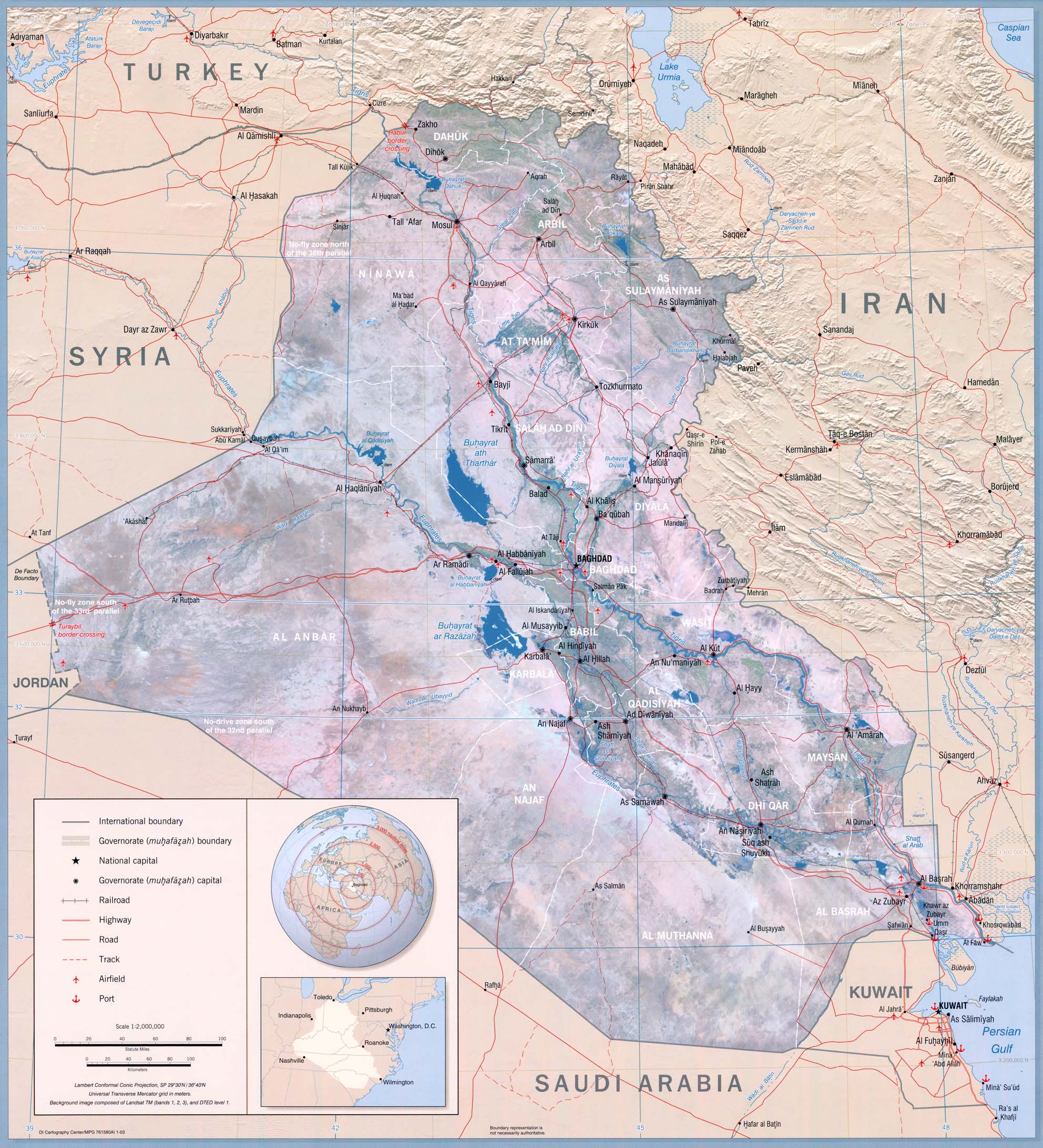
Tuesday, June 14, 2005
War News for Tuesday, June 14, 2005
Bring ‘em on: At least 22 people killed and 80 wounded in suicide bomb attack in
Bring ‘em on: Two US soldiers killed in roadside bombing near Ramadi. Eleven employees of American-Iraqi Solutions Group killed Sunday when one of its five-vehicle supply convoys was ambushed east of Ramadi by up to 20 heavily armed gunmen firing from an overpass. Seven badly decomposed bodies, including one Iraqi and six believed to be "Asians," were brought to Yarmouk hospital after being killed in a convoy ambush several days ago. Most had been shot in the face.
Bring ‘em on: Bodies of 17 Iraqi civilians, believed to be people who worked for foreign contractors, found in a desert in Habbaniya in Anbar province. Last Friday at least 17 bodies in civilian clothes were found outside of Qaim. In addition, three bodies were found Sunday under a bridge in northwest Baghdad, three bodies were found Sunday in southeast Baghdad's al-Baladiyat neighborhood , and another three men were found last Saturday shot to death in Baghdad’s Dora district. It is difficult to tell whether any of these discoveries are the same as some previously reported in earlier posts but my impression is that they aren’t.
Bring ‘em on: Ten Iraqis, including two children, killed and seven wounded in a car bomb attack north of Baghdad. This may be the same attack as the one in Kanaan mentioned in the first entry above.
Vehicle accident: One US Marine killed and three critically injured in Humvee rollover in
Negotiating with terrorists:
Negotiations have just begun between
Iraqi Politics
Kurd threats: Kurdish officials have threatened to withdraw from the Iraqi government if it does not amend its political program, an Arab newspaper reported Monday.
The London-based al-Hayat daily quoted Kurdish parliament members as saying they may pull out of the government if Prime Minister Ibrahim Jaafari's unilateral decisions continued.
Sunni threats:
But the once-powerful community, at its lowest point since the U.S.-led invasion and ouster of Saddam Hussein, refuses to accept second-class status and believes it still has trump cards to play - chief among them: withholding approval of a new constitution in a fall referendum.
Under the provisional law now in force, Sunni Arabs can reject the draft constitution in October by voting against it in three of the four provinces where they have a majority. Such a move would force the dissolution of parliament and new elections held, throwing the entire political process a year behind schedule - as envisioned by
``If we don't like it in October, we shall vote against it and return the entire political process to point zero,'' said senior Sunni Arab politician and lawmaker Meshaan al-Jiburi.
Saddam: The tribunal that will put Saddam Hussein on trial released a video Monday showing the 68-year-old former dictator — looking drawn and tired but dressed in a pinstriped suit — being questioned about the killings of at least 50 Iraqis in a Shiite town.
The Iraqi Special Tribunal trying Saddam likely issued the new video to show that it is in control of the proceedings and to counter widespread beliefs that it was being directed by Shiites and Kurds who dominate the government and the 275-member National Assembly.
Life Under Occupation
TB on the rise: Iraqi doctors say they are concerned over an increase in Tuberculosis (TB) cases in the southeastern city of
The disease, which has been under control in the area for more than 50 years, has been rising steadily since the conflict in 2003.
A survey on living conditions, released by the UN and the Iraqi government in May, stressed that standards had seriously deteriorated over the past two years with poor access to clean water and adequate healthcare.
Contractors kill 12 Iraqi civilians a week!:
The move may be supported by the
Soldiers have for some time been angered by the salaries earned by the estimated 20,000 armed contractors working in
They are even more unpopular with Iraqis. Interior ministry officials say at least 12 Iraqi civilians are killed by contractors every week in the capital.
"Enough is enough," said an official at the interior ministry. "We are looking at ways to tighten weapons licenses, and to punish the worst cases. The culture of impunity must stop."
Transit point: "There is no drug problem in
Iraqi government officials and a U.N. agency that monitors drug trafficking disagree. Hamid Ghodse, president of the United Nations' International Narcotics Control Board, said that since the U.S.-led invasion in 2003,
US Military Affairs
The draft: The United States would "have to face" a painful dilemma on restoring the military draft as rising casualties saw the number of volunteers dry up, a senator warned today.
Joseph Biden, the top Democrat on the Senate Foreign Relations Committee, made the prediction after new data released by the Pentagon showed the US Army failing to meet its recruitment targets for four straight months.
"We're going to have to face that question," he said on NBC's Meet the Press TV show when asked if it was realistic to expect restoration of the draft.
"The truth of the matter is, it is going to become a subject, if, in fact, there's a 40 per cent shortfall in recruitment. It's just a reality," he said.
The comment came after the Department of Defence announced the army had missed its recruiting goal for May by 1661 recruits, or 25 per cent. Similar losses have been reported by army officials every month since February.
Experts said even that figure was misleading because the army has quietly lowered its May recruitment target from 8050 to 6700 people.
Why is a Democrat bringing this up? This is the result of a Republican president’s decisions approved by a Republican congress. Let them talk about how we need to bring back the draft!
And they can start it with these guys: They are young and bright and ardently right. They tack Ronald Reagan calendars on their cubicle walls and devote brown bag lunches to the free market theories of Friedrich von Hayek. They come from 51 colleges and 28 states, calling for low taxes, strong defense and dorm rooms with a view.
The summer interns of the Heritage Foundation have arrived, forming an elite corps inside the capital's premier conservative research group. The 64 interns are each paid a 10-week stipend of $2,500, and about half are housed in a subsidized dorm at the group's headquarters, complete with a fitness room.
Unusual in its size (and in its walk-in closets), the program, on which Heritage spends $570,000 a year, is both a coveted spot on the young conservative circuit and an example of the care the movement takes to cultivate its young.
Go look at the smug faces of these little shitweasels. Their brothers and sisters are dying in Bush’s war and these pissants’ priorities are to find a job where they don’t have to make coffee. I'll bet every single one of them thinks George Bush is god and not a one of them has the sac to put his ass on the line for his beliefs. These are the leaders of tomorrow? Our nation is doomed.
Like a bad penny: The body counts are back. For the first time since
"Marines Kill 100 Fighters in Sanctuary Near Syria" was a front page headline in the Washington Post last month. The body count, coming from a Marine spokesman, was carried in other major papers that day. What was striking about the factoid, besides the elegantly even number, was that it showed how the U.S. military has increasingly released body counts in reports depicting successful operations in Iraq -- despite decrees from the highest levels of the Pentagon, throughout the wars in Afghanistan and Iraq, that "we don't do body counts."
Your Tax Dollars At Work
“Indications of fraud”: There is no centralized procedure for monitoring scores of contracting firms rebuilding
Instead, most contracts are monitored by the individual agencies that award them. The Army Corps of Engineers, for example, which issues the bulk of reconstruction work, has its own inspectors and quality assurance monitors. The U.S. Defense Contract Management Agency provides oversight on behalf of the Army for troop support contracts -- private firms that do everything from serving meals to washing combat fatigues.
Last month, investigators said incompetence and "indications of fraud" was responsible for nearly $100 million in cash not being accounted for by the CPA. That amount included more than $7 million that simply vanished, according to the Special Inspector General for Iraq Reconstruction, appointed in January 2004 to serve as a
The Pentagon versus big finance? My world is shook to the core!: Besieged financial services giant American International Group Inc. repeatedly has sought to derail an effort by the Pentagon that could save taxpayers millions of dollars on reconstruction work in war zones like
The Tide Is Slowly Turning
Patience drops: Nearly six in 10 Americans say the
Patience for the war has dropped sharply as optimism about the Iraqi elections in January has ebbed and violence against
The souring of public opinion presents challenges for the president, who has vowed to stay the course until democracy is established and Iraqi forces can ensure security. He hasn't suggested sending more
"We have reached a tipping point," says Ronald Spector, a military historian at
Bush says screw you: The White House rejected the idea Monday that the
"The president has answered that question (about a timetable). We'll leave when we complete the mission. We are not going to stay a day longer than is necessary," McClellan said.
But even Republicans are starting to wake up: A new Gallup Poll shows that nearly six in 10 Americans say the
Some members of Bush's Republican Party are now joining in to call for a deadline to withdraw troops from
That duck is starting to limp: Faced with plummeting public support for the war in
A bipartisan group of House members is drafting a resolution that calls on the administration to present a strategy for getting the
The House International Relations Committee on Thursday approved a similar proposal, 32 to 9, with strong bipartisan support. Sponsored by Representative Joseph Crowley, a New York Democrat who voted to authorize force in
The
More paper trail: Think Progress has posted the full text of six British background papers, about which they say: “When reading them, keep in mind that these Papers were written approximately a full year before the invasion of
Son of Downing Street: Just as the
Seven more memos: It started during British Prime Minister Tony Blair's re-election campaign last month, when details leaked about a top-secret memo, written in July 2002 — eight months before the
Just last week, President Bush and Blair vigorously denied that war was inevitable.
“No, the facts were not being fixed, in any shape or form at all,” said Blair at a White House news conference with the president on June 7.
But now, war critics have come up with seven more memos, verified by NBC News.
Briefing paper of July 21: It is a safe bet that the British seemed a bunch of nervous Nellies in the eyes of the hard-nosed "neoconservatives" running our policy toward
The briefing paper of July 21, 2002, offers this clear picture of what the British see as the
The worms begin to turn: A number of citizen groups and Democratic politicians are launching an initiative to investigate information contained in newly unearthed British memos on the war in
Representative John Conyers, along with 89 members of Congress, have openly asked the administration to address claims it cooked the books to justify the war. On Thursday, June 16, Conyers and other Democrats will hold "Memogate hearings" in
But it goes back even further: Two years before the September 11 attacks, presidential candidate George W. Bush was already talking privately about the political benefits of attacking
"He was thinking about invading
And finally, the I word: Wisconsin Democrats are calling for the impeachment of President George W. Bush, Vice President Dick Cheney and Secretary of Defense Donald Rumsfeld.
Loyalists at this weekend's state party convention in
The resolution contends that the administration "lied or misled" the United Nations, Congress, and the American public about the justification for the war. It cites the so-called "
Damn straight: It really could not be put much more clearly than this. A group within the executive branch had decided that war was the only option, and they then set out to rig the evidence in order to deceive Congress, the American people, and the world. Remember that even as late as early March 2003, Bush was telling us, "I've not made up our mind about military action [sic]." Such a deception would almost certainly constitute a "high crime and misdemeanor" under Article II, Section 4 of the Constitution, making it an impeachable offense.
Even though impeachment is unlikely given the Republican majority in Congress and the weak-kneed record of the Democrats, the public should continue raising the possibility. We as Americans must not consider how politically viable our demands are before making them, as that would make us little more than politicians. Sometimes, it is more important to be right and just than to state a popular opinion or executable solution.
If the liars and criminals who started this war get away without punishment, the legal ramifications will influence every prospective military adventure in the coming decades. One more signal will be sent that our executive branch can act with complete impunity, even at the cost of tens of thousands of lives. Instead, let us send a message of outrage, let us stand up and say that Americans are tired of being force-fed official fabrications. The first step is contacting your representatives and the media, and urging them to support the current attempts to uncover the truth.
Have you signed the letter? If you have, good work. If you haven’t, SIGN THE GODDAM LETTER please. We need a million signatures and we are going to get them. Thank you.
Civil Liberties
Big Dick: Vice President Dick Cheney said Monday he doesn't believe revelations about the treatment of prisoners at the
Cheney did not mention the article in this week's issue of Time magazine based on an 84-page logbook of the interrogation and treatment of Mohammed al-Qahtani, a
Time's article, authenticated by Pentagon spokesman Larry DiRita, outlines al-Qahtani's treatment, which included being refused a bathroom break and forced to urinate in his pants, having a female guard straddle him, being forced to wear pictures of scantily clad women around his neck and being forced to bark and act like a dog.
But the vice president defended the treatment of Guantanamo's detainees, saying they have been treated "in a human fashion" but do not "qualify" for treatment under the Geneva Conventions "because they are unlawful combatants (who) have not operated in accordance with the laws of war: they haven't worn a uniform, they target civilians."
"In spite of that they are still treated with respect and dignity," he said.
Respect and dignity: Extracts from an interrogation log,
13 December 2002, 1115: Interrogators began telling detainee how ungrateful and grumpy he was. In order to escalate the detainee's emotions, a mask was made from an MRE box with a smily face on it and placed on the detainee's head for a few moments. A latex glove was inflated and labeled the "sissy slap" glove. The glove was touched to the detainee's face periodically after explaining the terminology to him. The mask was placed back on the detainee's head. While wearing the mask, the team began dance instruction with the detainee. The detainee became agitated and began shouting.
20 December 2002, 1115: Detainee offered water—refused. Corpsman changed ankle bandages to prevent chafing. Interrogater began by reminding the detainee about the lessons in respect and how the detainee had disrespected the interrogators. Told detainee that a dog is held in higher esteem because dogs know right from wrong and know how to protect innocent people from bad people. Began teaching the detainee lessons such as stay, come, and bark to elevate his social status up to that of a dog. Detainee became very agitated.
Stealing our freedoms in secrecy: A closed-door vote by the Senate Intelligence Committee last week to expand law enforcement powers under the USA Patriot Act is prompting sharp criticism from some conservative leaders who are otherwise among the most vocal allies of President Bush and the Republican leadership in Congress. The conservative leaders — who have formed a coalition with critics on the left, including the American Civil Liberties Union — vowed to press their concerns in coming days with public statements, rallies and radio advertisements in key congressional districts.
The conservatives, including former U.S. Rep. Bob Barr (R-Ga.) and political activists who have been long-standing critics of the anti-terrorism law, lashed out with particular force last week against the White House, members of Congress and Atty. Gen. Alberto R. Gonzales. They said they had expected a more open review of the Patriot Act in which lawmakers considered some limits in order to safeguard civil liberties.
"It is a slap in the face to the Constitution," said Barr, who leads a bipartisan coalition calling for limits on the act.
And they expect us to trust them: Soon after Sept. 11, 2001, the FBI learned that 18 Middle Eastern men had obtained licenses in
Deeply concerned about another terrorist attack, prosecutors filed fraud charges against the men on Sept. 24, 2001. The next day, then-Attorney General John D. Ashcroft appeared before Congress. Invoking the threat of attacks with poisons from crop-dusting aircraft or other hazardous materials, he said some of the defendants "may have links to the hijackers."
Within two days, the FBI was backing off that allegation. Two months later, prosecutors in
Robert Cindrich, a former
Yet the case still makes up the largest single portion of the government's list of terrorism prosecutions.
Commentary
An open letter to the troops: You do not have to follow illegal orders EVER, under any circumstances, and you ARE bound by International Law. You should also be bound by what you know is right, by your sense of plain common decency.
One of the ways they will get you to do things that you will not want to live with for the rest of your lives is to impose that group-think on you. If one of us is guilty, we are all guilty. And “what happens in
And I’m telling you that you do not owe them or anyone else that kind of loyalty.
Take a little break to laugh at an idiot: For a fun example of a Bush dupe struggling to come to terms with Bush incompetence, go check out this Jim Hoagland column. Here are a couple representative sentences:
Yes, much of the criticism of President Bush comes from partisans with their own axes to grind, and from those who opposed the
But the White House is too quick to find comfort in the ignorant partisanship of some foes and the partisan ignorance of others -- and in the reality that patience is required in all wars and particularly in one as amorphous and demanding as this struggle has become.
My emphasis. What a douchebag.
Comment: The war has taken a dangerous turn - not in
According to the latest Washington Post/ABC News Poll, for the first time since the war began a majority of the American public doesn't believe the toppling of Saddam Hussein's regime has made the
If we learned anything from
In both cases, the American people were had.
Opinion: With the war in
The Army, frantically searching for solutions, is offering enlistments as short as 15 months and considering bonuses worth up to $40,000. But it may be facing a problem too difficult for any amount of money to overcome. Americans are catching on to the hideousness and apparent futility of the war in
Analysis: The Bush administration's confused and confusing foreign policy seems hard to decipher—especially regarding headline-grabbing reports on Abu Ghraib prison and the
Some op-eds on the right argue that abuses did not take place there and that, if they did, they were minor and undertaken by isolated individuals, a few rotten apples. Left-leaning pundits blame what they consider horrors on Mr. Bush and the Pentagon. These interpretations, while on the surface dissimilar, share one central false assumption: that the president and his closest aides are embarrassed by Abu Ghraib and
The fact of the matter, however, is that the administration, in its usual unsubtle way of dealing with foreigners, does want the outside world to be aware of what happens if you're "against us": you end up in prison or a detainee camp. Gruesome disclosures about Abu Ghraib and
Comment: In evaluating the case for impeaching George W. Bush over the Iraq War, his deceptions about weapons of mass destruction most readily come to mind, but there is also the incompetence of his military strategy, especially Bush’s refusal to recognize how such a complex project might go terribly wrong.
Rather than look at the military prospects realistically, Bush and his advisers pursued a consistent policy of wishful thinking, deceiving the American public about the war’s cost in both money and blood, and ultimately deluding even themselves.
From the expected flower-strewn Iraq welcome in March 2003 to the cheery predictions after the Shiite election win in January 2005, the war has suffered from a macabre “Peter Pan” syndrome, that happy thoughts and some pixie dust of propaganda could lift the U.S. to victory – when instead it has sent tens of thousands of people to unnecessary deaths, including almost 1,700 American soldiers.
Reality was banished not only from the pre-war WMD justifications, it’s been barred from mid-war assessments, too. But the hard truth – recognized from the start by many military experts – was that
As for the practicality of Bush’s impeachment over the
Comment: What we're talking about here is 1,700 dead Americans – based on a lie.
What we're talking about here is Lou Allen of
All dead – based on a lie,
What I can't understand – what's making my head pop off – is that so many Americans are indifferent to this kind of news. Is it because Americans expect presidents to lie, so it's not news when they do (unless it involves sex)?
Is it because this is simply confirmation of what we sort of knew all along anyway and – so what – we got Saddam (even though Osama is still at large)?
Is it because no one really cares what happens to our troops – even those of you with those stupid, yellow "Support Our Troops" magnets on your cars? Tell me, what have you done to support our troops other than put a stupid, yellow magnet on your car?
If you really want to support our troops, I have a suggestion: Demand a confession from George Bush.
Casualty Reports
Local story:
Local story: Two Mississippi National Guardsmen killed in roadside bombing in
Local story: Funeral scheduled for
Local story:
Local story: Antigo, WI, Marine died from wounds received June 8 in Al Anbar province.
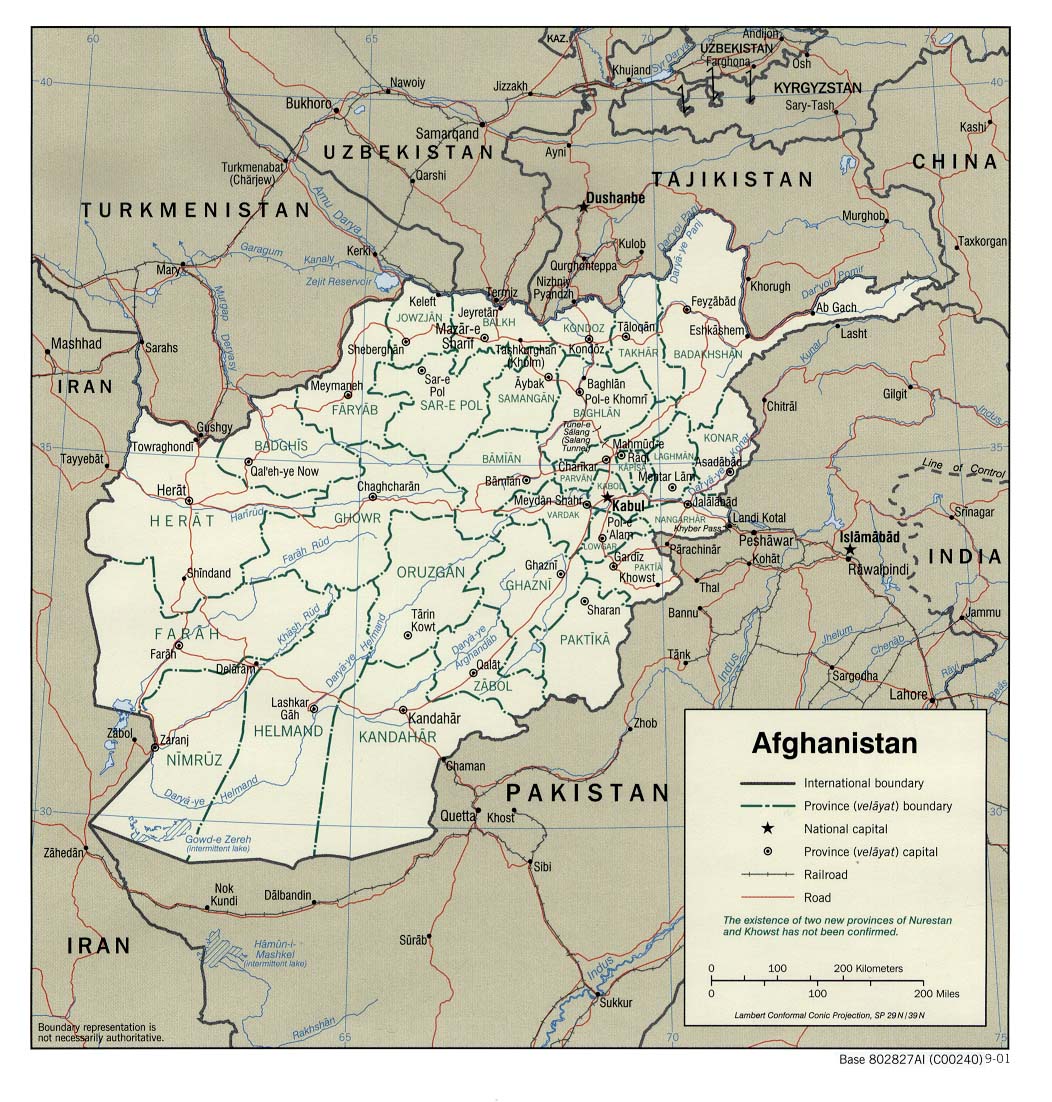
Local story:
Local story:
Monday, June 13, 2005
Iraqis inspecting the damage of U.S. air strikes in western Iraq on Sunday challenged American assertions that the raids had killed 40 insurgents, saying there were no guerrillas in the area. "There were no mujahideen (fighters) or armed men in the area. The planes attacked indiscriminately," said one man, who did not give his name, as he inspected the rubble of a house. Quite how many may have died, or their identities, remained unclear. Residents would not let a Reuters cameraman film two of the houses that were hit by the strikes. Hamdi al-Alusi, chief of nearby Qaim hospital, said three civilians from houses in the nearby district of Rumana were brought in wounded after the air strikes, including a 12-year-old boy who later died. The U.S. military spokesman said Rumana was not targeted during or after the strikes. "These are children's clothes," said one man, picking up a shirt from the rubble left by the strikes.Banned Contractor still getting work. Juan Cole takes a look at some of the Iraq and other ME news that's out and ponders "Things You Wouldn't expect to Happen if You Listened to Bush and Cheney" Opinion and Commentary Military can't fix Iraq:
A growing number of senior American military officers in Iraq have concluded that there is no long-term military solution to an insurgency that has killed thousands of Iraqis and more than 1,300 U.S. troops during the past two years. Instead, officers say, the only way to end the guerrilla war is through Iraqi politics — an arena that so far has been crippled by divisions between Shiite Muslims, whose coalition dominated the January elections, and Sunni Muslims, who are a minority in Iraq but form the base of support for the insurgency. Gen. George W. Casey, the top U.S. commander in Iraq, expressed similar sentiments, calling the military’s efforts “the Pillsbury Doughboy idea” — pressing the insurgency in one area only causes it to rise elsewhere. “Like in Baghdad,” Casey said during an interview with two newspaper reporters, including one from Knight Ridder, last week. “We push in Baghdad — they’re down to about less than a car bomb a day in Baghdad over the last week — but in north-center (Iraq) ... they’ve gone up.” The recognition that a military solution is not in the offing has led U.S. and Iraqi officials to signal they are willing to negotiate with insurgent groups, or their intermediaries. “It has evolved in the course of normal business,” said a senior U.S. diplomatic official in Baghdad, who spoke on the condition of anonymity because of U.S. policy to defer to the Iraqi government on Iraqi political matters. But the violence has continued unabated. Lt. Col. Frederick P. Wellman, who works with the task force overseeing the training of Iraqi security troops, said the insurgency doesn’t seem to be running out of new recruits, a dynamic fueled by tribal members seeking revenge for relatives killed in fighting. “We can’t kill them all,” Wellman said. “When I kill one, I create three.”A Long War
At the moment, the Sunnite Arabs do not have a credible collective leadership with whom the government could negotiate even if it wanted to, and there’s not much point in trying to negotiate with the insurgents, either: some 38 different groups have claimed attacks against American troops. Nor will sealing the frontiers help, as the great majority of the insurgents are Iraqis moved by some combination of nationalism, Islamism, and/or Baathism. (The International Institute for Strategic Studies recently estimated that there are between 20,000 and 50,000 insurgents, organized in some 75 separate units). Another election might ease some of the strains if substantial numbers of Sunnite Arabs chose to participate next time, but it is far from clear that they would, and in any case the timetable is slipping fast. Current deadlines foresee completion of the new constitution by August 15, a referendum on it in October, and new elections in December (assuming that the referendum says “yes”), but three months were lost in haggling between Kurds and Shias over government jobs and now that schedule is most unlikely to be met. In fact, it will be surprising if they can even agree on a new constitution by the end of the year -- and Sunnite Arab views will scarcely be represented at all. So the violence will probably continue at around the current level for the next six to nine months at least, and beyond that the future is simply unforeseeable. Whether you choose to call this a civil war or not, the fact is that almost all of the insurgents are Sunni Arabs, while the new Iraqi army and police forces are overwhelmingly Shiites and Kurds. So long as the insurgency continues, the Shia leadership is unlikely to demand the immediate departure of American troops -- and so far, the US still seems determined to stay. It’s a long time since the early days of the occupation, when US officials spoke airily about a prolonged occupation of Iraq and only very gradual moves towards putting power back into Iraqi hands, but they have (deliberately or accidentally) created a situation in which key Iraqi players depend on their continued presence. Nor is there any sign that Washington has yet given up its plans for “enduring bases” in Iraq as the strategic center from which it can perpetuate its military domination of the oil-rich Gulf region. This is going to be a long war.Freedom Comes - Freedom Goes:
Sheikh Abdul al-Bahadli, a firebrand cleric with an artistic bent, drew a tree on a notepad. It was not a bad sketch. After a pause his pen returned to the pad and drew a box around the tree. "Is it not more beautiful if it is put in a frame?" he asked. This was not an invitation to discuss aesthetics, but an argument for women wearing the Islamic headscarf known as the hijab. It was also a justification for the transformation of Basra and southern Iraq. Since the US-led invasion toppled Saddam Hussein two years ago, this city with a long liberal tradition and the surrounding provinces have fallen under the sway of conservative Islam. Alcohol shops have been burnt, women have been encouraged to wear the veil and music has been banned in many places. Prostitution has gone underground. A student picnic was viciously attacked because the male and female undergraduates mingled. Mr Bahadli, an ally of the influential cleric Moqtada al-Sadr, said music and television must not excite the wrong emotions. "Mozart yes, Michael Jackson no."